
Game review
Ballatory
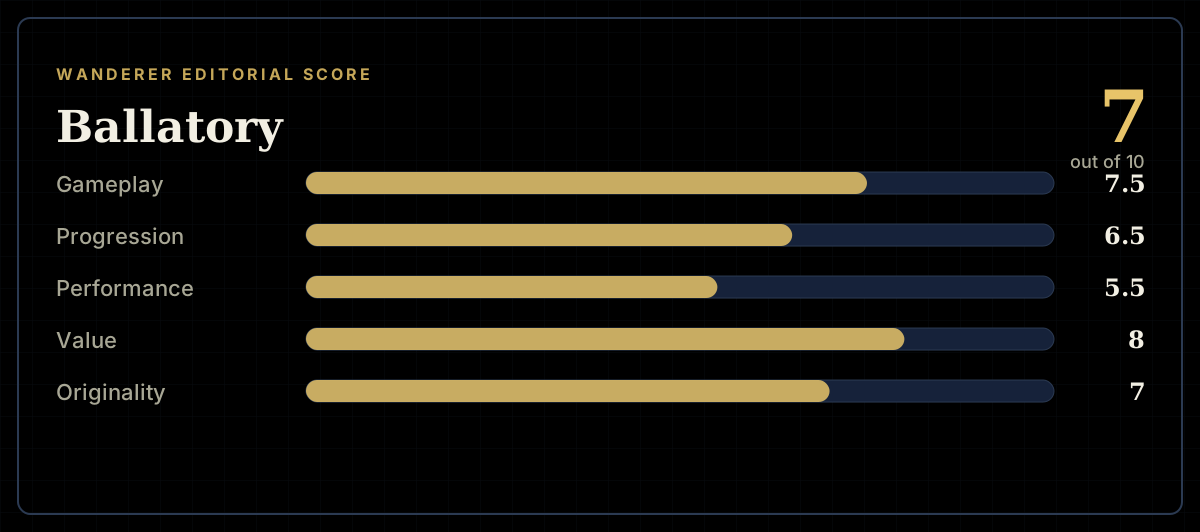
7 / 10
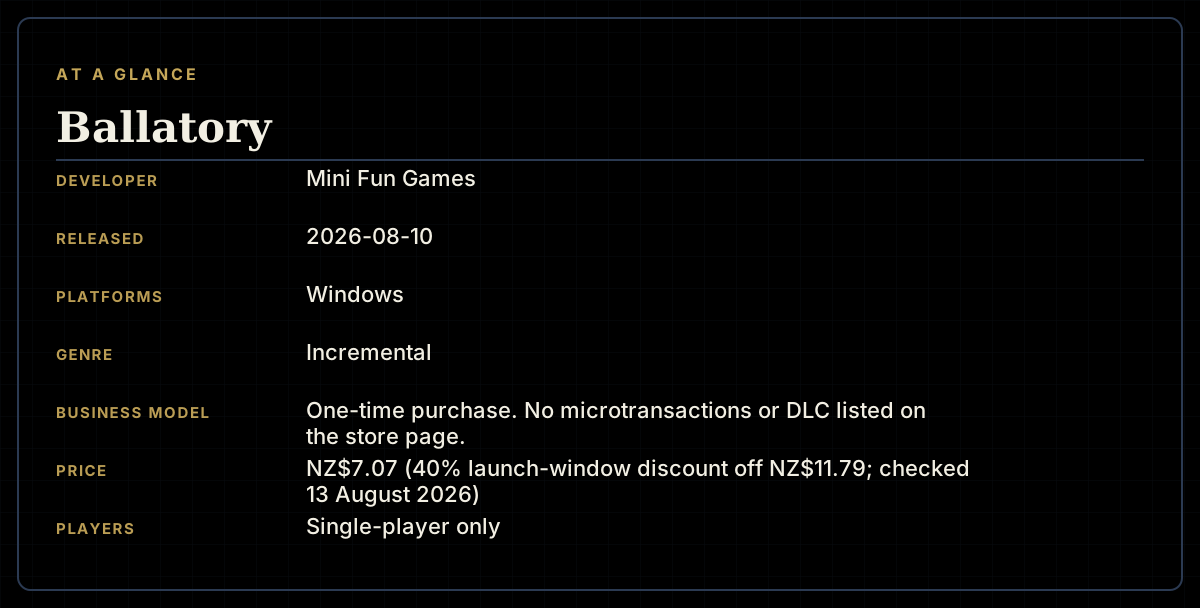
- Developer
- Mini Fun Games
- Publisher
- Mini Fun Games
- Released
- 10 August 2026
- Platforms
- Windows
- Genre
- Incremental
- Monetisation
- One-time purchase. No microtransactions or DLC listed on the store page.
- Players
- Single-player only
The short version
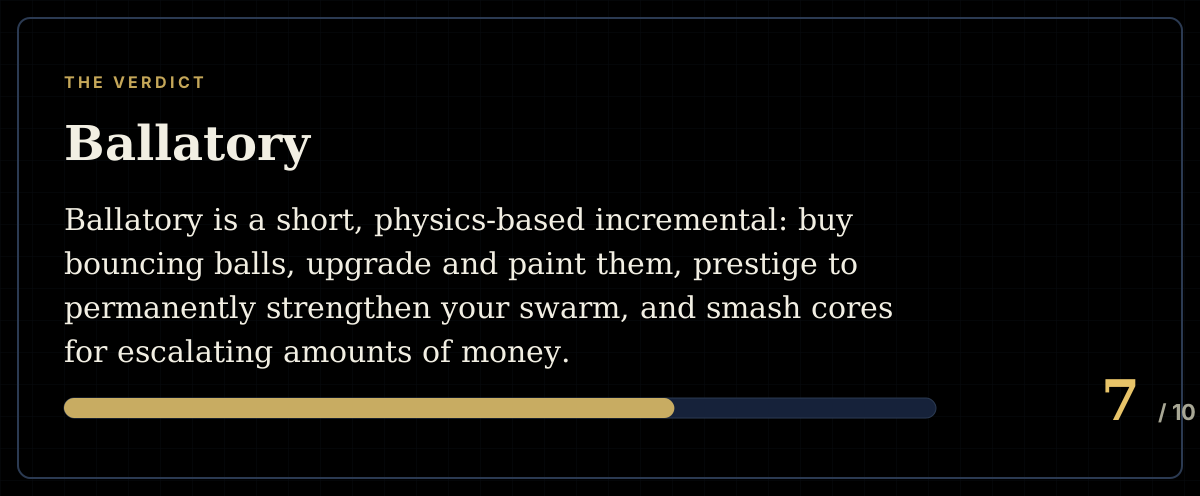
Ballatory is a short, physics-based incremental: buy bouncing balls, upgrade and paint them, prestige to permanently strengthen your swarm, and smash cores for escalating amounts of money. Released 10 August 2026 by Mini Fun Games for NZ$7.07 (checked 13 August 2026, on a 40% launch discount), it holds a Positive score across 22 reviews, with reviewers specifically praising something the genre often fakes: real strategic decision-making rather than a fixed optimal buy-order.
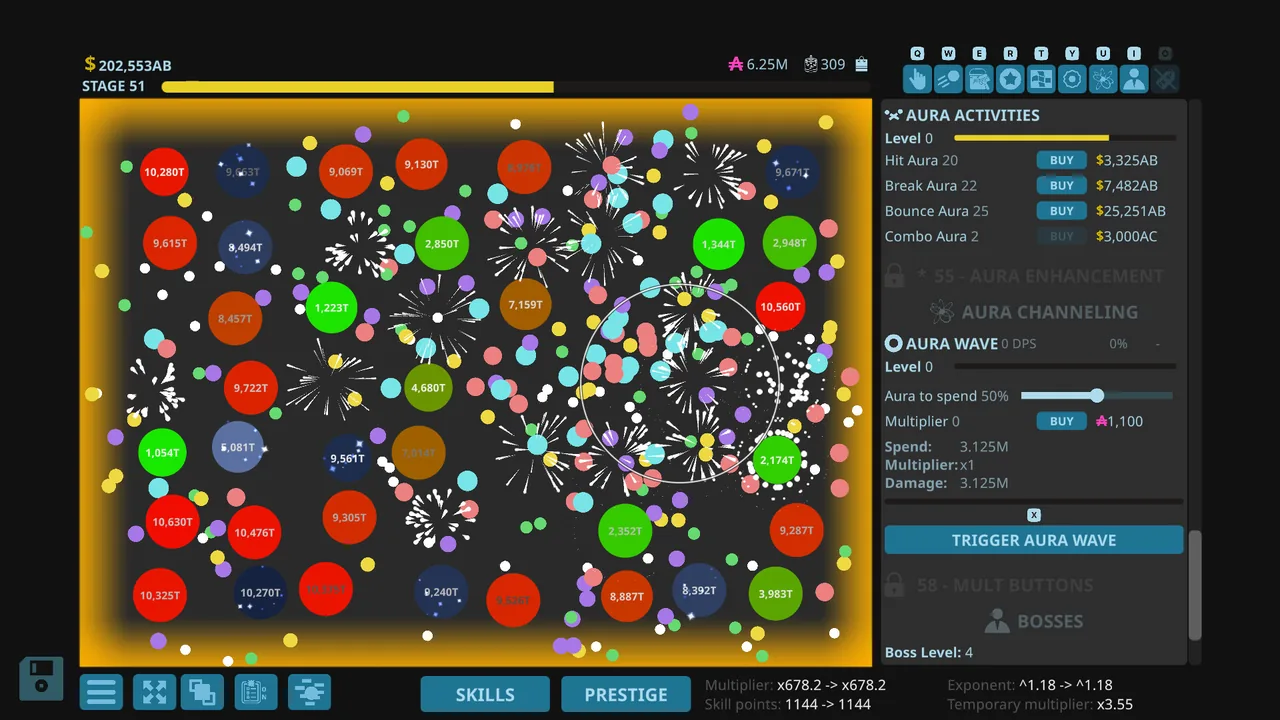
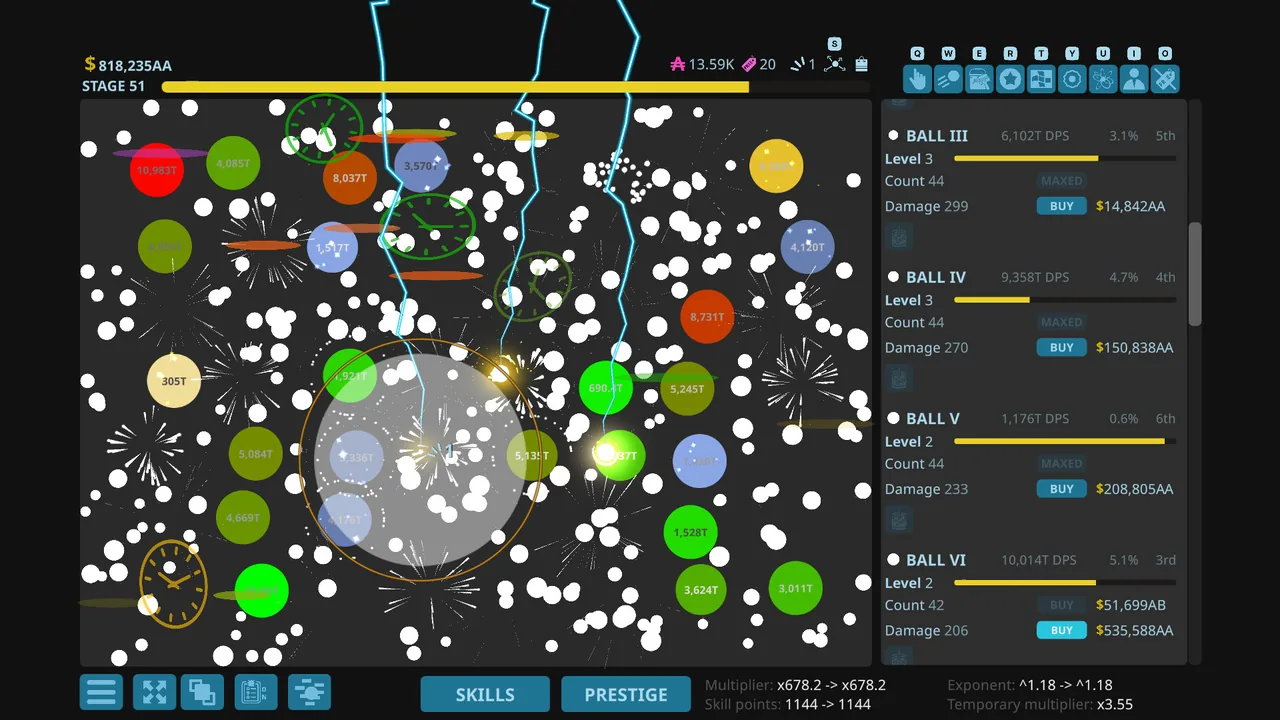
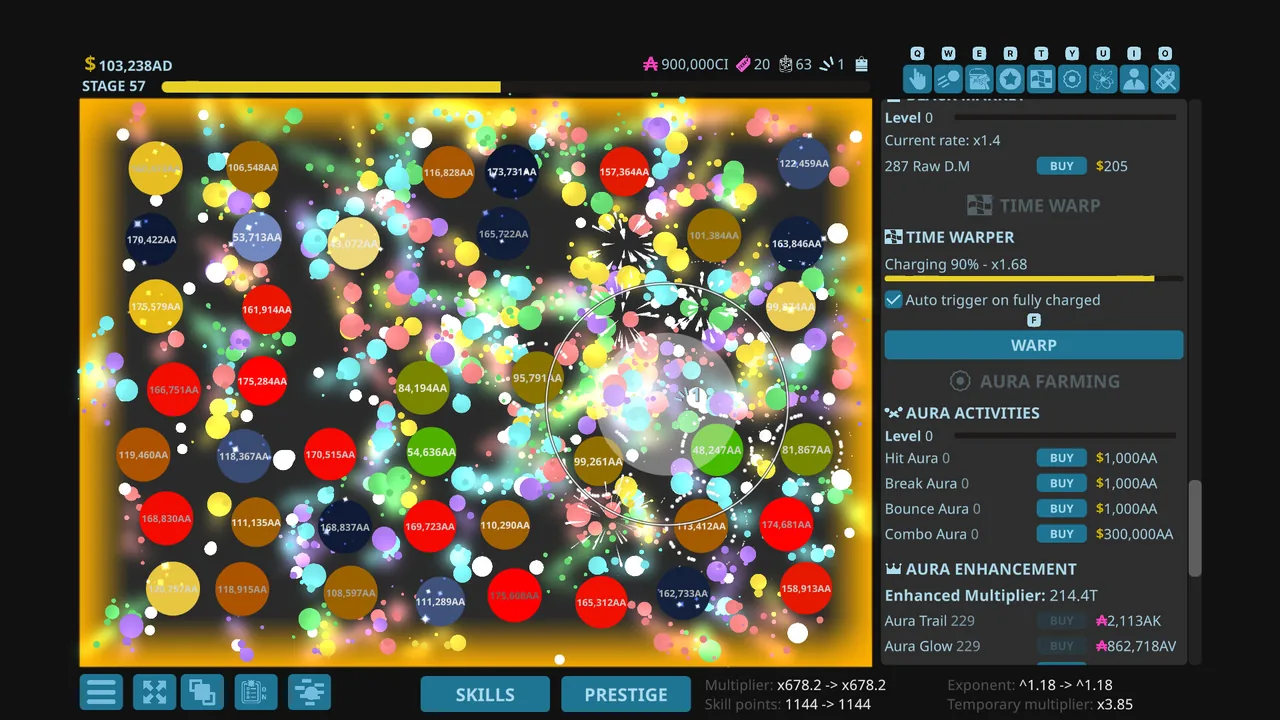
The most detailed available reviews are largely enthusiastic but converge on two concrete, specific problems: late-game visual effects -- lightning, particle trails, screen-filling ball swarms -- tank performance hard enough that one player's frame rate dropped to 10-20 FPS, and the same effects are separately flagged as uncomfortably intense, with one reviewer calling the second half "seizure inducing."
Biggest strengths
- Real strategic depth reviewers specifically credit as rare for the genre -- "actually have decisions to make that aren't just buying things in a slightly different order," as one review puts it, with prestige-point allocation mattering rather than a single obvious path
- A short, respectfully-scoped runtime: most reviewers report reaching 100% completion in 4 to 7 hours, and the achievement curve backs this up with a gentle rather than punishing late-game drop-off
- A satisfying "giga snowball" endgame acceleration that reviewers describe as a genuine payoff for early strategic investment rather than a slog to the credits
Biggest weaknesses
- Late-game visual effects -- lightning, glow and screen-filling ball trails -- cause serious, specific performance problems, with one reviewer reporting their PC dropping to 10-20 FPS on the final prestiges even with damage numbers disabled
- The same late-game effects are described by at least one reviewer as "very seizure inducing," a real accessibility concern the store page's content descriptors do not currently flag
- Pacing stalls noticeably in the middle for multiple reviewers before the correct strategy clicks and progress suddenly accelerates, an uneven curve rather than a smooth one
Who it's for: Incremental fans who want a short, tightly designed session -- most reviewers finish everything in 4 to 7 hours -- with genuine strategic choices about where to invest prestige points rather than a single obvious optimal path. Not for anyone sensitive to fast, flashing visual effects, or players who want a long-tail incremental to sink dozens of hours into.
Our recommendation: A strong, cheap pickup at NZ$7.07 for incremental fans who want real decisions to make rather than a solved buy-order -- but the late-game visual intensity is a genuine concern worth knowing about in advance, both for performance on modest hardware and for photosensitivity, since Steam's own content descriptors don't currently flag it.
7 / 10
Ballatory's pitch sounds like a joke about the incremental genre before it's anything else: buy balls, excite the balls, paint the balls, prestige the balls. "There's balls bouncing all over the place, I can excite the balls, I can buy more balls to bounce around," reads one review, entirely sincerely, before landing on a genuine verdict: "This game took the axiom 'ball is life' very literally." Underneath the goofy premise is a short, physics-driven incremental about building a swarm of bouncing balls that smash cores for escalating money, prestiging to unlock permanent skills, and finding the right build before the game's back half accelerates hard. Mini Fun Games released it 10 August 2026 for NZ$7.07 on a launch discount (checked 13 August 2026), and it holds a Positive score across a small but detailed 22-review sample.
An incremental that asks for actual decisions
The single most-repeated praise in Ballatory's reviews isn't about the ball physics or the presentation -- it's about something the genre frequently promises and rarely delivers: real strategic choice. "It's refreshing to see an incremental where there's actually strategy involved," reads one review. "It's still relatively short for an incremental game, but it's really really nice to see that you actually have decisions to make that aren't just buying things in a slightly different order." A second reviewer describes arriving skeptical -- "initially skeptical as it appeared extremely linear" -- before the mid-game opened up: "then as I progressed it became much more flexible/challenging. Not really skill based but decisions of where to spend prestige points becomes very important." That's a meaningfully different design than most incrementals manage, where the "optimal" path is usually a single solved sequence a wiki spoils in five minutes.
The runtime matches the genre priority this readership cares about most directly: respecting a player's time rather than padding for padding's sake. "100% in ~6 hours," reads one review; another reports "about 4 hours to 100% it." The global achievement data backs this up with a relatively gentle curve down to the high teens for the hardest cosmetic unlocks, rather than the steep cliffs seen in longer-tail incrementals -- consistent with a game most buyers who start it actually finish. The payoff at the end draws real enthusiasm too: "once you hit the giga snowball point you blast to the end before there's time for the welcome to be overstayed," reads one review, a specific, positive account of pacing sticking the landing rather than dragging.
A real, specific late-game problem
Set against that praise is a concrete, repeated complaint about the game's final stretch, and it's worth taking seriously because it's raised independently by more than one reviewer in near-identical terms. "The only downside is the performance -- even though I disabled the damage numbers, my PC tanked to 10-20 FPS on the last few prestiges with the lightning and all," reads one review, from a player who otherwise rates the game highly. A second reviewer, also broadly positive, goes further: "full achievement took 7 hours, it went very slow around mid game, then accelerated so fast that any choice was made pointless. All and all a fun game, but very seizure inducing in the second half." A third notes that "there are a few things that don't seem to work exactly like they say," suggesting some of the late-game systems aren't fully polished to match their descriptions.
That combination -- serious performance strain and a specific photosensitivity concern, both tied to the same late-game visual effects -- is worth flagging directly rather than treating as ordinary launch-week roughness. Steam's content descriptors for Ballatory currently list nothing, so buyers sensitive to flashing or rapid visual effects won't get a warning from the store page itself; this review's available evidence suggests they should go in cautious regardless, and that lower-spec machines may struggle in the final stretch even with in-game options like damage numbers turned off.
A more structural criticism comes from the game's most detailed negative review, which pushes back on the "incremental" label from the opposite direction than usual: rather than being too passive, it argues Ballatory is a puzzle wearing an incremental's clothes. "As soon as you have found the correct mid-game strategy, it will carry you to the end of the game. Unlike in an incremental game, you cannot simply grind your way through. You HAVE to use the winning strategy," reads the review, calling it "a bad, casual puzzle game disguised as an incremental game" as a result. That's a genuinely different read from the reviewers praising the same design as "real strategy" -- the disagreement seems to hinge on whether finding one correct build among several options reads as satisfying discovery or as a puzzle with a single right answer disguised as an open decision.
7.0 out of 10. Ballatory is a short, cheap, genuinely well-designed incremental that earns real credit for offering actual strategic decisions in a genre that usually fakes them, and for respecting a player's time with a tight, mostly 4-to-7-hour runtime. Its late-game visual effects are a real, specific problem, though -- concrete performance drops on at least one reviewer's machine and a photosensitivity concern the store page doesn't currently warn about -- worth knowing before diving into the back half. At NZ$7.07, still a good pickup for incremental fans who want a short, thoughtful build to sink an afternoon into.
Pros and cons
Pros
- Real strategic depth reviewers specifically credit as rare for the genre -- "actually have decisions to make that aren't just buying things in a slightly different order," as one review puts it, with prestige-point allocation mattering rather than a single obvious path
- A short, respectfully-scoped runtime: most reviewers report reaching 100% completion in 4 to 7 hours, and the achievement curve backs this up with a gentle rather than punishing late-game drop-off
- A satisfying "giga snowball" endgame acceleration that reviewers describe as a genuine payoff for early strategic investment rather than a slog to the credits
- Cheap even before its launch discount, with reviewers repeatedly calling it good value "for a few bucks"
Cons
- Late-game visual effects -- lightning, glow and screen-filling ball trails -- cause serious, specific performance problems, with one reviewer reporting their PC dropping to 10-20 FPS on the final prestiges even with damage numbers disabled
- The same late-game effects are described by at least one reviewer as "very seizure inducing," a real accessibility concern the store page's content descriptors do not currently flag
- Pacing stalls noticeably in the middle for multiple reviewers before the correct strategy clicks and progress suddenly accelerates, an uneven curve rather than a smooth one
- One more critical review argues the "incremental" framing is misleading in a different way than usual -- calling it "a bad, casual puzzle game disguised as an incremental game" where only one of roughly four possible strategies actually works once you reach the midgame, rather than a game you can grind through regardless of choices
Screenshots
-
BallatoryImage: Mini Fun Games via Steam -
BallatoryImage: Mini Fun Games via Steam -
BallatoryImage: Mini Fun Games via Steam -
How the review scores each part of the gameWanderer Editorial -
The essentialsWanderer Editorial -
The short versionWanderer Editorial