Game review
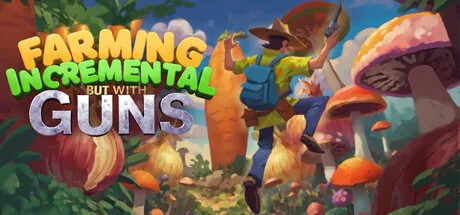
Farming Incremental But With Guns
6.5 / 10
- Developer
- Clementine Wolf Games
- Publisher
- Clementine Wolf Games
- Released
- 11 August 2026
- Platforms
- Windows
- Genre
- Incremental / First-Person Shooter
- Monetisation
- Paid, one-time purchase. No premium currency, ads, subscriptions or DLC are listed on the store page.
- Players
- Single-player only. No multiplayer, co-op or online features are listed anywhere on the store page.
The short version
Farming Incremental But With Guns commits fully to a premise that sounds like a joke and mostly earns the follow-through: you plant crops, then shoot them until they burst into coins, ploughing the proceeds into turret upgrades and sprint speed via a bubbling cauldron of ingredients. Across three short biomes — grassy farmland, a frozen tundra, and a desert oasis — it stays genuinely funny and genuinely satisfying to fire a rifle at a mushroom the size of a garden shed. What it doesn't do is what its own title claims: the numbers you build up inside each level, sometimes into the millions, get wiped back to zero the moment that level ends, rather than compounding into anything permanent. For a roughly three-hour, five-dollar palate cleanser that's a forgivable structural choice rather than a fatal one, but it means the game plays more like three short arcade levels wearing an incremental's clothing than an actual incremental, and more than one Steam reviewer has said so directly.
Biggest strengths
- Shooting oversized, cartoonish crops for a satisfying coin-burst payoff is a simple idea executed with real polish and a sense of humour that carries through all three biomes
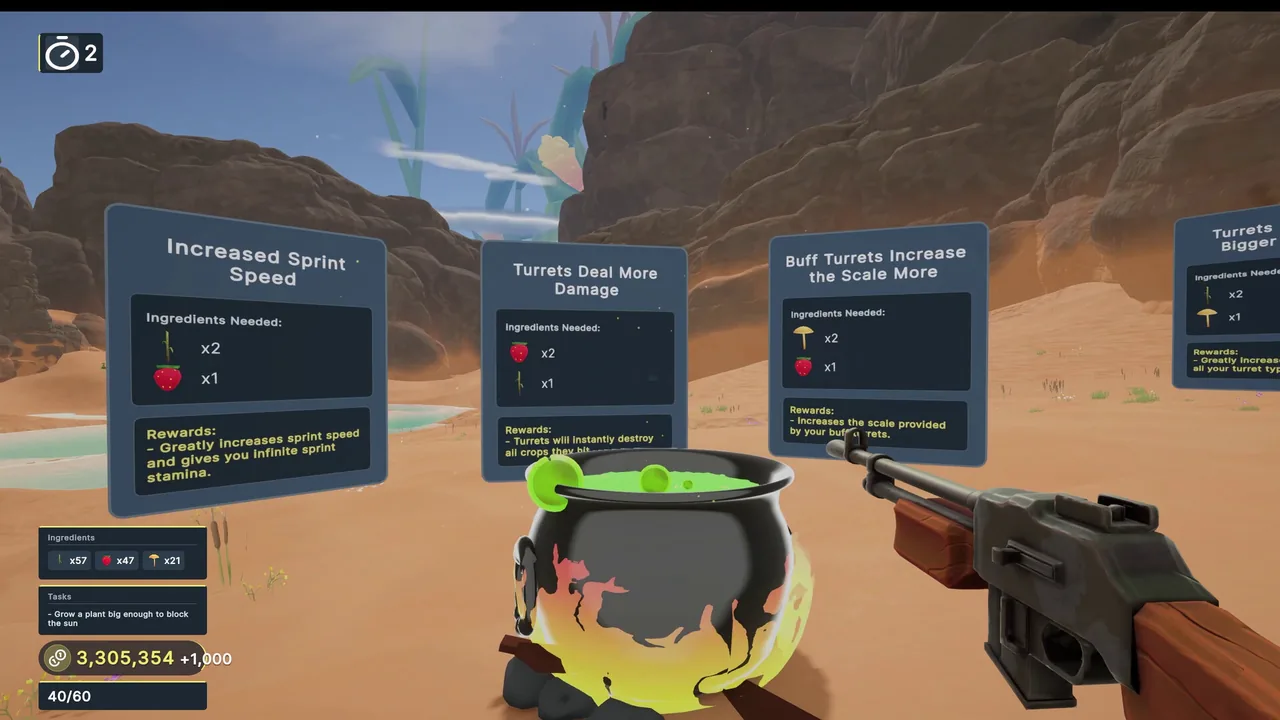
- The upgrade cauldron ties visually distinct rewards (sprint speed, turret damage, turret scale) to specific crop ingredients rather than a single abstract currency, giving upgrades some thematic identity
- At a discounted NZ$4.74 for what multiple reviewers clock at around three hours to finish, the per-hour cost compares well against pricier genre neighbours
Biggest weaknesses
- Currency and crop-scale progress reset to zero at the start of every new level rather than carrying forward, which one Steam reviewer specifically called out as not feeling "like an incremental" at all, with power not increasing between levels
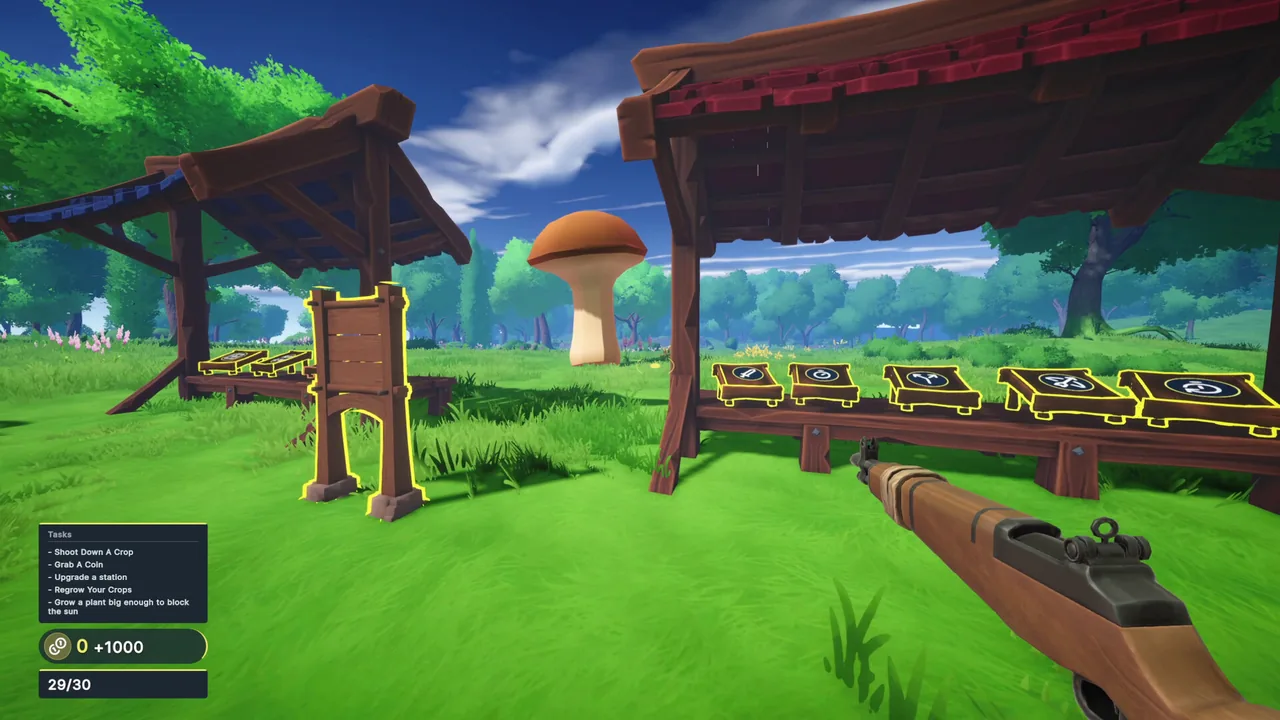
- Progress within a level is capped by short task checklists (a crop-scale or coin-count target shown as a fraction like 29/30), so the promotional screenshots' seven-figure coin counters exist for a few minutes before that level ends and the count restarts
- Reviewers describe the pacing as uneven across the three acts, with the middle section singled out as a "slog" compared to the first and third
Who it's for: Players who want a short, cheap, funny first-person shooter with number-go-up feedback for an afternoon, not players specifically shopping for a persistent incremental progression system to sink dozens of hours into.
Our recommendation: A fair impulse buy at its discounted price for a few hours of a genuinely novel, well-executed premise — just go in expecting three self-contained short levels rather than one continuously escalating incremental economy.
6.5 / 10
The title does most of the marketing work by itself. Farming Incremental But With Guns is exactly what it says: an active, first-person incremental where you plant crops, grow them to absurd proportions, and then shoot them down for coins. It's a dumb idea in the best sense, and the small team behind it — Clementine Wolf Games, both developer and publisher — clearly knew it, leaning into the joke with tasks like "Grow a plant big enough to block the sun" rather than trying to dress the premise up as something more serious. The trouble with a title that makes a specific promise is that reviewers are obligated to check whether the game keeps it, and on the word "incremental" specifically, this one doesn't quite.
Shoot the crop, take the coin
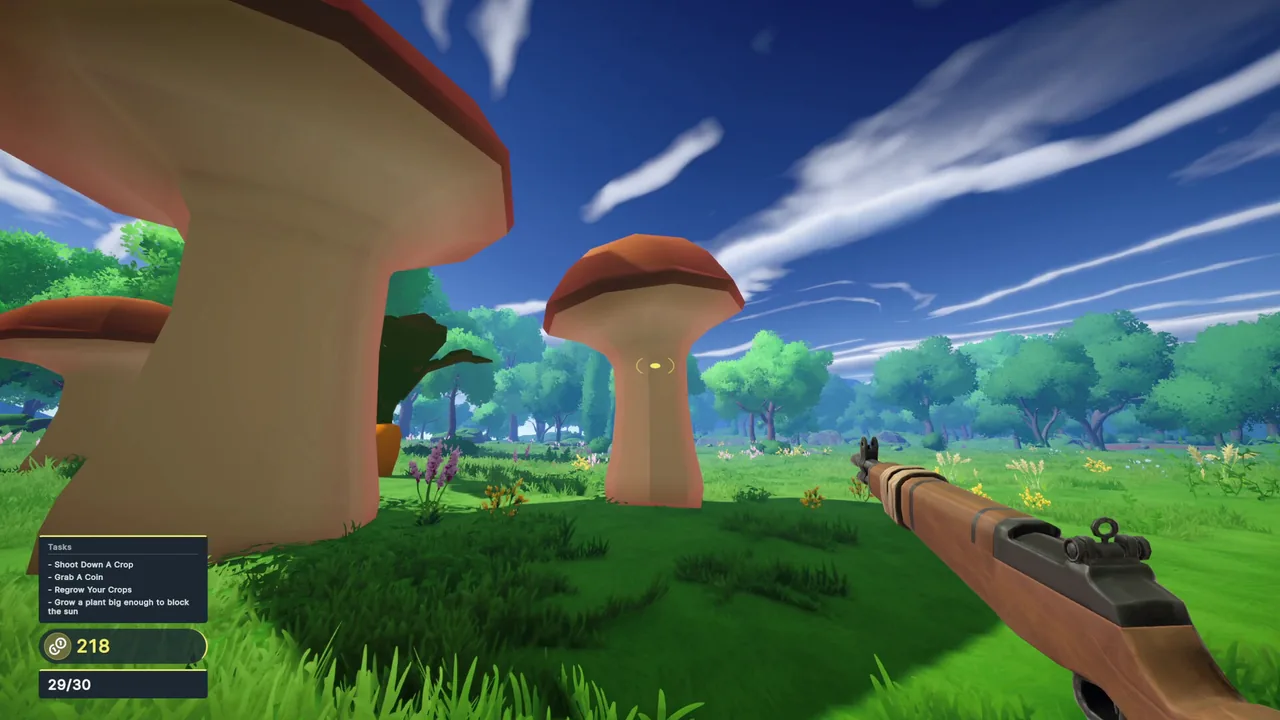
The moment-to-moment loop is simple and, going by the screenshots and the small pool of player reviews available at launch, genuinely fun. You're handed a rifle, dropped into a meadow full of mushrooms taller than the farmhouse behind them, and told to shoot. Crops burst into a shower of coins on death, a checklist in the corner tracks objectives like "Shoot Down A Crop" and "Regrow Your Crops," and a running coin total climbs in the corner — climbing fast enough, going by one promotional screenshot, to hit seven figures within a single level. Spend that currency at a bubbling cauldron and you unlock concrete, visually distinct upgrades: increased sprint speed, harder-hitting automated turrets, bigger buff radius from those turrets. It's a satisfying, tactile version of the genre's usual "number goes up" feedback loop, and putting a literal gun in the player's hand to trigger it is a smarter hook than most incrementals bother with.
Three biomes carry the roughly three-hour campaign: green farmland to start, a frozen tundra in the middle, and a desert oasis to close it out. Steam reviewers who've finished it describe an uneven curve across those acts — the opening stretch as the most open and enjoyable, the tundra section as a comparative slog, the finale as the strongest of the three, with a couple of players noting its side quests can be cheesed rather than genuinely solved. That's a normal shape for a three-act indie game built by a small team, and not the kind of flaw worth marking a game down heavily for on its own.
The reset problem
What's harder to wave off is what happens between those acts. Multiple pieces of evidence line up here: task checklists in the official screenshots show progress tracked as a level-scoped fraction — 29 of 30, 40 of 60, 55 of 60 — rather than an ever-climbing lifetime total, and the coin counts shown alongside them, however large mid-level, don't appear to carry forward once that fraction fills and the level changes. One Steam reviewer put the mechanical result of this plainly: "it doesnt really feel like an incremental, it feels like you beat a level and then move on to the next with a clean slate not increasing in power at all," concluding the game "felt like a slog after the first level" as a result, despite calling it fun overall. A second negative review describes each level running "about 10-20 minutes and then just hard resets you onto another level."
That's a legitimate identity problem for a game whose entire pitch rests on the word "incremental." The genre's appeal is usually the compounding: numbers that used to feel enormous becoming trivial as the player's power grows, with each session building visibly on the last — it's the same reason a genre staple like Cookie Clicker or Melvor Idle can hold attention for hundreds of hours despite a simple core action, because nothing you earn ever really goes away. Here, growth appears to be scoped to whichever biome you're currently in, and gets zeroed out when you move to the next one. The turret and sprint upgrades from the cauldron may persist — the available material doesn't fully resolve whether those specific unlocks are permanent or also reset — but the headline number, the one the marketing screenshots put front and centre with a seven-figure coin total, plainly isn't. Played as three separate, self-contained arcade levels that happen to share an aesthetic, the design makes total sense: each level gets its own mini-economy so the pacing can be tuned independently rather than trying to balance one giant number across three very different settings. Marketed and named as an incremental, though, it invites exactly the disappointment that Steam's early reviewers are describing, because that word carries a specific promise in this genre and the game's own systems don't cash it.
It's worth being precise about what this criticism is and isn't. This isn't a game that stops being fun because of the reset — several of the positive reviews explicitly acknowledge the per-level structure and still recommend the game, since three tightly-paced short levels avoid the opposite failure mode common to the genre, where a single sprawling economy goes stale long before the credits roll. The complaint is narrower and more specific: a shopper who reads "incremental" on the store page and expects the genre's usual compounding-numbers hook, the thing that makes idle and incremental games so easy to return to for just five more minutes, will not find it here. What they'll find instead is a well-made short arcade campaign that borrows the genre's visual language — climbing coin counters, an upgrade tree, task checklists — without adopting its structural promise.
Presentation and the price of admission
Visually, the game leans into a bright, low-poly cartoon style that suits the joke well — giant mushrooms and pumpkins rendered with the same friendly rounded shapes as a mobile farming game, which makes shooting them feel more like a prank than a massacre. The three biomes are distinct enough to register as separate settings rather than palette swaps, going by the available screenshots, and the interface stays legible throughout: task lists in the corner, a currency counter, a level-progress bar. One reviewer flagged the crosshair specifically, describing a "flatted pointer" as a minor annoyance, which is a small enough complaint to file under personal taste rather than a real usability failure.
At a discounted NZ$4.74 (NZ$6.33 before the launch-week 25% cut) for a campaign that multiple reviewers clock at around three hours, the per-hour price sits comfortably in line with, or better than, plenty of pricier genre neighbours that pad similar ideas out with grindier permanent economies. Full controller support, Steam Cloud saves and Steam Achievements are all present, which is more polish than a lot of five-dollar debut titles bother shipping with. The achievement list, in particular, is the closest thing the game offers to a reason to look back once the main three biomes are done — a low-stakes completionist hook rather than a genuine replayability system, but a reasonable one for a game this size and price rather than something to hold against it.
Who it's actually for
Because the per-level reset undercuts the genre-standard reason to keep playing — chasing an ever-growing number — this isn't the right pick for someone specifically shopping for a persistent incremental to leave running for weeks. That audience should look elsewhere and isn't who this game is for anyway, going by how the developer talks about it: three biomes, a few hours, a joke that stays funny because it doesn't overstay its welcome. Read that way, the target player is someone who wants a cheap, contained, funny FPS with satisfying number-feedback for an afternoon, not someone building a long-term save file. Reviewers who went in with that expectation walked away calling it "such a fun and unique game" and "WELL worth the price tag"; the ones who went in expecting a persistent economy were the ones who came away disappointed. The gap between those two reactions is really a gap in what the title promised versus what the design delivers, not a gap in how well the game executes what it's actually trying to be.
Where that leaves it
Judge Farming Incremental But With Guns as a short, funny, well-made arcade shooter with a farming skin and a genuinely clever central joke, and it's an easy recommendation at its price. Judge it against the specific promise baked into its own title — that satisfying compounding growth incrementals are built around — and it comes up short, by its own players' account as much as this review's reading of the evidence. Both things can be true at once, and the score here tries to hold both: worth the asking price for an afternoon's entertainment, but not the persistent incremental economy the name on the box advertises.
Pros and cons
Pros
- Shooting oversized, cartoonish crops for a satisfying coin-burst payoff is a simple idea executed with real polish and a sense of humour that carries through all three biomes
- The upgrade cauldron ties visually distinct rewards (sprint speed, turret damage, turret scale) to specific crop ingredients rather than a single abstract currency, giving upgrades some thematic identity
- At a discounted NZ$4.74 for what multiple reviewers clock at around three hours to finish, the per-hour cost compares well against pricier genre neighbours
- Full controller support and Steam Cloud saves are in place for a game this size, which isn't a given at this price point
Cons
- Currency and crop-scale progress reset to zero at the start of every new level rather than carrying forward, which one Steam reviewer specifically called out as not feeling "like an incremental" at all, with power not increasing between levels
- Progress within a level is capped by short task checklists (a crop-scale or coin-count target shown as a fraction like 29/30), so the promotional screenshots' seven-figure coin counters exist for a few minutes before that level ends and the count restarts
- Reviewers describe the pacing as uneven across the three acts, with the middle section singled out as a "slog" compared to the first and third
- With no persistent meta-progression to chase, there's little reason to return once the roughly three-hour campaign is finished
Screenshots
-
Farming Incremental But With GunsImage: Clementine Wolf Games via Steam -
Farming Incremental But With GunsImage: Clementine Wolf Games via Steam -
Farming Incremental But With GunsImage: Clementine Wolf Games via Steam -
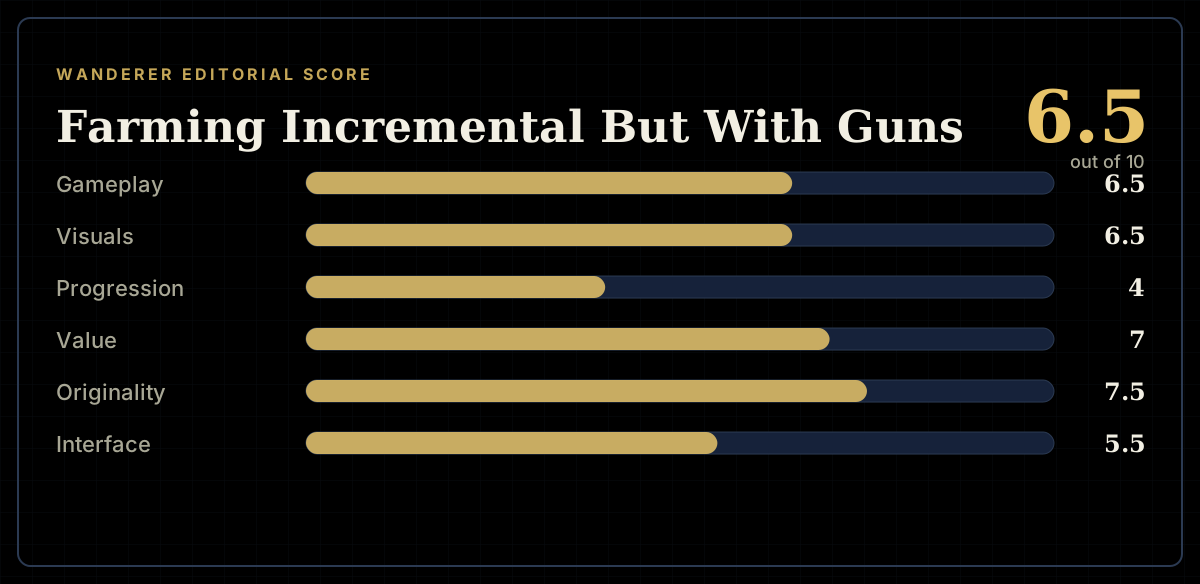
How the review scores each part of the gameWanderer Editorial -
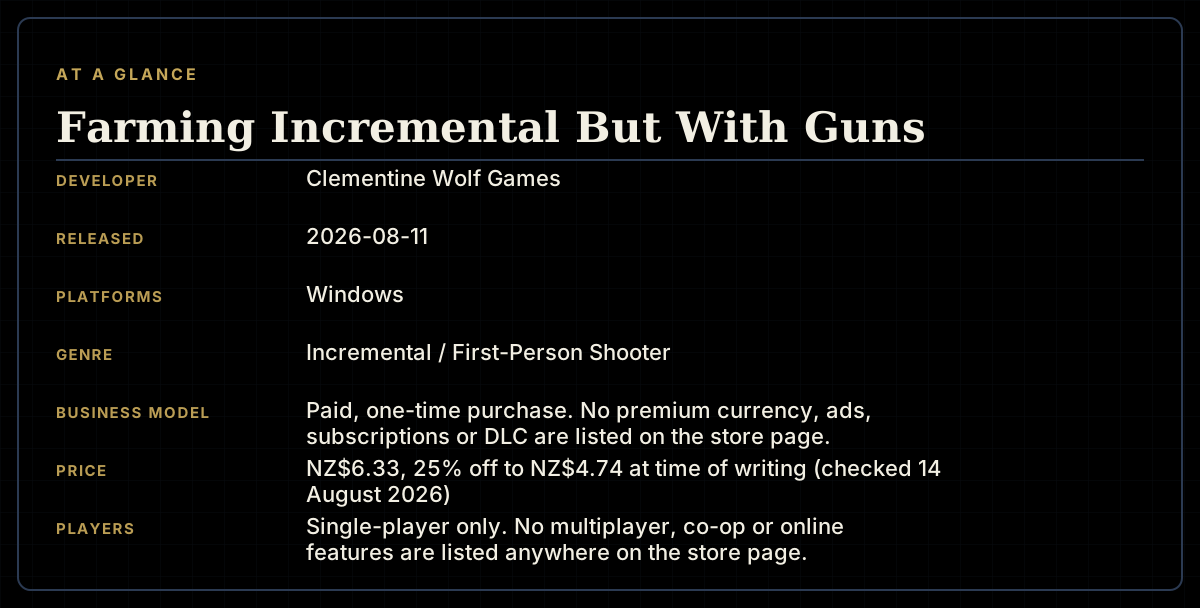
The game at a glanceWanderer Editorial -
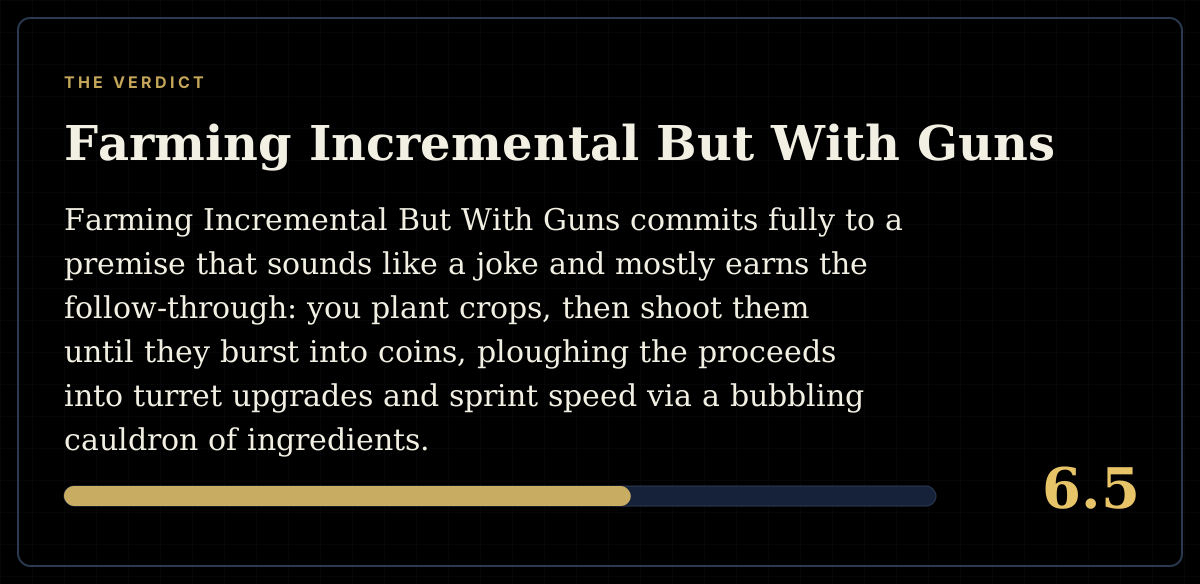
The short versionWanderer Editorial