Game review
Tower Realm
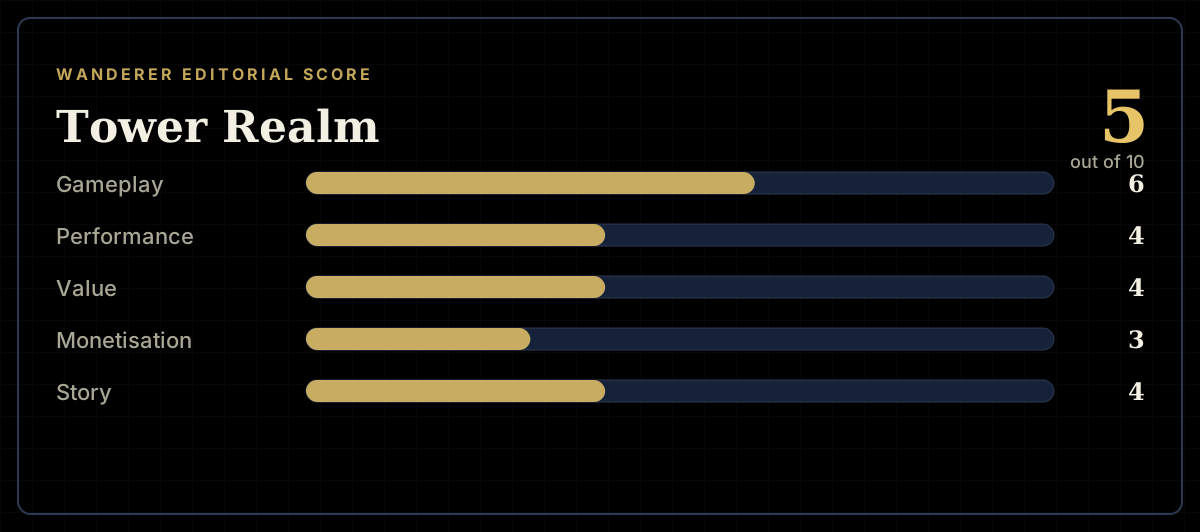
5 / 10
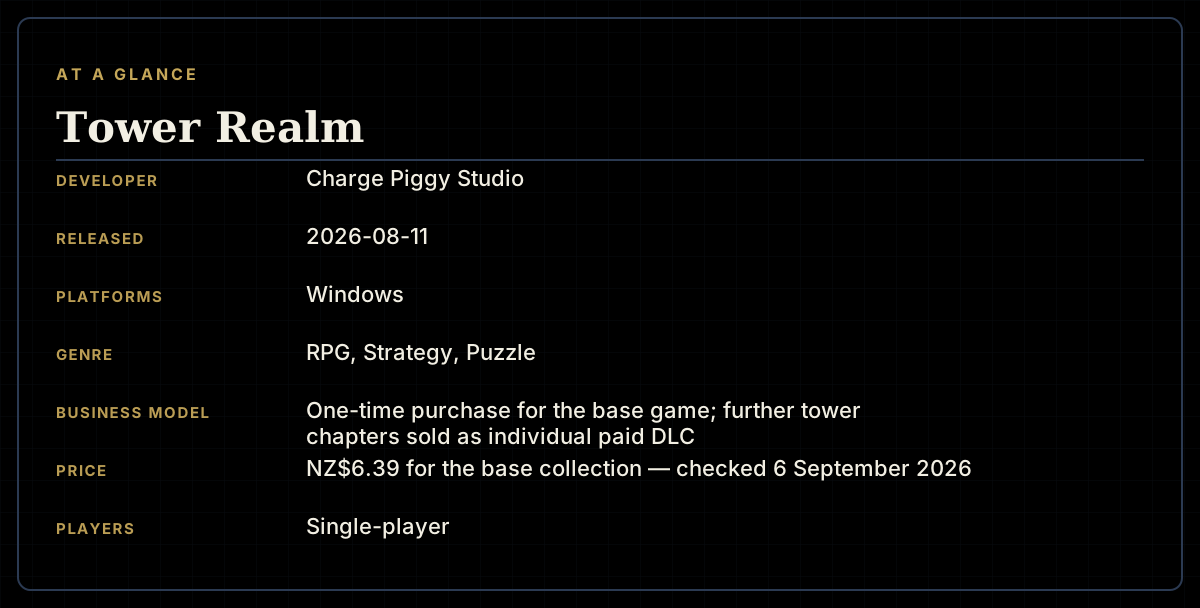
- Developer
- Charge Piggy Studio
- Publisher
- Charge Piggy Studio
- Released
- 11 August 2026
- Platforms
- Windows
- Genre
- RPG, Strategy, Puzzle
- Monetisation
- One-time purchase for the base game; further tower chapters sold as individual paid DLC
- Players
- Single-player
The short version
Tower Realm, released 11 August 2026 by Charge Piggy Studio, is a Steam collection of "Magic Tower" games — a Chinese puzzle-RPG tradition built around fixed maps, hard stats, and precise resource-and-route planning through a vertical dungeon, similar to the free browser games found on sites like h5mota. It sits Mixed with a large review base of 98, and reading through a wide cross-language sample makes the reason for that split unusually clear and specific. Veteran genre players, including some with hundreds of hours in the developer's earlier, well-regarded prior title, consistently praise the actual tower design as tightly and precisely balanced, with one detailed review noting that every micro-decision genuinely matters even in the "easy" tower. Overwhelmingly, though, the dominant complaint — repeated by dozens of reviewers, mostly writing in Chinese — concerns how the game is sold: the base purchase includes only the first chapter of each tower, with every subsequent chapter sold as a separate paid DLC and no guarantee that any given tower will ever be completed. Separately, this review found a specific, repeatedly reported Steam-compatibility crash preventing some players from launching the game at all, and a default dialogue system with no clearly signposted way to skip long, repeating story scenes, though reviewers have discovered an undocumented keyboard shortcut that does work.
Biggest strengths
- The actual tower design draws consistent, detailed praise from experienced genre players, with resource and route planning described as tightly and precisely tuned, requiring genuinely careful, granular decision-making even in the tower intended to be the easiest
- A move to the Godot engine brings genuinely improved controller support compared to the RPG Maker tooling this genre traditionally relies on, drawing specific, appreciative comment from multiple reviewers
- At least one detailed English-language review, writing from outside the existing fan community, finds the per-tower base pricing reasonable by general Steam standards, offering a useful counterpoint to the dominant backlash
Biggest weaknesses
- The single most repeated complaint, made by dozens of reviewers writing primarily in Chinese, is that the base game only includes the first chapter of each tower, with every further chapter sold as individual paid DLC and no guarantee that any tower will ultimately be finished — several reviewers explicitly compare this unfavourably to completely free browser Magic Tower games offering hundreds of floors, and to other paid Steam entries in the genre that ship as a complete, one-price product
- Multiple reviewers independently report a specific launch-blocking error citing an outdated Steam client interface requirement, with unhelpful in-game error messaging that gave no indication of the actual cause or fix
- Story dialogue has no clearly signposted skip function by default, and multiple reviewers describe individual NPC conversations taking up to thirty seconds even with fast-forward held down, a delay that repeats every time a save near that point is reloaded; reviewers have since discovered an undocumented keyboard shortcut that does skip dialogue, but the game does not surface this itself
Who it's for: Fans of Chinese Magic Tower puzzle RPGs who want tightly designed, high-difficulty tower content, and who are comfortable buying into a chapter-by-chapter DLC model with no guarantee of eventual completion.
Our recommendation: Worth it for the base tower if precise, punishing resource-planning puzzles appeal to you; think carefully before committing to further chapters given how strongly and consistently the game's own core community objects to the DLC structure.
5 / 10
Introduction
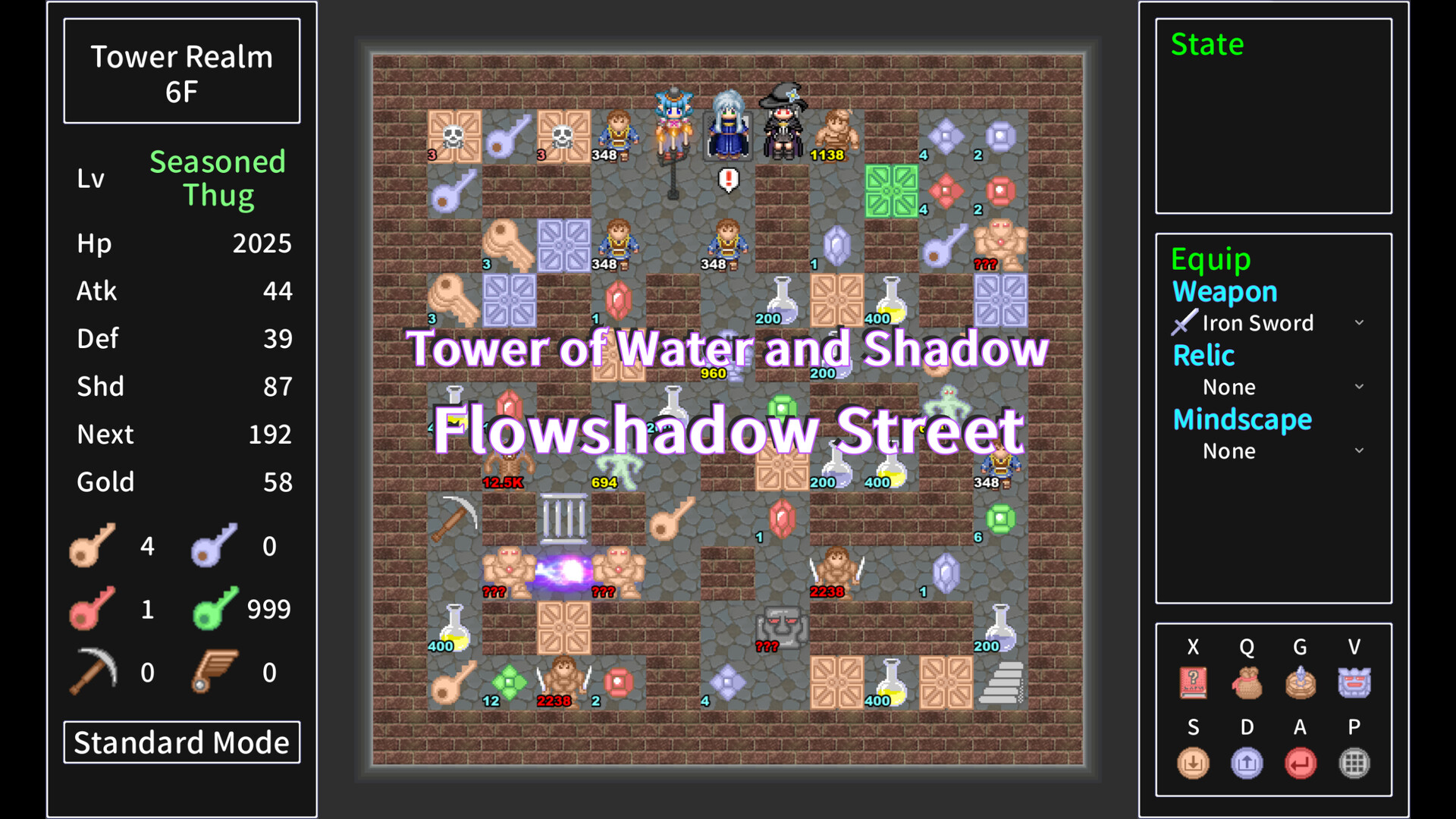
Tower Realm, released 11 August 2026 by Charge Piggy Studio, brings a Chinese puzzle-RPG tradition to Steam: the "Magic Tower," a genre built around climbing a fixed vertical dungeon armed with nothing but HP, attack, defence and shield stats, a handful of keys, and the discipline to plan a route through it with almost no room for waste. It sits Mixed with a substantial review base of 98, and reading across a wide, largely Chinese-language sample makes the reason for that split unusually easy to state precisely: this is a game whose actual puzzle design draws real, detailed respect, sold in a way that a large majority of its own community considers a serious problem.
Tightly designed towers, genuinely respected by veterans
The praise here is specific and comes from reviewers who clearly know the genre well. Multiple experienced players, some with hundreds of hours in the developer's earlier, well-regarded title, describe the resource-and-route planning here as tightly and precisely tuned — one detailed review cites exact final-battle numbers from their own playthrough, health totals and boss damage calculations separated by only a few hundred points out of hundreds of thousands, as evidence of just how little room for error the design allows. A separate, detailed English-language review, written from outside the existing fan community, notes the store page's claim that every tower has at least one clearable solution without using the difficulty-easing "Green Key" item functions less as a promise and more "a threat" — even the tower explicitly intended to be the easiest demands real, careful planning to clear without help. The move to the Godot engine also draws specific, appreciative comment for bringing genuinely solid controller support to a genre that has traditionally relied on RPG Maker tooling with much weaker gamepad handling.
A monetization structure a large majority of its core community rejects
Set against that design quality is the dominant, overwhelming pattern in this review's research. Dozens of reviewers, independently and mostly writing in Chinese, object specifically to how the game is sold: the base purchase includes only the first chapter of each included tower, with every subsequent chapter sold separately as paid DLC, and no guarantee offered that any given tower will ultimately be completed by the developer. Reviewers repeatedly compare this unfavourably to completely free browser-based Magic Tower games offering hundreds of floors at no cost, and to other paid Steam entries in the same specific genre that ship as a single, complete purchase. Several reviewers frame this in strong terms, one asking directly why a chapter-by-chapter DLC model is being applied to what's sold as a full release rather than clearly labelled as ongoing, incremental content from the outset.
It's worth reporting the other side of this specifically, because it complicates a simple verdict. One detailed English-language review, evaluating the game without the context of the existing free-Mota community's expectations, finds the roughly two-dollar-per-tower base pricing reasonable by general Steam standards, and says they expected the price to be somewhat higher going in. That same review acknowledges the accumulating DLC count "might start to look scary" over time, but holds out hope for future bundle discounts to soften the concern. Read together, this suggests the backlash is genuine and substantive — the completion-risk concern in particular is a legitimate, practical worry regardless of audience — but also shaped in part by a specific community's long-standing expectation that Magic Tower content should be free, an expectation general Steam puzzle-game buyers may not share to the same degree.
A specific launch crash, and dialogue with no obvious way to skip it
Beyond the pricing dispute, this review found two concrete technical and design problems independent of it. Multiple reviewers report a specific crash on launch tied to an outdated Steam client interface requirement, with the in-game error message giving no indication of the actual cause; one detailed report traces the real issue to a missing Steam API component only findable by digging through engine log files, after official support proved unable to help resolve it directly. Separately, story dialogue has no clearly signposted skip function by default — several reviewers describe individual conversations taking up to thirty seconds even with fast-forward held down, a delay that repeats every time a save near that scene is reloaded, which matters more than usual in a genre built around frequent save-and-retry route planning. Reviewers have since shared an undocumented keyboard shortcut that does skip dialogue entirely, but its absence from any in-game prompt or settings menu means many players simply endure the delay without knowing a fix exists.
Long-time fans miss the earlier game's emotional writing
A smaller but specific complaint comes from reviewers who followed the developer's earlier, well-regarded release closely. Several describe this game's writing as leaning heavily on internet meme humor in a way that undercuts particular emotional story beats they say landed genuinely well in the studio's prior work, with more than one reviewer naming specific plot moments — a supporting character's self-sacrifice, a tragic royal romance — they feel were cut or flattened in favour of lighter, jokier tone here. This isn't a complaint about the writing being absent, but about a specific, felt downgrade in emotional seriousness from players who came in with real affection for what the same team did previously.
Final Verdict
Tower Realm's actual puzzle design earns real, specific respect from players who know this genre well — tight, carefully tuned towers that reward exactly the kind of granular planning Magic Tower fans come to the format for, wrapped in noticeably better technical presentation than the genre typically gets on Steam. What holds this score down is that the way the game is sold has become the dominant story in its own community's reaction: a chapter-by-chapter DLC structure with a real, unresolved risk that any given tower may never be finished, compounded by a specific launch- blocking bug and a dialogue system that hides its own skip function from players who need it most. Worth the base price for the puzzle design alone; approach further chapter purchases with the same caution this game's own core audience is voicing loudly and specifically.
Pros and cons
Pros
- The actual tower design draws consistent, detailed praise from experienced genre players, with resource and route planning described as tightly and precisely tuned, requiring genuinely careful, granular decision-making even in the tower intended to be the easiest
- A move to the Godot engine brings genuinely improved controller support compared to the RPG Maker tooling this genre traditionally relies on, drawing specific, appreciative comment from multiple reviewers
- At least one detailed English-language review, writing from outside the existing fan community, finds the per-tower base pricing reasonable by general Steam standards, offering a useful counterpoint to the dominant backlash
- The difficulty-adjustment "Green Key" system gives players real, granular control over challenge level without requiring an upfront difficulty choice, which some reviewers say improves on rigid up-front difficulty settings elsewhere in the genre
Cons
- The single most repeated complaint, made by dozens of reviewers writing primarily in Chinese, is that the base game only includes the first chapter of each tower, with every further chapter sold as individual paid DLC and no guarantee that any tower will ultimately be finished — several reviewers explicitly compare this unfavourably to completely free browser Magic Tower games offering hundreds of floors, and to other paid Steam entries in the genre that ship as a complete, one-price product
- Multiple reviewers independently report a specific launch-blocking error citing an outdated Steam client interface requirement, with unhelpful in-game error messaging that gave no indication of the actual cause or fix
- Story dialogue has no clearly signposted skip function by default, and multiple reviewers describe individual NPC conversations taking up to thirty seconds even with fast-forward held down, a delay that repeats every time a save near that point is reloaded; reviewers have since discovered an undocumented keyboard shortcut that does skip dialogue, but the game does not surface this itself
- Long-time fans of the developer's earlier, well-regarded title describe this game's writing as filled with internet-meme humor that undercuts specific emotional story beats they say were genuinely effective in the earlier release, several naming exact plot moments they feel were cut or flattened
- A related, less severe complaint concerns interface friction: switching between towers reportedly requires fully exiting and re-entering rather than a quick in-menu switch, and floor selection doesn't support scroll-wheel navigation
Screenshots
-
Tower RealmImage: Charge Piggy Studio via Steam -
Tower RealmImage: Charge Piggy Studio via Steam -
Tower RealmImage: Charge Piggy Studio via Steam -
How the review scores each part of the gameWanderer Editorial -
The essentials at a glanceWanderer Editorial -
The short versionWanderer Editorial