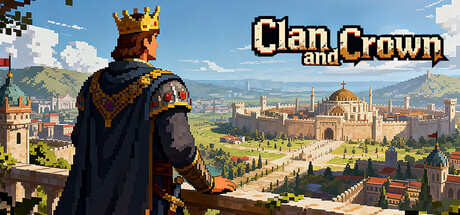
Game review
Clan and Crown
5 / 10
- Developer
- alanchu
- Publisher
- Wise Games
- Released
- 9 August 2026
- Platforms
- Windows
- Genre
- Strategy, RPG, Simulation
- Monetisation
- One-time purchase, no in-game purchases listed
- Players
- Single-player
The short version
Clan and Crown, released 9 August 2026 by solo developer alanchu, is an unusual hybrid: start a family, raise children, infiltrate a city's 13 industries and 70 professions, and work toward either winning a mayoral election or building weapons to wage outright war, all in pursuit of founding a lasting family empire. It sits Mixed with a small sample of 11 reviews as of this check, and reading through all of them turns up a genuine, high-stakes disagreement rather than a simple thumbs-up split. One detailed critical reviewer reports a severe, specific core-mechanic failure: after roughly twenty turns, children stop having children of their own and an entire family line dies out, while population caps in a single nation are so restrictive that the facilities required to run infiltration operations can't all be built at once — that reviewer reports failing to complete the game across four or five attempts even on the lowest difficulty and directly questions whether the developer has played their own game to completion. Set directly against this, two of the game's most heavily invested reviewers, with hundreds of hours logged between them, describe genuinely deep, successful strategies for both political and military routes to victory, one offering a detailed opening build order and the other a full strategic breakdown of siege and defense tactics. This review reports both accounts as genuinely held rather than resolving which better represents the typical experience.
Biggest strengths
- The core premise is genuinely distinctive: raising heirs, infiltrating city industries, and choosing between political and military paths to a family empire is a specific combination this review hasn't seen elsewhere in the genre
- At least two heavily invested reviewers, with hundreds of hours logged, describe real strategic depth once a working approach is found, including detailed, specific build orders for both a political-infiltration route and a warlord-style military conquest route
- The price is repeatedly and specifically described as very low for the amount of systems on offer, with one reviewer explicitly comparing the cost favourably to two cups of coffee
Biggest weaknesses
- One detailed critical review reports a severe, specific core-mechanic problem: population growth stalls after roughly twenty turns, family lines die out entirely, and the facilities required to run infiltration operations can't all be built due to restrictive nation-wide population caps, reportedly making the game unwinnable across multiple attempts even on the lowest difficulty
- The interface draws unusually harsh, specific criticism, with more than one reviewer comparing it to an amateur student project rather than a released commercial game, and drag-based building placement described as easy to trigger by accident
- The technology research system is described by one detailed reviewer as confusing and opaque, with displayed success percentages that don't appear to correspond to actual progress, and no way to cancel a stalled research item to free up a queue slot
Who it's for: Strategy fans drawn to an unusual family-dynasty premise who are willing to push through a rough, unpolished interface and a real risk of hitting a game-ending population problem before finding a working strategy.
Our recommendation: Worth its very low price for the concept if you're patient enough to experiment past a difficult, unclear opening; go in aware that at least one detailed player reports the game becoming mathematically unwinnable under certain approaches, and that finding a working strategy may take several failed attempts.
5 / 10
Introduction
Clan and Crown, released 9 August 2026 by solo developer alanchu, sets out to combine several genres that don't usually share a game: start a family, raise children, quietly buy your way into a city's criminal and legitimate industries across 13 sectors and 70 professions, then choose whether to seize political power through an election or manufacture weapons and take the city by force, all in service of building a lasting family empire. It sits Mixed with a small sample of 11 reviews, and reading through every one of them turns up something more specific and more useful than a simple split verdict: a genuine, high-stakes disagreement about whether the game is currently playable to completion at all.
A distinctive premise, and real depth for those who find it
The concept itself draws specific credit. Reviewers consistently describe not having encountered this particular combination elsewhere — dynasty management, city infiltration and a choice between political and military victory conditions layered together. More tellingly, at least two of the game's most invested reviewers, logging hundreds of hours between them, describe genuinely successful, detailed strategies once they found their footing. One lays out a specific opening build order: rush technologies for organized crime, security and finance early to seize population and territory from rival families before pivoting to culture, intelligence and eventually military technology. A separate, similarly invested reviewer offers a full strategic breakdown of siege and defense tactics for the game's warlord route, down to which unit compositions handle air versus ground threats. That's a level of engaged, specific strategic thinking that doesn't happen with a game that has nothing underneath its surface.
A severe, specific complaint that directly contradicts that success
Set squarely against those success stories is one of the most severe, specific critical reviews in this review's research. That reviewer reports a core-mechanic failure: after roughly twenty turns, children in the player's family stop having children of their own, causing the entire family line to die out, while a hard population cap within any single nation means the facilities required to run infiltration operations can't all be built simultaneously — running an effective coup or subversion campaign reportedly requires seven or eight such facilities, but population runs out after only four. That reviewer reports failing to complete the game across four or five separate attempts, even on the lowest available difficulty, and states directly that they doubt the developer has completed their own game. This review cannot determine whether this reflects a specific bug, a difficulty-scaling problem affecting some starting conditions but not others, or a genuine design flaw the successful players above happened to route around — but the specificity and detail of the complaint make it impossible to dismiss alongside the equally detailed success stories reported elsewhere in this same sample.
A rough, sometimes confusing interface
Independent of that core dispute, the interface draws unusually harsh and specific criticism. More than one reviewer compares it unfavourably to a student project rather than a commercial release, and drag-based building placement is described as prone to accidental misclicks. A separate detailed reviewer describes the technology research system specifically as confusing: displayed success percentages for different research options don't appear to correspond to actual progress, queued research can stall indefinitely with no way to cancel it and free the slot, and early-game random events are described as largely passive, offering little for the player to actually engage with during the opening hours.
Missing polish reviewers want addressed
A handful of smaller but specific requests round out this sample. One reviewer asks directly for non-English language support, noting that modern translation tools make its absence harder to justify for a game they otherwise like the theme, music and technology tree of, and states plainly their score will improve once that's addressed. Separate reviewers report that military units can't be manually directed during combat and can be lost to what feels like arbitrary attrition on automatic defense, and that children's personalities all appear identical rather than being randomized, which one reviewer specifically flags as exactly the kind of variance that should exist to keep repeat playthroughs feeling different from one another.
A pattern worth naming: the AI-authorship question, again
One reviewer raises a question this review has now seen recur across a striking number of games this year: whether the game's art assets were produced using AI tools. That reviewer's stance is notably more measured than most versions of this complaint — they state plainly they don't mind AI-generated art specifically as long as the underlying code isn't AI-produced, and argue that if a developer can be judged on whether the resulting game is fundamentally sound rather than on how its visuals were made. This review has not investigated Clan and Crown's asset pipeline and reports this only as one reviewer's stated position in an ongoing, wider debate this genre and year seem to be having with itself, not as a claim about this specific game's development process.
Final Verdict
Clan and Crown has a genuinely distinctive premise, and this review found real evidence that depth exists underneath its rough presentation — detailed, successful strategies from its most invested players prove the systems can work together in interesting ways. What keeps this score down is that this review also found an equally detailed, equally credible account of the opposite experience: a specific, severe population-math problem that one reviewer says makes the game unwinnable across repeated attempts, on top of an interface reviewers describe in unusually harsh terms. At its very low price, this is worth a cautious try for strategy fans specifically drawn to its unusual premise and willing to experiment past a difficult, unclear opening; go in aware that you may be one of the players who hits a wall this review cannot promise you'll be able to work around.
Pros and cons
Pros
- The core premise is genuinely distinctive: raising heirs, infiltrating city industries, and choosing between political and military paths to a family empire is a specific combination this review hasn't seen elsewhere in the genre
- At least two heavily invested reviewers, with hundreds of hours logged, describe real strategic depth once a working approach is found, including detailed, specific build orders for both a political-infiltration route and a warlord-style military conquest route
- The price is repeatedly and specifically described as very low for the amount of systems on offer, with one reviewer explicitly comparing the cost favourably to two cups of coffee
- At least one reviewer credits the developer with visibly continuing to develop the game rather than abandoning it after a rough launch, offering cautious optimism about its trajectory
Cons
- One detailed critical review reports a severe, specific core-mechanic problem: population growth stalls after roughly twenty turns, family lines die out entirely, and the facilities required to run infiltration operations can't all be built due to restrictive nation-wide population caps, reportedly making the game unwinnable across multiple attempts even on the lowest difficulty
- The interface draws unusually harsh, specific criticism, with more than one reviewer comparing it to an amateur student project rather than a released commercial game, and drag-based building placement described as easy to trigger by accident
- The technology research system is described by one detailed reviewer as confusing and opaque, with displayed success percentages that don't appear to correspond to actual progress, and no way to cancel a stalled research item to free up a queue slot
- Random events during the game's early stage are described as almost entirely passive and largely unavailable to meaningfully interact with, undermining the strategic-choice framing the game otherwise leans on
- At least one reviewer specifically requests English-only support be addressed, noting modern translation tools make the absence of other language options harder to justify, and states their score will change once that's addressed
- Separate reviewers report military units cannot be manually controlled during combat and can be lost to what feels like arbitrary attrition while left on automatic defense, and that children's personalities all appear identical rather than being randomized for replay variety
Screenshots
-
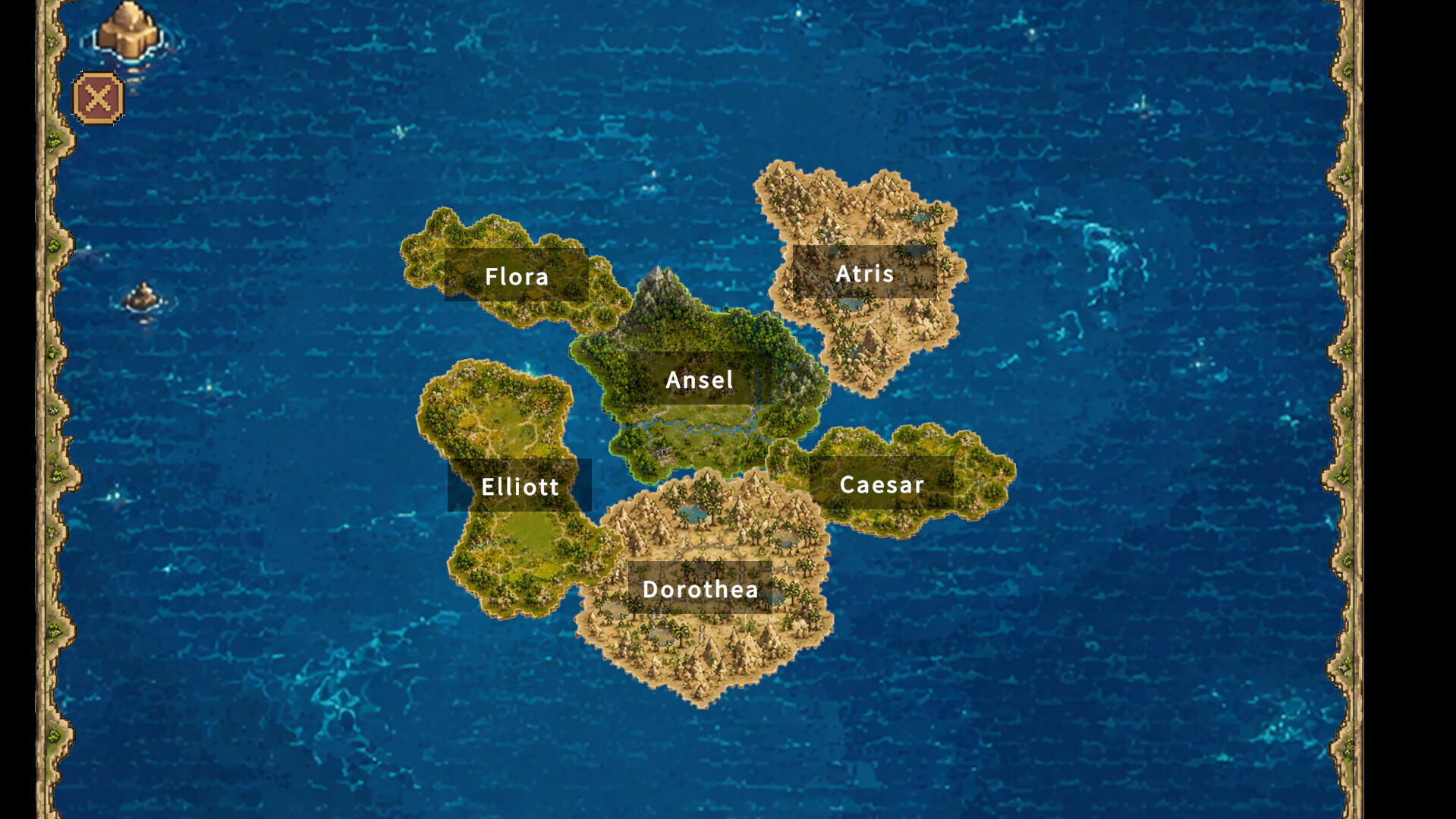
Clan and CrownImage: Wise Games via Steam -
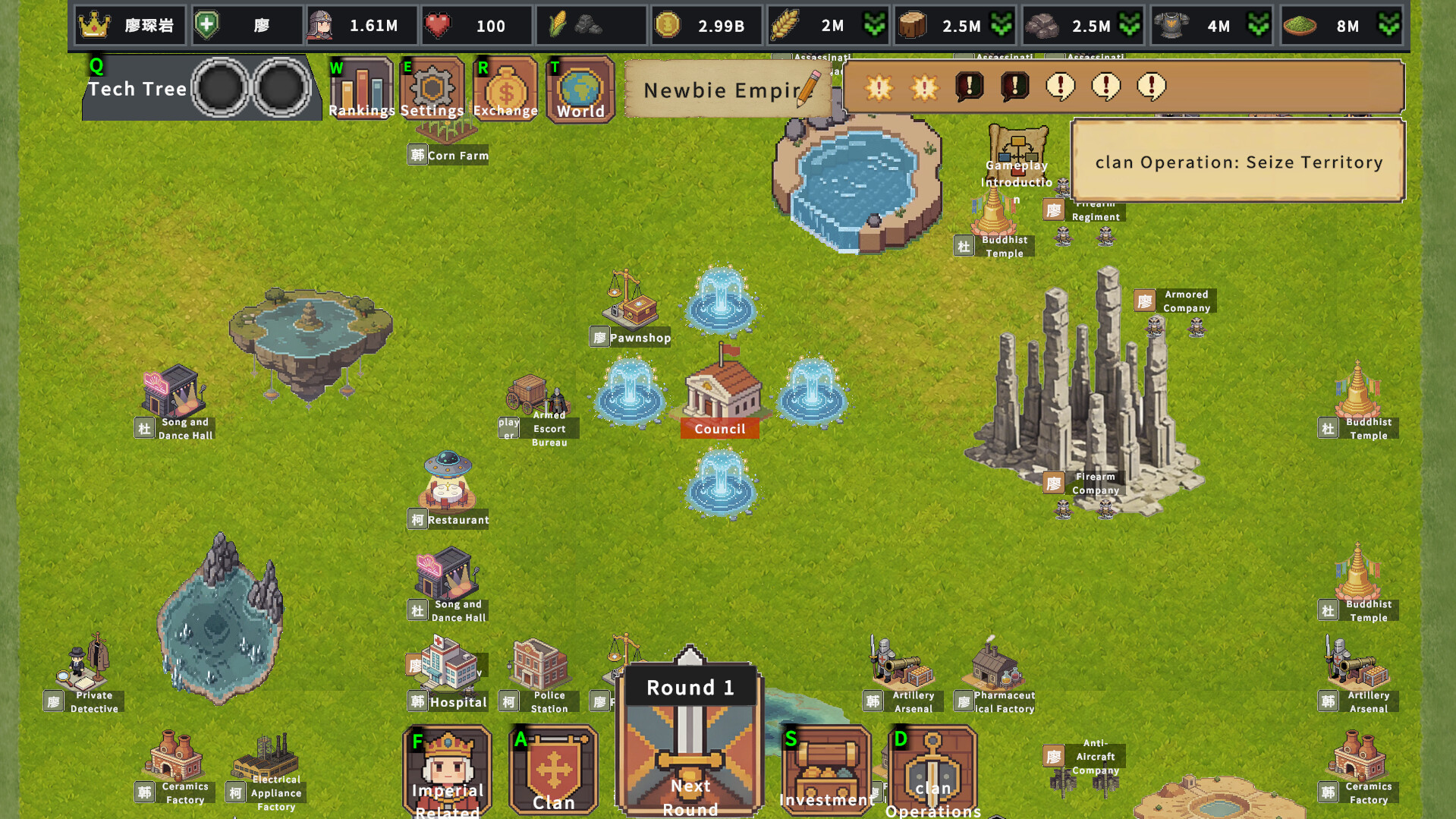
Clan and CrownImage: Wise Games via Steam -
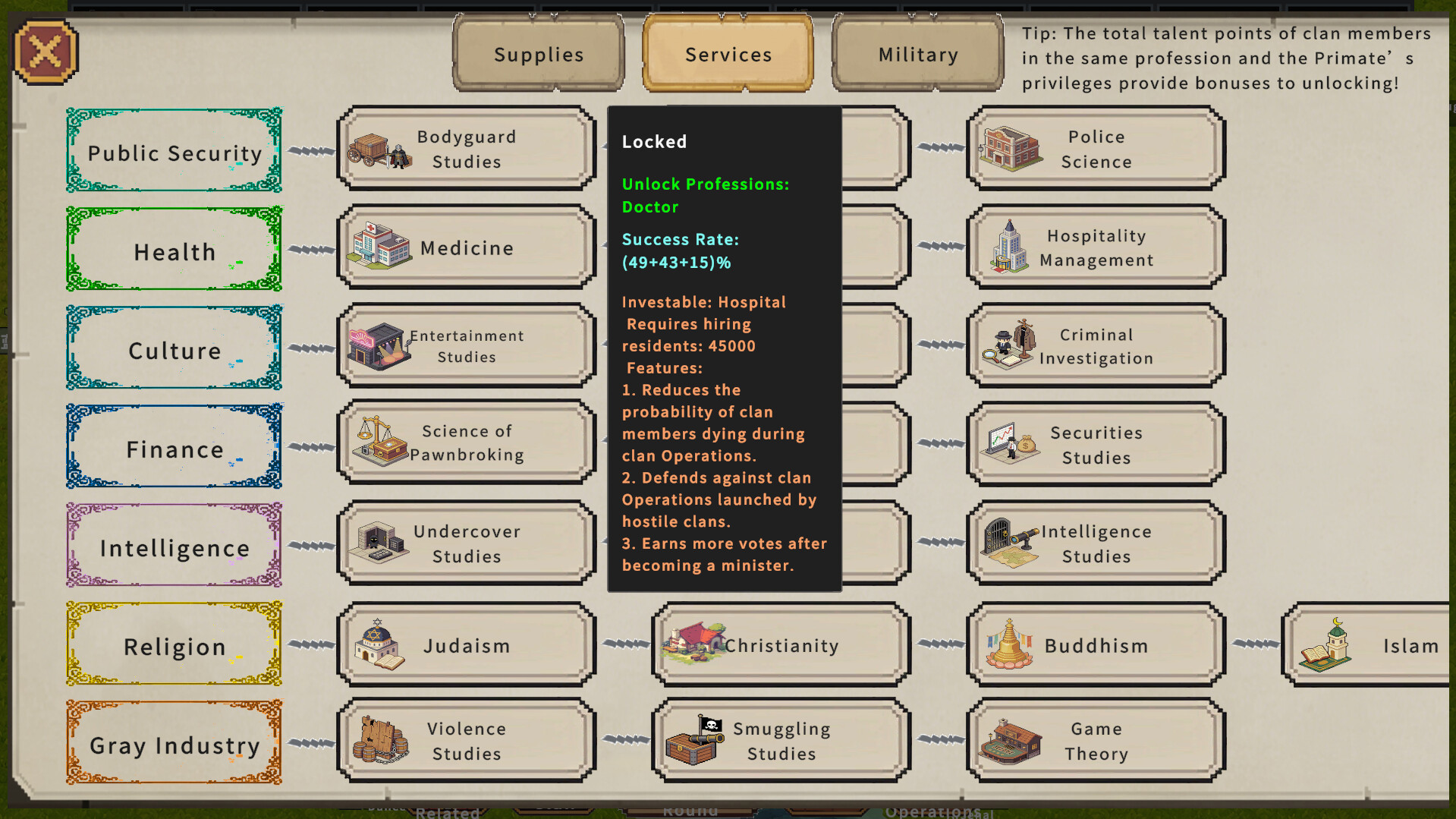
Clan and CrownImage: Wise Games via Steam -
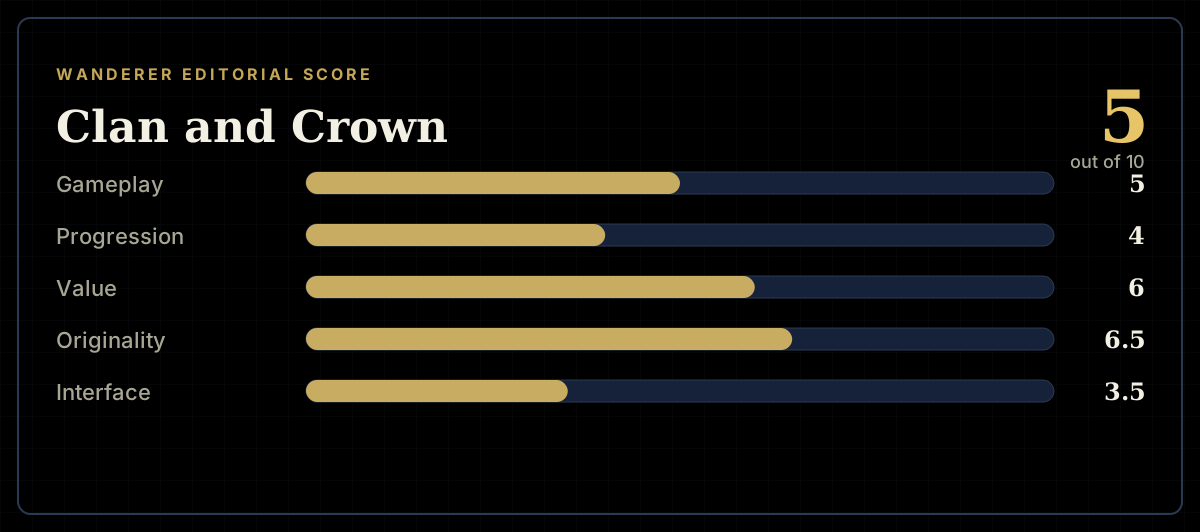
How the review scores each part of the gameWanderer Editorial -
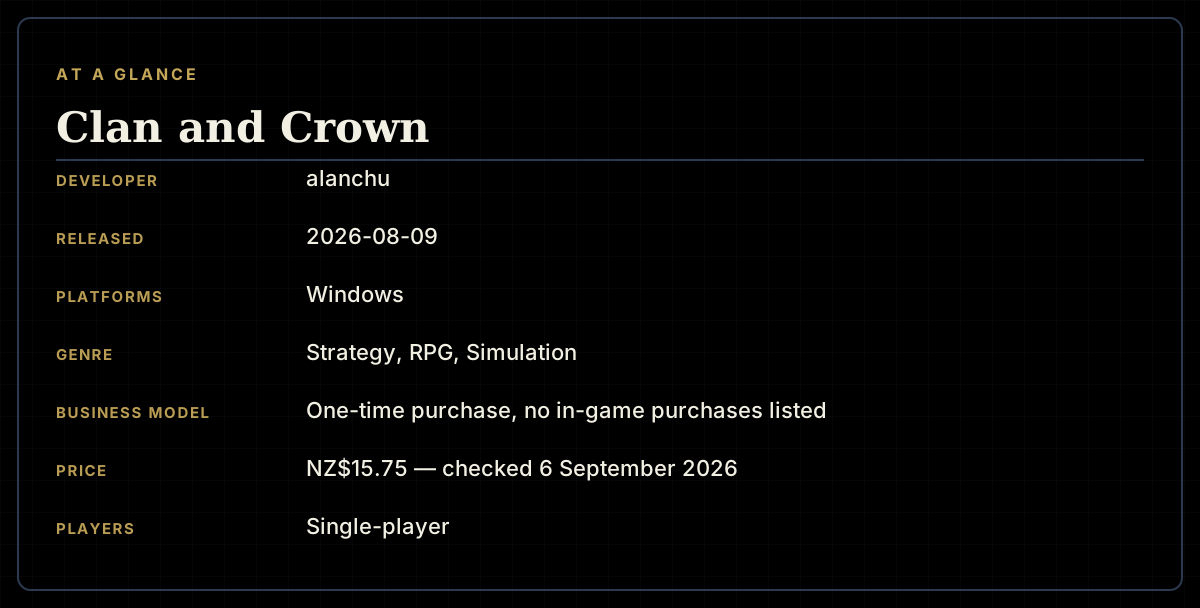
The essentials at a glanceWanderer Editorial -
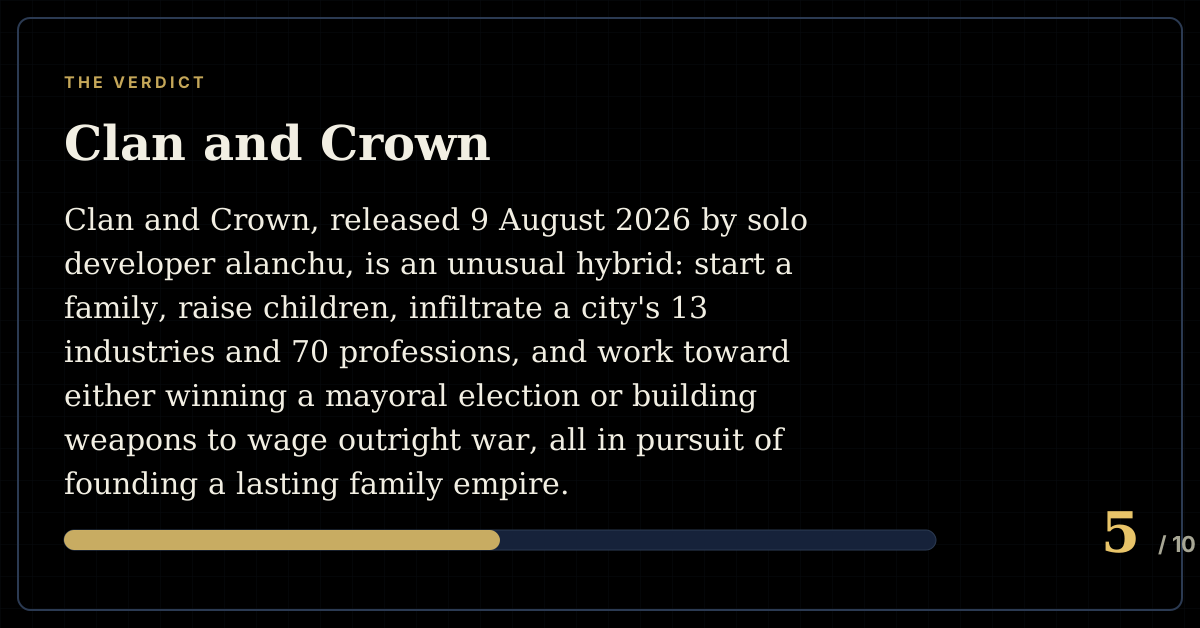
The short versionWanderer Editorial