Game review
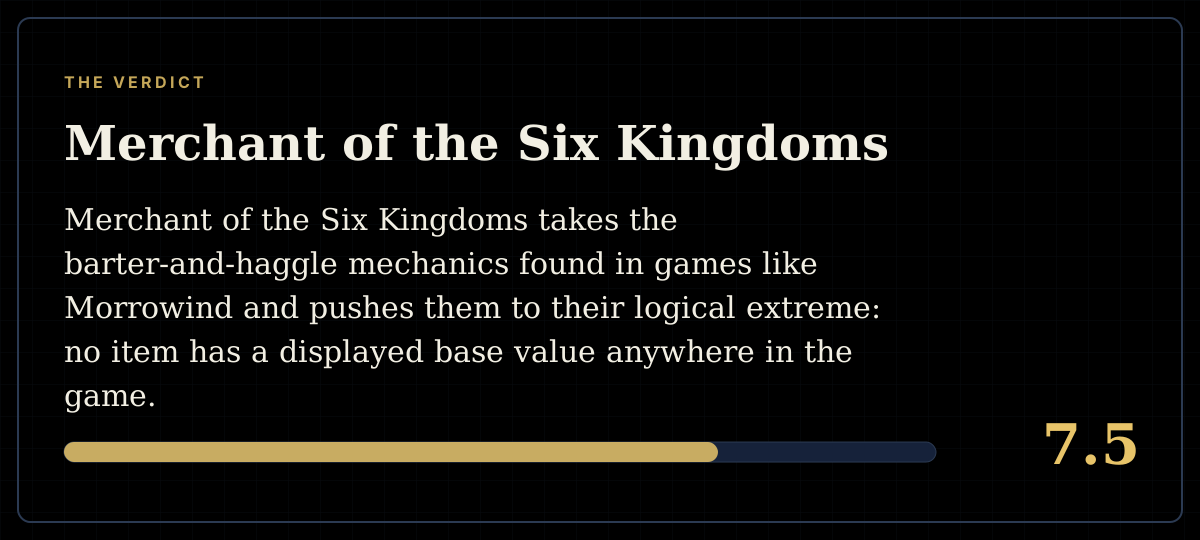
Merchant of the Six Kingdoms
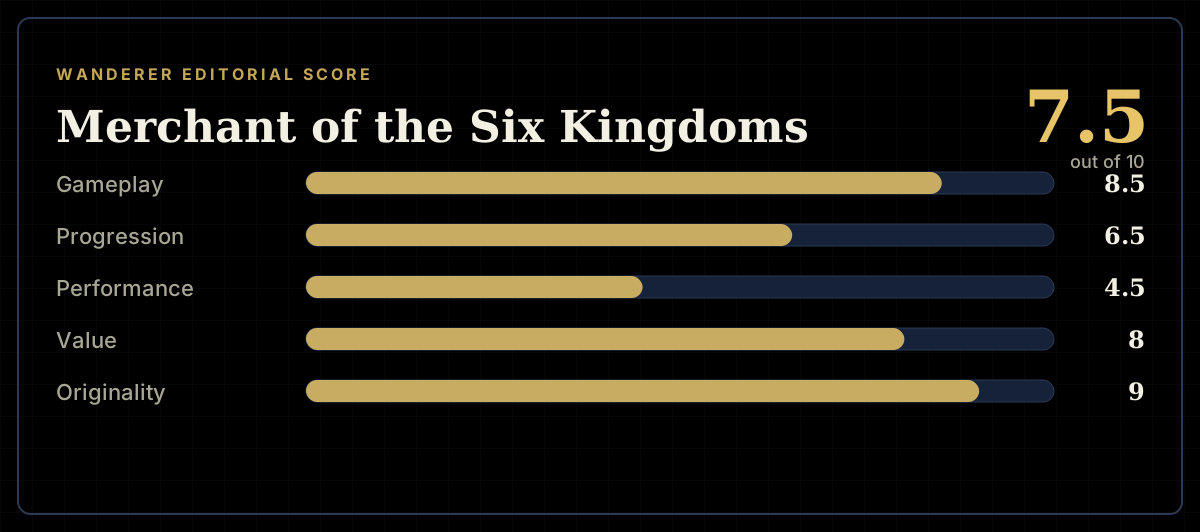
7.5 / 10
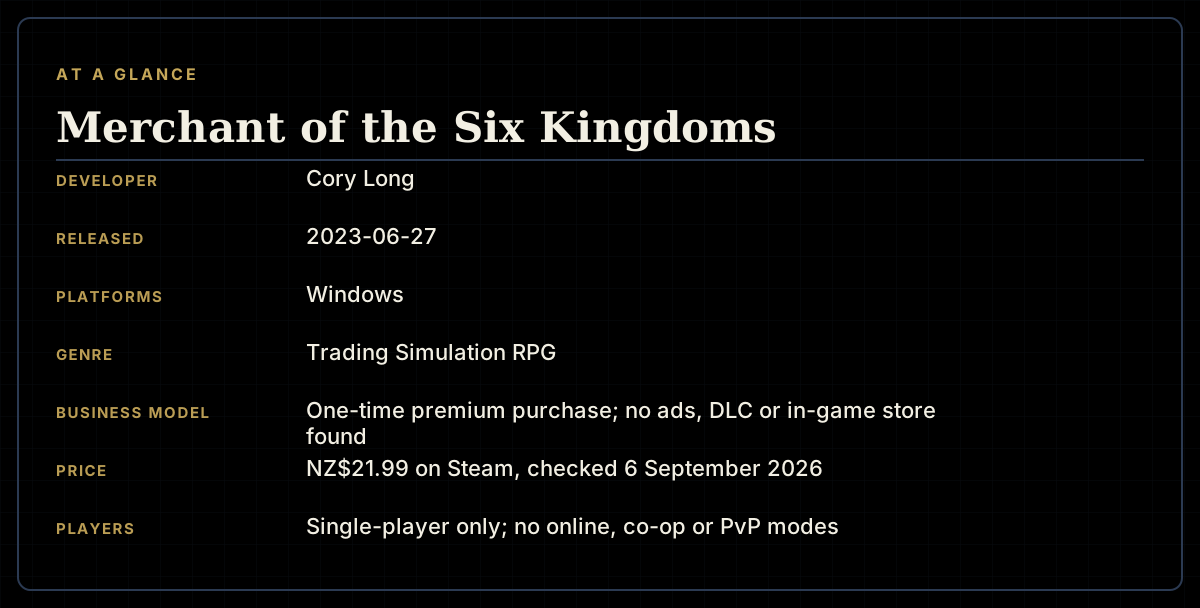
- Developer
- Cory Long
- Publisher
- GooseGames
- Released
- 27 June 2023
- Platforms
- Windows
- Genre
- Trading Simulation RPG
- Monetisation
- One-time premium purchase; no ads, DLC or in-game store found
- Players
- Single-player only; no online, co-op or PvP modes
The short version
Merchant of the Six Kingdoms takes the barter-and-haggle mechanics found in games like Morrowind and pushes them to their logical extreme: no item has a displayed base value anywhere in the game. Learning what a bushel of carrots or a fine sword is actually worth, region by region, season by season, trader by trader, is the entire point, and reviewers across the board — some with decades of history in trading and tycoon games — call this the most genuinely novel economic system the genre has produced in years, worth 10 to well over 100 hours for the right player.
What holds it back from an unreserved recommendation is a serious, well-documented technical problem: a memory leak causing sudden freezes that has cost multiple reviewers hours of accumulated in-game progress, reported as recently as mid-2026 despite two dedicated patches that same year specifically targeting it. The solo developer's transparency about the issue — including admitting an inability to reproduce it personally — is genuinely commendable, but the bug itself remains a real risk for some players years after launch.
Biggest strengths
- A genuinely revolutionary core mechanic: no item has a visible base value anywhere in the game, forcing players to learn worth through direct experience, regional variation and season, which reviewers across the genre's history call unlike anything else on the market
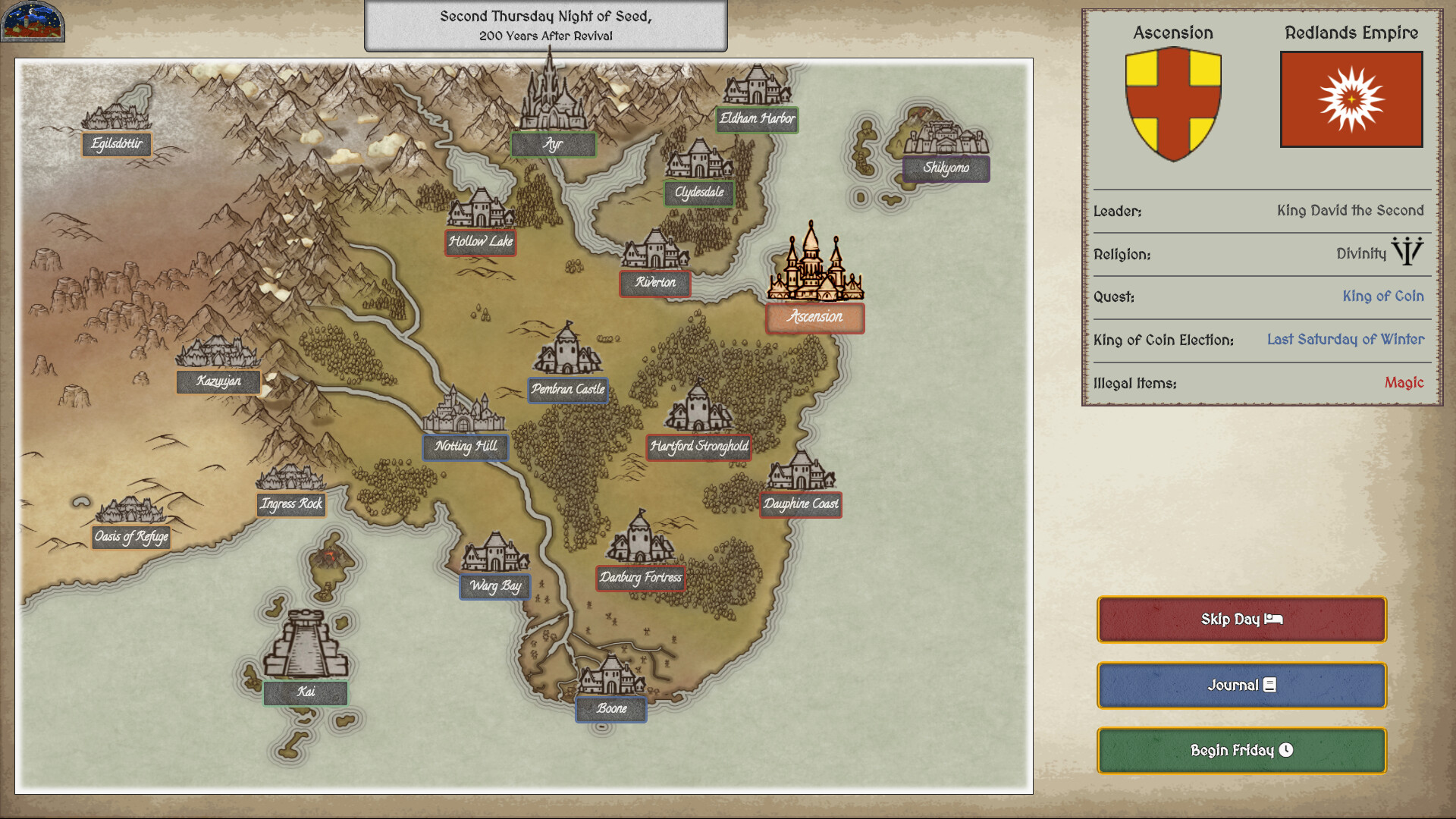
- An enormous amount of content for players who click with the loop — 20 markets, roughly 200 individually-modeled traders, and around 1,800 tradeable items, with reviewers reporting 10-to-100-plus hour playthroughs
- A haggling system where currency itself is part of the negotiation rather than an abstract number, a specific design choice reviewers repeatedly single out as genuinely rare in the genre
Biggest weaknesses
- A memory leak causing sudden game freezes has cost multiple reviewers hours of accumulated progress in a single incident, reported as recently as mid-2026 despite two dedicated patches that year specifically targeting the issue
- The entire game is the bartering loop — reviewers note there's no combat, empire management or other system to provide variety, meaning the appeal rests entirely on how much a given player enjoys haggling specifically
- No in-game tool tracks what a player previously paid for an item, forcing some to keep external notes or spreadsheets to identify a good deal, a quality-of-life gap several reviewers request directly
Who it's for: Fans of deep, spreadsheet-adjacent economic simulation who want a genre entry built entirely around haggling rather than simple buy-low-sell-high arithmetic. Less suited to anyone wanting other systems (combat, questing, empire management) to break up the trading loop, or anyone on hardware prone to the reported memory leak.
Our recommendation: A genuinely excellent, singular trading sim for the audience it's built for — just save frequently and be aware of the ongoing freezing reports before committing a long session.
7.5 / 10
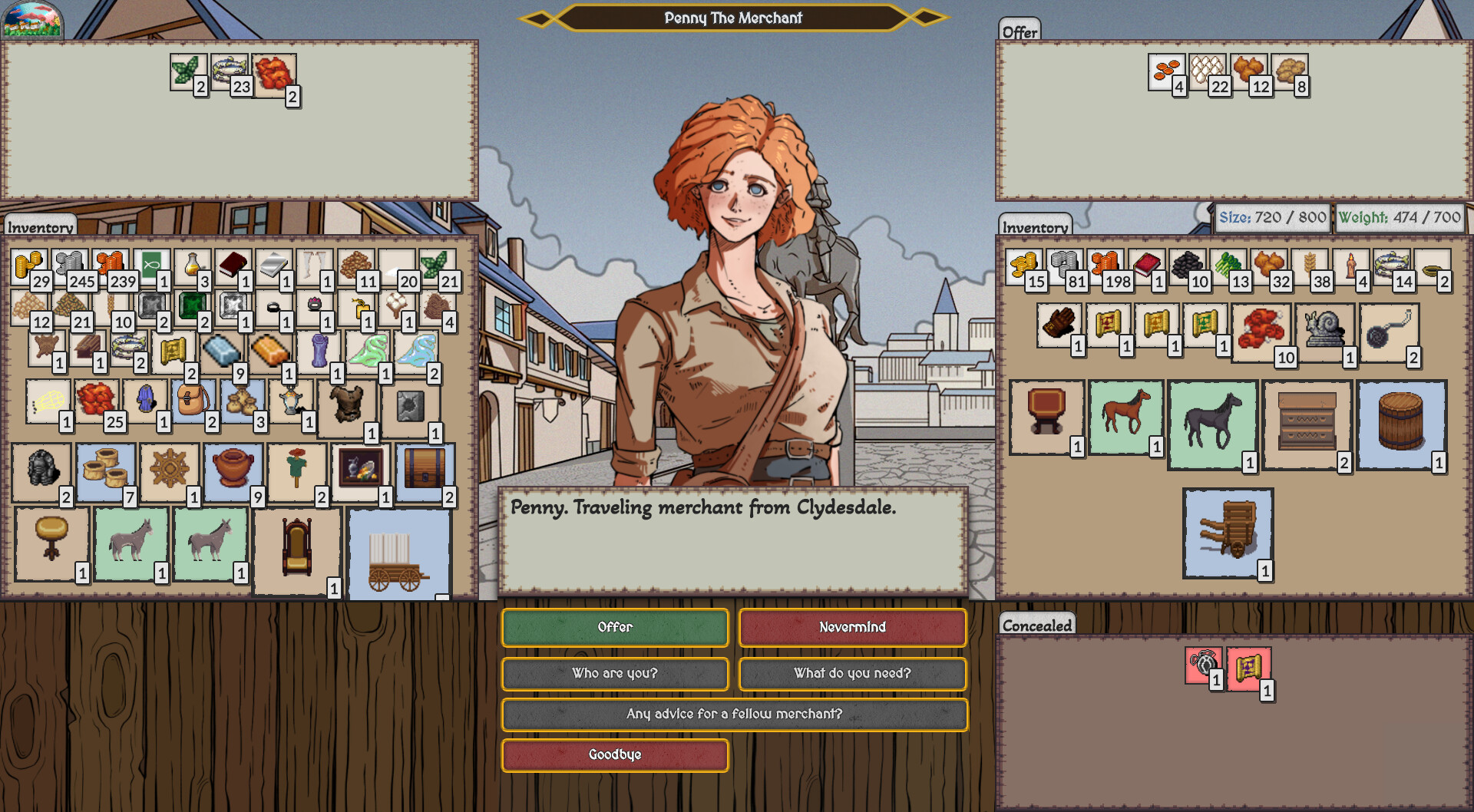
Most trading games reduce their economy to a simple, visible number: buy at this price, sell at that one, watch the difference accumulate. Merchant of the Six Kingdoms refuses to show you that number at all. There is no item value screen, no price tag, no ledger telling you what anything is "supposed" to cost — only the accumulated experience of haggling with hundreds of individually distinct traders across twenty markets, learning through trial, memory and regional variation what a bushel of carrots or a fine sword is actually worth to the person standing in front of you. Reviewers with deep histories in trading and tycoon games — genre veterans who've played everything from Sid Meier's Pirates to Recettear — consistently describe this as the single most novel idea the format has produced in years.
Haggling as the entire game, and it works
The core loop asks a player to buy low from one trader and sell high to another, but with the crucial twist that "low" and "high" are never given — a player has to actually learn the market through direct, accumulated experience, tracking mentally (or, as several reviewers admit, on external spreadsheets) which regions undervalue which goods and which traders will pay a premium for specific items during specific seasons. Currency itself is folded into that negotiation rather than treated as an abstract number outside it, a detail reviewers repeatedly flag as a rare and meaningful design choice. The scale backing this system is genuinely large — roughly 200 distinct traders and 1,800 tradeable items across 20 markets — and reviewers report losing entire evenings without noticing, with playthroughs ranging from a satisfying 10 hours to well over 100 for players who fully commit to mastering the economy.
A serious, ongoing technical problem
Set against that praise is a real, well-documented risk: a memory leak that causes the game to freeze suddenly, with reviewers describing losing hours of accumulated trading progress to a single incident with no warning. This isn't a launch-era complaint that's since disappeared — one detailed review dated as recently as July 2026 confirms the problem persists after trying that month's update, and the developer's own patch notes for two separate 2026 updates (versions 6.5 and 6.6) explicitly target memory leaks reported by the community, including one specifically flagged as affecting AMD graphics cards. The developer's transparency here deserves real credit — openly admitting an inability to reproduce the bug personally while still shipping targeted fixes based on community reports — but the practical risk to a player's save progress remains real for those affected, years after release.
A loop that asks for total buy-in
A fair, recurring criticism from a smaller share of reviewers concerns scope rather than execution: the bartering system is the entire game, with no combat, empire management, or other system layered on top to provide variety across a long playthrough. For players who love haggling specifically, that focus is the point; for anyone hoping for a broader economic sandbox in the mold of Sid Meier's Pirates or Horizon's Gate, the singular focus can feel thin well before the underlying economy is fully mastered. A related, more practical complaint concerns the lack of an in-game record of what a player previously paid for a given item — without one, tracking whether a given sale is actually profitable requires either careful memory or external notes, a quality-of-life gap several reviewers specifically request addressed.
A small UI mistake, quickly acknowledged
One specific early complaint is worth citing as a model of how the developer has handled feedback: a "Gift" button positioned close enough to other interface elements that misclicking it could give away items or currency, costing real accumulated progress. A reviewer's initially frustrated account of this issue was later updated to note the developer's responsiveness and an appreciated fix — a small but concrete example of the same transparent, community-engaged development pattern evident in the memory-leak patch notes above.
Confirming a specific reviewer complaint against the record
One detail worth verifying directly: a reviewer describes their tracked Steam playtime as apparently inflated well beyond what they'd actually played, framing it as "100% bugged" rather than time that genuinely flew by. Checking the developer's own changelog confirms this wasn't a misperception — version 6.0 introduced a bug that miscounted playtime, and it was specifically identified and fixed in version 6.4's patch notes. That's a useful example of how a specific, oddly-phrased reviewer complaint can be checked directly against the public record rather than dismissed as exaggeration: in this case, the player was right, down to the version number that caused it.
Where it lands
Merchant of the Six Kingdoms succeeds at something genuinely rare: building an entire game around a single mechanical idea — learning value through experience rather than being told it — and making that idea sustain dozens, sometimes over a hundred, hours of engagement for the right player. The achievement list backs up how deep that engagement can run: the easiest milestone still sits at only 63.6% of the playerbase, and dedicated late-game achievements like reaching the game's highest wealth tiers sit under 1%, suggesting a meaningful gap between players who dabble and the smaller number who fully commit to mastering the economy. Its singular focus won't appeal to everyone, and quality-of-life gaps around price tracking are real, but the more serious concern is a persistent, well-documented memory leak that can cost real progress, one the developer is still actively working to resolve as recently as this year. For patient players willing to accept that risk, this remains one of the more genuinely original trading games on the market.
Pros and cons
Pros
- A genuinely revolutionary core mechanic: no item has a visible base value anywhere in the game, forcing players to learn worth through direct experience, regional variation and season, which reviewers across the genre's history call unlike anything else on the market
- An enormous amount of content for players who click with the loop — 20 markets, roughly 200 individually-modeled traders, and around 1,800 tradeable items, with reviewers reporting 10-to-100-plus hour playthroughs
- A haggling system where currency itself is part of the negotiation rather than an abstract number, a specific design choice reviewers repeatedly single out as genuinely rare in the genre
- An unusually transparent, still-active solo developer posting detailed changelogs and engaging directly with community bug reports more than three years after release
- Community-driven localization support via an open repository, with a full Polish translation already added through community contribution
Cons
- A memory leak causing sudden game freezes has cost multiple reviewers hours of accumulated progress in a single incident, reported as recently as mid-2026 despite two dedicated patches that year specifically targeting the issue
- The entire game is the bartering loop — reviewers note there's no combat, empire management or other system to provide variety, meaning the appeal rests entirely on how much a given player enjoys haggling specifically
- No in-game tool tracks what a player previously paid for an item, forcing some to keep external notes or spreadsheets to identify a good deal, a quality-of-life gap several reviewers request directly
- Some of the game's mini-games are described as shallow, closer to a coin flip than genuine additional strategy
- A specific interface issue — a "Gift" button positioned where it could be easily misclicked, costing real progress — was reported by early players; the developer's responsiveness to this specific complaint was praised, though it illustrates how costly small UI mistakes can be in a game built around slow, accumulated wealth
Screenshots
-
Merchant of the Six KingdomsImage: GooseGames via Steam -
Merchant of the Six KingdomsImage: GooseGames via Steam -

Merchant of the Six KingdomsImage: GooseGames via Steam -
How the review scores each part of the gameWanderer Editorial -
The specsWanderer Editorial -
The short versionWanderer Editorial