Game review
To the Moon
7.5 / 10
- Developer
- Freebird Games
- Publisher
- Freebird Games
- Released
- 1 November 2011
- Platforms
- Windows, macOS, Linux
- Genre
- Narrative Adventure RPG
- Monetisation
- One-time premium purchase; no DLC, no in-app purchases
- Players
- Single-player only; no online, co-op or PvP modes
The short version
To the Moon set out to prove a short, RPG Maker-built, almost gameplay-free narrative could land as hard as any big-budget story game, and for a large majority of its enormous review base it succeeded — its premise (two doctors walking backward through a dying man's memories to artificially grant his last wish) is genuinely original, its soundtrack is cited constantly and specifically as one of the best in the medium, and it launched a franchise still actively expanding fifteen years later.
A real, detailed minority of reviewers push back hard on the same things others love: forced comic-relief banter between the two lead characters, clumsy and inconsistent dialogue, and gameplay several call clunky rather than minimal-by-design. More seriously, this game's review base is genuinely divided — not along casual-taste lines, but with reviewers citing their own or family lived experience on both sides — over how it portrays a major character on the autism spectrum. This review reports that dispute rather than adjudicating it.
Biggest strengths
- A genuinely original narrative structure — two doctors technologically walking backward through a dying man's memories to artificially fulfil his last wish — that reviewers consistently say they haven't seen replicated elsewhere
- Kan Gao's soundtrack is cited specifically and constantly across positive and negative reviews alike as one of the best musical scores in the medium
- A rare, still-ongoing franchise: a free spiritual follow-up (A Bird Story, 2014), a full sequel (Finding Paradise, 2017), a third entry (Impostor Factory, 2021), a 2025 remaster, and a new entry teased as recently as June 2026 — fifteen years of continued, active investment from the same small studio in the same story world
Biggest weaknesses
- Gameplay is minimal by design — mostly walking and simple memory-fragment puzzles — and a real share of detailed reviews describe the controls specifically as clunky rather than just sparse, with a small number reporting game-breaking bugs
- Multiple independent reviewers single out the same problem: forced, "hamfisted" comic-relief banter between the two lead doctors that several say undercuts the story's more serious stretches
- A genuine, serious divide in the review base over the portrayal of a major character on the autism spectrum — some reviewers, including some citing their own or a family member's experience with Asperger's, call it a fair and rare, brutally honest portrayal; others, including reviewers who identify similarly, call the same portrayal one-sided and harmful. This review reports both positions rather than picking a side
Who it's for: Players who want a short, story-first experience and don't need traditional gameplay to carry a game, especially fans of understated emotional drama. Less suited to anyone who wants meaningful interactivity for their money, or who has specifically been put off by the autism-representation debate described below.
Our recommendation: Worth experiencing for the premise and soundtrack alone, cheap even at full price and frequently discounted further — but go in aware of both the writing criticisms and the representation debate rather than only the five-star framing its aggregate score suggests.
7.5 / 10
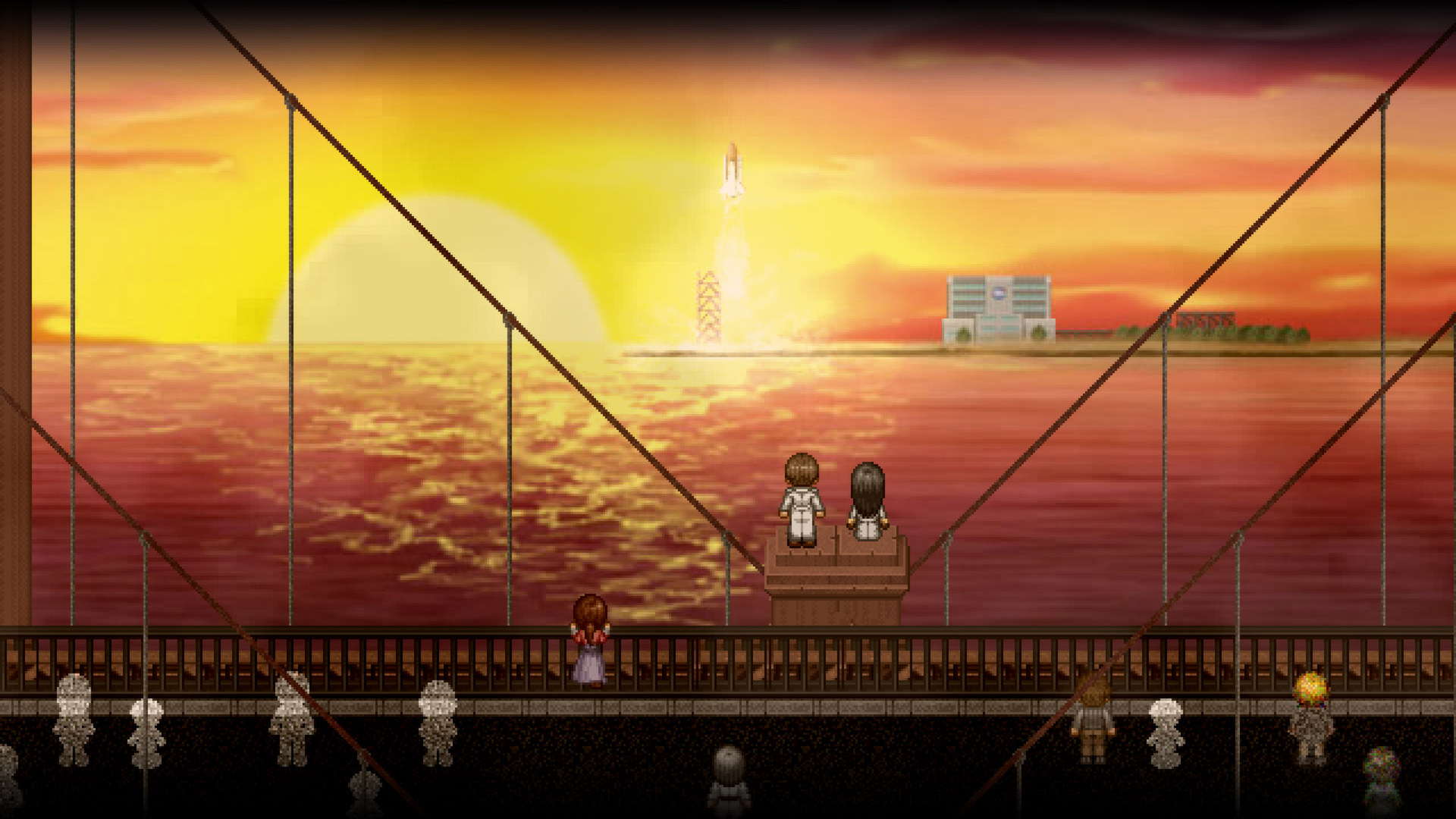
To the Moon asks its two lead characters to do something unusual for a video game: rather than fight through a dying man's final days, they technologically walk backward through his memories, altering them to construct a life he wished he'd had, so he can die believing he achieved his lifelong dream of reaching the moon. It's a striking, genuinely original premise for a medium built mostly around forward momentum, and fifteen years and nearly 70,000 reviews later, it remains one of Steam's most consistently cited examples of a small, gameplay-light indie landing as an emotional experience on its own terms. That overwhelming reception, though, sits on top of a real, detailed set of disagreements worth taking seriously rather than treating the aggregate score as the whole story.
Barely a game, and reviewers are split on whether that's the point
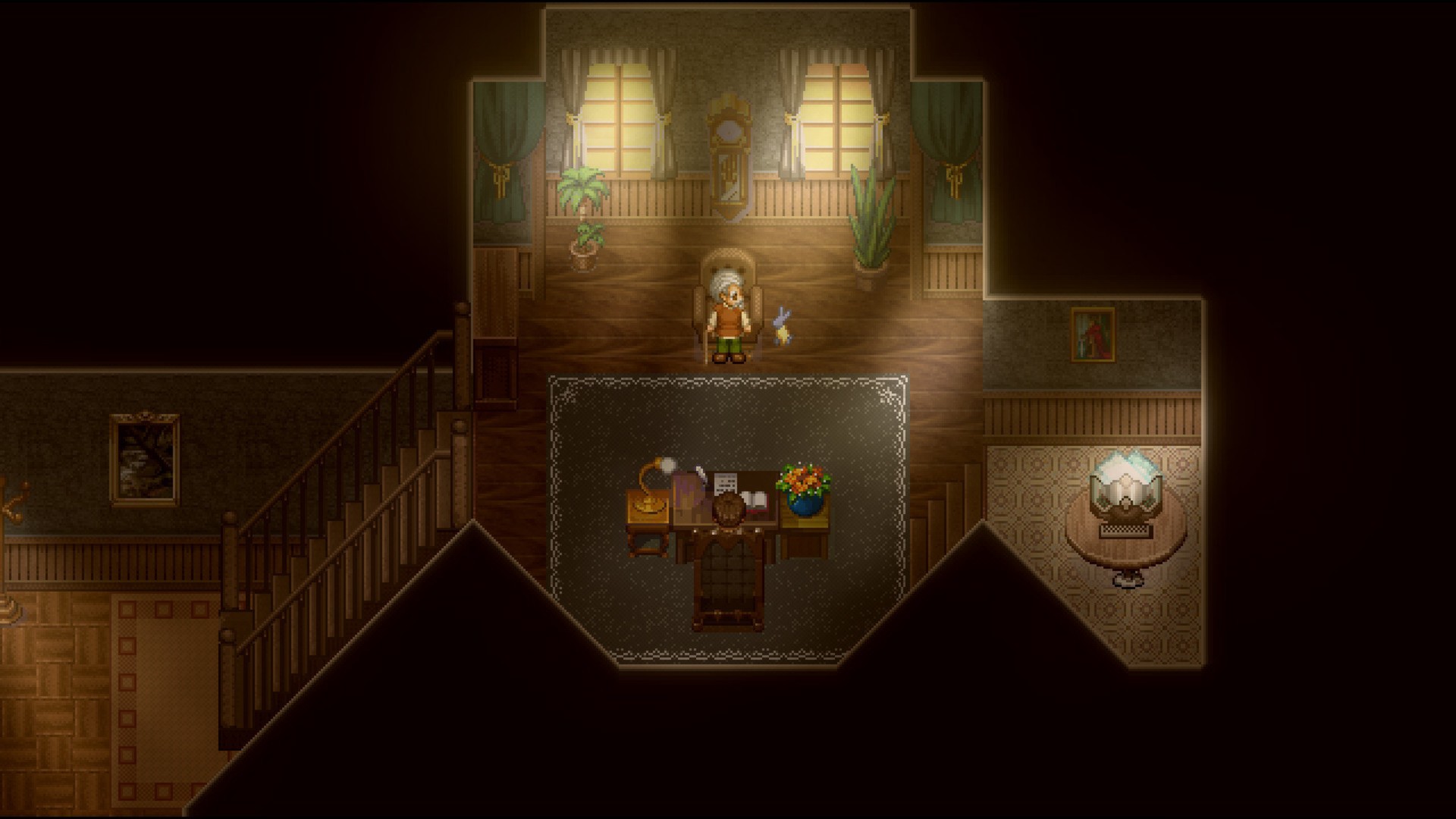
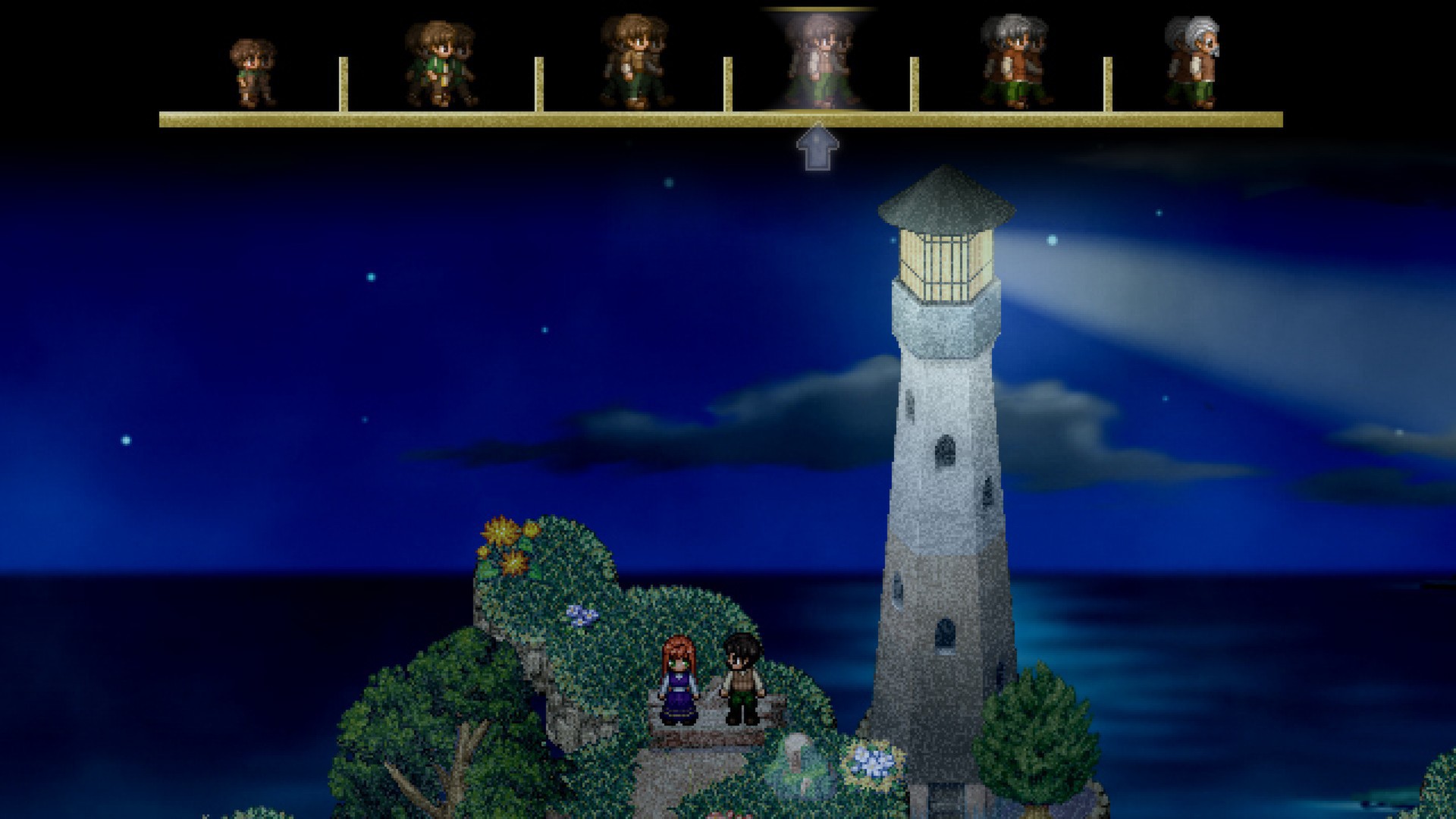
To the Moon's actual interactivity is thin by design: players walk the two doctors, Eva and Neil, through memory environments, collecting scattered mementos to piece together simple puzzles that unlock the next stage of the dying man's past. Several detailed reviews accept this framing entirely and describe the minimalism as correct for what the game is trying to do. Others push back specifically on execution rather than concept — reporting mouse controls that don't give proper feedback, puzzles some call "weird" and "repetitive," and, in at least one case, a pair of game-breaking bugs that blocked story progress outright. A recurring value complaint follows from the same place: at roughly three to four hours and a premium-adjacent list price, several reviewers argue a spoiler-free let's-play video delivers close to the same experience for free — a fair characterization given how little of the runtime is genuinely interactive, even if it undersells what a live playthrough's pacing and puzzle-solving add for players who prefer to experience a story firsthand rather than watch it.
A writing debate that splits the same story reviewers otherwise love
Set gameplay aside and the story itself draws two consistent, opposing reactions. The majority position treats it as genuinely moving — comparisons to Eternal Sunshine of the Spotless Mind and Pixar's Up recur constantly, and multiple detailed reviews describe being unable to stop playing once the plot's central mystery started unfolding. But a real, specific minority makes the same counter-argument independently and in detail: that the banter between Eva and Neil, meant to lighten the story's heavier stretches, reads as forced rather than funny, and that the dialogue more broadly is inconsistent — one detailed review points out that characters middle-aged to elderly are written speaking like "teenagers or young adults" throughout. This isn't a case of a lone dissenting voice; it's a specific, repeatable criticism of craft that shows up independently across reviewers who otherwise praise the same story's emotional payoff, and it's fair to treat it as a real, if minority, weakness in the writing rather than dismiss it as taste.
A genuine divide worth reporting carefully
The most serious disagreement in this game's review base concerns its portrayal of a major character on the autism spectrum, introduced without the game ever using clinical terminology directly. One detailed, widely-read negative review argues the portrayal is one-sided and harmful — that the character's partner is framed as heroic for enduring their difficulty rather than the relationship being shown with any balance, and that the story's resolution effectively erases that character's life in favor of a constructed alternative. A separate, differently-voted review makes the opposite case just as personally: identifying as autistic themselves, with a father who also has Asperger's, this reviewer specifically thanks the game for what they call a brutally honest, rarely-attempted portrayal of how that condition can strain a relationship, contrasting it directly against the earlier critical review. Neither side is arguing from a position of not understanding the subject matter, and this review does not attempt to resolve which reading is correct — both represent real, considered positions inside the same review base, and a prospective buyer sensitive to this topic should know the debate exists and is substantive before going in, not encounter it as a surprise.
A franchise still being written, fifteen years later
Whatever the disagreements over its writing, To the Moon's own history shows one of the more sustained examples of small-studio follow-through anywhere in this catalogue. Freebird Games released a free spiritual follow-up, A Bird Story, in 2014; a full direct sequel, Finding Paradise, in 2017; a third entry, Impostor Factory, in 2021; a 16:9 remaster of the original in 2025; and, as recently as June 2026, teased an entirely new entry billed as the series' next chapter. In between, the studio has shipped free minisodes, a comic series, merchandise, and even an announced animated feature adaptation. That's not a developer who made one acclaimed game and moved on — it's a genuinely rare, still-active fifteen-year commitment to the same small story world, and it's worth weighing against any single entry's individual flaws when deciding whether this developer's work has earned trust.
Where it lands
To the Moon's soundtrack and premise earn their reputation honestly, and the game's enormous, overwhelmingly positive reception isn't manufactured or hollow — most players genuinely do find what they're looking for here. But this is also a game whose own detailed critics, not just casual dissenters, make real, specific arguments about clumsy dialogue, thin interactivity, and — most seriously — a divided, personally-argued dispute over how it handles autism representation. All of that is worth knowing walking in, alongside the fact that this small studio has kept building on this exact story, honestly and consistently, for a decade and a half and counting.
Pros and cons
Pros
- A genuinely original narrative structure — two doctors technologically walking backward through a dying man's memories to artificially fulfil his last wish — that reviewers consistently say they haven't seen replicated elsewhere
- Kan Gao's soundtrack is cited specifically and constantly across positive and negative reviews alike as one of the best musical scores in the medium
- A rare, still-ongoing franchise: a free spiritual follow-up (A Bird Story, 2014), a full sequel (Finding Paradise, 2017), a third entry (Impostor Factory, 2021), a 2025 remaster, and a new entry teased as recently as June 2026 — fifteen years of continued, active investment from the same small studio in the same story world
- Short enough (roughly three to four hours) to complete in a single sitting, which several reviewers cite as part of its emotional effectiveness rather than a flaw
- Cheap even at full price, with a long history of free comics, mini-episodes and other supplementary content released alongside the paid entries
Cons
- Gameplay is minimal by design — mostly walking and simple memory-fragment puzzles — and a real share of detailed reviews describe the controls specifically as clunky rather than just sparse, with a small number reporting game-breaking bugs
- Multiple independent reviewers single out the same problem: forced, "hamfisted" comic-relief banter between the two lead doctors that several say undercuts the story's more serious stretches
- A genuine, serious divide in the review base over the portrayal of a major character on the autism spectrum — some reviewers, including some citing their own or a family member's experience with Asperger's, call it a fair and rare, brutally honest portrayal; others, including reviewers who identify similarly, call the same portrayal one-sided and harmful. This review reports both positions rather than picking a side
- Short playtime at a premium-adjacent price draws real value complaints from some reviewers, a few of whom suggest a spoiler-free "let's play" delivers a similar experience for free
- Only one Steam achievement exists for the base game, so there's no meaningful achievement-completion data to independently gauge audience engagement
Screenshots
-
To the MoonImage: Freebird Games via Steam -
To the MoonImage: Freebird Games via Steam -
To the MoonImage: Freebird Games via Steam -
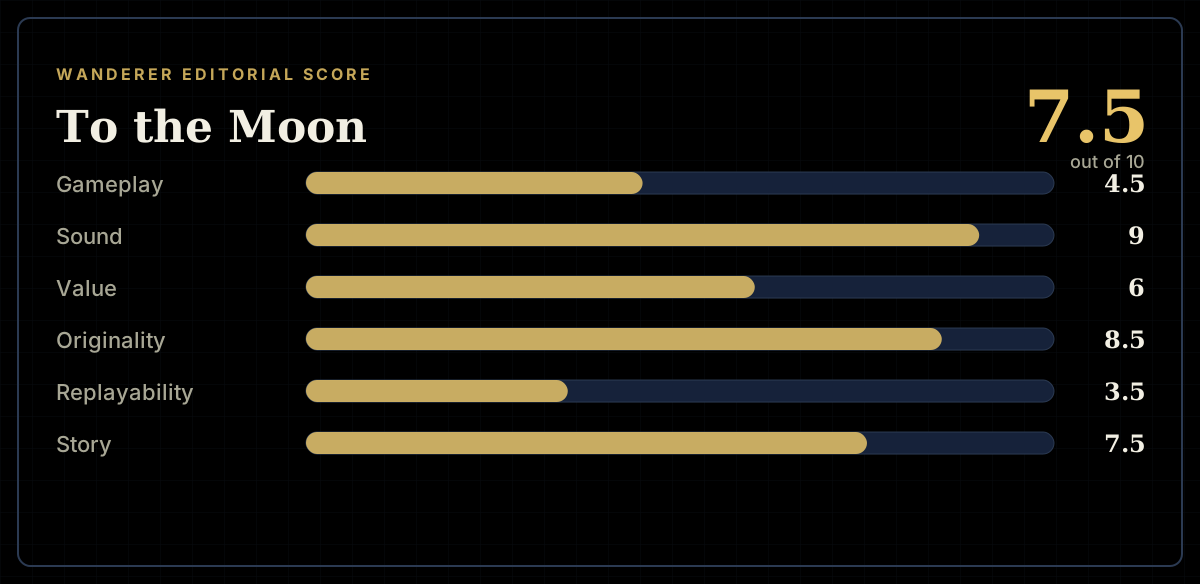
How the review scores each part of the gameWanderer Editorial -
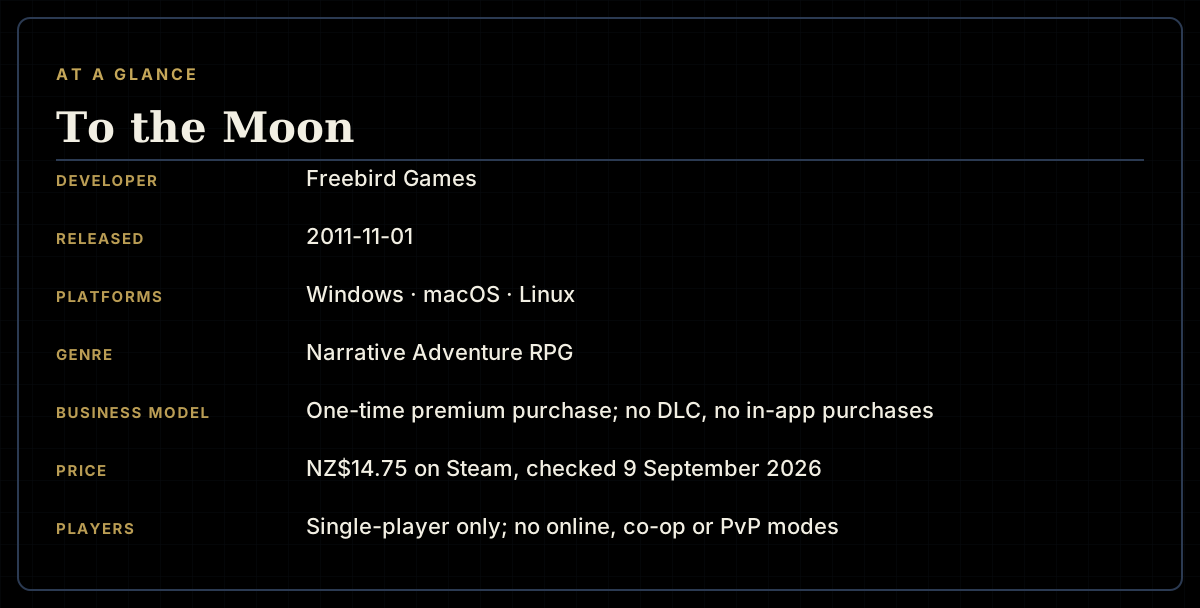
The specsWanderer Editorial -
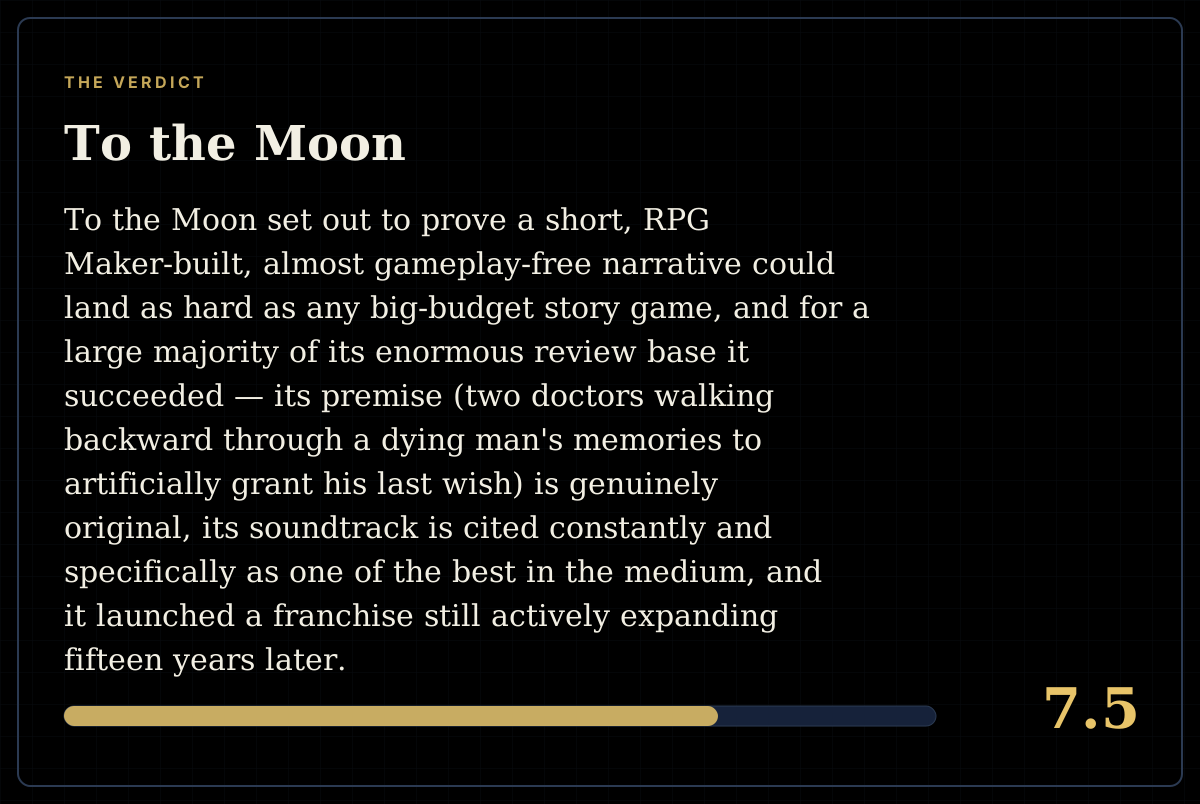
The short versionWanderer Editorial