
Game review
Betrayal At Club Low
8 / 10
- Developer
- Cosmo D Studios
- Publisher
- Cosmo D Studios
- Released
- 9 September 2022
- Platforms
- Windows, macOS
- Genre
- Narrative RPG, Tabletop, Adventure
- Monetisation
- One-time purchase, no DLC, no in-app purchases
- Players
- Single-player only
The short version
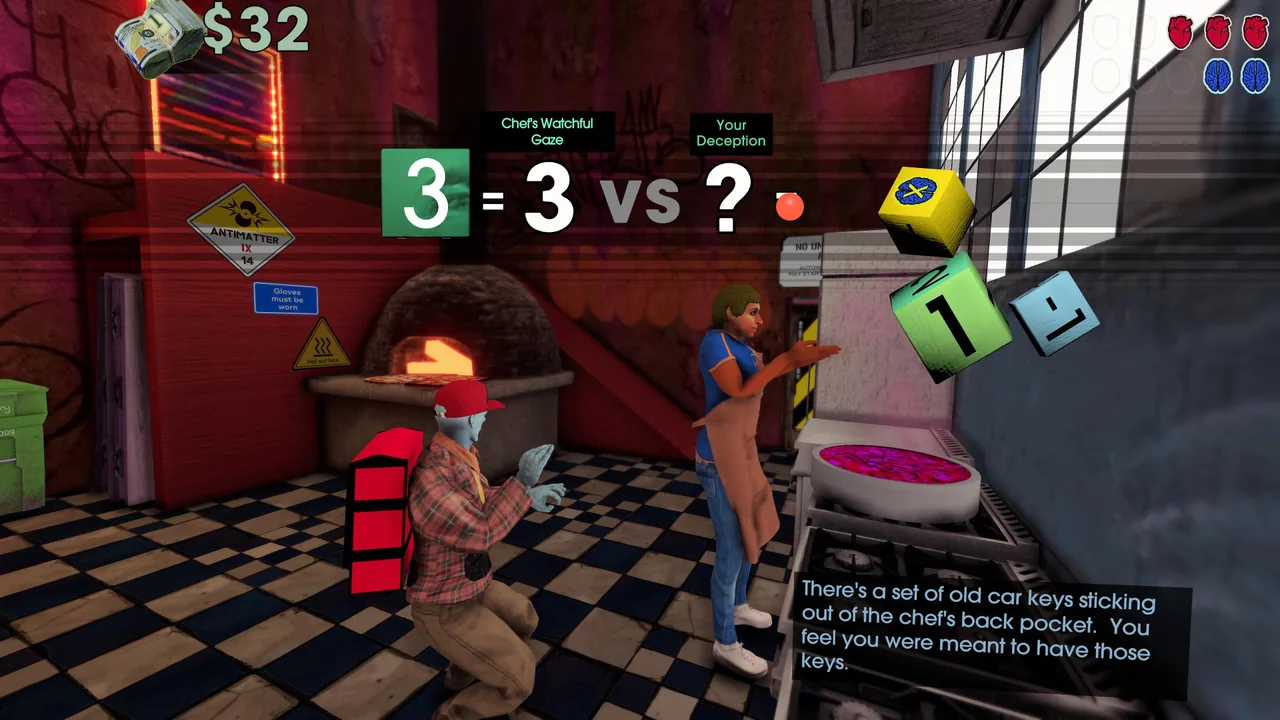
Betrayal At Club Low sends the player undercover into a former coffin factory turned nightclub, resolving encounters by rolling a set of themed dice — the Pizza Dice among them — that determine how a compact, replayable story of infiltration and betrayal unfolds. Developed and self-published by Cosmo D Studios, best known for the surreal first-person exploration games Off-Peak and The Norwood Suite, it released 9 September 2022 and sits at Overwhelmingly Positive, 97.1% across 520 English-language reviews. Nearly the entire negative sample — all 15 reviews, read in full here — comes from a single, specific source: longtime fans of the developer's earlier games who miss the format those games were built around, rather than reviewers judging Betrayal At Club Low as a new, standalone experience.
Biggest strengths
- Writing and world-building retain the surreal, distinctive character voice the developer's earlier games are known for, described by reviewers as instantly recognisable even in a very different format
- The dice-resolution system is credited by a large majority of reviewers with genuinely high replayability, rewarding multiple short playthroughs to see different outcomes rather than padding a single run
- A compact, one-sitting length that several reviewers specifically praise as respecting their time rather than overstaying its welcome
Biggest weaknesses
- The entire negative review sample, read in full, comes from a single specific source: longtime fans of the developer's earlier Off-Peak-style games who miss the first-person exploration and extended dialogue format those games were built around, finding this dice-driven structure comparatively "cramped and restrictive"
- Several reviewers, including some who ultimately still recommend the game, describe the dice mechanic as occasionally punishing in ways that can spiral — failing one roll can trigger a condition that makes subsequent rolls harder, compounding bad luck rather than offering a way back
- A small number of reviewers report specific frustration with runs ending abruptly on a string of unlucky rolls, arguing this undercuts a sense of earned progression
Who it's for: Fans of quirky, dice-driven tabletop-style narrative games who want a compact, highly replayable story; existing Off-Peak fans should know this trades first-person exploration for a dice-resolution system before buying.
Our recommendation: A genuinely inventive, replayable slice of surreal storytelling that succeeds almost entirely on its own terms — its harshest critics are specifically longtime fans wishing it were the previous game instead.
8 / 10
Introduction
Betrayal At Club Low sends the player undercover into a nightclub built inside a former coffin factory, resolving the night's escalating complications by rolling themed dice — including the titular Pizza Dice — that shape how a compact, tabletop-flavoured story of infiltration plays out. Developed and self-published by Cosmo D Studios, the small team behind the acclaimed surreal exploration games Off-Peak and The Norwood Suite, it released 9 September 2022 and sits at Overwhelmingly Positive, 97.1% across the 520 English-language reviews this review draws from, having read the entire negative sample. What makes that small negative sample worth examining in full, rather than treating as statistical noise, is how narrow and specific its source turns out to be.
A distinctive voice, translated into a new format
The writing and world-building here retain what reviewers describe as an instantly recognisable identity, even in a structurally different game. One reviewer summarised the appeal directly: "I've been waiting so long for a game that does what Betrayal at Club Low sets out to do. It's a compact game you can easily finish in one sitting, with a focus on high replayability, unique and interesting mechanics." Long-time fans of the developer's earlier work generally recognise the same surreal tone carried through into this new dice-driven structure — one reviewer, who identifies as having played every prior Cosmo D game, described this one as surprising in the best sense, noting "there's a vibe that all of Cosmo's games present, and Betrayal is no different." Sound design and music draw their own consistent praise, in keeping with a studio whose soundtracks already carry a strong reputation independent of the games themselves.
The complaint that's entirely about what came before
Here's the specific, narrow pattern worth centring this review on. Every single one of the 15 English-language negative reviews this game has ever received traces its disappointment back to the same specific source: comparison against the developer's earlier games rather than judgement of this one on its own terms. One reviewer put it precisely: "I liked the other Cosmo D games because they were easy, casual playing: you got wander around these expansive, exquisitely-surreal environments, and have long but charming conversations with a variety of squirrelly characters. BaCL feels cramped and restrictive." Another, a fan of the earlier Off-Peak titles specifically, wrote plainly: "I wish there was less gameplay in this game," missing the extended first-person exploration and dialogue the studio built its reputation on. This is a genuinely different kind of negative review pattern than most games in this library show — it's not reviewers discovering flaws in a new product, it's devoted fans of a specific prior format mourning its absence, which is a narrower and more specific complaint than it might first appear.
Within that same complaint, a real mechanical criticism does emerge: several reviewers describe the dice-resolution system as capable of spiralling punitively, where failing one roll triggers a condition that makes the next roll harder, compounding bad luck into a run-ending streak rather than offering a path back. That's a fair, specific design critique distinct from the format-nostalgia complaint, and it's worth taking seriously even within such a small, unanimous negative sample.
What the replayability actually delivers
Set against that criticism, the dice-driven structure draws its own wide, genuine praise as a deliberate design choice rather than a downgrade. Reviewers repeatedly credit the system with real, rewarding replayability — short enough to finish multiple times in a sitting, different enough each run to justify doing so, and structured specifically to reward experimentation with different approaches rather than optimising toward one correct path. One reviewer, clearly enjoying that replay loop, described "having fun replaying the story several times to get different outcomes and stories," precisely the kind of engagement the format is built to reward.
Where players actually finish
Steam's achievement data shows a healthy, broad engagement curve for a short, replayable game, with several milestone achievements sitting in the 54-67% range — consistent with a large majority of buyers experiencing multiple runs and a meaningful share of the game's varied outcomes, rather than stopping after a single attempt.
Final Verdict
Betrayal At Club Low succeeds almost entirely on its own terms — inventive, replayable, and true to its developer's distinctive voice even inside a genuinely different structural format. Its harshest critics, read in full here, aren't disputing that; they're specifically mourning a different game this developer chose not to make again, which is a real and understandable reaction from devoted fans but a narrower complaint than it might initially suggest. A fair, specific critique about the dice system's occasional punishing spirals is worth knowing before you buy. For anyone approaching this as its own thing rather than a direct sequel to Off-Peak, there's a genuinely inventive, highly replayable few hours here.
Pros and cons
Pros
- Writing and world-building retain the surreal, distinctive character voice the developer's earlier games are known for, described by reviewers as instantly recognisable even in a very different format
- The dice-resolution system is credited by a large majority of reviewers with genuinely high replayability, rewarding multiple short playthroughs to see different outcomes rather than padding a single run
- A compact, one-sitting length that several reviewers specifically praise as respecting their time rather than overstaying its welcome
- Sound design and music draw consistent praise, in keeping with the strong reputation the developer's soundtracks already carry
Cons
- The entire negative review sample, read in full, comes from a single specific source: longtime fans of the developer's earlier Off-Peak-style games who miss the first-person exploration and extended dialogue format those games were built around, finding this dice-driven structure comparatively "cramped and restrictive"
- Several reviewers, including some who ultimately still recommend the game, describe the dice mechanic as occasionally punishing in ways that can spiral — failing one roll can trigger a condition that makes subsequent rolls harder, compounding bad luck rather than offering a way back
- A small number of reviewers report specific frustration with runs ending abruptly on a string of unlucky rolls, arguing this undercuts a sense of earned progression
- The game's most distinctive locations and characters are more limited in scope than the sprawling environments of the developer's earlier titles, which a specific subset of fans experience as a genuine loss rather than a stylistic choice
Screenshots
-

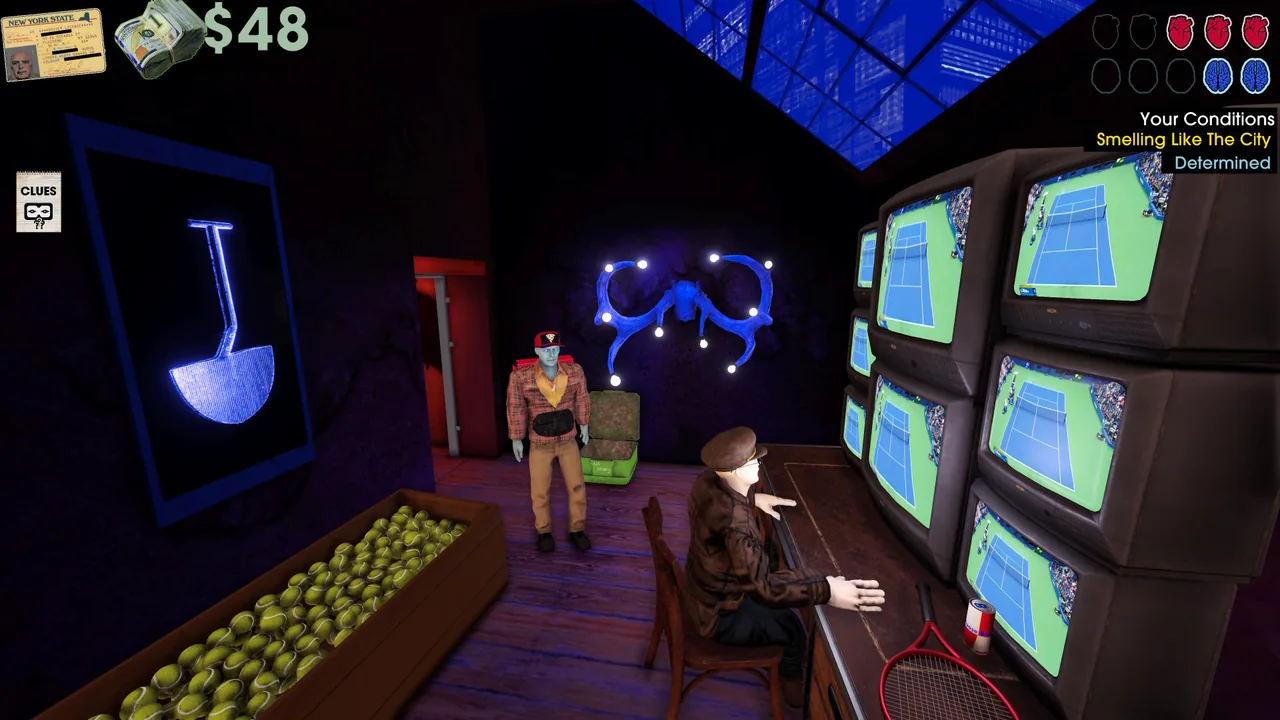
Betrayal At Club LowImage: Cosmo D Studios via Steam -
Betrayal At Club LowImage: Cosmo D Studios via Steam -
Betrayal At Club LowImage: Cosmo D Studios via Steam -
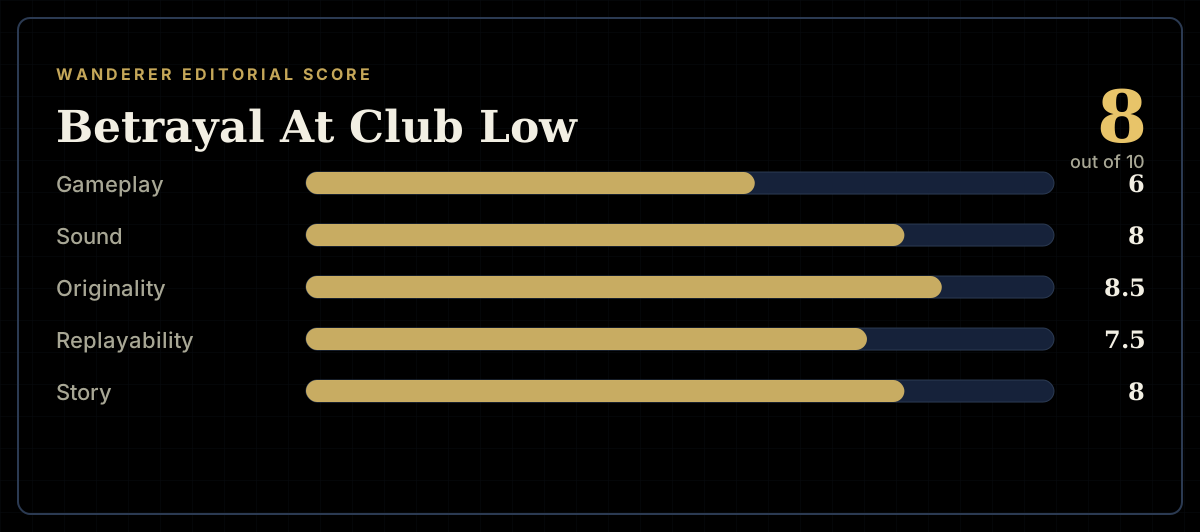
How the review scores each part of the gameWanderer Editorial -
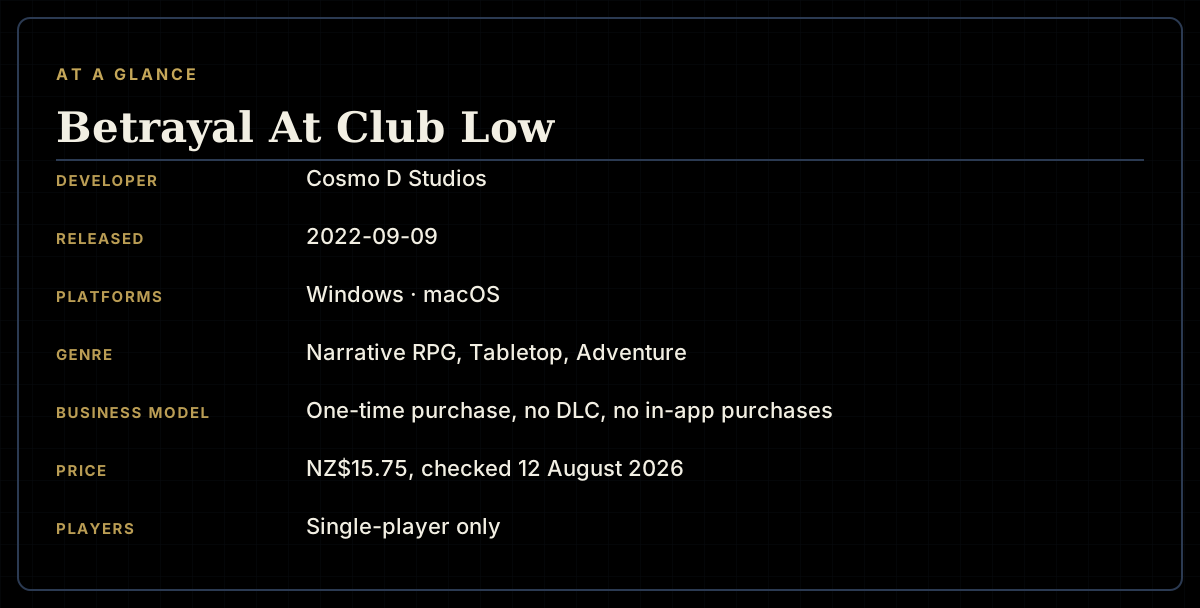
The essentials at a glanceWanderer Editorial -
The short versionWanderer Editorial