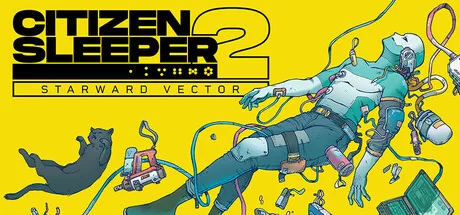
Game review
Citizen Sleeper 2: Starward Vector
7.5 / 10
- Developer
- Jump Over The Age
- Publisher
- Fellow Traveller
- Released
- 31 January 2025
- Platforms
- Windows, macOS
- Genre
- Narrative RPG
- Monetisation
- One-time purchase, no in-game store
- Players
- Single-player only
The short version
Citizen Sleeper 2: Starward Vector is a sci-fi tabletop RPG from Jump Over The Age, published by Fellow Traveller, following a new artificial-bodied "Sleeper" fleeing a debt-holding gangster across the Starward Belt while managing a crew, a ship and a body running on borrowed time. Released 31 January 2025, it has been recognised at an unusually high level for an indie sequel — two BAFTA nominations and a Best Narrative win at the Indie Game Awards — and holds a large, healthy Steam review base at roughly 91% positive across both its full 2,589-review all-language corpus and its 2,054-review English-language subset. This review reads the 100 most-relevant English negative reviews of the roughly 177 the game has and finds an unusually clean, singular pattern: 66 of that 100 explicitly measure the sequel against Citizen Sleeper, and the specific complaint that recurs most, in 48 of the 100, is the new dice-and-risk system, which several reviewers describe producing unrecoverable "death spiral" runs that the game's single, overwriting save slot can't undo.
Biggest strengths
- Critical recognition is exceptional for the genre — two BAFTA nominations and a Best Narrative win at the Indie Game Awards — and the writing itself draws consistent praise even from reviewers who otherwise mark the game not recommended
- The Starward Belt setting expands meaningfully beyond the original's single space station, giving the sequel a genuine sense of a wider journey rather than repeating the first game's scope with a new coat of paint
- The core dice-allocation, risk-and-clocks structure remains a distinctive, still largely unimitated way to tell a story, and several reviewers who marked it not recommended still call the underlying writing on par with the original
Biggest weaknesses
- 66 of the 100 negative reviews read for this piece explicitly compare the sequel unfavourably to Citizen Sleeper, most often citing a harsher, more punishing tone in place of the original's hopeful, rebuilding-a-life throughline
- The new dice-and-risk mechanic is this review's single most repeated specific complaint, present in 48 of the 100 negatives, with several describing runs that spiral into an unrecoverable state once dice pools run low, unable to progress or fail out cleanly
- A single, continuously overwriting save slot compounds the dice complaint directly — reviewers report bad RNG runs becoming permanent because there is no earlier save to fall back to and no way to manually create one
Who it's for: Fans of dense, dice-driven narrative RPGs who want a bigger, harsher, more mechanically demanding follow-up; existing Citizen Sleeper fans should know this is a meaningfully different, tougher game before buying expecting more of the same.
Our recommendation: A genuinely accomplished, critically garlanded sequel whose expanded scope is real, but whose harsher dice system and single save slot have created real, repeated frustration even among its predecessor's most devoted fans — go in aware it's a tougher game than the original, not just a bigger one.
7.5 / 10
Introduction
Citizen Sleeper 2: Starward Vector puts the player back inside an artificial "Sleeper" body running on a corporate leash, this time a new protagonist fleeing across the Starward Belt after a memory- wiping escape from a debt-holding gangster named Laine. Developed by Jump Over The Age and published by Fellow Traveller, it released 31 January 2025 as the sequel to one of the more acclaimed indie narrative games of recent years, and it has earned recognition to match — two BAFTA nominations and a Best Narrative award at the Indie Game Awards, plus a Steam review base holding at roughly 91% positive across 2,589 all-language reviews, 91.4% across its 2,054 English-language reviews. This review reads the 100 most-relevant of that English negative sample — of roughly 177 total — and finds something unusually tidy for a review corpus this size: a single, dominant, well-defined pattern running through nearly all of it.
A harsher, higher-stakes dice system
The mechanical backbone hasn't changed in shape: allocate a pool of dice each cycle to actions, with each die's face determining how well that action goes, all while managing hunger, ship condition and crew needs against contracts that pay in the resources needed to survive. What has changed, and what this review's sample returns to more than any other single subject, is how unforgiving that system has become. Forty-eight of the 100 negative reviews read for this piece specifically raise the dice mechanics, and the sharpest version of the complaint describes a genuine design flaw rather than ordinary difficulty: once a run's dice pool degrades far enough, several reviewers report being unable to meaningfully progress a contract or mission, without the game formally failing them out of it either — a stall rather than a loss, with no clean way forward. One reviewer called it "a death spiral which made the game impossible to continue" after an otherwise enjoyable eight hours; another described being denied the ability to abandon a contract they could no longer complete.
That problem is sharpened by a second, closely linked complaint: Citizen Sleeper 2 keeps a single, continuously overwriting save slot, with no manual save option. Seventeen of the 100 negatives raise saving specifically, and combined with the dice complaint, the shape of the frustration is consistent — a bad run isn't just bad luck to shrug off, it's a permanent state the player has no way to step back from. That's a meaningfully different risk profile than the original game offered, and it's the single clearest, most fixable-sounding piece of critical feedback in the whole sample.
The predecessor's shadow
Read the negative sample in bulk and the loudest thing about it isn't any specific mechanic — it's who's writing it. Sixty-six of the 100 negative reviews explicitly invoke the first Citizen Sleeper, comparing tone, pacing, characters or difficulty against it, almost always to the sequel's detriment. "The first game had a lot of poignant stories about making the best of a bad situation and finding a new home," reads one representative review. "In this game you shuffle from crisis to crisis while a cartoonishly evil villain [pursues you]." Several reviewers go out of their way to note they're longtime fans reluctant to leave a negative review at all — "I feel like such an ungrateful [expletive]," opens one, from a reviewer who says they specifically asked for a sequel about a crew of space travellers in their review of the original. A detailed 55-vote review, written after finishing the game on its hardest difficulty and unlocking 100% of its achievements, singles out thin screen time for the main antagonist as a structural weakness rather than a matter of taste.
This is a pattern worth naming plainly rather than treating as an unqualified verdict on quality: a sequel's harshest critics are very often exactly the people who loved the original most, arriving with the highest expectations and the most specific memory of what made it work. That doesn't make the criticism wrong, but it does mean a newcomer with no attachment to the first game is reading a different, less loaded experience than most of this review corpus is. What tempers that reading here is the size of the gap: the original Citizen Sleeper currently sits at roughly 93.1% positive on English-language Steam reviews, against the sequel's 91.4% — real, measurable, but a two-point difference rather than a collapse, on a game that's still comfortably Very Positive in its own right.
Critical acclaim vs. player disappointment
It's worth holding two things side by side rather than picking one. On one hand, Citizen Sleeper 2 has been decorated by outside critical bodies at a level few indie sequels reach — two BAFTA nominations and a Best Narrative win — which suggests the writing and design vision landed convincingly with people evaluating it on its own terms rather than against a predecessor. On the other, a real and specific slice of its existing fanbase came away frustrated by choices that make the game measurably harder to forgive a bad run in. Both readings can be true simultaneously, and this review's sample doesn't offer a way to declare one side more correct than the other — only to report that the gap exists, and that a reader deciding whether to buy should know which side of it they're more likely to land on. Someone drawn to Citizen Sleeper 2 for its expanded scope and stakes, with no strong attachment to the original's gentler tone, is likely to find exactly the ambitious sequel the award nominations describe. Someone hoping for more of what made the first game beloved, delivered with the same emotional register, is the reader most likely to end up writing one of the 66 comparison-heavy negative reviews this corpus is full of.
Final Verdict
Citizen Sleeper 2: Starward Vector is a genuinely ambitious expansion of its predecessor's dice-and- clocks formula, widening the scope from a single space station to a full star belt and earning serious outside critical recognition for doing so. Where it loses ground with its own audience is specific and fixable in principle rather than a fundamental flaw in the concept: a harsher dice system that can trap a run in an unrecoverable state, made worse by a single save slot that offers no way back once that happens, and a tonal shift away from the hopeful throughline that made the first game so beloved by the people now writing its toughest reviews. It remains a well-written, distinctive piece of sci-fi storytelling that holds a Very Positive rating on its own merits — but anyone coming to it because they loved Citizen Sleeper should know this is a tougher, less forgiving game before they start, not simply a bigger version of the same one.
Pros and cons
Pros
- Critical recognition is exceptional for the genre — two BAFTA nominations and a Best Narrative win at the Indie Game Awards — and the writing itself draws consistent praise even from reviewers who otherwise mark the game not recommended
- The Starward Belt setting expands meaningfully beyond the original's single space station, giving the sequel a genuine sense of a wider journey rather than repeating the first game's scope with a new coat of paint
- The core dice-allocation, risk-and-clocks structure remains a distinctive, still largely unimitated way to tell a story, and several reviewers who marked it not recommended still call the underlying writing on par with the original
- Sustained post-launch support and a strong ongoing profile, including a first-anniversary celebration post and continued sales promotion more than a year after release
Cons
- 66 of the 100 negative reviews read for this piece explicitly compare the sequel unfavourably to Citizen Sleeper, most often citing a harsher, more punishing tone in place of the original's hopeful, rebuilding-a-life throughline
- The new dice-and-risk mechanic is this review's single most repeated specific complaint, present in 48 of the 100 negatives, with several describing runs that spiral into an unrecoverable state once dice pools run low, unable to progress or fail out cleanly
- A single, continuously overwriting save slot compounds the dice complaint directly — reviewers report bad RNG runs becoming permanent because there is no earlier save to fall back to and no way to manually create one
- Several long-time fans of the original specifically criticise the antagonist and supporting cast as less compelling than the first game's ensemble, with one detailed 55-vote review naming thin screen time for the main villain as a structural weak point
Screenshots
-
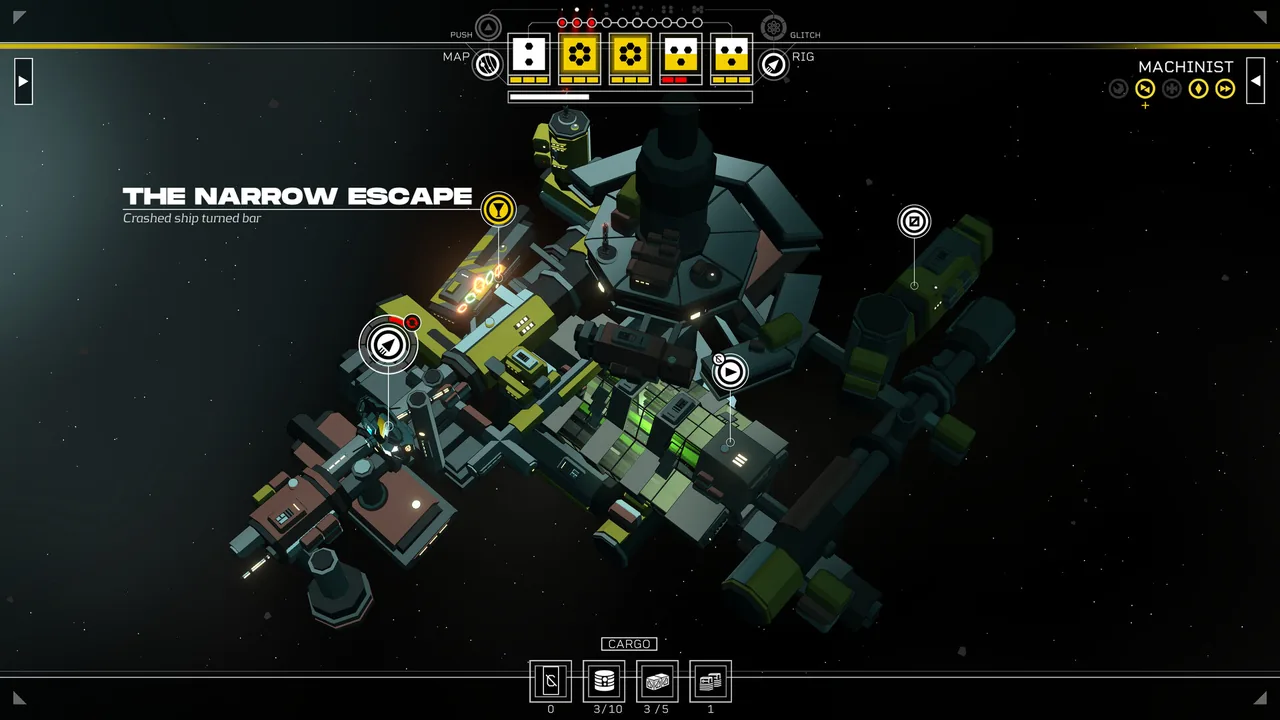
Citizen Sleeper 2: Starward VectorImage: Fellow Traveller via Steam -
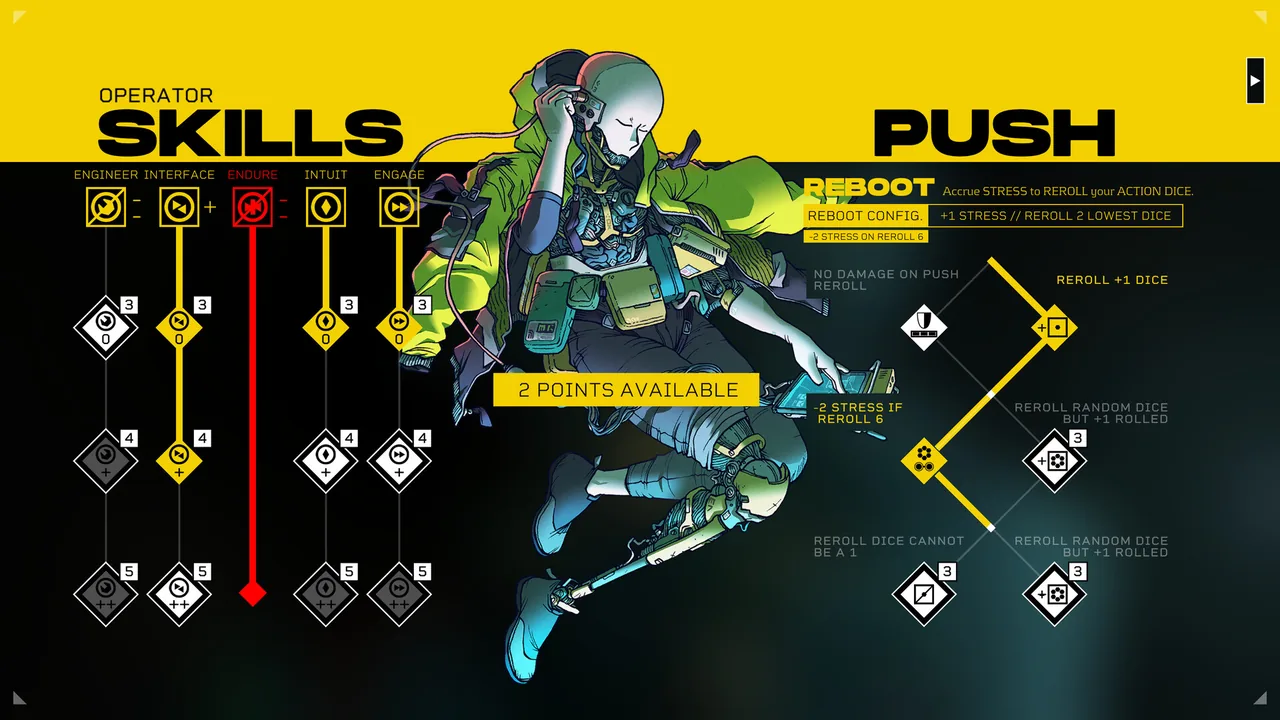
Citizen Sleeper 2: Starward VectorImage: Fellow Traveller via Steam -
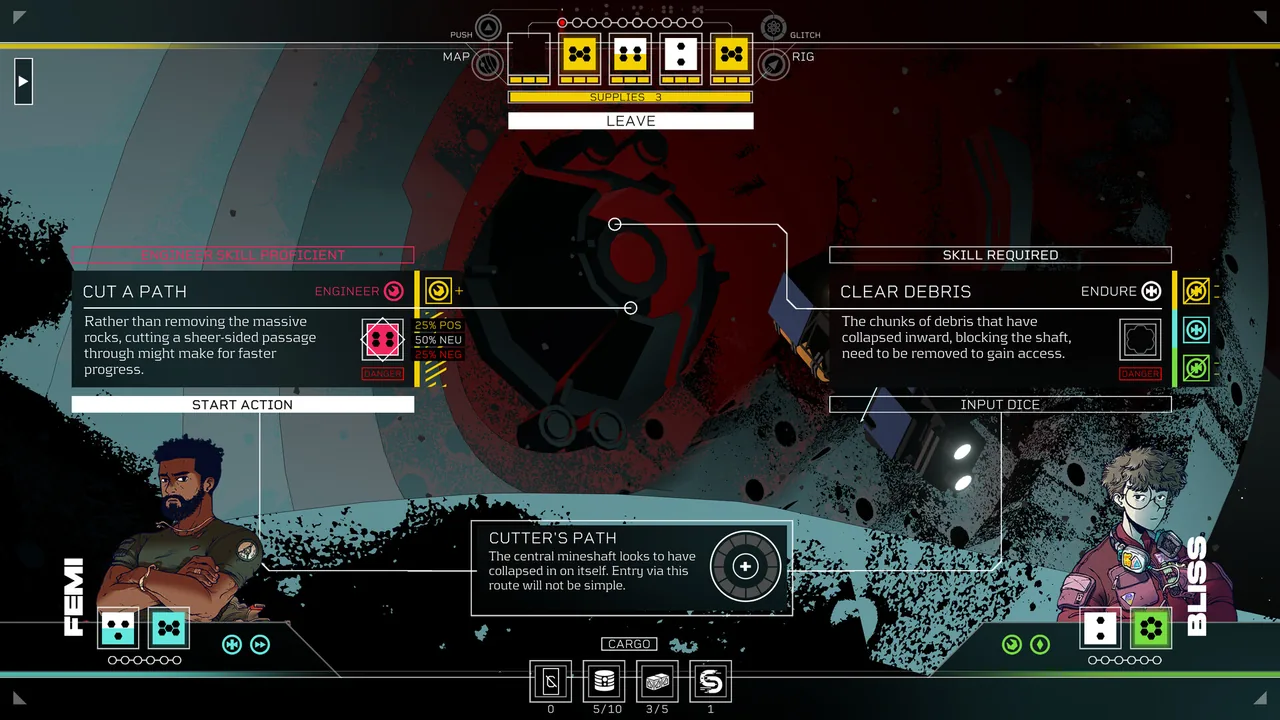
Citizen Sleeper 2: Starward VectorImage: Fellow Traveller via Steam -
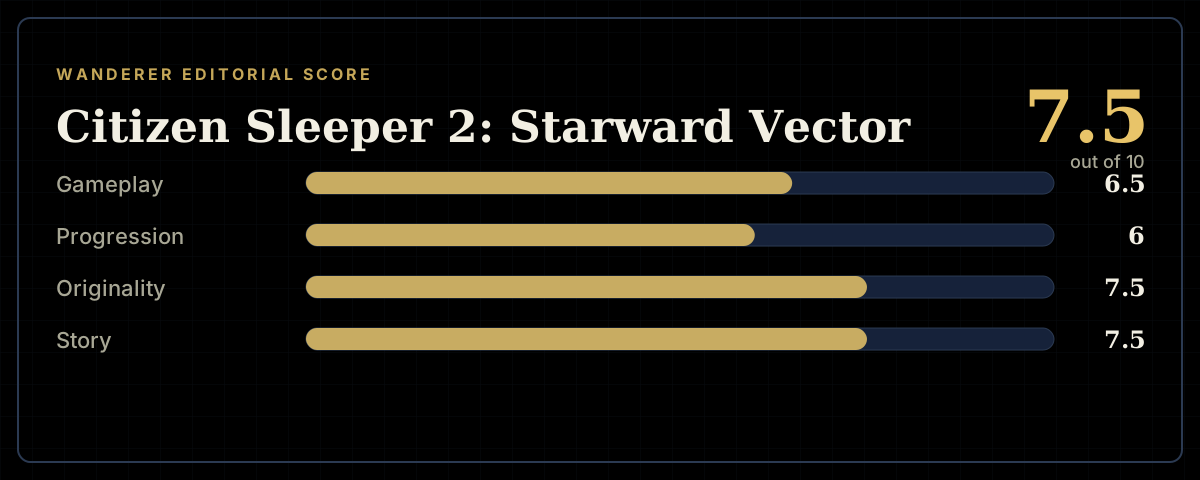
How the review scores each part of the gameWanderer Editorial -
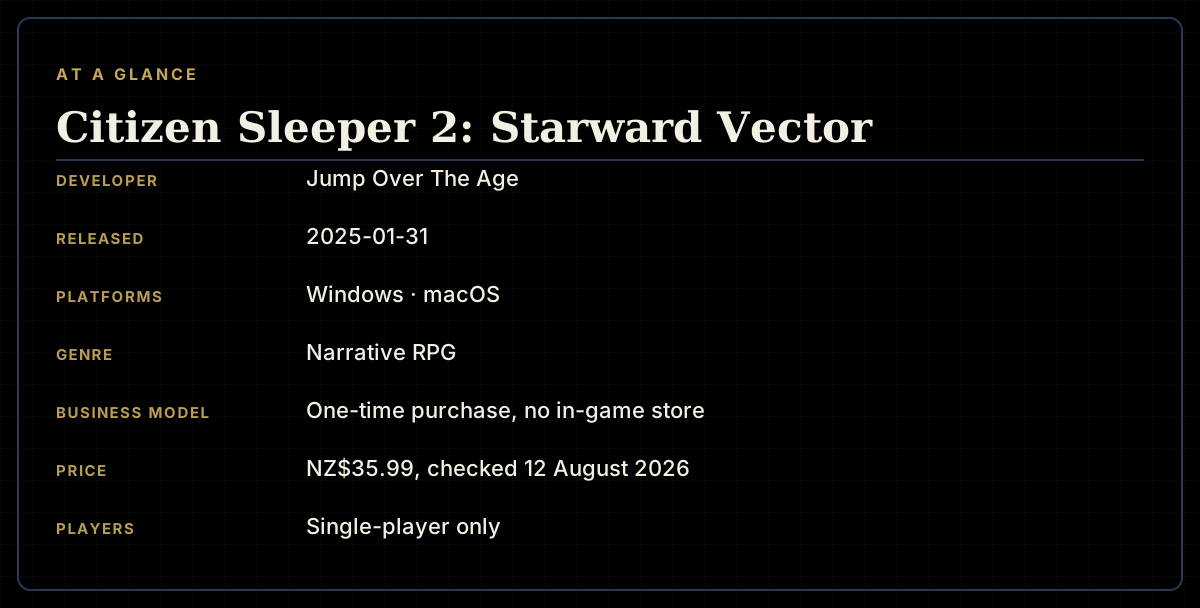
The essentials at a glanceWanderer Editorial -
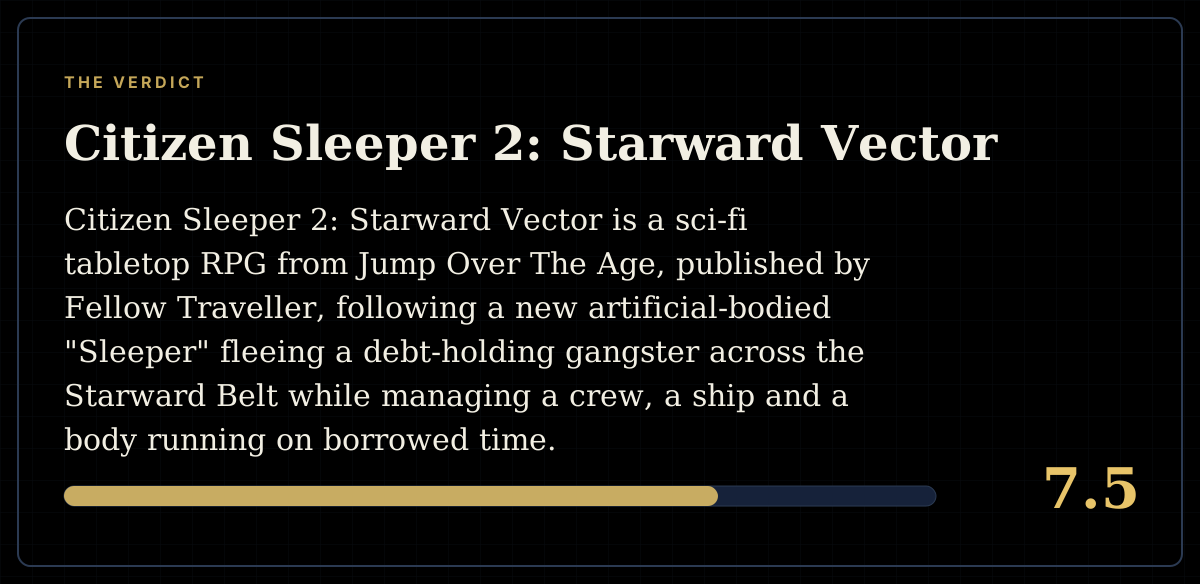
The short versionWanderer Editorial