Game review
Citizen Sleeper
7 / 10
- Developer
- Jump Over The Age
- Publisher
- Fellow Traveller
- Released
- 5 May 2022
- Platforms
- Windows, macOS, Linux
- Genre
- Narrative RPG, Tabletop, Sci-Fi
- Monetisation
- One-time purchase, plus an optional soundtrack and artbook
- Players
- Single-player only
The short version
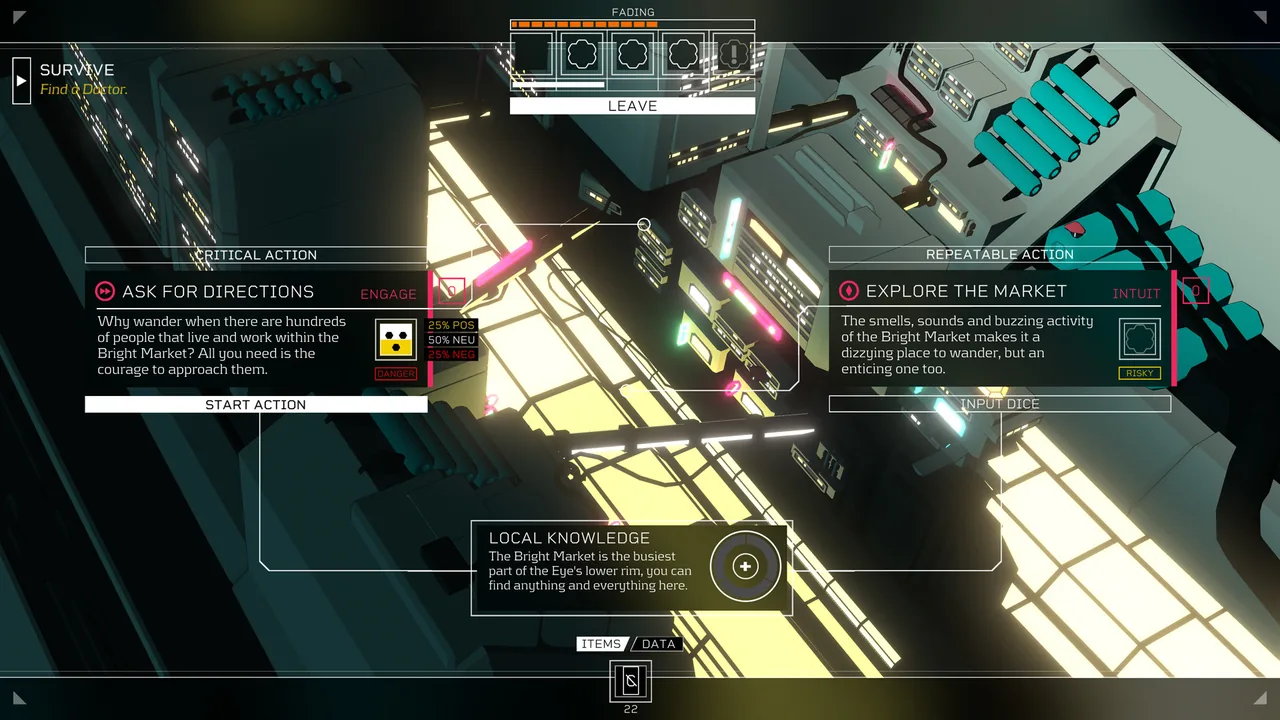
Citizen Sleeper puts the player in control of an escaped synthetic worker — a Sleeper — eking out survival day by day on the lawless space station Erlin's Eye, using a nightly pool of dice to decide how to spend a body that's slowly failing. Developed by Jump Over The Age and published by Fellow Traveller, it released 5 May 2022 and sits at Very Positive, 93.1% across 7,697 English-language reviews. Its writing and worldbuilding draw exceptional, specific praise and real critical recognition. What runs through a large, unusually detailed share of the negative sample, and echoes across similar 2022 narrative games this review has covered, is a consistent, specific complaint: once the dice-allocation system is understood, a meaningful number of reviewers say the choices framing the game stop mattering, turning what's sold as a tabletop RPG into what they describe as a well-written visual novel with extra steps.
Biggest strengths
- Writing and worldbuilding draw exceptional, specific praise, with reviewers describing Erlin's Eye and its cast as some of the most captivating science fiction settings in recent indie games
- The dice-and-decay premise — a failing synthetic body forcing daily trade-offs — is credited by many reviewers as a genuinely affecting way to dramatise scarcity and desperation, at least in the opening hours
- A tightly paced, roughly seven-to-ten hour runtime that several reviewers specifically praise for not overstaying its welcome
Biggest weaknesses
- An unusually consistent, detailed complaint recurs across a large share of the negative sample: once the dice-allocation strategy is understood, several reviewers describe the game becoming trivially easy, turning tense resource management into what one detailed review called "a tedious click fest with zero stakes or tension"
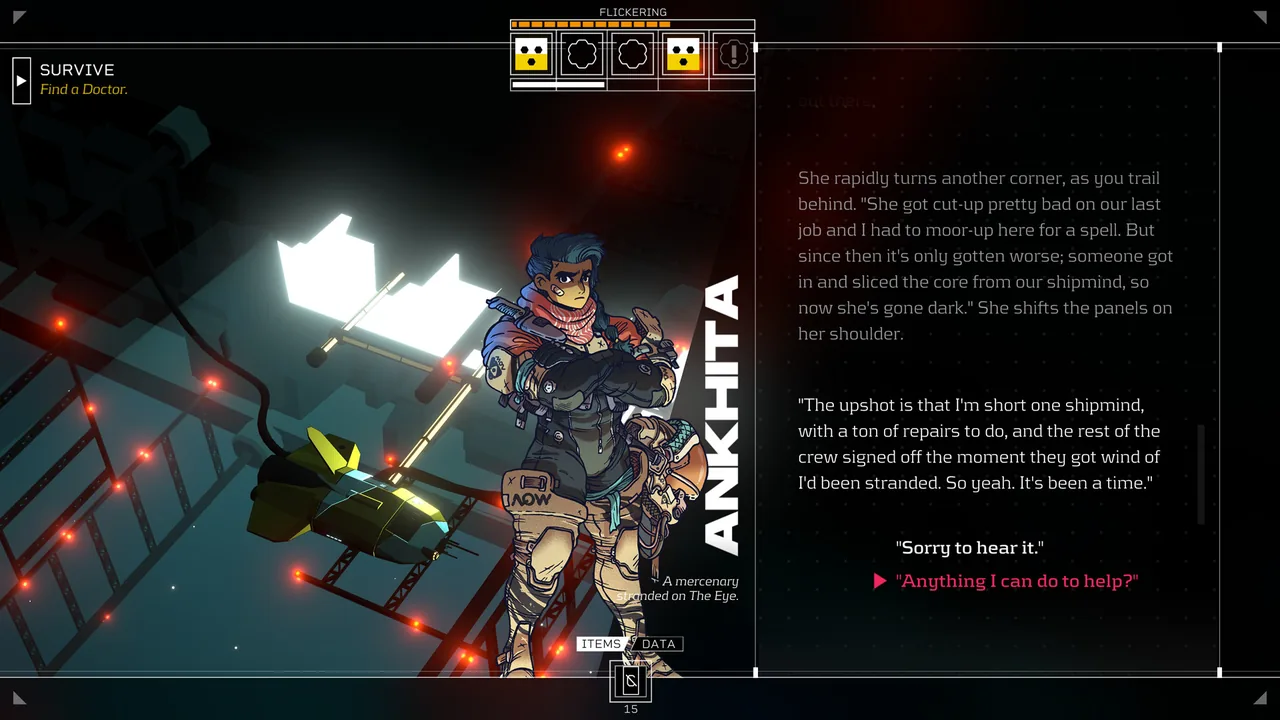
- The single most repeated criticism concerns narrative agency directly — multiple reviewers argue that choices within individual storylines don't meaningfully diverge, describing the branching structure as an illusion layered over what is, mechanically, closer to a visual novel than an RPG
- Near-constant comparisons to Disco Elysium recur throughout the sample, and a large share of them are unfavourable, with several reviewers arguing the writing, while good, doesn't match the depth or characterisation that comparison implies
Who it's for: Fans of literary sci-fi and Disco Elysium-adjacent narrative games who prioritise writing and atmosphere over mechanical depth; a poor fit for anyone specifically drawn in by the "TTRPG" and "choices matter" framing expecting genuine systemic consequence.
Our recommendation: Genuinely excellent, atmospheric science fiction writing wrapped around a resource-management system that a large, detailed share of players say resolves into a solved formula rather than sustained meaningful choice — go in for the story, not the promise of branching consequence.
7 / 10
Introduction
Citizen Sleeper drops the player into the body of a Sleeper — a human consciousness copied into a failing synthetic body, on the run from the corporation that made them — surviving day by day aboard the lawless space station Erlin's Eye by rolling a nightly pool of dice and deciding how to spend them across jobs, relationships and looming threats. Developed by Jump Over The Age and published by Fellow Traveller, it released 5 May 2022 and sits at Very Positive, 93.1% across the 7,697 English-language reviews this review draws from. Its writing has earned real critical recognition, including award nominations, and this review's sample reflects that acclaim clearly. What's equally clear, reading a substantial share of both the positive and negative samples, is an unusually consistent, detailed complaint about what the dice mechanic actually delivers once its logic is understood.
Writing that earns its acclaim
Start with what draws the widest, most specific praise in this sample. Erlin's Eye and its cast of station-dwellers are described repeatedly as genuinely captivating science fiction, with reviewers crediting the setting's atmosphere of scarcity, desperation and found community as some of the best recent writing in the genre. The dice-and-decay premise itself draws real, specific credit for dramatising its themes mechanically rather than just narratively — the failing body, represented by progressively fewer usable dice over time, gives urgency to decisions in a way pure prose couldn't. A tightly paced runtime, most reviewers finish in roughly seven to ten hours, draws its own praise as respecting players' time rather than padding for length.
The complaint that recurs with unusual precision
Here's the specific, detailed pattern worth centring this review on, because it recurs with a consistency this library has now documented across several 2022 narrative games. A large share of Citizen Sleeper's negative reviews describe a very particular arc: genuine early enjoyment, followed by the realisation that once the dice-allocation strategy is understood, the resource-management tension the game is built around simply dissolves. One detailed 228-vote review put it precisely: "I really enjoyed this game... right up until the point where I 'solved' the gameplay and it became a tedious click fest with zero stakes or tension." Another reviewer described the mechanical core directly: "It's very simple to end up with positive only dice rolls," at which point the resource scarcity the whole premise is built on stops functioning as a real constraint.
A closely related, equally consistent complaint concerns narrative choice specifically. Multiple reviewers argue that decisions within individual storylines don't meaningfully diverge — one detailed 78-vote review, written years after launch, described the flaw precisely: "the choices you make in one story don't impact" outcomes the way the framing implies, arguing the branching structure functions more as "the outward appearance that your choices matter" than genuine agency. A separate reviewer put the genre mismatch even more bluntly, calling it "a very dishonest 'TTRPG-dice based' game where you basically play a Visual Novel with extra steps," arguing the cycle-and-dice system exists mainly "to give an illusion of choice" rather than to structure real consequence. This isn't a fringe reading — it recurs across dozens of independent, detailed reviews with striking consistency, including from reviewers who otherwise praise the writing highly.
The Disco Elysium comparison, and why it usually cuts against this game
A specific, recurring pattern in this corpus deserves its own mention: near-constant comparison to Disco Elysium, almost always raised by the reviewer rather than provoked, and a large share of those comparisons land unfavourably. One reviewer, weighing the two directly, wrote that Citizen Sleeper "is like comparing Divergent to Hunger Games. One is written by a much more experienced writer than the other and its obvious." Another reviewer objected specifically to how the comparison shaped their own expectations going in: "If only it wasn't breathlessly compared to Disco Elysium... My expectations were high." This is worth flagging as a distinct pattern from the gameplay complaint above — it's a complaint about marketing and community framing setting up a comparison the game's own writing, while genuinely good, doesn't fully sustain.
What the game's own achievement data suggests
Steam's own numbers offer a useful, independent cross-check on the "converges too fast" complaint. Character-build and stat-related achievements sit fairly high — around 48-64% for the early ones — tapering to a genuine drop for the hardest late-game and hidden-story achievements, some under 3%. That's broadly consistent with a game most players engage with meaningfully at least once, though it doesn't directly confirm or refute the build-convergence complaint several reviewers raise about different starting classes ending up statistically similar by the end.
Final Verdict
Citizen Sleeper earns its critical acclaim honestly on the strength of its writing — Erlin's Eye is a genuinely well-realised piece of science fiction, and this review's sample backs that up with real specificity rather than generic praise. Where the score reflects real, documented tension is in the gap between how the game frames itself — a TTRPG-inspired story where dice and choices genuinely matter — and what a large, detailed, remarkably consistent share of its own players say actually happens once the mechanics are understood: a solved, low-stakes resource system wrapped around branching that doesn't fully branch. If you're reading this for the writing and the atmosphere, that's real and worth your time. If the "TTRPG" and "choices matter" framing is what's selling you the purchase specifically, a meaningful share of this game's own audience wants you to know, before you buy, that the mechanics underneath don't quite deliver on that promise.
Pros and cons
Pros
- Writing and worldbuilding draw exceptional, specific praise, with reviewers describing Erlin's Eye and its cast as some of the most captivating science fiction settings in recent indie games
- The dice-and-decay premise — a failing synthetic body forcing daily trade-offs — is credited by many reviewers as a genuinely affecting way to dramatise scarcity and desperation, at least in the opening hours
- A tightly paced, roughly seven-to-ten hour runtime that several reviewers specifically praise for not overstaying its welcome
- Clean, honest monetisation with no DLC beyond an optional soundtrack and artbook, and no in-app purchases of any kind
Cons
- An unusually consistent, detailed complaint recurs across a large share of the negative sample: once the dice-allocation strategy is understood, several reviewers describe the game becoming trivially easy, turning tense resource management into what one detailed review called "a tedious click fest with zero stakes or tension"
- The single most repeated criticism concerns narrative agency directly — multiple reviewers argue that choices within individual storylines don't meaningfully diverge, describing the branching structure as an illusion layered over what is, mechanically, closer to a visual novel than an RPG
- Near-constant comparisons to Disco Elysium recur throughout the sample, and a large share of them are unfavourable, with several reviewers arguing the writing, while good, doesn't match the depth or characterisation that comparison implies
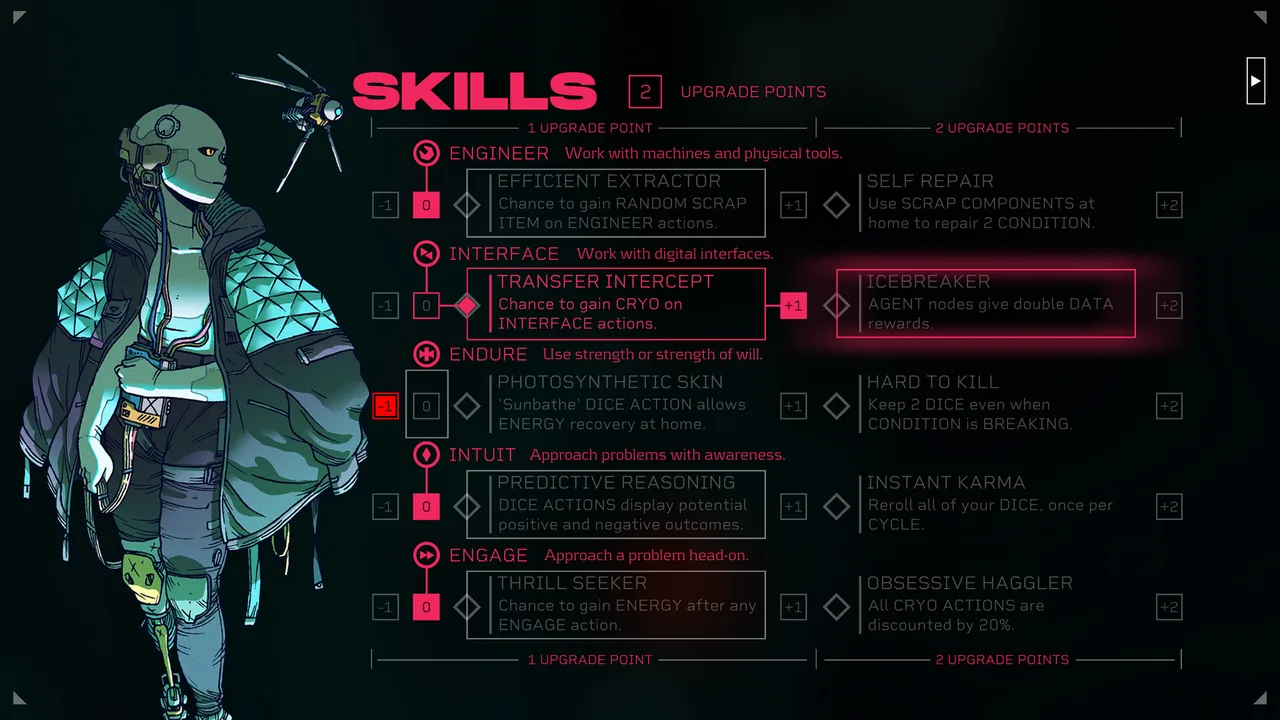
- Several reviewers report character builds converging on the same few maxed-out stats regardless of starting class, undercutting the sense that early choices meaningfully shape a playthrough
Screenshots
-
Citizen SleeperImage: Fellow Traveller via Steam -
Citizen SleeperImage: Fellow Traveller via Steam -
Citizen SleeperImage: Fellow Traveller via Steam -
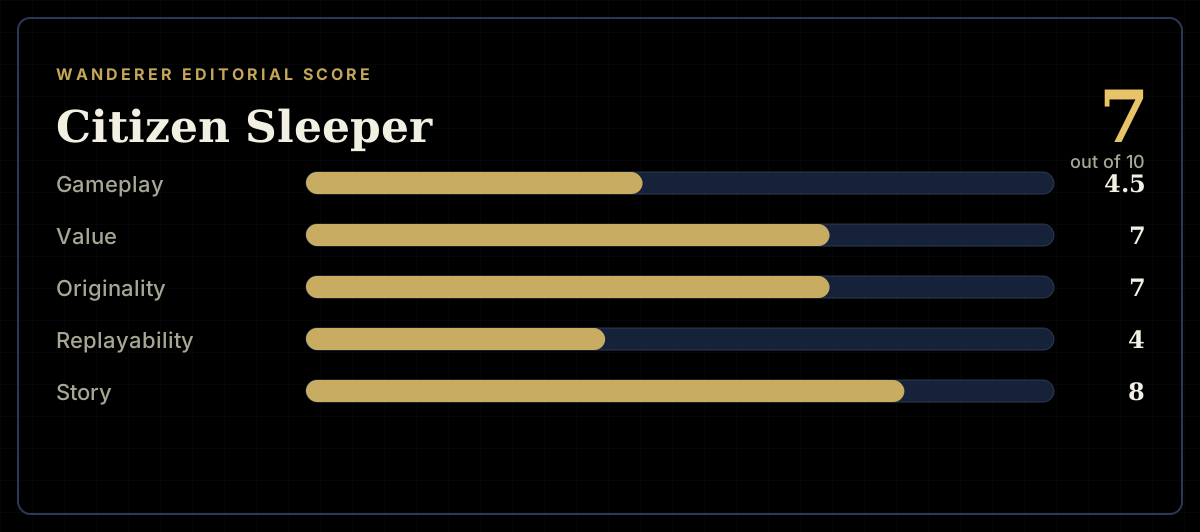
How the review scores each part of the gameWanderer Editorial -
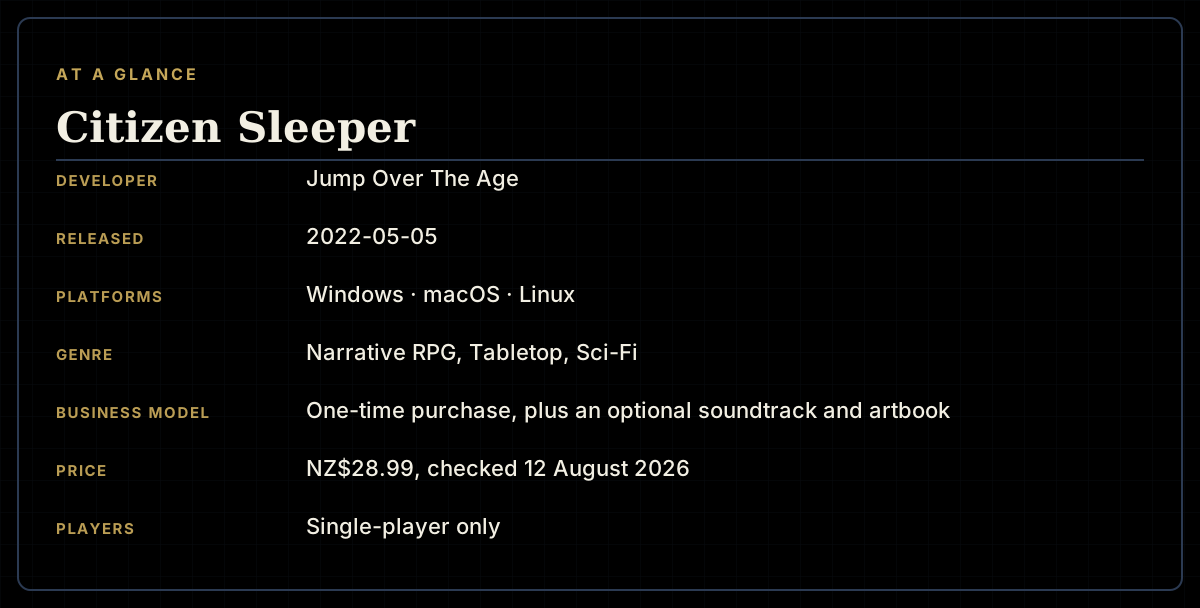
The essentials at a glanceWanderer Editorial -
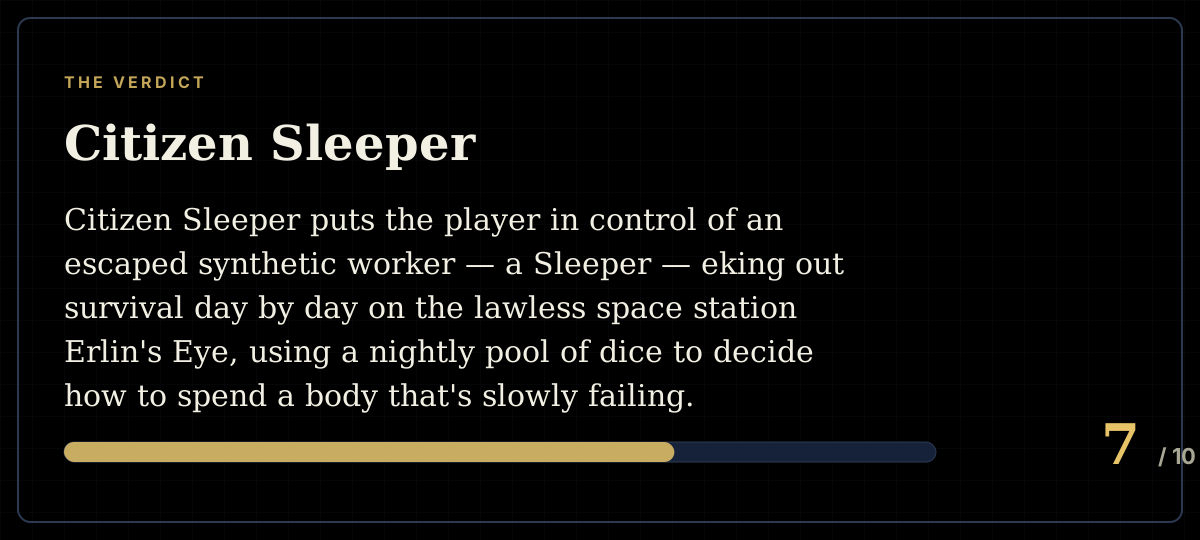
The short versionWanderer Editorial