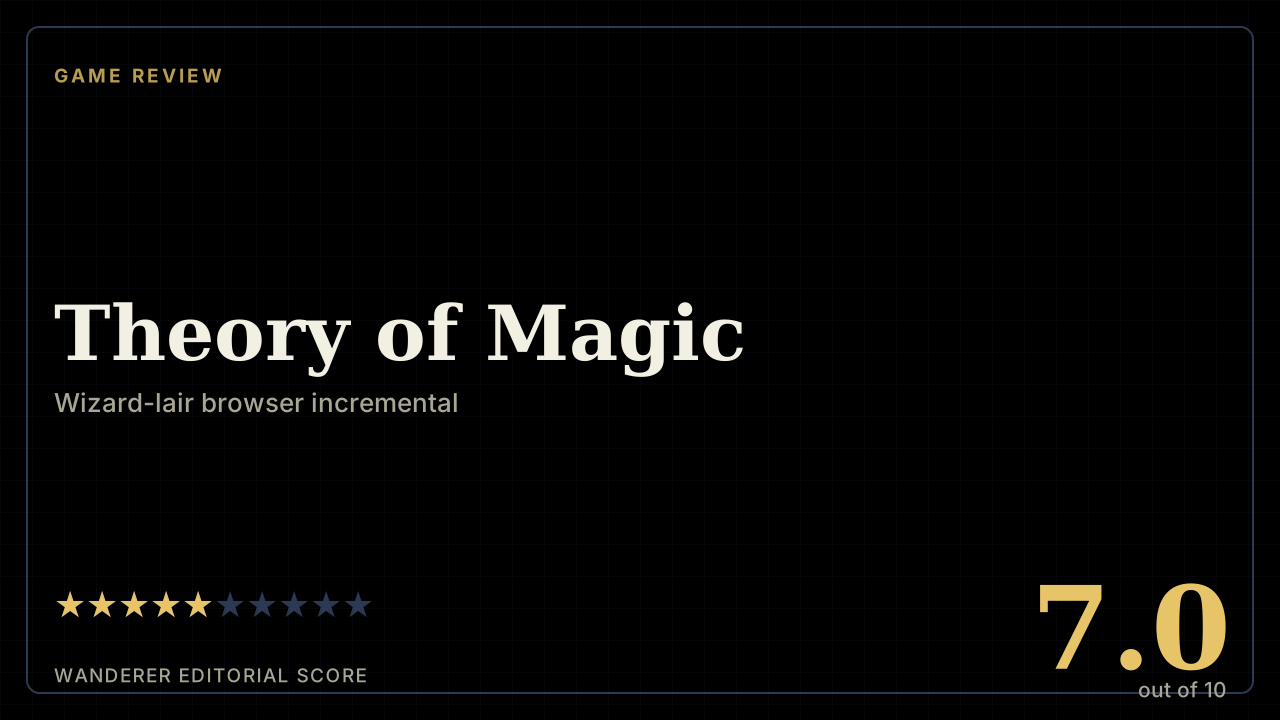
Game review
Theory of Magic
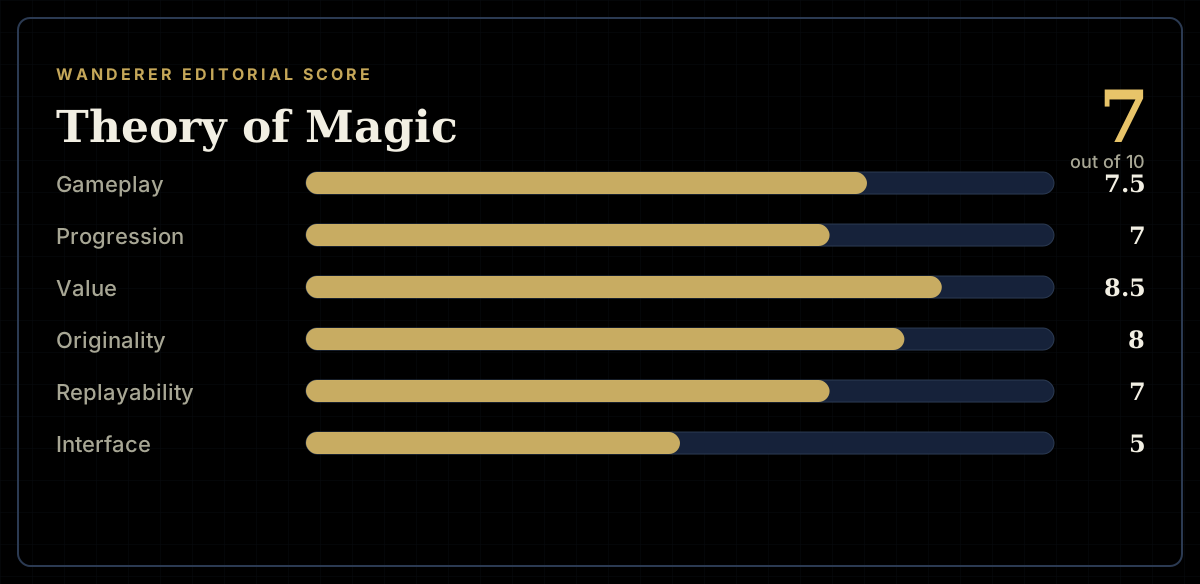
7 / 10
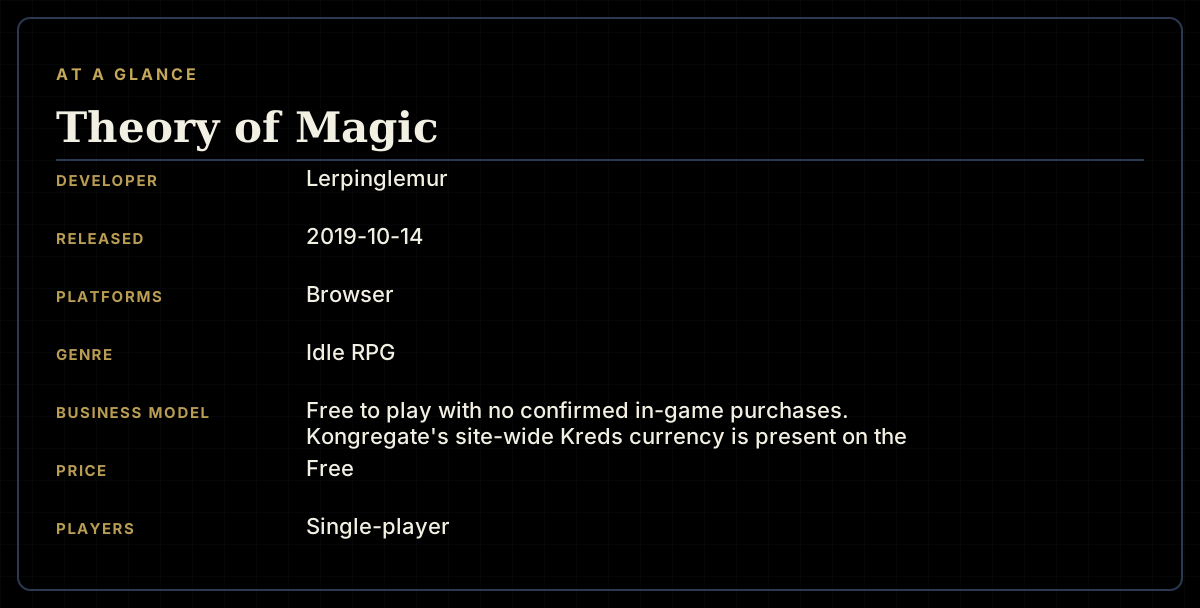
- Developer
- Lerpinglemur
- Publisher
- Lerpinglemur (self-published)
- Released
- 14 October 2019
- Platforms
- Browser
- Genre
- Idle RPG
- Monetisation
- Free to play with no confirmed in-game purchases. Kongregate's site-wide Kreds currency is present on the page as it is on every Kongregate title, but no purchasable content specific to Theory of Magic was found; the community-maintained Arcanum mirrors carry no monetisation of any kind.
- Players
- Single-player
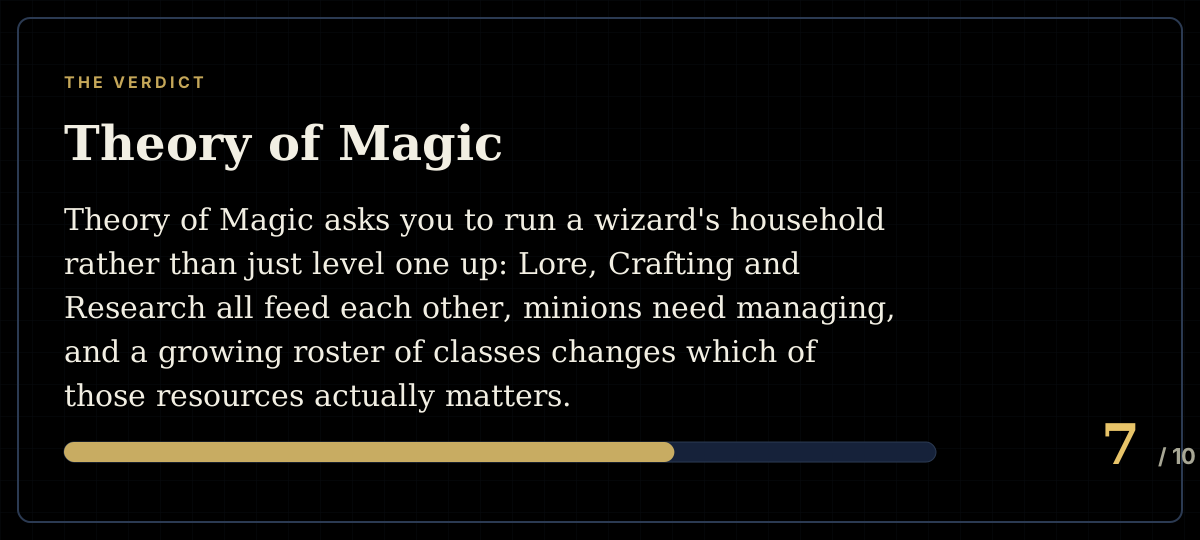
The short version
Theory of Magic asks you to run a wizard's household rather than just level one up: Lore, Crafting and Research all feed each other, minions need managing, and a growing roster of classes changes which of those resources actually matters. It's dense, genuinely original for a browser incremental, and influential enough that later games in the genre cite it directly as a template. It's also effectively unfinished business — the original developer stopped updating it years ago, and what exists now is a fan-run continuation spread across mirrors with no single obvious front door.
That split identity is the whole story. The systems underneath are some of the best-built in the free incremental space. Finding them, and figuring out which version of the game you're even looking at, is the tax you pay to get there.
Biggest strengths
- The Lore, Crafting and Research economy makes every unlock reshape earlier decisions instead of just scaling one number upward
- A genuine class system lets schools like Puppetry and Alchemy change which resources and caps matter, not just which icon is on screen
- Adventure mode's dungeons carry damage between visits, giving combat real stakes instead of an auto-battler afterthought
Biggest weaknesses
- The official Kongregate build has sat multiple versions behind the actively developed community fork for years
- The original developer's long absence leaves the project's future entirely with volunteer maintainers running separate mirrors
- Minimal onboarding leaves systems like Codices and Adventure floors unexplained until a player finds the wiki
Who it's for: Incremental-game veterans who don't mind consulting a wiki, and who'd rather dig into a dense, unpolished system with real depth than play something friendlier that runs out of ideas sooner.
Our recommendation: Play it for free and expect to lean on the community wiki early. Skip the Kongregate embed if a more current community mirror is available, since the hosted version is known to lag several releases behind, and don't expect the game to explain itself much before you're several systems deep.
7 / 10
Most idle games ask you to grow one number. Theory of Magic asks you to run a household — a wizard's lair with a ledger of resources that all lean on each other, a staff of minions that need directing, and a class you've picked that quietly changes which of those resources is even worth watching. It's an unusually ambitious design for a free browser game with no art budget to speak of, and it's good enough that other developers in the genre point to it as a direct influence. It's also, at this point, a game its own creator has walked away from, left running as a stalled official build while a scattered handful of fans keep the real version alive somewhere else. Both of those facts matter to anyone deciding whether to spend time with it.
A lair with more moving parts than it lets on
The premise is deliberately small: you start as a stable hand and work toward becoming a practicing wizard, outfitting a lair, learning spells and eventually commanding minions to do useful work while you're away. What makes the loop interesting is how tightly its core resources lean on each other. Lore, Crafting and Research aren't parallel currencies you top up independently — raising one changes the ceiling on another, Codices convert Research into passive Lore generation, and Mana gates which spells you can actually cast at any given moment. Nothing in that list is revolutionary on its own; browser incrementals have used interlocking currencies for years. What's notable is how deliberately Theory of Magic tunes them to fight each other for your attention, so that "which resource do I focus next" stays a live question well past the opening hour instead of collapsing into a single dominant strategy the way looser idle economies tend to.
That density is a double-edged design choice. It gives the mid-game genuine texture — there's always another lever worth pulling, another combination of unlocked systems worth testing. It also means the game explains almost none of it. Codices, Arcana, and the exact function of a given class's caps are things you're expected to work out by watching numbers change, and the community wiki exists largely because the game itself doesn't bother. Players who enjoy that kind of discovery will find it rewarding. Players expecting even a light tutorial layer will bounce off within the first session.
Classes change the math, not just the paint job
Where Theory of Magic earns its reputation is the class system layered over that resource economy. Schools like Puppetry and Alchemy don't just reskin the same numbers — Puppetry reshapes the game around assembling and directing mechanical minions, raising caps tied to constructs and allies, while Alchemy leans the whole build toward Crafting output and potion production instead. Picking a class is closer to picking which resources in that opening economy actually matter to you than it is to picking a costume, and that's the same idea Idle Wizard would later build an entire structure around — Theory of Magic got there first, with less presentation and more friction, but the underlying insight is the same: a class worth its name should change the shape of the whole game, not just its flavour text. Readers who liked that idea in Idle Wizard's twelve-class rotation, or in our review of it, will recognise the family resemblance immediately.
Dungeons that remember what happened to you
Beyond the lair sits Adventure mode, split between Locales and Dungeons. Locales are the gentler half — encounters auto-progress while you're present, handing out loot, temporary modifiers or accumulated stress without demanding constant input. Dungeons are the sharper edge: your wizard and minions fight hostile floors using equipped weapons, armour and spells, and crucially, damage persists. Losing a fight doesn't reset the dungeon to full health on your next attempt — you go back in carrying whatever wounds you left with, which turns a string of dungeon runs into something closer to attrition warfare than a disposable auto-battler. It's a small mechanical choice that does a lot of work: it makes preparation before a dungeon run actually matter, and it makes retreating to heal a real decision rather than busywork between fights.
The version problem
The single biggest issue with Theory of Magic isn't a system, it's the state of the project itself. The developer credited on Kongregate, Lerpinglemur, stopped actively updating the game there years ago, and the build hosted on that page — long-time players cite it as sitting around version 0.10.9 — has fallen well behind the actively developed continuation, reportedly several full point releases further along, that lives on as an open-source fork under the name Arcanum. That fork is maintained by volunteers on their own GitLab Pages mirrors rather than any single canonical site, which means a newcomer searching for "Theory of Magic" today can land on the frozen Kongregate version, one of several fan-hosted continuations, or a wiki that describes systems the Kongregate build doesn't even have yet. None of those destinations announce which one they are.
That's a genuinely unusual position for a well-regarded game to be in, and it colours everything else about recommending it. The design underneath is sound enough that a later, better-funded game like Wizard Banished could credit it as a direct inspiration and mean it as a compliment. But a player today has to do detective work just to find the currently-developed version, and even then they're trusting volunteer maintainers rather than a studio with any obligation to keep supporting it. It's less "abandoned" than "handed off without ceremony," and the handoff shows.
Presentation and the friction that comes with it
Visually, Theory of Magic asks for patience. It's number-dense menus, small icons and dense text blocks throughout, closer to a spreadsheet with a fantasy skin than anything built to look appealing on a store page — understandable for a free solo project, less forgivable for a game this mechanically rich. The rougher problem is usability rather than art direction: equipment and inventory screens are a recurring source of player complaints, with reports of not being able to tell what's currently equipped or confirm that an item swap actually registered. Layered on top of systems this interconnected, unclear equipment feedback isn't a cosmetic nuisance, it's friction sitting directly on top of the decisions that matter most.
Progression pacing has its own well-documented rough patch. Long stretches of the early-to-mid game are widely reported to stall around a specific milestone, the Alcove stage, sometimes for what players describe as months of intermittent play before the next real unlock arrives. That's the kind of wall a design this interlinked can produce almost by accident — enough currencies gating each other that a single bottleneck resource can freeze the whole system — and it's a legitimate argument against recommending Theory of Magic to anyone who wants steady, visible forward motion rather than a long plateau followed by a breakthrough.
What it costs
There's effectively nothing to weigh here financially. Theory of Magic is free wherever it's played, and no evidence turned up of purchasable content specific to this game, on Kongregate or on any of the community mirrors. Kongregate's site-wide Kreds currency shows up on the page as it does on every game hosted there, but it isn't tied to anything Theory of Magic itself sells. For a genre where monetisation is often the first thing worth scrutinising, this is one of the rare cases where there's genuinely nothing to warn a player about.
Verdict
Theory of Magic earns its reputation honestly: the Lore-Crafting-Research economy is one of the better-built resource loops in the free incremental space, the class system changes the actual math of the game rather than its costume, and the persistent-damage dungeons give Adventure mode real stakes. That's a strong enough foundation that other developers in the genre still point to it as an influence years later. What keeps the score from climbing higher has nothing to do with that design and everything to do with its current condition — a frozen official build, a fan-run continuation scattered across mirrors with no obvious front door, thin onboarding, and equipment screens that make basic decisions harder than they should be. None of that erases what the systems accomplish. It does mean the game asks more patience of a new player than its quality alone would justify, and that gap is exactly what separates a very good idle RPG from an easy recommendation.
Anyone drawn to dense wizard-school incrementals should also look at Magic Research, which trades Theory of Magic's dungeon combat for a tighter, more finishable research tree, or Progress Knight for a fantasy incremental built around a single continuous life rather than a lair full of interlocking systems. Players who'd rather have that kind of layered progression sit inside active exploration, with someone still maintaining the world underneath it, may also enjoy Wanderer.
Pros and cons
Pros
- The Lore, Crafting and Research economy makes every unlock reshape earlier decisions instead of just scaling one number upward
- A genuine class system lets schools like Puppetry and Alchemy change which resources and caps matter, not just which icon is on screen
- Adventure mode's dungeons carry damage between visits, giving combat real stakes instead of an auto-battler afterthought
- Completely free with no confirmed in-game purchases anywhere it's hosted
- Influential enough that later incrementals such as Wizard Banished cite it directly as a design inspiration
Cons
- The official Kongregate build has sat multiple versions behind the actively developed community fork for years
- The original developer's long absence leaves the project's future entirely with volunteer maintainers running separate mirrors
- Minimal onboarding leaves systems like Codices and Adventure floors unexplained until a player finds the wiki
- Progression is widely reported to stall for long stretches at specific milestones, most often the Alcove stage
- Inventory and equipment screens are frequently described as unclear about what's currently worn and what an item does
Screenshots
-
How the review scores each part of the gameWanderer Editorial -
The game at a glanceWanderer Editorial -
The short versionWanderer Editorial