Game review
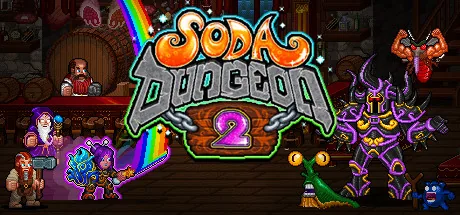
Soda Dungeon 2
7 / 10
- Developer
- AN Productions
- Publisher
- Armor Games Studios
- Released
- 9 July 2020
- Platforms
- Windows, macOS, Android, iOS
- Genre
- Idle RPG
- Monetisation
- Free-to-play everywhere, with an in-client cash shop on every platform; mobile additionally carries optional ads (rewarded revives, occasional interstitials) that Steam does not show
- Players
- Single-player, no online or local multiplayer
The short version
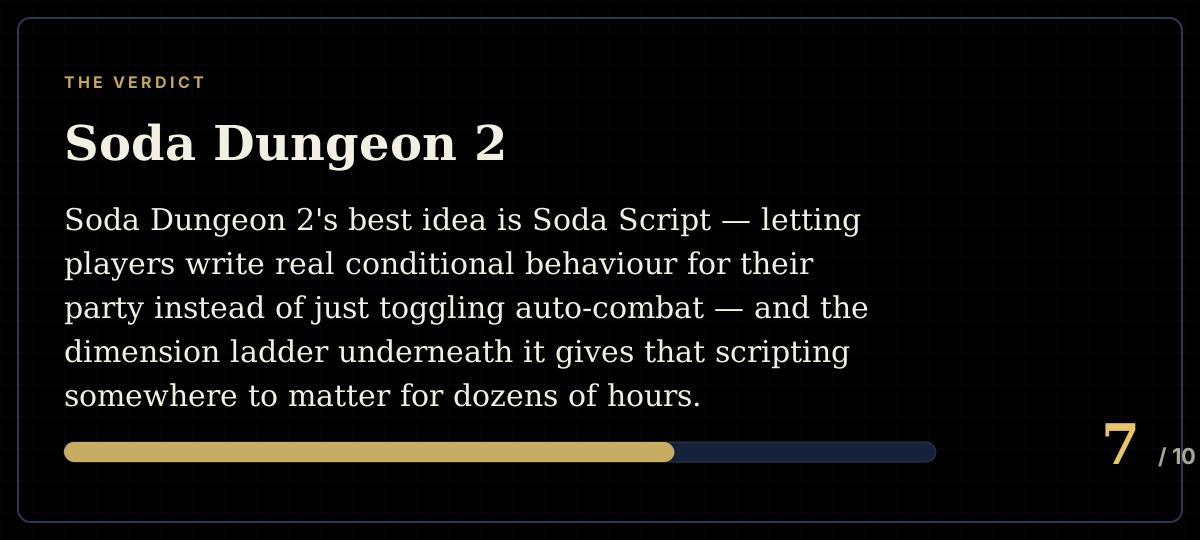
Soda Dungeon 2's best idea is Soda Script — letting players write real conditional behaviour for their party instead of just toggling auto-combat — and the dimension ladder underneath it gives that scripting somewhere to matter for dozens of hours. What holds it back is everything surrounding that core: menus that never got a real desktop pass, a cash shop that shows up on every platform including the one that doesn't need it, and a save system that a single bad crash can erase completely.
Biggest strengths
- Soda Script turns party behaviour into real conditional logic instead of a single auto-combat toggle
- Ten early dimensions ease new players in before Warrior's Dimension opens an infinite late-game ladder
- Steam's own DLC listing carries only a cosmetic soundtrack, with no priced content packs sitting on top of the base game
Biggest weaknesses
- Several long-tenured players report the game wiping a save entirely after a crash, forced shutdown or power loss
- Desktop menus for buying upgrades and sodas read as an unconverted mobile layout rather than something built for a mouse
- Mid-game item and skill balance leaves a visible number of choices feeling redundant once better options unlock
Who it's for: Fans of the original Soda Dungeon, and anyone who wants an idle dungeon crawler with a genuine scripting layer instead of a single auto-battle switch.
Our recommendation: Install it free on whichever platform is closest — mobile if you want it in your pocket, Steam if you'd rather skip the ads. Back up your save file somewhere the game can't wipe it, and don't expect the interface to feel native to whichever platform you picked.
7 / 10
Most idle dungeon crawlers give you exactly one lever over how your party fights: on or off. Soda Dungeon 2 gives you a scripting language instead. Soda Script lets a player attach conditional triggers to each class — heal this ally below a health threshold, swap targets when an enemy shields up, retreat a fragile support before the boss's big attack lands — and then walk away and trust the logic to hold. That's a genuinely different answer to the question every auto-battler eventually has to face: what does a player actually do once the fighting runs itself? Here, the answer is real system design, not a checkbox.
Scripting the fight instead of watching it
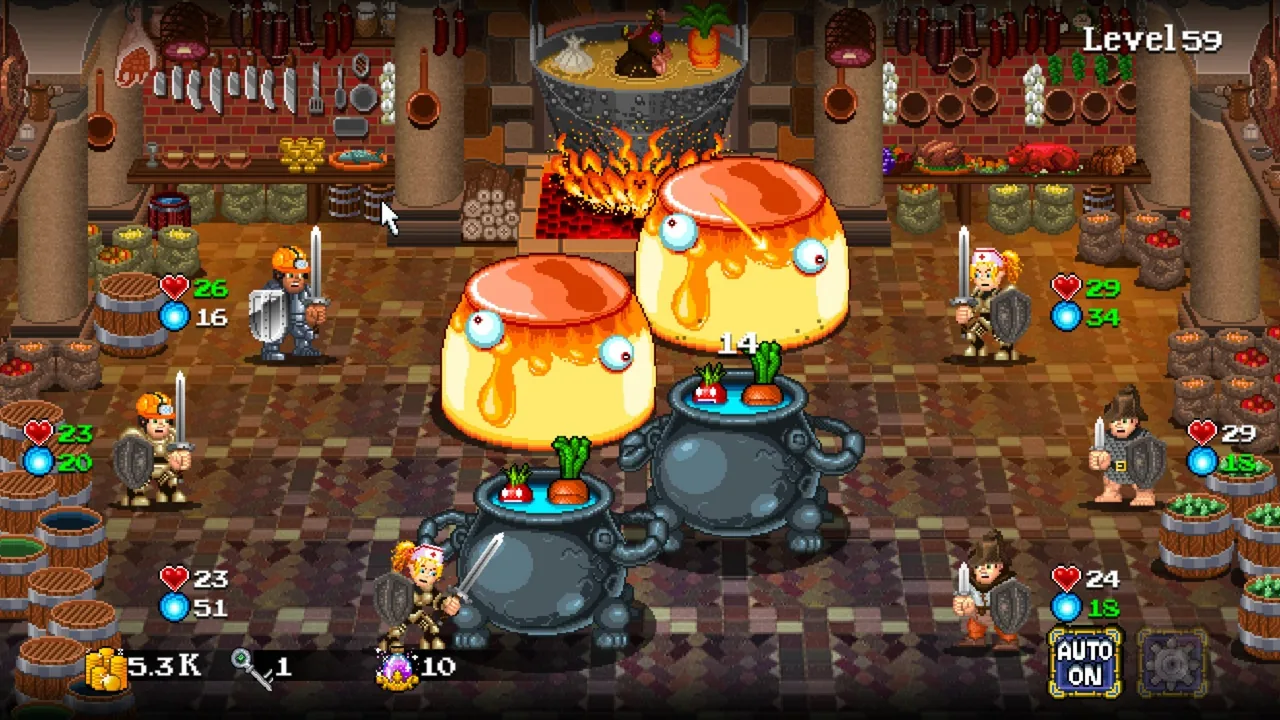
The base loop under the scripting is exactly what returning players expect from the 2015 original: hire adventurers at the tavern, send them into a dungeon, let turn-based combat resolve automatically against a scaling enemy line, bring the loot home to upgrade a growing home base, repeat with a stronger team. What's new is how much of that loop a player can actually reprogram rather than just observe. Scripts apply per-class, so a Warrior's "hold the front line" logic and a DarkMage's "burst the healer first" logic can run at the same time without a player micromanaging either one turn by turn. Getting a script wrong is instructive rather than punishing too — nobody actually dies in Soda Dungeon, so a bad trigger costs a slower run, not a wiped party.
That safety net is a deliberate genre choice as much as a mechanical one. Defeat sends the party home with whatever loot they'd already collected rather than erasing the run, which keeps the tone light and keeps a badly-tuned script from feeling like a real setback. It also means the tension in Soda Dungeon 2 was never going to come from risk of loss. It comes from whether the systems around that safety net give a player enough to actually decide.
Ten dimensions, then an infinite one
Progression is split cleanly into two phases, and the split is one of the smarter structural choices in the game. The first ten dimensions function as an extended onboarding ramp — new enemy types, new gear tiers, new unlockable classes at the tavern, each one still finite and beatable in a normal session. Clearing dimension ten hands the ladder over to Warrior's Dimension, an effectively endless climb where floors keep scaling and the goal shifts from "finish the story" to "see how far a tuned team and a tuned script can push." That's a real prestige shape without a hard reset button — nothing gets thrown away going into the endless dimension, but the pacing and the stakes change completely once it opens.
The cost of that structure shows up in the middle, not the ceiling. A visible slice of the item and skill pool exists mostly to be outgrown rather than genuinely chosen between — a pattern several current players flag directly, describing whole categories of gear and abilities as functionally dead weight once a handful of clearly stronger options unlock. That's a common enough idle-RPG failure mode, but it's a more noticeable one here specifically because Soda Script rewards a player for engaging deeply with class behaviour — the more that engagement runs into options that don't actually change an outcome, the less the scripting layer has to work with.
Crafting, the tavern, and a returning cast
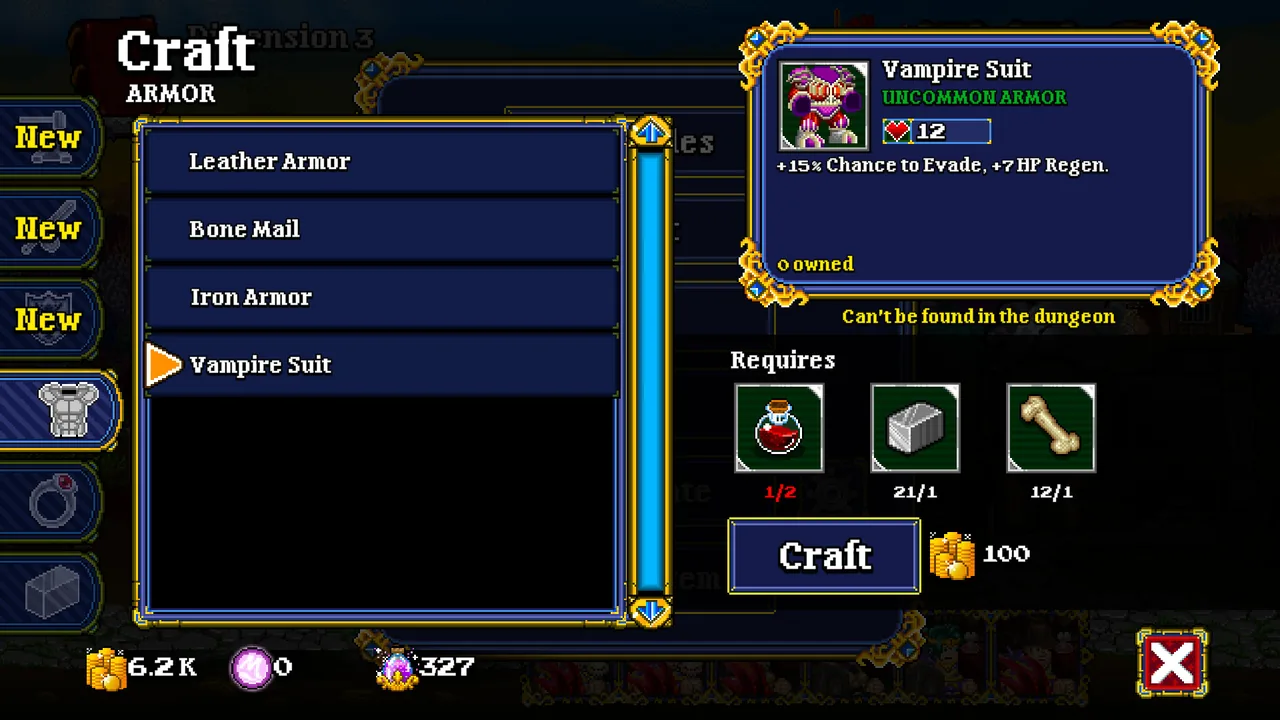
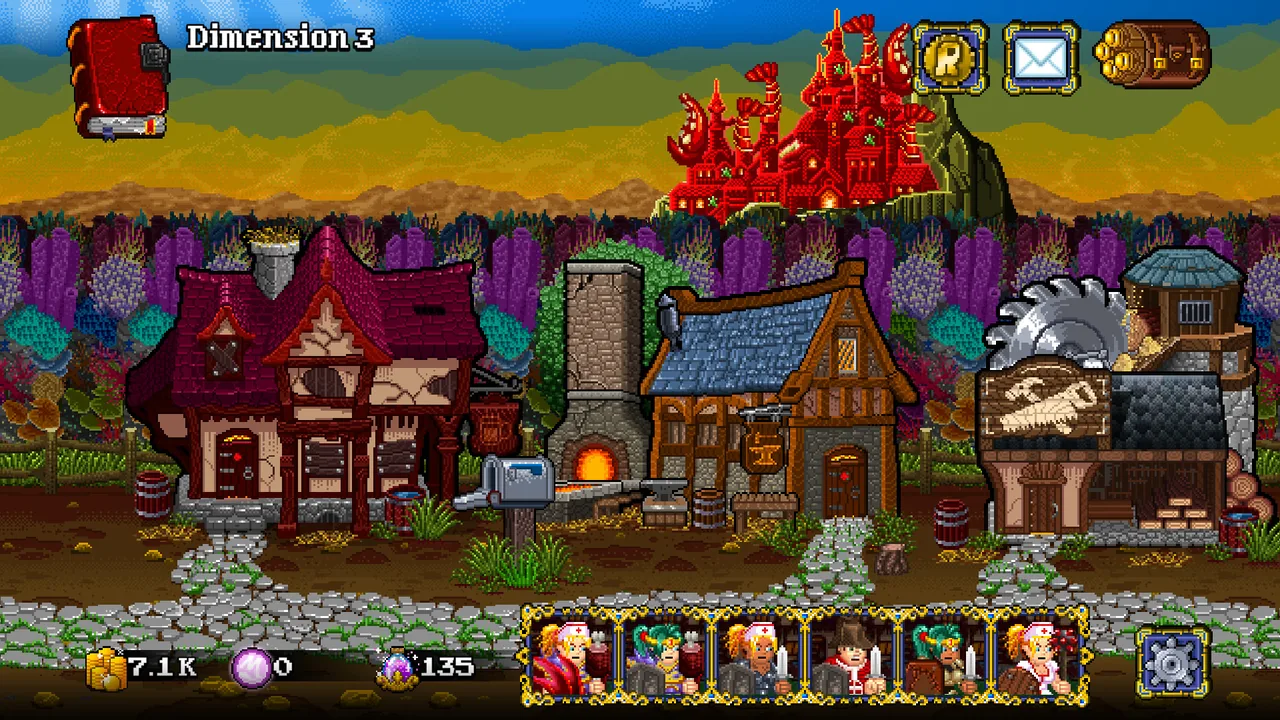
Home-base building carries more weight than it did in the original. A blacksmith forge, a wizard's shop and an arena all sit alongside the tavern now, each one gating a different slice of what a party can become — new classes, craftable gear built from dungeon-specific materials, and the arena that doubles as where Soda Script gets written and tested. None of these systems is complicated in isolation, and that's by design: this is still a game meant to be checked on rather than mastered in one sitting. The returning cast of trumpeting skeletons, put-upon Dark Lords and a genuinely overworked fairy carries the writing well past the point most idle games stop bothering with jokes, which matters more than it sounds for a genre this repetitive by nature.
Presentation
The pixel art is a clear step up from the original's rougher sprites without abandoning what made it recognisable — bright, chunky, a little goofy, and legible at the small sizes an idle game actually gets looked at. It won't be mistaken for a AAA production and isn't trying to be; the personality carries more of the presentation than the fidelity does, and it lands.
What Soda Dungeon 2 actually sells you
Steam's own developer copy is direct about this: "the only thing they won't find is timers, lives systems, or a paywall. Everything can be bought with in-game currency." That's a fair description of the shape of the shop, and it's worth taking at face value — Steam's DLC listing for this app has exactly one entry, a $6.29 soundtrack, with no priced hero packs, gear packs or content expansions sitting on top of the free base game the way they do in plenty of this genre's Steam neighbours.
It's also not the whole picture, because Soda Dungeon 2 began life as a mobile game and the cash shop followed it to every platform it landed on. Steam's own storefront categorises the game as carrying in-app purchases, meaning the same currency shop that exists on phones exists inside the Steam client too — it just arrives as an in-game purchase screen rather than a priced Steam DLC listing, which is why it doesn't show up next to the soundtrack in the store page's DLC section. Mobile carries one thing Steam doesn't: ads, appearing roughly once every few dungeon runs, mostly tied to optional bonuses like reviving a defeated adventurer or doubling a reward, plus an ad-removal purchase in the same $6–$9 range as the rest of the mobile bundle ladder. Nothing here is a hard paywall — the developer's own claim that everything is earnable in-game currency holds up against how the shop is actually built — but a share of players describe the cash shop as present in enough menus, on enough platforms, that a game with no forced timers and no lives system still feels like it's asking for a purchase more often than a genuinely paywall-free game needs to.
Where the desktop version shows its origins
The clearest tell that this game was designed for a thumb first is the interface. Buying upgrades, comparing gear and navigating the shop all read as a mobile layout translated onto a mouse rather than redesigned for one — a real complaint from players who came to the Steam version expecting a PC-native experience and found menus that assume a touchscreen's spacing and flow instead. It's not broken, but it's friction that a from-the-ground-up desktop release wouldn't carry.
More serious is a save-reliability issue several long-tenured players report independently: a crash, forced shutdown or power loss during play can wipe the save file entirely rather than rolling back to the last safe checkpoint. For a genre built on the promise that progress keeps accumulating whether or not anyone's watching, a save system that can lose everything to an ordinary crash is a real risk, not a minor inconvenience — and it's the kind of thing worth building a manual backup habit around before it happens rather than after.
Verdict
Soda Dungeon 2 earns real credit for treating its auto-battle layer as something to design rather than something to tolerate. Soda Script gives players an actual lever to pull on how their party behaves, the ten-dimension ramp into an endless Warrior's Dimension gives that lever somewhere meaningful to keep mattering, and the writing stays funny for longer than most games in this genre bother trying. Steam's clean DLC listing is a real point in its favour too — whatever else this game asks for, it isn't asking through a shelf of priced content packs.
It settles at a 7.0 rather than higher because too much of what surrounds that core still reads like an unconverted mobile game rather than a considered sequel. A cash shop that followed the game to every platform, menus that were never redesigned for a mouse, mid-game items that stop mattering the moment better ones unlock, and a save file that a bad crash can erase outright are all real costs set against a genuinely well-built core loop.
Install it for free wherever you already spend time — it's a comfortable choice on a phone during a commute and an equally comfortable one left open in a background window on a desktop. Just don't go in expecting the Steam version to feel like it was built for Steam, and back your save file up somewhere the game itself can't touch it.
Players who want their idle progression to keep moving inside one persistent, continuously running world instead of a series of restartable dungeon runs may find that a more natural fit in Wanderer.
Pricing and monetisation checked 30 July 2026.
Pros and cons
Pros
- Soda Script turns party behaviour into real conditional logic instead of a single auto-combat toggle
- Ten early dimensions ease new players in before Warrior's Dimension opens an infinite late-game ladder
- Steam's own DLC listing carries only a cosmetic soundtrack, with no priced content packs sitting on top of the base game
- Cross-platform cloud saves let a save started on a phone continue seamlessly on Steam
- The writing keeps a running joke going for dozens of hours without repeating itself as often as the genre usually does
Cons
- Several long-tenured players report the game wiping a save entirely after a crash, forced shutdown or power loss
- Desktop menus for buying upgrades and sodas read as an unconverted mobile layout rather than something built for a mouse
- Mid-game item and skill balance leaves a visible number of choices feeling redundant once better options unlock
- The Warrior's Dimension endgame stretches into hours-long single climbs, and moving to a new dimension means re-clearing every floor from the start
- Mobile ads for revives and bonuses sit alongside a cash shop that a share of players describe as present in nearly every menu
Screenshots
-
Soda Dungeon 2Image: Armor Games Studios via Steam -
Soda Dungeon 2Image: Armor Games Studios via Steam -
Soda Dungeon 2Image: Armor Games Studios via Steam -
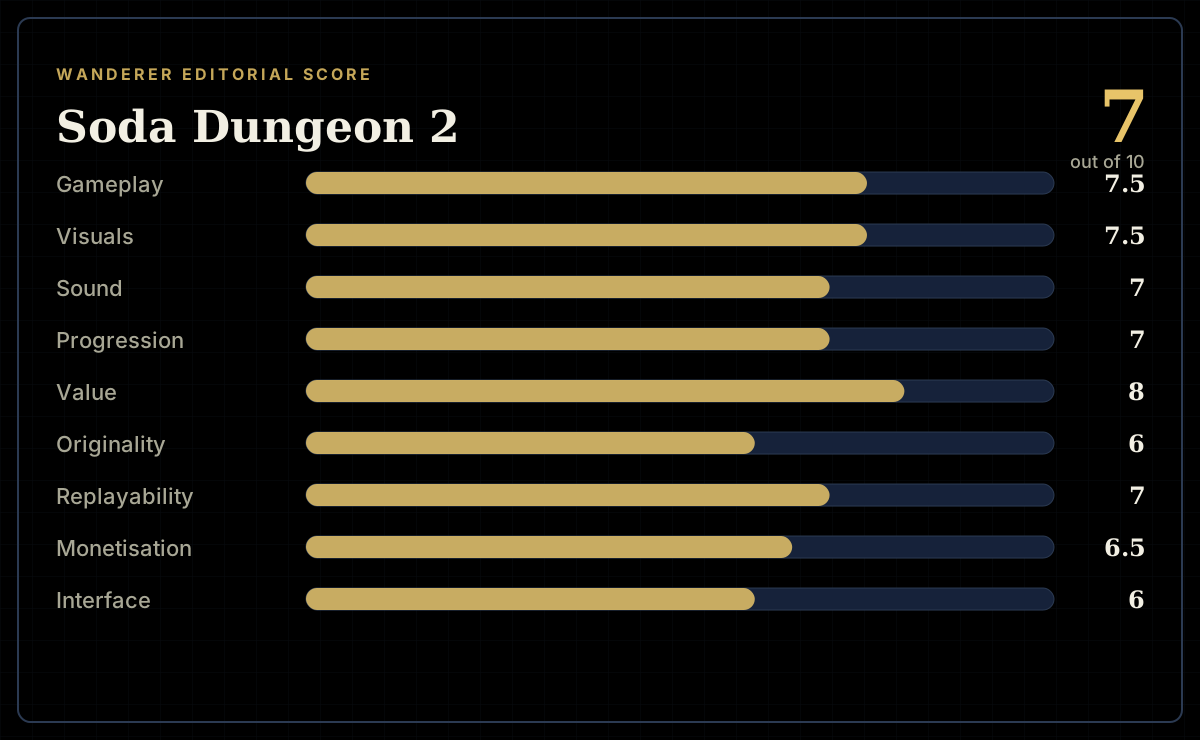
How the review scores each part of the gameWanderer Editorial -
The short versionWanderer Editorial