Game review
Nonstop Knight 2
6.5 / 10
- Developer
- Kopla Games
- Publisher
- Flaregames GmbH
- Released
- 13 June 2019
- Platforms
- iOS, Android
- Genre
- Action RPG
- Monetisation
- Free-to-play with a regenerating key system gating new dungeon runs, a gem premium currency sold in fixed bundles, loot boxes (disclosed directly in the App Store listing), and optional rewarded video ads
- Players
- Asynchronous guild cooperation with offline companion rewards, plus the Badlands mode's competitive leaderboards and tournaments; no real-time PvP or co-op play
The short version
Nonstop Knight 2 took a genuinely elegant idea — a knight who runs and fights on his own while you handle the abilities — and built a full second game's worth of heroes, elemental skill trees, guilds and a competitive leaderboard mode around it. Most of that expansion earns its keep. What doesn't is the regenerating key that now gates every new dungeon run to roughly once an hour, which turns the series' defining promise into the thing players complain about most.
Biggest strengths
- The semi-auto combat loop — knight runs and swings on his own, player triggers the abilities — still reads as immediate and responsive seven years and one full sequel later
- Full equipment slots (helmet, gloves, chest, boots, cloak or shield) plus fire, ice and void skill trees give real build variety the single-knight original never had
- Guild cooperation and the Badlands leaderboard add a social and competitive layer entirely absent from the first game, without demanding real-time attendance
Biggest weaknesses
- The regenerating key system caps new dungeon attempts at roughly one per hour, and players consistently describe it as the single mechanic that most contradicts a game called "Nonstop"
- Keys, gems, loot crates and rewarded ads stack into more separate points of monetisation pressure than the mechanically simpler original ever needed
- Loot boxes are flagged directly in the app's own App Store disclosure, and gem-bundle pricing climbs to $49.99 for a single purchase
Who it's for: Mobile action-RPG fans who want real gear and build depth in a game they can pick up for five minutes at a time, and who don't mind a game that asks them to check back in on a schedule rather than leaving it running for a day.
Our recommendation: Worth installing for free — the combat, the elemental skill trees and the equipment system are all better than they need to be for a seven-year-old mobile game. Go in expecting the key system to set your actual pace, not the difficulty curve, and decide early whether that's a rhythm you can live with.
6.5 / 10
From one knight to a roster
Nonstop Knight, the 2016 original from Finnish studio Kopla Games, ran on a small idea executed cleanly: a knight advances down an endless dungeon corridor on his own, fights start and resolve automatically, and the player's entire job is tapping the screen at the right moment to fire off whatever ability ring was equipped. One character, one gear slot doing most of the work, one loop. Kopla's own account of the franchise it built credits the series with more than 30 million players and a "best upcoming Finnish game company" award in 2017 — modest numbers by mobile standards, but real ones for a game whose entire pitch was doing less than its competitors.
Nonstop Knight 2 kept that corridor and that tap, then spent seven years building a second game's worth of systems on top of it. Heroes now carry full equipment loadouts — helmet, gloves, chest armor, boots, and a cloak or shield — instead of the original's single ring, and combat skills split across fire, ice and void trees rather than living on one interchangeable gear piece. Item sets reward committing to a matching loadout instead of just chasing the single highest number. None of this is a gimmick bolted on to justify a "2" in the title. It's the kind of gear system players actually optimize around, and it gives Nonstop Knight 2 a build-planning layer the minimalist original was never trying to have.
Guilds and Badlands: systems the original never needed
The bigger structural addition is social. Guild cooperation grants offline companion rewards to members, and the Badlands mode runs its own leaderboards and tournaments for players who want a number to compare against strangers rather than just their own last run. Neither system demands real-time attendance — guild rewards accrue asynchronously, and Badlands rankings update on their own schedule rather than forcing a live match. That's the right call for a game whose whole appeal used to be that it needed almost nothing from you. Tap Titans 2 made the opposite bet with its own tournament mode, scheduling fixed windows that reward players who can be actively online when the clock is running. Nonstop Knight 2's Badlands avoids that trap, adding competitive stakes without converting the game into an appointment.
The key that broke the promise in the name
This is where the review has to get specific, because it's the mechanic current players raise most consistently, and it sits directly on top of the site's central question for any mobile idle-adjacent game: what actually happens while you're not looking at it. In Nonstop Knight 2, the answer is a regenerating key. Each new dungeon run costs one, the pool caps low, and refills arrive at roughly one key per hour — meaning the practical limit on how much of the game a player can touch in a sitting isn't skill, gear, or even the dungeon's own difficulty curve. It's a timer. Player reviews on the App Store are blunt about the result: one describes waiting "basically a day" to keep playing without spending, another calls the pacing a design failure outright. Whether or not that specific tone is fair, the underlying complaint is accurate — a key economy is, functionally, the game's away-progression system, and it's a stingy one next to genres built around true offline income.
It's also a more concentrated version of a problem this site has flagged before. Bit Heroes spreads the same idea across four separate stamina meters — dungeon energy, PvP tickets, raid currency, trial tokens — which dilutes the friction even as it multiplies the number of things a new player has to track. Nonstop Knight 2 has exactly one meter, which makes the game easier to understand at a glance and makes that single choke point far more visible, and far more frustrating, every time it's the reason a session ends. A game named for never stopping built its entire monetisation loop around a mechanic whose job is making you stop.
Layered on top of the key economy: a gem premium currency sold from $0.99 up to a $49.99 bundle, special offers between $1.99 and $19.99, loot boxes that Apple's own storefront discloses directly in the listing, and optional rewarded video ads. None of it is disguised — the ads convert into real, usable currency rather than a mystery box, and multiple players specifically praise the absence of forced interstitial ads, a genuinely different experience from mobile idlers that interrupt every third action. Almost a Hero makes a similar promise about its rewarded-ad economy and keeps it cleanly, because nothing in that game gates core progress behind a hard wall the way Nonstop Knight 2's keys do. Here, "ads are optional" is true in the narrow sense — nobody is forced to watch one — but it sits next to a key system that isn't optional at all once the pool runs dry, which is a meaningfully different claim than a shop with no mandatory gate whatsoever.
Combat that still lands, when you're allowed to play it
None of the monetisation critique should obscure what Nonstop Knight 2 actually gets right during the time a player does have keys for. The semi-auto combat — knight advancing and swinging on his own, player timing ability triggers against incoming bosses — still reads as immediate rather than passive, and current player feedback consistently credits the loop with feeling responsive even after seven years of accumulated systems. The elemental skill trees add a real decision layer bosses can punish if ignored, and the multiple game modes — Nightmare, Resource Farms, Survival, Paranormal, Companion challenges — give the same core combat different constraints to work within rather than just scaling the same fight harder.
The rough edges are specific rather than vague. Crash reports cluster around tablet play, an awkward weak spot for a genre whose whole appeal is long, low-effort sessions on a larger screen. Recent updates stripped out difficulty-tier options some veteran players relied on to keep the late game challenging, trading accessibility for the kind of long-term ceiling that keeps a seven-year player base engaged. And a handful of reviews single out tonal choices — dance emotes and lighthearted event framing — as a mismatch for a game that otherwise plays like a straight dungeon crawler. None of these sink the combat. They're the kind of accumulated friction that shows up in any live-service game seven years and dozens of content patches into its life.
Still alive, which is not nothing
For a Flaregames-published mobile title from this era, that question is worth asking directly rather than assuming. The evidence here is clean: version 3.3.8 shipped 7 July 2026 as a "7th Anniversary Update," adding a new dungeon and a seasonal event rather than coasting on old content. The App Store listing carries roughly 8,500 US ratings averaging 4.6 out of 5, and the Google Play listing shows a similar consensus — around 4.2 out of 5 across more than 56,000 reviews. There's no Steam presence to check, and none was expected; a storesearch query for "nonstop knight" against Steam's own API returns zero results, confirming this has always been a mobile-only series. What did turn up delisted is the original Nonstop Knight itself — it no longer appears in App Store search results in the New Zealand, US or Finnish storefronts, which suggests Kopla and Flaregames have quietly pulled it from sale rather than continuing to support two overlapping games. Nonstop Knight 2 is the only entry left standing, and it's standing on genuinely active ground rather than maintenance-mode life support.
Where it sits next to the rest of the shelf
The useful comparison isn't another gacha idler — it's another sequel that had to answer the same question. Soda Dungeon 2 added scripting and deeper systems on top of the free, ad-less original without retiring it; both still exist side by side. Kopla and Flaregames went a different way, letting the minimalist original disappear entirely in favor of the expanded sequel. That's a defensible business decision for a live-service game — maintaining two overlapping products is real ongoing cost — but it means anyone who liked Nonstop Knight specifically for what it left out no longer has the option to go play that version. What they get instead is a genuinely deeper game gated by a mechanic less generous than anything the original asked of them.
Verdict
Nonstop Knight 2 earns real credit for turning a one-note idea into a game with actual build depth, a social layer, and seven years of continuous support that a lot of 2019-era mobile titles never see. The combat still works, the gear system rewards planning, and the ad economy is honestly one of the less pushy versions of its kind on mobile. It settles at 6.5 rather than higher because the key system isn't a minor annoyance sitting off to the side — it's the mechanism that decides how much of everything else a player actually gets to touch in a given hour, and it does that job worse than the branding, or the rest of the game's design, suggests it should. Free players get a real, regularly-updated action RPG here. They just get it on the key pool's schedule, not their own.
Pricing and monetisation checked 1 August 2026.
Players who want their gear and combat progression to keep moving without a regenerating timer deciding when they're allowed to play might also want to look at Wanderer, where nothing ever gates the next step behind an hourly refill.
Pros and cons
Pros
- The semi-auto combat loop — knight runs and swings on his own, player triggers the abilities — still reads as immediate and responsive seven years and one full sequel later
- Full equipment slots (helmet, gloves, chest, boots, cloak or shield) plus fire, ice and void skill trees give real build variety the single-knight original never had
- Guild cooperation and the Badlands leaderboard add a social and competitive layer entirely absent from the first game, without demanding real-time attendance
- No forced interstitial ads is a specific, repeated point of praise in current player feedback, not a vague claim
- Seven straight years of live support, capped by a July 2026 anniversary update adding new dungeon content, is rare for a 2019 mobile action RPG and confirms it is still actively developed
Cons
- The regenerating key system caps new dungeon attempts at roughly one per hour, and players consistently describe it as the single mechanic that most contradicts a game called "Nonstop"
- Keys, gems, loot crates and rewarded ads stack into more separate points of monetisation pressure than the mechanically simpler original ever needed
- Loot boxes are flagged directly in the app's own App Store disclosure, and gem-bundle pricing climbs to $49.99 for a single purchase
- Recent updates removed difficulty-tier options that veteran players relied on for meaningful endgame challenge
- Crash reports cluster specifically around tablet play, an odd weak point for a genre built around long, low-input sessions
Screenshots
-
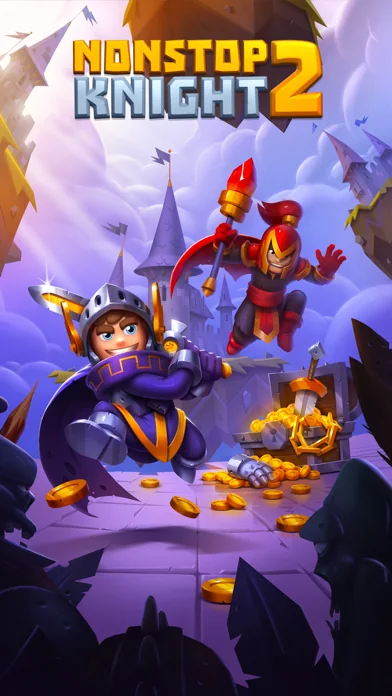
Nonstop Knight 2 - Action RPGImage: Flaregames GmbH via the App Store -
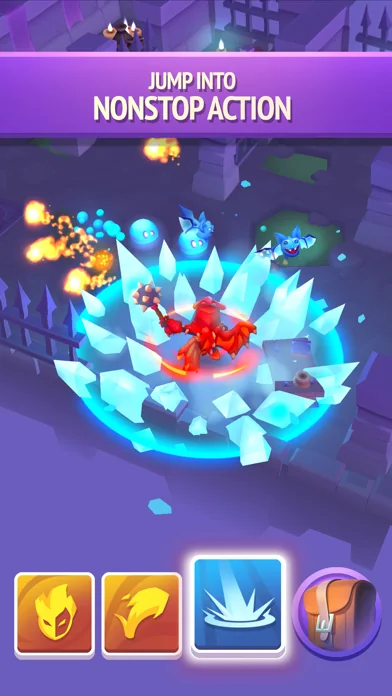
Nonstop Knight 2 - Action RPGImage: Flaregames GmbH via the App Store -
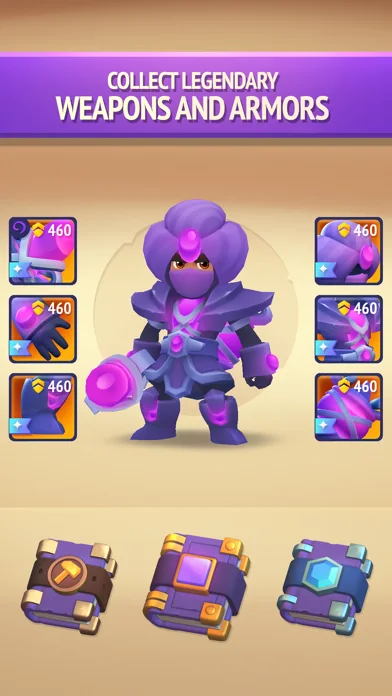
Nonstop Knight 2 - Action RPGImage: Flaregames GmbH via the App Store -
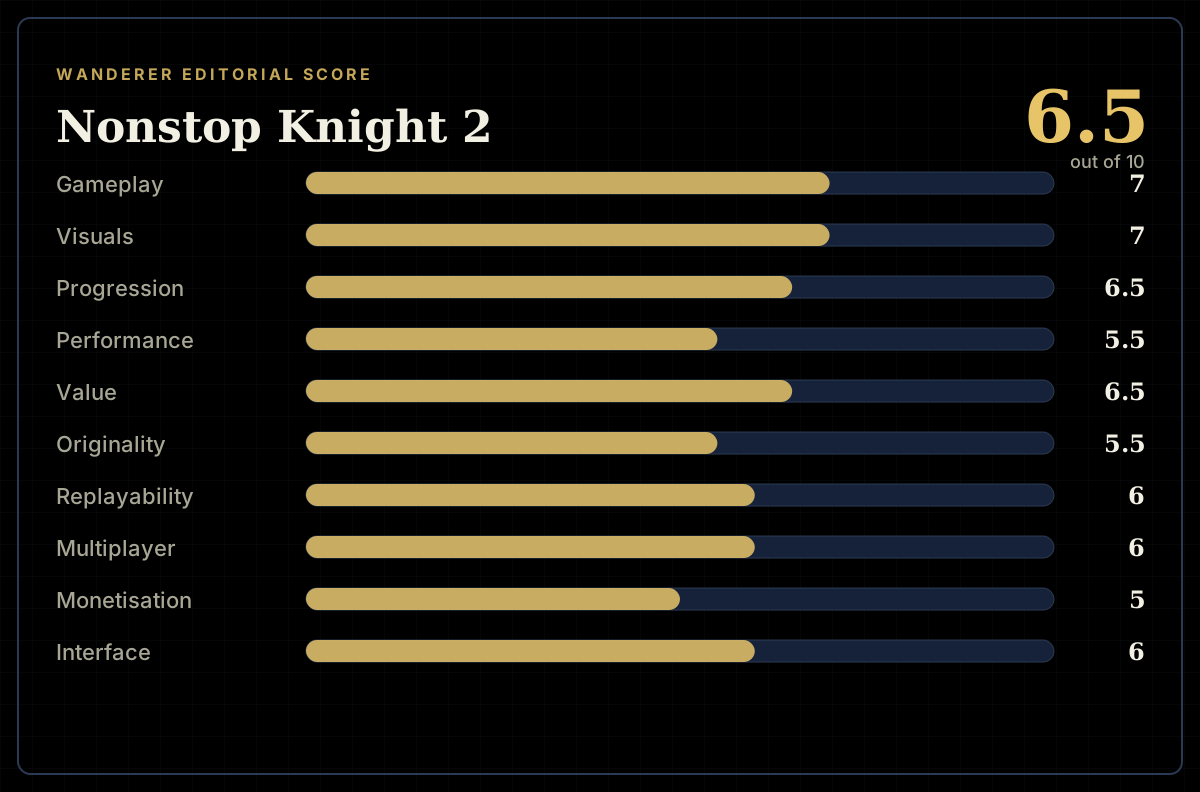
How the review scores each part of the gameWanderer Editorial -
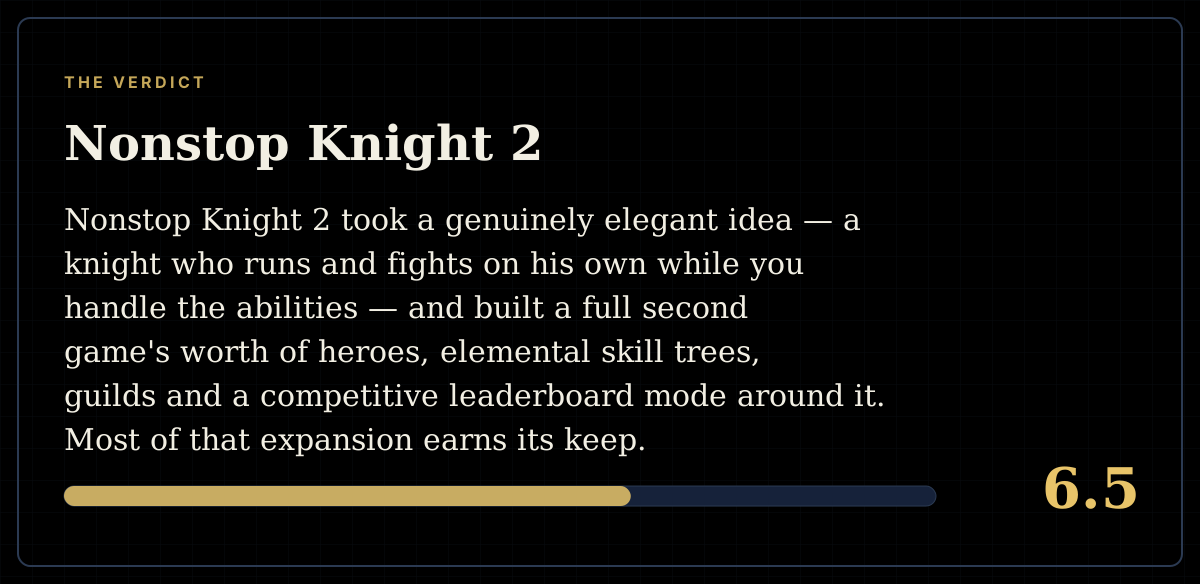
The short versionWanderer Editorial