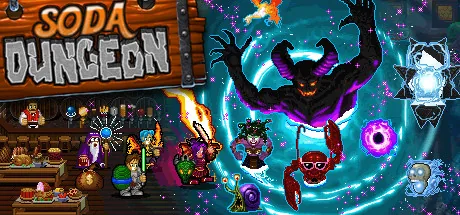
Game review
Soda Dungeon
7 / 10
- Developer
- AN Productions, Poxpower
- Publisher
- Armor Games Studios
- Released
- 6 February 2017
- Platforms
- Windows
- Genre
- Idle RPG
- Monetisation
- Free-to-play with an in-client currency shop; no advertisements on the Steam version
- Players
- Single-player, no online or local multiplayer
The short version
Soda Dungeon takes the Clicker Heroes formula of ascend, reset, unlock a permanent bonus, and wraps it in a tavern full of hireable adventurers and just enough turn-based combat to feel like an actual RPG rather than a spreadsheet. It's an easy game to recommend at its price of nothing, but the loop is simple by design and starts showing its seams once the novelty of a new dimension wears off.
Biggest strengths
- The relic-and-dimension ascension loop gives a simple auto-battler real long-term structure, closely following the Clicker Heroes template
- Completely free with no advertisements on the Steam release and no priced DLC on the storefront at all
- Multiple long-time players describe unlocking heroes and convenience upgrades for a dollar or two apiece rather than hitting a paywall
Biggest weaknesses
- A recurring player complaint describes the mouse cursor turning sluggish specifically when the window is maximized or set to fullscreen
- Floors and encounters repeat with little visual variety once the auto-battle habit sets in, and several negative reviews cite exactly this as the reason they stopped
- Auto-Combat's AI makes basic decisions with little room to tune it, unlike the scripting layer Soda Dungeon 2 later added
Who it's for: Idle and incremental fans who want their number-go-up loop wrapped in visible characters and gear rather than an abstract upgrade tree, and anyone curious about the mobile game that later became Soda Dungeon 2.
Our recommendation: Install it for free and see how far level 100 gets you before deciding whether the ascension loop has hooked you. If it has, the newer Soda Dungeon 2 offers a deeper version of the same idea.
7 / 10
Most idle games hide their number-go-up loop behind an abstract tree of upgrades. Soda Dungeon puts a face on it: a tavern full of adventurers you actually hire, equip and send into a dungeon that keeps getting harder, with a turn-based combat screen underneath the auto-battle option rather than instead of it. It's a small, free, slightly goofy game built on a formula everyone in this genre recognises, and it's aged well specifically because it never pretends to be more than that.
The loop: hire, gear, send, repeat
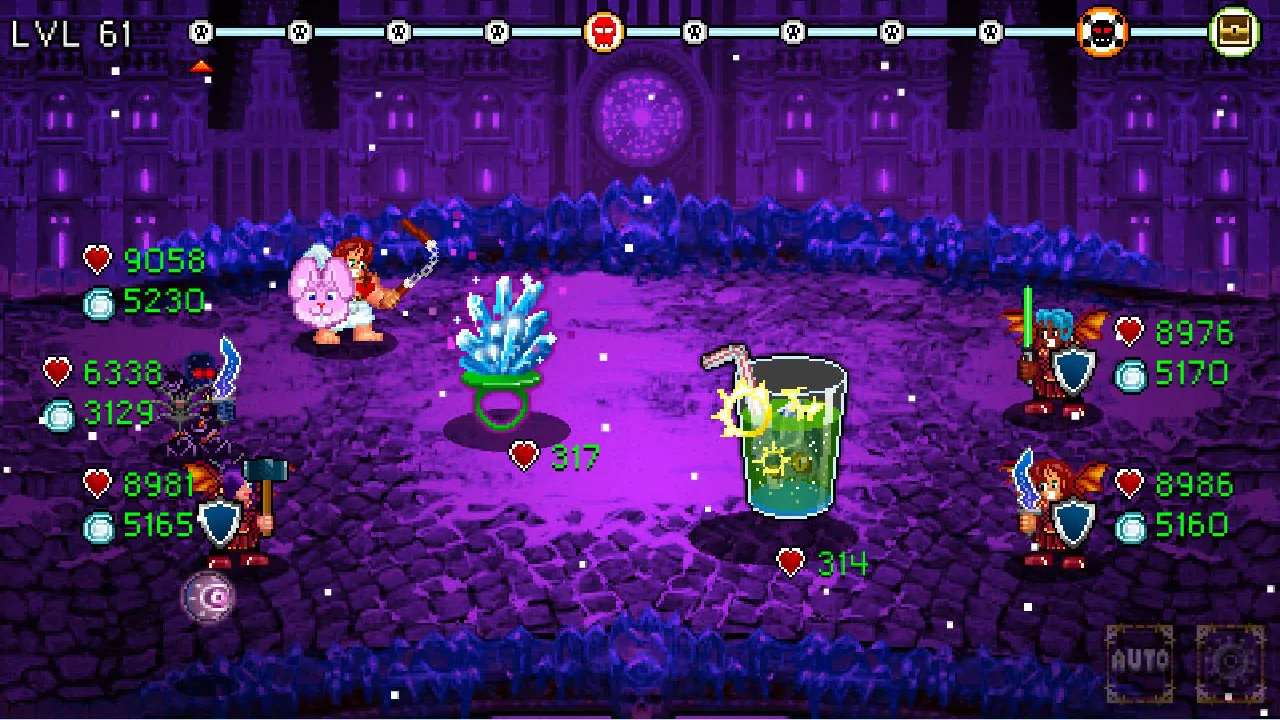
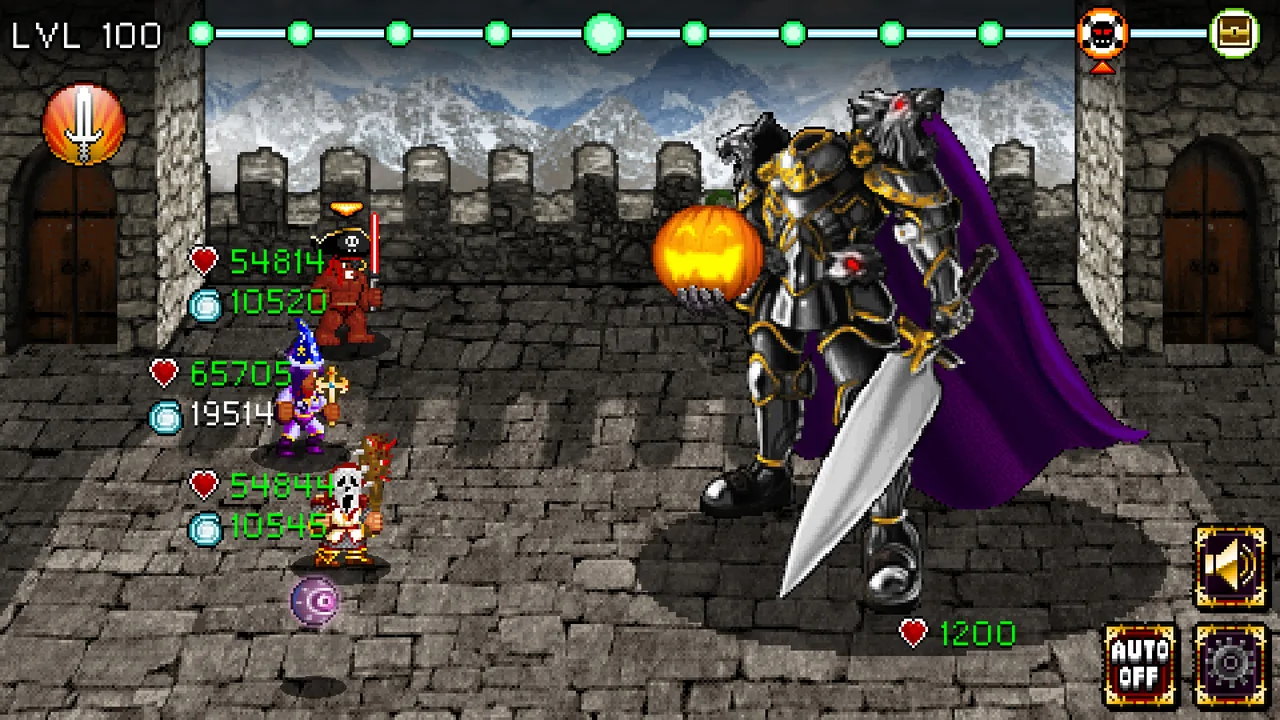
The structure will be instantly familiar to anyone who has played Clicker Heroes or its many descendants, translated into an RPG-flavoured skin. Adventurers are hired at the tavern with gold earned from previous runs, equipped with whatever gear the dungeon has coughed up, and sent down a corridor of increasingly dangerous floors. Every fifth floor brings a miniboss, every tenth a full boss, and the fights themselves can be played out manually, turn by turn, or handed to Auto-Combat and left running in the background. That dual mode matters more than it sounds like it should: plenty of idle games only tolerate manual play as a novelty, but Soda Dungeon's turn-based combat holds up as an actual decision space when a player wants to engage with it, not just a slower way to watch numbers change.
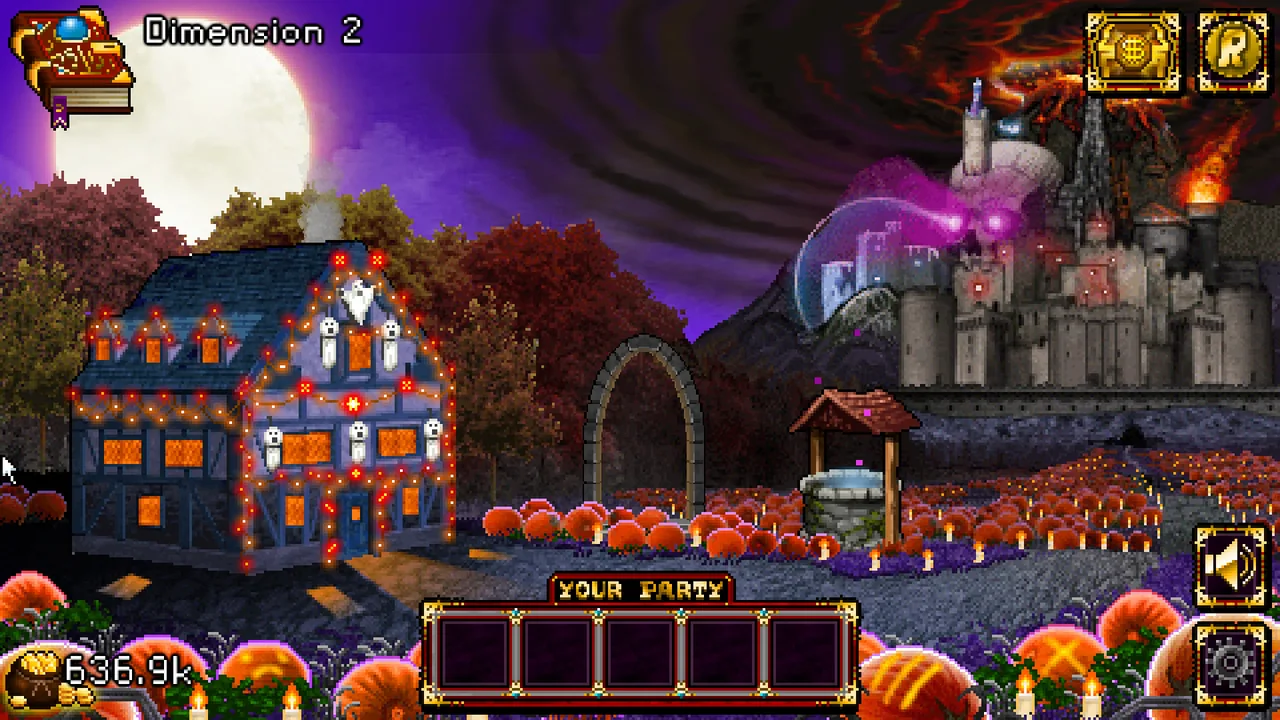
Characters don't level up individually in the way a traditional RPG would suggest. Instead, progression runs through gear and through the relic system unlocked once a run reaches dimension milestones, echoing the ascend-and-reset structure the genre borrowed from Clicker Heroes almost wholesale. Reaching level 100, then 200, then 300 within a dimension eventually opens the option to ascend into a new one, trading the floors already cleared for a permanent relic bonus and a fresh, harder climb. It's not a novel idea by 2017, let alone now, but it's implemented cleanly enough that the loop of push, ascend, push further keeps generating a reason to check back in.
Dressed as a dungeon crawler, not a spreadsheet
What separates Soda Dungeon from a pure numbers game is how much of its personality survives the idle wrapper. The classes on offer, Thief, Knight, Healer, Darkmage, Shifter and more, each carry their own stat spread and abilities, and assembling a workable party out of them is a real puzzle in the early dimensions before better gear smooths the decision out. A warp feature that lets players pay a small gold fee to jump straight back to a previously cleared floor is a small piece of design that a lot of idle games skip and shouldn't: nobody wants to re-walk a hundred floors they've already beaten just to get back to where they left off.
The pixel art won't be mistaken for a prestige production and isn't trying to be. It's simple, bright and legible at the small sizes an idle game is actually looked at, which matters more than raw fidelity in a genre built around glancing at a screen rather than staring at it. The soundtrack is a short, looping piano-and-drum track that by most accounts should have worn out its welcome in an hour and somehow hasn't, going by how often long-time players single it out as one of the game's better surprises.
Where the loop runs out of new things to show you
The ascension structure gives Soda Dungeon a real shape, but it's a shape built on repetition, and that repetition is where the criticism concentrates. A meaningful share of negative feedback describes floors and enemy encounters blurring together with too little new to look at once the early novelty wears off, which is a fair reading of a game whose main lever for difficulty is scaling numbers rather than new mechanics. Auto-Combat compounds this in its own way: it's convenient and it's honestly done, but the decision-making underneath it is basic, and players looking for the kind of conditional scripting Soda Dungeon 2 later introduced won't find anything like it here. This is the original, simpler version of that idea, and it plays like one.
The most concrete technical complaint is a cursor bug reported by a cluster of players: maximizing the window or switching to fullscreen makes the mouse pointer noticeably sluggish, with no fix surfacing in the game's own forums. It doesn't stop the game from functioning, since Auto-Combat doesn't need precise clicking to keep running, but it undercuts the moments where manual, turn-based play is meant to feel responsive.
What actually costs money
Steam categorises Soda Dungeon as carrying in-app purchases, and the storefront is explicit that there's no paywall gating basic progress: no timers, no lives system, nothing standing between a player and the next dungeon floor except the floor itself. Player accounts of what the shop actually sells are consistent with that framing. Purchases appear to buy gold directly at a fixed exchange rate, alongside a handful of specific unlocks like extra heroes or a dungeon speed-up, with individual purchases landing in the one-to-two-dollar range rather than escalating into a battle-pass-style ladder. One long-time player's account of spending roughly ten dollars total across several hero unlocks, framed as a reasonable price for skipping some grind rather than a requirement to progress at all, matches the wider pattern: convenient, optional, and not structured around pressuring anyone into spending. Steam's own storefront lists no priced DLC for the game at all, which is a meaningfully clean position for a free-to-play idle game to hold.
The Steam release also drops a cost the mobile original reportedly carried: several reviews single out the PC version specifically for shipping with no advertisements, treating what would normally be a paid ad-removal unlock as simply included for free. That's a real point in its favour and one worth noting for anyone coming from the mobile version expecting the same interruptions.
Verdict
Soda Dungeon earns its Very Positive standing honestly. It takes a well-worn ascension formula, attaches it to characters and gear a player can actually see and choose between, and charges nothing for the privilege, with no ads on Steam and no paywall gating the loop at any point. The warp feature, the relic system, and the option to play combat manually instead of just watching it all show a developer that understood which parts of the genre's usual friction were worth removing.
It settles at a 7.0 because the game is honest about being simple, and simple eventually means repetitive. Floors don't vary enough to reward long manual play, Auto-Combat's decision-making can't be tuned the way later idle games allow, and a persistent cursor bug in fullscreen mode is the kind of rough edge that should have been fixed years ago. None of that erases what's here: a free, well-made, genuinely addictive idle dungeon crawler that respects the time of whoever leaves it running. Players who finish it and want the same idea with more systems underneath it have an easy next step in Soda Dungeon 2, already reviewed on this site.
Anyone who wants that same kind of persistent, always-progressing loop but set in one continuous world instead of a series of restartable dungeon runs may also want to look at Wanderer.
Pricing and monetisation checked 1 August 2026.
Pros and cons
Pros
- The relic-and-dimension ascension loop gives a simple auto-battler real long-term structure, closely following the Clicker Heroes template
- Completely free with no advertisements on the Steam release and no priced DLC on the storefront at all
- Multiple long-time players describe unlocking heroes and convenience upgrades for a dollar or two apiece rather than hitting a paywall
- Manual turn-based combat and full Auto-Combat are both genuinely playable modes, not a single toggle bolted onto a mobile game
- Chunky, legible pixel art and a short looping soundtrack that players still praise dozens of hours into a save
Cons
- A recurring player complaint describes the mouse cursor turning sluggish specifically when the window is maximized or set to fullscreen
- Floors and encounters repeat with little visual variety once the auto-battle habit sets in, and several negative reviews cite exactly this as the reason they stopped
- Auto-Combat's AI makes basic decisions with little room to tune it, unlike the scripting layer Soda Dungeon 2 later added
- Platform support stops at Windows, with no macOS or Linux build, and the game only ships in five languages
- Controls still read as a converted mobile layout, with clicking simply standing in for the original game's tapping rather than a from-scratch desktop redesign
Screenshots
-
Soda DungeonImage: Armor Games Studios via Steam -
Soda DungeonImage: Armor Games Studios via Steam -
Soda DungeonImage: Armor Games Studios via Steam -
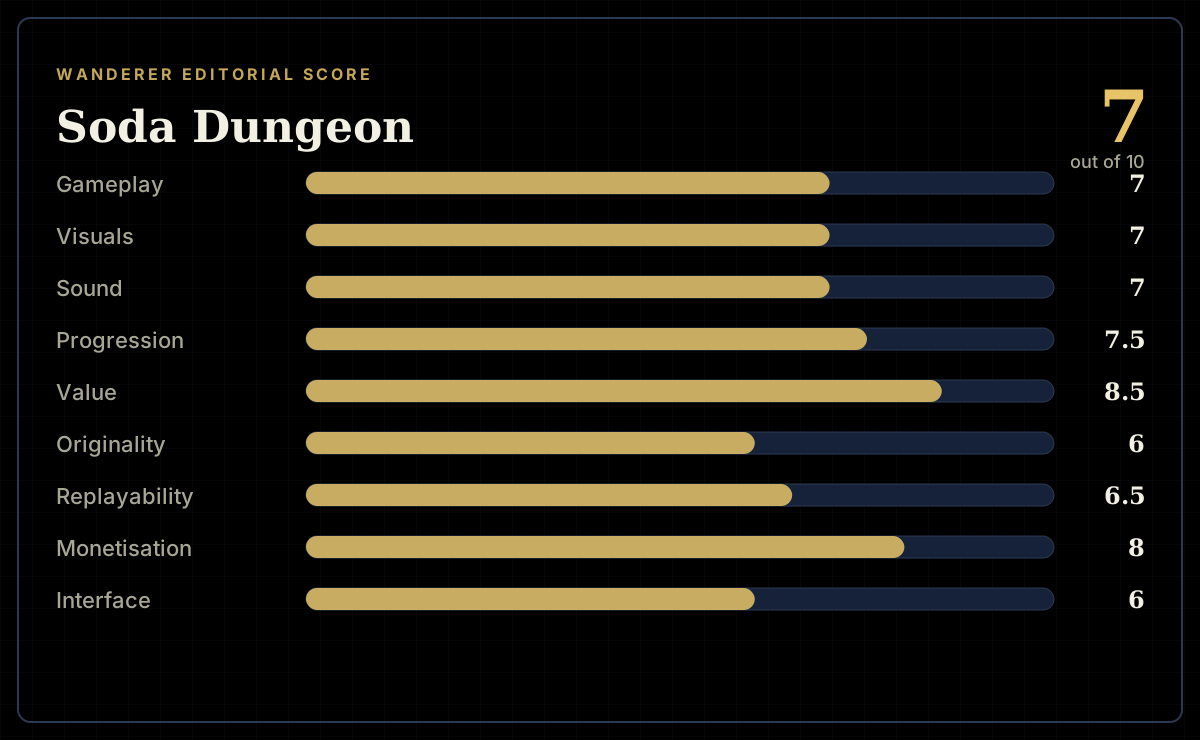
How the review scores each part of the gameWanderer Editorial -
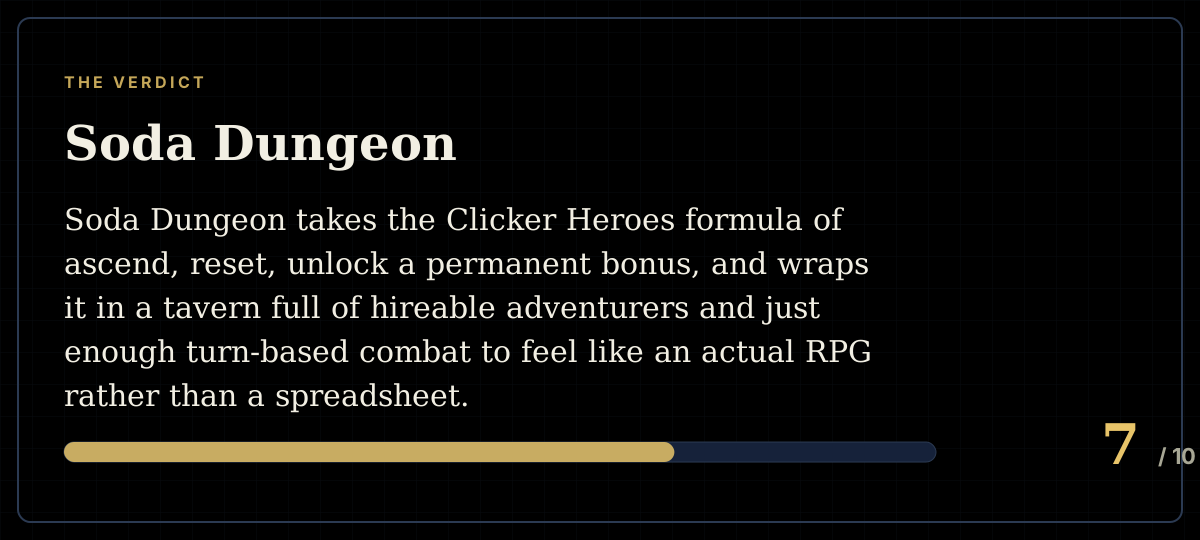
The short versionWanderer Editorial