Game review
The Commission: Organized Crime Grand Strategy
4.2 / 10
- Developer
- 302 Interactive
- Publisher
- 2:30 AM Studios
- Released
- 23 August 2018
- Platforms
- Windows, macOS
- Genre
- Grand Strategy
- Monetisation
- Premium, one-time purchase
- Players
- Single-player only
The short version
The Commission picks a setting almost nobody else is working in — turn-based Prohibition-era mafia strategy, five families squabbling over a fictional city called New Shore — and then doesn't build enough game underneath it to hold that premise up. The opening hour or two, spent picking a family and carving out a first racket, has real promise. Past that it flattens into a spreadsheet of assign-capo-to-neighbourhood decisions with no real counterplay, wrapped in an interface that a majority of its own reviewers single out as the thing that broke them.
It is cheap now, and the idea alone is worth an hour of anyone's curiosity about the genre. It is not worth defending as a finished grand strategy game.
Biggest strengths
- A setting with almost no modern competition — turn-based Prohibition mafia strategy is a genre of one
- Five families with distinct starting traits give the first hour or two real variety
- The core loop (claim a neighbourhood, pick a racket, defend it) is legible immediately, once you're past the interface
Biggest weaknesses
- Interface is the single most-repeated complaint across its review history — no full map view in one window, no early tutorial, "excel with a little graphics"
- Progression flattens hard within a handful of hours into steamrolling identical neighbourhoods with no endgame or event markers
- Persistent, unresolved bug reports, including a broken UI/audio state that survives reinstalling and verifying files
Who it's for: Genre curiosity-seekers who grew up on Gangsters or Mob Rule and will forgive a lot of jank for a mafia management fix that barely exists anywhere else.
Our recommendation: Wait for a deep sale, and go in expecting a rough, shallow proof-of-concept rather than a finished grand strategy game.
4.2 / 10
Introduction
Grand strategy has room for a hundred subgenres it has never really tried. Organized-crime management is one of them — the last notable attempt most PC players can name is Eutechnyx's Gangsters: Organized Crime and its sequel, both closing in on a quarter-century old. 302 Interactive's The Commission: Organized Crime Grand Strategy, released in August 2018 and still sold today for a few dollars, tries to fill that gap: five fictional mafia families fighting over the fictional city of New Shore, block by block, racket by racket, across the Prohibition era. It is a good pitch. The execution is where the trouble starts.
The pitch and the opening hours
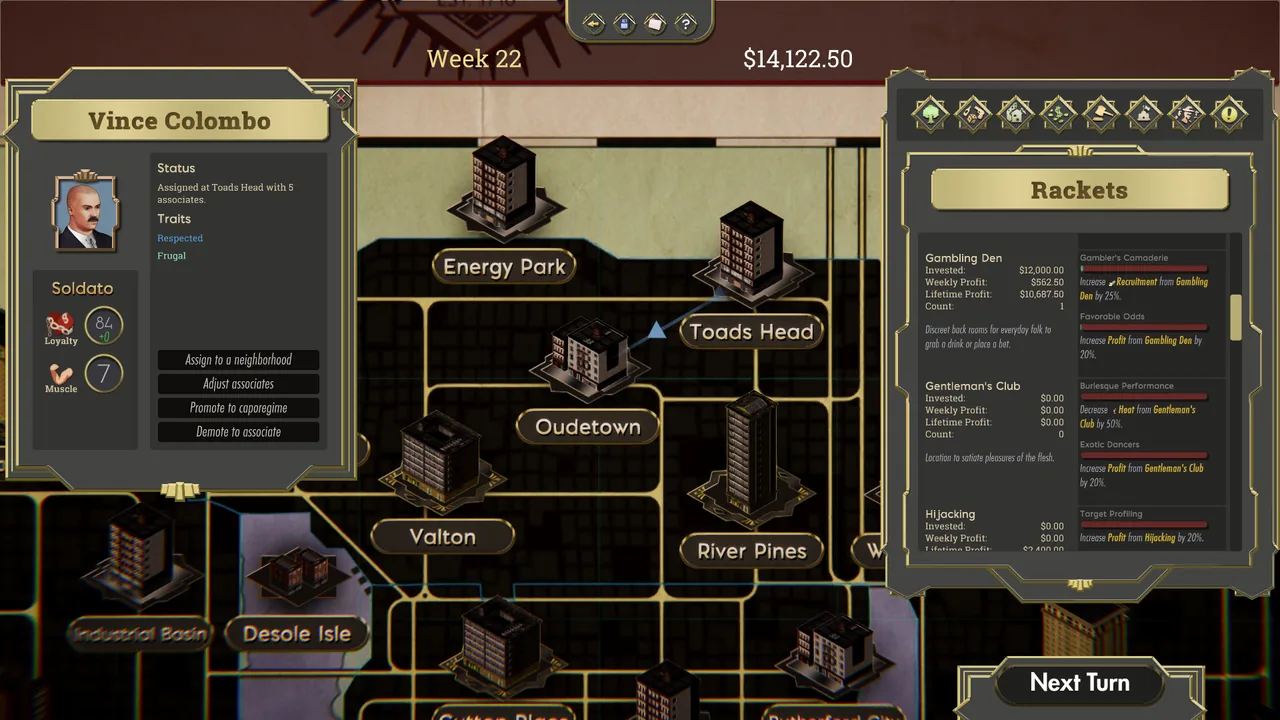
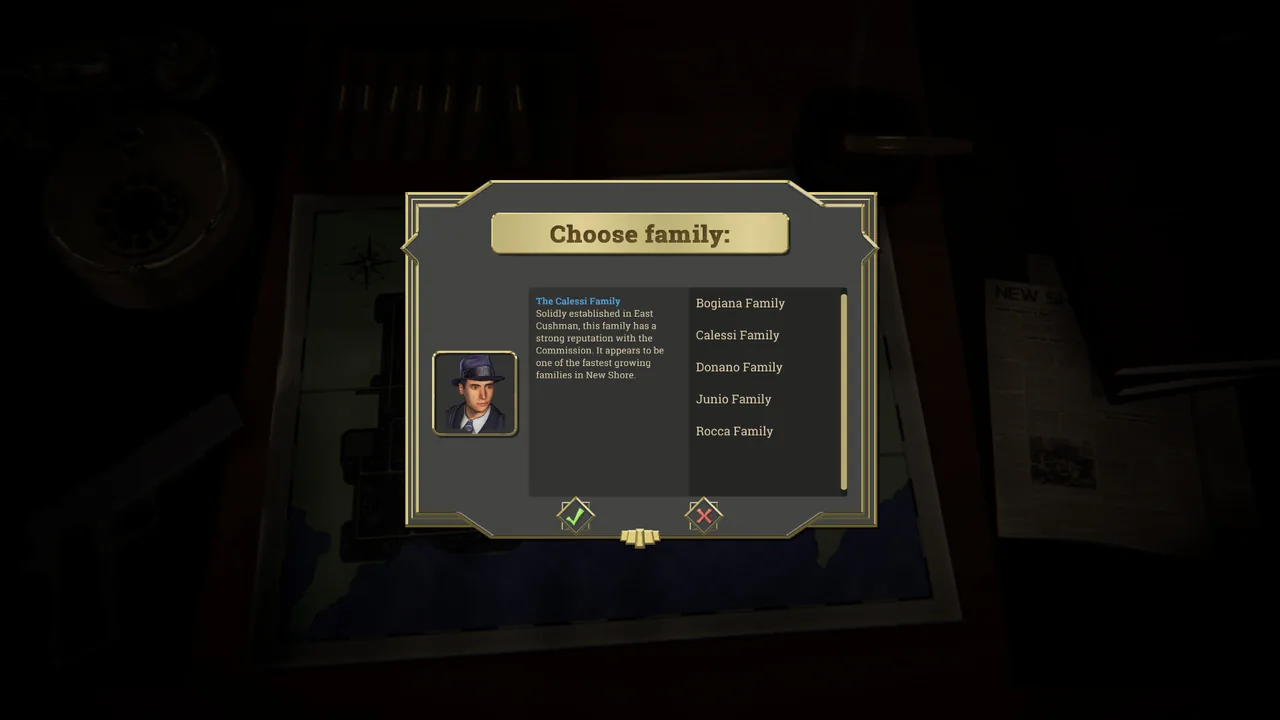
You pick one of the five families — each with its own starting strengths, weaknesses and connections into New Shore's five boroughs — and start putting capos and soldatos to work running rackets, buying off city officials, and leaning on neighbourhoods that aren't yet yours. It is turn-based, menu-driven, and closer in spirit to a business sim than to anything with a camera you can walk around in. For an hour or two that structure works: reviewers who came in wanting a spreadsheet with a fedora on it describe genuinely liking the traits system, where a capo's and a don's bonuses stack across the geography they control, and the novelty of managing loyalty rather than firepower.
That's the version of the game its handful of positive Steam reviews describe, and it is real — one reviewer, comparing it favourably to the Gangsters series, called the family perks "interesting stacking and building of modifiers," and several others say the same underlying idea, "claim a racket, defend a racket," is legible almost immediately.
Where it stops working
The trouble is what happens after that opening stretch, and this is where the negative side of the ledger — 27 of the 40 English-language Steam reviews on file, a "Mostly Negative" rating I read in full to write this review — gets specific rather than vague. The most common complaint, independently repeated by well over a dozen reviewers, is that the mid-to-late game collapses into a loop with no real texture to it: hire enough people, assign them to rackets, and expand by attrition until you own the map. One reviewer's summary has stuck with other players enough to be echoed almost word for word by several others: "Basically it's excel with a little graphics." Another calls it "a menu driven flash game" with stats that "pretend to matter" until you simply out-hire the opposition.
Steam's own achievement data backs this up more precisely than any review can. Half of owners who unlocked any achievement (49.5%) finished the tutorial. That drops to 35.4% for reaching don power level 5, and 32.2% for the game's headline "earn a million dollars" milestone — the game's own idea of an early-mid checkpoint. Past that point the numbers fall off a cliff: single digits for controlling half a borough (7.0%) or using ten different racket types (7.8%), and under one percent (0.3%) for the achievement tied to actually surviving deep combat pressure. That shape — roughly a third of the audience getting past the opening, and almost nobody reaching anything resembling an endgame — matches the reviews describing "no endgame or even significant event markers along the way" almost exactly.
Several reviewers also describe the AI as expanding faster than seems achievable by the player, even on the easier difficulty settings, taking two or three territories in the time it takes a human player to work out how a racket is assigned. Combined with a heat and law-enforcement system reviewers describe as arbitrary rather than readable — "there's no rhyme or reason to when a rival family attacks you or the cops raid" — the mid-game reads less like a strategic puzzle than a coin-flip you're eventually going to lose to attrition, or win by out-grinding.
Interface
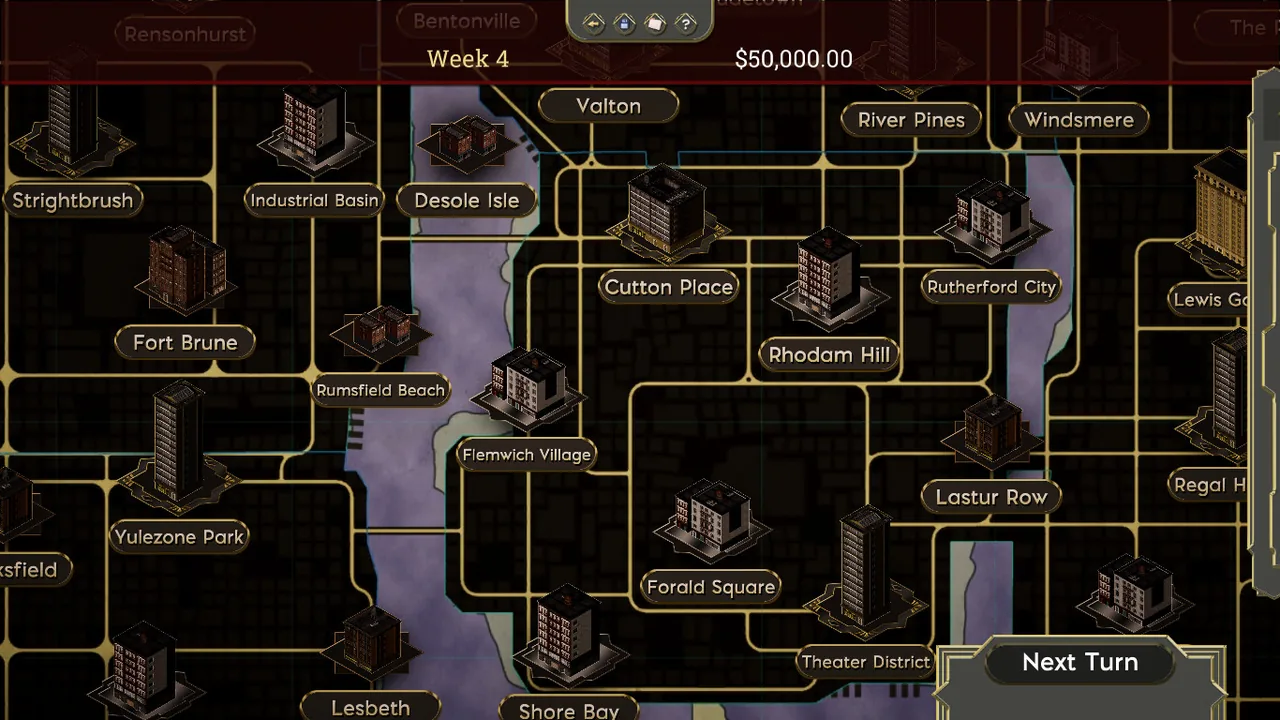
If there's one thing close to a consensus across both the positive and negative reviews, it's that the interface undersells whatever depth is actually in the systems underneath it. Multiple reviewers single out the lack of any single-window overview of the world map, forcing constant back-and-forth clicking just to see what's happening across New Shore's five boroughs. Several early reviews mention the game shipping with no tutorial at all, leaving new players to guess what a racket does or how to assign a capo without being told; a tutorial was added in a later patch and at least one reviewer specifically credits it as "a big help," but by then the "atrocious UI" and "confusing" framing had already set the tone for most of the game's public review history. One reviewer's blunt framing captures the general mood: "A waste of money and a lesson on HOW NOT to design the interface for a game."
Technical state
Beyond the design complaints, a handful of reviewers describe outright breakage: a UI and sound corruption that one player reports surviving a reinstall and a Steam file verification, a reviewer citing unspecified "gamebreaking" bugs, and another noting the game "crashes" and lacks an autosave. These aren't the majority complaint — most of the negative reviews are about shallowness rather than instability — but they're recent enough, and specific enough, that anyone buying today should expect an old, thinly-supported build rather than a game with an active patch cadence smoothing these out.
Value
At launch this was a US$20 game, and a meaningful share of the negative reviews are really value complaints in disguise — "twenty dollars for this" comes up again and again as the actual sticking point beneath the design criticism. That calculus has changed: it's US$4.99 today, occasionally discounted further, with a single US$-priced soundtrack DLC as its only other purchase. At that price, the "genre of one" argument carries real weight for anyone specifically hungry for a mafia management game — there is close to nothing else recent that scratches this itch. At anything close to its original price, the same shallow mid-game and unreadable interface would be much harder to forgive.
Final verdict
The Commission is a good idea that never became a good game. Its five-families, turn-based, Prohibition-crime setting is close to unique on modern PC storefronts, and the opening hours give a real, if brief, sense of what a fully-realised version of this concept could be. But the interface fights you the whole way through, the mid-game collapses into repetitive territory-farming with no meaningful endgame, and a persistent minority of players report the kind of bugs that suggest this shipped, and largely stayed, unfinished. At its current bargain price it is defensible as a curiosity for genre die-hards who will forgive a lot for the right theme. As a grand strategy game on its own terms, it doesn't clear the bar.
Pros and cons
Pros
- A setting with almost no modern competition — turn-based Prohibition mafia strategy is a genre of one
- Five families with distinct starting traits give the first hour or two real variety
- The core loop (claim a neighbourhood, pick a racket, defend it) is legible immediately, once you're past the interface
- Now sold at a fraction of its 2018 launch price, which softens most of the value complaints below
Cons
- Interface is the single most-repeated complaint across its review history — no full map view in one window, no early tutorial, "excel with a little graphics"
- Progression flattens hard within a handful of hours into steamrolling identical neighbourhoods with no endgame or event markers
- Persistent, unresolved bug reports, including a broken UI/audio state that survives reinstalling and verifying files
- AI families are widely reported to expand and earn faster than the player can match, even on easier settings
Screenshots
-
The Commission: Organized Crime Grand StrategyImage: 2:30 AM Studios via Steam -
The Commission: Organized Crime Grand StrategyImage: 2:30 AM Studios via Steam -
The Commission: Organized Crime Grand StrategyImage: 2:30 AM Studios via Steam -
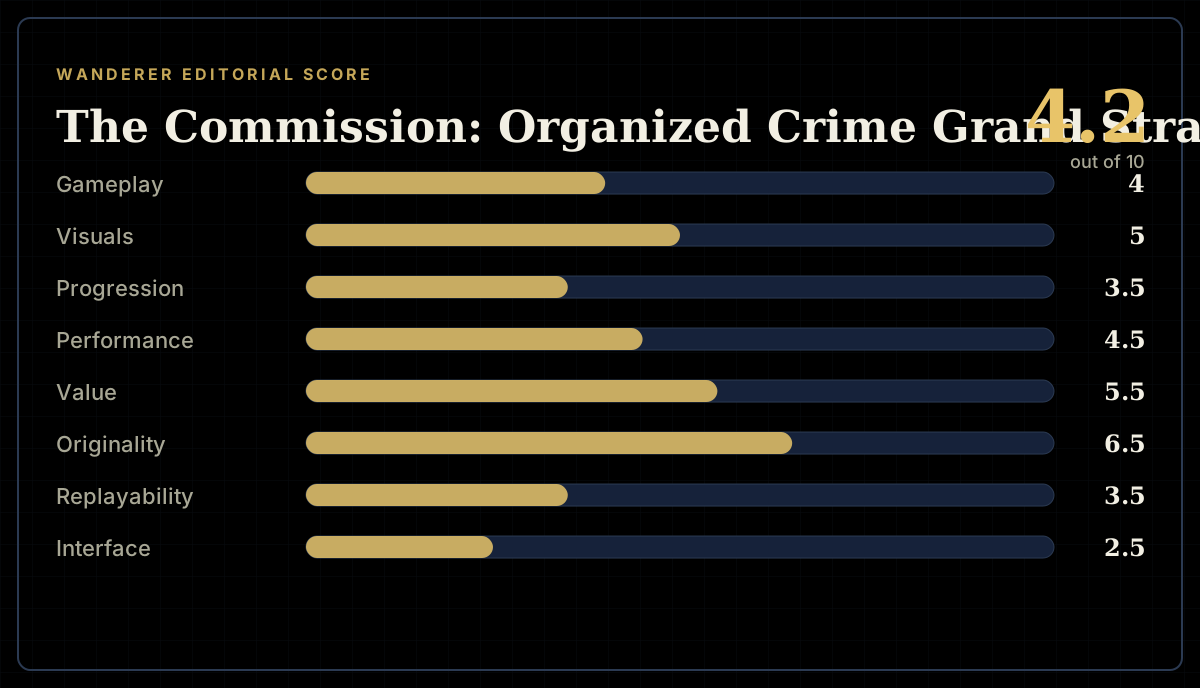
Wanderer Editorial's category scores for The Commission. -
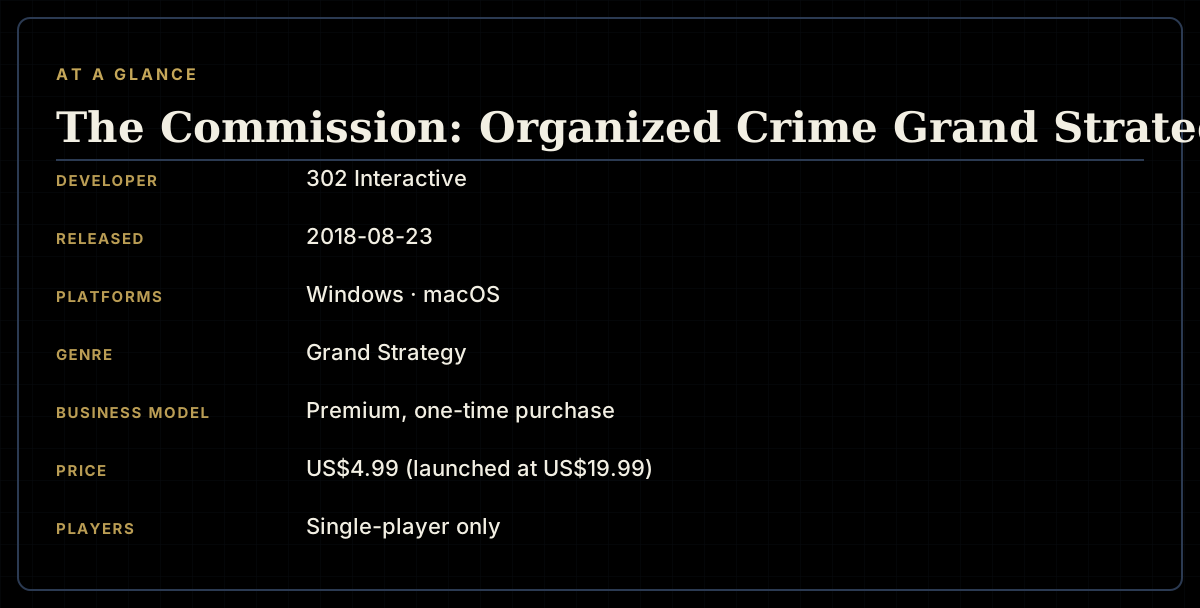
The Commission at a glance. -
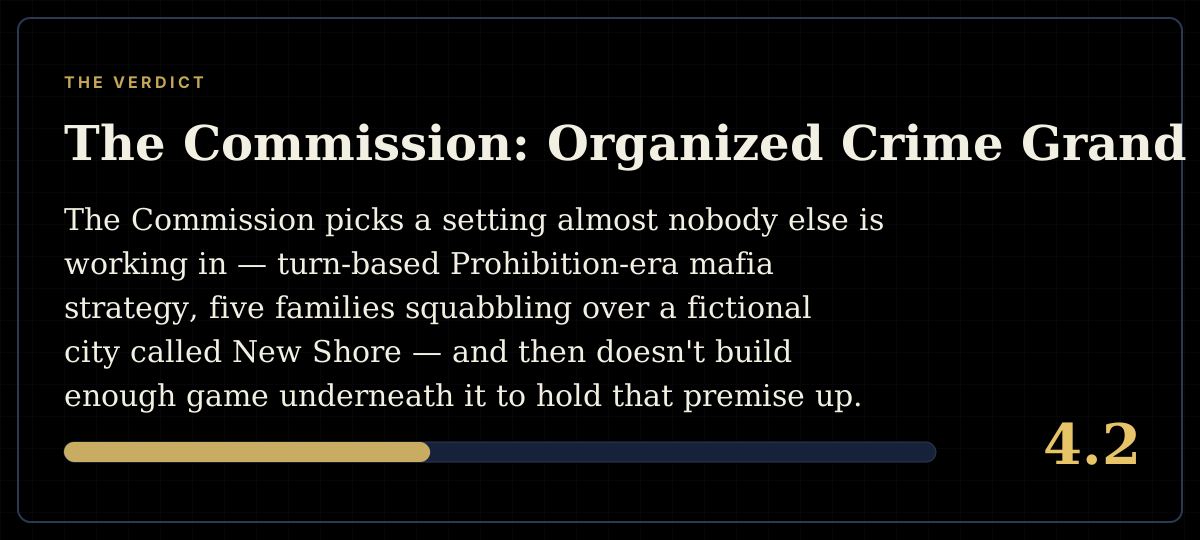
Wanderer Editorial's final verdict on The Commission.