Game review
Roman Triumph - Survival City Builder
6 / 10
- Developer
- Coreffect Interactive
- Publisher
- Forklift Interactive
- Released
- 3 April 2025
- Platforms
- Windows
- Genre
- Survival City Builder
- Monetisation
- One-off premium purchase.
- Players
- Single-player only
The short version
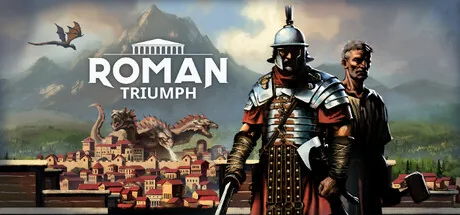
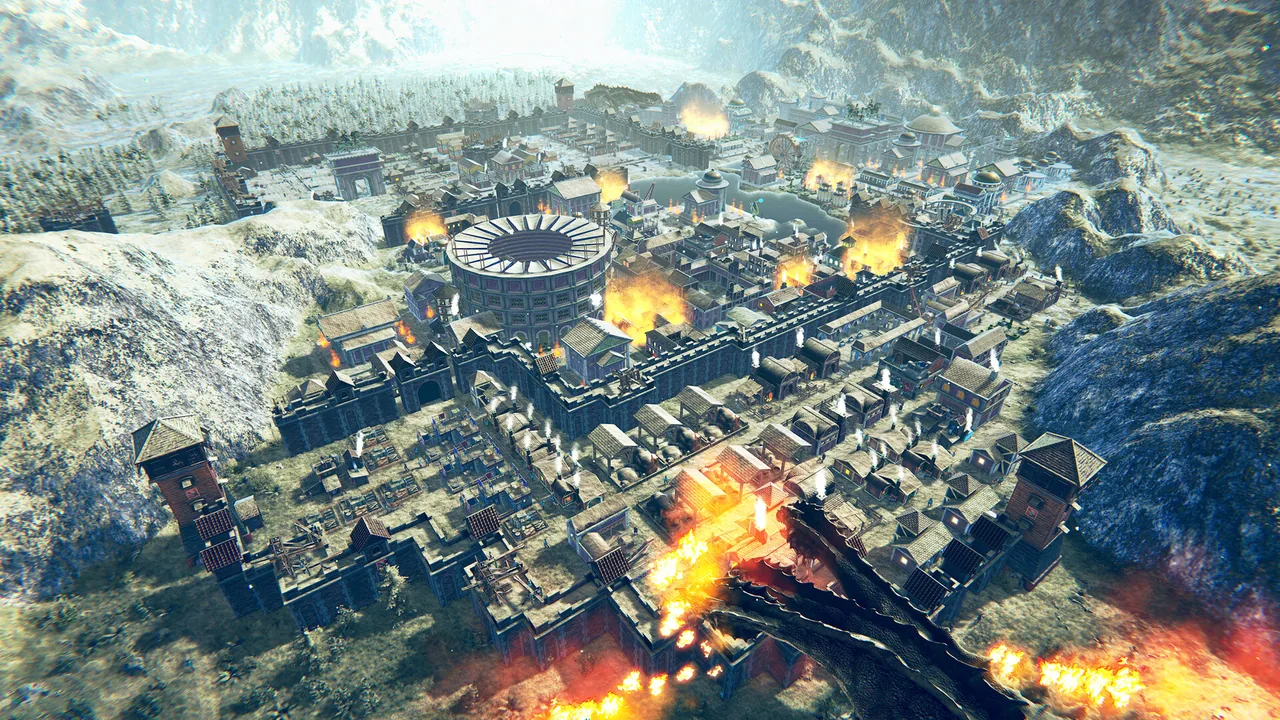
Roman Triumph borrows its city-planning DNA from the Caesar and Zeus era of management sims -- grid out districts, connect them with roads and aqueducts, keep citizens fed and pleased with the gods -- and adds a survival layer of barbarian raids and outright mythological monsters: Hydra, Minotaur and Cerberus all besiege player cities directly. It's a striking-looking game, built mostly by one developer over roughly a year and a half, and 84.4% of its 763 lifetime reviews recommend it. The more useful number is the recent one: across the last 100 English reviews, positivity has fallen to 71%, and the complaints driving that drop -- a rushed jump straight to 1.0, broken food logistics, and performance that collapses well before a city gets large -- come from players who watched the game grow and feel it stopped short.
Biggest strengths
- A genuinely distinctive premise -- Roman city-building crossed with mythological monster sieges -- that neither the Caesar/Zeus classics nor most modern survival city-builders attempt.
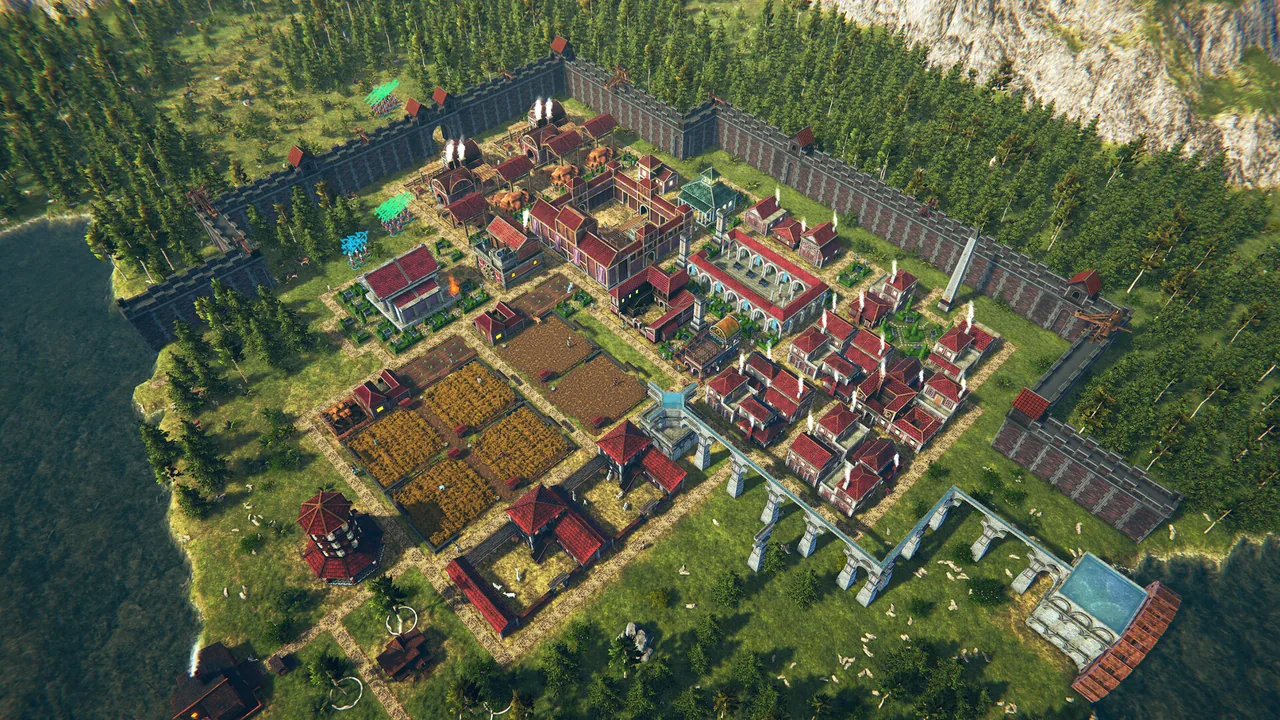
- Visually ambitious for a mostly solo-developed game, with detailed walled cities, aqueducts and legionary formations that hold up well in its own screenshots.
- The desert biome added at 1.0 changes the core farming and defense calculus meaningfully rather than reskinning the same map.
Biggest weaknesses
- The most-upvoted negative review describes the jump from version 0.4 straight to 1.0 as leaving the gameplay loop "seriously lacking purpose," a sentiment echoed by several reviewers who followed the game through Early Access.
- Multiple detailed reviews describe the food and production chain breaking down illogically -- citizens starving despite ample farms and hunting lodges reported working correctly.
- Performance is repeatedly flagged as collapsing once a city passes a few hundred citizens, with one reviewer naming 600 as the point where the game becomes "virtually unplayable."
Who it's for: Fans of classic city-builders (Caesar 3, Pharaoh, Zeus) curious about a mythological- survival spin on the formula, and players who enjoy watching a solo developer's project evolve in public. Less suited to anyone who wants a polished, optimised builder that scales cleanly to a large city, or a game with meaningful post-launch momentum right now.
Our recommendation: A cautious recommendation, best taken on a sale. The core city-building loop and the mythological-siege twist are genuinely appealing ideas executed with real visual ambition, but buy it for a mid-sized city and a few dozen hours rather than expecting the late-game scale or the active development pace some of its own community was promised.
6 / 10
Caesar and Zeus, with teeth
Roman Triumph's city-planning half will be instantly familiar to anyone who has played Caesar 3, Pharaoh or Zeus: grid out housing, farms and workshops, connect them with roads, keep an eye on food, happiness and standing with the gods. What it adds is a survival layer with real bite -- alongside barbarian raiders, the game throws the Hydra, the Minotaur and Cerberus directly at player cities, forcing walls, ballistae and archer towers into the same planning conversation as farm placement. Several negative reviewers reach for the genre's classics by name when critiquing it -- "Get Ceaser3 or Pharao instead," reads one -- which says as much about the ambition of the comparison as it does about where the game currently falls short of it.
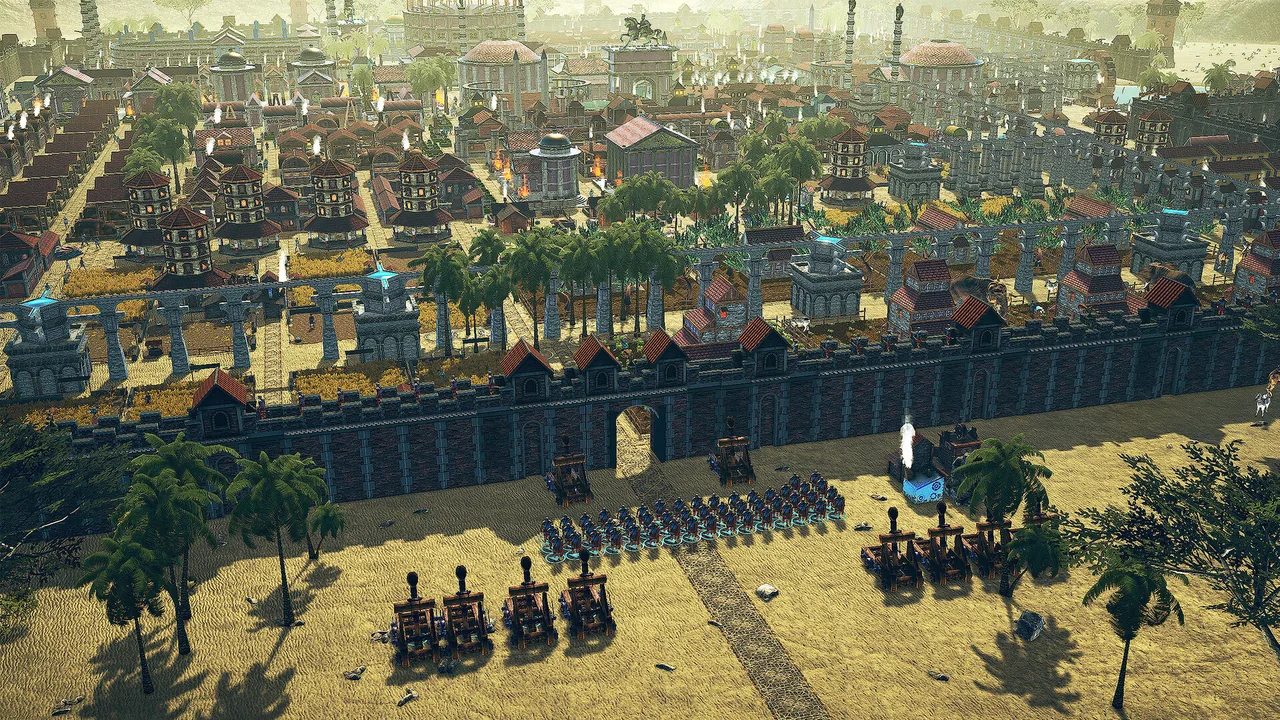
The 1.0 update in September 2025 added a second biome, a procedurally generated desert map where farms only work with aqueducts built first, timber is scarce enough to force trade, and the open terrain removes the natural choke points forests provide -- a genuine change to the core planning puzzle rather than a fresh coat of paint on the same map. That's a meaningfully different kind of content than most city-builders add at their own 1.0, and it's a fair example of the ambition running through this game even where the execution lags behind it.
When the numbers don't add up
The single most detailed complaint in the review corpus, at 75 votes, describes food logistics that don't behave the way the game's own numbers suggest they should: "I am producing meat from 2 Hunting Lodges, Wheat from 8 farms and cabbages from 4 farms for 58 citizens in Summer, and yet my citizens keep starving." That's not a vague "the game is hard" complaint -- it's a specific, checkable claim about production not matching consumption, and it isn't isolated. A separate reviewer describes oddly rigid tech-tree gating, needing to build four wheat fields before a cabbage field becomes available "even though you know how to build" one. Together, these read less like intentional difficulty and more like a simulation whose underlying math doesn't fully hold together yet.
The jump to 1.0
The most-upvoted negative review in the entire corpus, at 171 votes, isn't really about any single broken system -- it's about trajectory. The reviewer bought in at Early Access launch, watched progress "pretty minimal" over the following months, and then saw the developer jump straight from version 0.4 to 1.0 without the intermediate build-up they expected. Steam's own version history corroborates the shape of that timeline: Patch 0.4.1 landed 13 August 2025, and 1.0 launched five weeks later on 16 September, with the developer's own announcement calling it a milestone reached "after years of work" while promising continued support.
Whether that promise has held up is answerable from the data: the news feed's last post is dated 22 December 2025, meaning roughly eight months without a further update as of this review. And the sentiment gap between the lifetime score (84.4% across all 763 reviews) and the last 100 English reviews specifically (71% positive) is a genuine, measurable decline rather than noise -- a thirteen-point drop that lines up with reviewers who watched Early Access, felt the 1.0 update didn't deliver what they were promised, and said so after the fact rather than at launch week.
Performance at scale
The other recurring, specific complaint is performance. "Once I hit a certain population and density the game becomes very very chopping and becomes unresponsive, virtually unplayable," reads one review; another names a number directly -- a Ryzen 5 5600X and RTX 3070 Ti struggling once a city passes roughly 600 citizens. A third describes leaving the game running unattended for hours with "nothing changed," suggesting the simulation itself can grind to a near-halt under load rather than just rendering slowly. For a genre whose whole appeal is watching a city grow from a handful of buildings into a sprawling metropolis, a performance ceiling well below that scale is a real structural limitation rather than a cosmetic complaint.
A genuinely good-looking game
None of the above should obscure what Roman Triumph gets right visually. Its own screenshots show detailed, believable Roman architecture -- terracotta roofs, working aqueduct arches, walled perimeters with archer towers, and disciplined blocks of legionaries in testudo-style formation -- that holds up well for a mostly solo-developed project. The desert biome's washed-out, sun-bleached palette is a distinct visual identity from the forested starting map, not a simple retexture. Whatever its systemic problems, this isn't a game that looks unfinished; it looks like a game whose ambition outran what one developer, working largely alone, could fully balance and optimise on a compressed timeline to 1.0.
Verdict
Roman Triumph is easy to admire and harder to fully recommend at full price today. The core idea -- classic Caesar-style city planning under siege from actual monsters, not just raiders -- is a genuinely good one, well-served by ambitious visuals for a small team's output. But the reviewers who followed this game closest, through Early Access and into 1.0, are the ones voicing the sharpest disappointment: broken-feeling production math, a version jump that skipped the incremental progress they were expecting, and a performance ceiling that arrives well before a city can grow into the scale the genre promises. Buy it for what it is today -- a striking, mid-sized Roman city-builder with real limitations -- rather than for what eight months of silence suggests it might become.
Pros and cons
Pros
- A genuinely distinctive premise -- Roman city-building crossed with mythological monster sieges -- that neither the Caesar/Zeus classics nor most modern survival city-builders attempt.
- Visually ambitious for a mostly solo-developed game, with detailed walled cities, aqueducts and legionary formations that hold up well in its own screenshots.
- The desert biome added at 1.0 changes the core farming and defense calculus meaningfully rather than reskinning the same map.
- A transparent, communicative solo developer who posted detailed build-up-to-1.0 announcements and personally signs off on patch notes.
Cons
- The most-upvoted negative review describes the jump from version 0.4 straight to 1.0 as leaving the gameplay loop "seriously lacking purpose," a sentiment echoed by several reviewers who followed the game through Early Access.
- Multiple detailed reviews describe the food and production chain breaking down illogically -- citizens starving despite ample farms and hunting lodges reported working correctly.
- Performance is repeatedly flagged as collapsing once a city passes a few hundred citizens, with one reviewer naming 600 as the point where the game becomes "virtually unplayable."
- The news feed has posted nothing since December 2025, roughly eight months of quiet following the 1.0 launch that some reviewers already considered undercooked.
Screenshots
-
Roman Triumph: Survival City BuilderImage: Forklift Interactive via Steam -
Roman Triumph: Survival City BuilderImage: Forklift Interactive via Steam -
Roman Triumph: Survival City BuilderImage: Forklift Interactive via Steam -
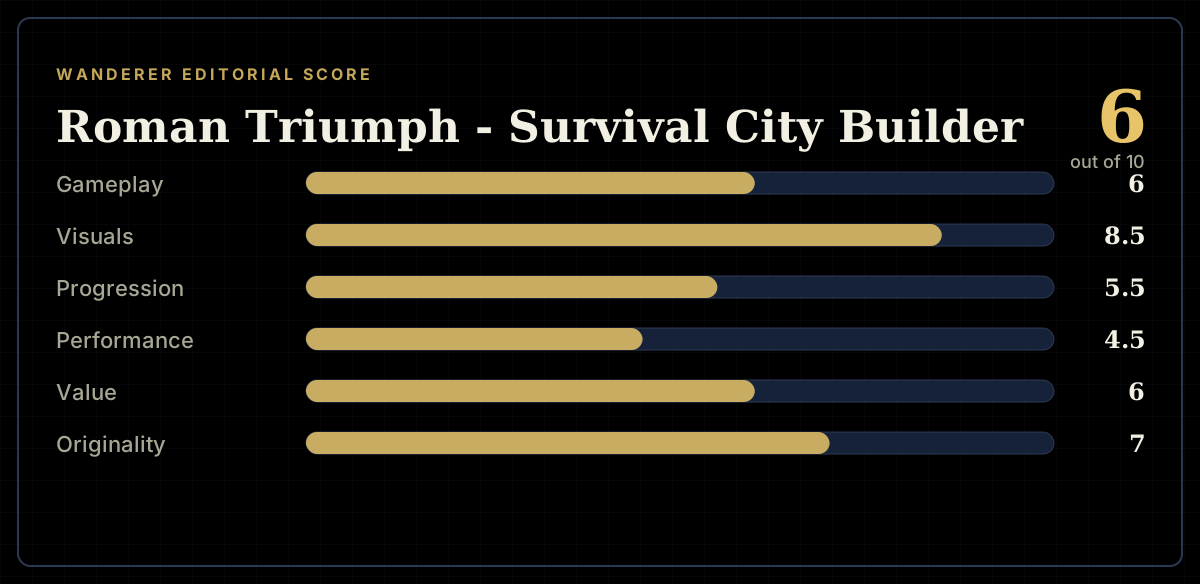
How the review scores each part of the gameWanderer Editorial -
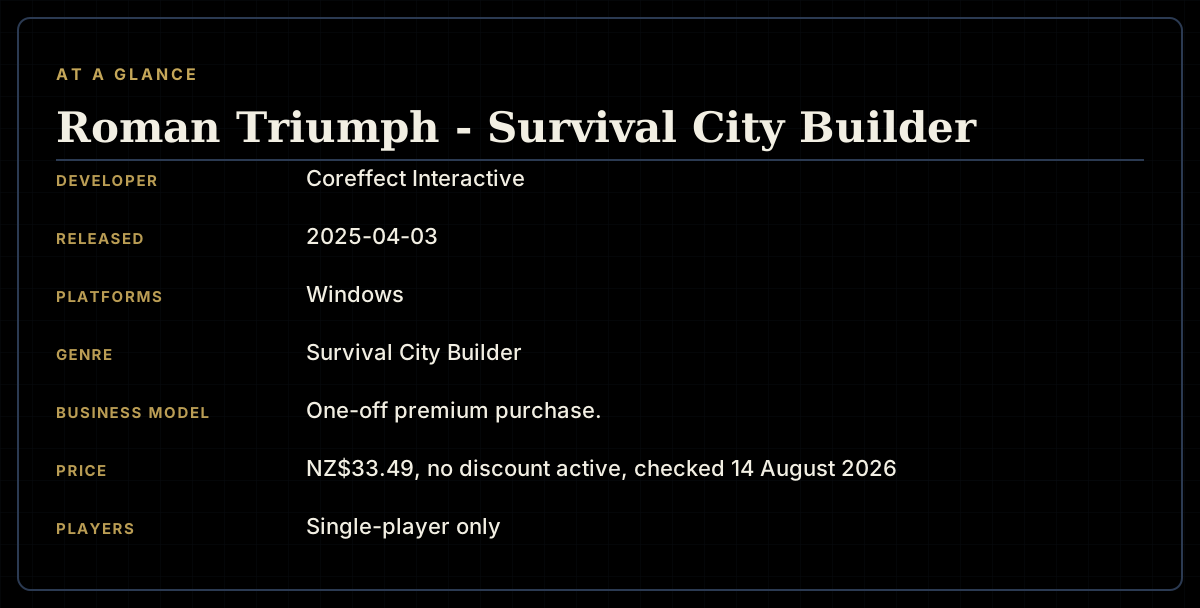
The game at a glanceWanderer Editorial -
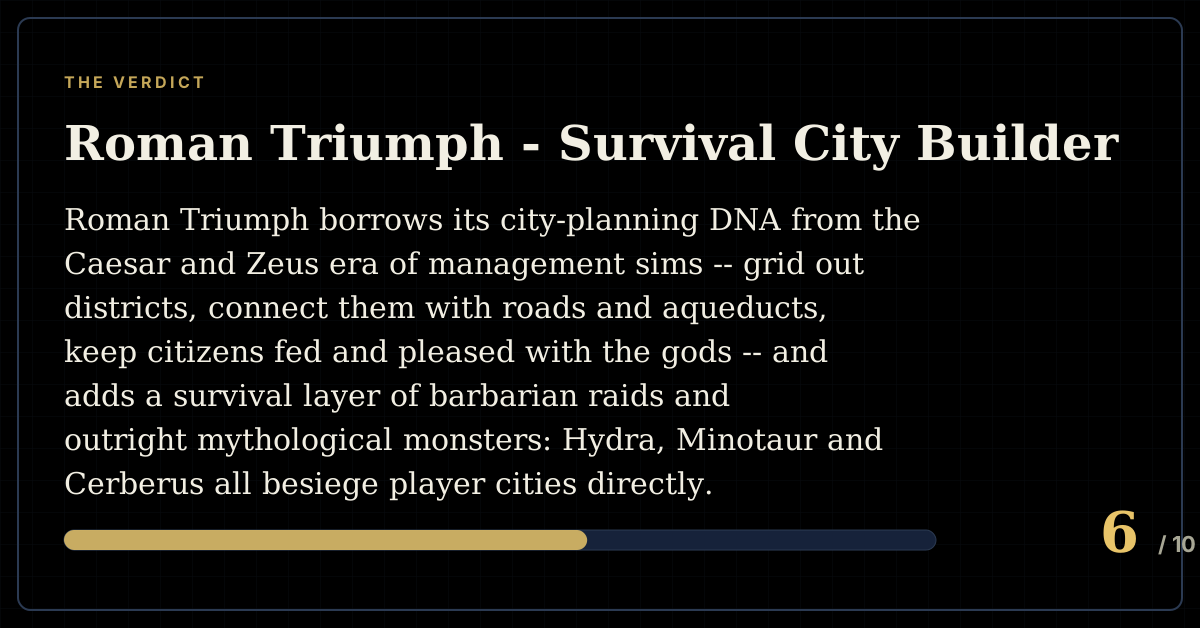
The short versionWanderer Editorial