
Game review
Sigilfarer: A Dice-Rolling Roguelite Review
7.4 / 10
- Developer
- Viabo Games
- Publisher
- Anshar Publishing
- Released
- 14 September 2026
- Platforms
- ["Windows"]
- Genre
- RPG
Your Party Is a Dice Set, and That Changes Everything
Sigilfarer's pitch is simple to state and surprisingly deep in practice: instead of building a deck of cards, you build a set of dice. Every weapon, shield, and piece of armor your party equips physically alters the faces of the dice each character rolls in combat, adding new attacks, buffs, defensive options, or utility effects directly onto the die itself. Manage up to four characters at once, and the strategic question shifts from "what cards do I draw" to "what am I rolling, and how did I shape those odds." It's a clever reframing of deck-building mechanics that a lot of reviewers immediately recognize, since the studio itself is upfront that Sigilfarer sits in the lineage of games like Slice & Dice and For the King, borrowing the dice-combat immediacy of one and the exploration-driven adventuring structure of the other.
Combat is turn-based and built entirely around what your dice roll gives you to work with each turn, while skill checks and resource management during rest periods pull the same dice into service outside of fights too. The result is a system where the tools you equip matter as much for the dice faces they unlock as for their raw stats, and reviewers consistently praise how many viable ways there are to build a party once you start experimenting with which effects pair well together.
Wandering a Broken World, One Hex at a Time
Beyond combat, Sigilfarer sends its party of wanderers across procedurally generated, open hexagonal maps through a world fractured by a magical catastrophe. Each region offers distinct biomes, hazards, and opportunities, and the roguelite structure means death sends you back to try again with permanent upgrades in hand rather than erasing your progress outright. Reviewers who've stuck with the game for hours describe an addictive "just one more run" loop, with several specifically calling out how responsive and active the developers have been on Discord, regularly incorporating player feedback and shipping updates that visibly improved the game's readability and UI since its earlier testing phases.
The comparisons to For the King show up constantly in player reviews, both for the exploration structure and for the general aesthetic, while the combat draws the Slice & Dice comparisons almost every time it comes up. Several reviewers who'd played both cited touchstones describe Sigilfarer as a genuine hybrid that captures what made each of those games work rather than feeling like a shallow copy of either, with party composition and archetype variety adding a layer of team-building strategy that keeps runs from feeling repetitive early on.
A Steep Difficulty Curve and Some Rough Interface Edges
The most consistent criticism centers on pacing and difficulty balance, particularly the jump in enemy strength between the game's first and second areas, which some reviewers describe as a dramatic spike in enemy health and damage that isn't matched by an equivalent increase in the player's own options. A few reviewers specifically flagged magic and healing abilities as underwhelming relative to enemy damage output at that stage, making certain build paths feel weaker than others. The meta-progression system that's supposed to soften repeated failed runs also draws some frustration, with a handful of players describing the permanent upgrades between attempts as too small to meaningfully offset a tough run, though multiple reviewers note that the developers have already been tuning these numbers post-launch in response to feedback.
Interface issues are the other recurring complaint: there's no way to preview or decline equipment rewards before committing to them, inventory sorting options are limited, and checking a status effect's exact function requires digging through tooltips rather than having a clear reference available during combat. None of these are described as dealbreakers, but several reviewers frame them as exactly the kind of quality-of-life gaps that would meaningfully improve a game whose core systems they otherwise already enjoy. One reviewer also flagged that the game defaults to maximum graphical settings regardless of hardware, pushing GPU utilization needlessly high until manually adjusted, worth knowing going in.
A Confident Debut With Room Left to Grow
Despite the rough edges, the overall reception leans strongly positive, and reviewers are quick to credit an active, communicative development team that's continued shipping fixes and refinements since launch. At $9.59 during its launch discount off a $11.99 list price, multiple reviewers single out the price-to-content ratio as an easy sell, especially for players already invested in the roguelite or dice-combat genres who are used to paying considerably more for comparable scope. The developer's own store page is refreshingly candid about what the game isn't trying to be, explicitly noting it doesn't offer "relaxing gameplay," 4X strategy, or city building, which sets reasonable expectations for what is, at its core, a tense, build-focused combat roguelite rather than a cozy management sim.
Verdict
Sigilfarer takes the dice-as-deck idea and runs with it convincingly, building a genuinely engaging turn-based combat system around gear that reshapes your odds rather than just your stats, wrapped in a hexagonal-exploration adventure structure that clearly owes a debt to For the King while carving out its own identity. A steep difficulty spike between early areas and some interface friction around equipment and status effects keep it from feeling fully polished at launch, but an actively engaged development team already addressing feedback, a genuinely inventive core mechanic, and a fair asking price make this an easy recommendation for anyone who enjoys tactical roguelites and doesn't mind a bit of jagged difficulty on the way to mastering the dice.
Pros:
- Inventive dice-as-deck combat system where every piece of gear reshapes what you can roll
- Distinct character archetypes encourage genuinely varied party compositions
- Hexagonal, procedurally generated world exploration adds a satisfying adventure layer on top of combat
- Active, responsive developers already tuning balance and UI based on player feedback
- Strong value at its launch price for the genre
Cons:
- Sharp difficulty spike between the first and second areas frustrates some players
- Magic and healing abilities feel underpowered relative to enemy damage at times
- Meta-progression between runs can feel too incremental to offset a tough run
- No way to preview or decline equipment rewards, and limited inventory sorting
- Defaults to maximum graphics settings regardless of hardware, spiking GPU usage unexpectedly
Screenshots
-
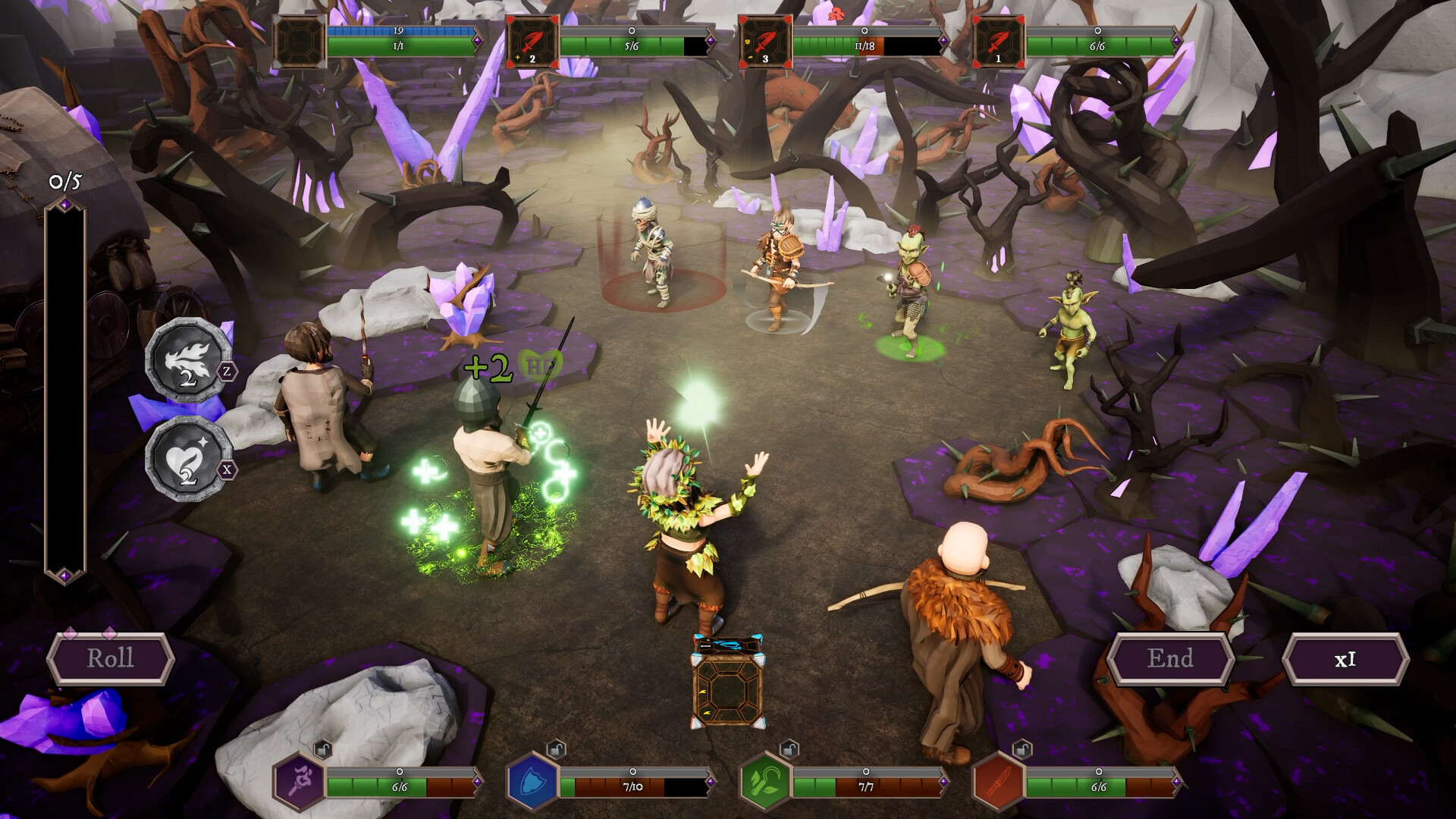
Turn-based combat against a goblin warbandImage: Viabo Games -
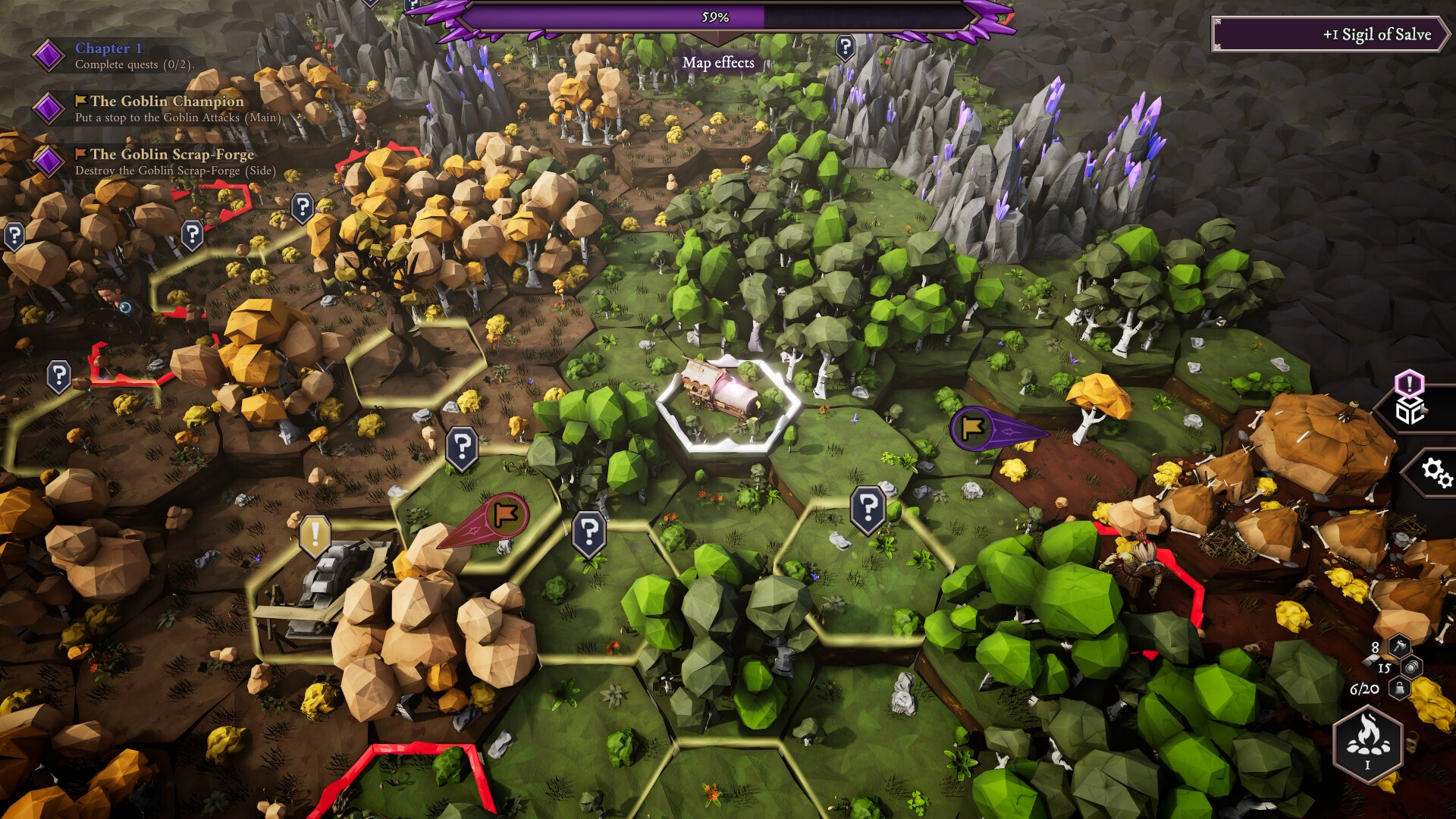
Exploring the hex map between goblin-themed questsImage: Viabo Games -
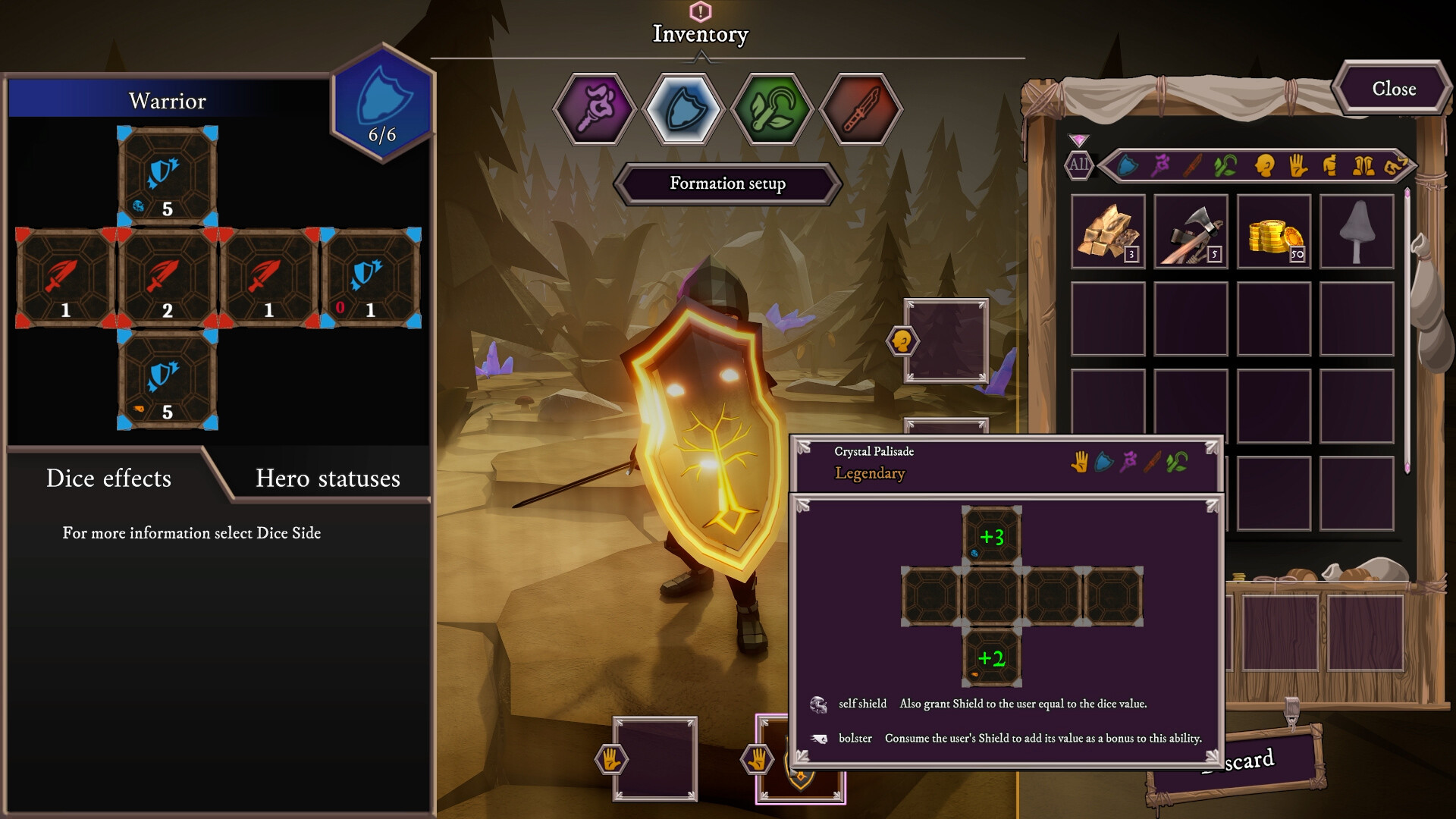
Equipping gear reshapes the faces of a character's diceImage: Viabo Games -
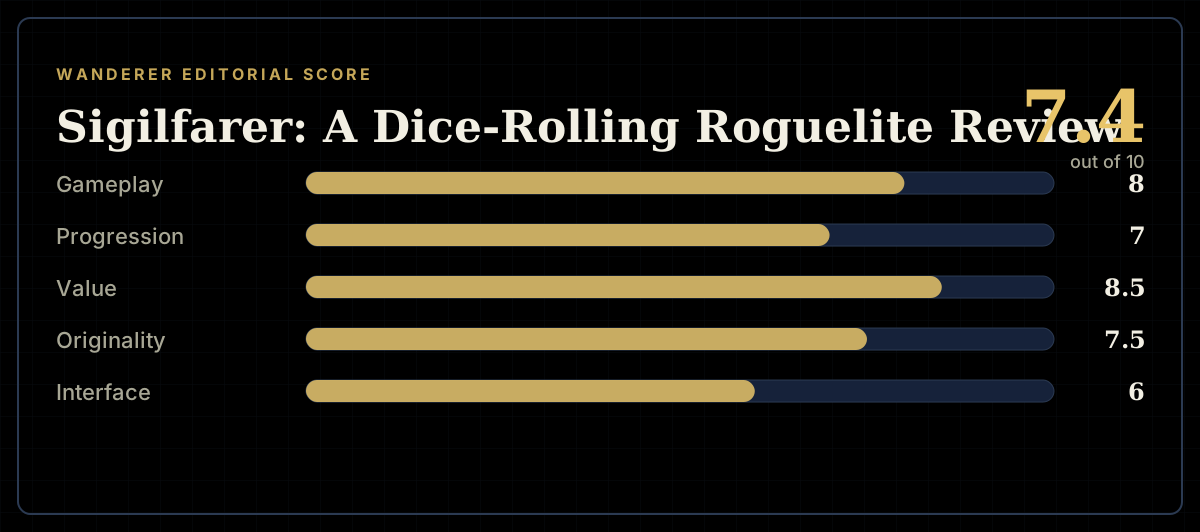
How the review scores each part of the gameWanderer Editorial -
The short versionWanderer Editorial