Game review
Dunebound Tactics Review
7.8 / 10
- Developer
- Terahard Ltd
- Publisher
- indie.io
- Released
- 14 September 2026
- Platforms
- ["Windows"]
- Genre
- Strategy
A Caravan Adrift in the Sand
Dunebound Tactics drops you at the helm of a sand-faring caravan crew, fleeing Imperial-controlled territory in search of a new home, and its opening hour does a good job of making that premise feel like more than set dressing. You're not just fielding a squad in a series of disconnected skirmishes; you're steering a fragile ship across a dynamically generated desert, spending a resource called Elios to keep the engine running while deciding whether to earn more of it through narrative-driven quests, looted enemy corpses, or, if things get desperate enough, your own crew. Reviewers consistently single out that last option as the game's sharpest bit of writing: the mechanic is optional, brutal, and framed with just enough weight that using it feels like an actual decision rather than a menu toggle.
The roguelite structure builds on that tension well. Runs are meant to end, sometimes badly, and the game leans into that by letting failed expeditions feed forward into the next attempt, whether through salvaged modules or survivors found wandering the wreck of your previous caravan. Several reviewers who've logged real hours describe genuinely wanting to see what a fresh run generates rather than treating repetition as a chore, which is the bar any roguelite in this crowded a genre has to clear.
Tactics Built Around Breaking the Battlefield
The combat itself is where Dunebound Tactics earns its keep. It's a turn-based tactical RPG at heart, but the game's core hook is a fully destructible and reshapable battlefield: you can obliterate cover, erect ice pillars to choke off enemy movement, lay explosive pillars or mines, and shove enemies into pits you've carved out yourself. Reviewers describe this as a real departure from the genre's usual cover-and-shoot rhythm, turning positioning into something you actively sculpt rather than something you merely exploit. One negative review does push back on this framing directly, complaining that you can't simply shoot around cover the way a conventional tactics shooter allows, but the broader reception treats that limitation as the point rather than an oversight: the game wants you solving fights by reshaping terrain and using crew abilities, not by out-aiming an enemy from behind a wall.
With 15 distinct classes, 16 traits, and more than 50 unlockable modules to equip across your roster, there's a genuine breadth of build options for a game at this price point, and reviewers report that runs start to feel meaningfully different once you've unlocked a handful of trait and module combinations. Recruiting survivors adds a further wrinkle, since your caravan has limited seats, so choosing who joins the crew becomes a running trade-off rather than a simple numbers-go-up decision. Facing down 38 distinct enemy classes across the Imperial and Arcanist factions gives the tactical layer real variety too, reviewers with over 500 hours logged describe still encountering fresh enemy compositions that force them to rethink an approach that had been working reliably.
An Indie Roguelite That Knows What It's Doing
For a day-one release from a small studio, Dunebound Tactics reads as unusually assured in its execution. The blocky, low-poly art style pairs well with the desert setting rather than reading as a budget compromise, and multiple reviewers specifically praise how well the visual style suits the caravan's sun-bleached, sand-faring atmosphere. The tension of resource management between fights, keeping the engine fed, keeping the crew alive, keeping enough Elios in reserve for an emergency, gives the game a survival backbone that a lot of pure tactics roguelites skip entirely, and reviewers who enjoy that layered pressure describe it as the thing that kept them coming back run after run.
The one recurring critique beyond the cover-shooter complaint is that the roguelite's randomization doesn't always offer as much meaningful choice as players expect from the genre's best examples, a couple of longtime roguelite fans note that the RNG can occasionally feel more like a constraint than a lever you're pulling on purpose. It's a fair point and worth setting expectations around, but it doesn't come up as a dealbreaker in any of the reviews that raise it, more a "worth knowing going in" caveat than a serious flaw.
Solid Value for a Genre That Rewards Repeat Runs
At $11.99 during its launch discount off a $14.99 list price, Dunebound Tactics sits at a fair price for a roguelite built to be replayed rather than finished once. Reviewers with the highest logged playtime, several past the 500-hour mark already, are the ones most enthusiastic about its long-term structure, which is generally a good sign for a genre that lives or dies on whether repeat runs stay interesting. Steam Achievements and Cloud support are both present, and the single-player focus means there's no multiplayer infrastructure to worry about breaking on launch day.
Technically, the reception has been clean so far: no reviewers report crashes, save corruption, or major performance issues, and the destructible-terrain systems that are core to combat are described as running smoothly rather than as a source of instability. For an indie strategy release competing against a genre stacked with well-funded competitors, Dunebound Tactics distinguishes itself through its terrain-manipulation hook and its caravan-survival framing rather than trying to out-scale bigger studios on content volume alone, and on the evidence of its launch-week reception, that focused approach is working.
Verdict
Dunebound Tactics takes the turn-based tactics roguelite and gives it real identity through a destructible, reshapable battlefield and a caravan-survival structure that makes every decision, who to recruit, when to spend Elios, whether to harvest your own crew, carry genuine weight. The RNG doesn't always offer quite as much agency as genre veterans might want, and players expecting a traditional cover-and-shoot tactics game may need to adjust their instincts, but the terrain-sculpting combat and layered class-and-module system give it real staying power. For a day-one indie release, it's a confident, well-realized entry in a crowded genre and an easy recommendation for tactics and roguelite fans alike.
Pros:
- Destructible, reshapable terrain gives tactical combat a genuinely fresh hook
- Caravan-survival layer between fights adds real tension to resource decisions
- Deep class, trait, and module system with 15 classes and 50+ modules to build around
- Strong art direction that suits the desert setting well
- Fair price for a roguelite clearly built for many repeat runs
Cons:
- Not a fit for players expecting a traditional cover-and-shoot tactics game
- Roguelite randomization sometimes offers less meaningful choice than genre veterans expect
- Limited caravan seats force difficult recruitment trade-offs that won't appeal to everyone
- Single-player only, with no co-op or competitive option
- Windows-only at launch, no Mac or Linux support
Screenshots
-
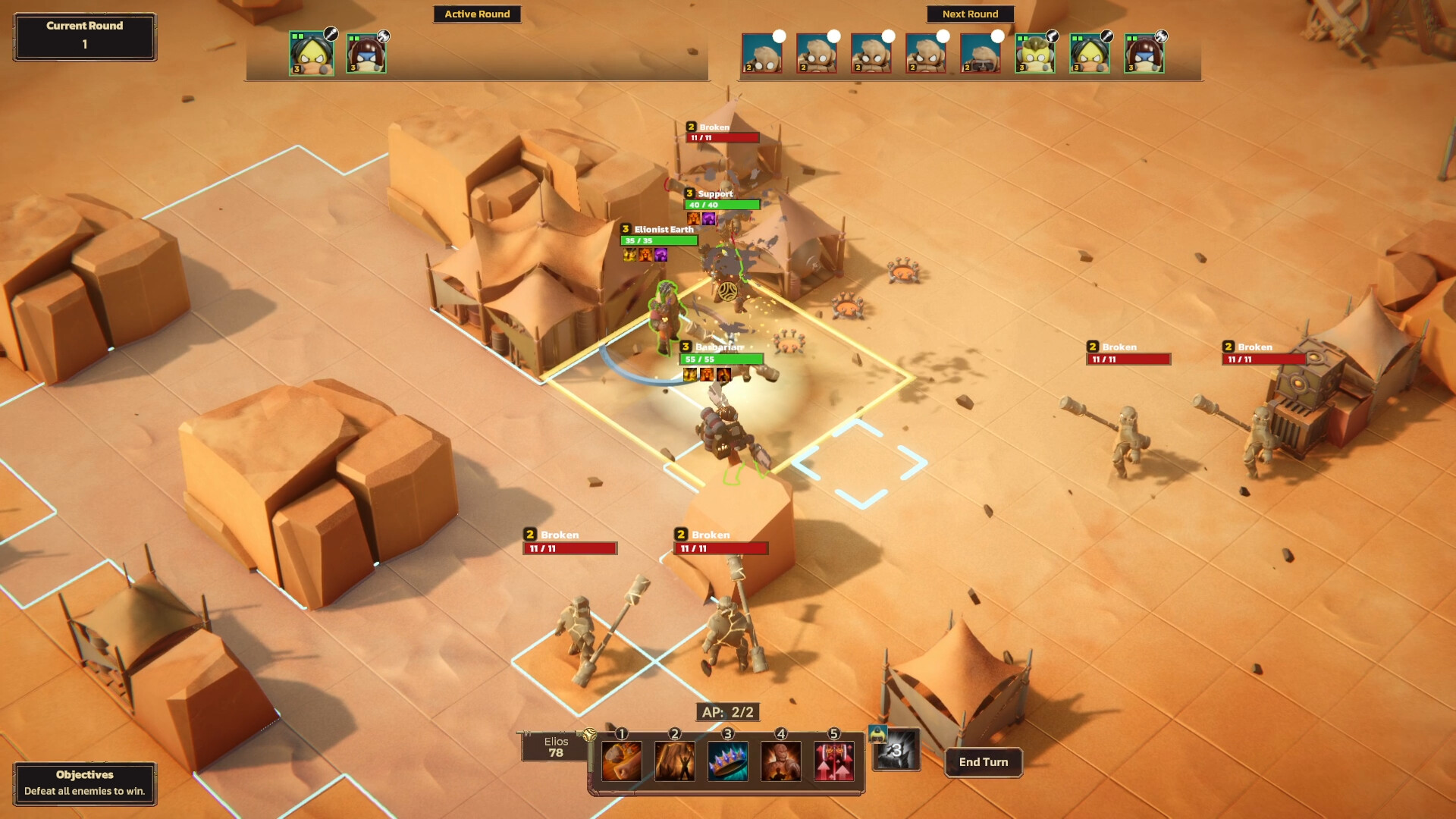
A squad battle unfolds around a cluster of desert tentsImage: Terahard Ltd -
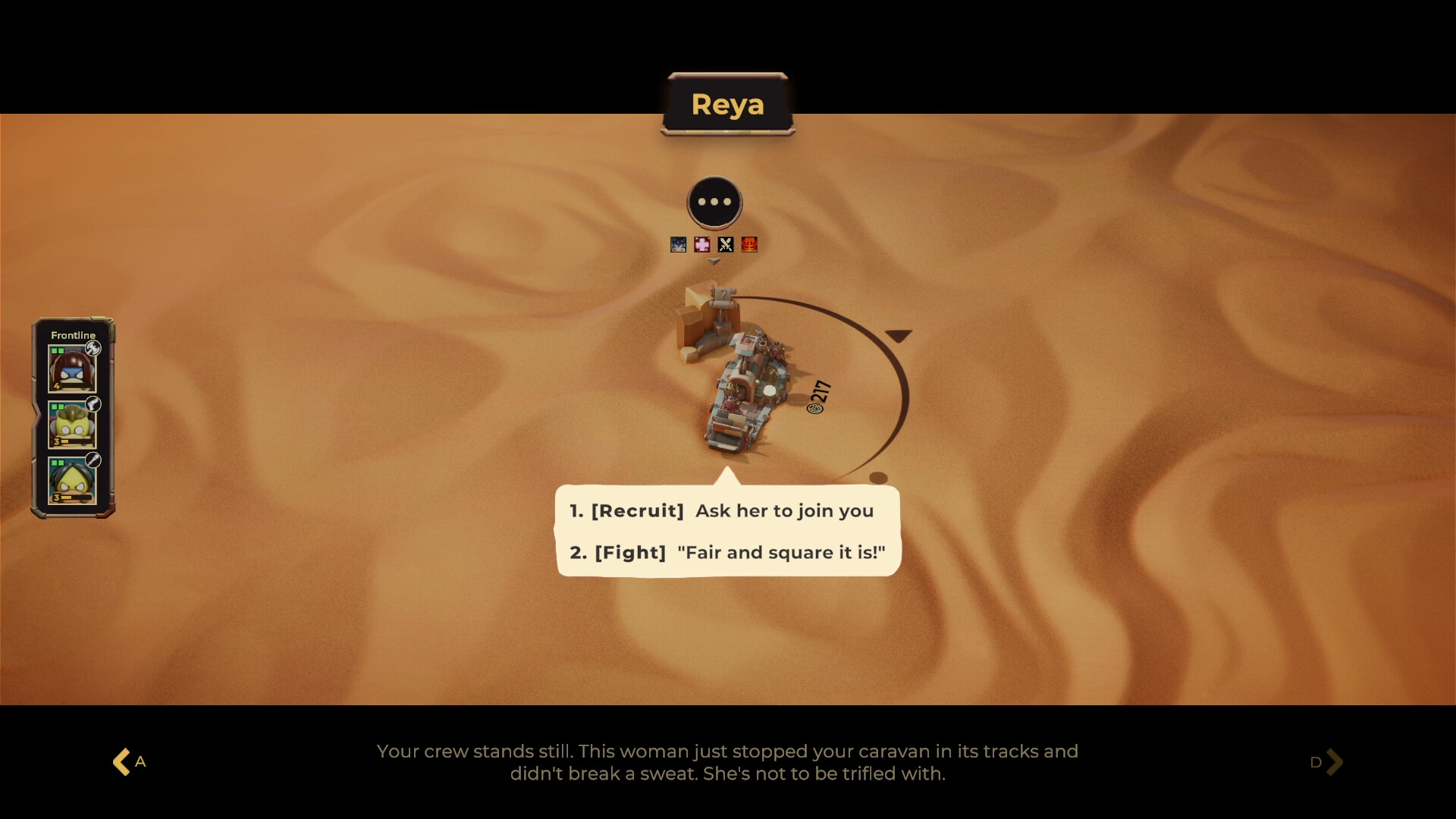
Deciding whether to recruit or fight a wanderer encountered on the sandsImage: Terahard Ltd -
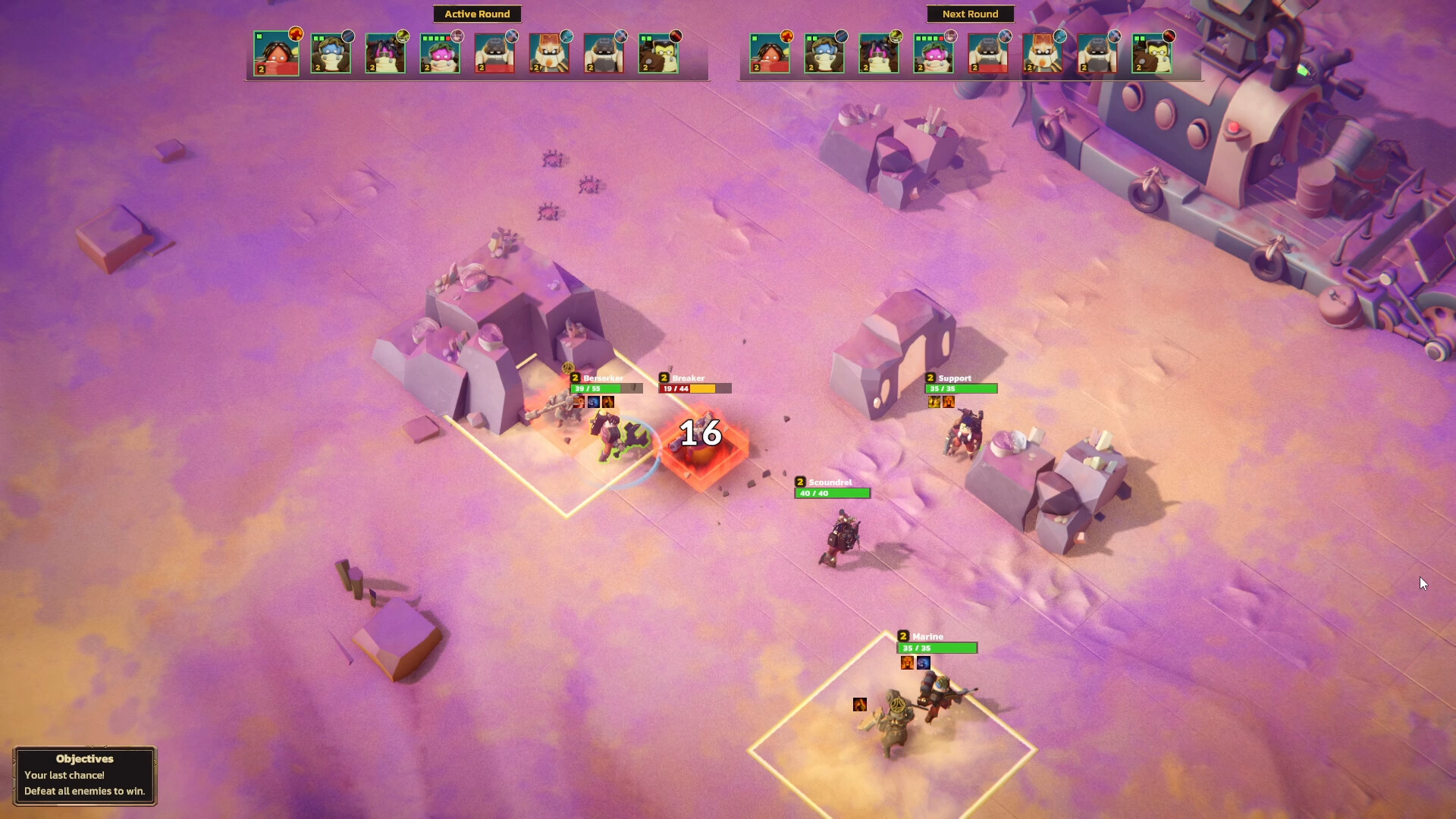
A bigger skirmish breaks out near the caravan's shipImage: Terahard Ltd -
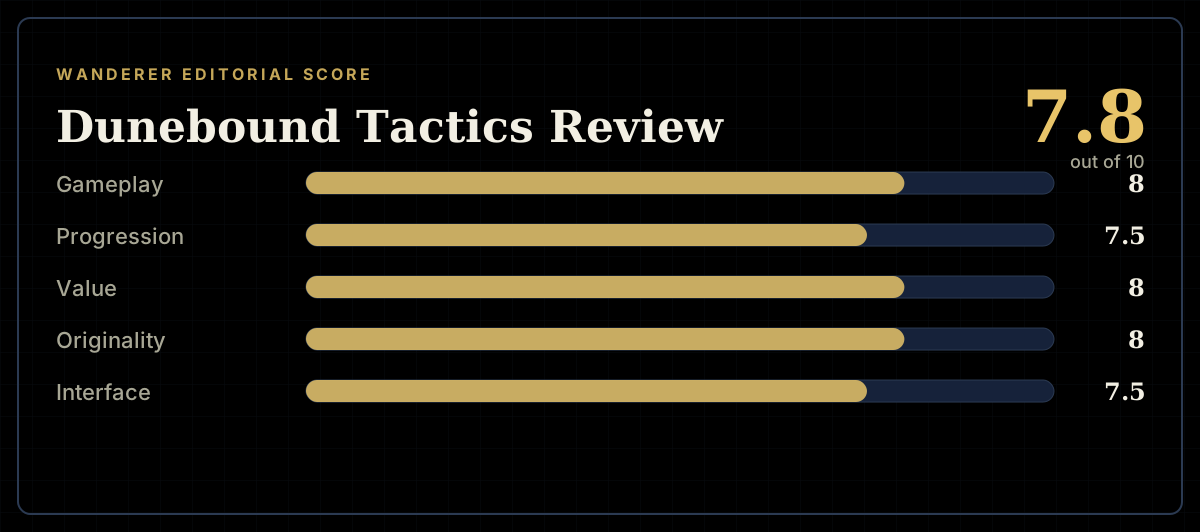
How the review scores each part of the gameWanderer Editorial -
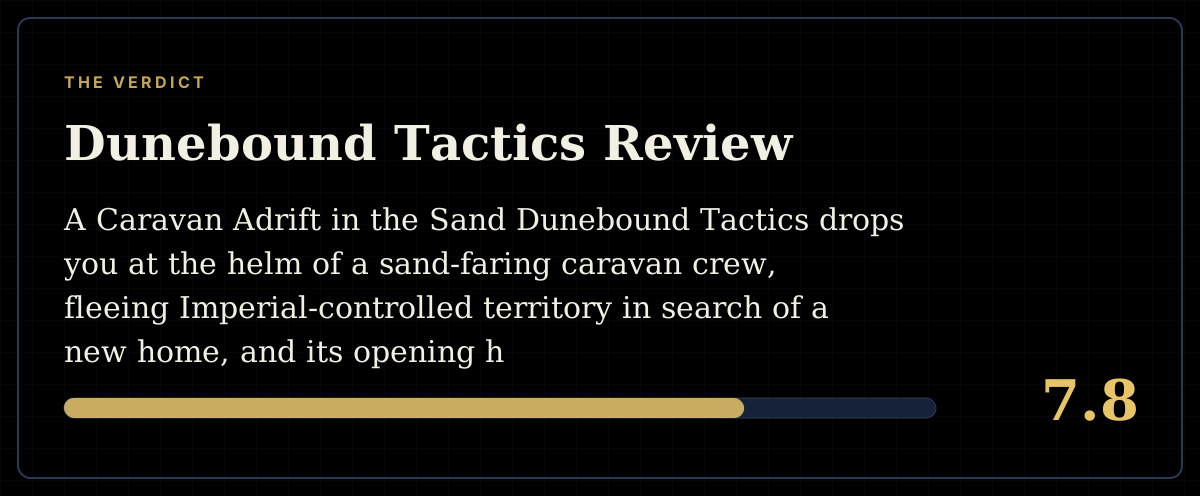
The short versionWanderer Editorial