Game review
Project Torque
5.5 / 10
- Developer
- Invictus Games Ltd., JOGARA LTD
- Publisher
- JOGARA LTD
- Released
- 20 December 2019
- Platforms
- Windows
- Genre
- Racing, MMO, Simulation, Sports
- Monetisation
- Free to play with an in-game cash shop; long-time players report the shop has drifted from purely cosmetic parts toward some gameplay-relevant items since a change of operator
- Players
- Massively multiplayer online racing — Sim, Drift, Drag, Capture the Flag and Thunder Alley modes, PvP throughout, plus limited single-player missions
The short version
Project Torque's driving model and its stack of genuinely distinct multiplayer modes — sim racing, drift, drag, a Capture the Flag variant run at racing speed, and the oval-brawl chaos of Thunder Alley — are the reason a small core of players has followed this game across three names and two decades. None of that changes the number that actually decides whether a new arrival has a good time: Steam's own concurrent-player counter sits in the single digits, and an MMO built entirely around finding other humans to race cannot outrun that math.
What's left is a technically competent, historically interesting free racer that plays best as a private arrangement between friends who already know it exists, not as a random Tuesday download for someone hoping to log in and find a race.
Biggest strengths
- Five genuinely distinct race modes — Sim, Drift, Drag, CTF and the demolition-adjacent Thunder Alley — rarely found together in one free racer
- Per-car handling and physics are still praised by long-time players as the game's strongest asset
- Light enough to run comfortably on old or low-end hardware
Biggest weaknesses
- Steam's concurrent-player count sits in the single digits, undermining the entire premise of an MMO racer
- Missions and progression are gated behind currency that is earned almost exclusively through multiplayer races, creating a hard wall when nobody else is online
- Visuals and interface plainly show their age, and some players report friction just getting an account registered
Who it's for: Racing-game history buffs, players who remember Level-R or HEAT Online and want to see what survived, and small friend groups willing to coordinate a session rather than expecting to matchmake with strangers.
Our recommendation: Free to install, so there's no financial risk in trying it — but go in with a friend or two lined up rather than expecting the servers to supply an opponent. If neither, the single-player missions run dry fast once they demand multiplayer-earned currency you have no way to earn.
5.5 / 10
Project Torque has been three different games with three different names, and it is still, technically, all of them at once. What launched on Steam on 20 December 2019 as "Project Torque - Free 2 Play MMO Racing Game" began life in 2006 as Level-R, a Japanese-market racer built on the Cross Racing Championship Extreme 2005 engine. It came to North America under the Project Torque name later that decade, folded when its original publisher shut the service down in mid-2010, and came back within months as HEAT Online under a different publisher — before Invictus Games, the original developer, eventually brought the Project Torque name itself back from the dead as a Steam release. That is an unusually well-documented survival story for a free racing game, and it explains a lot about who is still playing it: a Steam review with over 1,400 hours logged opens by warning off "the typical modern racing game player" before recommending it, in the same breath, to anyone who isn't one. This is a game that knows exactly who it's for. The harder question is whether that audience is still large enough to make the game work as designed.
What's actually here
The pitch, lifted straight from the store page, is "Sim, Drift, Drag, CTF and Thunder Alley" — and unlike a lot of F2P racers that use "modes" loosely to mean cosmetic variants of the same lap, these are genuinely different games wearing the same car models. Sim races run closer to a traditional circuit racer with track-specific handling; Drift scores line and angle rather than finishing position; Drag is a straight-line reaction and shift-timing test; Capture the Flag runs an actual flag-carrying objective at racing speed, closer to a vehicular team sport than a race; and Thunder Alley, repeatedly singled out by long-time players as the game's best-populated and most enjoyable mode, is an oval-circuit brawl clearly modelled on NASCAR-style pack racing, contact included. One reviewer with over 900 hours logged, translated from Russian, says they play "cool, BUT only in Thunder Alley mode... like Nascar," logging in with a regular team every evening specifically for that one mode rather than the game as a whole — a specific, useful data point for anyone deciding whether to bother, rather than a generic complaint.
The driving model underneath all of it earns consistent, specific praise across reviews spanning different play styles: "the physics are surprisingly nice, every car drives different and has its own pretty detailed customisation," writes one long-time player; another calls it "a really dated racing game that still fits in a niche between simcade and full arcade games that is hard to find contenders for." That's a fair description of the actual design space Project Torque occupies — heavier and more deliberate than an arcade kart racer, looser and more forgiving than a modern sim, with slipstreaming and racing-line mechanics that reward learning a track without demanding a wheel-and-pedal setup to be competitive.
The number that actually matters
None of that changes what an MMO racer is fundamentally for: finding other people to race against. Steam's public player-count API returns a current concurrent figure in the single digits at the time of writing — a number so low it isn't a fair snapshot of a bad hour, it's consistent with what the reviews themselves describe. "The highest amount of people I've seen online at any point was 16 people, and they were all spread apart in different gamemodes and servers," one reviewer writes, while praising the game as their current favourite racer in the same review. Others are blunter: "great, but need more players," "slowing player numbers tho, we need some players," "player base is so low," "the playerbase is generally really nonexistent." This isn't a minority complaint buried in an otherwise glowing review pool — it is close to the single most repeated sentence across the entire review history, positive and negative alike, and it's worth taking at face value rather than as ordinary live-service grumbling: an MMO racer with five modes to split a handful of concurrent players across is, structurally, going to leave most of those modes running empty most of the time.
Progression that assumes a population it doesn't have
The knock-on effect shows up hardest in progression. Single-player missions exist, but several reviewers report they require a currency — variously called RP or mission keys depending on the system — that is earned almost exclusively through multiplayer races. "The game is impossible to progress in, the servers are dead which means that keys can't be gained to go through missions," one reviewer writes; another: "Missions are not available," full stop. That's a specific, structural design bind rather than vague difficulty: the game's own single-player content is gated behind an economy that depends on the multiplayer population it doesn't currently have, which means the fallback content for a night with no other racers online is often not available either. A handful of reviewers frame the grind itself as excessive even with a healthy population in mind — "this game can make you insane just with its grinding" — which suggests the mission economy was tuned for a much larger, much more active playerbase than the one logging in today.
The account, the shop, and what's changed since the takeover
A recurring friction point that has nothing to do with the driving: several reviewers describe difficulty simply getting an account registered, including one report that registration was closed outright at the time of writing and another describing a forum-account requirement that felt like "a waste of time and disk space" for what should be a same-day install. These are not universal — most reviews don't mention account trouble at all — but they show up often enough, and specifically enough, to flag as a real first-hour risk rather than one unlucky user's hardware problem.
One of the more detailed reviews in the pool describes the 2019 Steam build as a fan-and-developer collaboration deliberately built around a specific older game state — codenamed "Fiona" — chosen for being the most well-regarded version rather than the most recent one, explicitly compared by that reviewer to "WoW Classic." That same review describes the launch monetisation as pointedly free of pay-to-win: cars, cosmetics and clan creation for sale, "at no point ever intrud[ing] upon gameplay." Later reviews tell a less generous story about where the shop has drifted since. One longtime player, back after Invictus Games' Jogara partnership relaunched the game again, writes: "I hate the fact that some parts can only be bought with real money. In the past, it was only licensed cars that could be bought with real money" — and separately reports no meaningful content update since 2022. Another longtime player describes an earlier operator wiping player purchases entirely during a prior ownership transition, forcing a full re-buy of anything previously owned. Take any single one of these as one player's account rather than verified fact, but taken together — across different reviewers, different play histories, describing the same general direction of change — they paint a consistent picture of a monetisation model that has crept outward from its original pay-to-win-free framing as the game has changed hands, alongside a development pace that has slowed considerably from whatever supported the 2019 relaunch.
Where it's honestly still good
None of the above should erase what Project Torque gets right. It is light: several reviewers specifically praise how well it runs on old or modest hardware, a real point of difference from racing games that assume a recent GPU as table stakes. It is genuinely free, with no paywalled entry and a substantial car and track roster inherited from nearly two decades of development across its various names. And the core driving model has aged more gracefully than the interface around it — the handling differences between cars, the slipstream mechanics, and the specific identity of modes like Thunder Alley and the CTF variant remain things a current F2P racing catalogue mostly doesn't offer anywhere else. Steam's own review aggregate reflects that split directly: "Mostly Positive" at roughly 70% across 906 reviews is a real, earned score from real players, not a number propped up by a small enthusiastic sample — it's just a score sitting alongside a concurrent-player count that tells a very different story about what a brand-new player will actually experience on arrival.
Verdict
Project Torque is a well-preserved piece of racing-game history with a driving model that still holds up and a set of multiplayer modes that remain genuinely distinct from each other, which is rarer than it should be in the free racing space. It is also, right now, an MMO with barely anyone in it — a fact repeated by its own longtime fans more often than any other single complaint, and one that directly breaks the mission-progression system built on top of it. Score this on driving feel and mode variety alone and it's a clearly above-average free racer. Score it as the massively multiplayer game it's built and marketed to be, and the population problem drags it down hard enough that most players will spend more time waiting in an empty lobby than racing.
Install it if you have a friend or two who'll join you, or if the specific history — a 2006 Japanese racer that has survived three publishers and two shutdowns to still be running in 2026 — is interesting to you on its own terms. Go in expecting a busy public matchmaking scene and you'll be disappointed inside your first session.
Wanderer's reviews of Forza Horizon 5 and Derby Heroines cover racing games built for a healthy population from day one, worth reading alongside this one for contrast. Players more interested in steady, no-population-required progression than in finding a race might also want to look at Wanderer itself.
Pros and cons
Pros
- Five genuinely distinct race modes — Sim, Drift, Drag, CTF and the demolition-adjacent Thunder Alley — rarely found together in one free racer
- Per-car handling and physics are still praised by long-time players as the game's strongest asset
- Light enough to run comfortably on old or low-end hardware
- A real, documentable lineage back to 2006's Level-R and 2010's HEAT Online gives it a novelty few current F2P racers can claim
- Entirely free with a large inherited roster of cars and tracks from its earlier releases
Cons
- Steam's concurrent-player count sits in the single digits, undermining the entire premise of an MMO racer
- Missions and progression are gated behind currency that is earned almost exclusively through multiplayer races, creating a hard wall when nobody else is online
- Visuals and interface plainly show their age, and some players report friction just getting an account registered
- Long-time players report the cash shop has drifted toward gameplay-relevant items since a change of operator, and that content updates have slowed to a crawl
- No Steam achievements or other modern retention hooks; it survives purely on nostalgia and whatever community it still has left
Screenshots
-
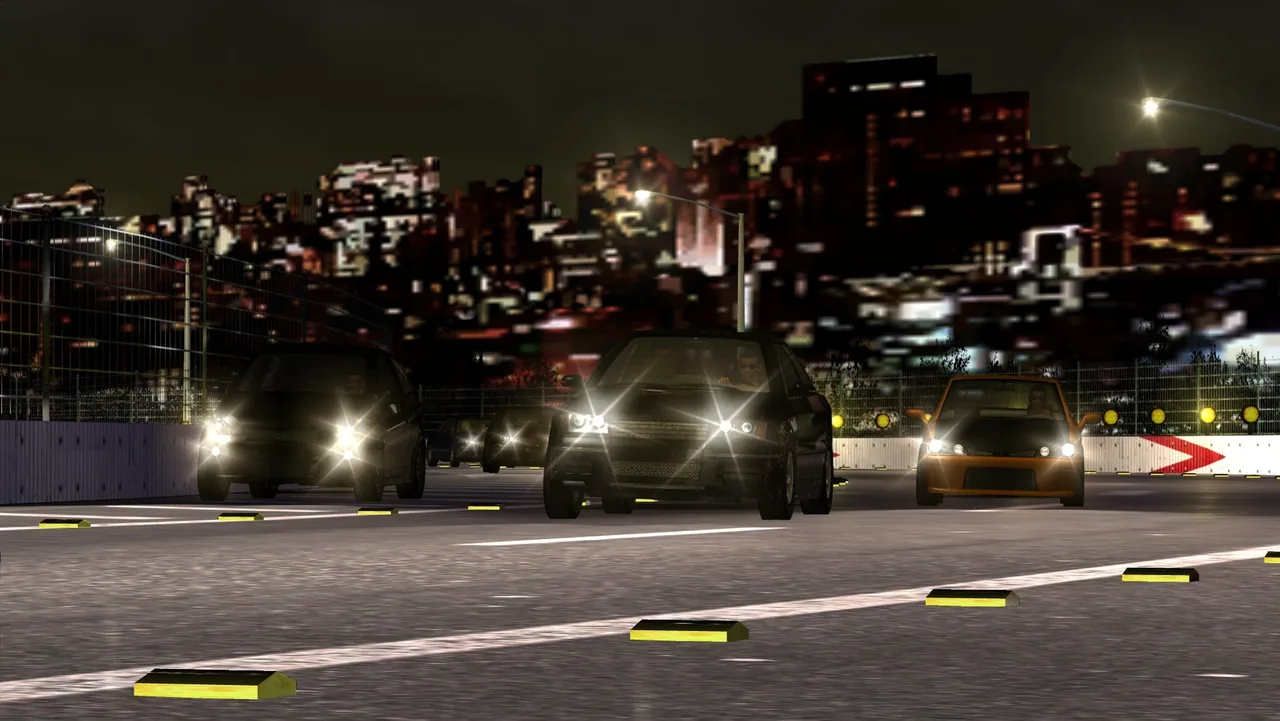
One of Project Torque's five distinct modes — Sim, Drift, Drag, CTF and Thunder Alley all play differently from each otherImage: JOGARA LTD via Steam -
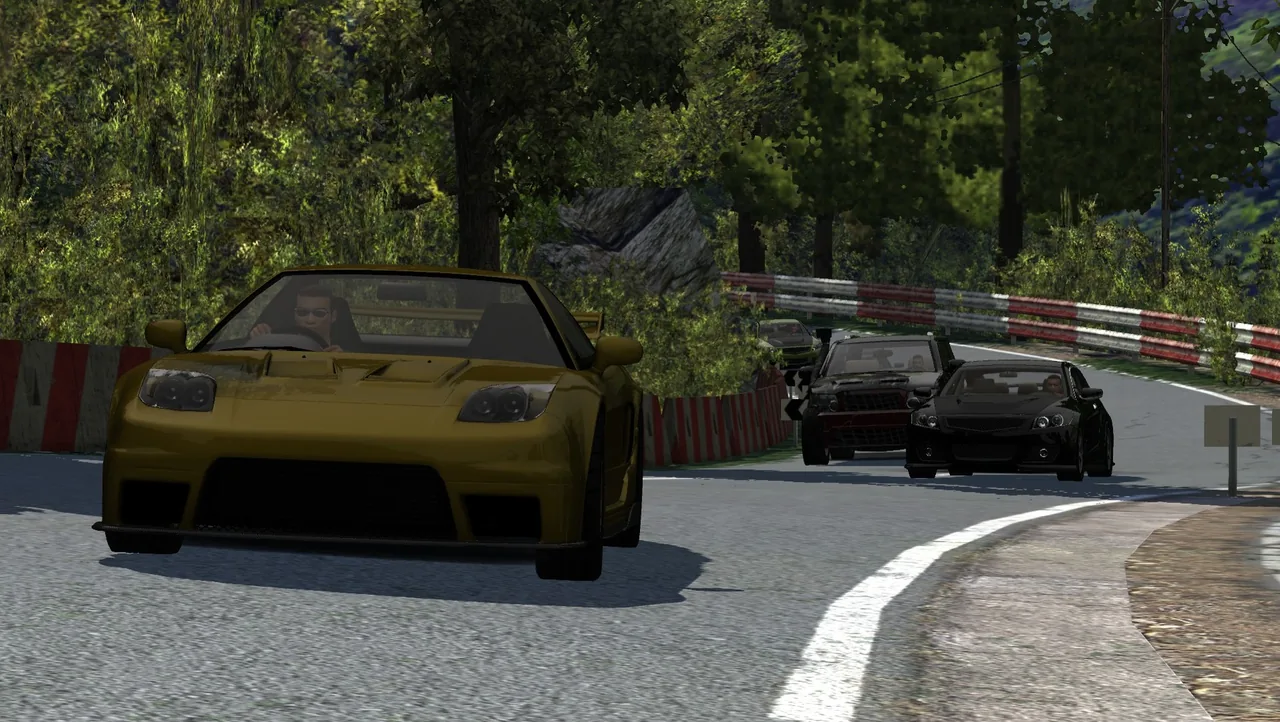
Car customisation and track variety inherited from the game's earlier Level-R and HEAT Online releasesImage: JOGARA LTD via Steam -
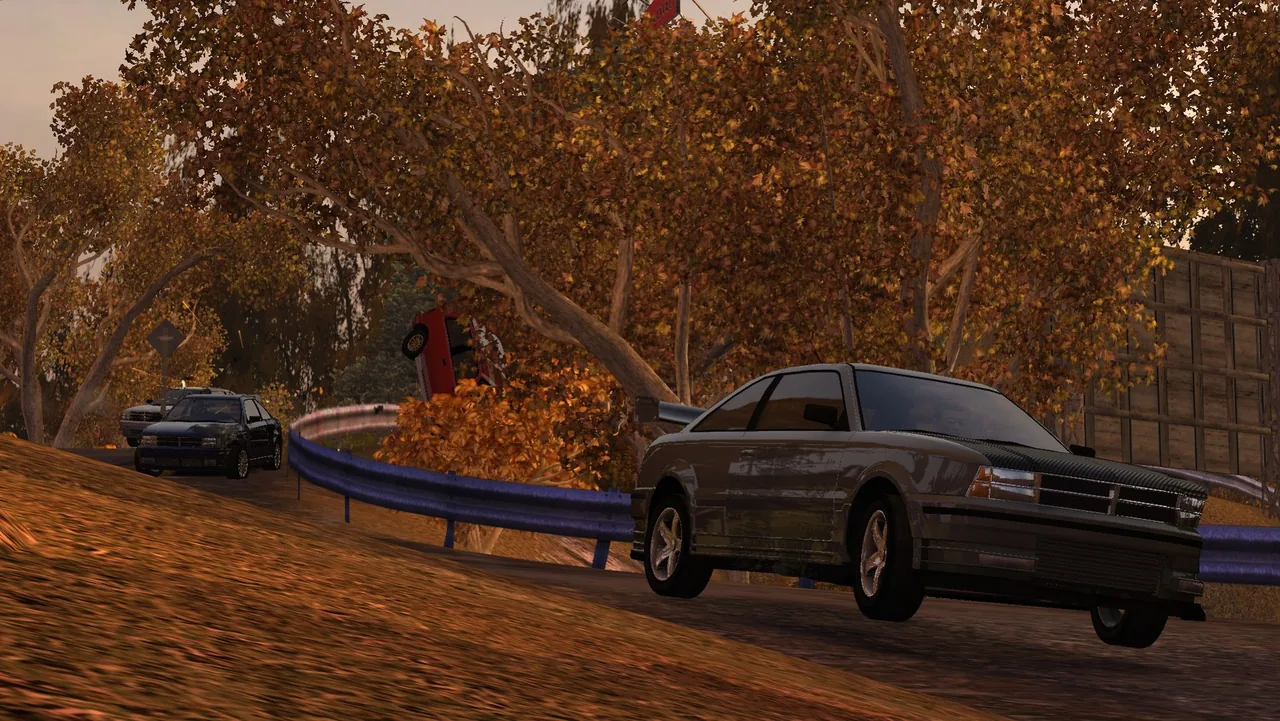
Project Torque - Free 2 Play MMO Racing GameImage: JOGARA LTD via Steam -
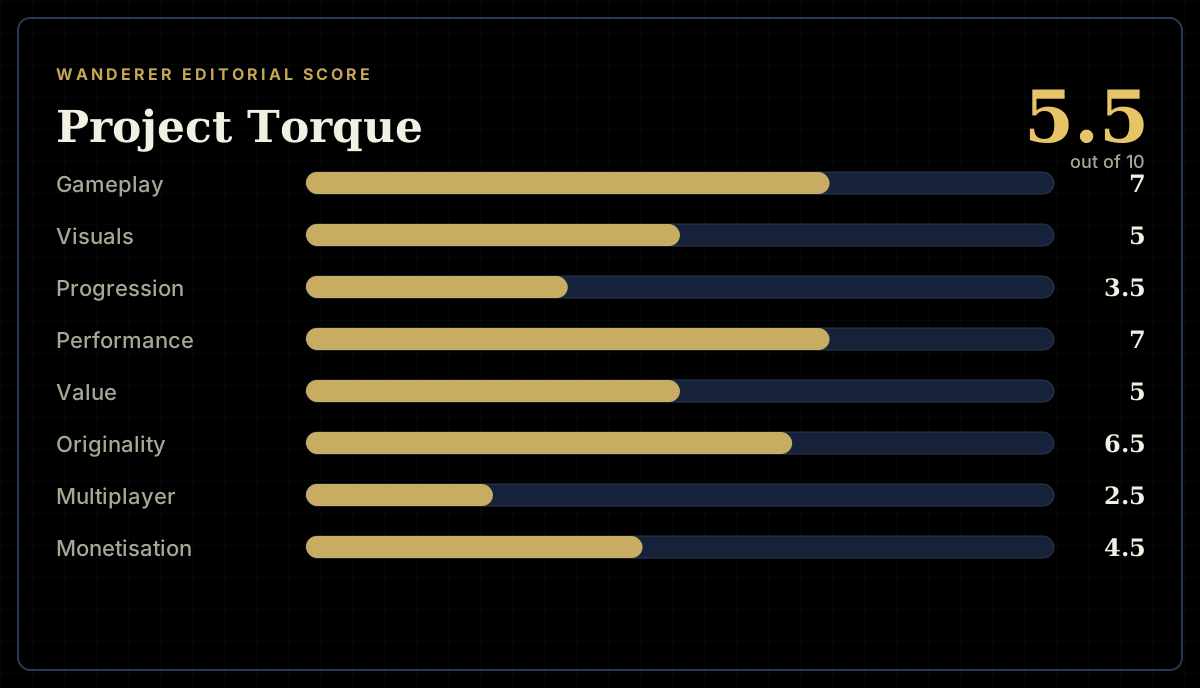
How the review scores each part of the gameWanderer Editorial -
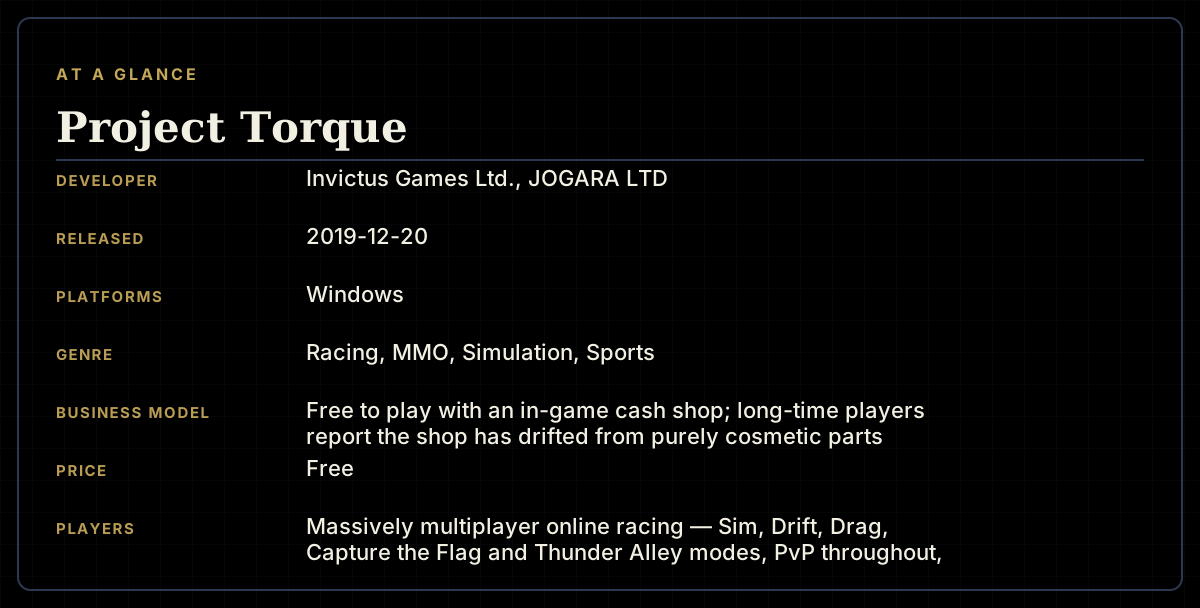
The game at a glanceWanderer Editorial -
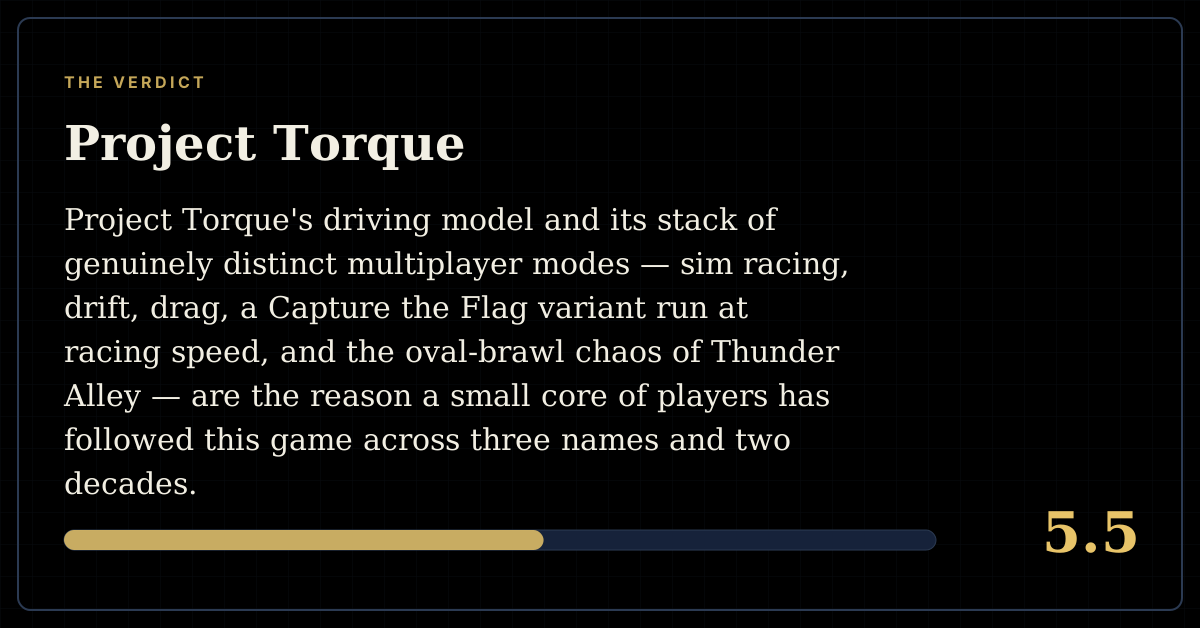
The short versionWanderer Editorial