
Game review
Derby Heroines: Run, Bet, Win!
6.5 / 10
- Developer
- SHINISE GAMES, MFC STUDIO
- Publisher
- SHINISE GAMES
- Released
- 5 August 2026
- Platforms
- Windows
- Genre
- Action, Racing, Simulation
- Monetisation
- One-time purchase, no DLC listed, no in-app purchase category on the store page. Gacha recruitment and race betting both run on in-game currency only; the store page states "No real money, ever."
- Players
- None; single-player only, no online modes listed
The short version
Derby Heroines: Run, Bet, Win! fuses two things that don't normally share a game: an actual horse-racing bet slip — Win, Place, Quinella, Exacta, Trio, Trifecta, wheel and box betting, a five-race PINZUDO 5 jackpot with carryover — and an arcade dash race you run yourself, with a gauge to manage, orbs to grab and a once-per-race special move. You study the odds like a punter, then you're the one crossing the line. Over a hundred collectible "track girls" sit behind a gacha the store page names outright, but every bet and every pull spends currency earned in-game; there's no real-money purchase path on the store page at all.
Two days after release, its entire public review corpus is 13 Steam reviews, every one of them in Japanese, every one of them positive, and several bring up the same comparison unprompted: this plays like a fan's version of Uma Musume Pretty Derby, built by a two-person credit and priced like an indie game rather than gated behind a live-service gacha's real-money pull system.
Biggest strengths
- Seven real bet types plus wheel, box and formation betting, on top of a five-race PINZUDO 5 jackpot with carryover — an unusually deep, correctly-named betting system for a game this size
- Every bet and every gacha pull spends in-game currency only; the store page states no real-money purchase exists, and Steam's own category tags list no in-app purchases at all
- Racing the horse yourself rather than only watching it, with a dash gauge, track-side skill orbs and a once-per-race special move, gives the betting half a reason to matter beyond spectating
Biggest weaknesses
- The entire public review corpus is 13 reviews, all in Japanese; the English-language review filter on Steam returns zero, so nothing here has been checked against the audience most likely to read this review
- Windows only, no demo listed anywhere on the store page, so there's no low-commitment way to try the racing or betting feel before paying full price
- At least one reviewer reported the gacha recruitment button doesn't use the word "gacha" anywhere in its own label, which is a strange thing to obscure on a store page that names the mechanic outright
Who it's for: Fans of Uma Musume Pretty Derby's horse-girl gacha loop who've wanted the same idea without a real-money gacha attached, and anyone who likes the idea of handicapping a race and then personally running it, rather than watching an AI do both halves.
Our recommendation: The betting system is specific enough, and the "no real money, ever" line specific enough, that this reads as a genuine design position rather than marketing copy. The catch is that almost nobody who plays in English has said anything about it yet — the entire review corpus so far is a dozen Japanese posts on a two-day-old game.
6.5 / 10
Most games that let you bet on a race also let you buy your way to a better bet. Derby Heroines: Run, Bet, Win! spends its entire pitch arguing the opposite. It hands you a genuinely deep, correctly-named horse-racing bet slip — Win, Place, Quinella, Exacta, Trio, Trifecta, the lot — lets you spend on it exactly once you've earned something to spend, and then puts you on the track yourself to see if your handicapping was any good. Two days after its 5 August 2026 release, it has thirteen Steam reviews, every single one of them written in Japanese, every single one of them positive, and more than one of them describes it, unprompted, as a fan-made Uma Musume without the real-money gacha attached.
A bet slip and a dash gauge, sharing one game
The premise is unusual enough to be worth stating plainly: this is a track-and-field girls' racing game where you don't just watch the race you bet on. The store page frames it as "the full grammar of horse racing" grafted onto an arcade sprint — study the paddock, read the simulated odds, buy a ticket, then take the starting gate as one of the runners and manage a dash gauge, grab skill orbs scattered along the track and unleash a once-per-race special move to try to close the gap. Pack running and slipstreams get name-checked on the store page alongside "photo finishes," which suggests the racing itself is built to produce genuinely close outcomes rather than a foregone conclusion for whichever runner you're controlling.
That structure does real work for the betting half. A bet slip only matters if the outcome feels earned rather than scripted, and running the race yourself — rather than handing it to an AI opponent, the way most racing-adjacent gacha games do — is the mechanism that's supposed to make your handicapping feel like it counted for something. Whether the racing itself holds up over dozens of runs is exactly the kind of thing a two-day-old game with thirteen reviews can't yet answer. What's verifiable is the shape of the design, and it's a genuinely uncommon one: punter and jockey in the same session, rather than split across two different games.
Seven bet types, and a monetisation claim worth checking
The betting system itself is the most specific, most confidently detailed part of the store page, and specificity is exactly what a claim like this needs to be believed. Seven bet types — Win, Place, Quinella Place, Quinella, Exacta, Trio, Trifecta — plus wheel, box and formation betting, stacked on top of a PINZUDO 5 jackpot that pays out for picking five straight winners across races seven through eleven, with a carryover pool for when nobody hits it. That's real horse-racing structure, not a simplified stand-in, and it reads like someone who actually understands the hobby built the betting math rather than reverse-engineering it from a Wikipedia summary.
The claim that matters most for Wanderer's readers sits right next to it: "Every bet uses in-game currency only. No real money, ever." That's a strong, specific sentence to put on a store page for a game that also runs a gacha — the roster of "100+ track girls" is recruited through what the store page itself calls a gacha, with distance aptitude, running style and level-up-by-race-XP stats attached to each one. Two things back the claim up rather than just repeating it: Steam's own storefront category tags list no in-app purchases at all, and there's no DLC entry either. Between a real bet slip and a real collection gacha, this is exactly the kind of game where a real-money purchase path would normally show up somewhere, and by every check available before release, it doesn't. That's worth taking seriously rather than skeptically, and it's the single best reason to trust this review's optimism.
It isn't friction-free, though. At least one reviewer flagged that the recruitment button itself — described in Japanese as an "Acquire Track Girl" prompt — never actually uses the word "gacha" on its own label, despite the store page using that exact word to describe the system. Naming a mechanic honestly on the storefront and then obscuring it in the actual interface is a small inconsistency, but it's the kind of thing that's worth fixing on a game explicitly trying to earn trust on this point.
Thirteen reviews, one language, one recurring comparison
The honest state of this game's reception, two days after launch, is thin and lopsided rather than absent. Thirteen Steam reviews exist, all thirteen positive, and every single one returned by Steam's review API is written in Japanese — the English-language filter comes back with zero. Playtimes on the sample run from roughly half an hour to a little over two hours, which is consistent with early buyers still working through the opening stages rather than a settled verdict on the full loop.
What those reviews actually say lines up with the comparison this section's headline promises. More than one describes the appeal in terms of Uma Musume Pretty Derby — the huge, real-money-gacha horse-girl racing franchise this game is unmistakably drawing on — with one reviewer specifically praising the ability to race in first person as something the bigger franchise doesn't offer, and another calling the presentation impressively polished "for a first solo project." A Steam discussion thread posted a few days before launch put the same comparison more bluntly, in a title translating roughly to "Mom, can we get Uma Musume? We have Uma Musume at home" — the kind of joke that only lands because the resemblance is real and the intent behind it is clearly affectionate rather than dismissive. That thread and two others sit on the game's discussion forum with zero replies each, which is simply what a launch-week forum looks like before an audience arrives, not a sign of a problem.
A few reviews also mention a pre-release "membership" early-access period run by the developer ahead of the general Steam launch, with at least one player expressing frustration that the notice for it was too short. That's a real, sourced complaint about how early access to the game was communicated — worth flagging for anyone weighing whether to jump in on launch weekend versus waiting, though it says nothing about the finished game itself.
Small-team seams
A few details point at exactly the scale of team behind this: two credited developers, a Twitter/X account as the only listed support channel with no support email, no achievements, no Steam news posts since release, and a minimum-spec listing that states "4 MB RAM" — almost certainly a typo for gigabytes, and one that's still sitting uncorrected on the store page two days after launch. None of that is disqualifying on its own; plenty of small teams ship a tight, honest game with a rough storefront listing around it. But it's a fair signal that post-launch support, bug triage and any future balance passes are riding on a small crew's bandwidth, the same caution worth applying to any two-person release regardless of how good the pitch sounds.
The game is also transparent about one more thing worth naming directly: its own AI Generated Content Disclosure states plainly, "We use AI for our sounds." That's a specific, narrow claim — sound design rather than art or writing — and it's stated rather than buried, which is more than a lot of larger releases manage on the same question.
Final verdict
Derby Heroines: Run, Bet, Win! makes a genuinely distinctive pitch and backs the part that matters most — its monetisation claim — with real evidence rather than just a marketing line. A real bet slip, a race you run yourself instead of only watching, and a gacha collection system that, by every check available before release, never asks for a second real-money purchase: that's a rare combination in a genre defined by the opposite instinct. The design is specific enough to trust, and the audience that's found it so far seems to agree.
What holds it at 6.5 rather than higher is simply how little of that agreement exists yet, and how narrow it is. Thirteen reviews, all positive, all in a single language that isn't the one this review is written in — that's real signal, but it's a fraction of what a fair verdict needs, and nobody playing in English has weighed in publicly at all. No demo exists to let a curious buyer check the racing feel before paying full price, and the small-team seams around the edges — the uncorrected spec typo, the single support channel, the gacha button that doesn't say "gacha" — are the ordinary cost of buying into a two-person team's launch week rather than a settled product.
Worth a look for anyone who already loves the horse-girl gacha genre and has been waiting for a version that doesn't ask for a credit card; worth waiting a few weeks for anyone who wants an English-language verdict to weigh against the Japanese one that currently exists.
Pros and cons
Pros
- Seven real bet types plus wheel, box and formation betting, on top of a five-race PINZUDO 5 jackpot with carryover — an unusually deep, correctly-named betting system for a game this size
- Every bet and every gacha pull spends in-game currency only; the store page states no real-money purchase exists, and Steam's own category tags list no in-app purchases at all
- Racing the horse yourself rather than only watching it, with a dash gauge, track-side skill orbs and a once-per-race special move, gives the betting half a reason to matter beyond spectating
- Full voice-acted commentary and UI in four languages (English, Japanese, French, Traditional Chinese), not just text localisation bolted onto a Japanese-only release
- All 13 Steam reviews posted so far are positive, and several single out how approachable the racing is even for players who don't already know horse-racing terminology
Cons
- The entire public review corpus is 13 reviews, all in Japanese; the English-language review filter on Steam returns zero, so nothing here has been checked against the audience most likely to read this review
- Windows only, no demo listed anywhere on the store page, so there's no low-commitment way to try the racing or betting feel before paying full price
- At least one reviewer reported the gacha recruitment button doesn't use the word "gacha" anywhere in its own label, which is a strange thing to obscure on a store page that names the mechanic outright
- No achievements, no Steam news posts, and the store's own minimum-spec listing states "4 MB RAM," an obvious storefront typo that nobody's corrected two days after launch
- Support runs through a single X/Twitter account with no listed email, which is thin infrastructure for a game asking players to track a roster of a hundred-plus collectible runners
Screenshots
-
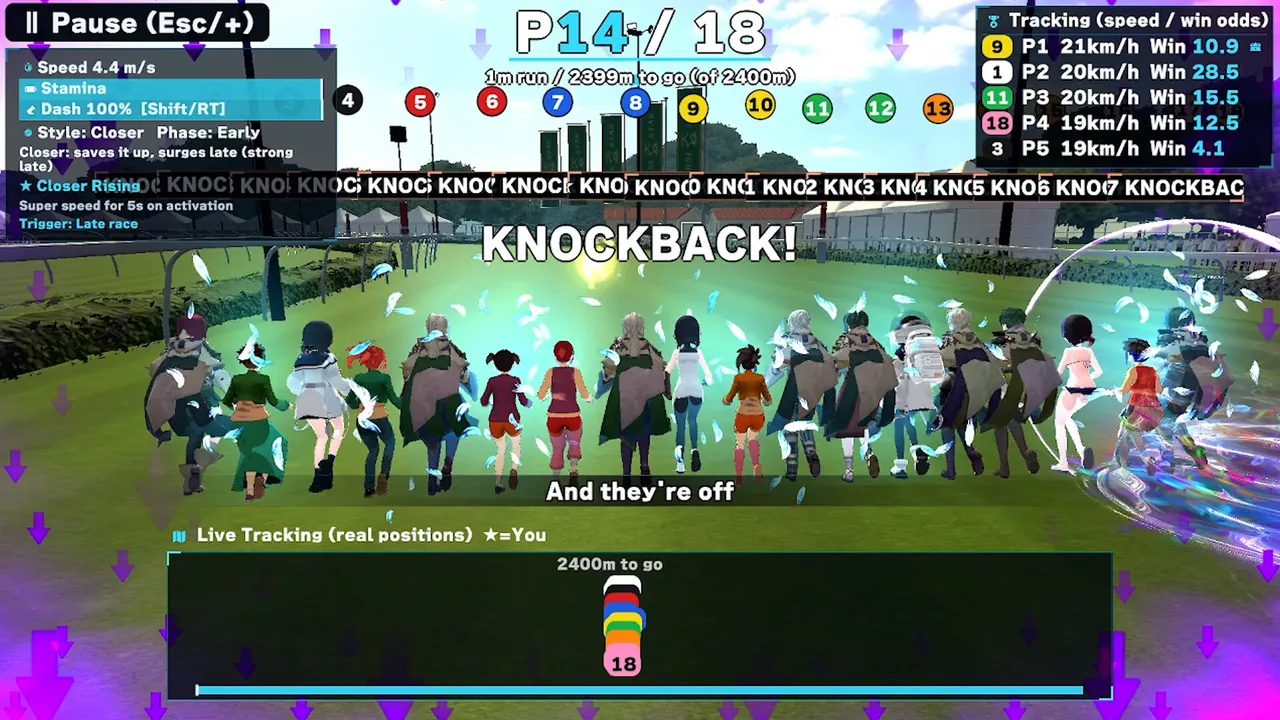
Derby Heroines: Run, Bet, Win!Image: SHINISE GAMES via Steam -
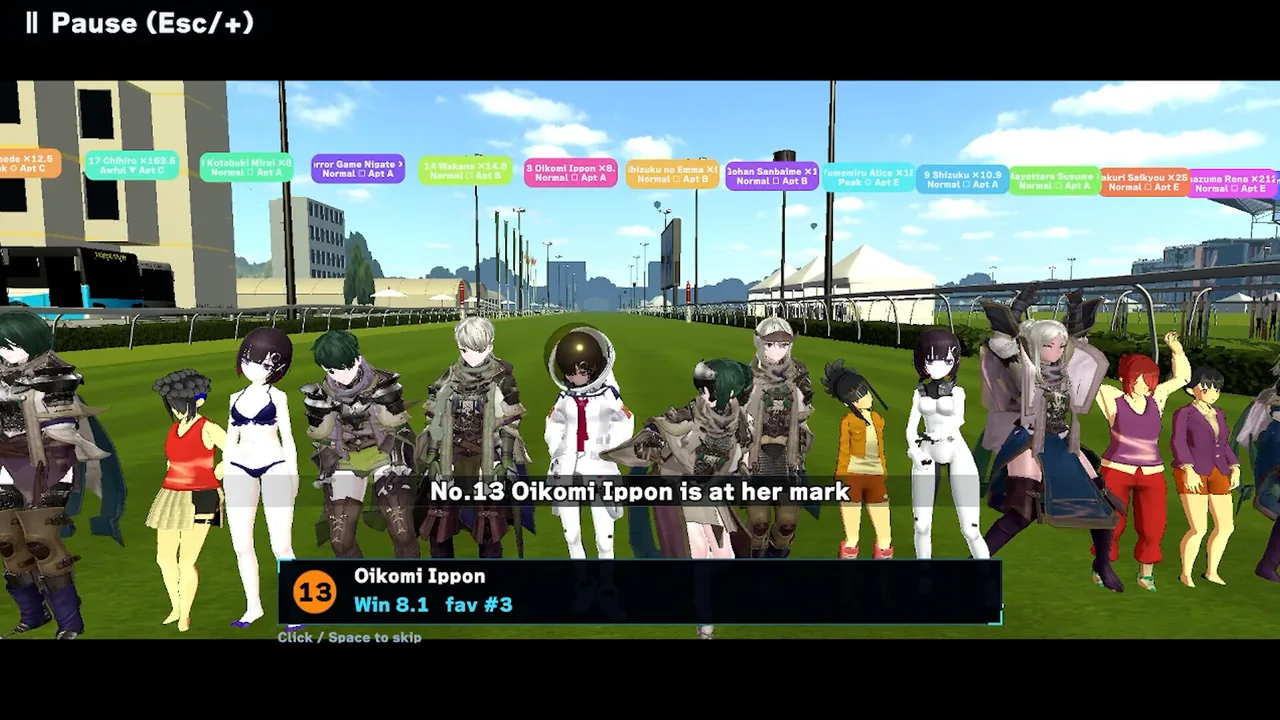
Derby Heroines: Run, Bet, Win!Image: SHINISE GAMES via Steam -
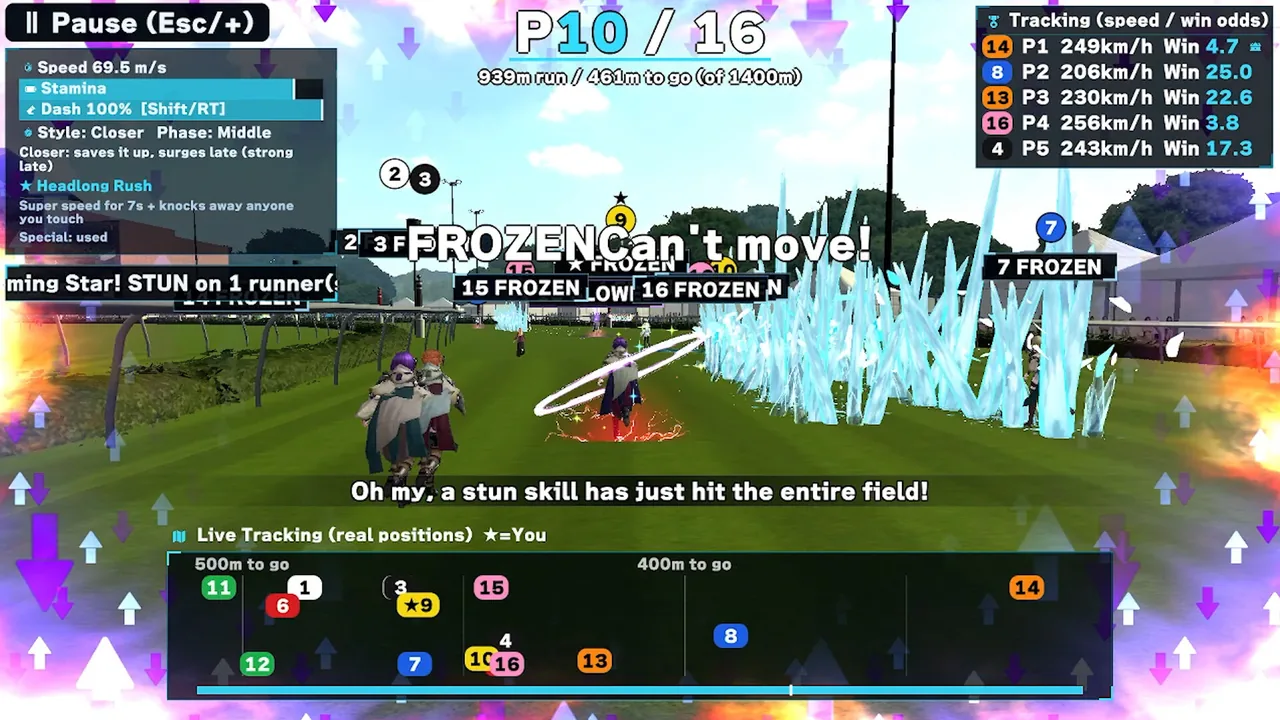
Derby Heroines: Run, Bet, Win!Image: SHINISE GAMES via Steam -
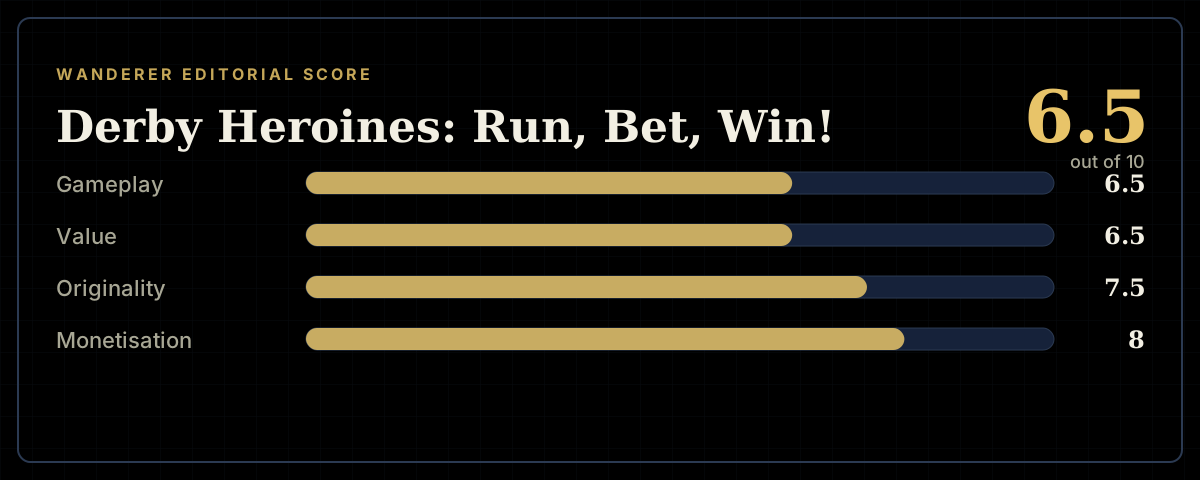
How the review scores each part of the gameWanderer Editorial -
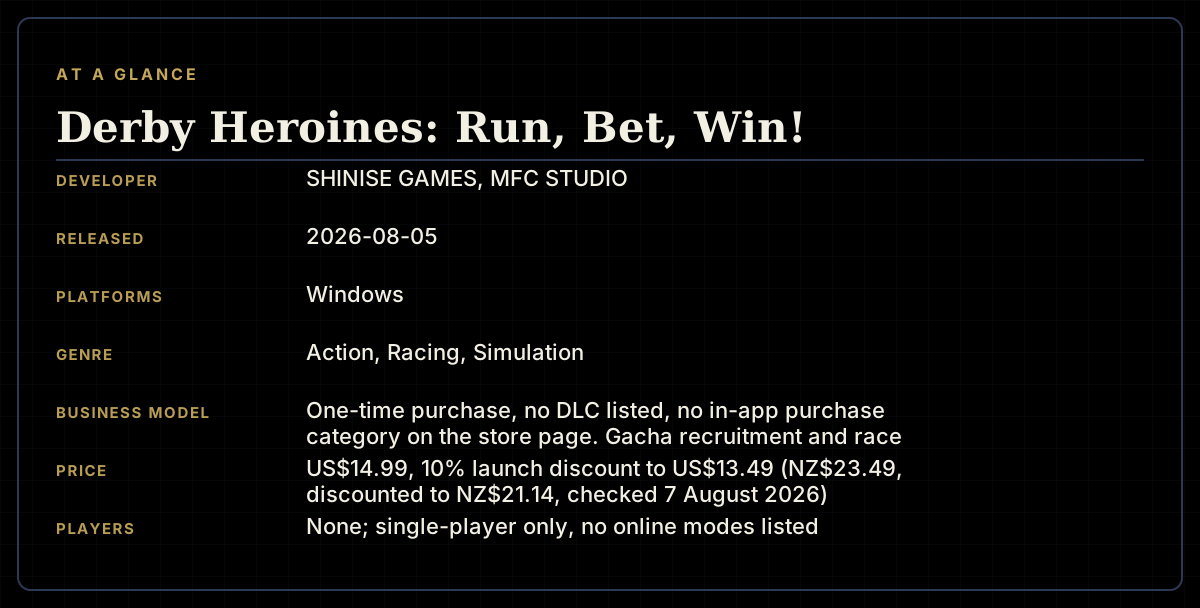
The game at a glanceWanderer Editorial -

The short versionWanderer Editorial