
Game review
Umamusume: Pretty Derby
7 / 10
- Developer
- Cygames, Inc.
- Publisher
- Cygames, Inc.
- Released
- 24 June 2025
- Platforms
- Windows
- Genre
- Gacha Training Sim
- Monetisation
- Free-to-play with gacha pulls, premium currency, and a battle-pass-style season system
- Players
- Asynchronous PvP (team trials, ranked racing)
The short version
Umamusume: Pretty Derby is a free-to-play horse-girl training sim from Cygames, in which players raise and race anthropomorphised racehorse characters through career simulations and PvP events. Global English release on Steam landed 24 June 2025 — a distinct, first-ever worldwide launch for a game that had already run for years in Japan — and it won Best Mobile Game at the 2025 Game Awards. It holds a massive, healthy review base: 93.7% positive across its 59,173-review all-language corpus, 93.5% across 41,364 English-language reviews, with recent sentiment (95 of the last 100 English reviews) if anything ahead of the lifetime figure. This review reads the 99 most-relevant English negative reviews and finds two dominant, well-documented threads: 59 of the 99 raise the game's gacha economy specifically, describing a system with no pity transfer between character banners and no guaranteed top-rarity pull even at the 200-pull pity ceiling; and 13 of 16 AI-related negatives cluster in the 48 hours after Cygames announced a dedicated generative-AI studio on 9 January 2026, written overwhelmingly by players with hundreds or thousands of hours invested rather than drive-by objectors.
Biggest strengths
- Writing and character work draw wide, consistent praise as unusually warm for the genre — story is repeatedly described as uplifting rather than grim, with genuine character development across career-mode storylines
- The core training-and-racing loop earns real credit for being "addictive" and rewarding, with races described by multiple reviewers as genuinely exciting rather than a formality between menus
- The single most-voted review in the entire corpus (1,393 votes) offers direct, practical advice that Wanderer's readers should weigh seriously: the game is playable and enjoyable entirely free, with its author reporting 140-plus hours without spending or rerolling
Biggest weaknesses
- Fifty-nine of the 99 negative reviews read for this piece raise the gacha system specifically, describing it as unusually harsh even by genre standards: no pity carrying over between character banners, and no guaranteed top-rarity (SSR) pull even after reaching the 200-pull pity ceiling on some banners, which several reviewers with gacha experience elsewhere call outside genre norms
- The competitive PvP endgame draws detailed, specific burnout complaints from invested players — including a self-described top-1,000 competitive finisher — describing months of weak decks and reliance on external optimisation guides just to remain competitive without heavy spending
- Thirteen of 16 AI-related negative reviews cluster within 48 hours of Cygames announcing a dedicated generative-AI studio on 9 January 2026, written by players with substantial investment (playtimes as high as 1,322 and 1,192 hours), and this review found no statement addressing the concern anywhere in the game's own subsequent news feed
Who it's for: Fans of sports anime, character-collector games and horse racing looking for a genuinely well-written free entry point; readers specifically weighing whether a gacha game's economics are fair should read the monetisation section closely before investing time.
Our recommendation: A genuinely well-made, warmly written game that costs nothing to enjoy at a casual level, playable entirely free by its own top-voted review's account — but its gacha economy is a real, documented outlier even within a genre known for harsh systems, and a January 2026 AI-studio announcement has left a dated but unresolved trust question hanging over it.
7 / 10
Introduction
Umamusume: Pretty Derby puts the player in charge of training an anthropomorphised racehorse character through a career of stat-building, story events and competitive races, collecting a growing roster of similarly horse-derived characters along the way. Developed and published by Cygames, its global English release landed on Steam 24 June 2025 — a genuine first-ever worldwide launch for a game that had already run for years as a Japan-only service — and it went on to win Best Mobile Game at the 2025 Game Awards. Reception on Steam has been enormous and durable: 93.7% positive across a 59,173-review all-language corpus, 93.5% across 41,364 English-language reviews, with recent sentiment (95 of the last 100 English reviews) holding steady or slightly ahead of the lifetime figure more than a year on. This review reads the 99 most-relevant English negative reviews in full and finds a game whose writing and core loop are genuinely well-regarded, sitting alongside a gacha economy this review's sample documents in unusually specific, technical detail — and a real, dated controversy this review can independently confirm the shape of.
A genre standout for writing and tone
Start with what draws the widest agreement, because it's substantial. Umamusume's story mode earns repeated, specific praise as a genre outlier — warm and uplifting where most gacha games lean grim or transactional in tone. "The writing is amazing," reads one detailed review that otherwise raises serious monetisation concerns, and the same pattern holds across dozens of others: reviewers criticising the economics of the game routinely stop to credit the characters and career-mode storylines as genuinely well-crafted rather than filler between gameplay systems. The training- and-racing loop itself earns real credit too, described as "addictive" in the constructive sense — races are called exciting and tense rather than a formality, and several reviewers describe the specific satisfaction of finally winning a difficult career-mode finale after repeated attempts. Presentation, music and voice acting round out the praise, holding up consistently even inside otherwise critical reviews.
What the gacha economy actually costs a player
This is the section Wanderer's readers should weigh most carefully, and it's worth being precise about what's being described rather than repeating a vague "it's predatory" label. Fifty-nine of the 99 negative reviews read for this piece raise the gacha system specifically, and the complaint that recurs most, described in matching technical detail by reviewer after reviewer, concerns two specific mechanics: pity does not carry over between character banners, so unspent progress toward a guaranteed pull is lost when a banner rotates; and even reaching the pity ceiling — 200 pulls on some banners — does not guarantee the top-rarity (SSR) character, only a "spark" resource that still requires further spending or luck to convert into the character a player wants. "Let's be real," writes one reviewer after 250 pulls yielding a single copy of a wanted character, "that's not a real pity system." Reviewers with experience across other gacha games specifically call this harsher than genre norms, not merely disappointing by comparison to an idealised standard.
It's important to state the other side plainly, because this review's own sample provides it: the single most-voted review in the entire corpus — 1,393 votes, comfortably the highest of any review read for this piece — argues the opposite conclusion from the same starting facts. "Just be f2p, don't spend any money, play for the fun races and you will be 100% fine," it reads, with its author reporting over 140 hours of enjoyment without ever spending or rerolling. That's a genuinely useful, practical piece of reader service this review passes on directly: the harshness described above applies specifically to players trying to build a fully optimised, competitive roster, and appears considerably less punishing for anyone content to play casually for the story and races. Whether that distinction matters depends entirely on what a given reader wants from the game — several detailed reviews from competitive players, including one self-described top-1,000 finisher in the game's PvP mode, describe genuine burnout from months of weak decks and a reliance on external optimisation guides just to stay competitive without heavy spending, which is a different and more serious complaint than ordinary "wish pulls were cheaper" grumbling.
A dated controversy this review can independently confirm
On 9 January 2026, Cygames announced the formation of "Cygames AI Studio," described in its own announcement as developing services and tools using generative AI. This review found a clean, dateable reaction in the negative sample: 13 of the 16 AI-related negative reviews read for this piece are dated within 48 hours of that announcement, and unlike a typical brigading wave, the authors are overwhelmingly long-invested players rather than drive-by objectors — playtimes on these specific reviews include 1,192, 1,322, 469 and 128 hours. "This is why I can no longer recommend the game," reads one, with 723 upvotes, the game's single most-voted negative review. Another, more measured, argues the game "was shaping up to be [an exception to industry norms], and all of which will now go out the window" if the studio's output reaches the game itself.
This review independently checked Cygames' Steam news feed for Umamusume covering the following seven months and found no post addressing the announcement, player concerns, or any clarification of how the new studio's work might or might not touch the game — the feed continues uninterrupted with story-event and character-roster announcements as though the controversy hadn't occurred. That absence doesn't confirm any specific outcome; it simply means, as of this check, there is no official statement to weigh against the concern, and readers troubled by the announcement should treat it as an open question rather than a settled one in either direction. Recent overall sentiment (95 of the last 100 English reviews positive) suggests this hasn't become a broad revolt beyond the invested minority who reacted immediately — worth noting plainly rather than either dismissing the wave or overstating its reach.
A smaller, specific technical complaint
A quieter but recurring thread in this review's sample concerns files left behind after uninstallation. Multiple reviewers, independently, report data persisting in a Cygames-specific folder under the Windows AppData directory after removing the game, with one — a 311-vote review — citing six gigabytes left behind. This review cannot independently verify the claim without installing and testing the software itself, which falls outside what this outlet does, but it's raised specifically and consistently enough across multiple reviewers to report as a documented player complaint rather than dismiss it.
Final Verdict
Umamusume: Pretty Derby earns its awards and its enormous, durable review base on real merit — this review's sample agrees unusually widely that the writing, characters and core training-racing loop are genuinely well-crafted, warmer in tone than most of its genre, and playable entirely for free at a casual level by its own most-trusted reviewer's account. Set against that is a gacha economy this review's sample documents in specific, technical, credible detail as harsher than genre norms on pity mechanics specifically, a real burnout pattern among invested competitive players, and a January 2026 AI-studio announcement that a meaningful, heavily-invested slice of its playerbase reacted to immediately and that remains unaddressed by the developer as of this check. None of that erases what the game does well — but a reader deciding whether to invest real time, and especially real money, deserves the specific picture this review's sample provides rather than the smoothed-over version a 93.5% badge implies on its own.
Pros and cons
Pros
- Writing and character work draw wide, consistent praise as unusually warm for the genre — story is repeatedly described as uplifting rather than grim, with genuine character development across career-mode storylines
- The core training-and-racing loop earns real credit for being "addictive" and rewarding, with races described by multiple reviewers as genuinely exciting rather than a formality between menus
- The single most-voted review in the entire corpus (1,393 votes) offers direct, practical advice that Wanderer's readers should weigh seriously: the game is playable and enjoyable entirely free, with its author reporting 140-plus hours without spending or rerolling
- Presentation, music and voice acting draw consistent praise across both positive and negative reviews, holding up even in detailed critical reviews written by burned-out competitive players
Cons
- Fifty-nine of the 99 negative reviews read for this piece raise the gacha system specifically, describing it as unusually harsh even by genre standards: no pity carrying over between character banners, and no guaranteed top-rarity (SSR) pull even after reaching the 200-pull pity ceiling on some banners, which several reviewers with gacha experience elsewhere call outside genre norms
- The competitive PvP endgame draws detailed, specific burnout complaints from invested players — including a self-described top-1,000 competitive finisher — describing months of weak decks and reliance on external optimisation guides just to remain competitive without heavy spending
- Thirteen of 16 AI-related negative reviews cluster within 48 hours of Cygames announcing a dedicated generative-AI studio on 9 January 2026, written by players with substantial investment (playtimes as high as 1,322 and 1,192 hours), and this review found no statement addressing the concern anywhere in the game's own subsequent news feed
- A specific, repeated technical complaint concerns leftover files after uninstallation — several reviewers report data persisting in a Cygames-specific folder post-uninstall, one citing six gigabytes; this review reports the complaint as documented by reviewers rather than as independently verified
Screenshots
-

Umamusume: Pretty DerbyImage: Cygames, Inc. via Steam -

Umamusume: Pretty DerbyImage: Cygames, Inc. via Steam -

Umamusume: Pretty DerbyImage: Cygames, Inc. via Steam -
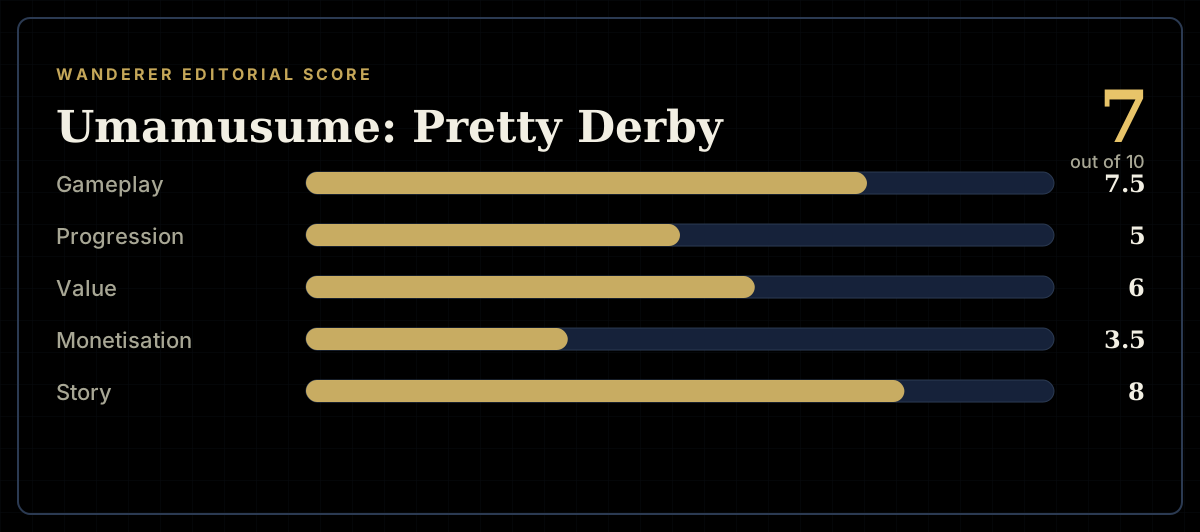
How the review scores each part of the gameWanderer Editorial -
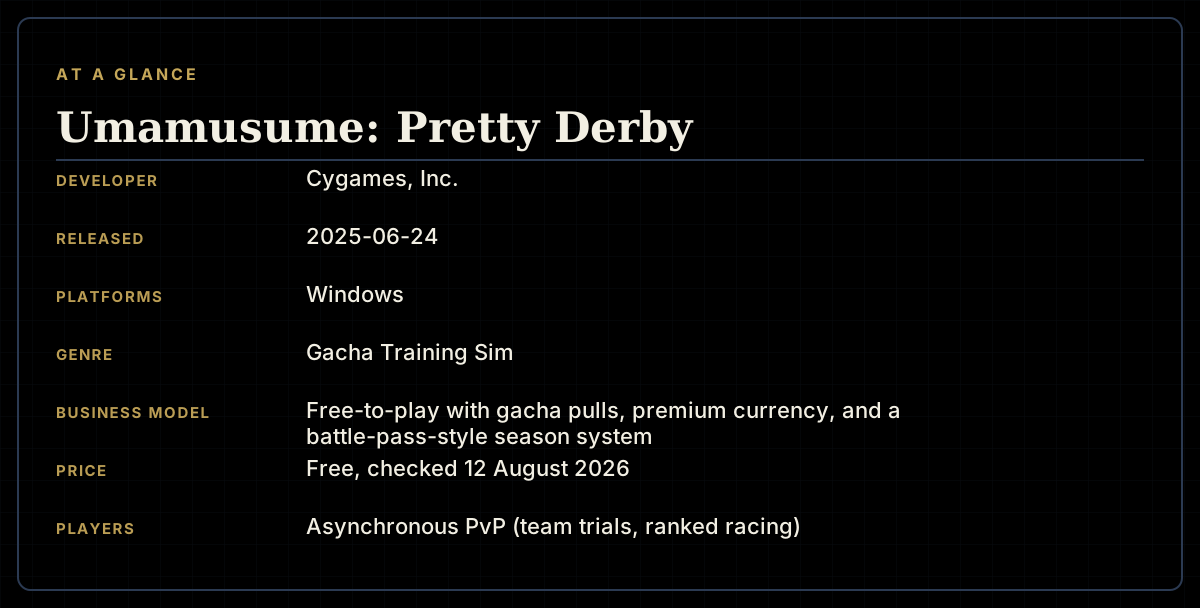
The essentials at a glanceWanderer Editorial -
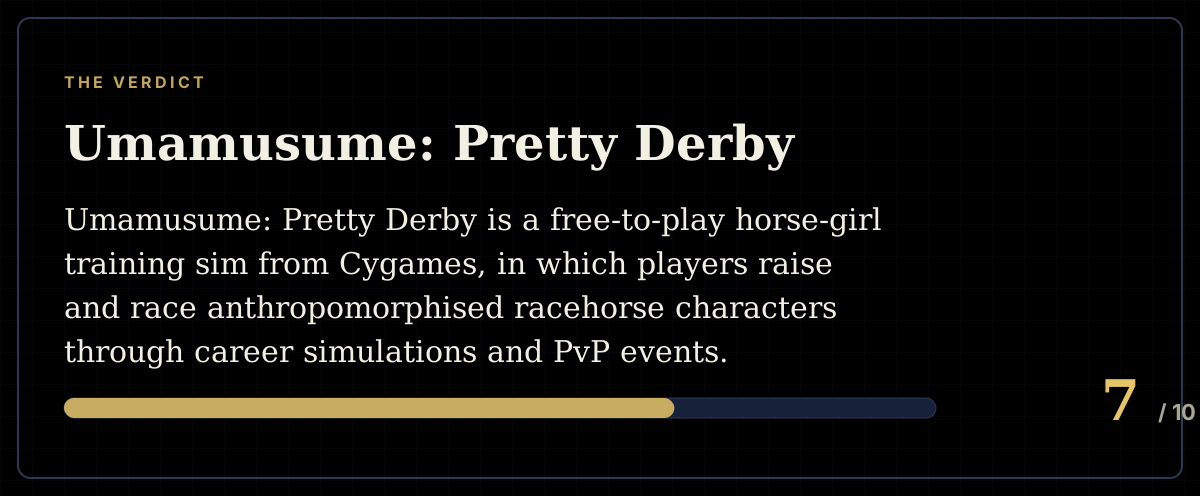
The short versionWanderer Editorial