
Game review
Rocket League
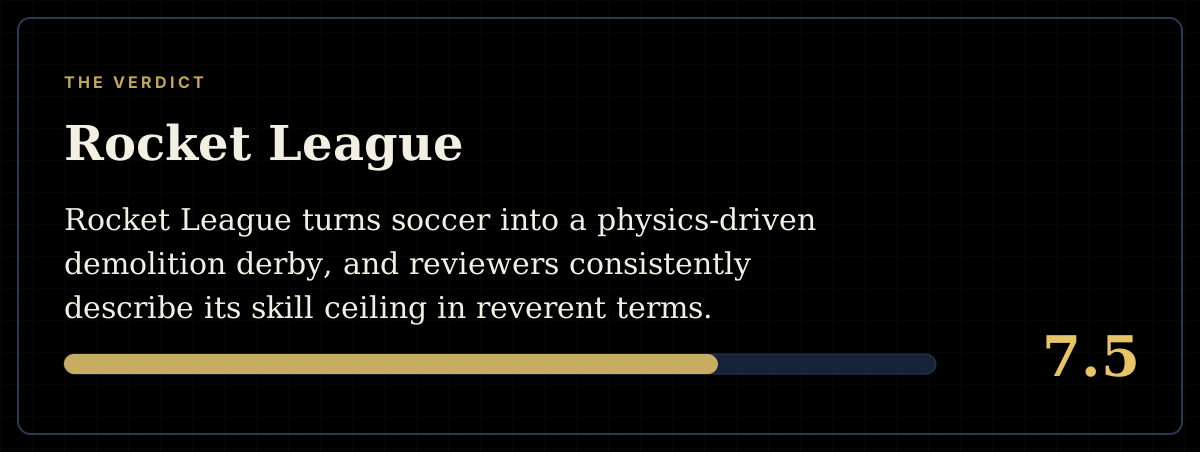
7.5 / 10
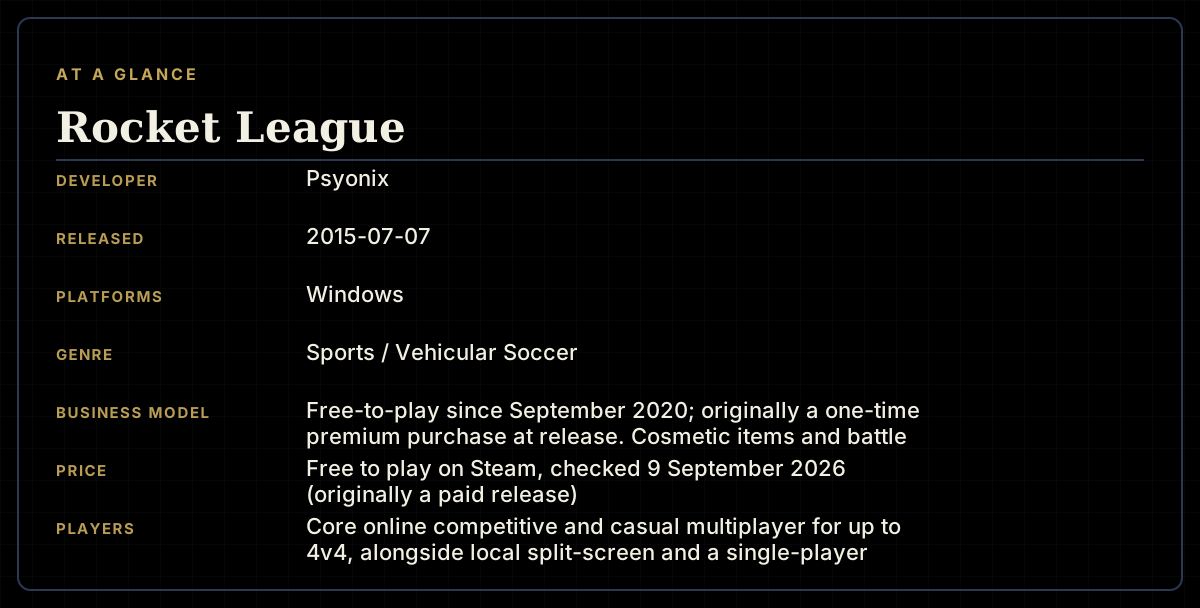
- Developer
- Psyonix
- Publisher
- Psyonix
- Released
- 7 July 2015
- Platforms
- Windows
- Genre
- Sports / Vehicular Soccer
- Monetisation
- Free-to-play since September 2020; originally a one-time premium purchase at release. Cosmetic items and battle passes are sold separately
- Players
- Core online competitive and casual multiplayer for up to 4v4, alongside local split-screen and a single-player training mode
The short version
Rocket League turns soccer into a physics-driven demolition derby, and reviewers consistently describe its skill ceiling in reverent terms. "Rocket League is less of a 'sports game' and more of an actual sport," one detailed reviewer writes, since every pass, shot and save has to be physically created by driving a car into a ball at the right speed and angle rather than triggered with a button. Multiple reviewers describe a genuinely rare quality: hundreds of hours in, players still discover they're only scratching the surface of what's mechanically possible.
Set against that near-unanimous praise for the underlying game, a large and sustained wave of reviewer anger, recurring consistently from 2020 through reviews as recent as September 2026, targets Epic Games' management of the title following its 2019 acquisition of developer Psyonix. Specific, repeated complaints include the loss of native Linux and Mac support, discontinued Steam Workshop map support, and — in one review carrying nearly 9,000 upvotes — a period where Epic account service outages locked paying, longtime players out of a game they'd played daily for years. This is a real, well-corroborated, multi-year pattern of publisher-side dissatisfaction distinct from the core game's own design quality, and it's worth understanding clearly before buying in (or, since the game is now free, before investing serious time).
Biggest strengths
- An exceptionally deep, physics-driven skill ceiling that reviewers consistently describe as still revealing new possibilities hundreds of hours into play
- A genuinely rare "one more match" quality, with reviewers describing short sessions repeatedly turning into much longer ones without feeling like a chore
- Free-to-play access removes the up-front cost barrier entirely, letting new players try the core game before committing any money
Biggest weaknesses
- A large, sustained, multi-year wave of reviewer complaints about Epic Games' management since acquiring developer Psyonix in 2019, recurring consistently from 2020 through as recently as September 2026 rather than fading as a one-time controversy
- Specific, repeated, and still-current complaints include the discontinuation of native Linux and Mac support and the shutdown of Steam Workshop map support, both confirmed still absent as of the most recent reviews checked
- One heavily upvoted review, carrying nearly 9,000 votes, describes a period of Epic account service outages that locked a longtime daily player out of the game entirely, alongside reported removal of previously owned garage items
Who it's for: Fans of competitive, skill-based multiplayer games who want one of the deepest physics systems ever built for a sports-style game. Less suited to players who specifically need Linux or Mac support, or who are wary of publisher-side account and service reliability given Epic's post-acquisition track record described here.
Our recommendation: Essential for competitive multiplayer fans, and free to try — just go in aware of the real, sustained frustration around Epic's management, particularly if you specifically need Linux or Mac support.
7.5 / 10
Rocket League's pitch sounds almost absurdly simple: rocket-powered cars, playing soccer, in an arena with no rules beyond scoring more goals than the other team. Developer Psyonix built the game as a spiritual successor to their earlier, smaller Supersonic Acrobatic Rocket-Powered Battle-Cars, and it went on to become one of the defining online multiplayer successes of its generation. More than a decade after its 2015 launch, this review sample makes clear that simplicity was always deceptive, and that the game's reputation now carries two very different, equally strong currents — one about the game itself, and one about who's been running it since.
A skill ceiling reviewers describe as nearly bottomless
The praise for Rocket League's core mechanics is specific and comes from players with genuinely enormous time invested. "Rocket League is less of a 'sports game' and more of an actual sport," one detailed reviewer explains, "since you have to create the pass yourself, and it can be anything, from a hard bounce off the back wall to a soft lob over the defender." Another reviewer, with well over a thousand hours logged, describes the game's progression with dry humor rather than frustration: "This is a great game. It will take a long time before you are good, then after you play a while after that, you'll realize you are actually still trash. This cycle repeats several times." That combination — genuinely simple to pick up, essentially limitless to master — recurs constantly across this review sample as the game's defining strength.
A real, sustained pattern of frustration with Epic's ownership
What makes this review sample unusual is the sheer volume and duration of a separate, specific complaint thread. Following Epic Games' 2019 acquisition of developer Psyonix, a large and recurring wave of negative reviews raises the same specific grievances again and again, not as a single controversy but as an ongoing pattern spanning years: discontinued native Linux and Mac support, shuttered Steam Workshop map support, and slower, sometimes broken community-requested updates. One of the most heavily upvoted reviews in this entire sample, carrying nearly 9,000 votes, describes a particularly severe version of this pattern directly: "Epic takes over, breaks the game, can't connect to the Epic Services so I can't play, takes away garage items... Went from a game I played daily to a game I literally can't play." Checking the most recent reviews available confirms this isn't settled history — a September 2026 review states plainly that "Linux and Mac are no longer supported, I can't even see the skins I've won over the years," showing the specific platform-support complaint remains current rather than resolved.
A steep, well-documented learning curve
Beyond the ownership controversy, reviewers are consistently honest about how demanding the game's early hours actually are. "When you buy this game, it will take about 20-30 hours to actually start hitting balls," one detailed reviewer writes, adding that mastering the game's basic mechanics is itself "basically mastering 1% of what you can do." A separate, widely upvoted review frames the game's ranking tiers with dry, self-deprecating humor rather than frustration, describing early ranks as a period where "you can't hit anything" and "you are a disgrace to your team," gradually giving way to genuine competence much further along. That combination of an initially steep wall followed by a very long, rewarding climb recurs consistently enough to be worth setting accurate expectations around before starting.
Community friction, separate from the ownership complaints
Beyond the Epic-specific frustration, a more familiar competitive-gaming complaint recurs in recent reviews: toxicity and frustration in ranked matchmaking. That's worth distinguishing clearly from the ownership and platform-support issues above, since it reflects a common pattern across competitive online games broadly rather than something specific to how this particular title is run, and it shouldn't be weighted the same way as the more concrete, specific technical and platform-support complaints.
A cosmetics economy, and a genuine esports legacy
Since going free-to-play, Rocket League's monetization runs entirely through cosmetic items — car bodies, decals, wheels, and celebration effects — sold separately from the core game, with no pay-to-win mechanics affecting actual on-field performance. At least one longtime reviewer specifically requests the return of an older loot-box-style "cases and keys" system that was later phased out in favor of direct purchases, a preference worth noting as a genuine point of disagreement among the game's own veteran playerbase rather than a settled complaint. Beyond cosmetics, it's worth noting this game helped establish competitive vehicular sports as a genuine esport, with a sustained, professional competitive scene that's run continuously for years — a track record that adds real weight to reviewers' claims about the depth of its underlying skill ceiling, since a shallow game rarely sustains a competitive scene at that level for this long.
Where it lands
Rocket League earns its reputation as a genre-defining competitive multiplayer game through physics-driven mechanics reviewers consistently describe as endlessly rewarding to master, now available to try without any up-front cost. The sustained, multi-year pattern of frustration with Epic Games' stewardship since 2019 — particularly the lasting loss of Linux and Mac support — is real, specific, and well-corroborated enough to weigh seriously rather than dismiss as one-time review-bombing. For competitive multiplayer fans on Windows specifically, the core game remains close to essential; players on other platforms should check current support status directly before investing time, and anyone burned by past Epic-related service issues should weigh that history honestly against how much they'd otherwise enjoy what remains a genuinely brilliant piece of game design underneath.
Pros and cons
Pros
- An exceptionally deep, physics-driven skill ceiling that reviewers consistently describe as still revealing new possibilities hundreds of hours into play
- A genuinely rare "one more match" quality, with reviewers describing short sessions repeatedly turning into much longer ones without feeling like a chore
- Free-to-play access removes the up-front cost barrier entirely, letting new players try the core game before committing any money
- A well-regarded progression and ranking system that reviewers say accurately reflects real skill growth over time, even while poking fun at how humbling that growth curve can feel
- Genuinely accessible to learn at a basic level while offering enormous room for mechanical mastery, a difficult balance reviewers say the game gets right
Cons
- A large, sustained, multi-year wave of reviewer complaints about Epic Games' management since acquiring developer Psyonix in 2019, recurring consistently from 2020 through as recently as September 2026 rather than fading as a one-time controversy
- Specific, repeated, and still-current complaints include the discontinuation of native Linux and Mac support and the shutdown of Steam Workshop map support, both confirmed still absent as of the most recent reviews checked
- One heavily upvoted review, carrying nearly 9,000 votes, describes a period of Epic account service outages that locked a longtime daily player out of the game entirely, alongside reported removal of previously owned garage items
- Community toxicity in ranked matchmaking is a frequent, if less specific, complaint across recent reviews, though this reads as a common issue across competitive online games generally rather than something unique to this title
- Reviewers note a genuinely steep initial learning curve, with one estimating 20 to 30 hours before consistently making contact with the ball in a meaningful way
Screenshots
-
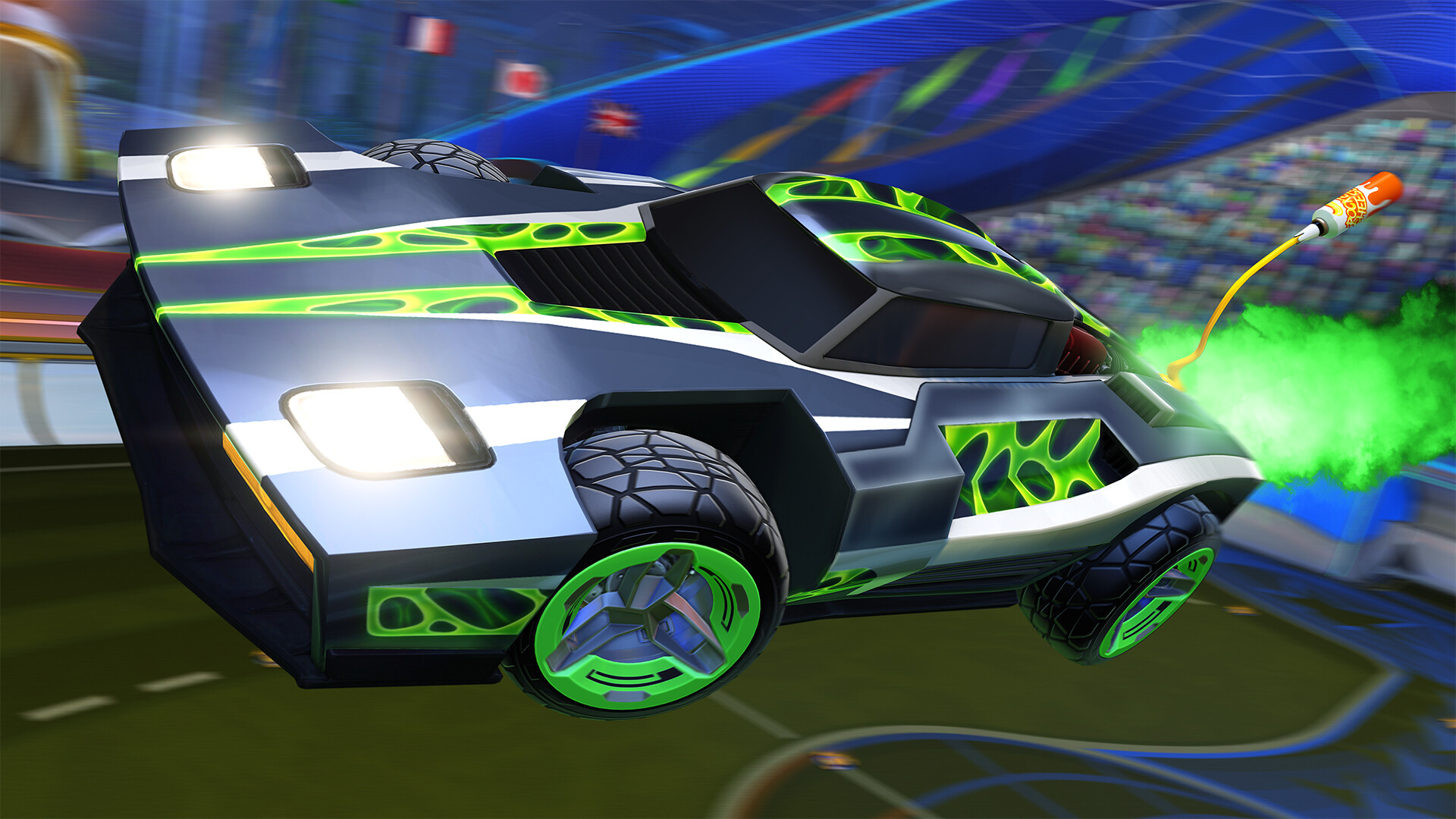
Rocket LeagueImage: Psyonix via Steam -
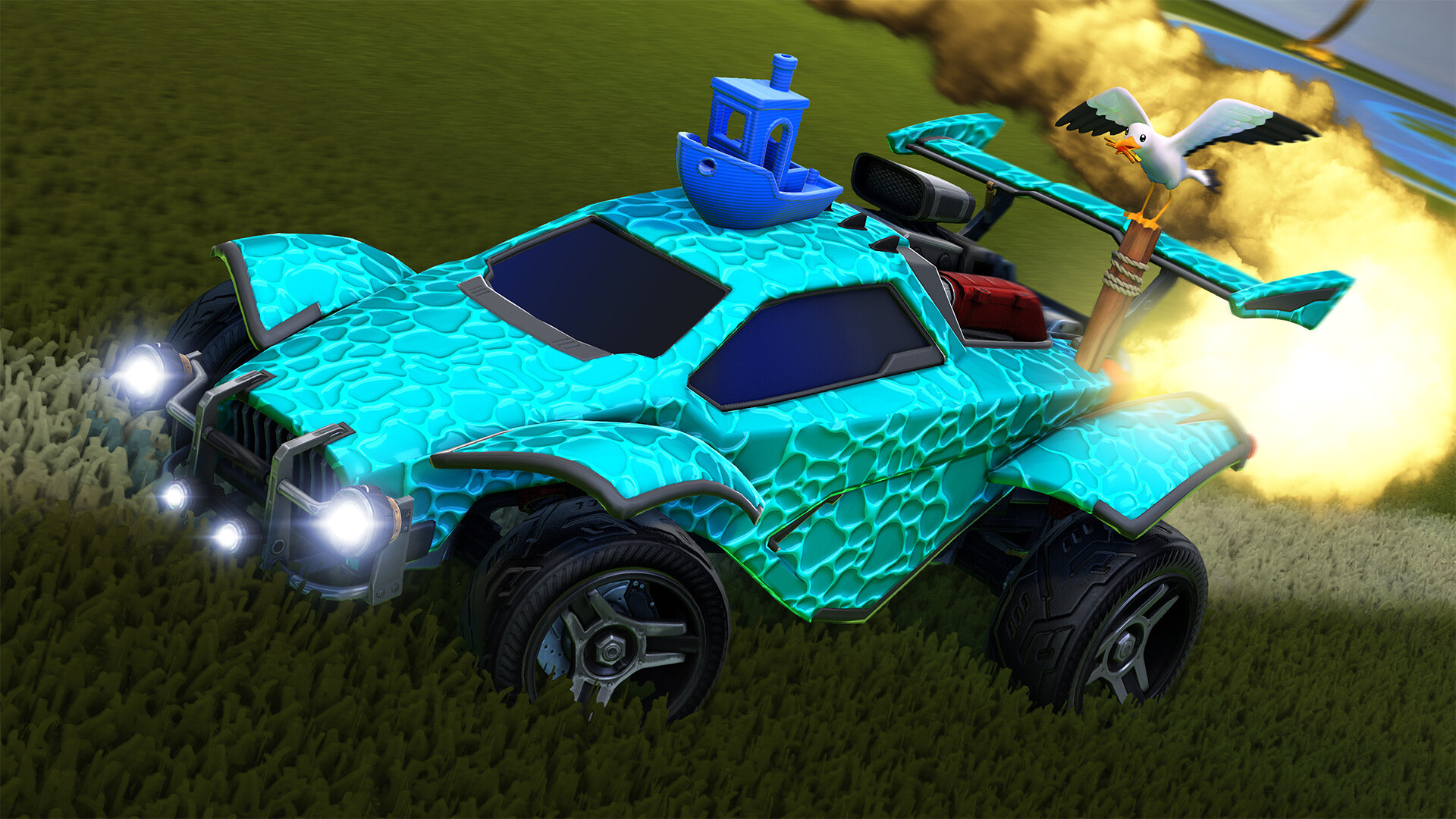
Rocket LeagueImage: Psyonix via Steam -
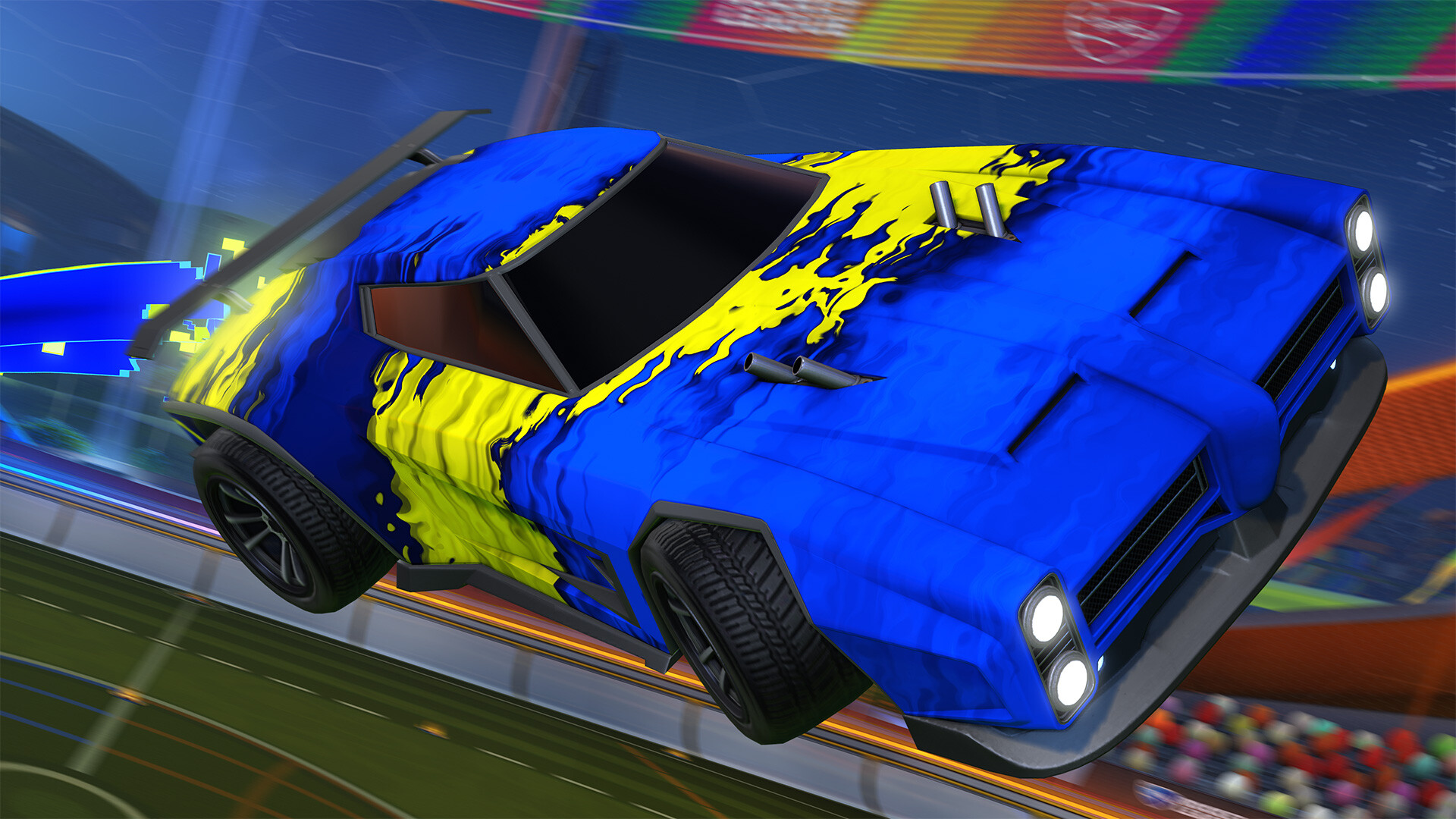
Rocket LeagueImage: Psyonix via Steam -
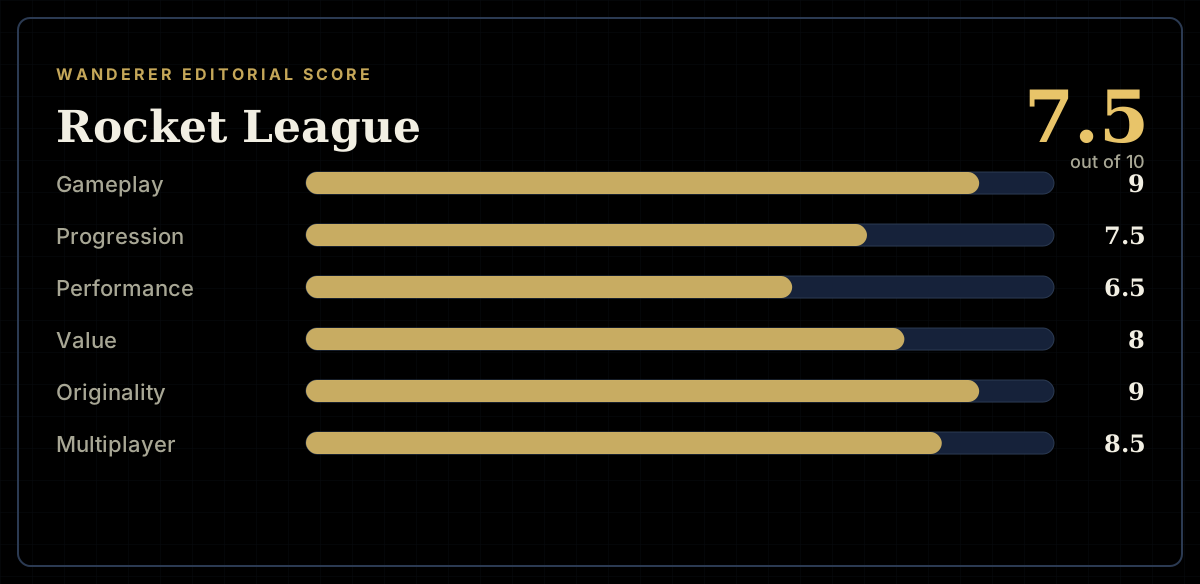
How the review scores each part of the gameWanderer Editorial -
The specsWanderer Editorial -
The short versionWanderer Editorial