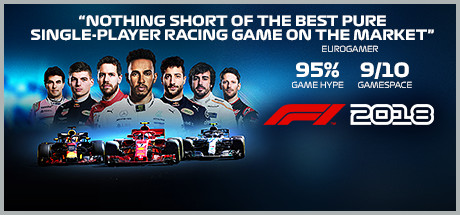
Game review
F1 2018
6.5 / 10
- Developer
- Codemasters
- Publisher
- Codemasters / Electronic Arts
- Released
- 23 August 2018
- Platforms
- Windows
- Genre
- Official licensed racing simulation
- Monetisation
- One-off purchase, no in-game currency, ads or gameplay-affecting purchases
- Players
- Online multiplayer supported, though reviewers describe it as the most neglected part of ongoing development
The short version
F1 2018 marked a genuine step forward for Codemasters' license at the time, with serious sim racers crediting a substantially improved tire and suspension model, more convincing AI behavior, and a deepened career mode with media-driven reputation management. One detailed review from a long-time sim racing league organizer, after roughly 400 hours, captures the tension precisely: the single-player experience "feels great," but multiplayer suffers from what the same reviewer calls "the sheer lack of care that the Codemasters team put in when listening to feedback," a complaint several other reviewers echo regarding AI opponents that fail to avoid collisions and then penalize the player for the resulting contact. Checked against the developer's own patch history, Codemasters shipped a genuinely dense patch schedule for roughly six months after launch before stopping entirely — consistent with the annual sports-license pattern of concentrated support that ends once development shifts to the next year's title, rather than either abandonment or truly sustained long-term care.
Biggest strengths
- A significantly improved tire and suspension model that serious sim racers specifically credit as a real step up from the previous year's title, delivering more convincing force feedback and tire behavior
- AI opponents praised as noticeably improved, described by one detailed reviewer as making "pretty reasonable defensive moves" while remaining genuinely competitive
- A deepened career mode with time-pressured media interviews that let players shape their driver's on- and off-track reputation, adding narrative texture beyond typical racing career structures
Biggest weaknesses
- A specific, credible complaint from an experienced league organizer describes sustained neglect of multiplayer feedback and bug reports across multiple years of the franchise, not unique to this entry
- AI collision behavior draws repeated criticism, with multiple reviewers describing opponents that fail to avoid contact and a penalty system that then blames the player for resulting collisions
- A steep, inconsistent difficulty curve is reported between AI difficulty settings, with one reviewer describing a stark jump from dominant wins to being "punted at turn 1" every race at a higher setting
Who it's for: Formula 1 fans and sim racing enthusiasts specifically looking for a snapshot of the 2018 season with genuinely improved handling physics over prior entries. Less suited to players prioritizing multiplayer stability, or anyone hoping for continued support beyond the title's single-season lifecycle.
Our recommendation: Worth seeking out secondhand or through a bundle for the single-player career experience and handling model; treat multiplayer and long-term support expectations accordingly, since patching stopped entirely within a year of release.
6.5 / 10
F1 2018 put players in the cockpit of the 2018 FIA Formula One World Championship, layering a deepened career mode — complete with time-pressured media interviews that shape a driver's reputation — on top of Codemasters' long-running racing simulation. Released in August 2018, it earned a solid, positive reception among the racing community it targets — 88% Very Positive across 1,612 English reviews (a live figure notably smaller than SteamSpy's stale cached count, worth flagging directly) — built on real, specific improvements over the previous year's entry. Reading closely through the sample confirms those improvements land for serious players, running into equally specific complaints about how the franchise treats the game once launch week passes.
Handling and AI reviewers say marked real progress
The praise for the simulation model itself is detailed and technical. One reviewer, writing a dedicated comparison to the prior year's title, explains: "With Codemasters new tire ans suspension models the way the cars perform and handle has improve significantly over last years game. The force-feedback feels much more real, I can really feel the cerbs and changes in road texture when driving in the rain." The same reviewer credits the AI specifically: "I'm glad to say that the AI is doing a great job at keeping me interested in the game, they are far less likely to turn in on you, they make pretty reasonable defensive moves and they are fast as hell." A separate reviewer with 826 hours invested calls it simply "one the best F1 games," specifically praising the handling feel. That's real, technically grounded agreement from players with serious hours invested that the underlying simulation genuinely improved.
A credible complaint about neglected multiplayer
The most serious criticism in the sample comes from a reviewer with unusual authority: someone who runs a large sim racing community and hosts league racing on Codemasters' F1 titles specifically. After roughly 400 hours, their assessment is precise: "The game in its natural state, away from multiplayer - it feels great... My main issue, and its being prevalent for a couple of years now for me personally, is the sheer lack of care that the Codemasters team put in when listening to feedback for this game, in particular multiplayer." That's not a casual complaint — it's a specific, experienced account of a pattern across multiple entries in the franchise, carrying real weight given the reviewer's stated community role and logged hours.
AI collisions that reviewers say unfairly penalize the player
A related, more specific gameplay complaint concerns how the AI handles contact. One reviewer states it plainly: "AI drivers don't try to avoid you and will just try to drive right through you. Such a basic error in programming." Another frames the same issue from the receiving end: "this game is not fun and you get blamed for other cars hitting you." These are specific, reproducible complaints about a particular system — collision avoidance and penalty attribution — rather than a vague difficulty complaint, and they recur independently across the negative review sample.
A support window that closed within a year
Checked against Codemasters' own partner-events history, the pattern is clear: patches shipped frequently and substantively for roughly six months after release, through Patch 1.16 in February 2019, and then stopped entirely. That's a meaningfully more active window than pure neglect, but it confirms the top reviewer's broader complaint about the franchise's priorities — real effort was spent, concentrated tightly around launch, before development attention moved to the next annual release rather than continuing to address the multiplayer and AI-collision issues raised throughout the game's active life.
What the achievement data shows
Global achievement statistics show healthy opening engagement with the career mode specifically: several of the earliest milestones, tied to starting a career and reaching initial goals, sit above 50% of the playerbase. That taper is fairly gradual through the mid-game before dropping into single digits for the hardest completionist and full-season achievements, a pattern broadly consistent with a career-focused racing game that holds attention well for a meaningful stretch before narrowing to its most dedicated players.
Peripheral and technical complaints beyond the core simulation
Beyond the AI and multiplayer issues, a separate cluster of technical complaints affects players using dedicated racing hardware. One reviewer describes a persistent rebinding limitation: "after 2 years and several quality wheels I am still unable to get this game to accept custom key binding to fit my set-up... they insist that it is a pre-set and cant be altered." Another reports basic peripheral recognition failures with Fanatec equipment, while a third describes recurring audio stuttering they were unable to resolve despite trying multiple community-suggested fixes. None of these issues are as central to the core simulation as the AI-collision and multiplayer complaints above, but together they describe a game whose hardware support lagged behind what serious sim racers investing in dedicated wheels and pedals would reasonably expect from a licensed simulation title at this price point.
A difficulty curve some players found jarring
A smaller but specific complaint concerns the gap between the game's difficulty settings. One reviewer describes the jump starkly: "Race on 60 difficulty, blow past everyone and win the championship by Sochi. Race on 80 difficulty, get punted at turn 1. Every. Single. [...] Race." That's a specific, reproducible account of a difficulty curve with a steep, poorly-tuned middle ground, distinct from the general AI-collision complaints raised elsewhere — a player looking for a moderate challenge between "too easy" and "unfairly punishing" reportedly had few good options.
Verdict
F1 2018 delivered genuine, specific improvements to Codemasters' Formula 1 simulation at the time of release, and serious sim racers credit the handling model and AI as real steps forward. Its multiplayer neglect and AI collision-handling issues are specific, credible complaints — including from an experienced league organizer — that the developer's own patch history shows it addressed only briefly before moving on to the next year's title. Worth experiencing for the single-player career and handling improvements; keep expectations modest for multiplayer stability and long-term support.
Sources: Steam store page and appdetails API (release date, pricing, platform data); Steam's aggregate review data (query_summary totals, English-language sample); individually read user reviews, both positive and negative, sorted by helpfulness and recency; Steam's global achievement statistics API; Codemasters' own partner-events patch history from August 2018 through February 2019.
Pros and cons
Pros
- A significantly improved tire and suspension model that serious sim racers specifically credit as a real step up from the previous year's title, delivering more convincing force feedback and tire behavior
- AI opponents praised as noticeably improved, described by one detailed reviewer as making "pretty reasonable defensive moves" while remaining genuinely competitive
- A deepened career mode with time-pressured media interviews that let players shape their driver's on- and off-track reputation, adding narrative texture beyond typical racing career structures
- Strong performance optimization relative to its visual fidelity, with multiple reviewers reporting notably better frame rates than the prior year's game even on modest hardware
- Achievement data shows healthy engagement with the career mode's opening milestones, with over half the playerbase reaching several of the earliest achievements
Cons
- A specific, credible complaint from an experienced league organizer describes sustained neglect of multiplayer feedback and bug reports across multiple years of the franchise, not unique to this entry
- AI collision behavior draws repeated criticism, with multiple reviewers describing opponents that fail to avoid contact and a penalty system that then blames the player for resulting collisions
- A steep, inconsistent difficulty curve is reported between AI difficulty settings, with one reviewer describing a stark jump from dominant wins to being "punted at turn 1" every race at a higher setting
- Specific technical complaints recur across the review sample, including crashes, audio stuttering, and racing-wheel peripheral compatibility issues that reviewers report as unresolved
- Development support was dense but short-lived, with Codemasters' own patch history showing updates stopping entirely roughly six months after launch, consistent with the franchise's annual-release business model rather than sustained long-term care
Screenshots
-
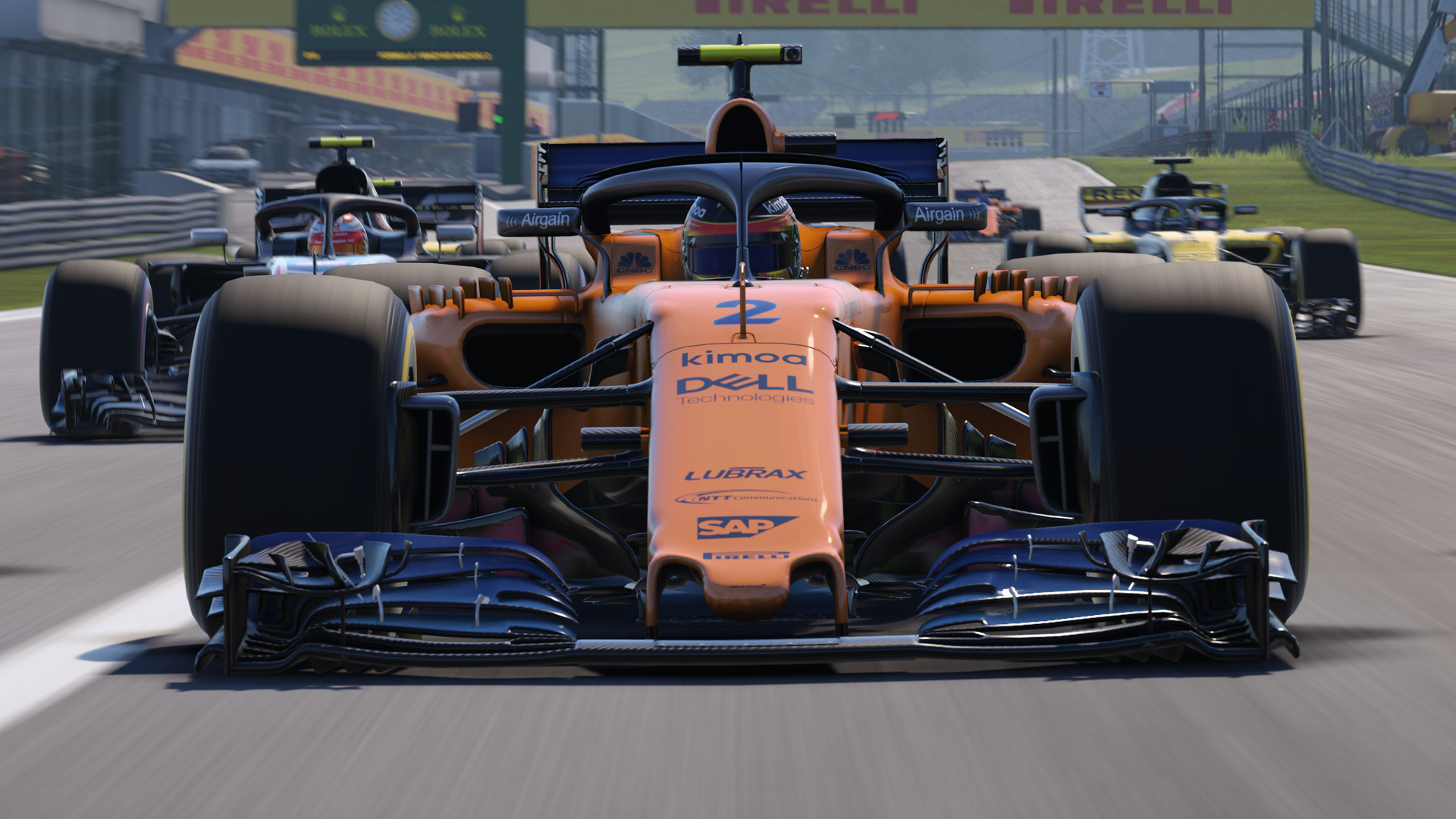
F1 2018Image: Codemasters via Steam -
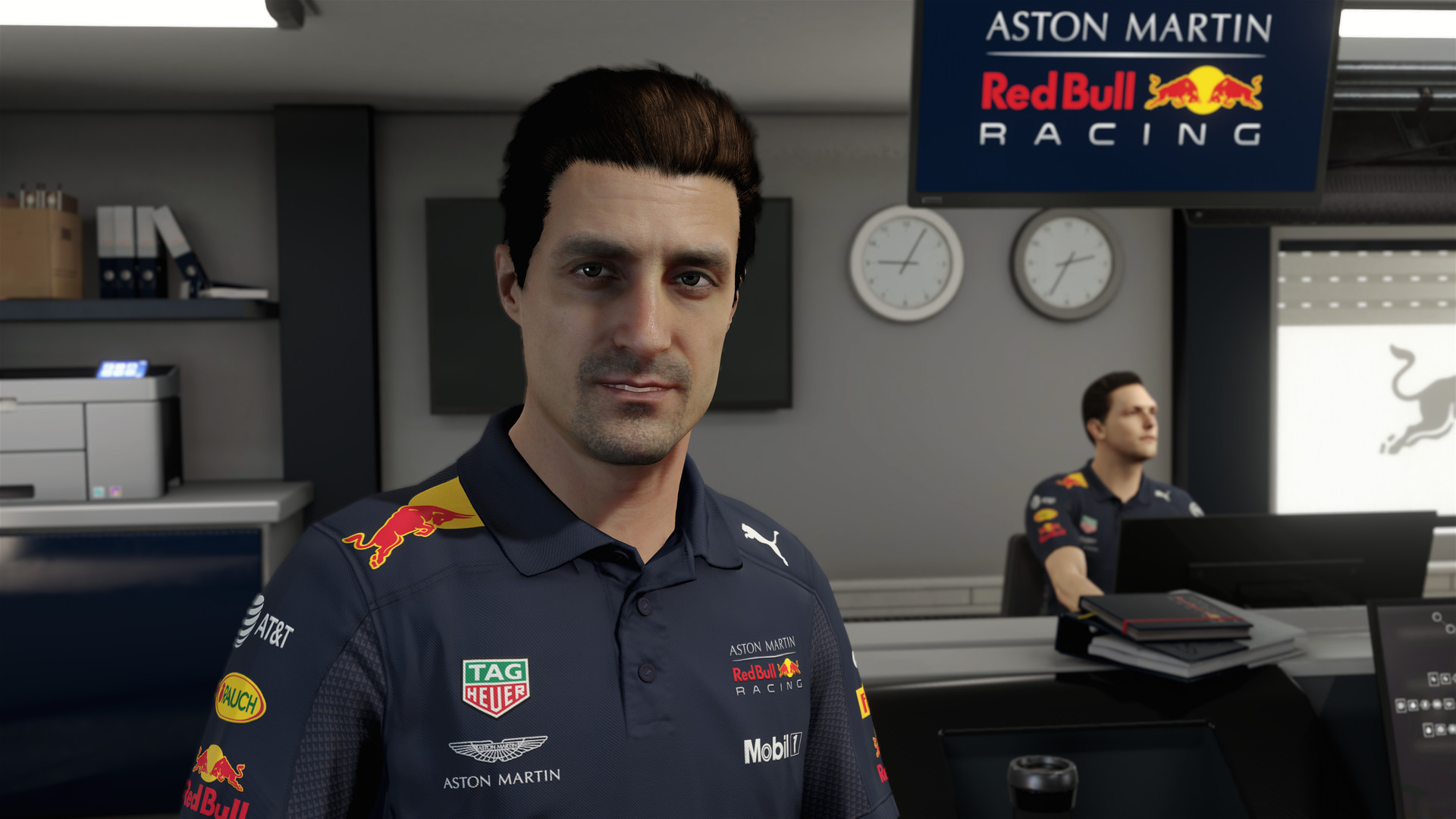
F1 2018Image: Codemasters via Steam -
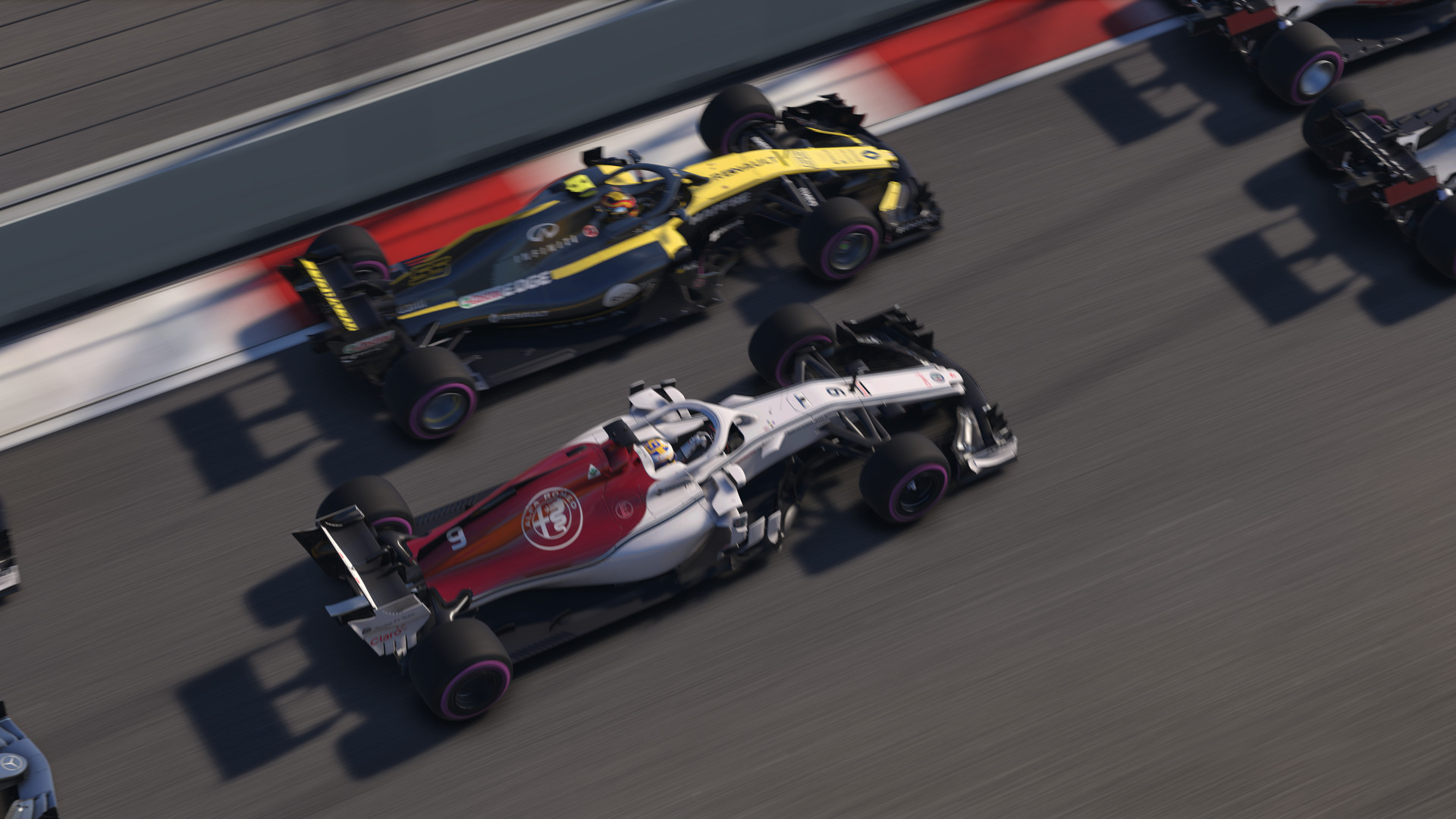
F1 2018Image: Codemasters via Steam -
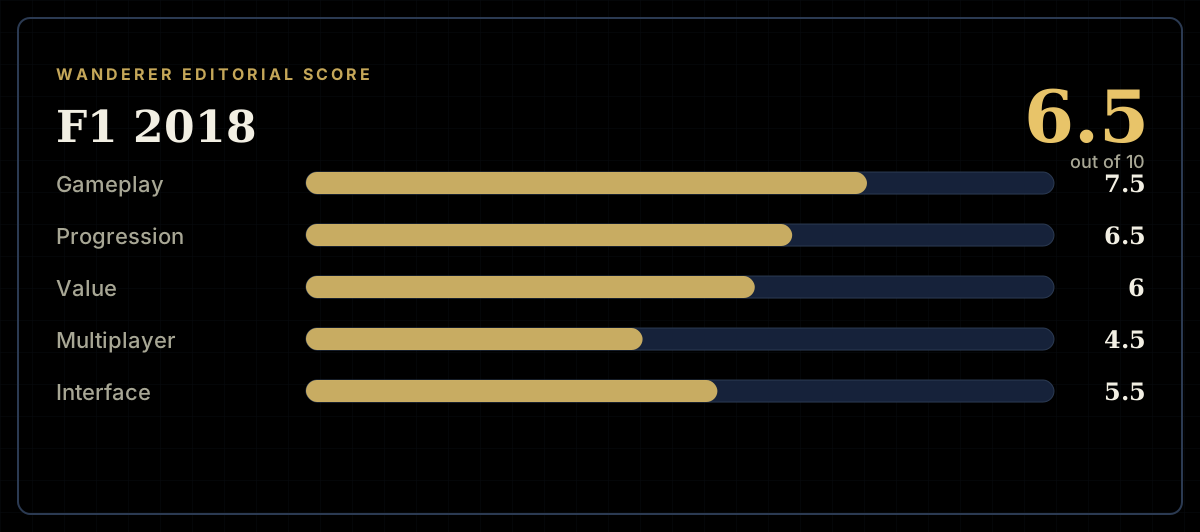
How the review scores each part of the gameWanderer Editorial -
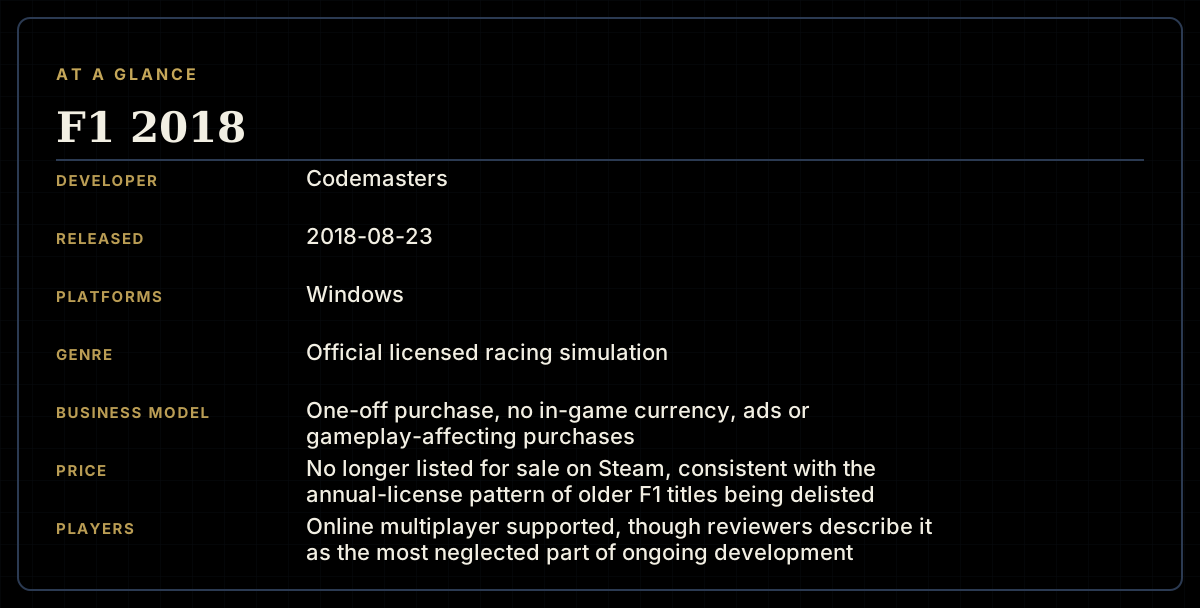
The specsWanderer Editorial -
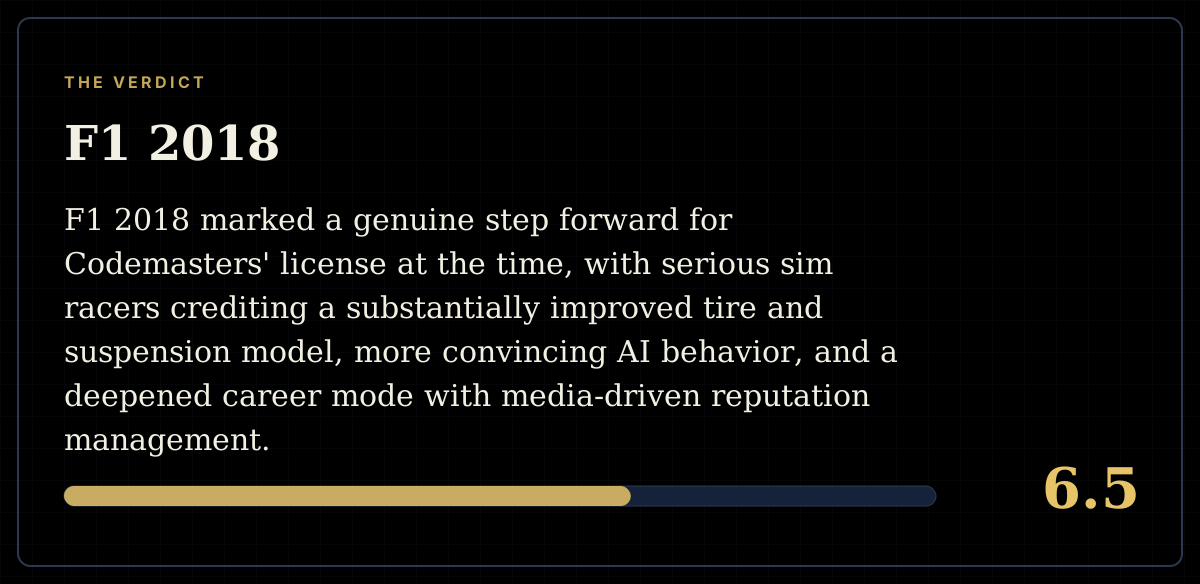
The short versionWanderer Editorial