Game review
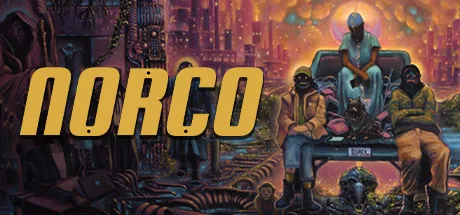
NORCO
7.5 / 10
- Developer
- Geography of Robots
- Publisher
- Raw Fury
- Released
- 24 March 2022
- Platforms
- Windows, macOS, Linux
- Genre
- Point-and-Click Adventure, Narrative
- Monetisation
- One-time purchase, plus an optional soundtrack and artbook
- Players
- Single-player only
The short version
NORCO follows Kay, returning to her decaying hometown outside New Orleans to search for her missing brother, uncovering a surreal blend of Southern Gothic family drama, industrial decline and speculative technology along the way. Developed by Geography of Robots and published by Raw Fury, it released 24 March 2022 and sits at Very Positive, 93.7% across 1,981 English-language reviews. The writing, world-building and presentation draw some of the most passionate testimonials this library has documented — but a specific, repeated criticism runs through both the positive and negative samples: the narrative's confident, tightly controlled first two acts give way to a more scattered, less cohesive third act that a meaningful share of even enthusiastic reviewers say undercuts the ending. A separate, equally consistent complaint concerns the game underneath the writing, which multiple reviewers describe as thin even for a text-heavy adventure game.
Biggest strengths
- Writing and world-building draw extraordinary, specific praise — reviewers repeatedly describe the game's surreal, industrial-decline Louisiana setting as feeling like a real, lived-in place rather than a backdrop for plot
- A distinctive tone that blends family drama, environmental grief and speculative technology without leaning on familiar genre tropes, earning frequent, favourable comparisons to Disco Elysium and Kentucky Route Zero
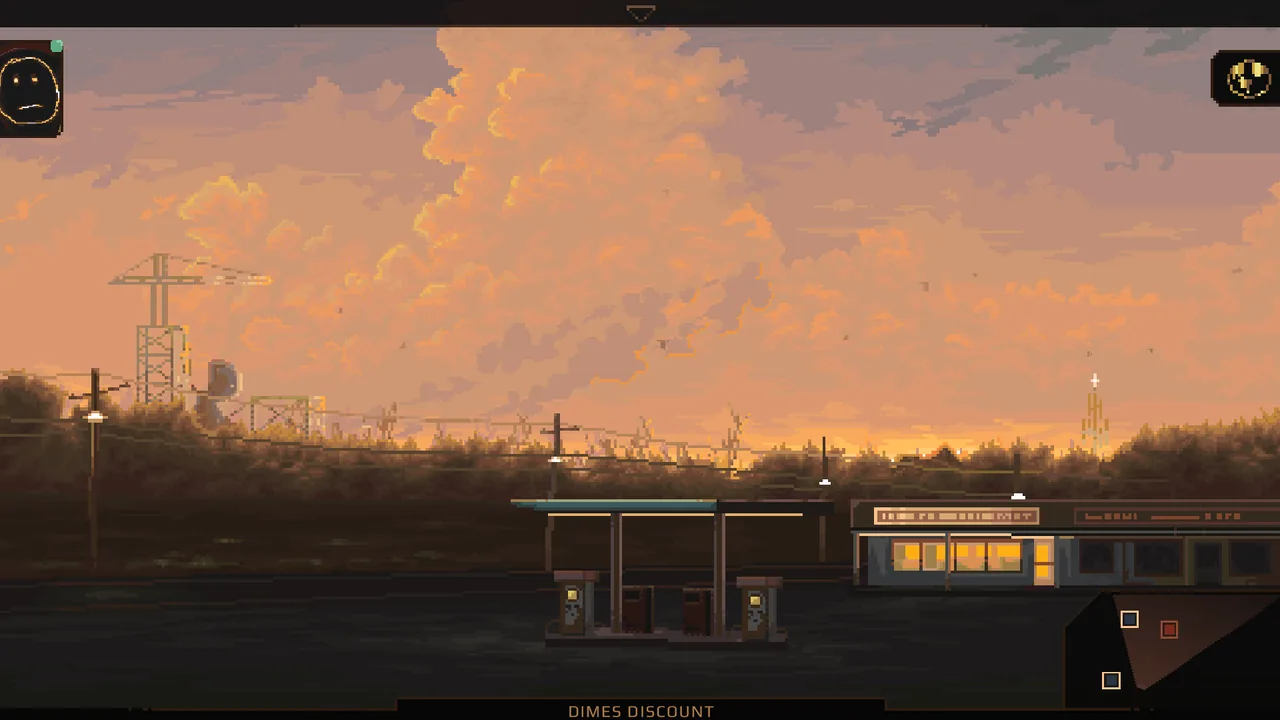
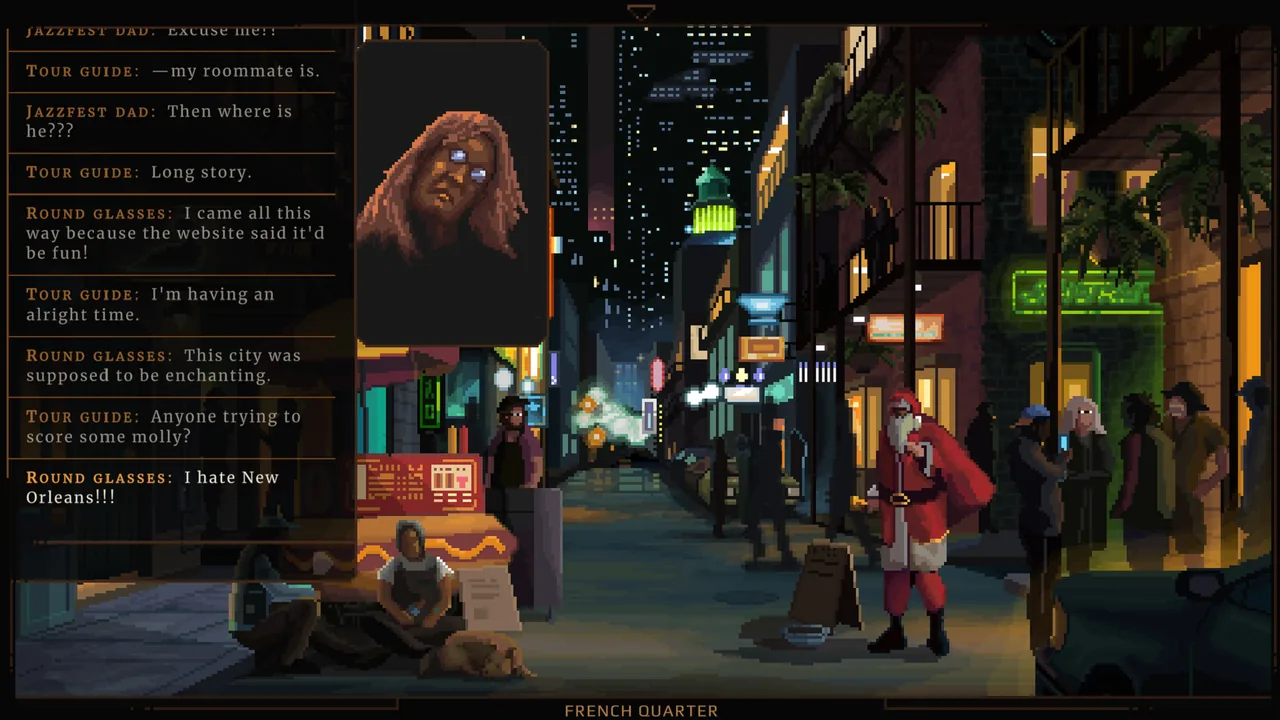
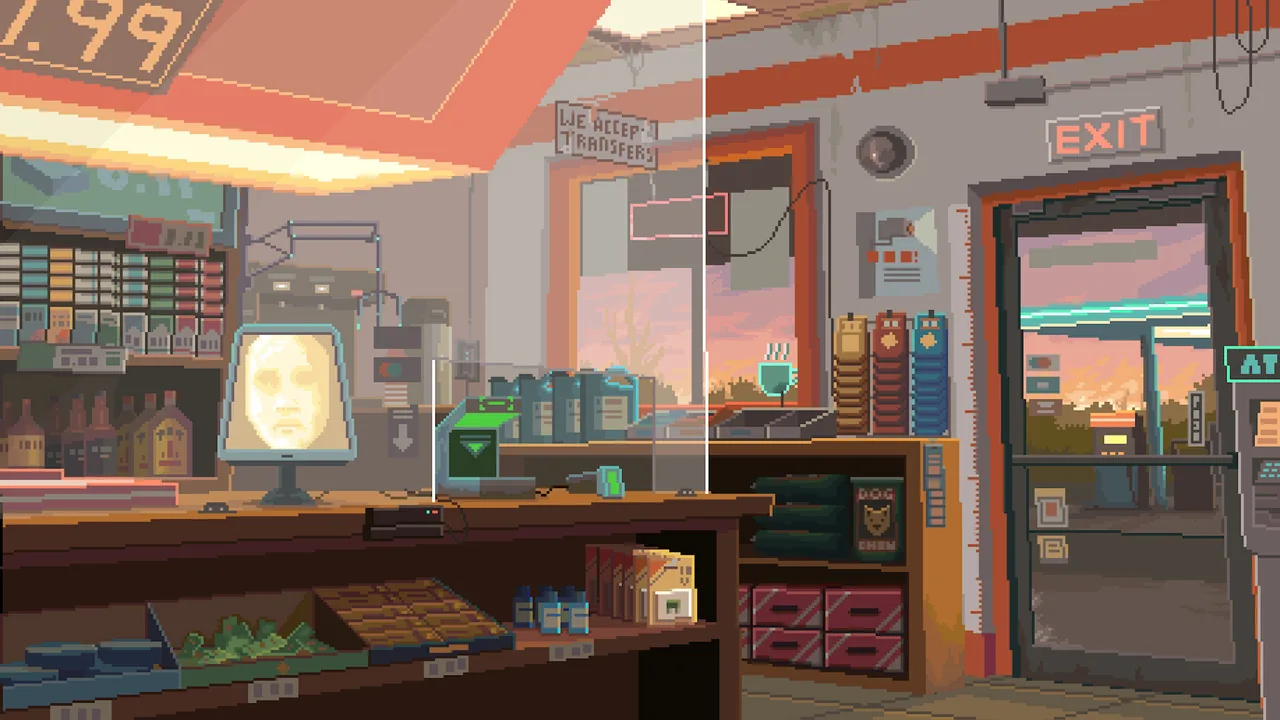
- Pixel art and music draw wide, consistent praise for reinforcing the game's specific mood rather than simply decorating it
Biggest weaknesses
- A specific, repeated complaint — made by reviewers who otherwise loved the game as much as by its critics — describes the narrative losing cohesion in its final act, after an exceptionally strong opening that sets much higher expectations
- Interactive gameplay is described by a large share of reviewers as minimal even for a text-heavy adventure game, consisting mostly of clicking between scenes to find the next piece of dialogue or object rather than solving meaningful puzzles
- Several reviewers specifically compare the game unfavourably to Disco Elysium on the strength of its systems, arguing NORCO's prose is excellent but its interactivity doesn't match that comparison's implied depth
Who it's for: Fans of literary, atmospheric narrative games in the vein of Disco Elysium and Kentucky Route Zero who prioritise writing and world-building over traditional gameplay; a poor fit for anyone wanting substantial puzzle-solving or interactive challenge alongside the story.
Our recommendation: One of the most distinctive and best-written narrative games of its year, worth playing for its world and voice even though its final act and its game-ness both draw real, repeated criticism from people who otherwise loved it.
7.5 / 10
Introduction
NORCO sends Kay back to her hometown of Norco, Louisiana — a real place, reimagined here as a sinking, surreal industrial suburb wrapped around an oil refinery — to search for her missing brother and untangle what happened to her family in her absence. Developed by Geography of Robots and published by Raw Fury, it released 24 March 2022 and sits at Very Positive, 93.7% across the 1,981 English-language reviews this review reads a substantial share of. The writing and setting draw some of the most genuinely passionate testimonials this library has documented in any game this session — but a specific, well-defined criticism runs through the sample regardless of a review's overall verdict, and it's worth taking seriously rather than treating the headline percentage as the whole story.
Writing and world-building that earn their comparisons
Start with what nearly every reviewer, positive or negative, agrees on: NORCO's prose and setting are exceptional. Reviewers describe the game's vision of industrial-decline Louisiana — refineries, wetlands, ghosts of a fading way of life — as feeling genuinely lived-in rather than assembled from genre convention, and the frequent, unprompted comparisons to Disco Elysium and Kentucky Route Zero function less as marketing shorthand than as an honest attempt to locate a genuinely rare kind of game. One reviewer described finishing the game, throwing their arms in the air, pacing the house muttering, then dragging their partner to the PC to watch them play through it in one sitting — the kind of specific, personal testimony that speaks to real impact rather than polite approval. The game's "mind map" mechanic, tracking every person, place and piece of information Kay has encountered, draws its own specific praise as a structural tool that genuinely helps the mystery unfold rather than existing as decoration.
The third-act problem, stated by fans and critics alike
Here's the specific criticism worth dwelling on, because of how consistently it appears regardless of a review's final verdict. Reviewer after reviewer describes an exceptionally strong opening — one 221-vote review called the beginning "absolutely" beloved, citing the Southern Gothic atmosphere, artwork and characters specifically — followed by a narrative that becomes noticeably less cohesive as it approaches its conclusion. A detailed 195-vote review, itself broadly positive about the game's worldbuilding, put it plainly: within the first act "many of its elements are wonderful," but the narrative doesn't sustain that quality through to the end. Crucially, this complaint isn't confined to the negative sample — a 106-vote positive review, one of the game's most-upvoted, opens by comparing NORCO favourably to "Kentucky Route Zero by way of Monkey Island, with a dash of Disco Elysium," then adds an explicit edit after finishing the game specifically to push back against other reviewers' dissatisfaction with the third act, which only makes sense as a response if that complaint was already common enough to need addressing. That's a useful, honest signal: even the game's own strongest advocates are engaging directly with a criticism that clearly has real currency in this game's community, rather than dismissing it.
A story-heavy game with comparatively little "game"
A second, separate complaint concerns interactivity rather than narrative quality. Multiple reviewers, including several who love the writing, describe the actual playable mechanics as minimal even by the standards of a text-heavy adventure game — one detailed review called it "endless streams of dialogue and descriptive text with almost no dialogue trees," closer to reading a book than playing an interactive story. Another reviewer specifically framed the Disco Elysium comparison as a double-edged sword: the prose invites that comparison, but the actual systems underneath — skill checks, meaningful choice consequences, a genuine RPG structure — don't match what the comparison implies, leaving NORCO's gameplay feeling comparatively thin next to the game it's most often measured against. A more practical complaint recurs alongside this: several reviewers describe clicking back and forth between scenes to locate the specific dialogue trigger or object needed to progress becoming tedious over a multi-hour session, a friction point common to the point-and-click genre but felt more acutely here given how much of the game's draw is its prose rather than its puzzles.
Where players actually get to, and where they don't
Steam's achievement data offers a useful, independent read on pacing. The achievement tied to completing Act One sits at 52%, meaning roughly half of everyone who launches NORCO makes it that far — a reasonable midpoint for a narrative game where some buyers simply sample the opening. From there the curve tapers steadily down through the game's back half, with the hardest, most completionist-tier achievements sitting around 4-5%. That's consistent with a story-driven game that a healthy share of its audience commits to and finishes, rather than one that loses players early — which lines up with this review's reading of the corpus: the criticism here isn't that players give up, it's that a meaningful number of the players who do finish come away feeling the ending doesn't fully deliver on the opening's promise.
Final Verdict
NORCO is a genuinely distinctive piece of writing, wrapped in art direction and music that earn every bit of the passionate response this review's sample documents — a Southern Gothic vision of industrial Louisiana that reviewers describe with the kind of specificity usually reserved for games people return to repeatedly. What keeps this from an even higher score is a criticism that recurs too consistently, across too many otherwise glowing reviews, to set aside: a final act that a meaningful share of this game's own biggest fans say doesn't sustain the quality of everything before it, paired with interactivity that several reviewers feel doesn't earn its comparisons to richer, more systemic narrative games. Neither complaint erases what NORCO does well. If literary ambition and a genuinely unique setting matter more to you than deep interactive systems, this is very much worth your time — go in expecting the ending to be the part people argue about.
Pros and cons
Pros
- Writing and world-building draw extraordinary, specific praise — reviewers repeatedly describe the game's surreal, industrial-decline Louisiana setting as feeling like a real, lived-in place rather than a backdrop for plot
- A distinctive tone that blends family drama, environmental grief and speculative technology without leaning on familiar genre tropes, earning frequent, favourable comparisons to Disco Elysium and Kentucky Route Zero
- Pixel art and music draw wide, consistent praise for reinforcing the game's specific mood rather than simply decorating it
- A genuinely inventive "mind map" mechanic for tracking people, objects and information the protagonist has learned, credited by several reviewers as a real structural asset to how the mystery unfolds
Cons
- A specific, repeated complaint — made by reviewers who otherwise loved the game as much as by its critics — describes the narrative losing cohesion in its final act, after an exceptionally strong opening that sets much higher expectations
- Interactive gameplay is described by a large share of reviewers as minimal even for a text-heavy adventure game, consisting mostly of clicking between scenes to find the next piece of dialogue or object rather than solving meaningful puzzles
- Several reviewers specifically compare the game unfavourably to Disco Elysium on the strength of its systems, arguing NORCO's prose is excellent but its interactivity doesn't match that comparison's implied depth
- A minority of reviewers report technical issues, including items disappearing mid-playthrough, though this doesn't recur widely enough in the sample to read as a systemic problem
Screenshots
-
NORCOImage: Raw Fury via Steam -
NORCOImage: Raw Fury via Steam -
NORCOImage: Raw Fury via Steam -
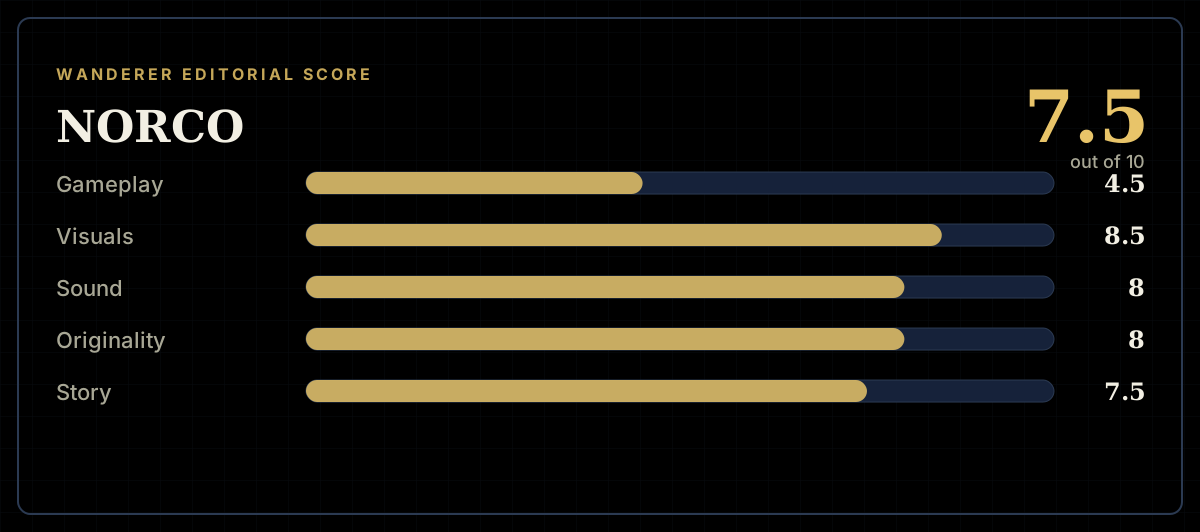
How the review scores each part of the gameWanderer Editorial -
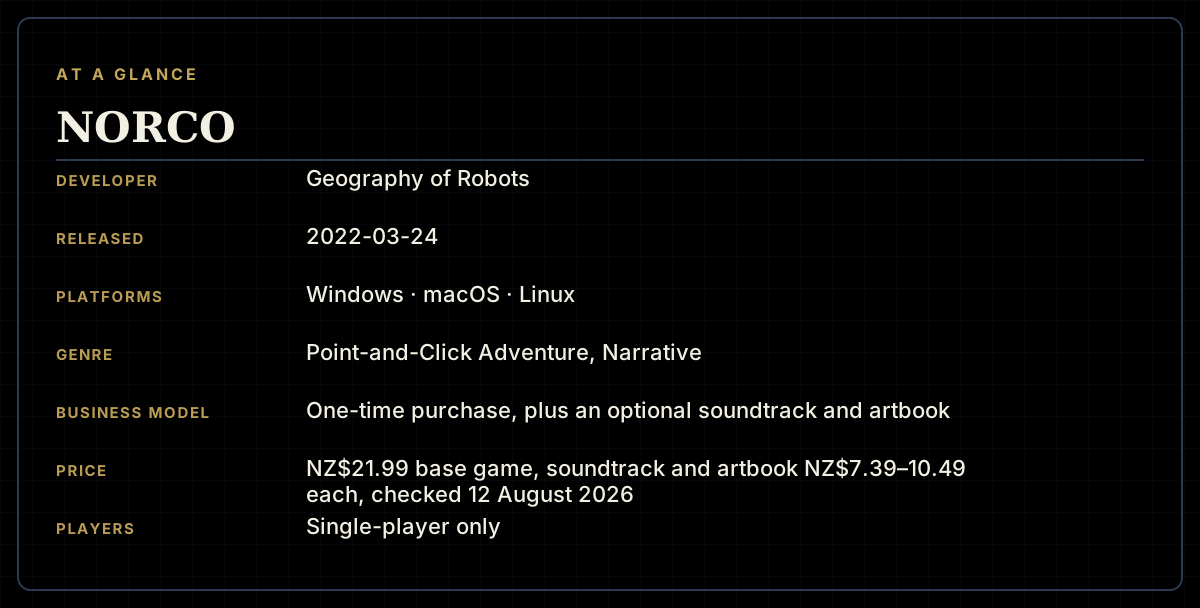
The essentials at a glanceWanderer Editorial -
The short versionWanderer Editorial