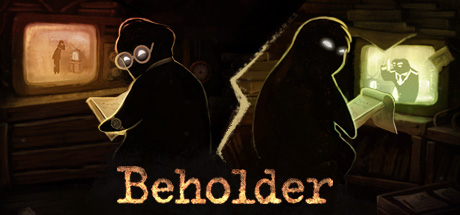
Game review
Beholder
7 / 10
- Developer
- Alawar Stargaze (Warm Lamp Games)
- Publisher
- Alawar
- Released
- 9 November 2016
- Platforms
- Windows, macOS, Linux
- Genre
- Dystopian Strategy Adventure
- Monetisation
- One-time premium purchase, plus two paid narrative DLC packs. No ads, no microtransactions
- Players
- Single-player only; no online, co-op or PvP modes
The short version
Beholder puts you inside a totalitarian apartment block as its state-installed landlord, bugging rooms and reporting tenants while trying to keep your own family fed and alive on the proceeds. The premise is genuinely distinctive, the art direction consistently earns praise, and the moral pressure of choosing between a stranger's freedom and your daughter's medicine is the kind of specific, personal dilemma few games manage convincingly.
A real, detailed critical thread argues the game undersells its own promise: despite framing itself around open-ended surveillance, most of the runtime funnels players down a fairly fixed story that requires cruelty to progress, and at least one specific, exploitable design flaw lets players skip the family-crisis pressure that's supposed to be the point entirely. Neither complaint erases what the game does well, but both are worth knowing about before buying rather than discovering mid-playthrough.
Biggest strengths
- A genuinely distinctive premise — a state-installed landlord bugging and reporting on tenants to keep his own family alive — that reviewers consistently say has no real equivalent elsewhere in the genre
- Striking, consistent art direction and atmosphere, praised across nearly every review read for this piece regardless of overall verdict
- A real, personal moral core: choosing between a stranger's safety and your own family's survival lands with more specificity than most games' morality systems manage
Biggest weaknesses
- A real, detailed critical thread argues the "surveillance sandbox" pitch oversells the actual game: most of the runtime is a fixed story that requires specific, often cruel choices to progress, with only limited branching beneath the surface
- A hard, ticking-clock time-pressure system is a specific, repeated complaint from reviewers who otherwise praise the story and art, arguing it forces rushing through content meant to be absorbed rather than raced through
- A detailed reviewer identifies a specific, exploitable design oversight: family financial- crisis quests only trigger if the player initiates the relevant conversation, meaning the intended moral pressure of impossible medical and tuition bills can be entirely avoided by simply not talking to family members — undermining the game's central emotional hook rather than testing it
Who it's for: Fans of morally uncomfortable narrative strategy games in the vein of Papers, Please who want a shorter, more story-forward experience. Less suited to players expecting genuine branching freedom to match the "spy on anyone you like" pitch, or anyone who dislikes hard timers layered onto a game they'd rather absorb slowly.
Our recommendation: A worthwhile, distinctive purchase for its atmosphere and central moral dilemma alone, especially discounted — just go in expecting a tightly authored, fairly linear story rather than a true surveillance sandbox.
7 / 10
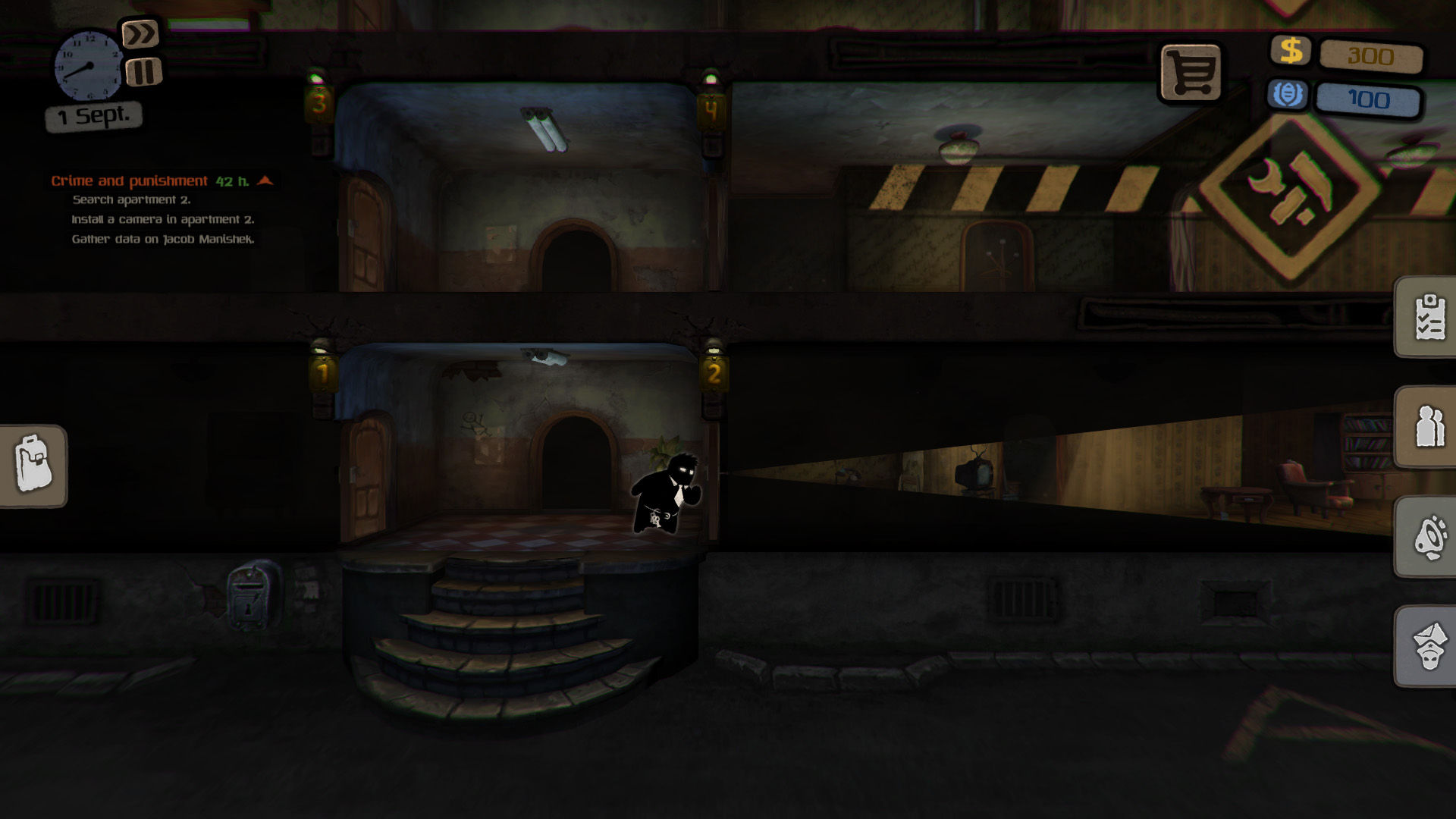
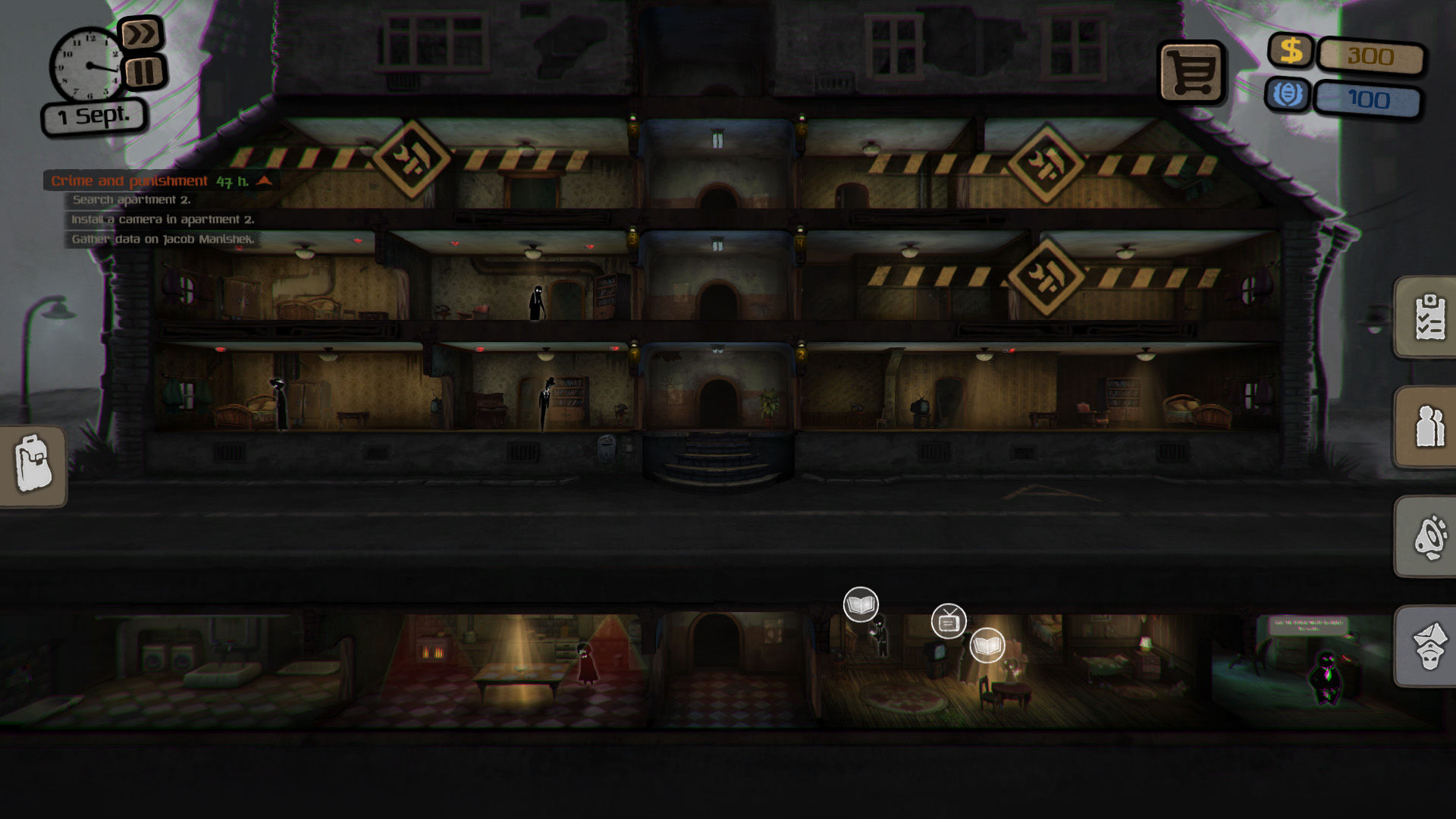
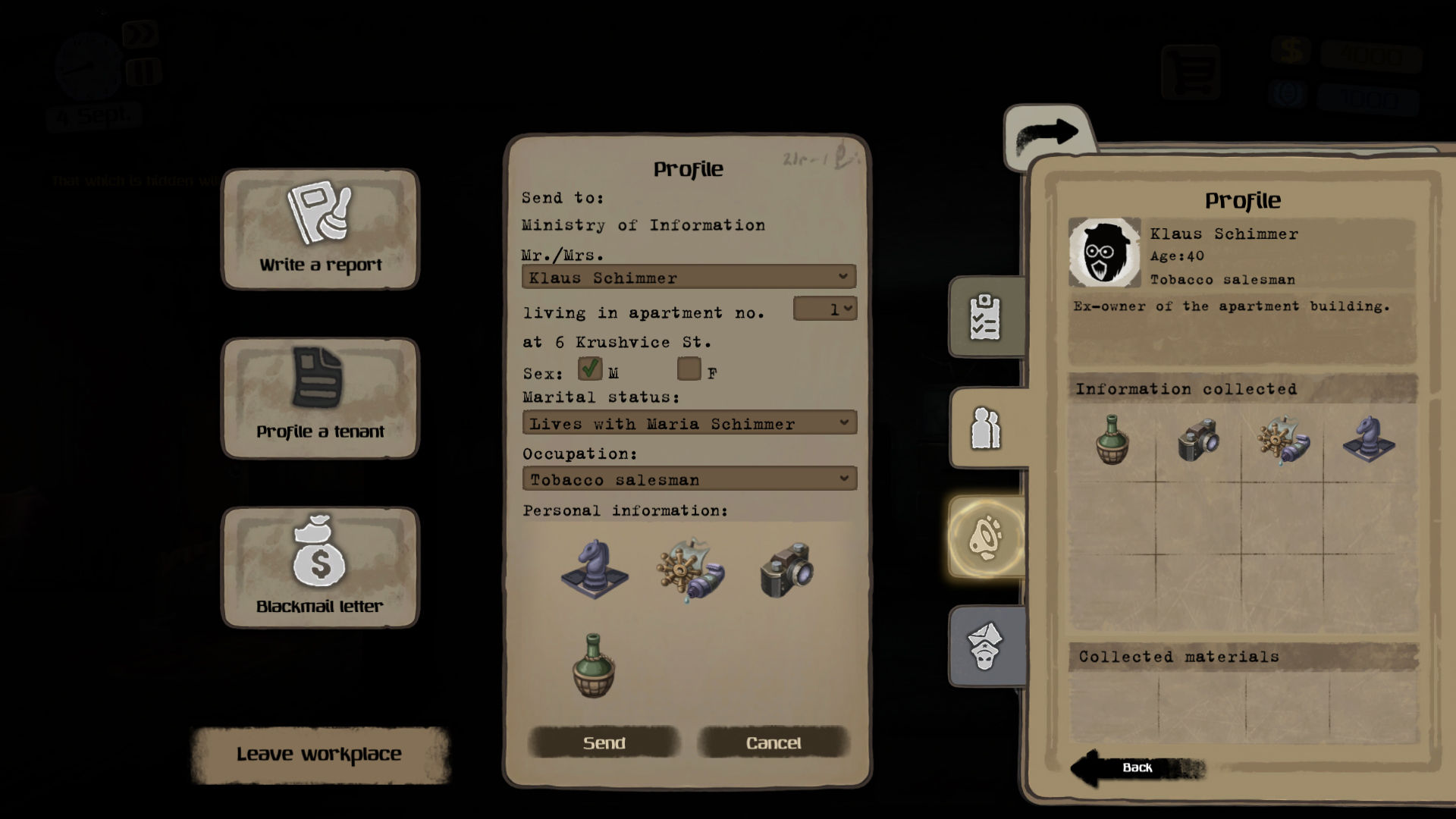
Beholder's pitch is a good one: you're a landlord installed by a totalitarian state, given keys to every apartment in your building and instructions to report anything suspicious you find. Bug the rooms, search belongings while tenants are out, and decide what to report and what to let slide — all while your own family needs rent, medicine and tuition money you don't reliably have. It's a genuinely distinctive setup for a strategy-adventure hybrid, and the game's striking, muted art direction and specific moral pressure earn it real, consistent praise across a large majority of its review base. The disagreements start once reviewers dig into how much of that premise the actual game delivers on.
A personal moral core that lands
What Beholder does best, according to the bulk of its positive reviews, isn't the espionage mechanics themselves but the specific, personal stakes layered underneath them. Several detailed accounts describe the same shape of decision: a neighbor breaks a minor law, and the player has to weigh reporting them (cash reward, one less person to worry about) against letting it slide (keeping a relationship, or just their own conscience, intact) — all while a genuinely desperate family situation makes every choice feel consequential rather than abstract. One widely-quoted review captures the tone precisely: an "annoying, nagging wife" wants money for trivial things, so the player plants illegal items under her mattress and reports her instead — recounted with the same dark, matter-of-fact humor that recurs across much of this game's review base. That specific, personal framing of morality — not a karma meter, but a family's survival measured against a stranger's freedom — is what reviewers single out as the game's real achievement.
Less freedom than the pitch implies
Set against that praise is a real, detailed counter-argument from a meaningful minority of reviewers: that Beholder's "spy on anyone" framing oversells a game that's actually a fairly fixed story wearing a sandbox's clothes. One detailed review puts it directly: "after the first few hours, most of the game is about finding out what the developers planned for you to do and then following the story they wanted to tell you." That same review reports a specific, jarring consequence of the game's rigid story order and permadeath system — a family member dying multiple times over the course of one playthrough, with the game still charging for repeat funerals for someone already dead — the kind of reproducible-sounding glitch worth reporting as one detailed player's specific account rather than a universal experience, since it wasn't independently corroborated across the wider sample read for this review.
A separate, equally specific complaint identifies what reads like a genuine design oversight rather than a bug: family financial-crisis quests (a daughter's medicine, a son's tuition) only trigger once the player initiates the relevant conversation, meaning a player can dodge the game's central moral pressure almost entirely just by not talking to their family. That's a meaningful gap between the intended experience — impossible, escalating costs forcing hard choices — and what a player who notices the exploit actually gets, and it's specific and mechanical enough to trust as an accurate description of the system rather than a vague balance complaint.
A third, separate thread targets pacing rather than freedom: several reviewers who otherwise praise the story and art object specifically to a hard, ticking-clock timer governing each in-game day, arguing it forces players to rush through content that's clearly meant to be read and absorbed. One reviewer frames the objection precisely: "a game this beautiful deserves to be appreciated, then absorbed while people play with it, not to be rushed through because there's a clock ticking." It's a fair, specific critique of a pacing choice rather than a complaint about difficulty in general.
What the completion data suggests
Beholder's own achievement data offers a useful, if coarse, check on how far players actually get. The earliest milestones sit comfortably in the majority — the most common trophy sits above 75% — but completion falls off steeply from there, with several later milestones under 20% and the paid DLC's own achievements sitting in the low single digits across the board. That's consistent with the shape of complaint reviewers describe: a strong, well-received opening stretch that a large share of buyers experience and enjoy, followed by a smaller audience that pushes into the harder, more restrictive back half of the story, and a much smaller one still that goes on to the paid expansions. None of that disproves the game's quality — plenty of well-regarded narrative games show a similar taper — but it does support the idea that whatever frustrates the detailed critical reviews (the clock pressure, the restart cost of permadeath, the fixed story order) is a real enough friction point that it measurably thins out the audience well before the credits roll.
A franchise that kept growing
Beholder's own commercial history backs up that its premise found a real, lasting audience beyond its initial launch reception. The developer shipped Beholder 2 in 2018 and Beholder 3 in 2022, and as recently as 2025 launched an entirely new spin-off, Beholder: Conductor, which ported to PlayStation 5 and Switch as recently as June 2026 — nearly a decade of continued investment in the same dystopian-surveillance premise from the same publisher. That's a meaningfully different shape than a one-and-done indie experiment, and it's fair context for weighing this specific entry's flaws: whatever the first game's structural shortcomings, the studio clearly found enough here worth building on repeatedly.
Where it lands
Beholder earns its Very Positive score on the strength of a genuinely original idea, striking art, and a moral dilemma specific enough to actually land emotionally rather than feel like a generic choice system. But the detailed critical minority arguing it's more linear and less reactive than its premise promises is making a real, checkable case, not just expressing disappointed expectations — and the specific quest-avoidance oversight and clock-pressure pacing complaints are concrete enough to weigh seriously against the atmosphere and story that earned it its reputation in the first place.
Pros and cons
Pros
- A genuinely distinctive premise — a state-installed landlord bugging and reporting on tenants to keep his own family alive — that reviewers consistently say has no real equivalent elsewhere in the genre
- Striking, consistent art direction and atmosphere, praised across nearly every review read for this piece regardless of overall verdict
- A real, personal moral core: choosing between a stranger's safety and your own family's survival lands with more specificity than most games' morality systems manage
- Spawned a genuinely sustained franchise — Beholder 2 (2018), Beholder 3 (2022), and a new spin-off, Beholder: Conductor, that launched on PC in 2025 and ported to console as recently as June 2026 — showing real, continued commercial investment in the premise
- Short enough to finish in a handful of sessions, keeping the tension from overstaying its welcome for players who do get along with its pacing
Cons
- A real, detailed critical thread argues the "surveillance sandbox" pitch oversells the actual game: most of the runtime is a fixed story that requires specific, often cruel choices to progress, with only limited branching beneath the surface
- A hard, ticking-clock time-pressure system is a specific, repeated complaint from reviewers who otherwise praise the story and art, arguing it forces rushing through content meant to be absorbed rather than raced through
- A detailed reviewer identifies a specific, exploitable design oversight: family financial- crisis quests only trigger if the player initiates the relevant conversation, meaning the intended moral pressure of impossible medical and tuition bills can be entirely avoided by simply not talking to family members — undermining the game's central emotional hook rather than testing it
- Permadeath combined with a largely fixed story order means a bad early choice can force a full restart, a frustration several reviewers raise specifically around launch-era testing
- Achievement data shows a steep drop-off past the earliest milestones, with the paid DLC's own achievements sitting in the low single digits, suggesting most buyers don't see the full extent of the game's content
Screenshots
-
BeholderImage: Alawar via Steam -
BeholderImage: Alawar via Steam -
BeholderImage: Alawar via Steam -
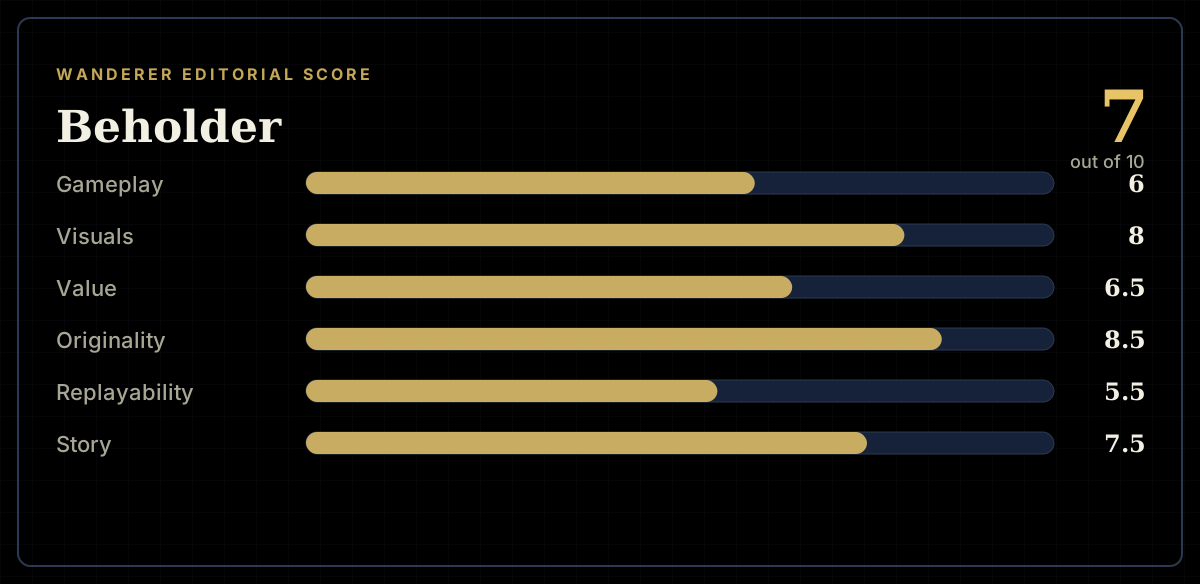
How the review scores each part of the gameWanderer Editorial -
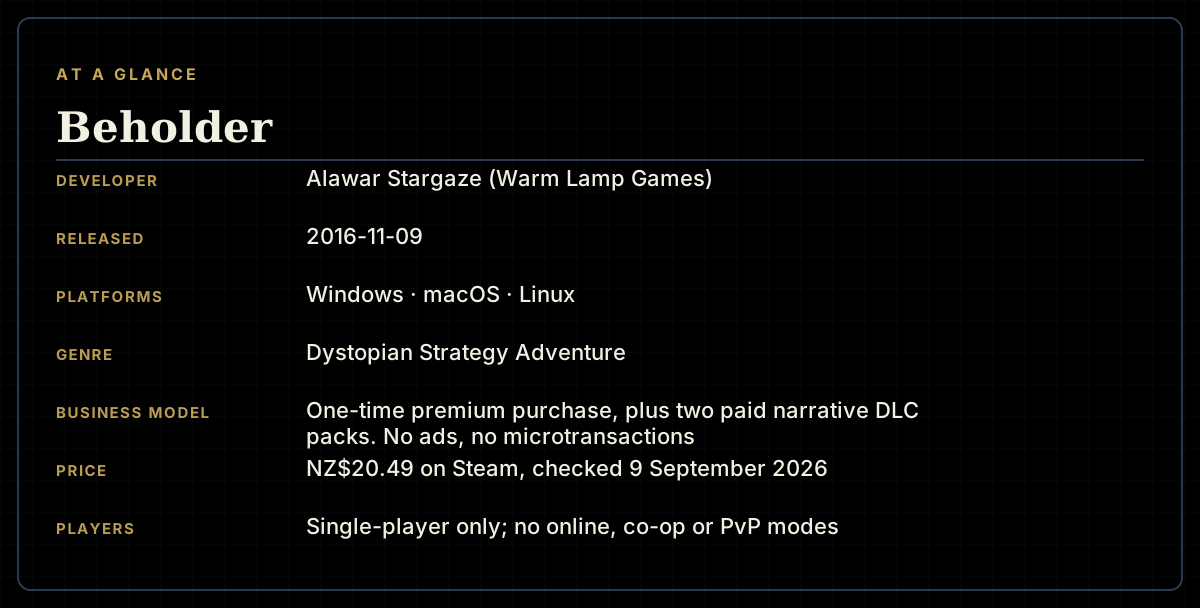
The specsWanderer Editorial -
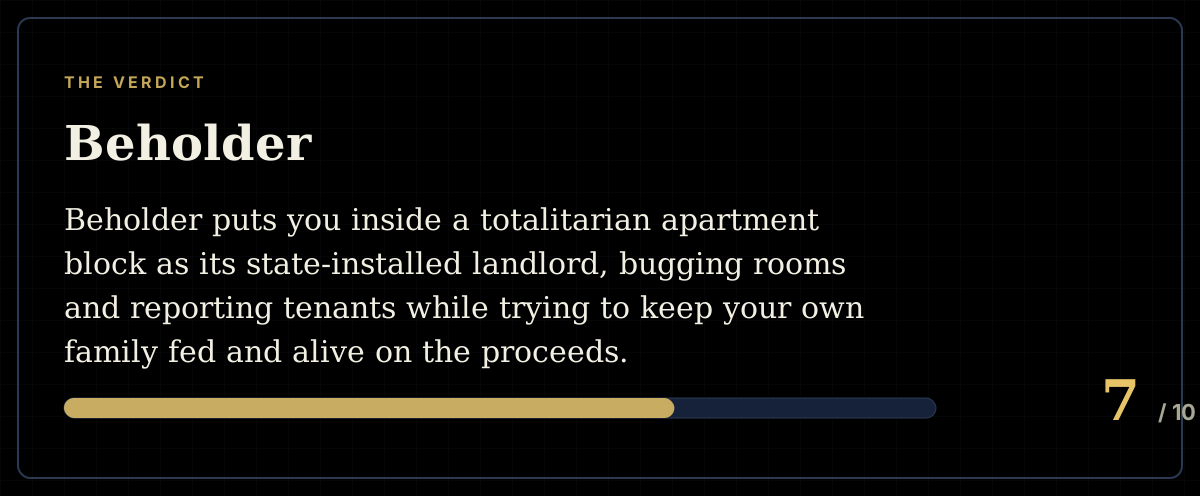
The short versionWanderer Editorial