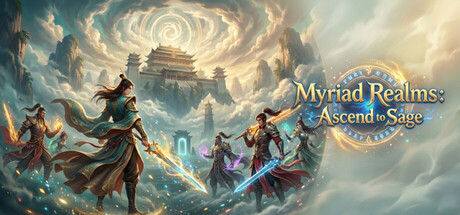
Game review
Myriad Realms: Ascend to Sage
7 / 10
- Developer
- Biranran
- Publisher
- ForDream
- Released
- 12 March 2026
- Platforms
- Windows
- Genre
- RPG, Adventure, Casual
- Monetisation
- One-time purchase, no in-game purchases listed
- Players
- Single-player
The short version
Myriad Realms: Ascend to Sage, released 12 March 2026 by solo developer Biranran, is a cultivation-themed idle strategy RPG drawing its characters, skills and magic treasures from Chinese mythology, built around rising from a low starting rank to Sage through combat, crafting and repeated rebirths. It sits Positive with English-speaking players, 89.2% across 37 reviews as of this check, but that modest-sounding score undersells the depth of devotion visible in the sample itself: multiple reviewers report play histories in the hundreds of hours, several well past a thousand, and nearly all of them independently credit a highly responsive developer who answers questions and ships updates directly in the game's community chat. Set against that loyalty are real, specific complaints: a thin tutorial that leaves some early systems feeling needlessly confusing, at least one detailed long-term player reporting punishingly low drop rates for the game's rarest treasures, some crafting and pet systems reviewers call redundant padding rather than meaningful depth, and no cloud save support for players who want to continue across multiple computers. Two reviewers, independently, speculate the game may have been built with substantial AI assistance, based on unusual interface choices and unusually fast feature turnaround; this review has not verified that claim.
Biggest strengths
- The developer is repeatedly and specifically praised as unusually responsive, answering questions directly in the game's community chat and shipping frequent updates that incorporate player feedback, a pattern nearly every reviewer in this sample independently credits
- Multiple reviewers report extraordinary long-term engagement, with play histories reported in the hundreds of hours and several well past a thousand, a strong practical signal of real depth beneath the low price
- The Chinese-mythology theming, drawing characters, skills and magic treasures from classical sources, draws specific praise for giving the game a distinct identity and genuine immersion for a game this cheap
Biggest weaknesses
- The tutorial is described by multiple reviewers as thin, leaving some early systems feeling unnecessarily confusing or tedious before a player has a chance to understand why they matter
- One long-term reviewer, citing hundreds of hours logged, reports punishingly low drop rates for the game's rarest treasure items, describing an eleven-hour farming session that produced only three of the targeted item
- Some systems, including alchemy and pet management, are described by at least one detailed reviewer as redundant padding that overlaps with other progression systems rather than adding meaningfully separate depth
Who it's for: Fans of xianxia and cultivation-themed idle RPGs who want a cheap, actively developed game with real long-term depth, and who are comfortable with a thin tutorial and some rough interface edges in exchange for an extremely low price.
Our recommendation: An easy recommendation at its price for genre fans willing to push through a rocky first few hours; expect to lean on outside guides or a translator if you don't read Chinese, despite English being listed as a supported language.
7 / 10
Introduction
Myriad Realms: Ascend to Sage, released 12 March 2026 by solo developer Biranran, sets its idle strategy RPG loop inside Chinese mythology, drawing characters, skills and magic treasures from classical sources as players rise from a low cultivation rank toward Sage through combat, crafting and repeated rebirths. It sits Positive with English-speaking players — 89.2% across 37 reviews — and that number, taken alone, understates what the sample actually shows. Reading through it turns up a genuinely striking pattern: play histories in the hundreds of hours are common, several reviewers report well over a thousand, and the reasons they give for staying that long are specific and consistent rather than vague loyalty.
A responsive developer fans keep pointing to
The single most repeated theme in this review's research is the developer's direct, ongoing engagement with the community. Nearly every review in this sample, positive and critical alike, mentions the same thing: Biranran answers questions personally in the game's community chat, incorporates player suggestions into updates quickly, and ships new content at a pace reviewers describe as unusually fast for a solo project. One reviewer who logged over 1,200 hours explicitly bought the game on Steam specifically because they liked the developer's approach after finding it elsewhere first. That kind of consistency, across dozens of independent reviews, is a genuinely strong signal about the ongoing health of the project.
Real depth, at a striking price
At roughly NZ$3, reviewers consistently frame this as an easy purchase, and the amount of engagement described backs that up: multiple reviewers report hundreds of hours invested, with the most extreme examples exceeding 1,400 hours, and repeatedly credit the combination of skill trees, equipment affixes, pets and rebirth mechanics with giving the game genuine combinatorial depth rather than a single flat progression track. Several reviewers separately confirm there's no forced advertising or aggressive monetization pressure despite the rock-bottom price, framing the game as a clean one-time purchase rather than a disguised free-to-play system.
A rough first impression, and some padding underneath the depth
Set against that, this review found real, specific complaints about the game's onboarding and mid-game structure. Multiple reviewers describe the tutorial as thin, leaving several early systems feeling needlessly confusing until a player works out their purpose independently. One detailed, heavily invested reviewer goes further, arguing that the alchemy and pet-management systems specifically feel like redundant padding — systems that exist to occupy time rather than add meaningfully separate strategic depth — and suggests development effort would be better spent expanding other realms and enemy variety instead. Separately, that same class of long-term player reports a genuinely harsh drop-rate problem for the game's rarest treasure items: an eleven-hour farming session that produced only three of the specific item being sought, a concrete, quantified data point rather than a vague complaint about luck.
Missing conveniences, and an unresolved authorship question
Two more specific gaps are worth flagging plainly. There is no cloud save support, which multiple reviewers separately raise as a real practical inconvenience for anyone who wants to continue progress across more than one computer. Separately, two reviewers independently raise a speculation this review has seen recur across several games this year: that the game may have been built with substantial AI assistance, citing an interface they describe as unintuitive and structured in ways that don't match typical player expectations, and — from a different reviewer — citing the sheer speed at which new ideas get implemented as circumstantial evidence. Notably, neither reviewer treats this as a dealbreaker; one explicitly frames it as an interesting, if rough, example of a new way games might get made. This review has not investigated the game's actual development process and reports this only as two independent, attributed reviewer observations.
A localization gap between listing and lived experience
Myriad Realms officially lists English as a supported language on its Steam store page. At least one English-speaking reviewer in this sample, however, reports relying on outside machine translation to play, aiming for a competitive leaderboard placement despite the language barrier. This review cannot confirm how complete the official English localization actually is inside the game itself, but that specific, concrete account is worth flagging directly for English-speaking buyers who might otherwise assume full native-language support based on the store listing alone.
A redemption process that frustrates some players
A smaller but recurring complaint concerns how certain in-game codes are distributed. Multiple reviewers describe needing to join the developer's external community chat group specifically to receive a redemption code, and more than one calls this process an unwelcome hassle for what should be a straightforward transaction — one reviewer states outright that they only wanted the code and resents having to join a group chat to get it. This sits at an odd angle to the otherwise consistent praise for the developer's community responsiveness discussed above: the same close community-chat relationship reviewers credit for fast updates and personal support is, for some players, also the point of friction they'd rather avoid.
Specific quality-of-life requests from invested players
Long-term players offer a number of concrete, specific suggestions rather than vague wishes for "more content," which is itself a useful signal of how seriously this fanbase engages with the game's systems. Reviewers separately request an auto-refresh-and-purchase option for a black-market shop interface currently requiring repeated manual clicks, a loop option for repeatedly challenging world bosses instead of manually re-initiating each attempt, and a dedicated high-health training dummy to properly test percentage-based damage effects that are currently hard to evaluate against the game's already-capped boss health pools. None of these are complaints about the game being broken; they're the kind of detailed, specific feedback that only comes from players who have already invested real time and want the systems they enjoy to work more smoothly.
Final Verdict
Myriad Realms: Ascend to Sage has earned something genuinely difficult to fake: a small but extremely devoted player base built on real systemic depth, an unusually responsive developer, and a price that makes the whole thing an easy bet even if it doesn't click. What keeps this from scoring higher is that its rough edges are concrete rather than incidental — a thin tutorial, harsh rare-item drop rates documented by one of its most invested players, some genuinely redundant systems, no cloud saves, and a real gap between its official English-language listing and at least one player's lived experience. For genre fans willing to push through an unpolished first few hours, this is an easy recommendation at its price; everyone else should go in with realistic expectations about both the language barrier and the learning curve.
Pros and cons
Pros
- The developer is repeatedly and specifically praised as unusually responsive, answering questions directly in the game's community chat and shipping frequent updates that incorporate player feedback, a pattern nearly every reviewer in this sample independently credits
- Multiple reviewers report extraordinary long-term engagement, with play histories reported in the hundreds of hours and several well past a thousand, a strong practical signal of real depth beneath the low price
- The Chinese-mythology theming, drawing characters, skills and magic treasures from classical sources, draws specific praise for giving the game a distinct identity and genuine immersion for a game this cheap
- At roughly NZ$3, reviewers consistently and specifically call this an easy purchase, with several separately confirming no forced advertising or aggressive monetization pressure despite the low price
Cons
- The tutorial is described by multiple reviewers as thin, leaving some early systems feeling unnecessarily confusing or tedious before a player has a chance to understand why they matter
- One long-term reviewer, citing hundreds of hours logged, reports punishingly low drop rates for the game's rarest treasure items, describing an eleven-hour farming session that produced only three of the targeted item
- Some systems, including alchemy and pet management, are described by at least one detailed reviewer as redundant padding that overlaps with other progression systems rather than adding meaningfully separate depth
- There is no cloud save support, which multiple reviewers flag as a real inconvenience for anyone wanting to continue progress across more than one computer
- Two reviewers, independently, speculate that the game may have been built substantially with AI assistance, citing an interface they describe as unintuitive and oddly structured, and separately, unusually rapid turnaround on new features and fixes; this review has not investigated the game's development process and reports this only as an attributed reviewer observation, not a confirmed fact
- At least one English-speaking reviewer reports relying on machine translation to play despite English being an officially listed supported language, suggesting localization completeness may vary in practice from what the store listing states
Screenshots
-
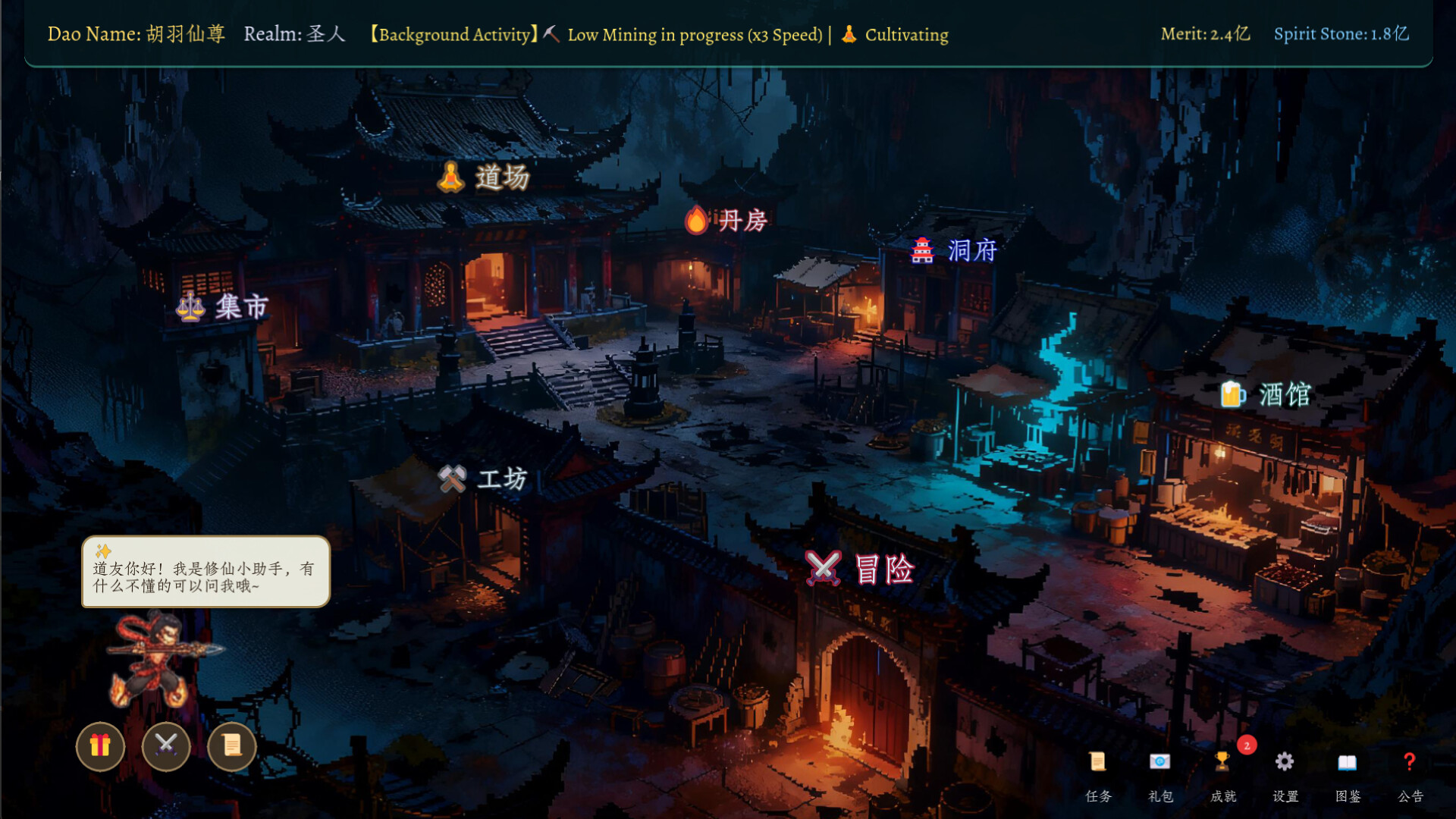
Myriad Realms: Ascend to SageImage: ForDream via Steam -
Myriad Realms: Ascend to SageImage: ForDream via Steam -
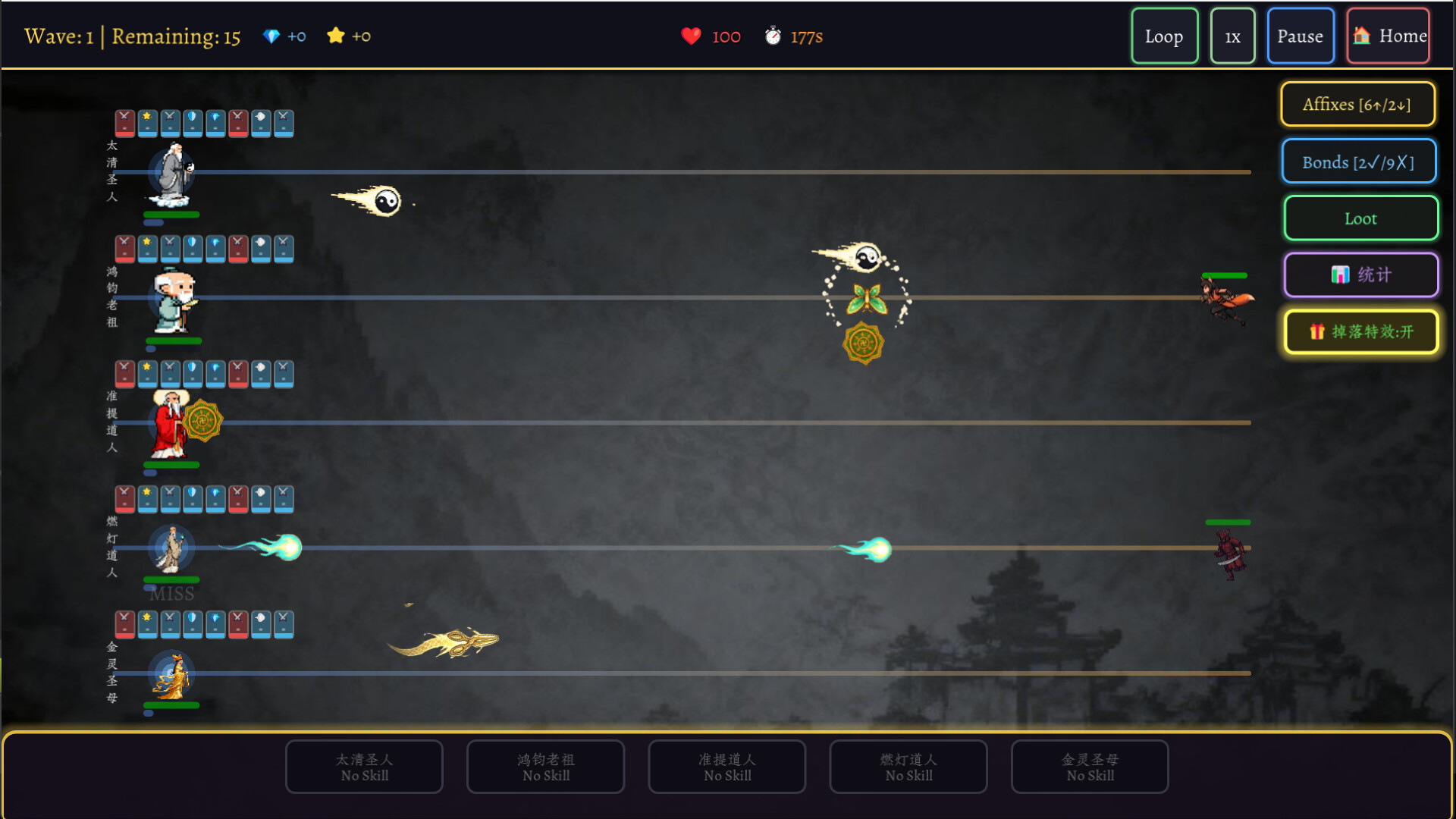
Myriad Realms: Ascend to SageImage: ForDream via Steam -
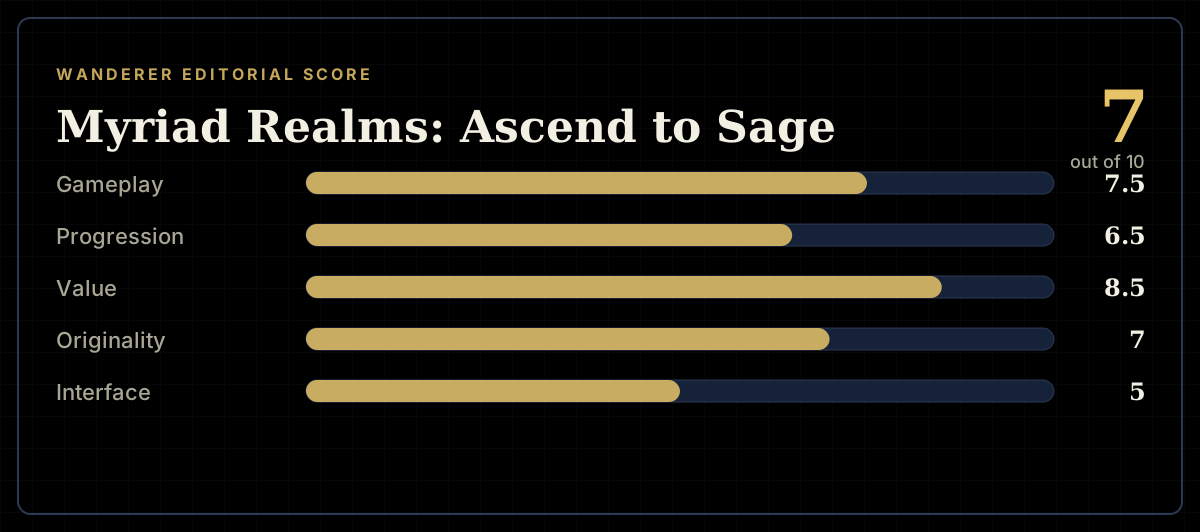
How the review scores each part of the gameWanderer Editorial -
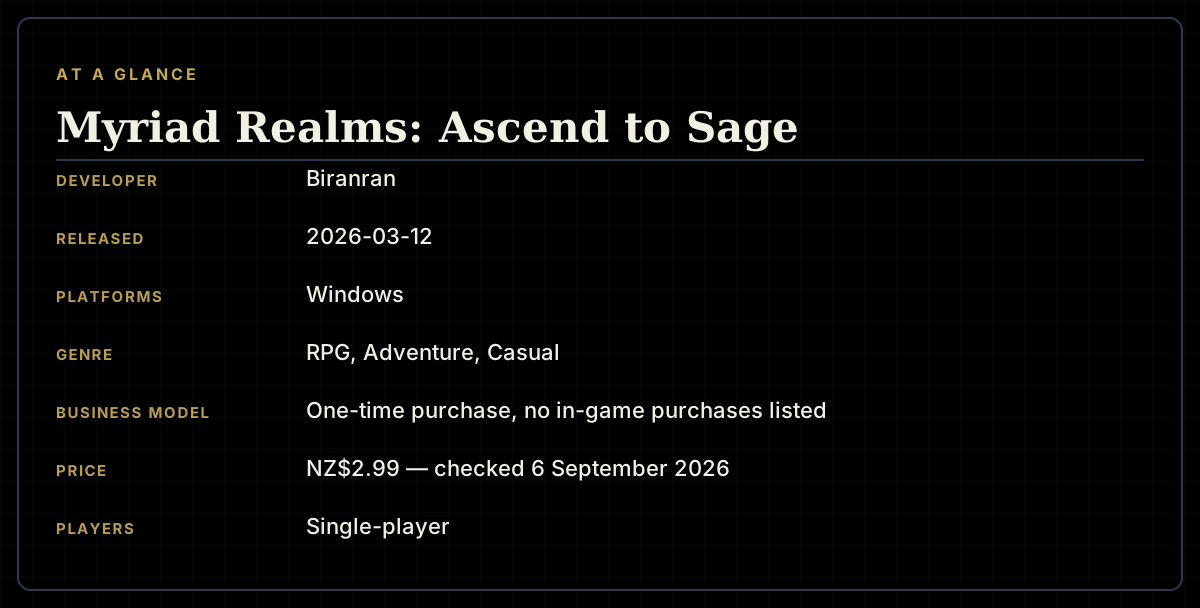
The essentials at a glanceWanderer Editorial -
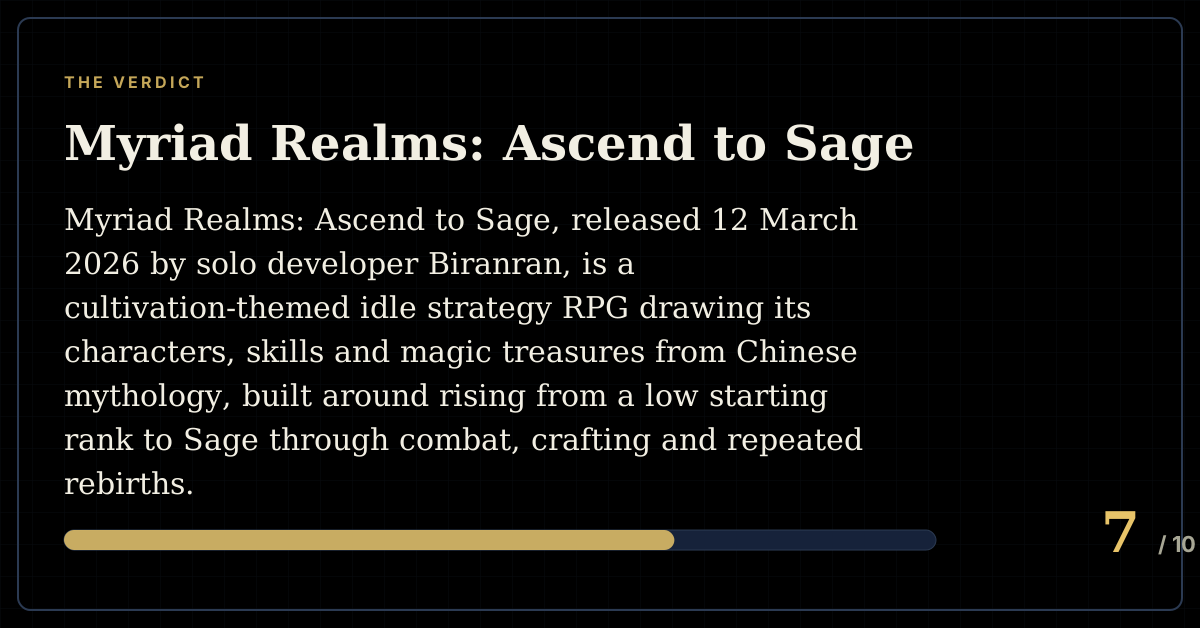
The short versionWanderer Editorial