Game review
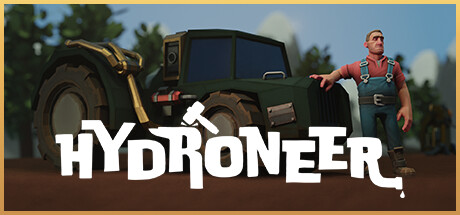
Hydroneer
6.5 / 10
- Developer
- Foulball Hangover
- Publisher
- Foulball Hangover
- Released
- 8 May 2020
- Platforms
- Windows
- Genre
- Mining and Base-Building Sandbox
- Monetisation
- Premium one-time purchase, plus one paid expansion (Journey to Volcalidus DLC, April 2024); no in-game store or loot boxes
- Players
- Steam Remote Play Together and local split-screen only; no independent networked co-op despite carrying a Co-op storefront tag
The short version
Hydroneer's central gimmick — no inventory, one object carried at a time, everything physically hauled and stacked by hand until hydro-powered machines take over — is a genuinely novel hook for a mining sandbox, and Foulball Hangover has kept shipping content and fixes for it for six years running. The trouble is what happens once that automation actually works: reviewers converge hard on a game that goes quiet fast, on multiplayer that isn't what its own Co-op tag implies, and on a real save-corruption bug that took years to land a proper fix.
Biggest strengths
- The no-inventory, carry-one-object mechanic is a genuinely distinctive spin on the mining-sandbox genre that several reviewers say sold them on the game within the first hour
- A tiny studio has shipped a near-continuous stream of updates and one full paid expansion across more than six years, including a 2024 multiplayer overhaul and 2026 optimisation and console-port announcements
- Hydro-powered machinery and modular pipe networks give automation planning real physical presence rather than abstract menu logic
Biggest weaknesses
- Once automation is built, a large share of reviewers independently report there's nothing left to spend money on or work toward — a handful of ores, gems and craftables cap the loop rather than deepen it
- The storefront's Co-op tag is misleading by several reviewers' direct account — actual multiplayer is Steam Remote Play Together or local split-screen, not an independently networked session
- Multiple non-exchangeable currencies gate progress behind delivery-task busywork that reviewers describe as tedious rather than challenging
Who it's for: Solo sandbox and automation fans who want a slower, more physical alternative to factory-builders like Satisfactory, and who are willing to treat the endgame as a stopping point rather than a destination.
Our recommendation: A strong pickup during a sale for the first 15-30 hours of digging and automating alone; go in expecting the "co-op" tag to mean shared-screen Remote Play rather than a real network game, and keep an eye on your save file until you've confirmed the 3.0.9 fix has reached your version.
6.5 / 10
Most mining sandboxes give you a backpack and let you forget about logistics. Hydroneer takes the backpack away entirely. You can hold exactly one object — one ore chunk, one gold nugget, one plank — at a time, and everything from selling loot to stocking a forge means physically carrying it there yourself, or building a machine that does the carrying for you. It's a small design decision that reshapes the whole game around it, and it's the single thing nearly every review, positive or negative, ends up discussing first.
One object, and the machines built to end that
The hook works. Early hours of Hydroneer are about digging into voxel terrain with a pan and shovel, hauling what you find to a smelter or a sluice by hand, and slowly realizing that every trip you're making is a trip a hydro-powered conveyor, pipe network or automated miner could make instead. Building that automation is genuinely satisfying physical-logic puzzle work — pressure, pipe routing and machine placement all matter in a way that a menu-driven factory game doesn't quite replicate. Several of the most detailed positive reviews describe exactly this arc: skeptical of the no-inventory gimmick for the first hour, converted by hour three once the first automated line comes online.
That same mechanic is also the game's most consistently cited flaw. A wide, genuinely even split runs through the review sample: for every player who calls the one-object rule the game's best idea, another calls it tedious busywork, particularly once trading requires walking coins to one vendor and goods to another across the map. Both camps are describing the same design choice accurately — it's not a case of one side being wrong, just a divisive mechanic that rewards patience some players don't have and others actively enjoy.
What automation actually buys you
The harder problem shows up after automation is built, and it's corroborated across a large number of independent reviews rather than resting on one loud complaint: once ore, gem and craft chains are running themselves, there simply isn't much left. Reviewers count a handful of ore types, a handful of gems, a couple of jewellery recipes and a short list of craftable goods, and several describe reaching that ceiling within 15 to 30 hours before finding themselves staring at a pile of coins with nothing to spend them on. Global Steam achievement data backs this up at scale: early crafting and smelting goals sit around 50-60% completion across the whole playerbase, while late-game achievements fall under 1%. That's consistent with most owners stopping well before the deeper systems, whether from boredom, a sense of completion, or the specific progression complaints below — the achievement curve can't distinguish which, but the shape matches what reviewers describe either way.
Progression itself draws a specific, repeated complaint: multiple non-exchangeable currencies gate advancement behind delivery-style fetch tasks that require driving across the map to find buyers, rather than a single economy the player can reason about. It's the kind of friction that reads as intentional pacing to some players and as padding to others, but enough reviewers single out the exact same mechanic that it's worth treating as a real design weakness rather than an isolated gripe.
Co-op that isn't quite co-op, and a save bug that finally got fixed
Two more specific, checkable complaints recur often enough to call out directly. First, Hydroneer's own storefront categories list Co-op and Shared/Split Screen Co-op alongside Remote Play Together, but do not list an independent networked online co-op category — and that absence lines up exactly with what several reviewers report firsthand: playing together means Steam Remote Play Together or local split-screen, with only one person able to use keyboard and mouse at a time, not each player running their own independent session. Anyone buying specifically for a real online co-op experience with friends should treat this as confirmed rather than assumed.
Second, a long-running save-corruption bug shows up across multiple reviews spanning what one detailed account describes as over two years of reports, including a Discord channel dedicated to sharing backup save files as an informal workaround. This wasn't a bug the developer ignored indefinitely: Foulball Hangover's own update history includes a dedicated "Save corruption fix!" patch (version 3.0.9) years into the game's life. That's a genuinely better outcome than the review that raised it initially expected, though it's fair context that the bug went unresolved long enough to burn real trust and real save files first.
A small studio that kept showing up
Whatever else is true about content depth, Foulball Hangover has not walked away from this game. The update history runs in an almost unbroken line from launch through a major 2.0 multiplayer overhaul, a paid Journey to Volcalidus expansion in April 2024 that drew its own mixed reception, a "one million players" milestone post in 2025, and optimisation and console-port announcements as recently as 2026 — six years of a tiny team actually finishing what it started, even where the finished product still draws real content complaints. That consistency matters for anyone weighing whether a small-studio sandbox is worth the risk of early abandonment; here, it plainly isn't.
Verdict
Hydroneer nails a genuinely original physical hook for the mining-sandbox genre and backs it with six years of real, sustained support from a tiny team — that's rarer than it should be in this space. What holds it to a mid-range score is that the loop it builds runs dry faster than its premise promises, its multiplayer undersells what "Co-op" usually means on Steam, and a serious save-corruption bug took years longer to fix than it should have. Buy it on sale for a satisfying 15-to-30-hour automation puzzle, not for a long-term base-building home.
Pros and cons
Pros
- The no-inventory, carry-one-object mechanic is a genuinely distinctive spin on the mining-sandbox genre that several reviewers say sold them on the game within the first hour
- A tiny studio has shipped a near-continuous stream of updates and one full paid expansion across more than six years, including a 2024 multiplayer overhaul and 2026 optimisation and console-port announcements
- Hydro-powered machinery and modular pipe networks give automation planning real physical presence rather than abstract menu logic
- Frequently discounted to a fraction of its list price, which several reviewers explicitly cite as the right way to buy in given how the content holds up
- A long-running, well-documented save-corruption bug that took years to fully resolve was eventually addressed in a dedicated 3.0.9 patch, rather than left to fester indefinitely
Cons
- Once automation is built, a large share of reviewers independently report there's nothing left to spend money on or work toward — a handful of ores, gems and craftables cap the loop rather than deepen it
- The storefront's Co-op tag is misleading by several reviewers' direct account — actual multiplayer is Steam Remote Play Together or local split-screen, not an independently networked session
- Multiple non-exchangeable currencies gate progress behind delivery-task busywork that reviewers describe as tedious rather than challenging
- The carry-one-item design that hooks some players in the first hour is the same mechanic others call tedious padding by hour ten, and the split is wide and genuine rather than a vocal minority
- Global achievement data shows a steep drop from around 50-60% completion on early crafting goals to under 1% on late-game ones, consistent with reviewers' account of most players stopping well short of the deeper systems
Screenshots
-
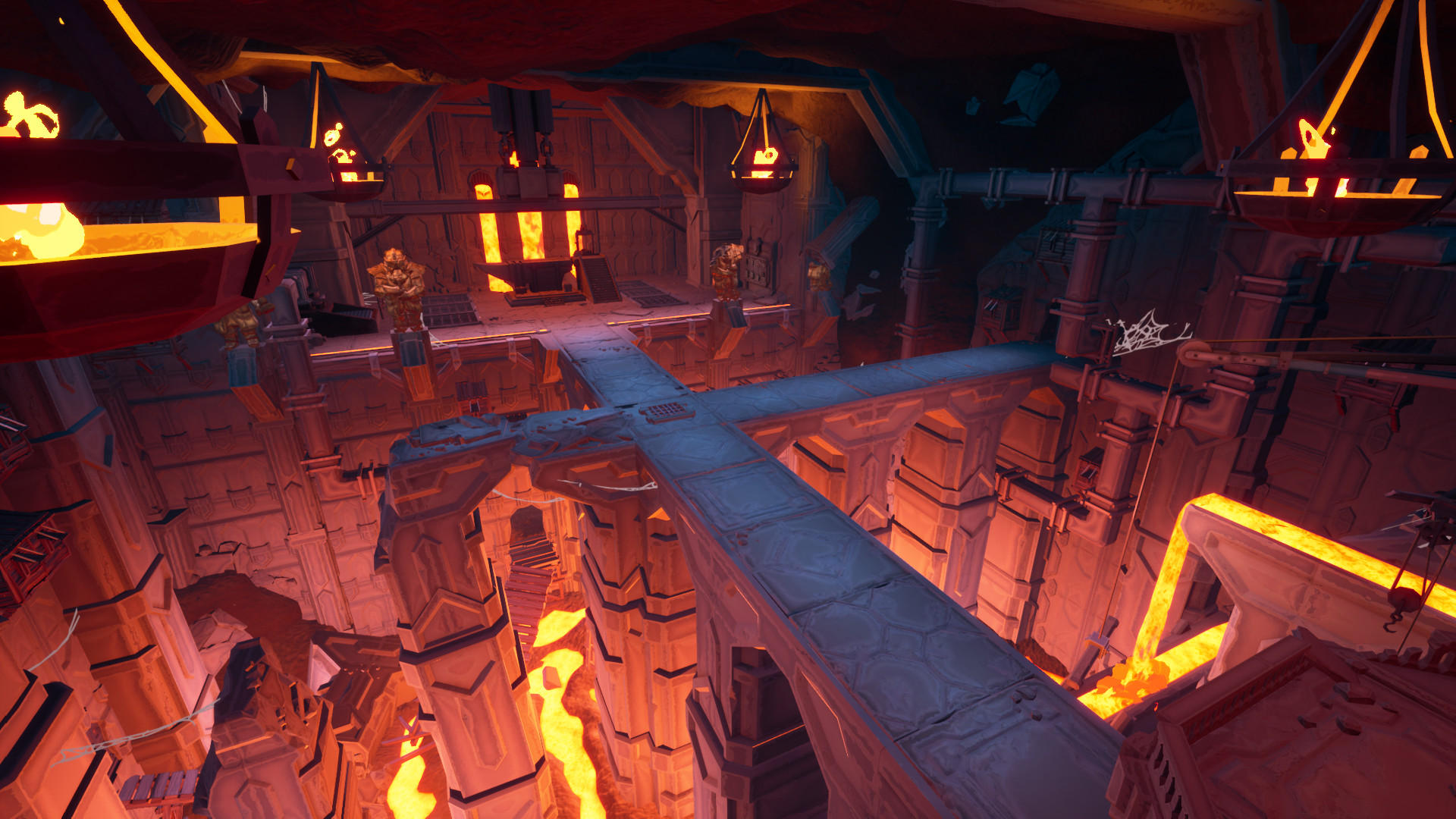
HydroneerImage: Foulball Hangover via Steam -
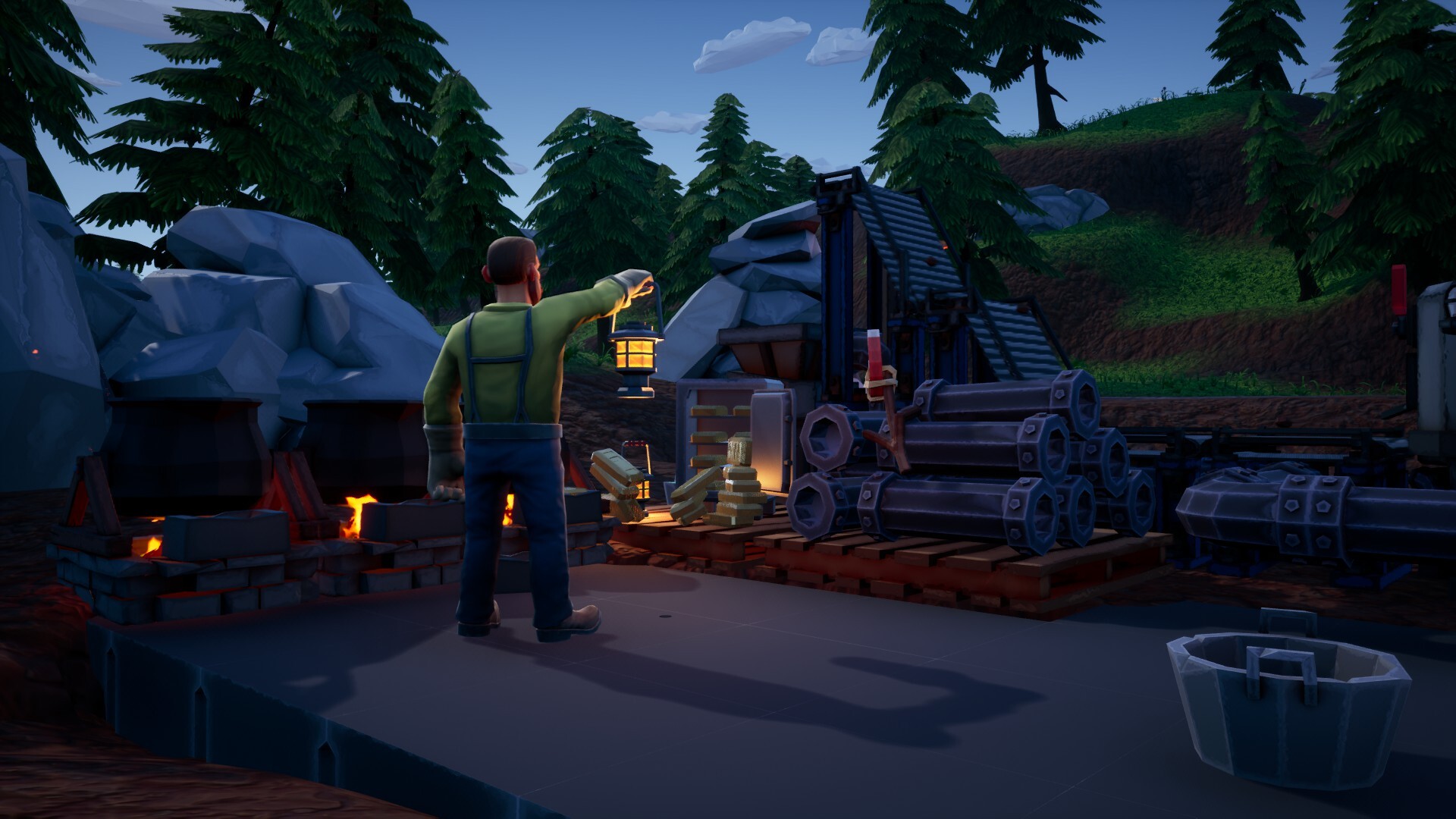
HydroneerImage: Foulball Hangover via Steam -
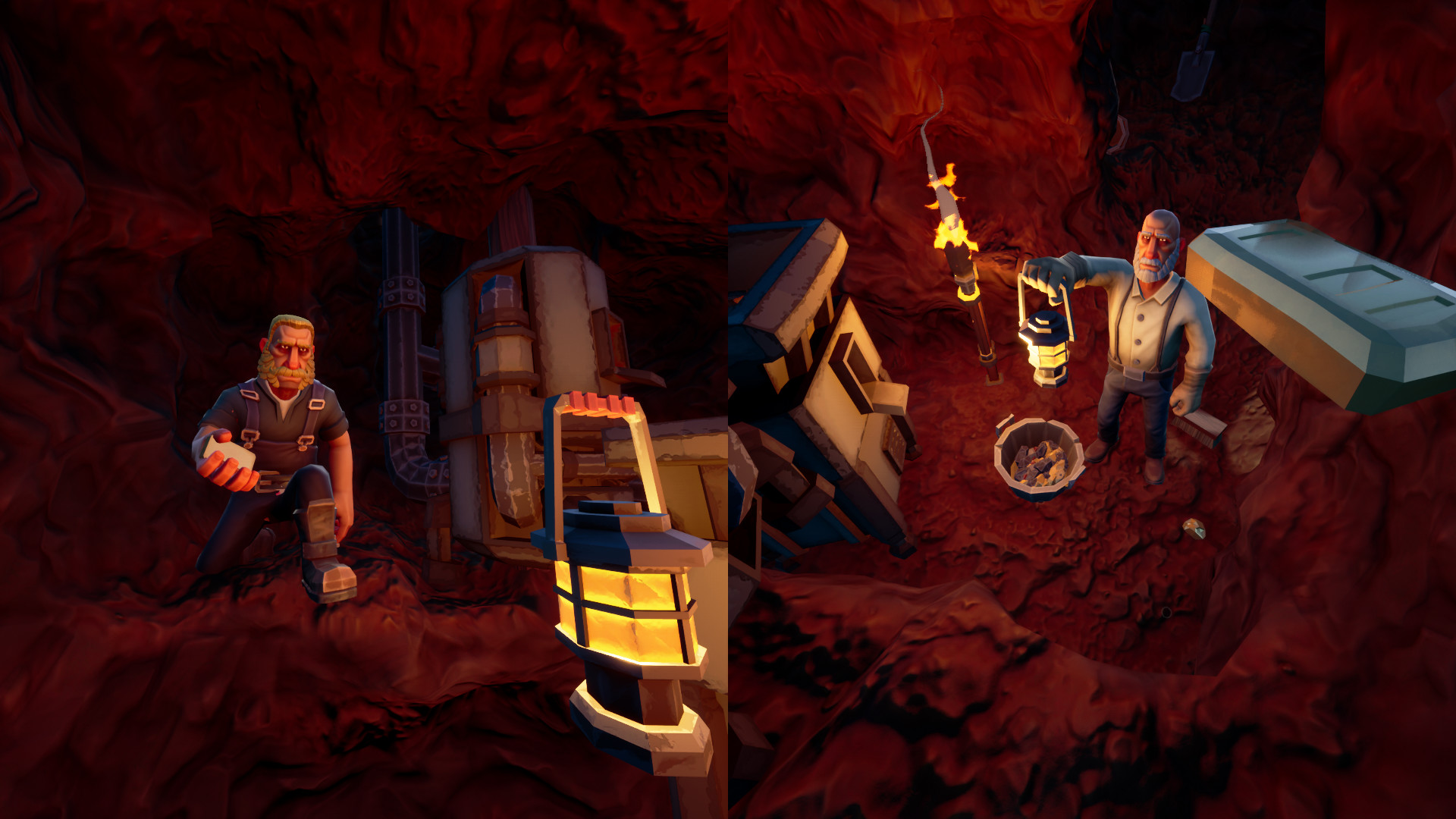
HydroneerImage: Foulball Hangover via Steam -
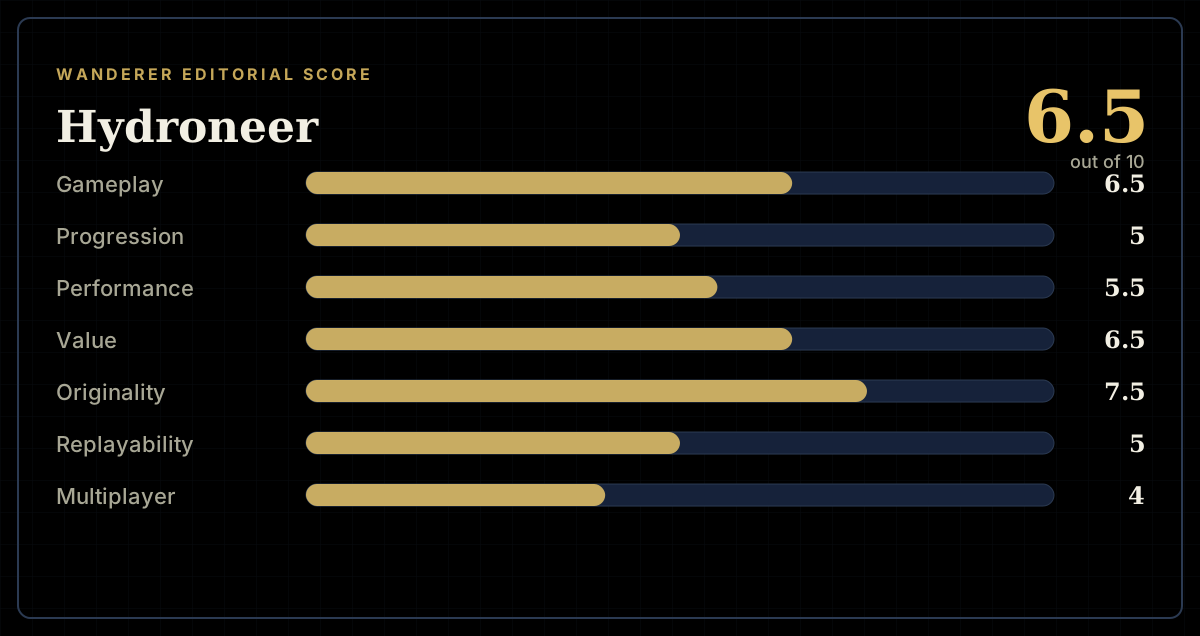
How the review scores each part of the gameWanderer Editorial -
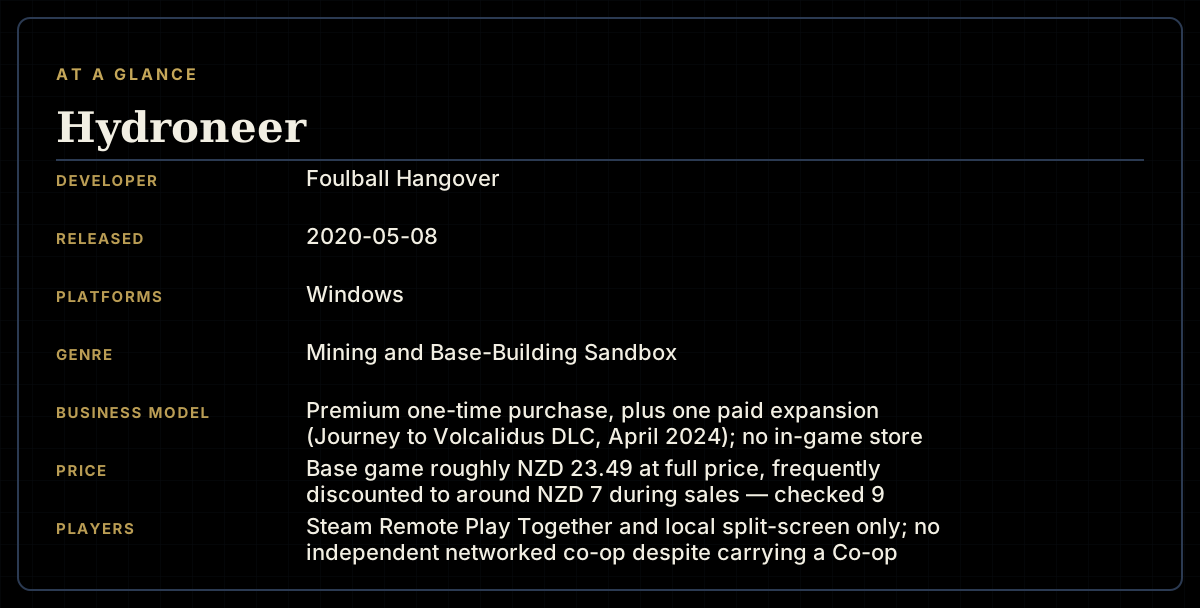
At a glanceWanderer Editorial -
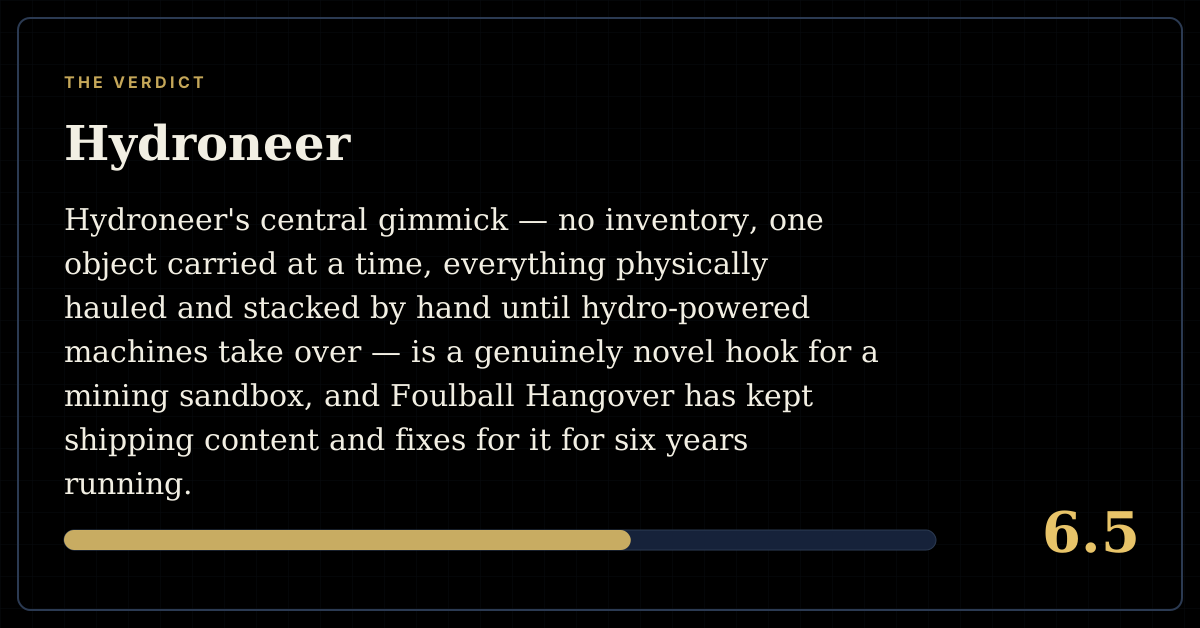
The short versionWanderer Editorial