
Game review
Hand of Fate
6.5 / 10
- Developer
- Defiant Development
- Publisher
- Defiant Development
- Released
- 17 February 2015
- Platforms
- Windows, macOS, Linux
- Genre
- Card-Based Action RPG
- Monetisation
- Paid, one-time purchase, plus a small cosmetic/card-pack DLC.
- Players
- Single-player only.
The short version
Hand of Fate frames its dungeon-crawling as a literal tabletop card game, dealt out by a mysterious dealer across a physical table, and its Very Positive rating across more than 3,200 reviews reflects real, deserved admiration for that presentation's originality. What holds this review back from stronger praise is an extraordinarily consistent complaint about the real-time combat sections players drop into between card encounters, described repeatedly as clunky and shallow, particularly at the game's final boss, alongside a separate, well-corroborated complaint that random-event outcomes grow punishingly unfair as a run progresses. This review found the original developer, Defiant Development, closed following the 2017 sequel, with the franchise only reviving under new stewardship in 2025.
Biggest strengths
- A genuinely original core structure, presenting dungeon-crawling as a physical tabletop card game dealt by a mysterious, well-written dealer character.
- Distinctive, atmospheric presentation and voice acting that reviewers consistently credit as elevating the experience beyond a simple deckbuilder.
- A real sense of build customisation through deck construction, letting players shape the tone and risk profile of each run.
Biggest weaknesses
- An extraordinarily consistent complaint describes the real-time combat sections as clunky and shallow, with a recurring, specific criticism of the game auto-targeting the player toward enemies rather than requiring precise positioning.
- A separate, well-corroborated complaint describes random-event outcomes skewing more punishingly against the player as a run progresses, with several reviewers describing effectively unwinnable situations arising from bad luck alone.
- The final boss encounter specifically draws unusually harsh, consistent criticism as a severe difficulty and design outlier relative to the rest of the campaign.
Who it's for: Fans of genuinely inventive tabletop-inspired game design who can tolerate real, well-documented combat and balance weaknesses; players specifically prioritising polished action combat should consider Hand of Fate 2 instead.
Our recommendation: A genuinely original, worthwhile experience for the deckbuilding and presentation alone; go in expecting the combat and late-game randomness to be the weakest parts of the package.
6.5 / 10
A genuinely original tabletop presentation
Hand of Fate's central conceit is distinctive and, by wide consensus, genuinely well executed: dungeon crawling presented as a literal card game, dealt out across a physical table by an enigmatic dealer whose commentary reacts to the player's choices. Reviewers consistently credit this framing as the game's standout achievement. "This is an Arkham-style game with dungeon-exploring through cards thrown in," reads a 2020 review, one of many that credits the hybrid concept as genuinely novel even while raising execution concerns. A 2018 review states the appeal plainly: "Hand of Fate is rather brilliant in design." That combination — real deckbuilding depth wrapped in a strong, atmospheric tabletop presentation with committed voice acting — is a consistent throughline across this review base, and it's a meaningful part of why the game is still discussed and played more than a decade after release.
An extraordinarily consistent complaint about the combat
What tempers that praise, with striking consistency, is a specific complaint about the real-time combat sections players enter after drawing certain cards. "The real time combat is so limp. It does that thing that certain games do where if you are not within range of hitting an enemy, the game tosses your character towards one in order to make contact," reads a 2021 review, describing a specific, frequently-cited targeting mechanic multiple other reviewers independently criticise using nearly identical language. A 2021 review reports a severe, specific failure point: "The combat of this game is just average until you reach the final boss where you realise that it is just outright atrocious." A 2019 review frames the broader assessment: "each of those systems is severely undercooked" relative to the ambition of the concept surrounding them. Checking a broad sample of negative reviews, this exact complaint — clunky, imprecise real-time combat, particularly criticised at the final boss specifically — recurs with enough consistency to read as a genuine, stable weakness rather than a matter of individual player skill or preference.
It's worth weighing this complaint against the game's own stated ambitions. Hand of Fate positions itself explicitly as a hybrid rather than a pure action game, and the deckbuilding and card-drawing systems are clearly where the bulk of the developer's design attention went. Several reviewers make exactly this distinction: the combat isn't broken in the sense of being unplayable, but it reads as a secondary system bolted onto a primary one, competent enough to function but never approaching the depth or polish of the card-based layer surrounding it. That's a meaningfully different criticism than saying the game simply plays badly, and it's worth keeping that distinction in mind when weighing how much the combat weaknesses should affect an overall recommendation for a specific reader.
A separate, well-corroborated complaint about punishing late-game randomness
Distinct from the combat complaints, a second consistent theme concerns how random-event outcomes shift as a run progresses. "It's fine at first you have like 50-50 chance of something. But as you progress through the campaign the RNG just heavily skewed against you. Most choices are like 25-75 so you will always be on the losing side," reads a 2021 review. A 2018 review describes a severe, specific consequence: "25% chance to just game over on an ironman style game. Game over, and very very angry." A 2018 review lists the same complaint among several: "the impossible-to-track card drawing sequences are a real bummer... they really really REALLY want you to play through every board like five times." Checking a broad sample of reviews, this is a distinct complaint from the combat issues above — it concerns the deckbuilding and event-resolution layer specifically, and it's raised independently often enough to treat as a genuine, separate design concern rather than an extension of the combat criticism.
A studio that closed, and a franchise later revived
This review checked Defiant Development's own news feed directly and found a striking, verifiable gap: substantial activity through the November 2017 launch of Hand of Fate 2, followed by nothing further until a "Ten Years Since the Beginning" retrospective post in February 2025 — a gap consistent with several reviewers' claims that the original studio closed following the sequel. "The sequel didn't fix the combat and now the studio's dead," reads a 2019 review, updated from an earlier, more optimistic version written before Hand of Fate 2's release. The franchise has since been revived under new development, with "Hand of Fate: Hordes" launching in Early Access in July 2026 — a decade-later continuation this review found directly confirmed in the same news feed, worth noting for anyone specifically invested in where the series stands today.
A specific, reported storefront dark pattern
A narrower but specific complaint concerns how DLC content is presented within the game itself. "It integrated DLC items into my deckbuilding, then when I clicked on them it opened up the store page and added the DLC to my cart. I don't like that much," reads a 2020 review. This review could not independently verify the precise current behaviour of this interface element, but reports it as a specific, actionable piece of information for cautious buyers who want to avoid unintended purchases while browsing the game's deck-building menus.
Final verdict
Hand of Fate remains a genuinely original piece of game design whose tabletop-inspired presentation still stands out more than a decade after release, and this review credits that achievement without reservation. What keeps the score moderate is an extraordinarily consistent complaint about clunky, shallow real-time combat — particularly severe at the final boss — compounded by a separate, well- corroborated pattern of punishing late-game randomness. This is a worthwhile pickup for players specifically drawn to its inventive card-based structure and atmosphere; those who want the combat refined should strongly consider Hand of Fate 2, which several reviewers in this sample directly recommend as an improvement on this specific weakness.
Pros and cons
Pros
- A genuinely original core structure, presenting dungeon-crawling as a physical tabletop card game dealt by a mysterious, well-written dealer character.
- Distinctive, atmospheric presentation and voice acting that reviewers consistently credit as elevating the experience beyond a simple deckbuilder.
- A real sense of build customisation through deck construction, letting players shape the tone and risk profile of each run.
- A franchise that has since been revived under new development, with a further entry, Hand of Fate: Hordes, launching in Early Access as recently as July 2026.
Cons
- An extraordinarily consistent complaint describes the real-time combat sections as clunky and shallow, with a recurring, specific criticism of the game auto-targeting the player toward enemies rather than requiring precise positioning.
- A separate, well-corroborated complaint describes random-event outcomes skewing more punishingly against the player as a run progresses, with several reviewers describing effectively unwinnable situations arising from bad luck alone.
- The final boss encounter specifically draws unusually harsh, consistent criticism as a severe difficulty and design outlier relative to the rest of the campaign.
- A specific, reported dark pattern describes DLC card items appearing integrated into the deckbuilding interface, which when selected open the storefront and add the item to the player's cart.
Screenshots
-

Hand of FateImage: Defiant Development via Steam -

Hand of FateImage: Defiant Development via Steam -

Hand of FateImage: Defiant Development via Steam -
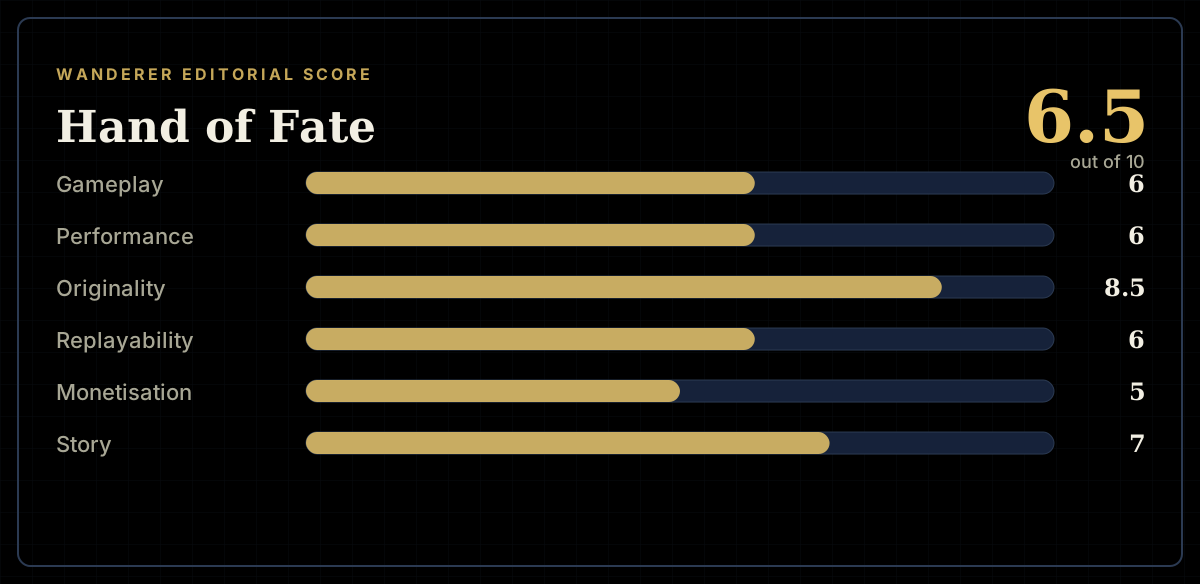
How the review scores each part of the gameWanderer Editorial -
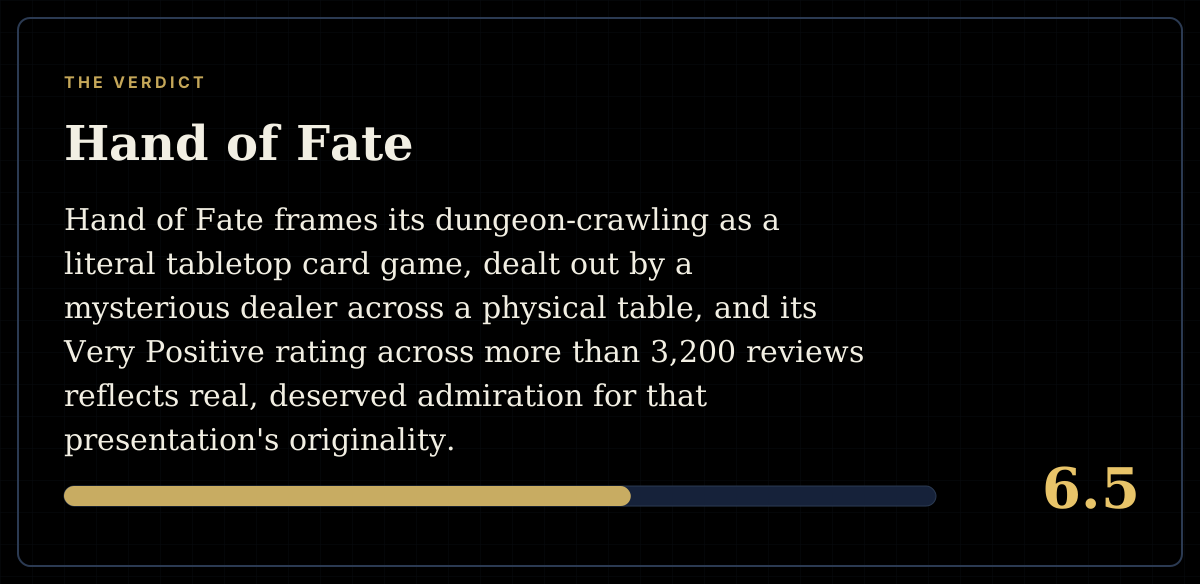
The short versionWanderer Editorial