Game review
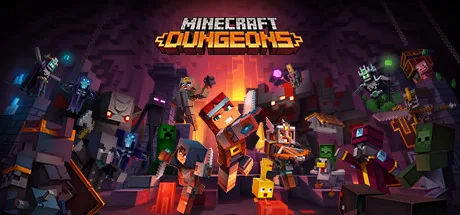
Minecraft Dungeons
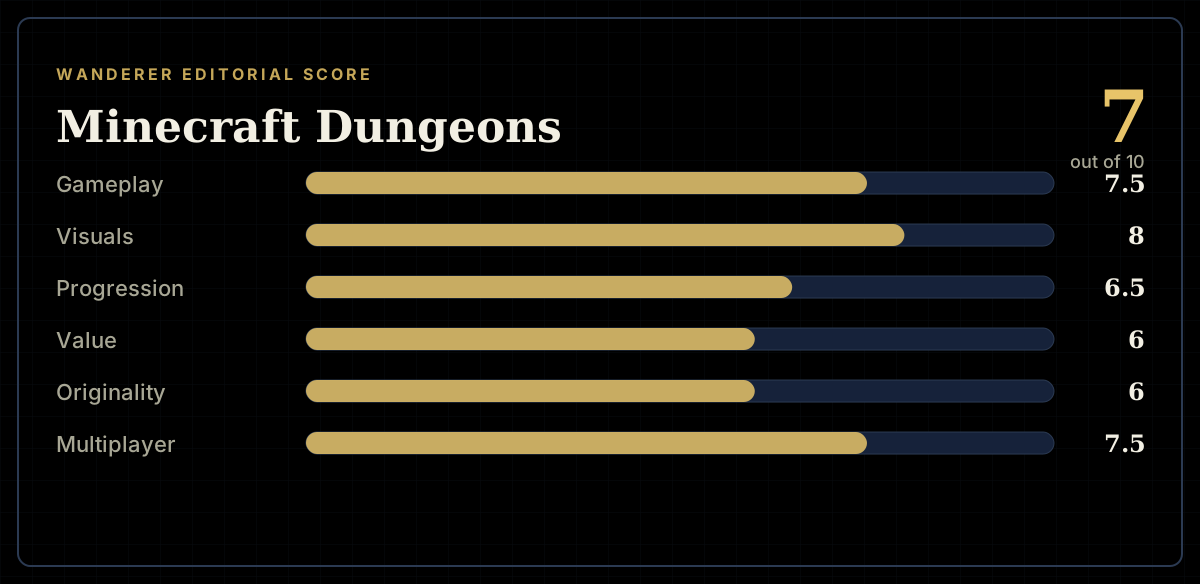
7 / 10
- Developer
- Mojang Studios, Double Eleven
- Publisher
- Xbox Game Studios
- Released
- 26 May 2020
- Platforms
- Windows, Xbox One, Xbox Series X|S, PlayStation 4, Nintendo Switch
- Genre
- Action RPG
- Monetisation
- Premium base game (NZ$31.95) plus a substantial paid-DLC tail: six story "Adventure" packs at roughly NZ$8.70 each (Jungle Awakens, Creeping Winter, Howling Peaks, Flames of the Nether, Hidden Depths, Echoing Void), a Hero DLC bundle at NZ$31.95, and three smaller Adventure Passes at NZ$5.90 each (Cloudy Climb, Luminous Night, Fauna Faire). Checked 3 August 2026.
- Players
- Up to four players, local split-screen and online co-op, with cross-platform play supported.
The short version
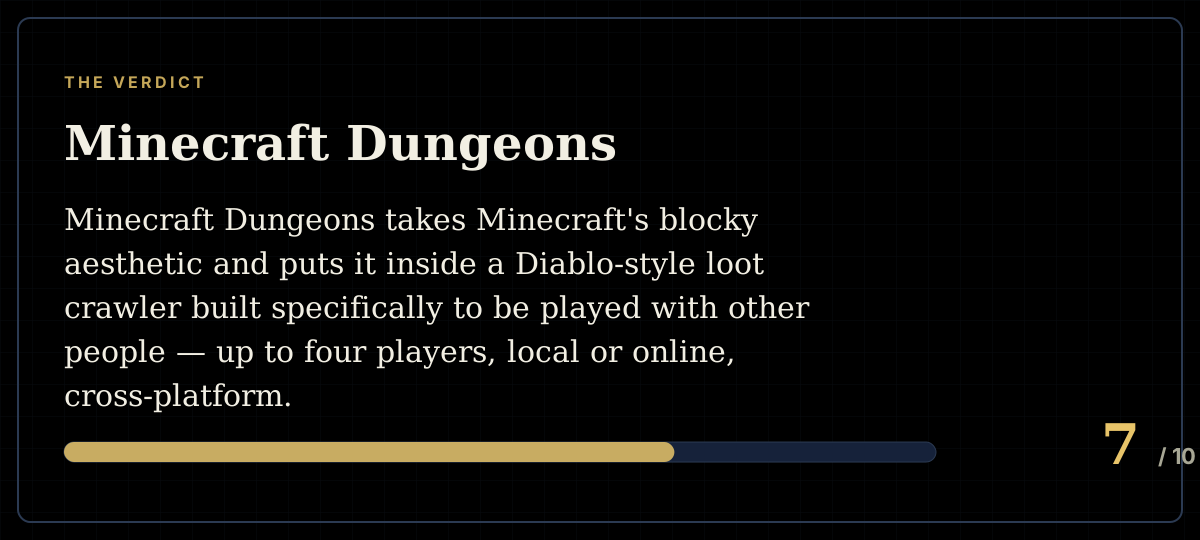
Minecraft Dungeons takes Minecraft's blocky aesthetic and puts it inside a Diablo-style loot crawler built specifically to be played with other people — up to four players, local or online, cross-platform. That structure works, and the accessible combat and enchantment system hold up for a session or two with friends. What a meaningful share of this game's own Steam reviews won't stop raising is a specific, documented complaint: the game demands an online Microsoft sign-in even to start its supposedly offline mode, which has repeatedly stranded Steam Deck and no-internet players at the main menu.
Biggest strengths
- Combat and the Enchantment Point system are approachable enough for players who bounce off denser action-RPGs, without feeling shallow across a first playthrough
- Up to four-player local and online co-op, with cross-platform support, makes this one of the more accommodating loot crawlers for playing with a mixed group of friends or family
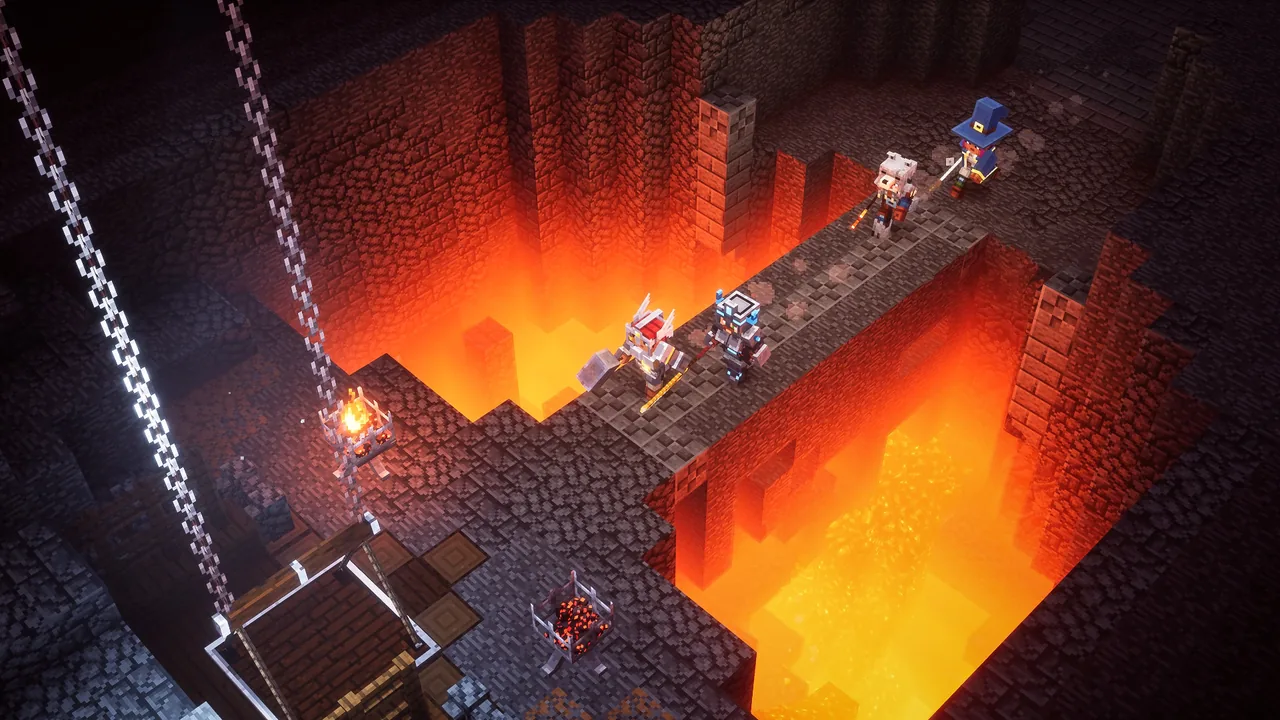
- Levels balance procedurally shuffled layouts against fixed landmark rooms, giving each run enough variation without losing your sense of where you are
Biggest weaknesses
- A large share of negative Steam reviews describe being unable to start the game's own offline mode without first signing into a Microsoft account online, stranding Steam Deck and no-internet players at the main menu
- Critics and players alike note the loot and build system runs shallower than dedicated dungeon crawlers once the initial charm wears off
- A meaningful share of negative reviews frame the six paid story DLC packs, on top of the base price, as expansions that should have been free procedural content rather than a purchase
Who it's for: Families and groups of friends who want an accessible, low-commitment loot crawler to play together, especially anyone already invested in Minecraft's world. Less suited to solo dungeon-crawler fans wanting Diablo-level build depth, or anyone planning to play offline or on a handheld without a reliable connection.
Our recommendation: A genuinely fun co-op loot game at a low base price, best enjoyed with friends rather than solo. Before buying for offline or portable play specifically, know that a real share of this game's own players have been blocked at the login screen with no internet available — check your setup against that first.
7 / 10
Mojang built Minecraft Dungeons as a straightforward pitch: take the isometric loot-crawler structure Diablo popularised, strip out the genre's usual stat-sheet density, and wrap the whole thing in Minecraft's blocky, instantly recognisable art style. It's a design built to be played with other people rather than alone, and on that specific promise it delivers — up to four players, locally or online, across platforms. It's also a game whose Steam release carries one very specific, heavily documented complaint that has nothing to do with combat or loot: a meaningful share of its own reviews describe being unable to start the game's offline mode without first getting online to sign in.
Combat built to be approachable, not deep
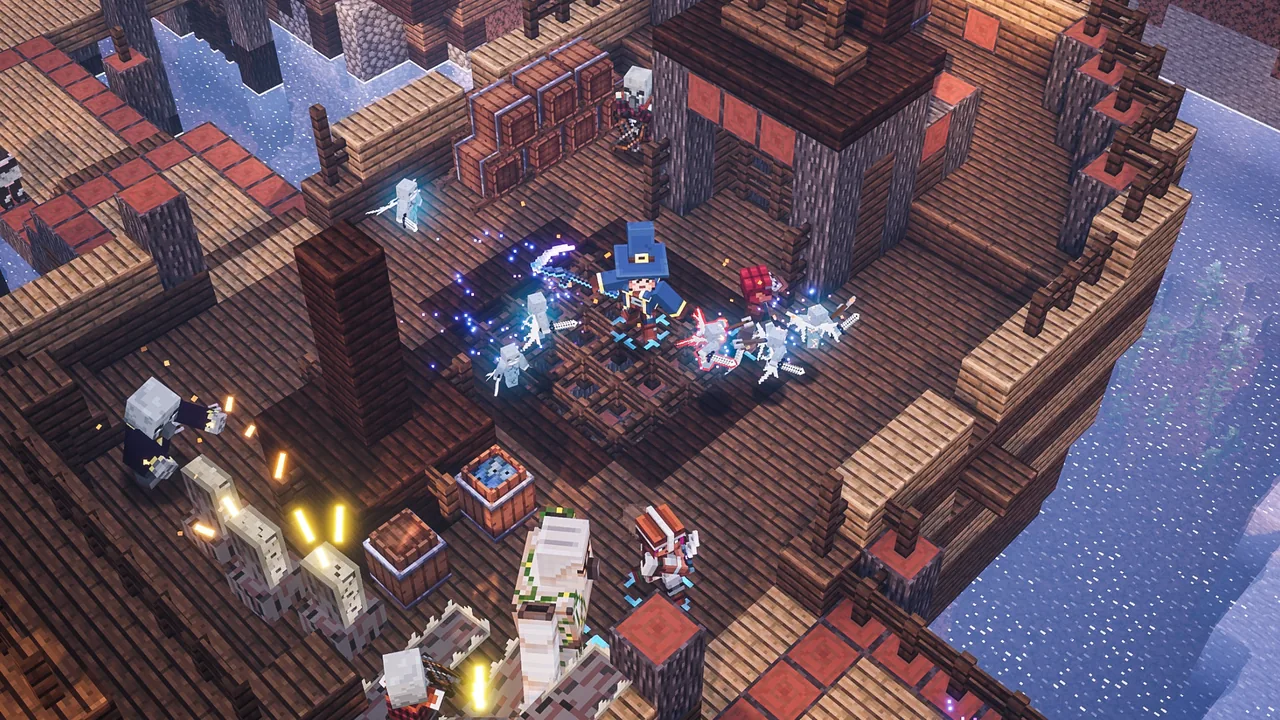
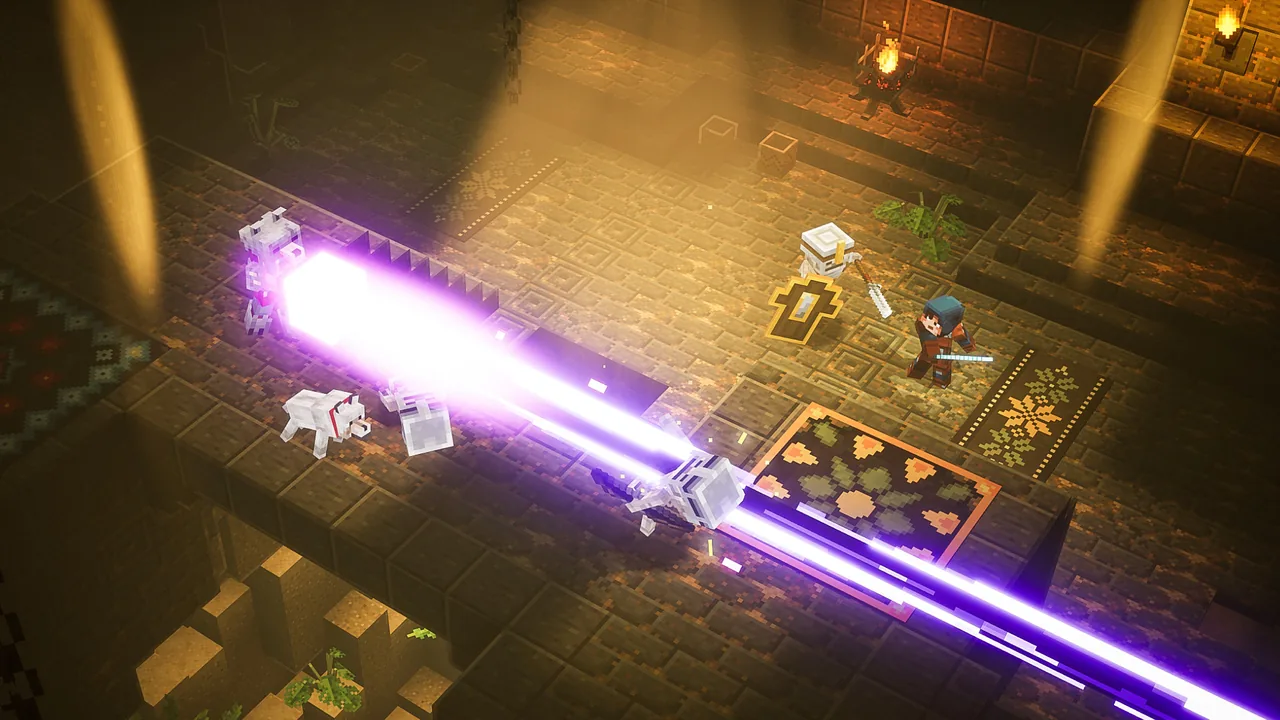
Minecraft Dungeons plays as a real-time action RPG rather than the turn-based systems this review's other JRPG coverage tends to favour: melee, ranged and area attacks, dodge-rolling, and gear that swaps out constantly as loot drops. The Enchantment Point system is the closest thing to a build-crafting layer — defeating enemies earns points that upgrade randomly rolled enchantments on weapons and armour, and points can be refunded and reallocated when better gear turns up, which keeps experimentation cheap. It's accessible in a way that's clearly deliberate: critics broadly praised how easy it is to pick up, and just as consistently noted that the ceiling on build complexity sits well below what dedicated dungeon-crawler fans expect from the genre. For a first playthrough with friends, that trade reads as a feature. Solo, over a longer stretch, it's the thing critics kept flagging as this game's real limitation.
Levels that vary without ever losing you
Each of the game's core levels reshuffles procedurally between runs, but not from a blank slate — fixed landmark rooms stay in place as waypoints inside the shifting layout, giving every run enough variety to avoid feeling memorised while keeping players oriented inside a level they've played before. It's a sensible middle ground between full-random dungeon generation, which can feel directionless, and fully authored levels, which stop surprising you after a couple of runs, and it holds up well across a first playthrough of the base campaign.
Co-op is the actual pitch
The single biggest reason to own this game is the four-player co-op, supporting local split screen, online play and cross-platform matchmaking between Windows, Xbox, PlayStation and Switch. That's a genuinely broad reach for a loot crawler, and it's the setting this game is clearly designed around — combat encounters, difficulty scaling and loot distribution all read as tuned for a group rather than a solo player working through content alone. Families and groups of friends looking for something low-commitment to play together are the audience this was built for, and it serves that audience well.
The complaint Steam Deck owners keep running into
Set against all of that, a large share of this game's negative Steam reviews raise the same specific, reproducible problem: the game's offline mode isn't actually available offline. Multiple reviews describe launching the game with no internet connection and getting stuck at the main menu because it requires a Microsoft account sign-in first, even for solo play with no intention of going online. Steam Deck owners come up repeatedly and specifically, since a handheld device without guaranteed connectivity is exactly the scenario this restriction breaks hardest — several reviews describe buying the game specifically for portable, connection-free play only to find it unplayable exactly where they needed it. This isn't a rare edge case buried in the review sample; it's frequent enough, and specific enough in its wording across independent reviews, to be treated as a real, documented limitation of the Steam release rather than an isolated configuration issue.
What the DLC tail actually costs
Beyond the base NZ$31.95, six paid story DLC packs run roughly NZ$8.70 each, a Hero DLC bundle prices at NZ$31.95 — matching the base game's own price — and three smaller Adventure Passes add another NZ$5.90 apiece. A meaningful share of negative reviews frame that specifically as a complaint about procedurally generated content being sold piecemeal rather than expanded for free, one describing it as "paying for more dungeons that should be free from a random generator." That's a fair characterisation of the tension: the base game's own dungeons already reshuffle for free, which makes charging per additional biome a harder sell than DLC that adds a genuinely new system or mechanic would be.
Verdict
Seven out of ten. Minecraft Dungeons does what it set out to do — an approachable, blocky loot crawler that plays best with three friends rather than alone, at a low base price that makes it an easy pickup for a group. What keeps it from climbing higher is specific rather than vague: a build system that critics and players alike found shallow past a first playthrough, a DLC tail that charges repeatedly for content its own procedural systems generate for free, and — the complaint this game's own Steam reviews raise most insistently — an offline mode that isn't actually usable offline for a meaningful number of players, Steam Deck owners especially. Buy it for a co-op night with friends. Check your setup first if you were planning to play it solo, offline, or on the go.
Price, DLC list and review counts checked 3 August 2026.
Pros and cons
Pros
- Combat and the Enchantment Point system are approachable enough for players who bounce off denser action-RPGs, without feeling shallow across a first playthrough
- Up to four-player local and online co-op, with cross-platform support, makes this one of the more accommodating loot crawlers for playing with a mixed group of friends or family
- Levels balance procedurally shuffled layouts against fixed landmark rooms, giving each run enough variation without losing your sense of where you are
- Minecraft's blocky art style translates convincingly into a dungeon-crawler's darker, more varied biomes without losing what makes it recognisable
Cons
- A large share of negative Steam reviews describe being unable to start the game's own offline mode without first signing into a Microsoft account online, stranding Steam Deck and no-internet players at the main menu
- Critics and players alike note the loot and build system runs shallower than dedicated dungeon crawlers once the initial charm wears off
- A meaningful share of negative reviews frame the six paid story DLC packs, on top of the base price, as expansions that should have been free procedural content rather than a purchase
- Solo play is serviceable but clearly the secondary way to experience a game built around co-op
Screenshots
-
Minecraft DungeonsImage: Xbox Game Studios via Steam -
Minecraft DungeonsImage: Xbox Game Studios via Steam -
Minecraft DungeonsImage: Xbox Game Studios via Steam -
How the review scores each part of the gameWanderer Editorial -
The short versionWanderer Editorial