
Game review
Ruins of Dawn
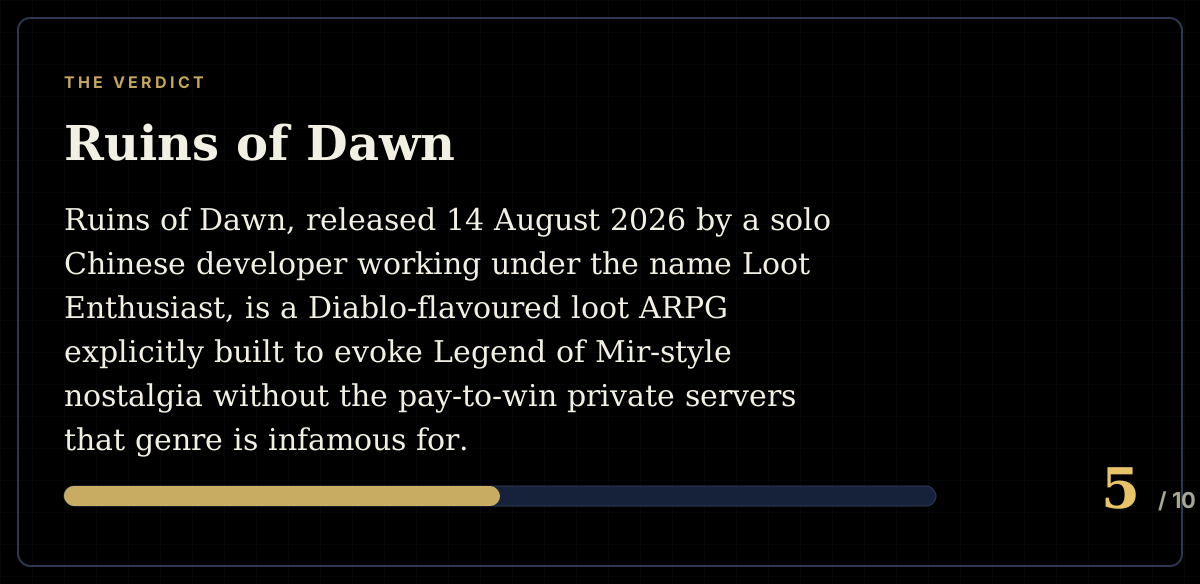
5 / 10
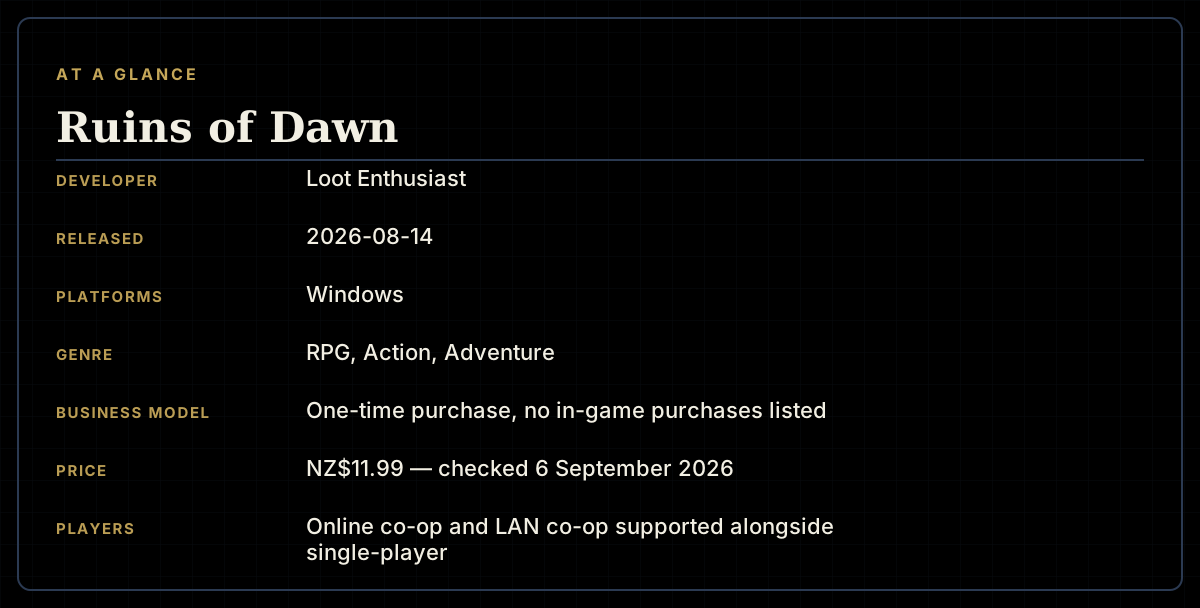
- Developer
- Loot Enthusiast
- Publisher
- Loot Enthusiast
- Released
- 14 August 2026
- Platforms
- Windows
- Genre
- RPG, Action, Adventure
- Monetisation
- One-time purchase, no in-game purchases listed
- Players
- Online co-op and LAN co-op supported alongside single-player
The short version
Ruins of Dawn, released 14 August 2026 by a solo Chinese developer working under the name Loot Enthusiast, is a Diablo-flavoured loot ARPG explicitly built to evoke Legend of Mir-style nostalgia without the pay-to-win private servers that genre is infamous for. It sits Mostly Positive with English-speaking players, 73.4% across a substantial 867-review sample as of this check, and reading through a large slice of that sample — overwhelmingly written in Chinese — turns up the single most consistent and severe complaint pattern in this reviewer's research this cycle: an extraordinarily low item drop rate, described independently by dozens of reviewers, that for a loot-driven ARPG cuts directly at the genre's core promise. Tellingly, this complaint isn't confined to the negative sample — one of the game's most upvoted positive reviews is an extensive, step-by-step guide to using the memory-editing tool Cheat Engine to manually adjust drop rates and item stats, describing this as necessary to make the game playable at all. Separately, reviewers report streamers selling paid carries using modified gear, at least one serious character-loss bug, and a specific, quantified allegation of early review-score manipulation this review has not verified.
Biggest strengths
- The core combat and itemization concept draws genuine, specific nostalgic praise for recreating a Diablo- and Legend of Mir-style loot grind without the pay-to-win private-server model that genre is normally associated with, particularly among older Chinese players revisiting a childhood favourite
- Several detailed reviewers with over 100 hours logged describe real potential in the class and build system, including a crafting mechanic where killing monsters fills a meter that grants a random affix players can apply to gear
- Online and LAN co-op are both supported alongside single-player, and one reviewer reports finding a genuinely powerful, game-changing item combination through ordinary random drops early in a playthrough
Biggest weaknesses
- An extraordinarily low item drop rate is reported independently by dozens of reviewers, with specific examples including farming a single boss for over ten hours, or killing the same target upward of a thousand times, without the targeted item ever appearing; one of the game's most upvoted positive reviews is itself a detailed tutorial for using the third-party tool Cheat Engine to manually inflate drop rates, describing this as necessary to make late-game progress at all
- Character progress does not carry over between characters — warehouse storage, reputation, and the in-game collection log are all reported as character-specific rather than account-wide, meaning starting a new character means starting entirely from scratch
- Multiple reviewers report livestreamers selling paid "carry" services to new players using gear reviewers say was obtained or modified through cheats, and say the developer has not visibly addressed the practice despite complaints
Who it's for: Fans of Diablo- and Legend of Mir-style loot grinding who specifically want that nostalgic feel without a pay-to-win private server, and who are prepared for a punishing, possibly broken drop-rate curve at launch.
Our recommendation: Worth a look only if you're prepared for what a large share of its own fans describe as an unplayable-without-cheats itemization curve, or you're happy to treat those reports as a warning rather than an exaggeration; most players should wait for a confirmed drop-rate rebalance.
5 / 10
Introduction
Ruins of Dawn, released 14 August 2026, is the work of a solo Chinese developer working under the name Loot Enthusiast, and it wears its inspiration openly: a Diablo-style loot ARPG built to recapture the specific feeling of Legend of Mir, a foundational Chinese online RPG whose modern legacy is dominated by pay-to-win private servers. It sits Mostly Positive with English-speaking players — 73.4% across a substantial 867-review sample — and reading through a large, overwhelmingly Chinese-language slice of that sample surfaces something unusual: a single complaint, reported with striking consistency and specificity by dozens of independent reviewers, that goes directly to the core of what a loot ARPG is supposed to deliver.
A real, specific nostalgic appeal
The praise here is genuine and specific rather than generic goodwill. Multiple reviewers, particularly older Chinese players, describe the game as satisfying a long-held wish to revisit Legend of Mir-style loot grinding without paying real money to compete on a private server — one reviewer frames this explicitly as the appeal for players of their generation. Beyond nostalgia, several detailed, heavily-invested reviewers describe real structural promise: a crafting system where defeating monsters fills a meter that grants a random affix to apply to gear, meaningful class variety, and — in one case — a genuinely exciting random early-game find, a dagger and ring combination that transformed a character's power entirely through ordinary drops rather than any grinding at all. Online and LAN co-op are both supported alongside solo play, another point in its favour for a genre often played socially.
A drop rate reviewers say breaks the entire loop
Set against that promise is the most consistent, most severe complaint in this review's research. Reviewer after reviewer, independently, reports item drop rates so low that basic genre expectations break down entirely: one details killing the same boss more than a thousand times without a single high-tier item appearing; another reports farming for a single named ring for ten straight hours with nothing to show for it; a third, thirty-two levels in, says they've killed the same boss-tier enemy over a thousand times without a single piece of red-tier gear, despite the game's own in-game guide stating the current difficulty tier should produce them. This isn't scattered frustration from a handful of impatient players — it recurs with near-identical specifics across reviewers with wildly different total playtimes, which is a strong signal the drop curve itself, not any individual player's luck, is the problem.
What makes this complaint impossible to dismiss as one-sided is where it also shows up: in the positive sample. One of the game's most upvoted reviews overall — recommending the game — is an extensive, step-by-step tutorial for using the third-party memory-editing tool Cheat Engine to manually inflate drop rates and adjust item stats, walking readers through the exact process of locating and locking a stat's value in memory. That reviewer describes trying to play without modification, hitting the same drop-rate wall everyone else reports, and eventually deciding cheating was the only way to make further progress feel worthwhile — a remarkable thing for a recommended review to say outright. A Korean-language reviewer independently calls it "a game that forces you to use Cheat Engine" given the current drop rates and experience curve. Not every reviewer agrees the rates are actually broken — at least one detailed, high-playtime review argues the drop rate is reasonable once players understand the game's difficulty and stat-scaling systems properly — but that reviewer is a clear minority voice against a much larger, more specific chorus describing the same problem in the same terms.
Streamers, carries, and a fairness problem the developer hasn't addressed
A related, separate complaint concerns the game's early competitive environment. Multiple reviewers report livestreamers selling paid "carry" services — powering up new accounts for money — using gear reviewers say was obtained or modified through cheats rather than legitimate play, and say this has gone unaddressed by the developer despite visible player complaints. Combined with the drop-rate problem above, this creates a specific, credible picture: a game whose intended progression curve is so punishing that an entire secondary economy of illegitimate shortcuts has formed around it within weeks of release.
Missing quality-of-life, and a character lost for good
Beyond drop rates, reviewers report the game missing several quality-of-life features common to the genre: no automatic movement toward a targeted enemy, meaning players must manually walk within range before an attack lands, no item pickup filter, and no way to search a cluttered inventory. Progress also doesn't carry over between characters — warehouse storage, faction reputation and the in-game collection log are all reported as tied to a single character rather than an account, meaning starting a new character means starting entirely over. Separately, one English-language reviewer reports a serious specific incident: after a computer crash, their character — over 125 hours old, with a full set of endgame gear across three equipment loadouts — was permanently gone, with the game's built-in character-recovery option doing nothing to restore it.
An unverified but specific claim of review manipulation
One further claim is worth reporting on its own terms, precisely because of how specific it is. One reviewer states that the game's Steam review score flipped from mixed early reception to "Overwhelmingly Positive" within ten minutes of launch, and cites this as their basis for believing a portion of the positive reviews were not genuine. This review has not independently investigated Steam's review-timing data and cannot confirm or refute this specific claim; it is reported here only as a specific allegation made by one reviewer, not as an established fact about the review sample's integrity.
Final Verdict
Ruins of Dawn has real, specific things going for it — a genuine nostalgic hook for a well-defined audience, promising crafting and class systems, and moments where the loot loop clearly works as intended. What keeps this score low despite a Mostly Positive rating is that its own community, across both critical and recommending reviews, converges overwhelmingly on the same severe, specific problem: a drop rate multiple reviewers say is so punishing that cheating becomes the practical path to progress, compounded by a streamer-driven carry economy the developer hasn't visibly addressed and at least one serious character-loss bug. For a genre whose entire appeal rests on the moment an item finally drops, that's a fundamental problem this review can't score around, however real the underlying nostalgia and potential are.
Pros and cons
Pros
- The core combat and itemization concept draws genuine, specific nostalgic praise for recreating a Diablo- and Legend of Mir-style loot grind without the pay-to-win private-server model that genre is normally associated with, particularly among older Chinese players revisiting a childhood favourite
- Several detailed reviewers with over 100 hours logged describe real potential in the class and build system, including a crafting mechanic where killing monsters fills a meter that grants a random affix players can apply to gear
- Online and LAN co-op are both supported alongside single-player, and one reviewer reports finding a genuinely powerful, game-changing item combination through ordinary random drops early in a playthrough
- The developer is understood by several reviewers to be a solo developer, and multiple reviews explicitly frame their criticism as constructive, encouraging continued development rather than writing the project off entirely
Cons
- An extraordinarily low item drop rate is reported independently by dozens of reviewers, with specific examples including farming a single boss for over ten hours, or killing the same target upward of a thousand times, without the targeted item ever appearing; one of the game's most upvoted positive reviews is itself a detailed tutorial for using the third-party tool Cheat Engine to manually inflate drop rates, describing this as necessary to make late-game progress at all
- Character progress does not carry over between characters — warehouse storage, reputation, and the in-game collection log are all reported as character-specific rather than account-wide, meaning starting a new character means starting entirely from scratch
- Multiple reviewers report livestreamers selling paid "carry" services to new players using gear reviewers say was obtained or modified through cheats, and say the developer has not visibly addressed the practice despite complaints
- Basic quality-of-life features reviewers expect from the genre are reported missing, including automatic movement toward a targeted enemy, an item-pickup filter, and a searchable inventory
- At least one reviewer reports a serious bug in which their character, with over 125 hours and a full set of endgame gear, was permanently lost following a computer crash, with the game's character-recovery option not functioning
- One reviewer makes a specific, quantified allegation that the game's review score shifted to "Overwhelmingly Positive" within ten minutes of launch, characterizing this as evidence of manipulated reviews; this review has not independently verified that claim
Screenshots
-
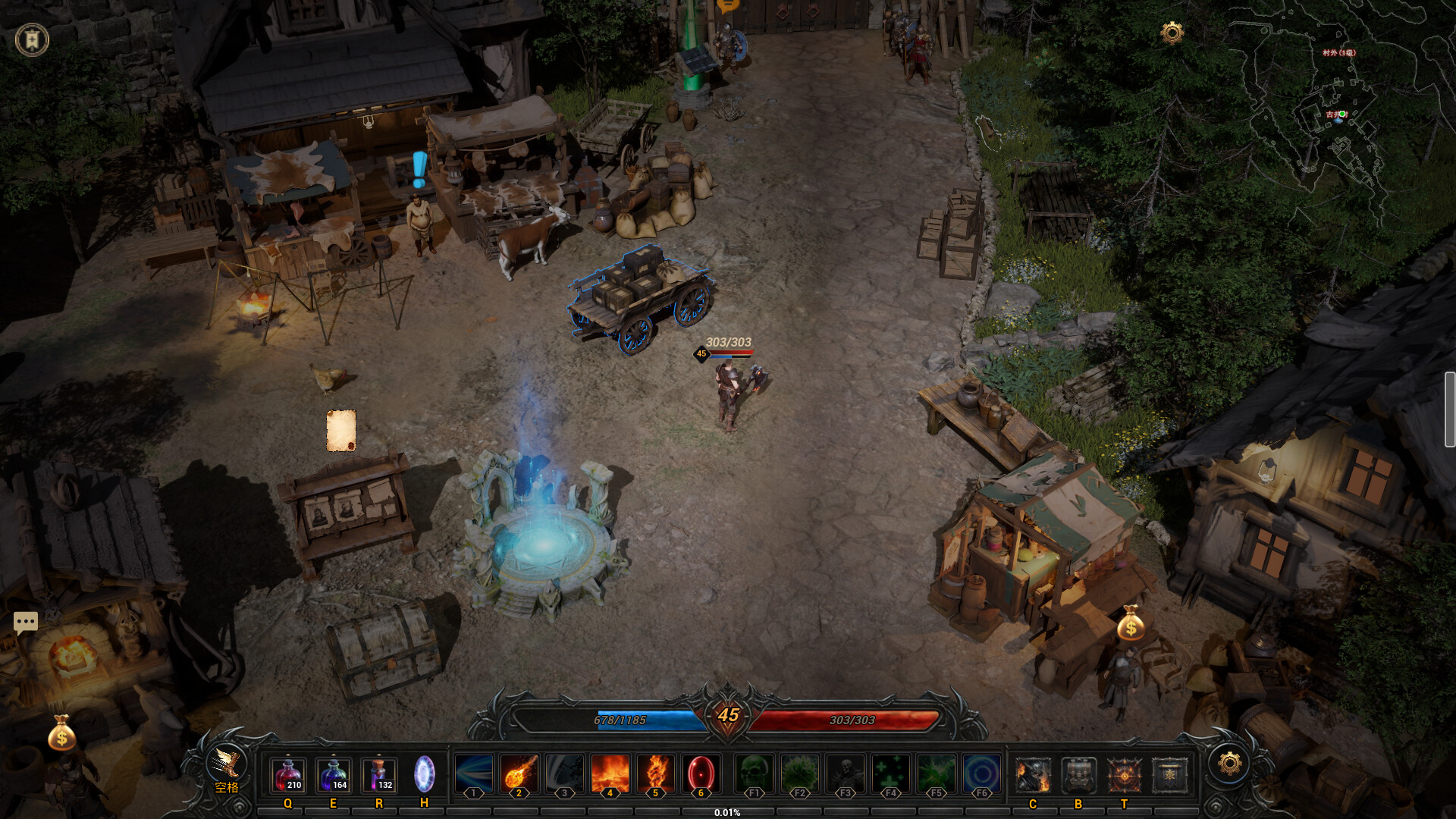
Ruins of DawnImage: Loot Enthusiast via Steam -
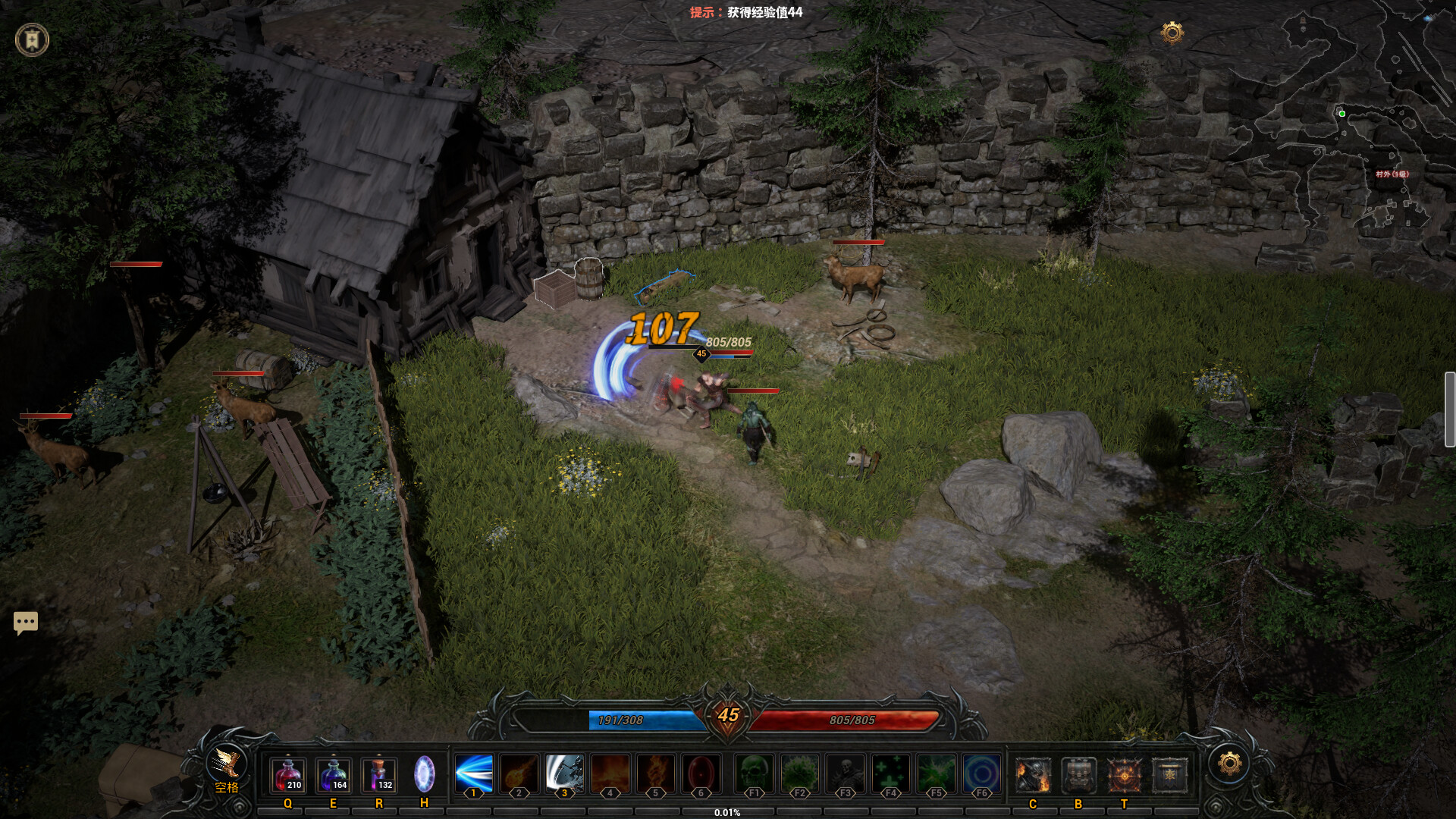
Ruins of DawnImage: Loot Enthusiast via Steam -
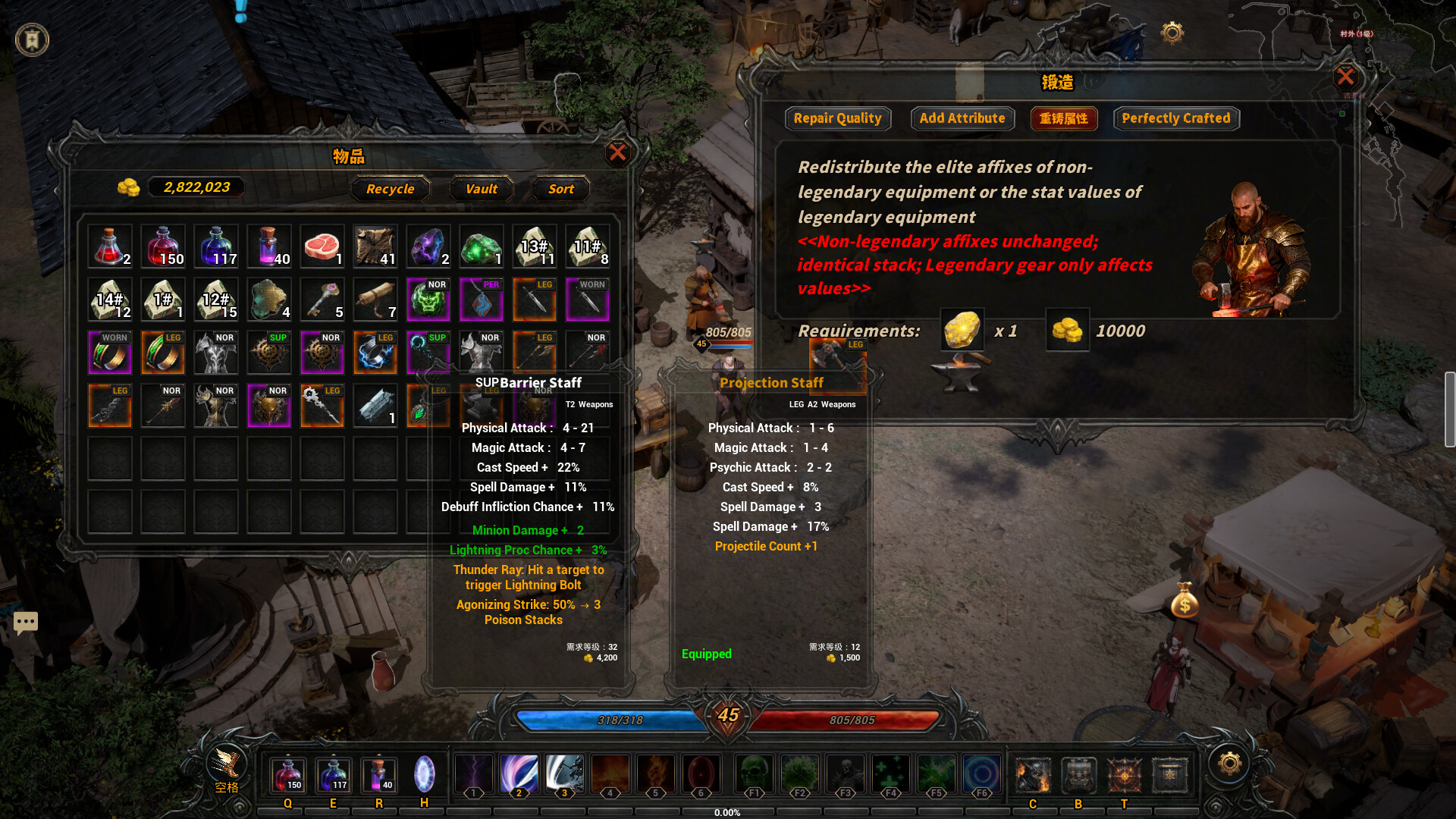
Ruins of DawnImage: Loot Enthusiast via Steam -
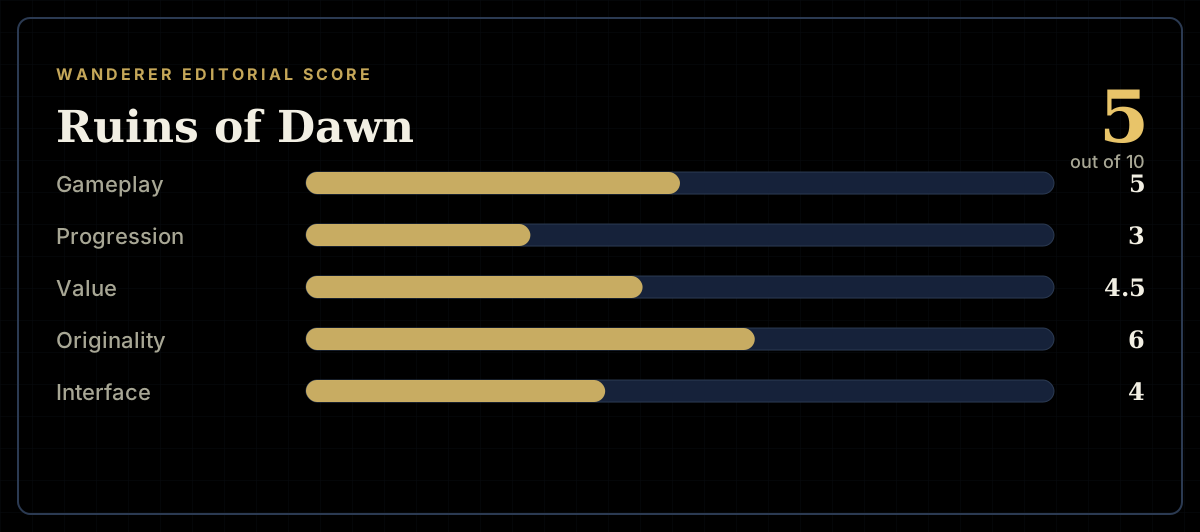
How the review scores each part of the gameWanderer Editorial -
The essentials at a glanceWanderer Editorial -
The short versionWanderer Editorial