Game review
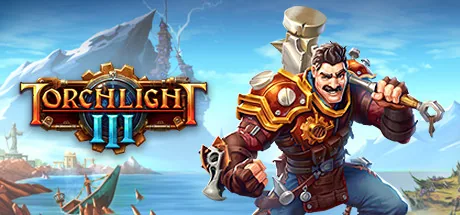
Torchlight III
5.5 / 10
- Developer
- Echtra Games (Echtra Inc.)
- Publisher
- Perfect World Entertainment at launch; Steam's current publisher of record is XD, which also publishes the mobile spin-off Torchlight: Infinite
- Released
- 13 October 2020
- Platforms
- Windows, PlayStation 4, Xbox One, Nintendo Switch
- Genre
- Action RPG
- Monetisation
- One-time purchase only. No DLC has ever shipped and there is no in-game store, despite the game's origins as a free-to-play project with a lifebound-item mechanic many players read as a leftover microtransaction hook
- Players
- Online co-op for up to 4 players, invite-only via Steam friends rather than public matchmaking. It runs peer-to-peer with no dedicated servers to shut down, so it still works in 2026 exactly as it did at launch — you just need to bring your own group
The short version
Torchlight III is the third game in a beloved isometric loot series that spent two years being developed as something else entirely — a free-to-play, shared-world MMO called Torchlight Frontiers — before Echtra Games pivoted back to a traditional premium ARPG in January 2020, five months before launch. What shipped is recognisably Torchlight: the same painterly art style, the same loyal pet that fetches your loot, a new base-building Fort to decorate. What's thinner is everything under the hood — build variety, itemization depth and endgame structure all land well short of Torchlight II, a game from 2012 this one is constantly, unfavourably measured against.
Steam's aggregate has sat at Mixed since launch and, unusually, it still does: 51% of the last 100 English-language reviews are positive, statistically identical to the 51% lifetime figure across 5,342 reviews (checked 13 August 2026). Most games with a rocky launch either recover as patches land or fade from view; Torchlight III has done neither. It just continues to divide new players exactly the way it divided its first ones.
Biggest strengths
- The series' distinctive, colourful, painterly art style is intact and still looks good in 2026
- A genuinely one-time price — no DLC, no cosmetic shop, no live-service layer ever appeared, despite the game's free-to-play origins
- Co-op runs peer-to-peer with no dedicated servers, so nothing can be switched off; it plays identically today to how it did on release day
Biggest weaknesses
- Build and itemization variety are considerably thinner than Torchlight II's; four classes and five Relic subclasses sound generous but reviewers and players converge on the same complaint, that most builds end up playing similarly
- Global achievement data backs up the "runs out of steam" criticism directly: 88.7% of players reach Act 1's town hub, but only 34.2% finish Act 1 and just 16.1% ever finish Act 3
- Combat, skills and gear still carry visible scars of the abandoned MMO pivot — aggregate, stat-stick itemization designed for a shared loot economy that no longer exists
Who it's for: Torchlight and Diablo-style ARPG fans who want a short, cartoonish, couch-friendly loot grind with a friend or two and don't mind a shallower build system than the genre's best. A poor fit for anyone hoping for Torchlight II's depth, or for solo players chasing dozens of hours of build experimentation.
Our recommendation: Worth a look on a deep sale for a weekend of co-op loot-clicking with low stakes and no ongoing cost — there has never been a cash shop or DLC to budget for. Go in expecting a shorter, simpler game than the Torchlight name implies, and don't expect any further updates; meaningful development ended years ago.
5.5 / 10
From shared-world MMO to a game called Torchlight III
Torchlight III didn't start out as Torchlight III. Echtra Games — founded by Torchlight and Diablo veterans Max Schaefer, Erich Schaefer and Travis Baldree — announced the project in August 2018 as Torchlight Frontiers, a free-to-play, persistent shared-world spin on the formula, with gear-driven progression that leaned closer to an MMO than the single-player dungeon crawls the first two games were known for. It spent roughly a year and a half in that shape, including a public alpha, before Echtra reversed course. In January 2020, five months before launch, Frontiers was renamed Torchlight III and stripped of its MMO ambitions in favour of a traditional premium ARPG structured like its predecessors — solo or small-group co-op, no persistent shared world, no free-to-play economy.
That U-turn is the single most useful fact for understanding the finished game, because Torchlight III plays like a game built on the frame of something else. It has the visual identity and some of the systems of Torchlight Frontiers — most visibly the Fort, a small persistent base you decorate between runs, originally conceived as a social space in a shared world and repurposed here into a solo decorating minigame — bolted onto a loot loop hastily reassembled to resemble Torchlight II. It mostly works. It rarely feels intentional.
Lifebound items: a controversy Echtra actually fixed
The clearest fossil of the abandoned MMO design is Lifebound items — better gear flagged so that a character permanently loses it on death. Early in Early Access (June 2020), Lifebound items dropped constantly; player forums estimated over half of mid-tier drops carried the tag, and the reaction was immediate and hostile. For a game that had just pivoted away from free-to-play specifically to avoid feeling like a monetisation-driven live-service product, a forced lose-your-best-gear-on-death mechanic read as exactly that kind of design left over from the version that got cancelled.
To Echtra's credit, this is a rare case in this review series of a developer actually listening inside an Early Access window rather than after full release. A 30 June 2020 patch made Lifebound opt-in: normal drops stopped carrying the flag, and a new consumable, the Scroll of Lifebound, let players choose to bind a specific item themselves in exchange for a stat boost, appearing as a rare drop starting at level 7 (later made rarer again, dropping from roughly a 1-in-20 to a 1-in-40 chance, after players used it too liberally). It's a small story, but a genuinely well-handled one — a system the community hated on day one was gone in about two weeks, well ahead of the October 1.0 launch it might otherwise have soured.
What's actually here, and what it's missing
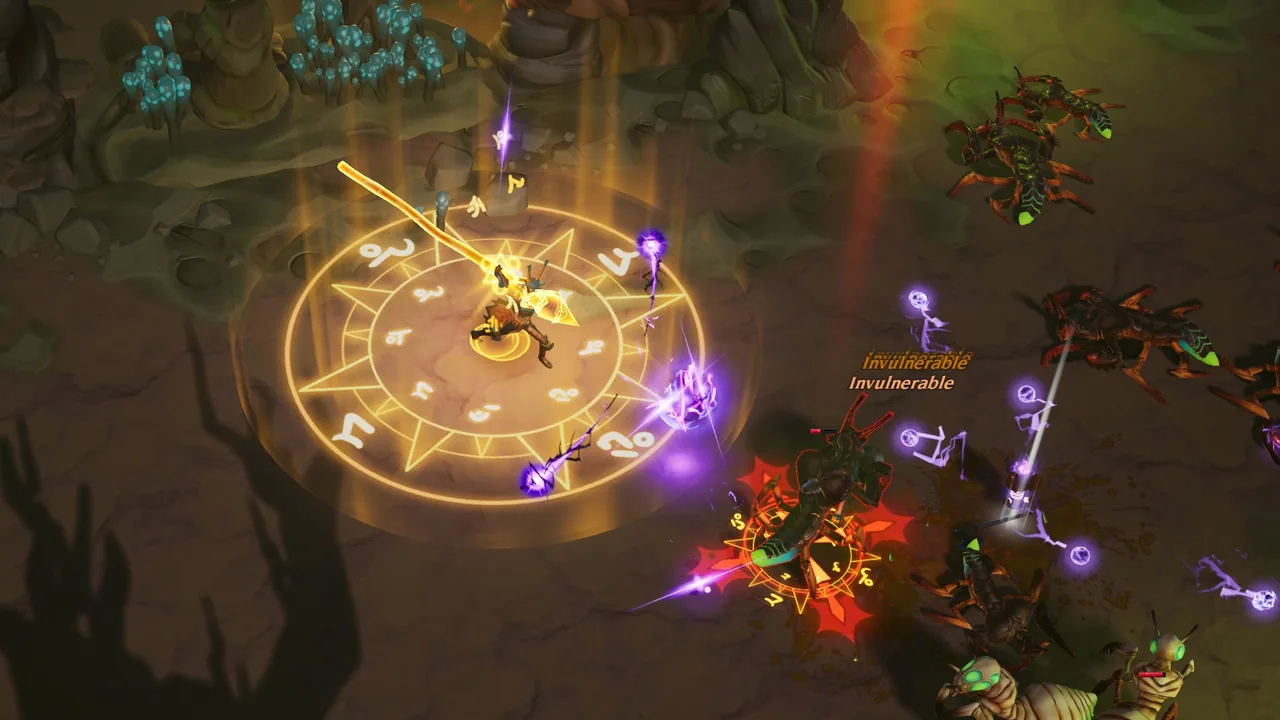
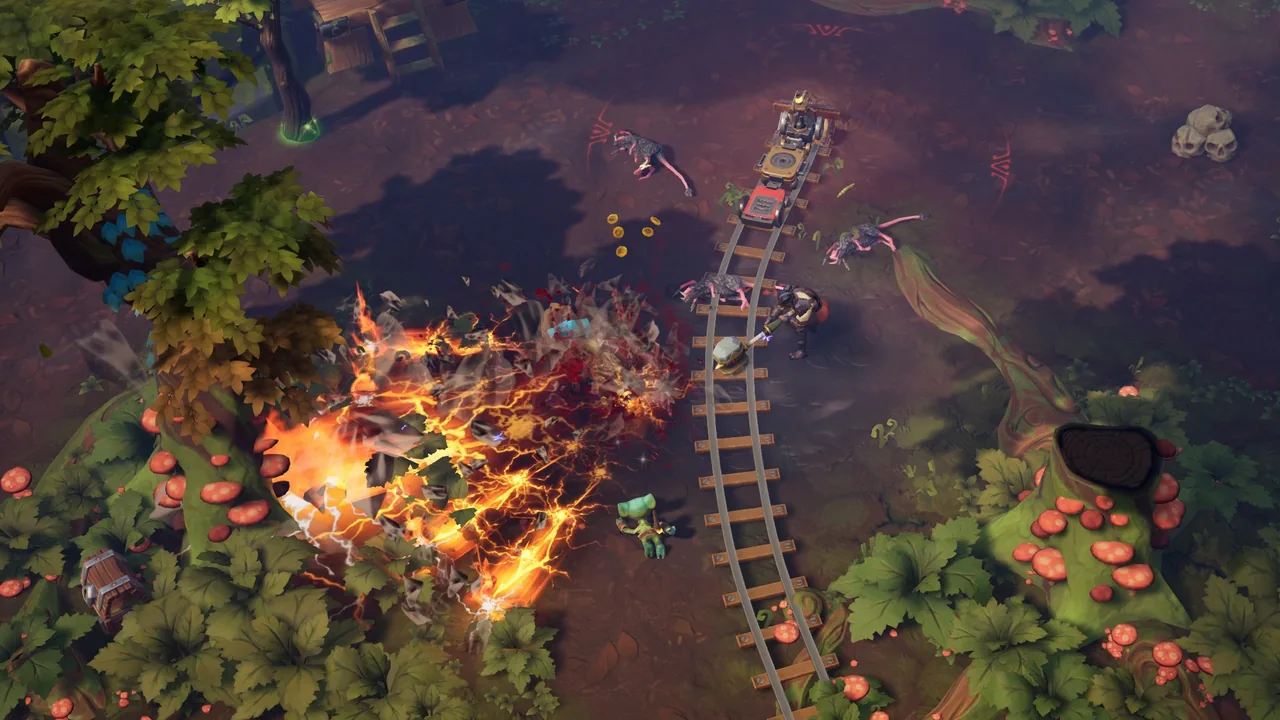
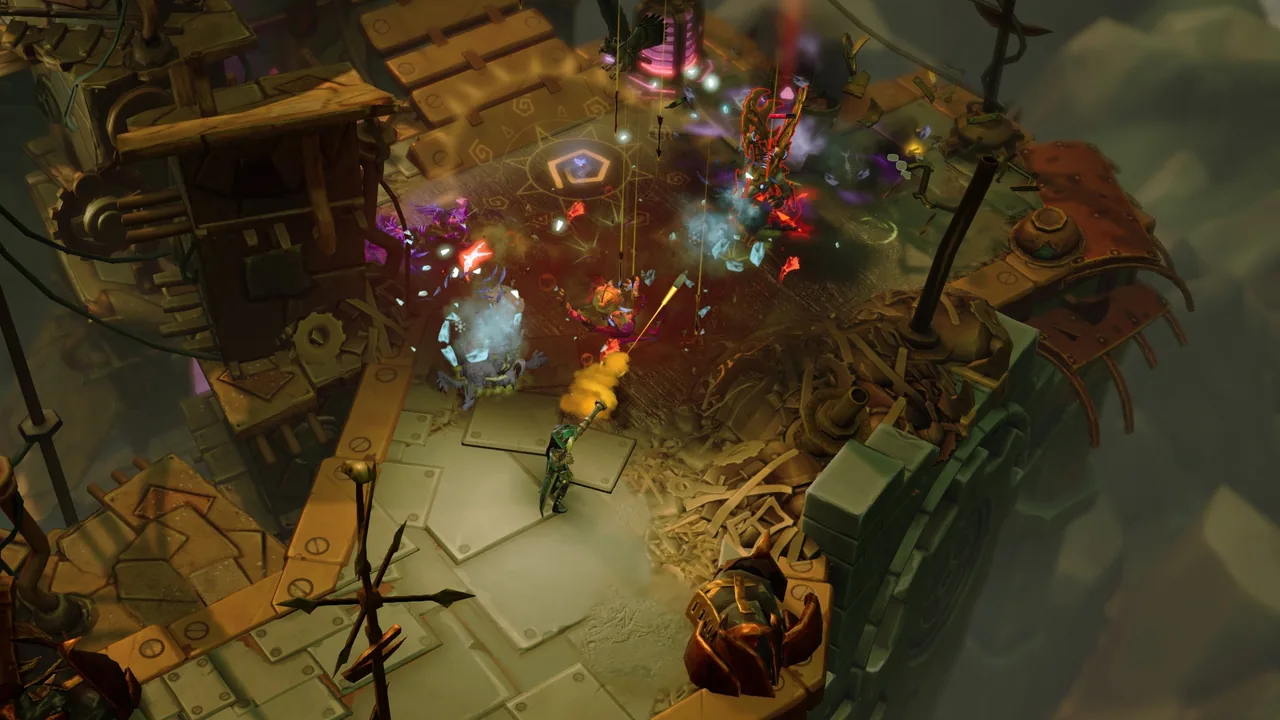
Once you're past that history, Torchlight III is: four classes (Dusk Mage, Forged, Railmaster, Sharpshooter) each with three skill trees, five optional Relic subclasses that layer in a fourth tree and a signature ability, a returning pet that fights alongside you and can be sent to town to sell your junk, and the Fort, which you renovate with crafting materials collected on runs. On paper that's a reasonable amount of build surface. In practice, the near-universal criticism from launch reviews — and one that Steam's ongoing user sentiment keeps echoing six years later — is that builds converge fast. Relics differentiate character identity more than they differentiate how combat actually plays, itemization leans on flat stat sticks rather than the build-defining uniques Torchlight II was known for, and skill trees offer fewer genuinely divergent paths than their four-class, five-relic headline suggests.
Metacritic settled at 65 on PC (62 PS4, 68 Xbox One, 63 Switch) and OpenCritic's aggregate landed at 64, rated "Weak" — solidly mixed critical consensus, not a disaster, but a clear step down from Torchlight II's 84. Reviewers at the time consistently framed the campaign as forgettable and the Netherim-invasion plot as thin scaffolding for loot runs, which is a fair description of most ARPG stories, but critics specifically called out that Torchlight III didn't clear even that low bar with much conviction.
Valve's global achievement data corroborates the "it doesn't hold your attention" read with harder numbers than review-aggregate scores usually offer. 88.7% of players who own an achievement have reached the Act 1 town — essentially everyone who installs the game gets that far. But completion falls off a cliff after that: only 34.2% finish Act 1 outright, 21.7% reach Act 2's completion mark, and just 16.1% ever finish Act 3, the game's final chapter. Only 6.7% complete the game on any single class, and achievements for finishing on multiple classes or fully building out a Relic set sit under 2%. For a genre whose whole appeal is usually "roll a new character and do it again," that's a steep, one-directional drop-off — most owners play through roughly one town's worth of content and stop.
How it's aged
This is where reviewing a 2020 release in 2026 earns its keep, because Torchlight III's story didn't end at launch — it just went quiet. Echtra shipped a final major update in May 2021, the same month its parent company Zynga completed acquiring the studio (announced March 2021). Publishing responsibilities shifted to Perfect World Entertainment, and meaningful new content for Torchlight III effectively stopped there; Steam's own listing now shows XD — the company behind the 2023 mobile/PC spin-off Torchlight: Infinite — as the publisher of record, a sign of how many hands the IP has passed through since. Then, in 2025, Zynga shut Echtra Games down entirely as part of a "strategic realignment," having never used the studio to make the jump into PC and console publishing it was reportedly acquired for. The team that made Torchlight III no longer exists.
The good news buried in that history: because Torchlight III's co-op was always peer-to-peer rather than server-hosted — a design holdover from its abandoned MMO plans, ironically — there was never a persistent-server switch-off to fear the way there was for, say, Wolcen: Lords of Mayhem, whose multiplayer was permanently shut down in September 2024. Torchlight III in 2026 runs exactly as it did in 2020: same solo campaign, same friend-invite co-op, same price, same absence of any storefront to spend more money in. That last part deserves real credit. A game that started life as a free-to-play MMO shipped, and has stayed, entirely free of microtransactions — no cosmetic shop, no battle pass, no paid DLC ever released. In a genre where loot-driven live-service creep is close to the default, six years of restraint is unusual, even if it's restraint born partly of the game having no active team left to build a store for.
What hasn't changed is player sentiment. The most-recent 100 English-language Steam reviews split 51% positive — statistically indistinguishable from the 51% lifetime figure across 5,342 total reviews. Reading the negative sample by year shows the bulk of the volume was always at launch (53 of the top 100 most-helpful negative reviews date to 2020 alone), but the game is still drawing fresh one- and two-star write-ups in 2026, several explicitly framing it as the more tolerable of the two current Torchlight options next to the mobile-first Torchlight: Infinite. That's a strange kind of legacy — not redeemed, not further tarnished, just permanently, quietly Mixed.
Verdict
Torchlight III is a competent, occasionally charming, ultimately compromised action RPG — a premium single-player game wearing the visible scar tissue of the free-to-play MMO it was supposed to be. The art holds up, the pet and Fort systems add pleasant texture, and its total absence of monetisation past the sticker price is genuinely rare for the genre. But the build depth and itemization that make an ARPG worth replaying were the casualties of the January 2020 pivot, and neither Echtra's five remaining months of development nor Zynga's ownership afterward ever fixed that. With the studio gone as of 2025, this is the final form the game will take: a short, good-looking, structurally thin loot game that Steam's own numbers say most people play for one town and then set down.
Wanderer's own approach to gear leans the other way — progression that keeps paying off whether you're actively grinding a dungeon or letting your character work through a stack of resources offline — precisely because a shallow itemization curve is the fastest way to make a loot game feel finished before it's actually over. Torchlight III's achievement data is a clean illustration of what that failure mode looks like in practice.
Pros and cons
Pros
- The series' distinctive, colourful, painterly art style is intact and still looks good in 2026
- A genuinely one-time price — no DLC, no cosmetic shop, no live-service layer ever appeared, despite the game's free-to-play origins
- Co-op runs peer-to-peer with no dedicated servers, so nothing can be switched off; it plays identically today to how it did on release day
- The Early Access team visibly responded to the loudest launch complaint — see Lifebound Items below — and fixed it before 1.0, which is more than many Early Access projects manage
- The Fort base and returning pet companion add a light layer of personalisation between runs
Cons
- Build and itemization variety are considerably thinner than Torchlight II's; four classes and five Relic subclasses sound generous but reviewers and players converge on the same complaint, that most builds end up playing similarly
- Global achievement data backs up the "runs out of steam" criticism directly: 88.7% of players reach Act 1's town hub, but only 34.2% finish Act 1 and just 16.1% ever finish Act 3
- Combat, skills and gear still carry visible scars of the abandoned MMO pivot — aggregate, stat-stick itemization designed for a shared loot economy that no longer exists
- Development effectively stopped after a final patch in May 2021, when parent studio Zynga acquired Echtra Games; Zynga shut Echtra down entirely in 2025 without it ever delivering the PC/console push it was bought for
- Sentiment has not improved with age — the most-recent 100 English reviews split exactly as positively as the lifetime total, which is a flat line, not a redemption arc
Screenshots
-
Torchlight IIIImage: XD via Steam -
Torchlight IIIImage: XD via Steam -
Torchlight IIIImage: XD via Steam -
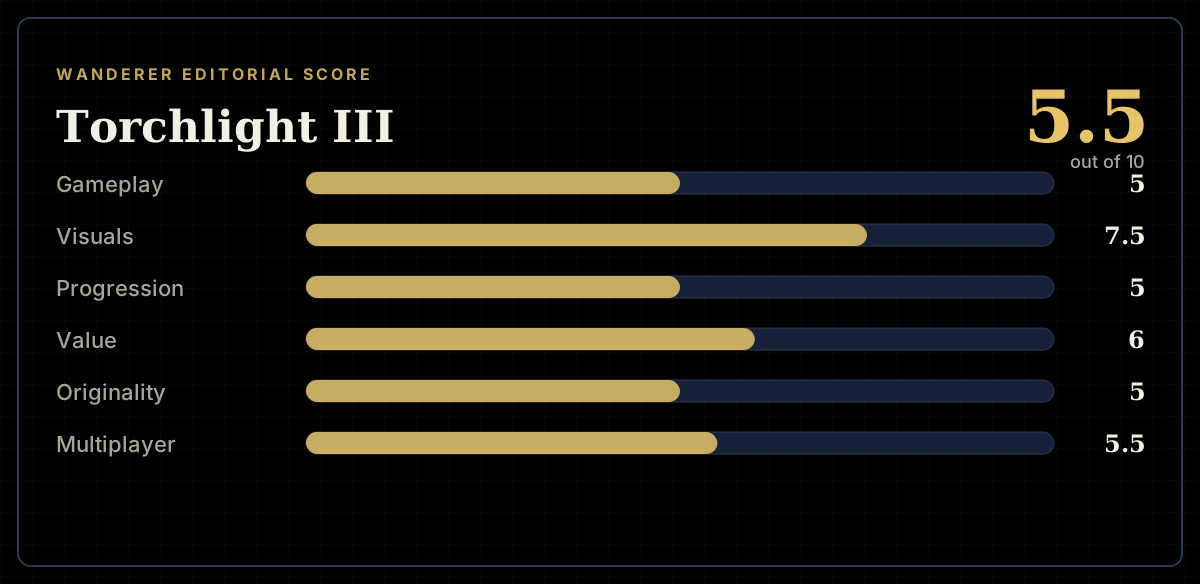
How the review scores each part of the gameWanderer Editorial -
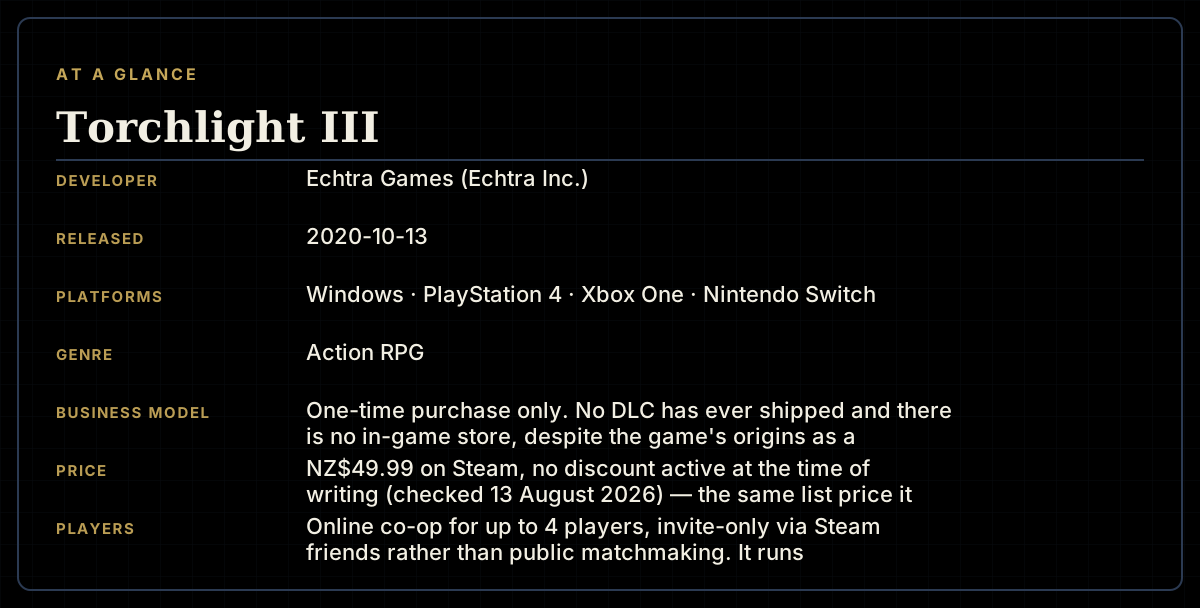
The essentials at a glanceWanderer Editorial -
The short versionWanderer Editorial