Game review
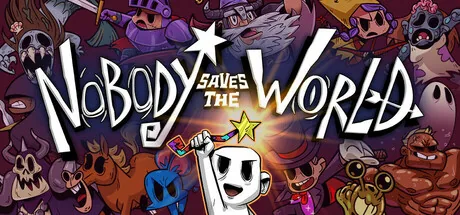
Nobody Saves the World
7 / 10
- Developer
- DrinkBox Studios
- Publisher
- DrinkBox Studios
- Released
- 18 January 2022
- Platforms
- Windows
- Genre
- Action RPG, Dungeon Crawler
- Monetisation
- One-time purchase, plus one paid content expansion and a soundtrack; no in-app purchases
- Players
- Local and online co-op for two players
The short version
Nobody Saves the World casts a featureless "nobody" as the bearer of a magic wand capable of transforming into nineteen distinct forms — rat, dragon, ghost, bodybuilder and more — each with its own attacks, passives and playstyle, unlocked permanently through quests and freely switchable once earned. Developed and self-published by DrinkBox Studios, the team behind Guacamelee, it released 18 January 2022 and sits at Very Positive, 91.1% across 2,826 English-language reviews. The build variety and transformation concept draw consistently specific praise, but the game carries the marks of a design built around a gamepad first: reviewers report a genuinely broken or severely limited keyboard-and-mouse experience from launch week through to a review posted in April 2026, over four years later, and describe the two-player co-op mode as an afterthought that shares resources and screen space in ways that undercut the feature it's supposed to be.
Biggest strengths
- Nineteen playable forms each offer a genuinely distinct playstyle, and unlocking them permanently rather than restarting a run lets players build a meaningful roster over a single playthrough rather than losing progress between attempts
- Reviewers repeatedly describe the game as unexpectedly addictive, with several recounting losing an entire evening or weekend to "just one more form"
- A distinctive, funny art style and world that draws favourable comparisons to Secret of Mana and DrinkBox's own earlier work, with dense reference humour throughout
Biggest weaknesses
- Keyboard-and-mouse support is a severe, specific and unusually long-running complaint — reviewers report being unable to bind basic actions to the mouse at launch, and a 2026 review still describes broken keybinding behaviour more than four years later
- Co-op is widely criticised as underbuilt: two players share gold, resources and upgrade paths, and one player can be forced to sit through the other's menu navigation, which multiple reviewers say undercuts the point of playing together
- The form-switching interface itself draws repeated quality-of-life complaints — the quick-swap menu shows only the eight most recently used forms rather than favourites, forcing constant menu-diving for anyone using more of the roster
Who it's for: Action RPG fans who want genuine build variety without restarting a run for each build, and who own or don't mind buying a gamepad; a poor fit for keyboard-and-mouse purists or anyone expecting a well-integrated co-op mode.
Our recommendation: A genuinely inventive shapeshifting RPG with real build diversity, best enjoyed on a controller and mostly solo — go in aware of the interface and co-op limitations rather than discovering them after buying.
7 / 10
Introduction
Nobody Saves the World hands the player a magic wand and a blank, featureless protagonist, then spends the rest of the game turning that blankness into an asset: transform into a rat to squeeze through gaps, a bodybuilder to punch through walls, a ghost to phase past obstacles, or one of sixteen other forms, each unlocked permanently through quests and freely swappable once earned. Developed and self-published by DrinkBox Studios — the team behind Guacamelee — it released 18 January 2022 and sits at Very Positive, 91.1% across the 2,826 English-language reviews sampled for this review. The concept earns real, specific praise across that sample. What also runs through it, consistently and for years, is a set of interface and multiplayer complaints serious enough that this review treats them as central to any honest recommendation rather than a footnote.
Nineteen forms, one genuinely good idea
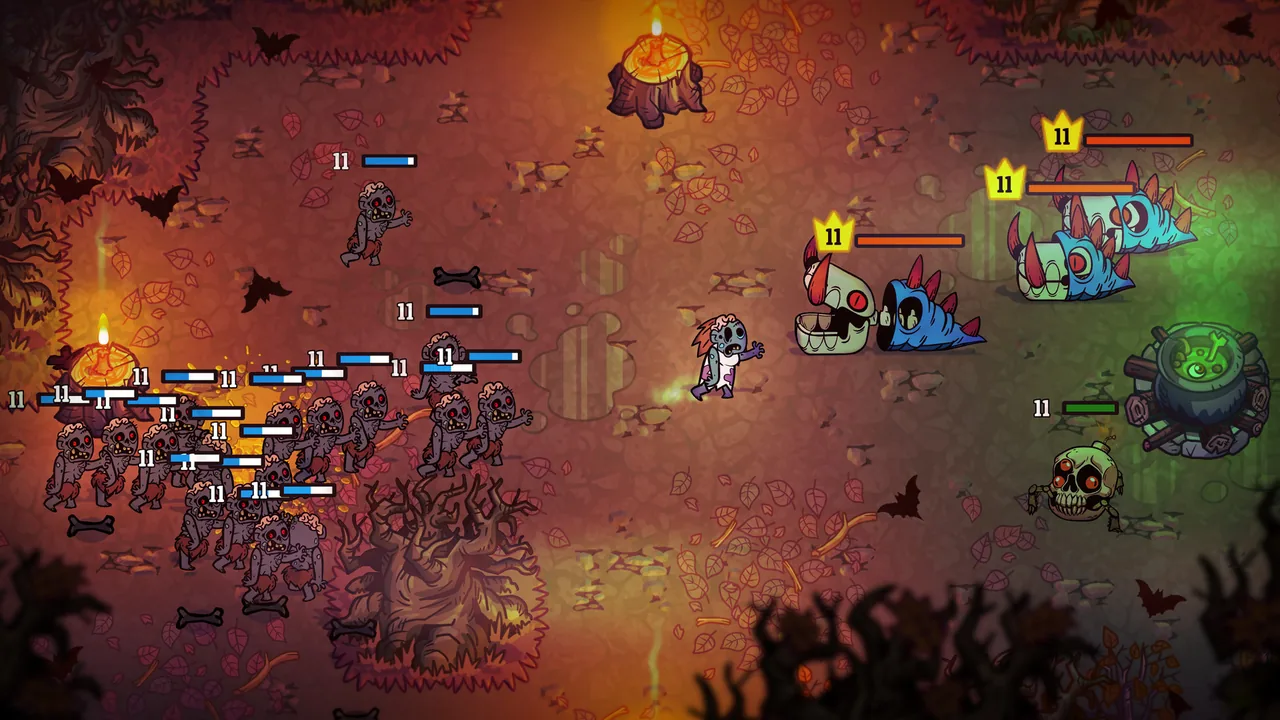
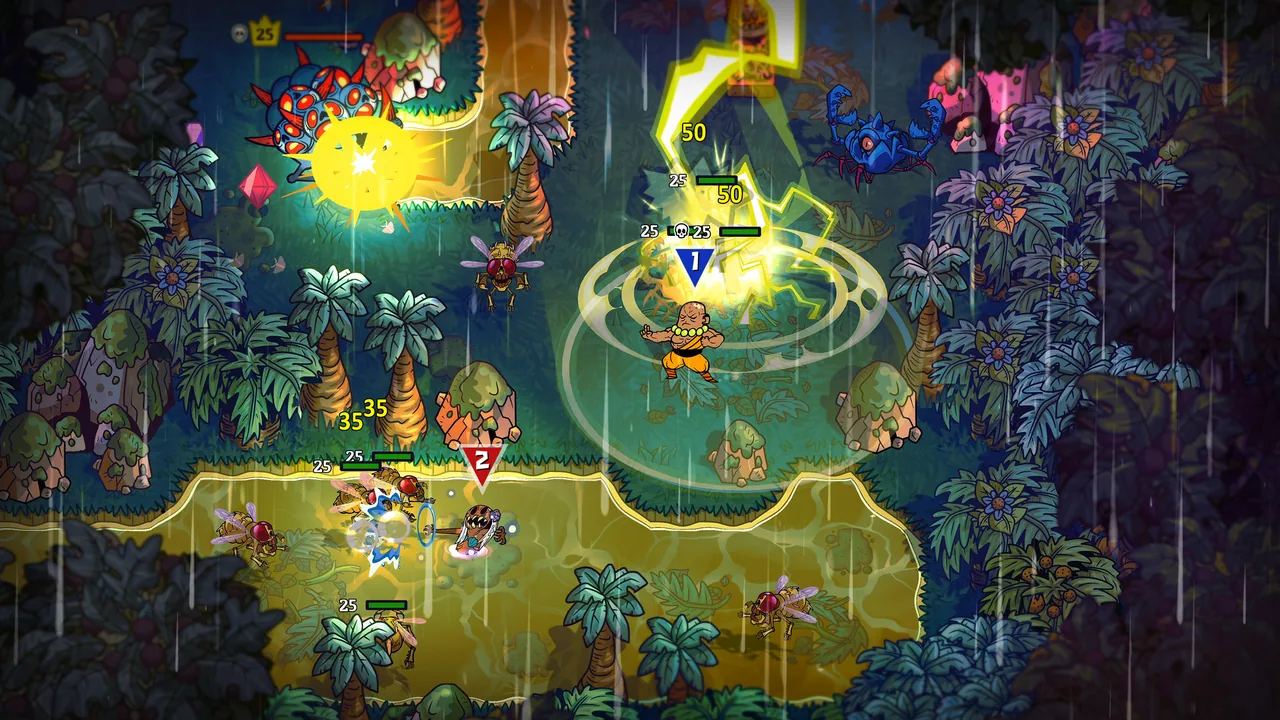
The transformation system is the reason this game works, and reviewers are unusually precise about why. Unlike most RPGs that force a fresh run to try a different build, Nobody Saves the World lets a single playthrough accumulate an entire roster: one detailed review described it as "an RPG with 15 different characters, each with a unique play style," except "instead of having to start a new run with each character, you unlock other characters by doing quests and leveling up," then switch freely at any moment depending on the situation. That structural choice is what separates this from a simpler transformation gimmick — it rewards experimentation without punishing it, and multiple reviewers describe losing far more time than intended as a direct result: "don't buy this game if you have plans for the night," as one 42-vote review put it, three hours into what was meant to be a 20-minute trial. The presentation earns its own praise, with reviewers drawing comparisons to Secret of Mana's overhead combat and crediting DrinkBox's dense, funny reference humour with giving the world real personality beyond the mechanics.
A keyboard-and-mouse problem that never fully went away
Here's the complaint this review has to lead with, because of how long it persists. At launch, a 134-vote review reported the game was "basically unplayable without gamepad" — no ability to bind actions to mouse clicks, no way to bind the map to a dedicated key, forced to use arrow keys for dialogue choices even with movement remapped to WASD. That's not a minor inconvenience; it's a core-input failure for anyone who plays action RPGs with a keyboard and mouse, the way the genre is most commonly played on PC. What makes this worth dwelling on specifically is the dating: a review posted in April 2026, more than four years after launch, describes the same fundamental issue still present — remapped movement keys not fully overriding the game's directional-input assumptions, to the point the reviewer called the absence of proper mouse-and-keyboard support "a federal crime." DrinkBox's own store listing tags the game "Gamepad Recommended" rather than simply supported, which is an honest label but doesn't retroactively fix years of player frustration for anyone who bought expecting standard PC controls to work.
Co-op that feels bolted on
The second recurring, specific complaint concerns the two-player co-op mode. Multiple reviewers describe a shared-resource structure that undercuts the point of playing together rather than enabling it: players share gold and upgrade paths rather than progressing independently, the camera can lock a joining player to whatever the host is doing, and one review described being forced to "sit through looking at the other player's menu while they mess around" rather than having independent control during downtime. A separate 175-vote review flagged a specific, practical concern about whether a joining player's own progression persists correctly between sessions, expressing uncertainty even after playing because the systems around it aren't clearly communicated. None of this reads as a co-op mode built from the ground up alongside the single-player game; it reads, as several reviewers put it directly, like a feature added on top of a design that wasn't built to share.
The grind underneath the good idea
A third, more moderate complaint concerns pacing. Several detailed reviewers describe late-game quests as repetitive busywork required to fully develop each form, with one calling the structure a "chores simulator" — you're pushed to play a form in a way that doesn't showcase what makes it fun, specifically so you can eventually unlock the version of it that does. A 419-vote review, the single most-upvoted negative in this sample, summarised the tension precisely: "grindy game that gets in the way of its own cool systems with quests that force a playstyle," describing what should be creative freedom collapsing into "an illusion of choice." This is a real design tension worth weighing against the genuine praise for build variety above — the system that makes the game distinctive is, per a meaningful share of its own players, also the thing the grind gets in the way of enjoying.
A studio that kept working on it
To DrinkBox's credit, none of this reads as a game that was abandoned after launch. The Frozen Hearth paid expansion arrived in September 2022, a free Impossible Dungeon update followed in January 2023, and the studio kept the game visible for years afterward with physical editions, merchandise, a plushie and a fourth-anniversary sale as recently as January 2026 — all while DrinkBox moved on to developing a new game, Blighted, announced in mid-2025. That's a healthy studio lifecycle rather than a quick cash-in, even though it didn't fully resolve the specific control and co-op complaints raised at launch. Steam's achievement data backs up a genuinely broad early engagement curve, too: the top achievement sits at 84.6%, tapering gradually down through a real midgame before the hardest completionist unlocks drop to around 2%.
Final Verdict
Nobody Saves the World gets its central idea unmistakably right: nineteen genuinely distinct forms, unlocked permanently and freely swappable, that reward experimentation in a way few action RPGs manage. What keeps it from a stronger score is that the systems around that good idea — its keyboard-and-mouse support, its co-op implementation, and the grind gating full access to its own best feature — drew specific, detailed, and in the case of PC controls, remarkably long-running criticism from its own player base. Play this on a controller, mostly solo, and there's a genuinely inventive, funny action RPG here. Go in expecting standard keyboard-and-mouse controls or a well-integrated co-op mode, and you'll likely end up writing the same review dozens of others already have.
Pros and cons
Pros
- Nineteen playable forms each offer a genuinely distinct playstyle, and unlocking them permanently rather than restarting a run lets players build a meaningful roster over a single playthrough rather than losing progress between attempts
- Reviewers repeatedly describe the game as unexpectedly addictive, with several recounting losing an entire evening or weekend to "just one more form"
- A distinctive, funny art style and world that draws favourable comparisons to Secret of Mana and DrinkBox's own earlier work, with dense reference humour throughout
- DrinkBox supported the game for years after launch, including a paid Frozen Hearth expansion, a free Impossible Dungeon update, physical editions and merchandise, without abandoning it once the initial wave of attention passed
Cons
- Keyboard-and-mouse support is a severe, specific and unusually long-running complaint — reviewers report being unable to bind basic actions to the mouse at launch, and a 2026 review still describes broken keybinding behaviour more than four years later
- Co-op is widely criticised as underbuilt: two players share gold, resources and upgrade paths, and one player can be forced to sit through the other's menu navigation, which multiple reviewers say undercuts the point of playing together
- The form-switching interface itself draws repeated quality-of-life complaints — the quick-swap menu shows only the eight most recently used forms rather than favourites, forcing constant menu-diving for anyone using more of the roster
- A large share of the negative sample describes late-game quests as repetitive and grindy, with several specifically objecting to being forced into an unwanted playstyle to progress a form rather than choosing how to engage with it
Screenshots
-
Nobody Saves the WorldImage: Drinkbox Studios via Steam -
Nobody Saves the WorldImage: Drinkbox Studios via Steam -
Nobody Saves the WorldImage: Drinkbox Studios via Steam -
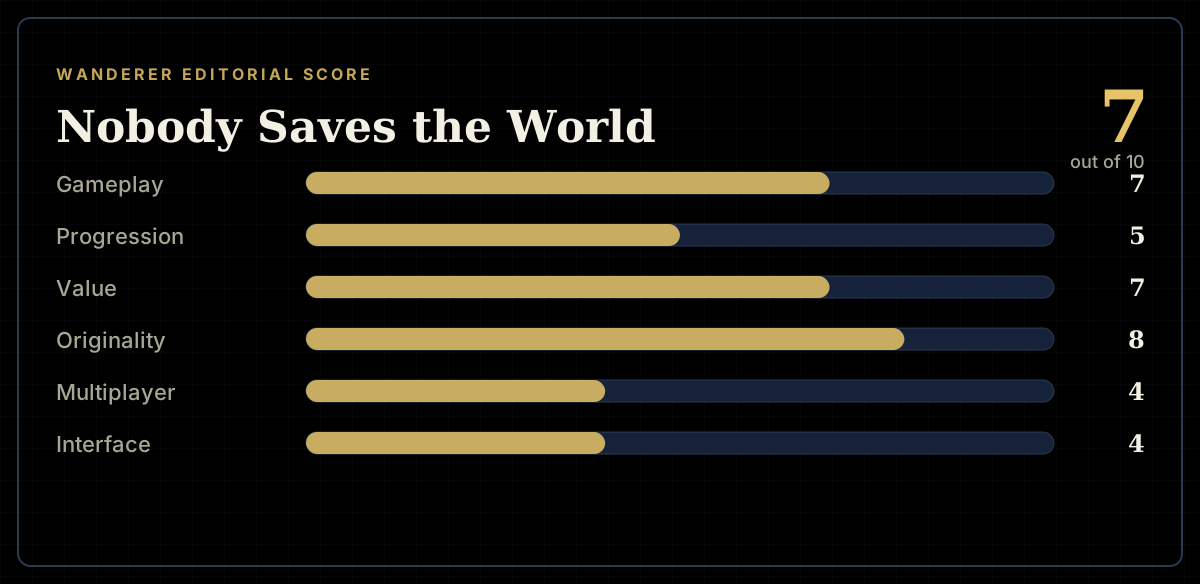
How the review scores each part of the gameWanderer Editorial -
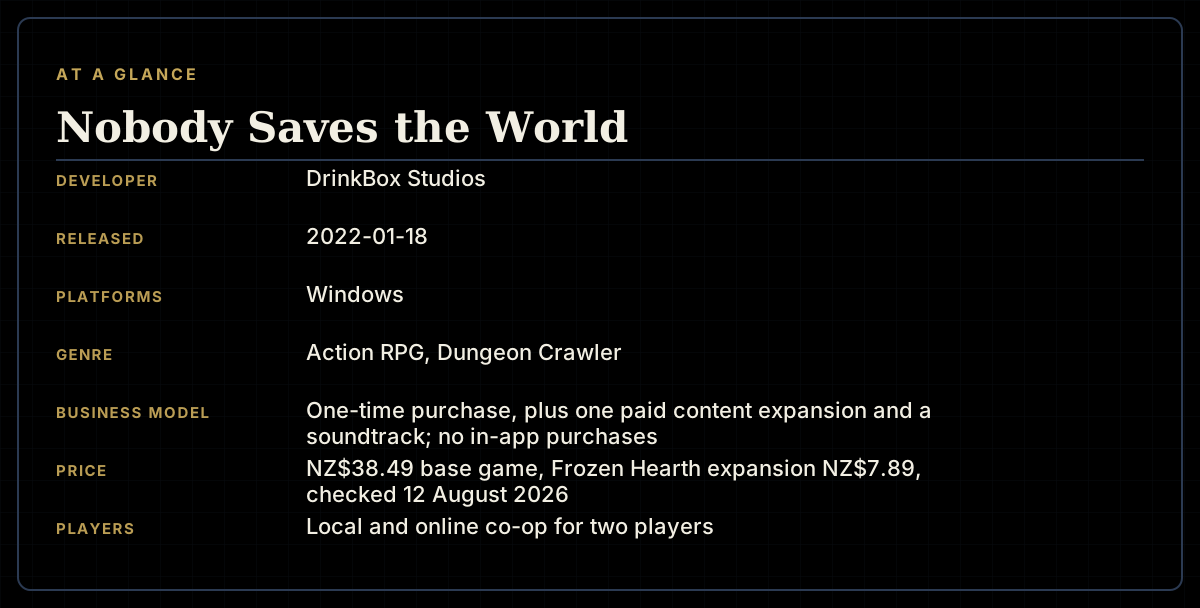
The essentials at a glanceWanderer Editorial -
The short versionWanderer Editorial