Game review
hackmud
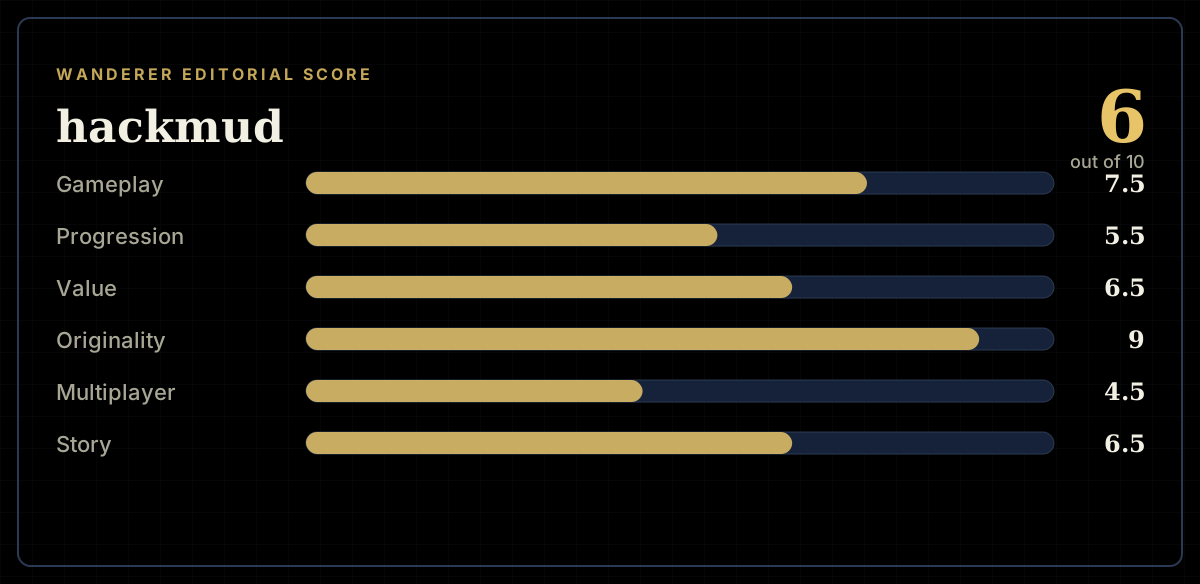
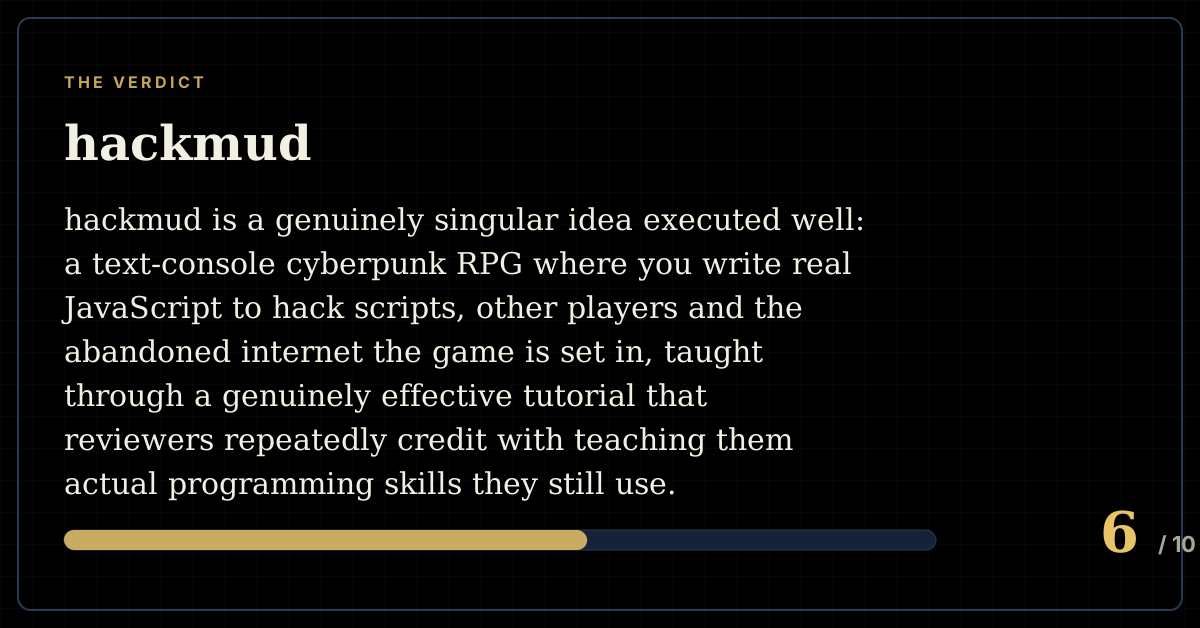
6 / 10
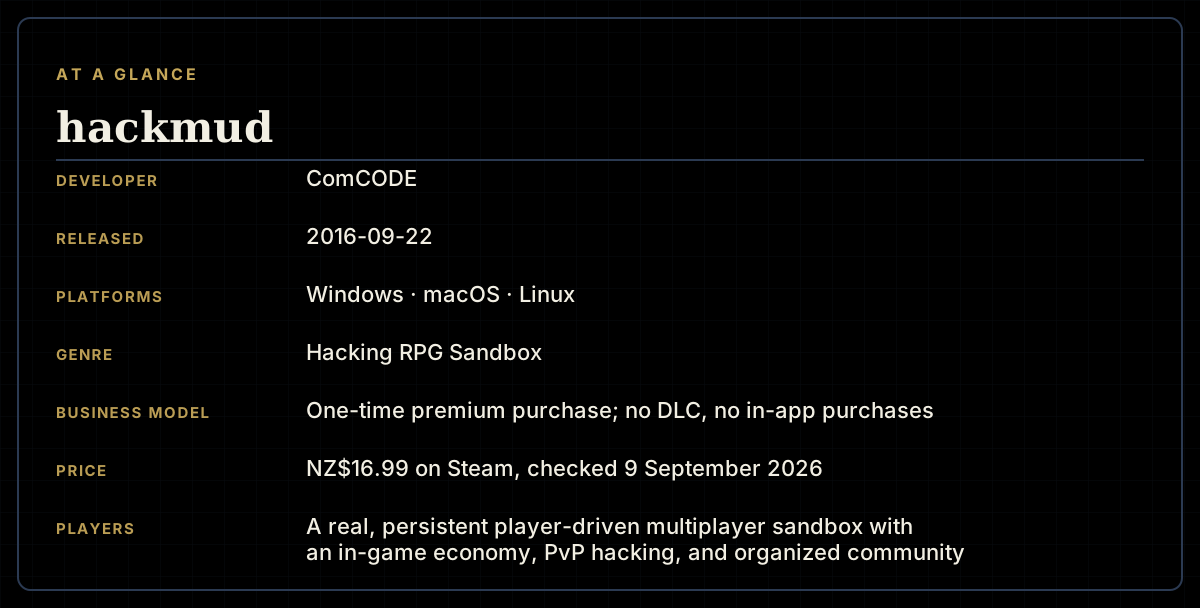
- Developer
- ComCODE
- Publisher
- ComCODE
- Released
- 22 September 2016
- Platforms
- Windows, macOS, Linux
- Genre
- Hacking RPG Sandbox
- Monetisation
- One-time premium purchase; no DLC, no in-app purchases
- Players
- A real, persistent player-driven multiplayer sandbox with an in-game economy, PvP hacking, and organized community events, alongside a single-player tutorial campaign
The short version
hackmud is a genuinely singular idea executed well: a text-console cyberpunk RPG where you write real JavaScript to hack scripts, other players and the abandoned internet the game is set in, taught through a genuinely effective tutorial that reviewers repeatedly credit with teaching them actual programming skills they still use. The multiplayer sandbox underneath is deep and emergent — casinos, bounty hunters, factional wars, and community-run events all happen because players make them happen, not because the game scripts them.
Two specific, detailed reviewer accounts describe developer moderation cutting directly against that same sandbox premise: one reviewer's progress was wiped for inactivity with what they describe as insufficient warning, and another describes being permanently banned for orchestrating a creative, well-received, weeks-long community event specifically because it was clever enough to require the developer to patch around it. Both are reported as attributed reviewer accounts this review couldn't independently verify against the developer's own moderation logs, but both are specific and detailed enough to weigh seriously against an otherwise distinctive, well-loved game.
Biggest strengths
- A genuinely unique premise executed well: real JavaScript scripting used to solve actual puzzles and hack other players, with multiple reviewers specifically crediting the game with teaching them programming skills (JavaScript, MongoDB, npm) they still use
- A well-regarded, effective single-player tutorial that reviewers consistently praise for making a genuinely complex system approachable without over-simplifying it
- A deep, emergent multiplayer sandbox with a real player-driven economy, factional conflict, and community-organized events — casinos, bounty hunters, and orchestrated in-game "world events" all arise from player creativity rather than scripted content
Biggest weaknesses
- One detailed reviewer reports having their entire account wiped for inactivity, describing the change as arriving with insufficient notice given how much time and effort had gone into it
- A separate, highly detailed account describes being permanently banned, without warning, for organizing a creative, well-received, multi-week community event that boosted concurrent player activity — the stated reason was that it created extra work for the developer to patch around, which the reviewer argues directly contradicts what a "hacking sandbox" is supposed to reward
- Both moderation accounts describe developer responses that reviewers characterize as punishing exactly the kind of creative, emergent play the game's premise otherwise celebrates, a tension this review can't resolve but reports plainly
Who it's for: Players genuinely interested in learning real scripting through play, and fans of emergent, player-driven multiplayer sandboxes who don't mind real stakes and real rule enforcement they can't always predict. Less suited to players who want guaranteed persistence of their progress or predictable, transparent moderation.
Our recommendation: A genuinely worthwhile, distinctive purchase for players curious about learning to code through play or wanting a truly emergent multiplayer sandbox — just go in aware that progress isn't guaranteed to be safe from inactivity wipes, and that creative play has, per at least one detailed account, been met with a ban rather than celebration.
6 / 10
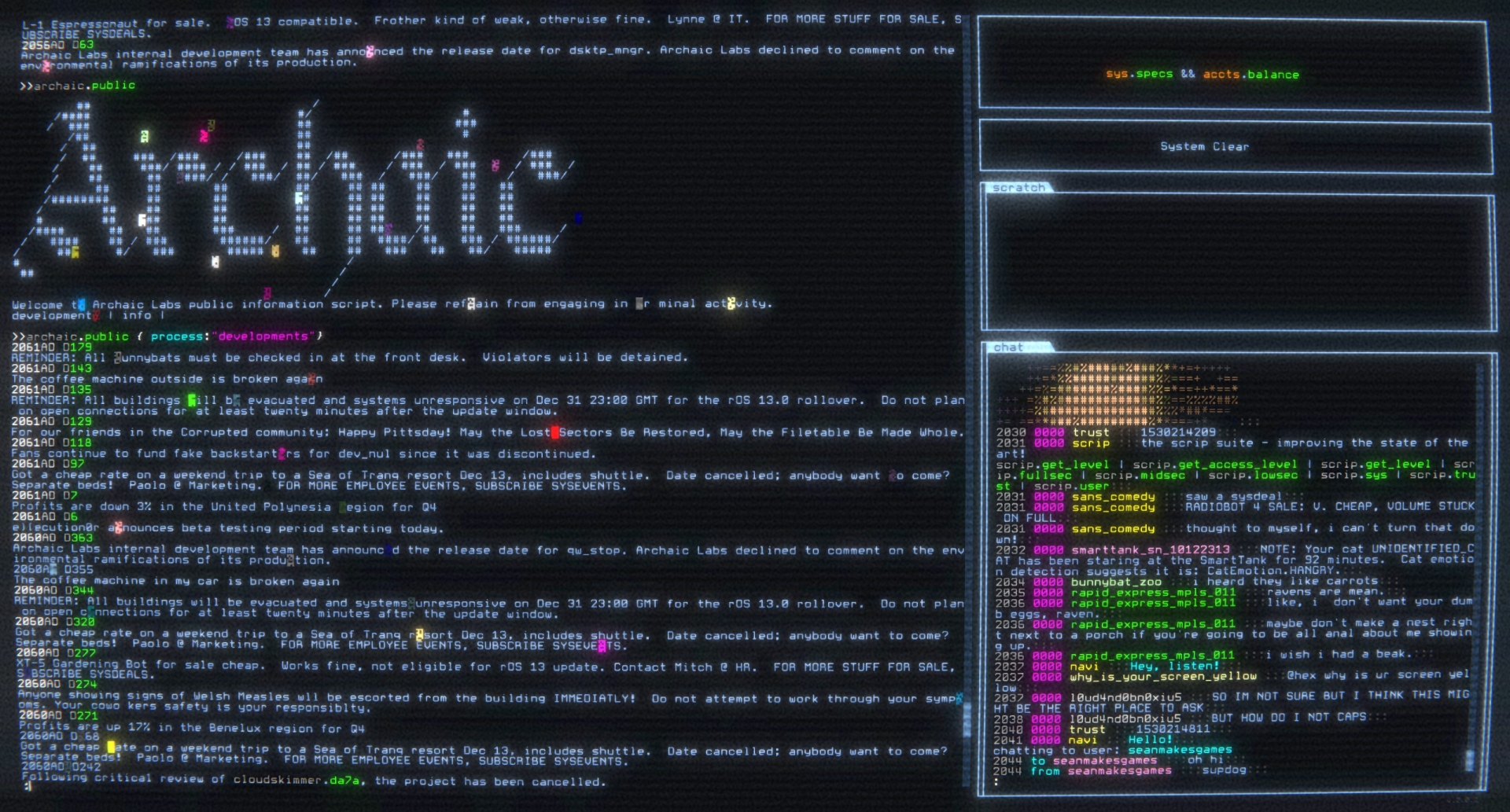
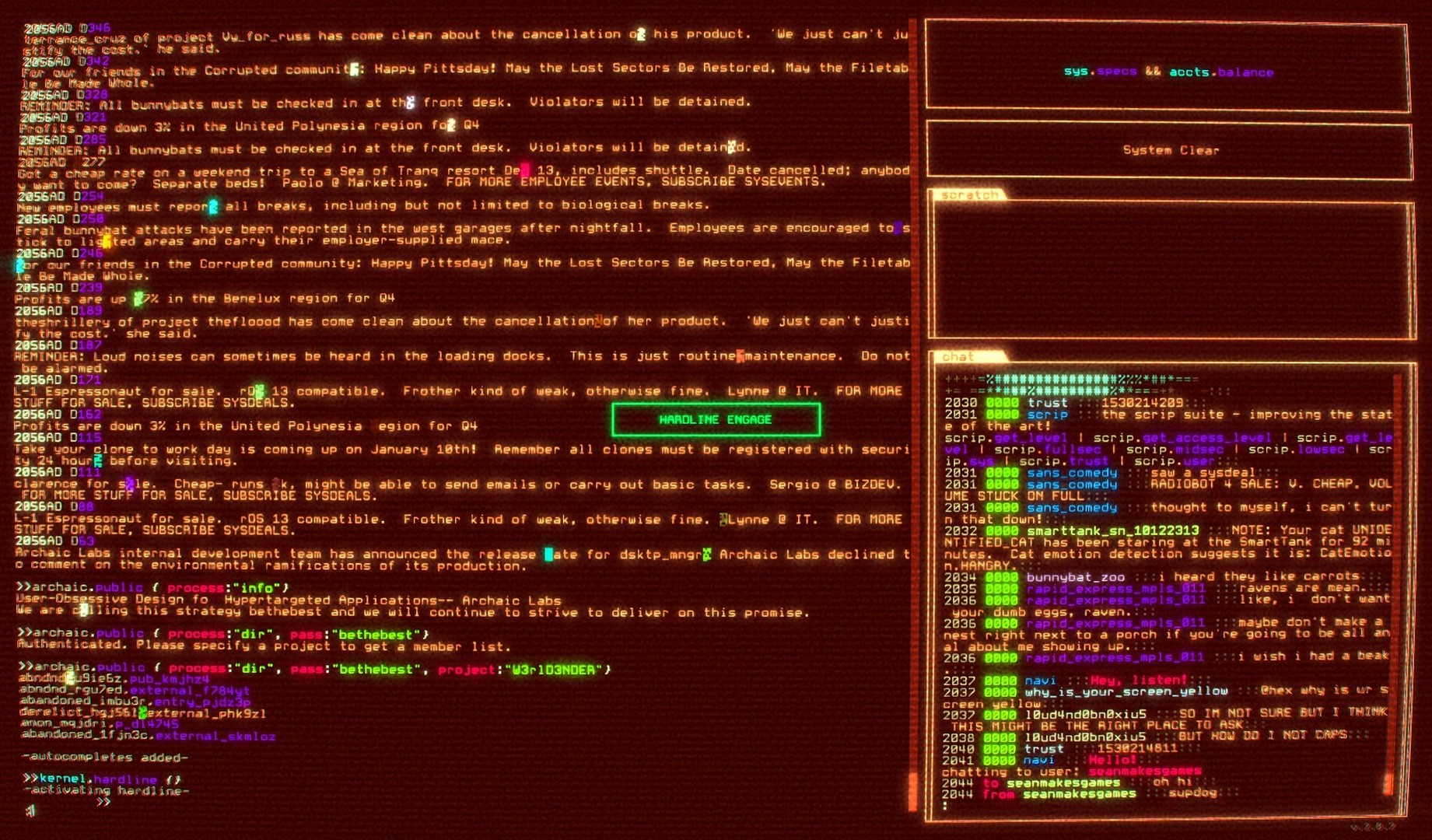
hackmud drops players into a text console version of an abandoned, chaotic internet, where the only tool available is real JavaScript — write scripts, chain function calls, exploit other players' code, and build a reputation in a persistent world that runs almost entirely on what players choose to do with it. It's a genuinely rare premise for a commercial game, and reviewers consistently confirm it isn't just a gimmick: multiple people specifically credit the game with teaching them programming skills — JavaScript, MongoDB, npm — that they carried with them well beyond the game itself. "858.7 hours ++ i learned Javascript, MongoDB, npm by playing this game," one review states, in exactly that spirit.
A rare hook that genuinely delivers
What makes hackmud stand out isn't just the scripting concept but how well it's taught. Reviewers repeatedly single out the three-to-four-hour single-player tutorial as "really well done," teaching real programming logic through in-fiction puzzles before releasing players into the wider multiplayer world. That world, once entered, is described as a genuinely emergent social sandbox rather than a themed skin over conventional RPG mechanics — casinos, a player-run news network, bounty hunters, and factional wars all exist because players built them, not because the developer scripted them in. One reviewer, describing the multiplayer world's texture, half-jokingly compares it to a MUD full of "social engineers and spies," and the comparison lands: this is a game whose best moments come from what its community does with the tools it's given.
Two specific, serious moderation complaints
Set against that praise are two detailed, specific reviewer accounts describing the developer's own conduct working against the sandbox's core premise. One reviewer reports their account being wiped for inactivity, framing the notice given beforehand as insufficient given how much invested time was lost. A second, far more detailed account describes something more serious: after organizing a genuinely creative, weeks-long community event — complete with a build-up narrative, a puzzle, and a live "attack" that visibly boosted concurrent player activity to over 50 people online at once — the organizing player was permanently banned, without warning, specifically because the technique used was clever enough that the developer had to patch around it afterward. The reviewer's own framing is pointed: "dev will ban you for cleverness" in a game explicitly marketed as a hacking sandbox. This review reports both accounts as exactly what they are — detailed, specific reviewer claims about developer moderation decisions this review could not independently verify against the developer's own logs or stated policies — but their level of detail, and the direct tension they describe between the game's premise and its enforcement, make them worth taking seriously rather than treating as ordinary moderation grumbling.
A small, entrenched community that can be hostile to newcomers
A third, differently framed critical account raises a structural concern distinct from the moderation complaints above. One detailed reviewer, describing themselves as genuinely wanting to like the game, argues its small, long-established playerbase creates real barriers for new players: existing social cliques have largely moved their coordination to channels outside the game itself, in-game "empires" of influence are already built and leave little room for newcomers, and a badly inflated in-game currency has pushed the community toward hoarding knowledge rather than sharing it. The reviewer calls it "a fascinating case study in MMO design failure: really neat as a social experiment, not much fun as an actual game" — a specific, structural critique of the sandbox's social dynamics rather than a complaint about any single mechanic or moderation decision. It's a meaningfully different angle than the ban and wipe accounts above, but it points toward the same underlying tension: a game whose best moments depend entirely on its community, for better and for worse.
Real server reliability complaints
A fourth, more conventional but still worth-naming thread concerns technical stability: several reviewers report the multiplayer servers going down frequently enough to interrupt normal play, with one describing regular "Multi User Domain is temporarily unavailable" errors cutting sessions short, and another reporting that a server-side incident wiped chat history and in-progress script work even for players engaging primarily with the single-player content. These are more conventional live-service reliability complaints than the moderation and community-structure issues above, but they compound the same broader picture: a genuinely inventive game whose day-to-day experience depends heavily on infrastructure and community factors outside any individual player's control.
Still a living, active world
Worth weighing against those accounts: hackmud remains genuinely active nearly a decade after release, with client updates as recently as December 2025, a structured seasonal content system ("hackmud seasons"), organized community game jams, and an in-person-adjacent "Cyberpunk Fest" event as recently as August 2026. That's real, continued investment from the developer, and it contextualizes the moderation complaints above as specific, serious incidents within an otherwise functioning, still-thriving community rather than evidence of a game in decline.
Where it lands
hackmud remains one of the more genuinely distinctive games covered in this review — a working demonstration that teaching real programming through play can be both rigorous and fun, wrapped around a multiplayer sandbox that earns its emergent reputation honestly. The detailed accounts of progress being wiped and creative play being banned are specific and serious enough to factor into any decision to invest real time in the multiplayer economy, even as the game's continued, active development suggests these are pointed incidents rather than a pattern defining the whole experience. It's a genuinely worthwhile, cheap way to learn real scripting skills inside a living world — just go in with clear eyes about where that world's rules can surprise you.
Pros and cons
Pros
- A genuinely unique premise executed well: real JavaScript scripting used to solve actual puzzles and hack other players, with multiple reviewers specifically crediting the game with teaching them programming skills (JavaScript, MongoDB, npm) they still use
- A well-regarded, effective single-player tutorial that reviewers consistently praise for making a genuinely complex system approachable without over-simplifying it
- A deep, emergent multiplayer sandbox with a real player-driven economy, factional conflict, and community-organized events — casinos, bounty hunters, and orchestrated in-game "world events" all arise from player creativity rather than scripted content
- Still genuinely active a decade after release, with client updates as recently as December 2025, a structured seasonal content system, and organized community events including a 2026 "Cyberpunk Fest"
- Cheap for the amount of depth and replayability on offer, especially for players willing to engage with the multiplayer economy long-term
Cons
- One detailed reviewer reports having their entire account wiped for inactivity, describing the change as arriving with insufficient notice given how much time and effort had gone into it
- A separate, highly detailed account describes being permanently banned, without warning, for organizing a creative, well-received, multi-week community event that boosted concurrent player activity — the stated reason was that it created extra work for the developer to patch around, which the reviewer argues directly contradicts what a "hacking sandbox" is supposed to reward
- Both moderation accounts describe developer responses that reviewers characterize as punishing exactly the kind of creative, emergent play the game's premise otherwise celebrates, a tension this review can't resolve but reports plainly
- No Steam achievement schema exists, removing one of the usual ways to independently corroborate engagement or progression patterns
- The core scripting system, while praised as rewarding, is acknowledged even by fans as a real barrier to entry for players with zero prior programming exposure
Screenshots
-
hackmudImage: ComCODE via Steam -

hackmudImage: ComCODE via Steam -
hackmudImage: ComCODE via Steam -
How the review scores each part of the gameWanderer Editorial -
The specsWanderer Editorial -
The short versionWanderer Editorial