Game review
Floors of Fate
7 / 10
- Developer
- EmreSezer
- Publisher
- EmreSezer
- Released
- 28 August 2026
- Platforms
- Windows
- Genre
- RPG
A Fifty-Sixth Consecutive Launch Without a Single Review
Floors of Fate launched on Steam on 28 August 2026 from solo developer EmreSezer, and at the time of writing it has zero user reviews. That's a real gap for a hack-and-slash tower crawler specifically, since the whole pitch hinges on whether fifty handcrafted floors of combat actually stay varied and fair across a full climb, and that's the kind of stamina test that only a genre-literate community putting real hours in can properly verify.
Fifty Floors, Shifting Biomes, and Foreshadowed Bosses
The core structure is a single, continuous tower climb across fifty handcrafted floors, with biomes shifting every five to ten floors to reflect the theme of the boss waiting at the top of that stretch — dense forests give way to arid deserts and twisted dungeons as the atmosphere escalates toward whatever's coming next. Tying environmental theming directly to the upcoming boss fight is a small structural choice that does real work: it turns biome transitions into a warning system, letting an attentive player brace for a specific kind of threat before the tower actually springs it on them, rather than treating each new floor's aesthetic as arbitrary set dressing. Combat is framed as a responsive hack-and-slash system built around timing, positioning, and stamina management, with dodging, blocking, and openings-to-punish forming the moment-to-moment loop — a fairly standard Soulslike combat skeleton, but one that at least commits to stamina as a real resource rather than allowing unlimited dodge-spam. Screenshots confirm the biome-boss pairing is a real, named system rather than a loose theme: a desert stretch culminates in a health-bar-and-title fight against "Ysira, Queen of the Sandstorm" out on open dunes, while a separate ice biome ends in a bone-ringed arena against "Ursilis, the Ancient Frost King," complete with a sweeping frost-slash attack that matches the setting. Giving each boss both a proper name and a title card on-screen is a small but effective way to make a run's midpoint and endpoint feel like distinct, memorable encounters rather than generic damage checks between floors. The screenshots also caught a detail the store page doesn't mention directly: floors are connected by a chained iron cage lift that hauls the player upward through the tower's shaft between stretches, a literal piece of vertical transit that reinforces the "climbing a tower" framing more concretely than a simple loading screen or staircase transition would.
Runes Stolen From Bosses, Modified Through a Goddess Statue
The build system is the most distinctive piece of the pitch: defeating a boss lets the player absorb its Boss Rune, unlocking a sixth active ability that turns that boss's own signature power directly against future enemies. That's a neat thematic hook — rather than an abstract skill point spent on a generic tree, character growth here is explicitly built from trophies taken off specific defeated threats, giving each unlocked ability a story attached to where it came from. The separate Alkir System, used at dedicated Goddess statues scattered through the tower, lets players modify existing skills, cut cooldowns, or bolt on new utility like dashes, which gives build customization two distinct axes — what new power you've earned by beating a boss, and how you've since refined the kit you already have — rather than a single linear upgrade path. With only a handful of bosses across fifty floors likely gating how many Boss Runes actually exist, the Alkir System's ongoing tuning of the kit a player already has is probably doing more of the week-to-week build variety than the runes themselves, which puts real pressure on that statue-based modification system to offer enough meaningful choices to feel worth revisiting between boss fights rather than a one-time stop players forget about after the first few floors.
Optional Permadeath Through a Purgatory Second Chance
Floors of Fate offers a Challenger Difficulty built around a distinct death mechanic: falling in battle doesn't end the run immediately but instead drops the player into Purgatory, a separate trial that offers one last chance to survive and continue the climb. Failing that trial, though, triggers full permadeath, erasing all progress on that difficulty — a genuinely higher-stakes twist on the genre's usual binary between forgiving checkpoints and total permadeath, since it inserts a skill-based reprieve rather than simply raising or lowering the punishment. Lower difficulties are stated to drop this system entirely, letting players learn the tower's fifty floors without risking a full progress wipe, which is a sensible way to let the same content serve both casual and hardcore audiences without forcing either into the other's preferred stakes. Framing Purgatory as a separate realm the player is sent to, rather than simply a harsher checkpoint rule bolted onto the existing tower, also gives the developer room to build unique enemies or hazards specifically for that one high-stakes trial, rather than reusing tower content wholesale for the moment that decides whether a Challenger run lives or dies.
Atmospheric Storytelling and a Time-Attack Leaderboard
Rather than lengthy cutscenes, the narrative is delivered through cryptic NPCs, lost notes, and environmental details the player has to actively piece together — a show-don't-tell approach that fits a tower built around silent, ancient horror better than a heavily scripted story would. Hidden altars scattered through the tower trigger optional Time Attack challenges that reward unique weapons with effects like poison, giving exploration a tangible payoff beyond just finding the next staircase up. A global leaderboard tracking full clear time gives the tower a competitive afterlife once a player has actually reached the summit, turning what could otherwise be a one-and-done climb into something worth repeating for a faster time. At NZ$11.25 with no discount and no mentioned monetisation beyond the flat purchase price, and with a genuinely wide language list including full audio support in English, the overall package looks priced and localized appropriately for a solo-developer effort of this scope.
Verdict
Floors of Fate builds a fifty-floor tower crawl around two genuinely distinctive systems — Boss Runes that let each defeated enemy's signature power become the player's own sixth ability, and an optional Purgatory mechanic that turns permadeath into a skill-based second chance rather than an instant progress wipe — wrapped around a stamina-driven hack-and-slash combat loop that at least commits to real resource management. The biome-shifts-with-the-boss structure and environmental storytelling suggest a thoughtfully paced climb rather than fifty samey floors of filler, and screenshots showing named, titled bosses like Ysira and Ursilis defending arenas built specifically for their own biome back that pitch up with concrete evidence rather than leaving it as marketing copy. It launched on 28 August 2026 with zero user reviews so far, so whether that pacing actually holds up across the full fifty floors, and whether the combat has enough depth to stay engaging that long, remain unverified by anyone outside the studio.
Screenshots
-
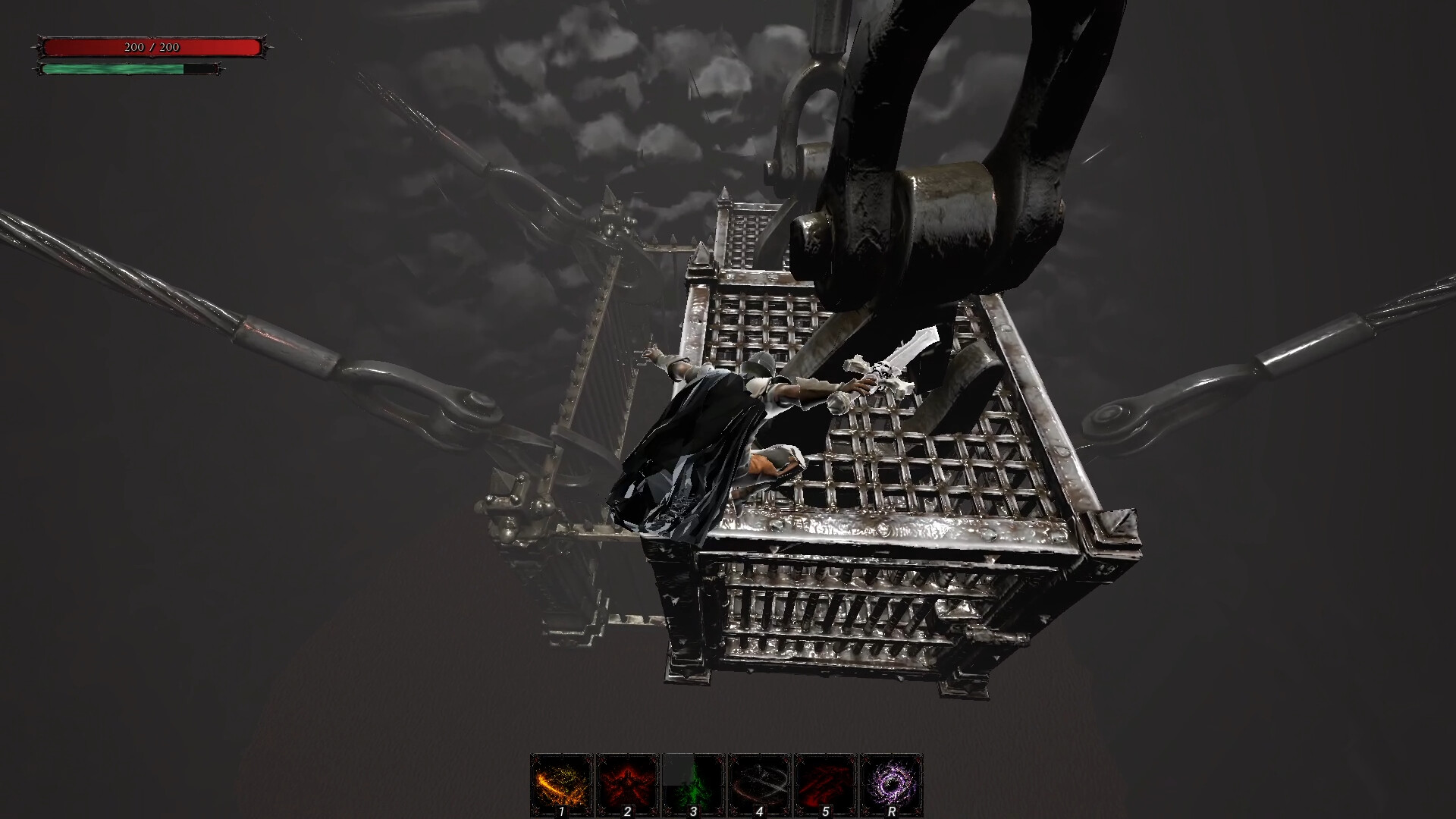
A chain-drawn cage lift carries the knight up the tower's shaft, with the six-slot ability hotbar already visible early on.Steam store page -
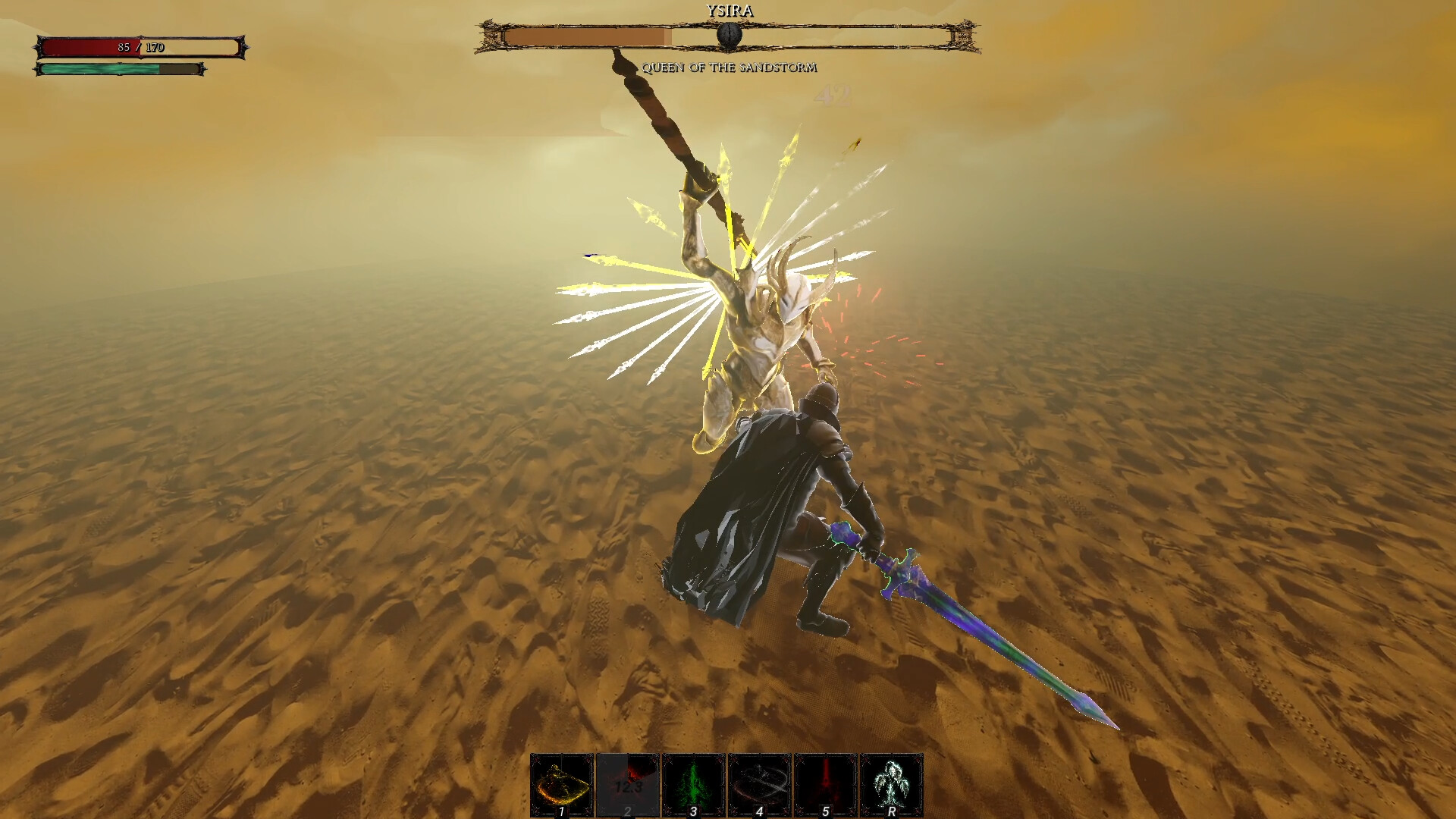
A boss fight against Ysira, Queen of the Sandstorm, in an open desert arena — one of several named bosses tied to a specific biome.Steam store page -
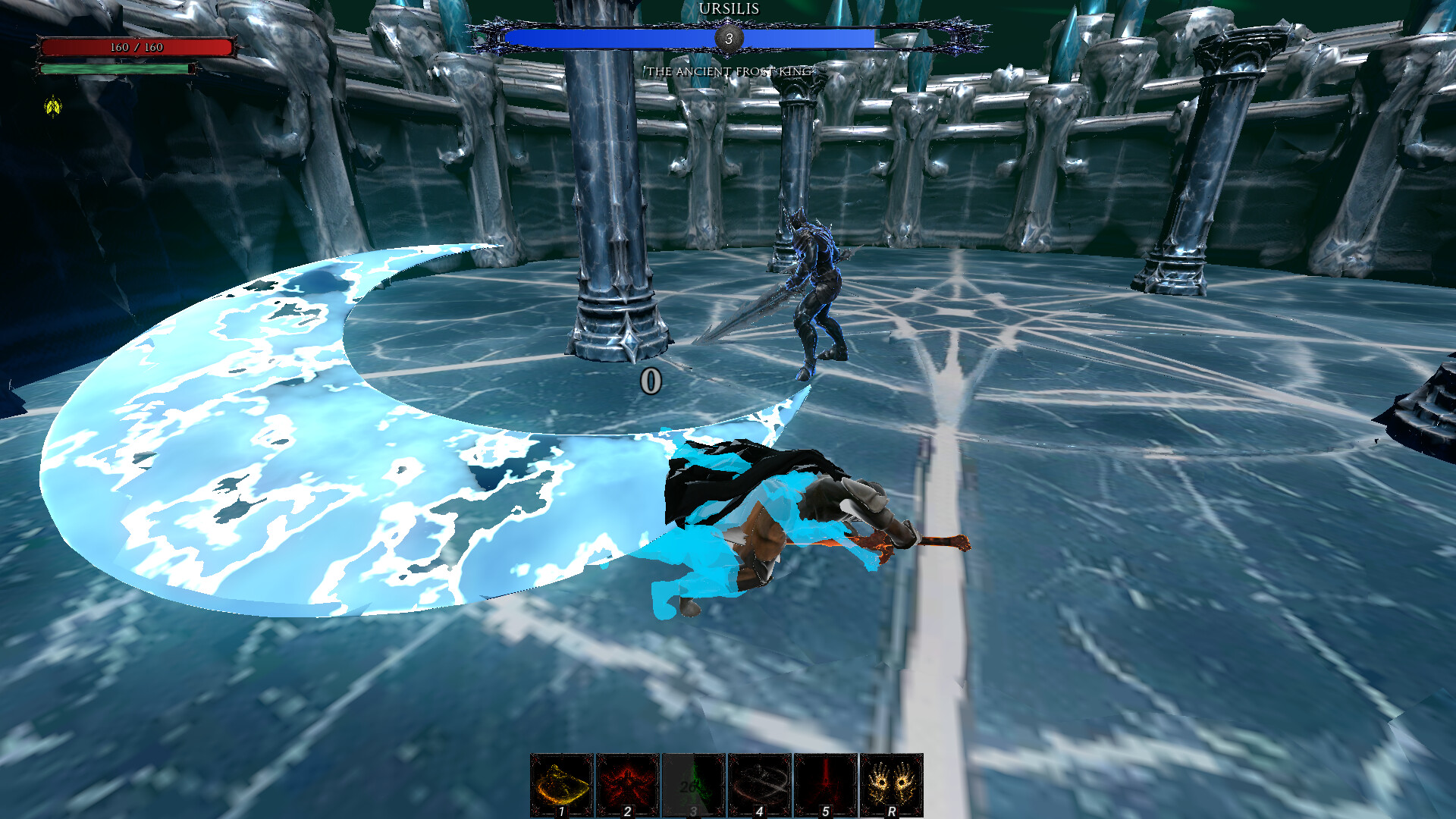
A second named boss, Ursilis the Ancient Frost King, defended by a bone-ringed ice arena that matches the frost biome theming.Steam store page