Game review
Dream Draw Dungeons
7 / 10
- Developer
- Vegoya Studio
- Publisher
- Vegoya Studio
- Released
- 15 September 2026
- Platforms
- Windows
- Genre
- RPG
A Fortieth Consecutive Launch Without a Single Review
Dream Draw Dungeons released as a full, non-Early-Access title on Steam on 15 September 2026, and at the time of writing it has zero user reviews. That's a notable gap for a game with this much stated content behind it — seven realms, forty-nine hand-built dungeons, and forty-nine named guardians are not small claims for a solo studio to make, and with nobody outside the developer having weighed in yet, everything here is judged strictly against what the store page itself describes rather than any confirmed account of how the finished product plays.
Seven Realms, Forty-Nine Dungeons, and a Dream as Framing Device
The premise is a boy's dream given pixel-art form — a light narrative conceit that mostly exists to justify the wildly varied realm list without needing a connected plot to hold it together: The Forest, The Mire, The Sunscar, The Dead City, The Frostbitten Wastes, The Ashblown Depths, and The Blighted Canopy. Each realm is stated to carry seven dungeon entrances of its own — a bear cave, an old well, a flooded sluice, a burnt mill, a hornet hive, a grand theatre — with a guardian in each holding a piece of a gate key needed to reach that realm's boss. If accurate, that's a genuinely large structural commitment for a single studio: 49 distinct dungeon interiors is a specific, checkable number rather than a vague "hours of content" claim, and it's the kind of promise that a body of player reviews would normally confirm or puncture quickly. Without that confirmation yet, the size of the claim is itself worth flagging plainly to a prospective buyer. Three screenshots do lend the realm variety some real support: a green forest realm with a wooden palisade village and tents, a snow-covered Frostbitten Wastes with a campfire and an igloo, and a cactus-dotted desert with a ruined tower on the horizon are visually distinct enough to suggest genuinely different tilesets and set dressing per realm rather than one environment reskinned seven times over. All three also show the game running in what the store page calls its "Semi-3D camera" mode, with a consistent HP-and-MP resource bar, a minimap, and an eight-slot ability hotbar with a couple of slots left open — real interface elements rather than mockup art, though none of the available screenshots happen to show the alternate flat 2D sprite mode the store page also advertises as a toggle.
Bosses With Named Mechanics, Not Just Bigger Health Bars
The store page goes further than most dungeon crawlers by naming specific boss mechanics rather than leaning on a generic "challenging encounters" line: the Fallen King is described as enraging once his shield breaks, the Ashen Queen throws her own weapon and floods the arena with molten pools, and the Frost Golem runs a survival-timer mechanic where the player must reach four torches to stay warm while the boss actively extinguishes them one at a time. Naming three specific, mechanically distinct bosses this clearly in marketing copy is a stronger signal of genuine design effort than most Early Access or budget action RPGs offer at this price point, though it also means the remaining forty-six-plus guardians and bosses are entirely unaccounted for in the pitch — there's no way to tell from the store page whether that same level of mechanical distinctiveness holds across the full roster or tapers off toward reused patterns deeper into the seven realms.
Twenty-One Skills, Three Trees, and a New Game+ Loop
Character building is framed around twenty-one skills split across Warrior, Rogue, and Holy trees, with the store page explicitly stating that rank investment means players can "master what you love, but never everything" — a specialization-over-completionism design choice that should give replays through New Game+ genuine reason to diverge rather than just repeating the same optimal build at higher numbers. New Game+ itself is described as carrying forward quest chains and skill mastery while scaling up enemies and rewards, plus a set of unmarked side quests hidden in each realm that unlock unique rewards — real replay incentives on paper, assuming the promised scaling doesn't just mean bigger enemy health totals against the same twenty-one skills. The game also offers a toggle between a classic 2D sprite view and what's described as an "immersive Semi-3D camera," a presentation option rarely offered in budget pixel-art action RPGs and one that at least suggests some technical ambition beyond a single fixed camera angle, though the store page gives no indication of any performance cost or visual tradeoff between the two modes. Equipment sits alongside the skill trees as a second progression axis, with the feature list promising "a variety of weapons and armor sets across dedicated gear slots" — a conventional but welcome addition to a build that would otherwise rest entirely on skill-point allocation, assuming the loot pool is large enough across forty-nine dungeons to feel like meaningful discovery rather than repeated drops of the same handful of items. A fog-of-war world map that fills in as the player explores each realm is also listed as a feature, which suggests the seven realms are laid out as explorable overworld spaces rather than a flat level-select menu between dungeons, giving the "explore" half of the pitch more structural weight than a simple hub screen would.
Full Price, No Extras, and a Modest Launch Discount
At NZ$15.00 with a 20% launch discount off a NZ$18.75 list price, Dream Draw Dungeons sits at a fair mid-tier indie price for the amount of content it claims, with no in-app purchases, DLC, or additional monetisation listed anywhere on the store page — a clean, complete-package pitch rather than a live-service structure needing ongoing spend. The game is English-only and Windows-only, with full keyboard, mouse, and gamepad support and Steam Cloud saves, which covers the basics expected of a 2026 release without extending to Mac or Linux. There's no stated total playtime estimate, so weighing the price against actual hours of content isn't possible yet without a review corpus to draw on, but the scope described — seven realms of seven dungeons each, plus New Game+ — reads as substantially larger than a typical NZ$15 action RPG offers if the numbers hold up.
Verdict
Dream Draw Dungeons makes an unusually specific and large set of content claims for a solo-developer action RPG — forty-nine named dungeons, distinctly mechanical named bosses, a three-tree skill system built around specialization, and a New Game+ loop with its own scaling and hidden rewards — at a fair price with no additional monetisation layered on top. Screenshots of three visually distinct realms, all running a working HP/MP/minimap/hotbar interface, back up at least the environmental-variety half of that pitch. It launched on 15 September 2026 with zero user reviews so far, so whether that scope holds up across all seven realms, or whether the mechanical creativity shown in the three named bosses on the store page thins out across the remaining forty-six, remains entirely unverified by anyone outside the studio.
Screenshots
-
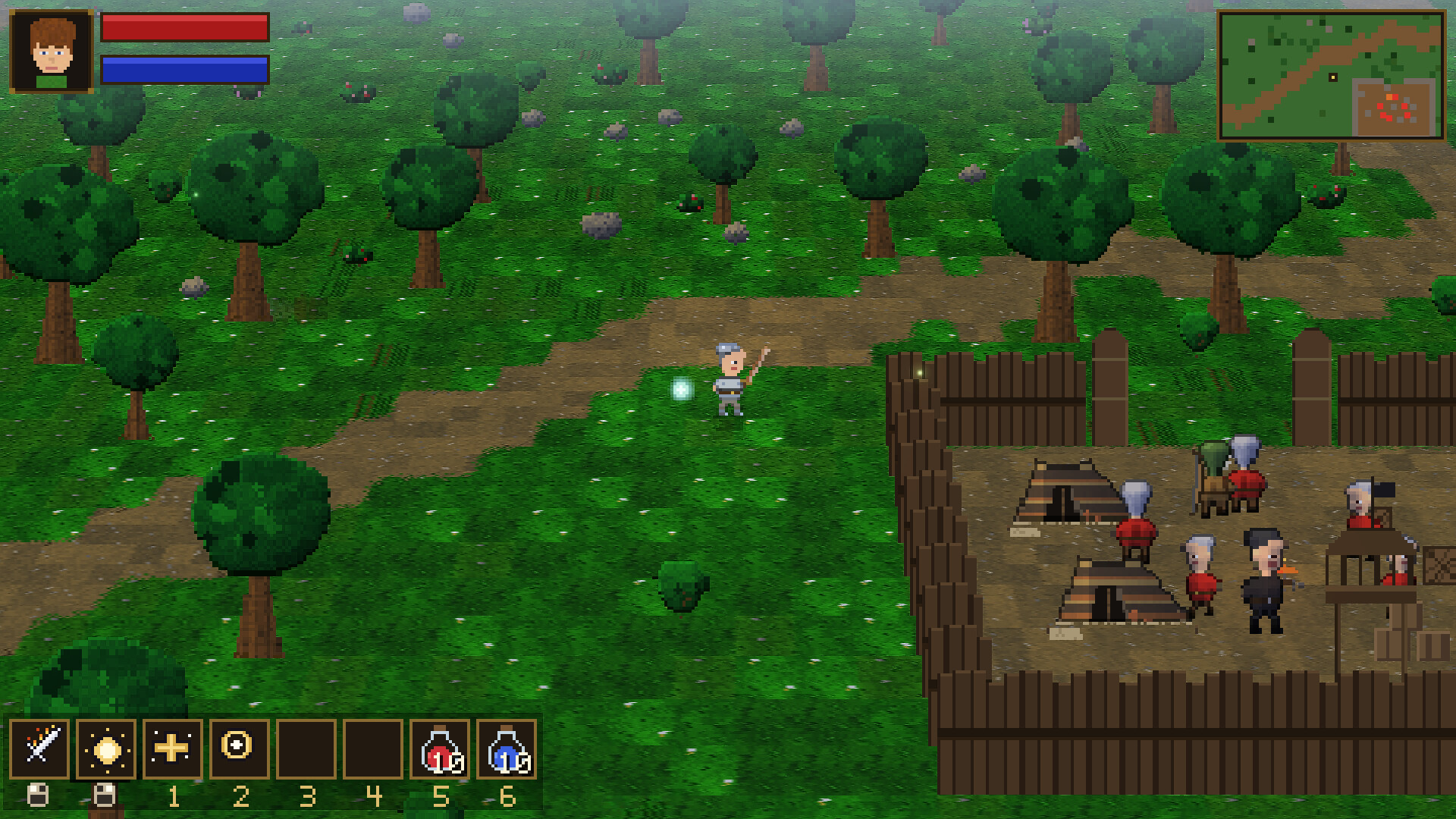
The Forest realm rendered in the Semi-3D camera mode, showing a real HP-plus-MP resource bar, a minimap, and an ability hotbar with open slots — none of the three screenshots show the alternate flat 2D sprite mode the store page also describes.Steam store page -
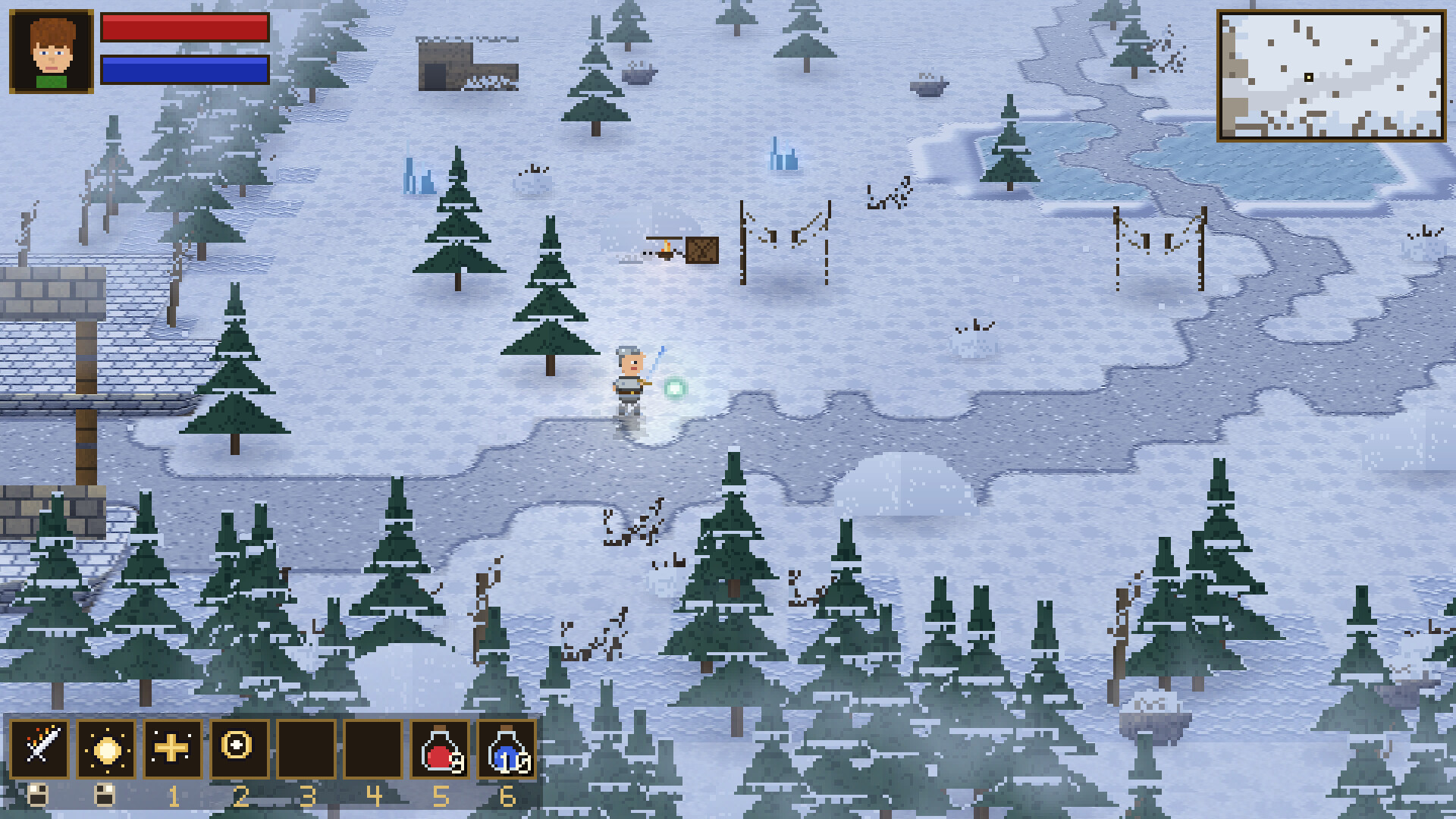
The Frostbitten Wastes realm, confirming the seven-realm claim extends to genuinely distinct environments and set dressing rather than palette-swapped reuses of the same forest tileset.Steam store page -
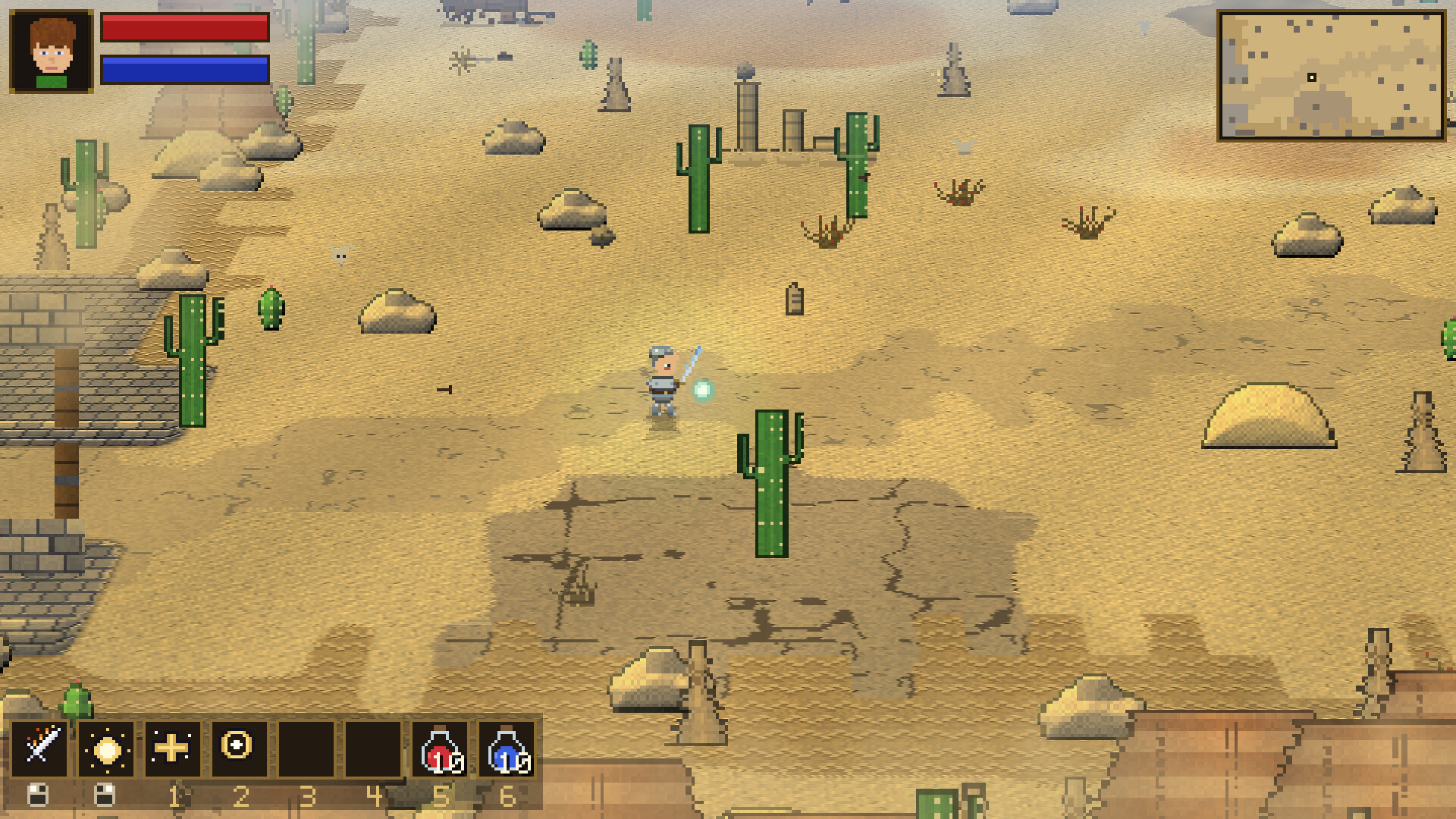
A desert realm matching the store page's mention of 'sand-drowned tombs in the desert,' with a ruined tower visible on the horizon.Steam store page