Game review
Realms Of Wands
6.5 / 10
- Developer
- Lumenrift Games
- Publisher
- Lumenrift Games
- Released
- 21 August 2026
- Platforms
- Windows
- Genre
- RPG
A Sixtieth Consecutive Launch Without a Single Review
Realms Of Wands launched on Steam on 21 August 2026 from developer Lumenrift Games, and at the time of writing it has zero user reviews. That's a meaningful gap to note for a dark fantasy action RPG specifically, since the genre lives or dies on how its combat actually feels moment-to-moment under player control, and no amount of store-page description of "fast-paced real-time combat" can substitute for a real community confirming whether the hit feedback, enemy variety, and boss design actually deliver on that promise.
A Fallen Kingdom Across Six Distinct Biomes
The setting is a classic dark fantasy premise — a fallen kingdom, fading magic, and rising darkness — but the world built around that premise is stated to span six visibly distinct environments: cursed forests, abandoned castles, haunted crypts, frozen wastelands, volcanic caverns, and forgotten temples. That's a genuinely broad environmental spread for a solo or small-team indie RPG to commit to, and naming each biome individually rather than describing a single generic "dungeon" suggests an intent to give each stretch of the game its own visual identity and presumably its own enemy roster, rather than reskinning the same handful of assets across a uniform world. Quests are framed around uncovering the history of the fallen kingdom's collapse, giving the biome-hopping structure a narrative throughline beyond simply providing fresh scenery between fights.
The choice to pair a haunted crypt with an abandoned castle, and a frozen wasteland with a volcanic cavern, also reads as a deliberate attempt to alternate tonal registers rather than letting the whole run settle into one mood — undead-flavoured decay giving way to elemental extremes and back again. Whether that alternation is expressed through actual level design, or whether the six biomes end up feeling more like six palette swaps stitched onto the same handful of corridor layouts, is exactly the kind of structural question a launch with no reviews yet leaves unanswered.
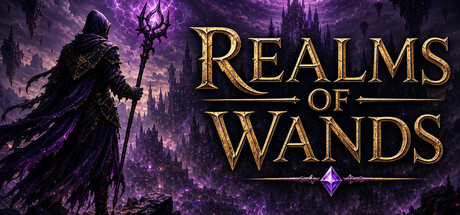
There's an important gap worth flagging up front between the game's presentation and its actual look in motion. The store page's key art is a moody painted illustration of a hooded wizard facing down a storm-lit ruined castle — the kind of image that suggests a painterly or heavily atmospheric dark fantasy game. The screenshots tell a different story: this is a grid-based, top-down pixel-art RPG, closer in visual lineage to classic tile-based JRPGs than to anything painterly, with characters, enemies, and environments rendered as small sprites moving square by square across a tile grid. That's not a criticism of the art style itself, which is clean and legible, but buyers expecting the atmosphere promised by the key art specifically should know the in-game reality is a much more retro, chunkier pixel presentation.
Real-Time Combat With Combinable Spells and Builds
Combat is described as fast-paced and real-time, fought against monsters, undead, demons, and dedicated boss encounters, with players expected to master powerful weapons and unlock devastating spells along the way. The more distinctive claim is that those spells and abilities can be combined to create a genuinely personal combat style, rather than following a single predetermined class or build path — a meaningful point of player agency for an action RPG, since it suggests build diversity is meant to emerge from how a player chooses to mix their unlocked toolkit rather than from picking one fixed archetype at character creation and sticking with it for the whole run. Unique weapons, armour, relics, and magical artifacts round out the equipment side, giving that build-crafting freedom actual gear to plug into rather than leaving character power purely a function of spell choices.
Levelling, Crafting, and Permanent Character Upgrades
Progression follows a fairly traditional but sturdy action-RPG shape: earning experience, levelling up, and unlocking permanent character upgrades that persist across a playthrough, alongside a crafting system for improving equipment directly rather than relying purely on found loot. Combining permanent level-based upgrades with active crafting gives players two separate levers for getting stronger — one tied to time spent playing regardless of what's dropped, and one tied to deliberately seeking out and processing better materials — which is a sensible way to keep both patient grinders and active loot-hunters feeling rewarded by the same core loop. The game's 82 Steam achievements back up the promised biome variety directly, with several named specifically after biome-tied boss kills — Bog Slayer, Frostbreaker, Keeper of Embers, and Wyrmslayer among them — confirming that each of the game's distinct environments is built around its own signature boss encounter rather than reusing a generic "beat the level" trigger throughout.
Other achievement names point at a broader spread of milestones than pure boss-kill trophies: Grave Robber suggests a dedicated loot-hunting or tomb-raiding thread running through the crypt content specifically, while Seasoned and Gauntlet read as endurance or accumulation markers rather than one-off encounter triggers, and The Last Ember hints at a late-game or finale-adjacent moment tied to the volcanic thread. Taken together, the achievement list is more useful here than most storefront trophy lists tend to be — it's effectively the clearest confirmation available, in the absence of any player reviews, that the six-biome structure and its named boss encounters are real content rather than just marketing copy.
That confirmation extends directly to the screenshots, which show a labelled boss fight against a "Bog Behemoth" in the forest area — a giant green slime creature with its own health bar and name plate distinct from the smaller enemies patrolling the same clearing. That lines up precisely with the Bog Slayer achievement, giving concrete visual proof that the biome-tied boss structure the achievement list implies is actually implemented in the game rather than just described on the store page. The same screenshots also show a readable heads-up display carrying HP, MP, and XP bars, a gold counter, a minimap, and a two-slot weapon-and-spell hotbar labelled with keyboard shortcuts — a clean, uncluttered layout for tracking the resources the combat and spell-combining systems depend on.
A Sharp Price for an English-Only, Keyboard-First Release
At NZ$12.49 with no discount, Realms Of Wands sits at a genuinely low price point for the amount of world, combat, and progression content its store page describes, positioning it as a low-risk entry point into the dark fantasy action RPG genre. Language support is limited to English only, and the game is explicitly designed for keyboard and mouse at launch, with controller support stated as a planned future addition rather than something available now — a reasonable acknowledgment of current scope limits from what appears to be a small studio, though anyone specifically wanting to play with a controller from day one should know that ahead of time. Steam Achievements and Steam Cloud support round out the launch feature set, giving the 82-achievement structure a meaningful way to track progress across saves.
Verdict
Realms Of Wands commits to a genuinely broad dark fantasy world across six distinct biomes, each anchored by its own named boss encounter — the "Bog Behemoth" fight visible in its own screenshots directly confirms the Bog Slayer achievement is real, implemented content rather than marketing copy — wrapped around a combinable-spell build system, a clean HUD, and a dual progression track of permanent levelling alongside active crafting. Buyers should go in aware that the actual game is a grid-based, top-down pixel-art RPG rather than the more painterly, atmospheric look its key art suggests; that's not a flaw so much as an expectation to set correctly before buying. The sharp NZ$12.49 price makes it an easy game to try regardless of how the bigger promises shake out. Whether the combat actually feels satisfying under sustained play, and whether six biomes' worth of enemies and bosses stay varied and well-balanced rather than reusing assets under new lighting, remain unverified questions for a launch with zero user reviews so far.
Screenshots
-
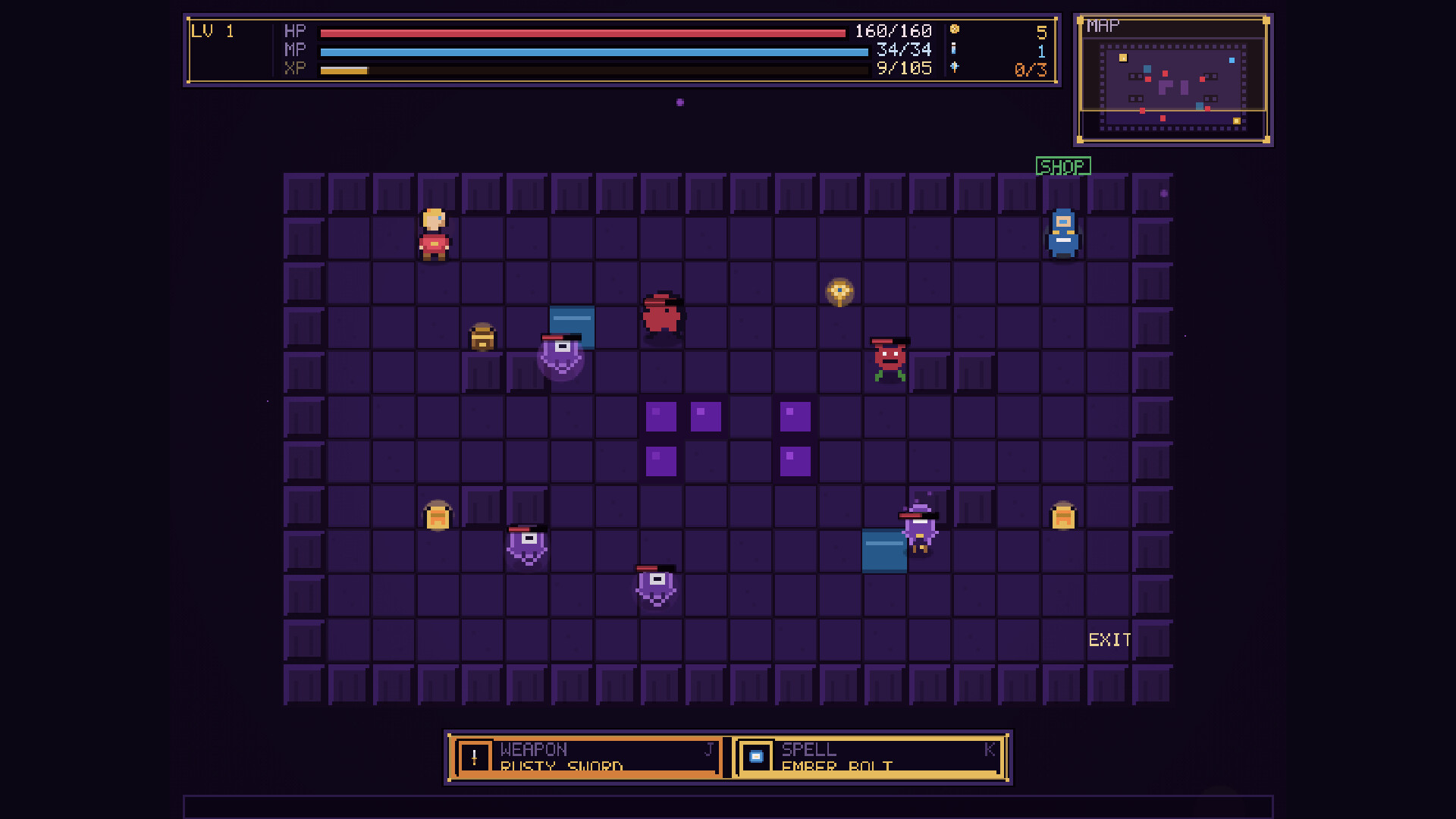
A haunted-crypt area, rendered as a grid-based top-down dungeon with chests, a shop stall, and roaming enemies.Steam store page -
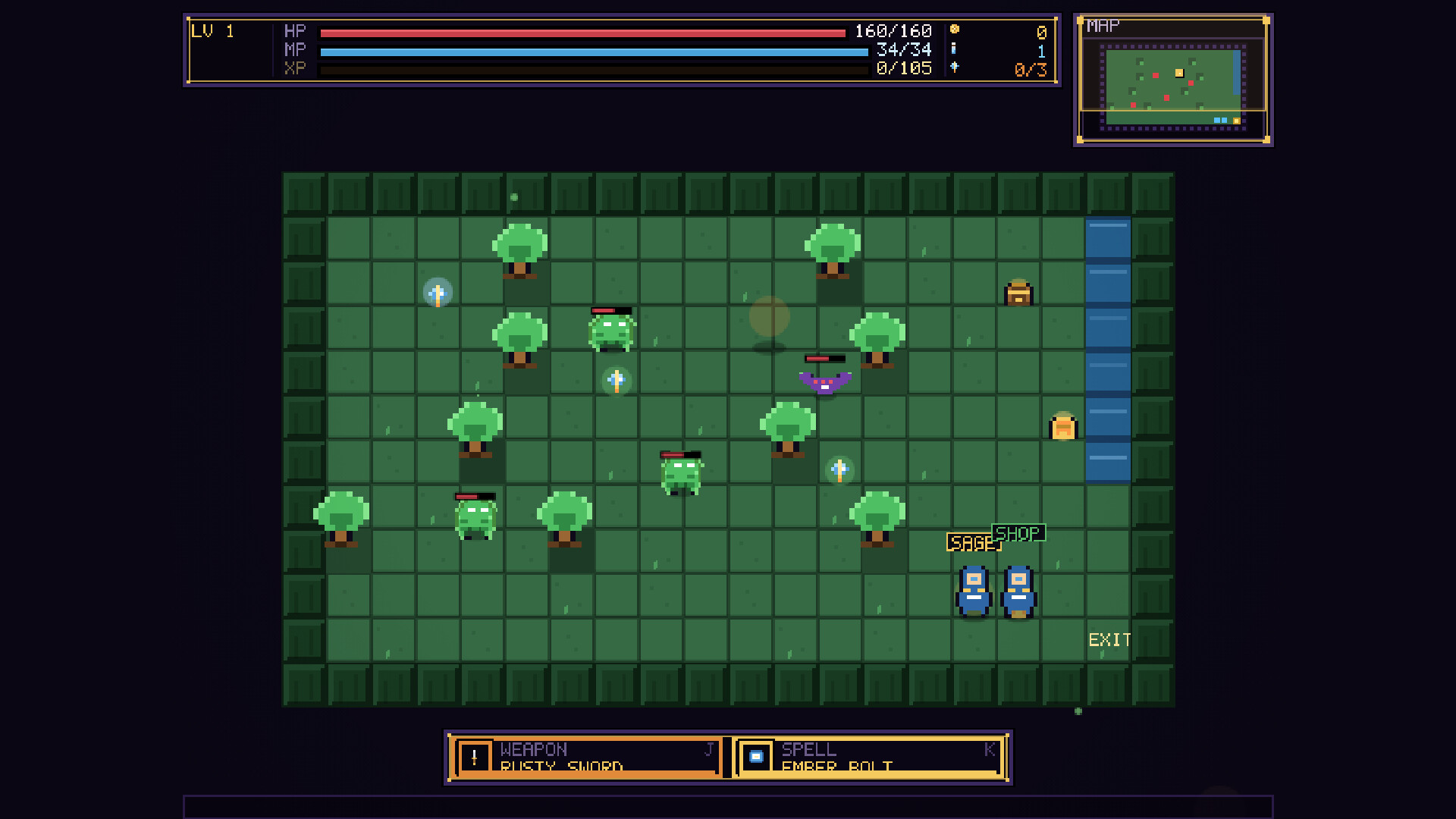
A forest clearing hub area with a Sage NPC and shop stall, framed by trees and wandering slimes.Steam store page -
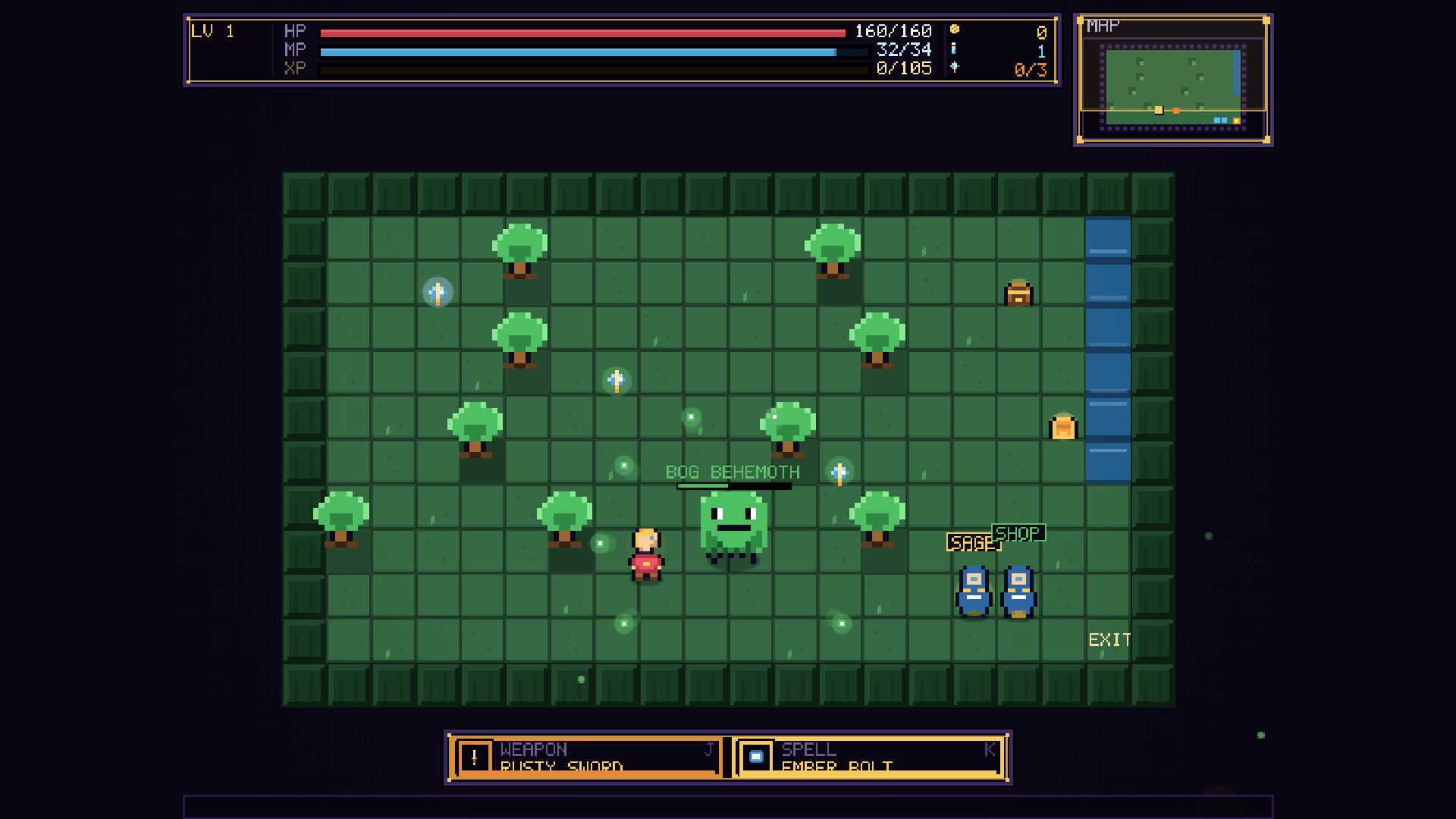
A named boss encounter, Bog Behemoth, fought in the forest biome — matching the game's Bog Slayer achievement.Steam store page