
Game review
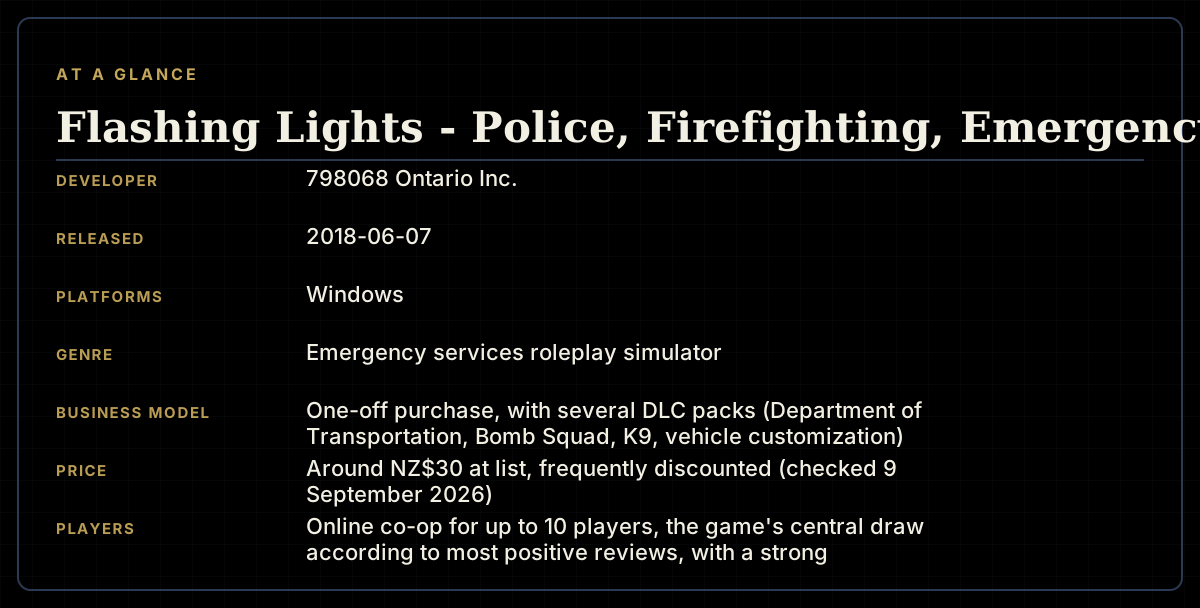
Flashing Lights - Police, Firefighting, Emergency Services (EMS) Simulator
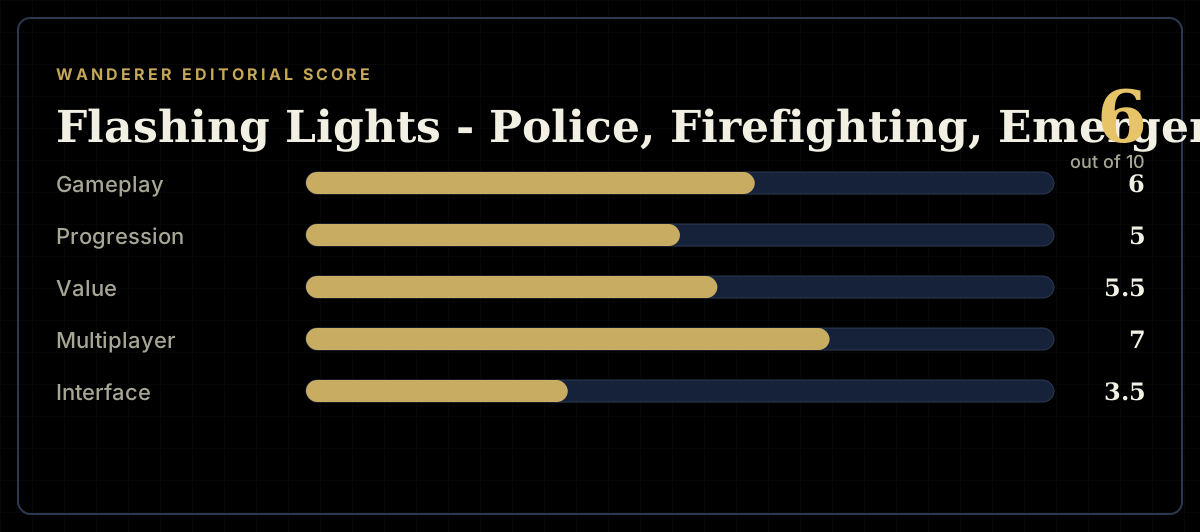
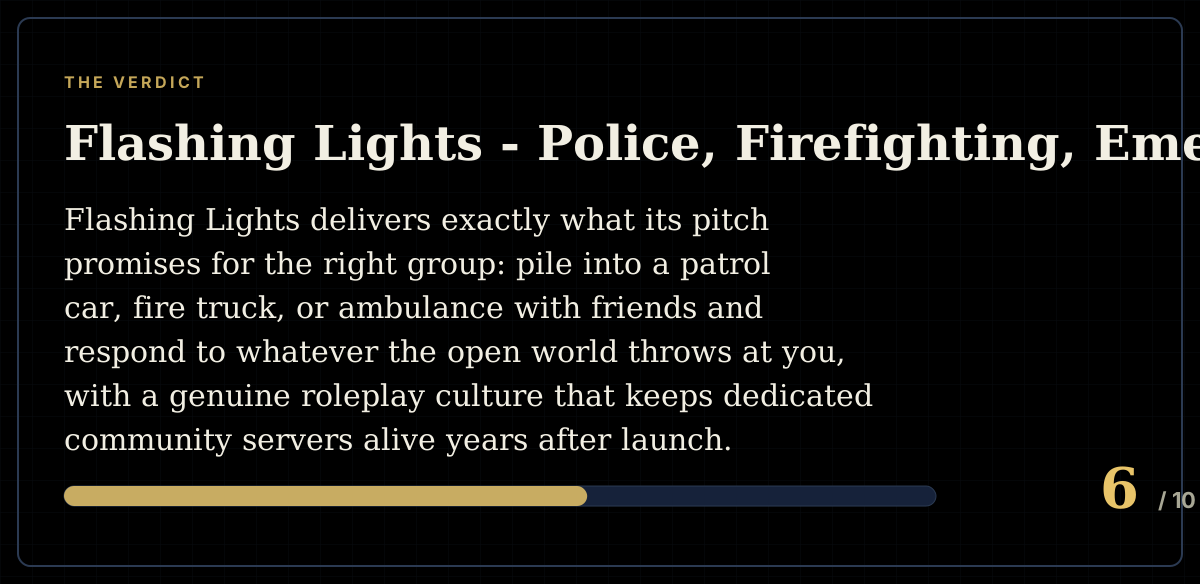
6 / 10
- Developer
- Nils Jakrins
- Publisher
- Excalibur Games
- Released
- 7 June 2018
- Platforms
- Windows
- Genre
- Emergency services roleplay simulator
- Monetisation
- One-off purchase, with several DLC packs (Department of Transportation, Bomb Squad, K9, vehicle customization) released across a long ongoing support life; no in-game currency or gameplay-affecting purchases
- Players
- Online co-op for up to 10 players, the game's central draw according to most positive reviews, with a strong community roleplay-server culture
The short version
Flashing Lights delivers exactly what its pitch promises for the right group: pile into a patrol car, fire truck, or ambulance with friends and respond to whatever the open world throws at you, with a genuine roleplay culture that keeps dedicated community servers alive years after launch. That appeal is real and specific — reviewers describe memorable sessions built entirely around improvised scenarios their friend groups invented. Set directly against that is an equally consistent, equally serious complaint about performance: multiple reviewers report the game runs poorly regardless of hardware quality, with one detailed account calling it "unplayable" on a capable machine and specifically noting "the developers have had a long time to fix this." That complaint isn't quite fair to the record — the developer's own patch history shows dense, near-monthly updates continuing right up to the time of this review, including real new content like a Bomb Squad expansion and vehicle customization — but the underlying frustration is real: sustained development hasn't yet resolved the specific performance complaints that have followed the game since its earliest years.
Biggest strengths
- A genuine, distinctive multiplayer roleplay appeal — reviewers describe real, memorable sessions built around player-invented scenarios across police, fire, and EMS roles
- An exceptionally long, still-active development history, with dense, near-monthly patches and real content expansions (Bomb Squad, K9, Department of Transportation) continuing years after the original Early Access launch
- Official mod support gives the community room to extend the game's scope beyond what the base content offers
Biggest weaknesses
- Persistent, specific performance complaints recur across years of reviews, with multiple players reporting poor frame rates and stability issues regardless of hardware quality, one calling the game "unplayable" on a capable system
- Mission variety is criticized by more than one detailed reviewer as thin, with a disproportionate share of scenario pop-ups skewing toward unlikely, overly serious events like terrorist attacks rather than routine, believable calls
- Specific interface bugs are reported, including at least one account of getting stuck in a vehicle-spawning menu with no resolution short of force-quitting
Who it's for: Groups of friends specifically looking for an emergency-services roleplay sandbox to build their own scenarios in, and fans of community-driven RP server culture. Less suited to solo players expecting a deep, structured mission-based campaign, or anyone who needs reliable, well-optimized performance on a first attempt.
Our recommendation: Worth it specifically for a group of friends looking for a shared roleplay sandbox; go in expecting real, longstanding performance friction that ongoing updates haven't fully resolved, and consider it a poor fit for a strong solo single-player experience.
6 / 10
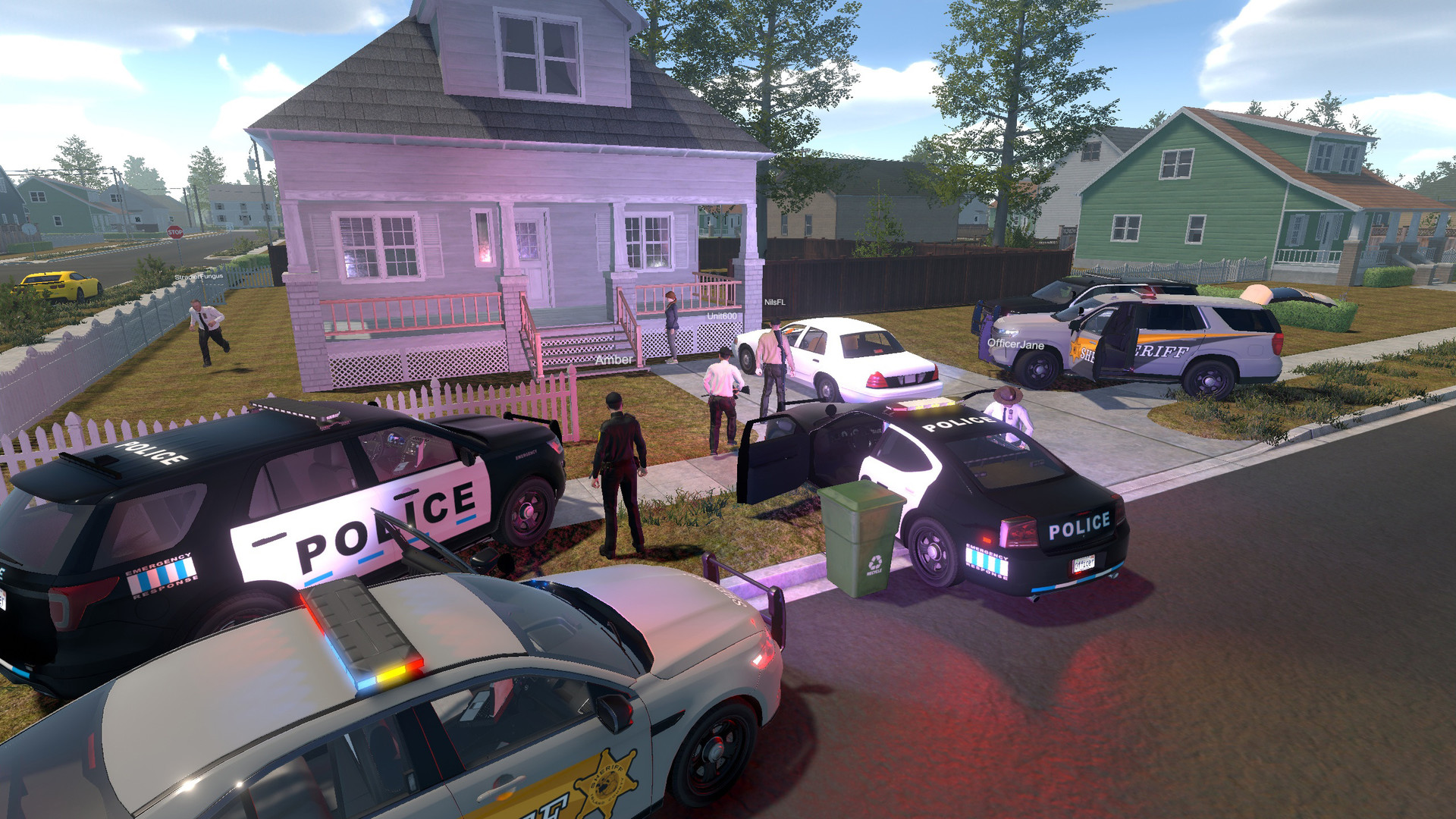
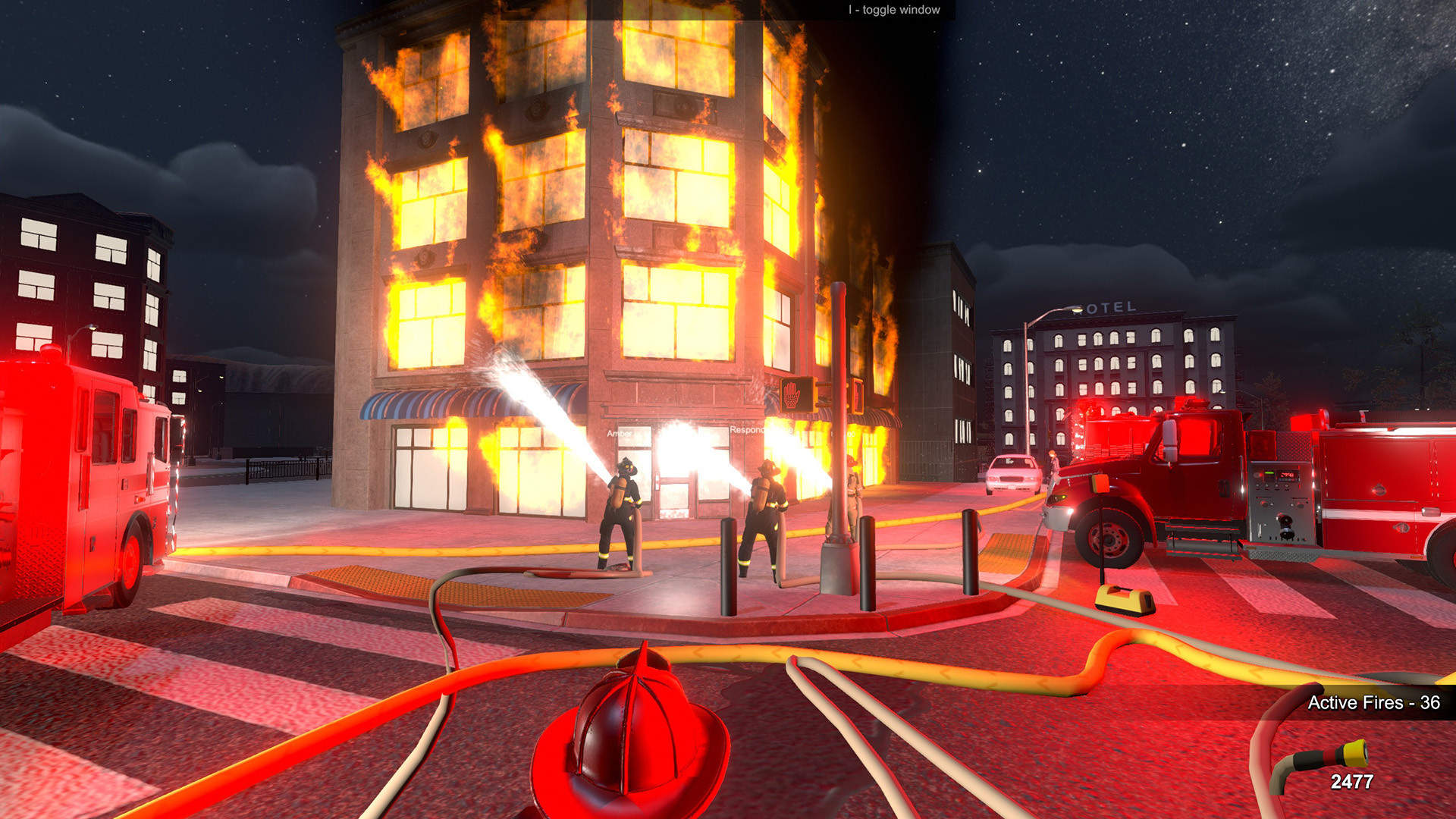
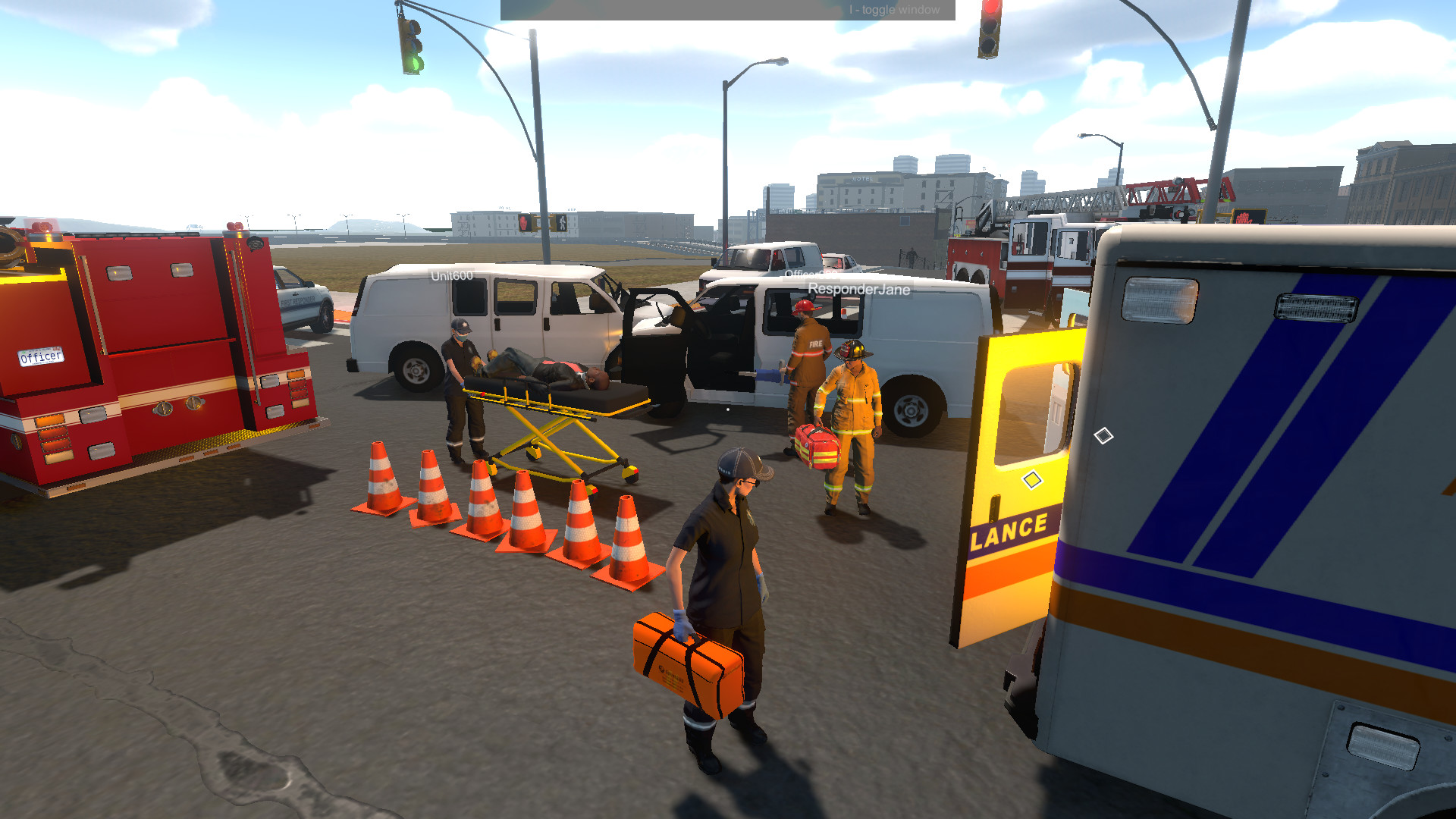
Flashing Lights puts players behind the wheel of a patrol car, fire truck, or ambulance in a shared open world, responding to car chases, structure fires, and medical emergencies solo or with up to nine friends. It entered Early Access in June 2018 and didn't reach 1.0 until May 2023 — the storefront's own listed date reflects only that later milestone, but the raw store page's Early Access field confirms the true original release nearly five years earlier. Across that unusually long development span, it's built a large, engaged audience — 83% Very Positive across nearly 10,000 English reviews — around a specific, genuine appeal: shared, improvised emergency-response roleplay with friends. Reading the review sample closely reveals that appeal is real, and alongside it, a performance complaint that's followed the game across nearly its entire life.
A genuine reason to play with friends
The strongest, most consistent praise centers on multiplayer roleplay specifically. One reviewer's account, while irreverent, captures the appeal directly: sessions built entirely around player-invented scenarios, treating the sandbox as a stage rather than a structured campaign. Another notes the game "is fun especially when you find a server with people who want to actually RP," pointing to community-run servers as where the experience genuinely shines. That's a meaningfully different kind of praise than a typical simulation game earns — it's not about the systems in isolation, but about what a coordinated group of players can build with them, and it recurs often enough across the sample to treat as the game's real, central strength.
A performance complaint that hasn't gone away
Set against that is an equally persistent, equally specific technical complaint. One detailed reviewer states it plainly: "Unplayable. Doesn't matter how good your computer is, this game is so poorly optimized that whatever substance there is here is irrelevant... The developers have had a long time to fix this." Another, more measured but pointing at the same issue, writes that "even with an extremely powerful rig, you're just stuck at horrific FPS and fidelity," adding that if the underlying idea "were to be translated to a game engine that was capable, it would be amazing." A third reviewer frames the same frustration in terms of value: "for 30 dollars I expect it to not have as much lag and bugs as it has." Three independent reviewers, naming the same specific technical shortfall across what the review dates suggest is a period of years, is strong enough convergence to treat as an accurate, ongoing characteristic of the game rather than a hardware-specific fluke.
A claim the patch record complicates
The specific accusation that "the developers have had a long time to fix this" without acting deserves the same scrutiny given to similar claims elsewhere: checked directly against the developer's own partner-events history, it doesn't hold up as stated. The patch cadence is dense and current — hotfixes as recent as August 2026, a Vehicle Customisation update the same month, a Department of Transportation DLC pack in March 2026, and a Bomb Squad expansion with new callouts and vehicles the year before. This is not a studio that stopped working on the game; it's a studio that has kept shipping real content and fixes for nearly eight years without fully resolving the specific performance complaints its players keep raising. Both facts belong in the same assessment: genuine, sustained effort, and a problem that effort hasn't yet solved.
Mission depth several reviewers find thin
Beyond performance, a specific complaint about mission variety recurs among more measured reviewers. One writes that despite recommending the game, "there [isn't] a very large pool of missions and a large percent of mission pop-ups being very serious and unlikely (e.g. terrorist attack, active shooter)" relative to the mundane, routine calls the setting would suggest. That's a fair, specific critique distinct from the performance issues — a request for more believable, varied scenario design rather than a technical complaint — and it lines up with global achievement data showing most tracked milestones held by under 15% of the playerbase, several under 3%, consistent with a structure that doesn't give most players a strong reason to keep chasing specific goals once the initial roleplay novelty settles.
A sandbox that cuts both ways
Worth stating plainly for anyone weighing whether the game suits a specific group: the same open, player-driven structure that enables the roleplay sessions reviewers praise also enables less structured, more chaotic behavior. One reviewer's own account of a memorable session — arresting a random NPC, driving them to the ocean at night, and "executing" them before going on to run over drunk pedestrians — is framed as a highlight rather than a complaint, and it's representative of a broader pattern in the sandbox-chaos genre this game sits alongside. That's not a content-safety concern in the way this fleet treats more serious allegations elsewhere; it's a straightforward description of emergent, GTA-adjacent sandbox freedom that some players specifically want and others may find undercuts the serious-roleplay experience they're hoping for. Community-run, curated RP servers, mentioned favorably by multiple reviewers, appear to be the main way players self-select into the specific experience they want rather than the base game enforcing one tone over the other.
Verdict
Flashing Lights earns its large, positive following on a genuine, hard-to-replicate strength: shared emergency-services roleplay that rewards a coordinated group more than a solo structured campaign would. Its performance problems are real, specific, and have persisted across years despite a development effort that's demonstrably still active and still shipping real content today. Buy it for a group of friends who want to build their own scenarios; go in with tempered expectations about how smoothly the technical side will run, since that specific complaint hasn't gone away no matter how many updates have shipped around it.
Sources: Steam store page and appdetails API (release date, pricing, platform data, the raw HTML "Early Access Release Date" field); Steam's aggregate review data (query_summary totals, English-language sample); individually read user reviews, both positive and negative, sorted by helpfulness and recency; Steam's global achievement statistics API; Excalibur Games' own partner-events patch history, dense and continuous from the 2018 Early Access launch through August 2026.
Pros and cons
Pros
- A genuine, distinctive multiplayer roleplay appeal — reviewers describe real, memorable sessions built around player-invented scenarios across police, fire, and EMS roles
- An exceptionally long, still-active development history, with dense, near-monthly patches and real content expansions (Bomb Squad, K9, Department of Transportation) continuing years after the original Early Access launch
- Official mod support gives the community room to extend the game's scope beyond what the base content offers
- Three distinct service roles with their own vehicles and equipment give genuine variety to what a session with friends can look like
- No monetisation beyond the one-time purchase and its DLC, keeping the roleplay sandbox free of pay-to-progress systems
Cons
- Persistent, specific performance complaints recur across years of reviews, with multiple players reporting poor frame rates and stability issues regardless of hardware quality, one calling the game "unplayable" on a capable system
- Mission variety is criticized by more than one detailed reviewer as thin, with a disproportionate share of scenario pop-ups skewing toward unlikely, overly serious events like terrorist attacks rather than routine, believable calls
- Specific interface bugs are reported, including at least one account of getting stuck in a vehicle-spawning menu with no resolution short of force-quitting
- Global achievement data shows most milestones held by under 15% of the playerbase, and several under 3%, consistent with reviewer accounts of a game whose depth and mission structure don't fully reward sustained, focused play
- Sandbox freedom cuts both ways: several reviewers describe chaotic, non-roleplay behavior (random violence against NPCs, griefing) as common outside curated community servers, which may not suit players expecting a more structured simulation experience
Screenshots
-
Flashing LightsImage: Excalibur Games via Steam -
Flashing LightsImage: Excalibur Games via Steam -
Flashing LightsImage: Excalibur Games via Steam -
How the review scores each part of the gameWanderer Editorial -
The specsWanderer Editorial -
The short versionWanderer Editorial