
Game review
Feed the Scorchpot
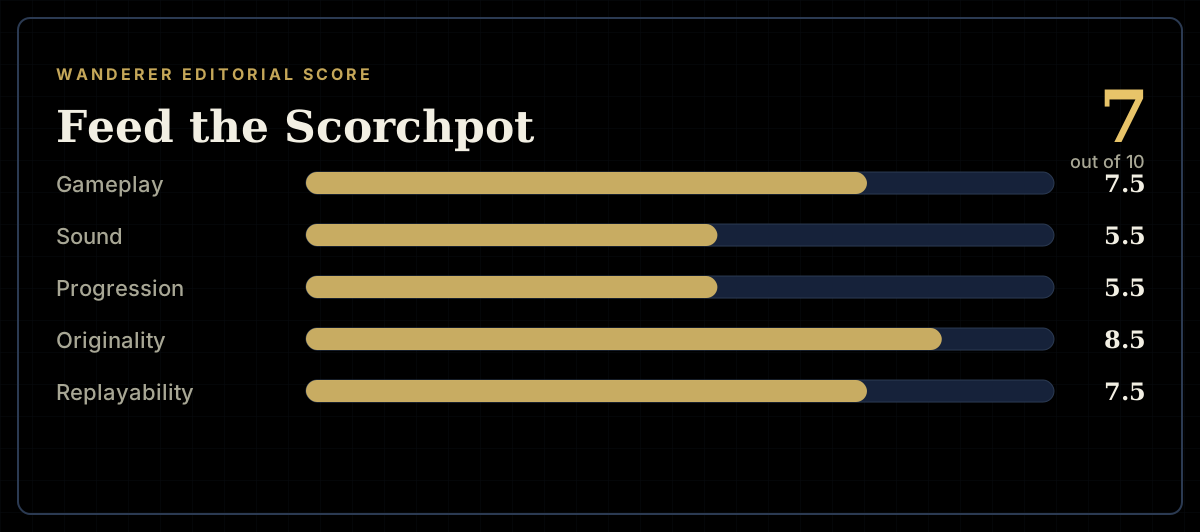
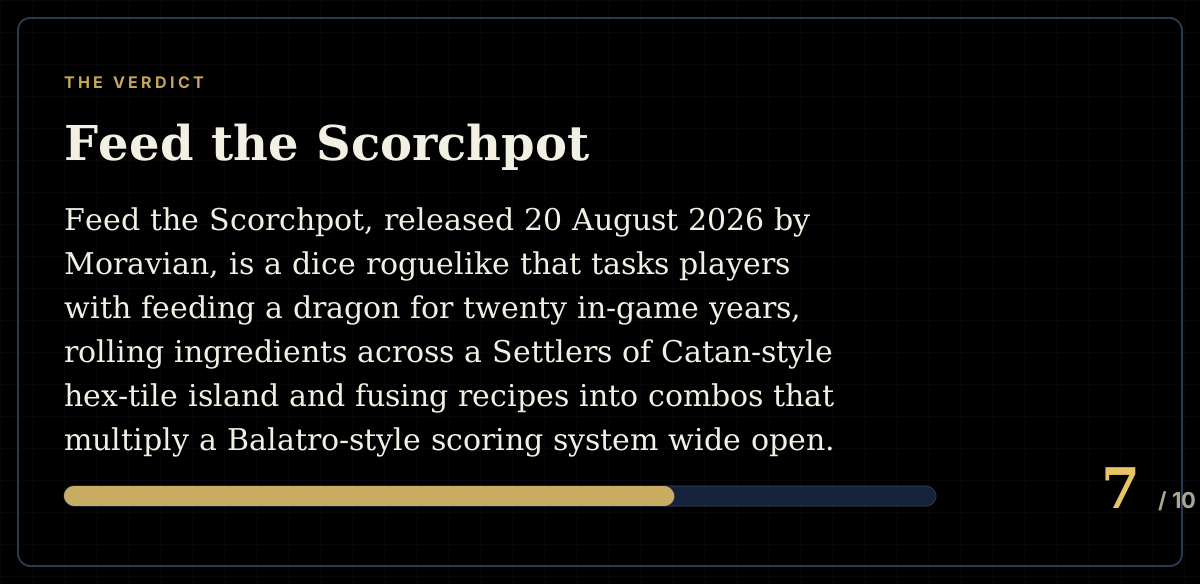
7 / 10
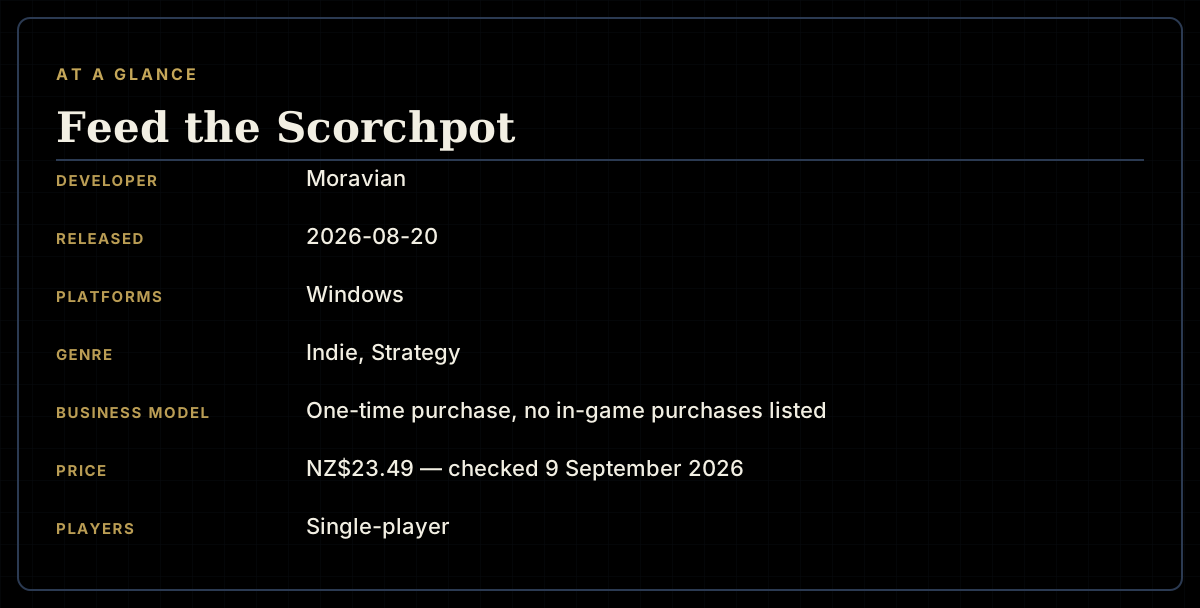
- Developer
- Moravian
- Publisher
- Indieformer
- Released
- 20 August 2026
- Platforms
- Windows
- Genre
- Indie, Strategy
- Monetisation
- One-time purchase, no in-game purchases listed
- Players
- Single-player
The short version
Feed the Scorchpot, released 20 August 2026 by Moravian, is a dice roguelike that tasks players with feeding a dragon for twenty in-game years, rolling ingredients across a Settlers of Catan-style hex-tile island and fusing recipes into combos that multiply a Balatro-style scoring system wide open. It sits Very Positive with a sample of 139 reviews, and reading widely through both its English and Chinese review pools reveals genuine, widespread enthusiasm for a hybrid concept reviewers consistently describe as fresh rather than derivative, despite openly wearing its two biggest inspirations. Reviewers repeatedly praise the addictive, multiplicative scoring loop, charming medieval-fantasy presentation, and genuinely voiced tutorial as evidence of real care and polish. Set against that praise, this review found a specific, detailed and cross-language-corroborated complaint: multiple reviewers, particularly in a substantial Chinese-language pool offering unusually granular technical detail, describe early-game runs becoming effectively unwinnable from a single unlucky opening roll, when key seasoning-source buildings or viable starting recipes simply don't appear, forcing repeated restarts before a run can even properly begin. This review also found reports of a mono-only audio mix some reviewers find a strange and dated design choice, and at least one specific warning that a settings-menu option can accidentally delete saved progress, a serious risk for achievement hunters in particular.
Biggest strengths
- The core hybrid of Catan-style dice-driven resource generation and Balatro-style multiplicative scoring draws overwhelming, specific praise as a genuinely fresh combination, with reviewers describing real, considered depth once the game's systems click into place
- Reviewers consistently praise a distinctive art style and genuinely voiced tutorial, describing the overall presentation as charming and unusually polished for the genre, with the medieval dragon-feeding premise drawing specific, affectionate comment
- Multiple reviewers specifically praise the depth unlocked by a later deckbuilding mechanic, describing a meaningful new layer of strategy that significantly expands the game once players reach it
Biggest weaknesses
- A substantial, detailed and cross-language-corroborated body of reviewers, particularly within a large Chinese-language review pool offering unusually granular technical breakdowns, describe early-game runs becoming effectively unwinnable from a single unlucky opening roll, when key seasoning-source buildings or viable starting recipes simply fail to appear
- Multiple reviewers report needing to restart runs repeatedly, sometimes many times in a row, before receiving a viable opening setup, describing this specifically as reliant on rerolling starts rather than being an overcomeable skill challenge
- At least one detailed reviewer reports the audio mix is mono-only across all sound effects and music, describing this as a strange and dated design choice given how long stereo output has been standard
Who it's for: Fans of Balatro-style multiplicative scoring roguelikes and Catan-style resource management, who can tolerate real, occasionally harsh RNG-driven difficulty spikes in the opening stretch of a run before the game's deeper systems open up.
Our recommendation: Strongly worth it for fans of "big number" roguelikes and board-game-inspired design; go in expecting real, sometimes frustrating early-game variance rather than a smooth, forgiving difficulty curve throughout.
7 / 10
Introduction
Feed the Scorchpot, released 20 August 2026 by Moravian, is a dice roguelike that tasks players with feeding a dragon for twenty in-game years, rolling ingredients across a Settlers of Catan-style hex-tile island and fusing recipes into combos that multiply a Balatro-style scoring system wide open. It sits Very Positive with a sample of 139 reviews, and reading widely through both its English and Chinese review pools reveals genuine, widespread enthusiasm for a hybrid concept reviewers consistently describe as fresh rather than derivative, despite openly wearing its two biggest inspirations on its sleeve.
A genuinely fresh hybrid, according to fans of both inspirations
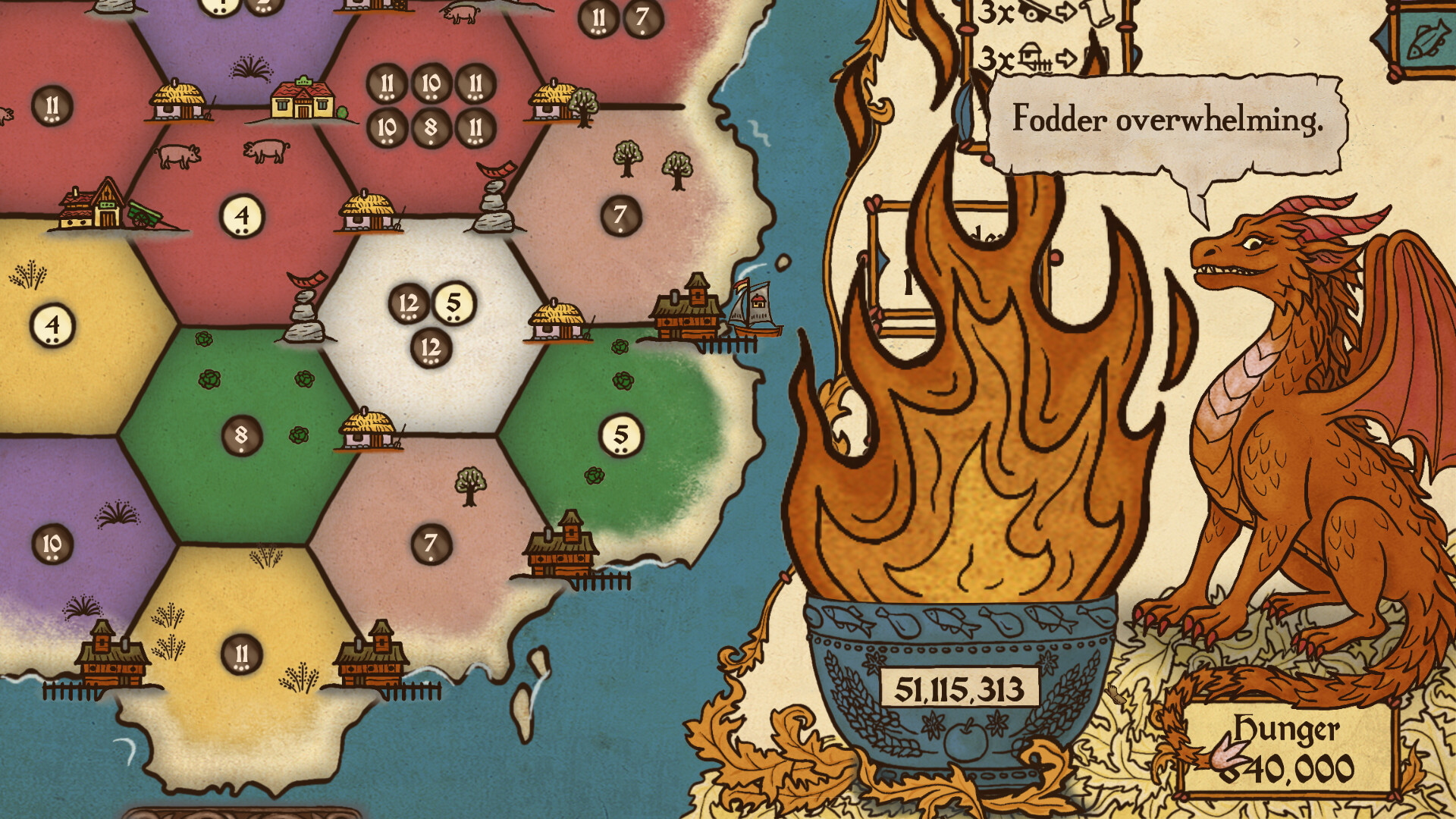
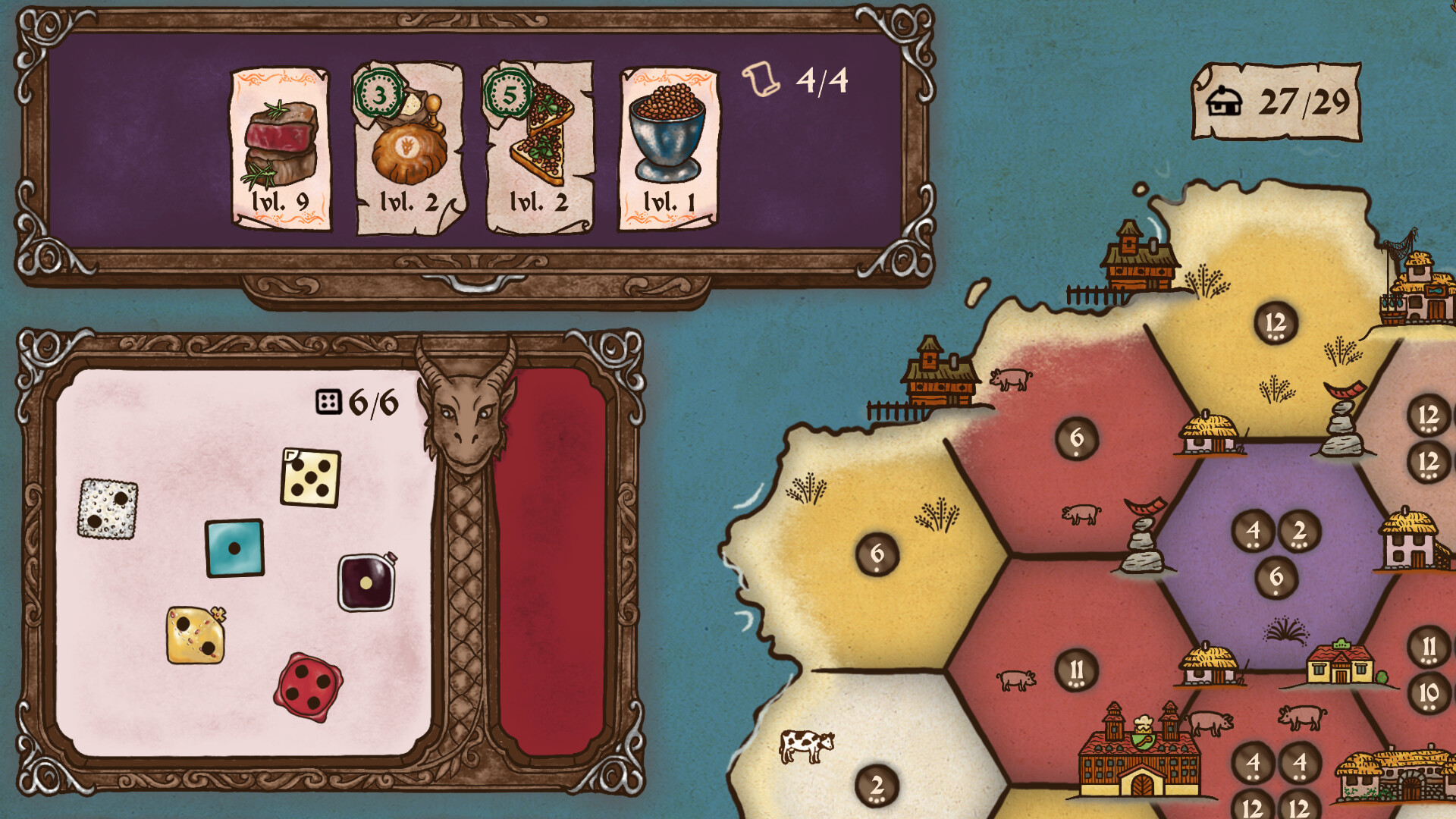
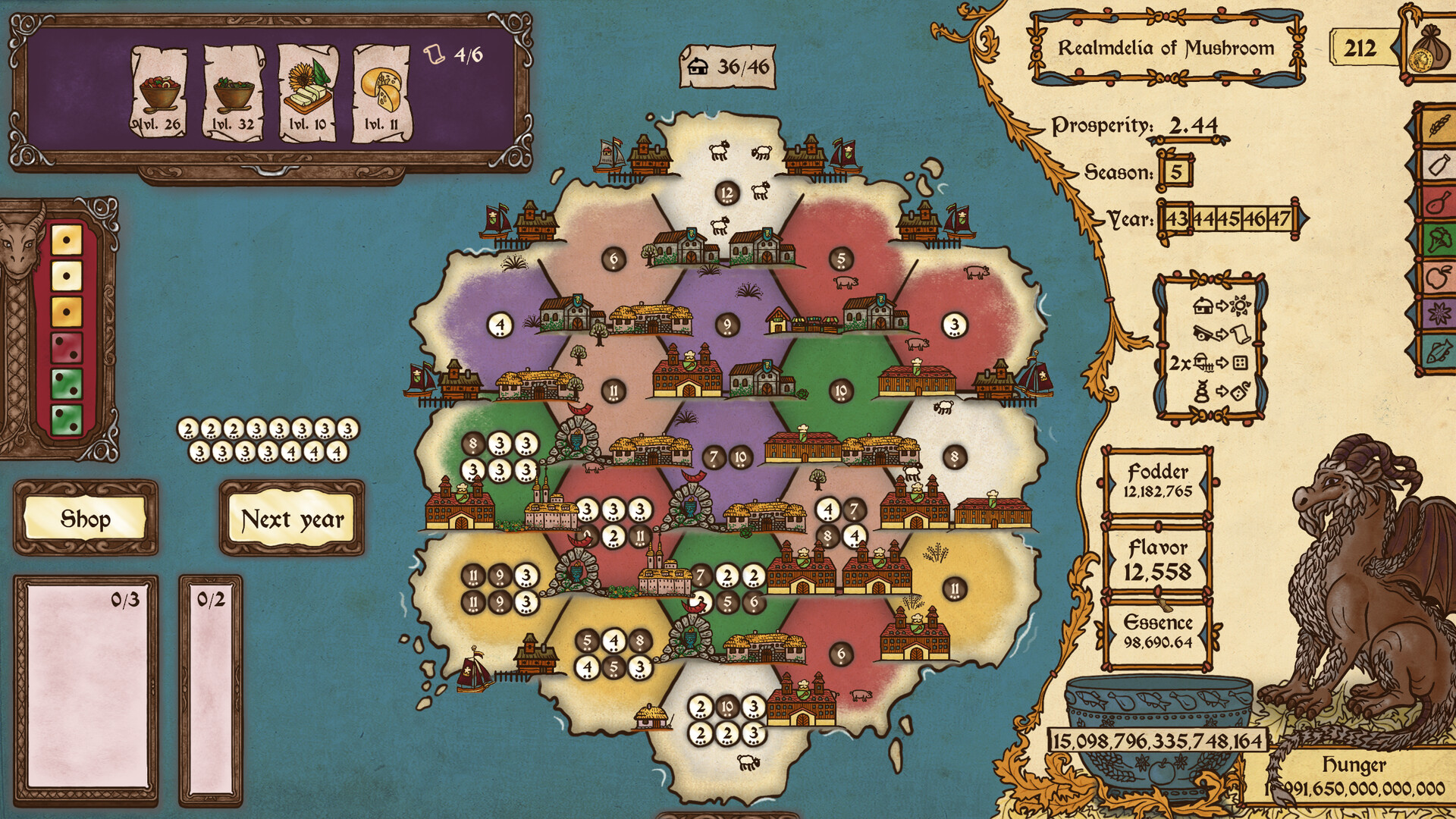
The clearest, most consistent praise across this sample concerns how well the central Catan-Balatro fusion actually works. Reviewers repeatedly describe the multiplicative scoring loop as addictive in exactly the way Balatro's fans would recognise, while the dice-driven, hex-tile resource generation draws its own specific praise for capturing genuine strategic tension from Catan's core design without simply copying it wholesale. Multiple reviewers explicitly state they'd grown tired of "Balatro meets X" games generally but found this specific combination special, and reviewers who don't particularly enjoy Catan itself separately describe the game as fresh and unique well beyond its surface-level board-game aesthetic.
Charming presentation, and a system with real depth
Beyond the core loop, this review found consistent praise for presentation, with reviewers describing a distinctive art style and a genuinely voiced tutorial sequence as signs of real care. Multiple reviewers specifically praise a later-unlocked deckbuilding mechanic for adding a meaningful new layer of strategy well beyond what the opening hours suggest, and replayability draws consistent praise given multiple unlockable dragons, difficulty tiers, and dozens of hours some reviewers report investing.
A harsh, cross-language-corroborated early-game RNG problem
Set against that praise, this review found a specific, detailed and unusually well-corroborated complaint spanning both language pools in this sample. A substantial number of reviewers, particularly within a large Chinese-language pool offering granular technical breakdowns of the game's scoring formula, describe early-game runs becoming effectively unwinnable from a single unlucky opening roll. Several detailed accounts explain the specific mechanism: the game's scoring depends on a three-way multiplier across base materials, seasoning and essence, and if key seasoning-source buildings like the trading post fail to appear early, players are left multiplying by a much smaller number for the rest of the run, unable to meaningfully recover regardless of skill. Multiple reviewers describe needing to restart runs repeatedly, sometimes numerous times in a row, before receiving a workable opening setup — a pattern several explicitly distinguish from a fair, overcomeable difficulty challenge, since no amount of skilled play can fully compensate for specific missing early infrastructure.
Mono audio, and a progress-deleting settings trap
This review found two further specific, concrete complaints worth flagging directly. At least one detailed reviewer reports the game's entire audio mix, music and sound effects alike, is output in mono rather than stereo, describing this as a genuinely strange and dated choice. Separately, at least one reviewer specifically warns that a particular settings-menu option can accidentally delete saved progress, flagging this as a serious risk especially for players pursuing full achievement completion who might lose significant accumulated progress to an easily-avoided interface trap.
Legibility gaps in scoring and building tiers
A further specific complaint concerns how clearly the game communicates its own systems back to the player. Multiple reviewers, again concentrated in the Chinese-language pool, report building tiers are visually difficult to distinguish at a glance, and separately note the game doesn't clearly break down which specific building or card contributed how much to a given score at round settlement. Given how much of this genre's appeal depends on players learning from both successful and failed runs, this specific legibility gap makes that learning process harder than it needs to be.
Weighing a genuinely inventive design against real onboarding friction
Taken as a whole, this review reads Feed the Scorchpot as a case where a genuinely inventive, well-executed core hybrid concept is meaningfully undercut by specific, addressable onboarding and transparency problems rather than a fundamentally flawed design. The RNG complaint in particular reads as serious and well-documented enough to warrant real caution for newcomers, even as reviewers who push through the opening frustration consistently describe the game clicking into something genuinely special once its deeper systems open up.
Why reading the Chinese-language pool changed this review's picture
It's worth being direct about how much this review's understanding of the early-game RNG complaint sharpened specifically by reading beyond the English review sample. English-language reviewers consistently describe the game as having "a learning curve" or being "harder than expected," which reads, on its own, like a fairly generic difficulty complaint many roguelikes attract. The Chinese-language pool, by contrast, offered detailed, mechanically precise breakdowns of exactly why and how specific opening rolls doom a run — naming the exact multiplier formula, identifying which specific buildings are load-bearing for early recovery, and describing the exact failure cascade that follows their absence. That level of specificity gave this review meaningfully more confidence that the RNG complaint reflects a genuine, identifiable design issue rather than a subjective mismatch between a particular player's skill level and the game's intended difficulty, and it directly shaped how heavily this review weighs that complaint in the final score.
What a balance pass would most need to address
Reading across both language pools, this review can identify the single most direct fix that would resolve the most consequential complaint here: guaranteeing some minimum baseline of seasoning-source availability during a run's opening turns, whether through a pity-timer mechanic or adjusted starting odds, would directly prevent the specific "doomed from turn one" scenario so many detailed reviewers independently describe. Several reviewers explicitly frame their own suggested fixes in almost identical terms, which suggests this is a well-understood, specific gap in the current design rather than a matter of taste, and one the developer would have a clear, concrete target to aim at if choosing to address it in a future patch.
Final Verdict
Feed the Scorchpot succeeds at a genuinely difficult creative task: combining Catan's resource strategy with Balatro's multiplicative scoring into something reviewers across two separate language communities describe as fresh rather than derivative, backed by charming presentation and real, substantial depth once its deckbuilding layer unlocks. What holds this score back is a specific, detailed and cross-language-corroborated early-game RNG problem that can make runs effectively unwinnable through no fault of the player, compounded by a mono-only audio mix, a progress-deleting settings trap, and legibility gaps in how clearly the game explains its own scoring. Strongly worth it for fans of "big number" roguelikes prepared for genuine, sometimes harsh early-game variance.
Pros and cons
Pros
- The core hybrid of Catan-style dice-driven resource generation and Balatro-style multiplicative scoring draws overwhelming, specific praise as a genuinely fresh combination, with reviewers describing real, considered depth once the game's systems click into place
- Reviewers consistently praise a distinctive art style and genuinely voiced tutorial, describing the overall presentation as charming and unusually polished for the genre, with the medieval dragon-feeding premise drawing specific, affectionate comment
- Multiple reviewers specifically praise the depth unlocked by a later deckbuilding mechanic, describing a meaningful new layer of strategy that significantly expands the game once players reach it
- Replayability draws consistent praise, with reviewers describing dozens of hours across multiple unlockable dragons and difficulty tiers, and the game is separately confirmed to run well on Steam Deck
Cons
- A substantial, detailed and cross-language-corroborated body of reviewers, particularly within a large Chinese-language review pool offering unusually granular technical breakdowns, describe early-game runs becoming effectively unwinnable from a single unlucky opening roll, when key seasoning-source buildings or viable starting recipes simply fail to appear
- Multiple reviewers report needing to restart runs repeatedly, sometimes many times in a row, before receiving a viable opening setup, describing this specifically as reliant on rerolling starts rather than being an overcomeable skill challenge
- At least one detailed reviewer reports the audio mix is mono-only across all sound effects and music, describing this as a strange and dated design choice given how long stereo output has been standard
- At least one reviewer specifically warns that a settings-menu option can accidentally delete saved progress, describing this as a serious risk particularly for players pursuing full achievement completion
- Separate reviewers report building tiers are visually difficult to distinguish at a glance, and the game doesn't clearly show which specific building or card contributed how much to a given score at round settlement, making it harder to learn from both successful and failed runs
Screenshots
-
Feed the ScorchpotImage: Indieformer via Steam -
Feed the ScorchpotImage: Indieformer via Steam -
Feed the ScorchpotImage: Indieformer via Steam -
How the review scores each part of the gameWanderer Editorial -
The essentials at a glanceWanderer Editorial -
The short versionWanderer Editorial