Game review
Nitro Kid
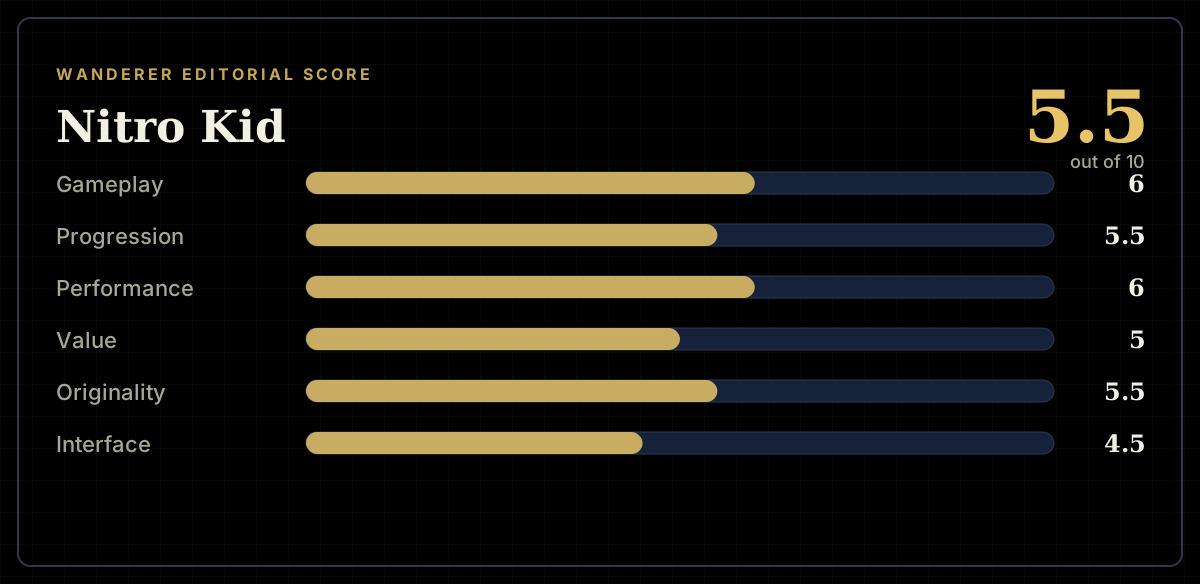
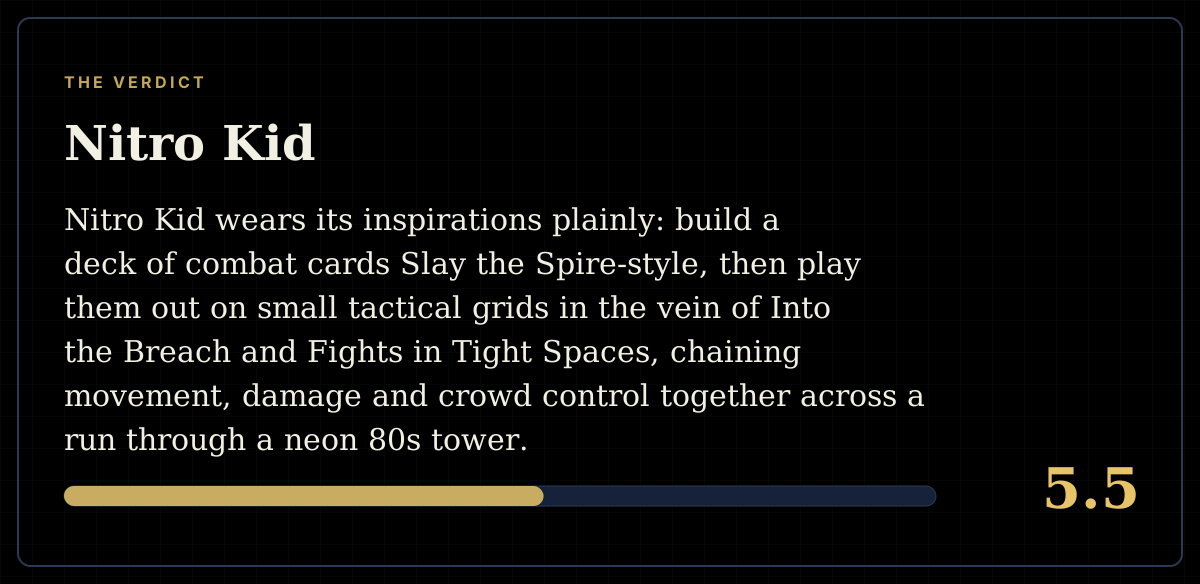
5.5 / 10
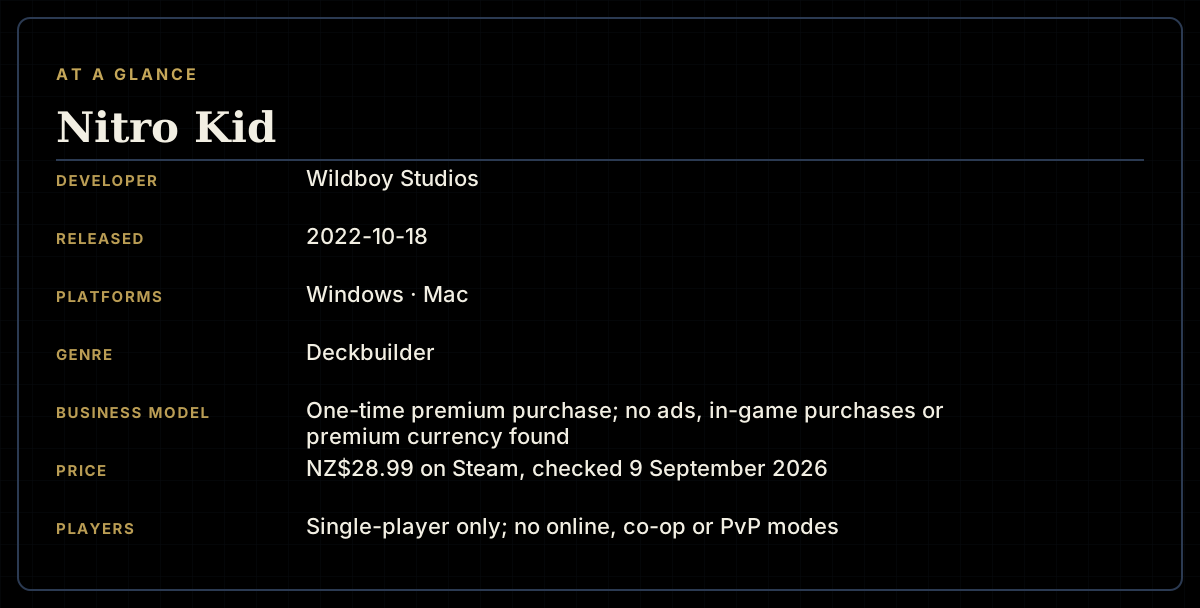
- Developer
- Wildboy Studios
- Publisher
- tinyBuild
- Released
- 18 October 2022
- Platforms
- Windows, Mac
- Genre
- Deckbuilder
- Monetisation
- One-time premium purchase; no ads, in-game purchases or premium currency found
- Players
- Single-player only; no online, co-op or PvP modes
The short version
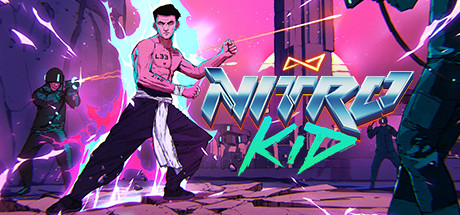
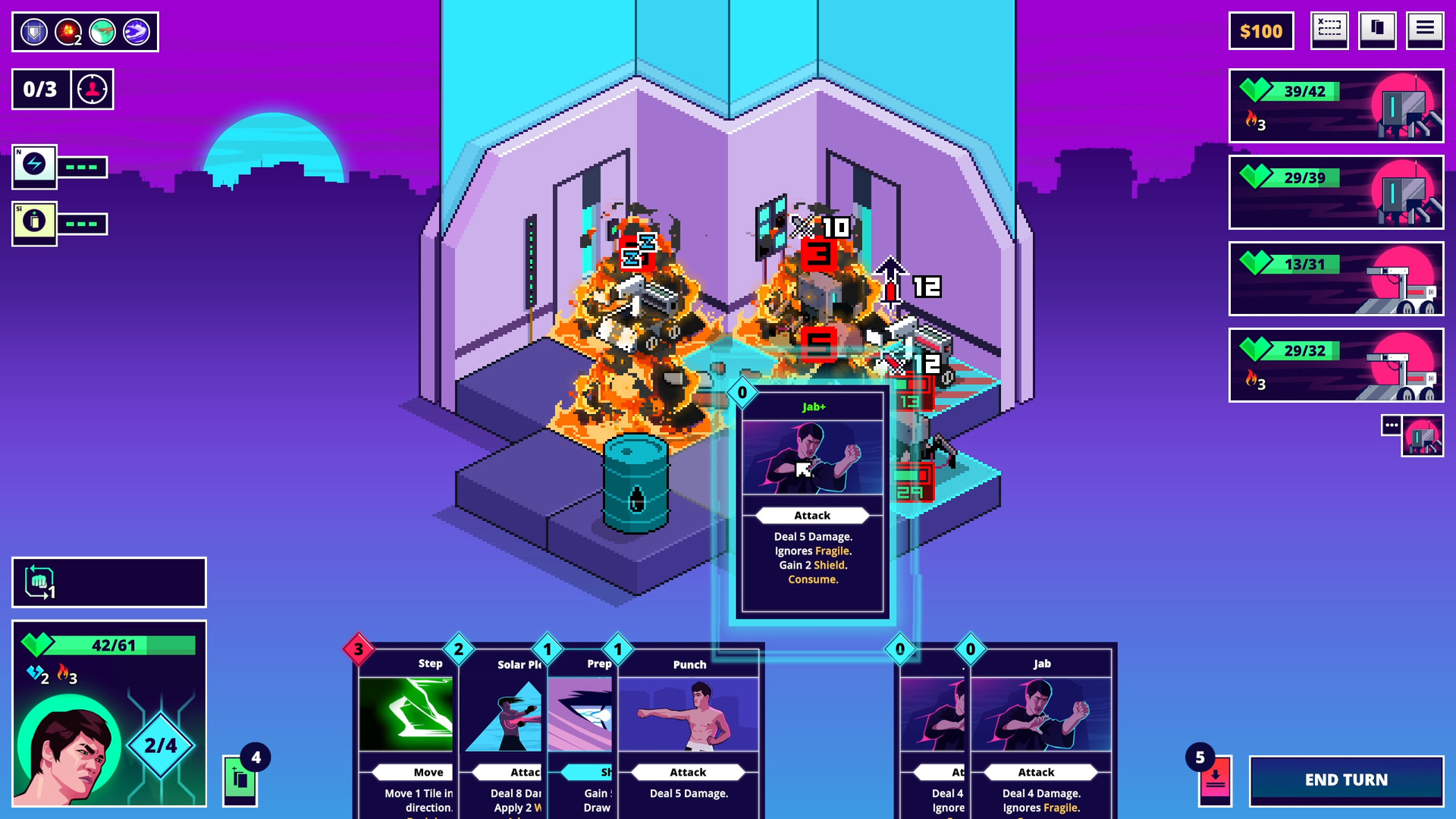
Nitro Kid wears its inspirations plainly: build a deck of combat cards Slay the Spire-style, then play them out on small tactical grids in the vein of Into the Breach and Fights in Tight Spaces, chaining movement, damage and crowd control together across a run through a neon 80s tower. When it clicks, reviewers describe genuinely satisfying moments where a build starts doing more than they'd planned, and the near-universally praised synthwave soundtrack — nominated for a Steam Award — carries even weaker runs.
The specific, repeated complaint from reviewers who know its genre touchstones well is more serious than ordinary nitpicking: unlike Into the Breach or Fights in Tight Spaces, where reading and manipulating enemy positioning is the whole point, Nitro Kid's enemies automatically rotate to face the player whenever they move, removing much of the outsmarting that makes the genre's best entries satisfying. Combined with limited movement options, small claustrophobic arenas, and a meaningfully underpowered starting character, several detailed reviews conclude the game falls short of the exact games it's most directly compared to. No patch has addressed any of this since November 2022.
Biggest strengths
- A widely and specifically praised synthwave soundtrack, nominated for the Steam Awards' Best Soundtrack category the year it released, that reviewers say elevates even a middling run
- Real, satisfying moments of deck synergy where cards chain into each other and enemies get pushed and controlled in ways a player didn't originally plan for
- A distinctive visual identity — retro-futuristic 80s neon combined with pixel-art combat — that stands out in a genre often defined by darker fantasy or sci-fi settings
Biggest weaknesses
- Enemies automatically rotate to face the player on movement, removing much of the positional outsmarting that defines the genre's clearest touchstones (Into the Breach, Fights in Tight Spaces) — multiple detailed reviewers name this specific design choice as the reason the comparison doesn't hold up
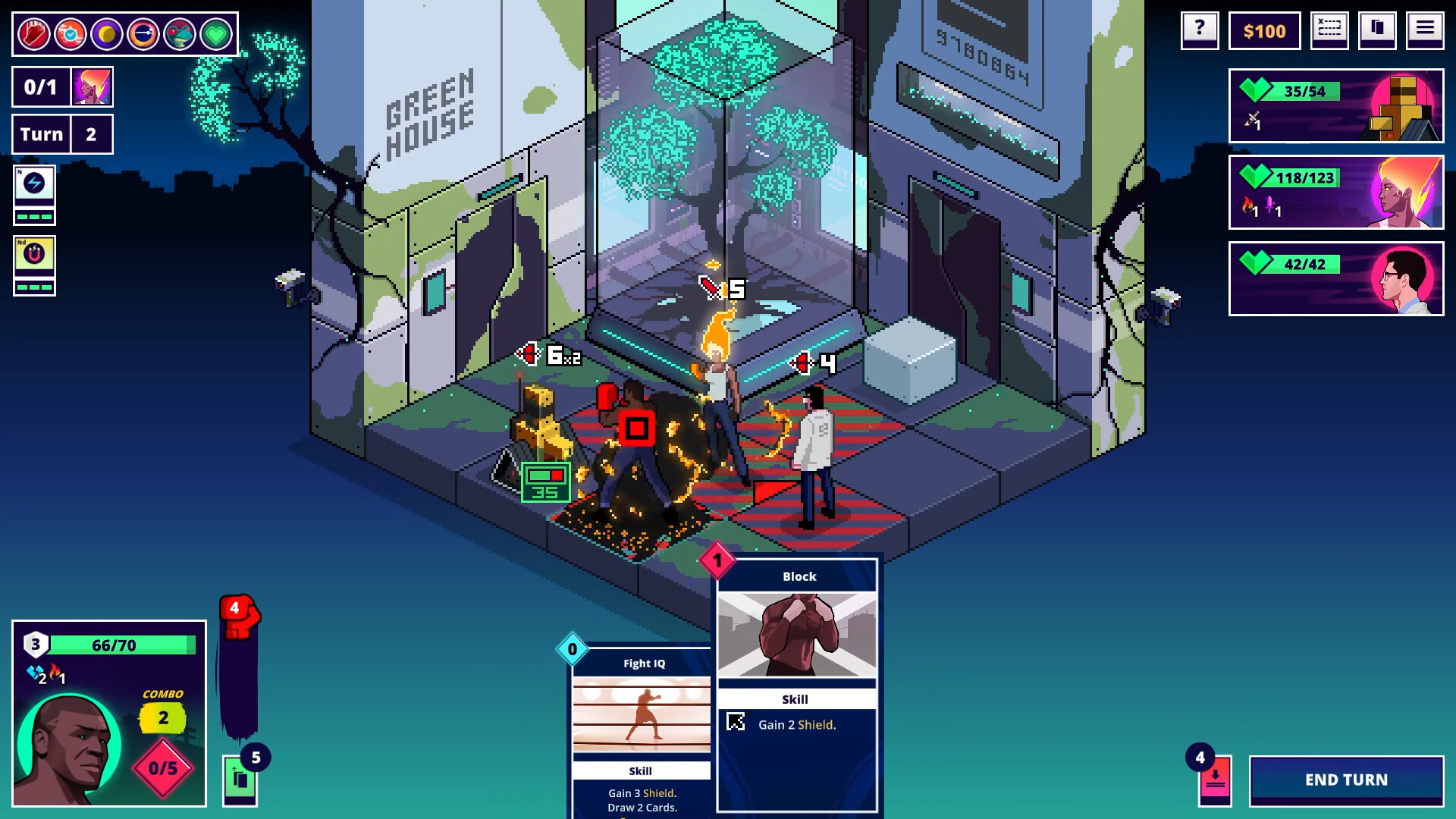
- Limited movement options and small, claustrophobic combat arenas compound the positioning problem, with players frequently backed into corners where planned movement effects can't be used at all
- One of the three playable characters (L33) is reported as meaningfully underpowered compared to the others, a specific balance complaint rather than general difficulty grumbling
Who it's for: Deckbuilder-tactics fans who specifically want the synthwave aesthetic and soundtrack, or who haven't already played Into the Breach or Fights in Tight Spaces. Less suited to genre veterans of those two games, who are likely to notice exactly what's missing.
Our recommendation: A stylish, well-scored genre hybrid worth trying on a discount, but genre veterans should expect it to fall short of the specific games it's most often compared to.
5.5 / 10
Nitro Kid knows exactly what games it wants to be compared to, and says so through its own design: build a card-based combat deck across a roguelike run, then execute it on small tactical grids where movement, damage and positioning all interact, all wrapped in a synthwave 80s aesthetic with a soundtrack reviewers can't stop praising. That's a strong pitch, built on two genuinely respected genre touchstones — Slay the Spire for the deckbuilding, Into the Breach and Fights in Tight Spaces for the tactical grid combat — and reviewers who come to it fresh, without deep experience in those specific comparisons, generally have a good time. The trouble starts with reviewers who know those games well.
A soundtrack that earns its acclaim, and a loop that mostly works
Whatever else this review has to say critically, the music deserves unqualified praise: reviewers across the review base single it out unprompted and specifically, one flatly stating Nitro Kid should win a best-soundtrack award, and the game did in fact receive a genuine nomination in the Steam Awards' Best Soundtrack category the year it launched. The deck-building loop underneath also earns real, specific praise when it clicks — reviewers describe runs where cards start chaining together unexpectedly, pushing enemies around and controlling a fight in ways that weren't part of the original plan, which is exactly the kind of emergent satisfaction a good deckbuilder should deliver.
The comparison that doesn't hold up
Set against that is a specific, repeated, and unusually pointed complaint. Multiple detailed reviews — including one explicitly framed as "a failed attempt at copying Fight in Tight Spaces" — identify the exact mechanical reason the comparison falls short: every enemy automatically rotates to face the player whenever they move, and many pursue or attack regardless of position. In Into the Breach and Fights in Tight Spaces, reading and manipulating exactly where enemies are facing and standing is the core skill the entire genre is built around; removing that turns positioning into something closer to decoration. Reviewers compound this with a related complaint about limited movement options in small, claustrophobic arenas, meaning even when movement cards are available, players are frequently backed into a corner where they can't be used effectively. More than one reviewer explicitly recommends players interested in the genre play Fights in Tight Spaces, Into the Breach or Griftlands instead, name-checking Nitro Kid's own clearest inspirations as the better version of what it's attempting.
A character imbalance and an input gap
Beyond the core design tension, two more specific complaints recur. L33, one of the three playable characters, is reported by more than one reviewer as meaningfully underpowered compared to the other two — a specific balance complaint about one character's damage output falling well short of what a full playthrough needs, not a generic difficulty gripe. Separately, despite the game achieving a "Steam Deck Compatible" label in a November 2022 update, reviewers who specifically want to play it that way say the label doesn't reflect what they actually need: one detailed 2026 review pleads directly for real controller support, explicitly noting that touchscreen input "doesn't count," while a separate review from the same year describes the font as too small to comfortably read on a Steam Deck's screen. Compatible, in this case, appears to mean playable via touch rather than properly supported with a controller.
Confirmed: nothing has changed since November 2022
This review checked the game's full public patch history directly rather than taking any single reviewer's word for it. The record is unambiguous: seventeen total public posts exist for Nitro Kid, the last of which — a balance update numbered 1.1.4 — landed on 30 November 2022. Nothing has followed since, in any form, as far as the public record shows. That directly corroborates a detailed December 2024 review stating plainly that the developer hadn't patched the game since 2022 and hadn't acknowledged reported bugs since April 2024. Whatever the reasons, every specific complaint in this review — the auto-rotating enemies, the character balance, the input support gap — has had years to be addressed and, as far as this research can confirm, has not been.
A real skill ceiling, for players who stick with it
Not every reviewer agrees the positioning complaint is fatal. One review, from a player who describes holding multiple speedrun world records for the game, argues there's a real, deep understanding to be built once you look past the surface-level comparison to other tactics games — movement is deliberately limited, and mastery comes from working within that constraint rather than expecting Into the Breach's freer positional play. That's a genuinely different read from the majority complaint, and it's worth reporting as a real, informed counterpoint rather than dismissing it: a small but committed high-skill community exists around this exact game, even as the broader reviewer consensus finds its core mechanic disappointing relative to its inspirations. With 46 achievements spanning story completion, combat challenges and character-specific goals, there's real structured content for players who land on that side of the divide.
Where it lands
Nitro Kid is a stylish, well-scored genre hybrid that mostly delivers on its own terms for players without deep prior experience in the tactical games it's drawing from, but its central design choice undercuts the exact appeal that makes its clearest inspirations so well regarded, and that choice — like everything else about the game — hasn't been revisited since its first month on sale. A 5.5 reflects real craft in its presentation and music, held back by a foundational design decision its own reviewers keep independently identifying as the problem.
Pros and cons
Pros
- A widely and specifically praised synthwave soundtrack, nominated for the Steam Awards' Best Soundtrack category the year it released, that reviewers say elevates even a middling run
- Real, satisfying moments of deck synergy where cards chain into each other and enemies get pushed and controlled in ways a player didn't originally plan for
- A distinctive visual identity — retro-futuristic 80s neon combined with pixel-art combat — that stands out in a genre often defined by darker fantasy or sci-fi settings
- Genuine replay value for players who enjoy optimising builds across three playable characters and multiple difficulty tiers
Cons
- Enemies automatically rotate to face the player on movement, removing much of the positional outsmarting that defines the genre's clearest touchstones (Into the Breach, Fights in Tight Spaces) — multiple detailed reviewers name this specific design choice as the reason the comparison doesn't hold up
- Limited movement options and small, claustrophobic combat arenas compound the positioning problem, with players frequently backed into corners where planned movement effects can't be used at all
- One of the three playable characters (L33) is reported as meaningfully underpowered compared to the others, a specific balance complaint rather than general difficulty grumbling
- No native controller or proper Steam Deck input support exists beyond touchscreen, which reviewers who specifically request it say doesn't count as real support for a game this tactical
- No patch, hotfix or balance update has been released since November 2022, meaning none of the complaints above have been addressed in the years since they were first raised
Screenshots
-

Nitro KidImage: tinyBuild via Steam -
Nitro KidImage: tinyBuild via Steam -
Nitro KidImage: tinyBuild via Steam -
How the review scores each part of the gameWanderer Editorial -
The specsWanderer Editorial -
The short versionWanderer Editorial