Game review
Craft The World
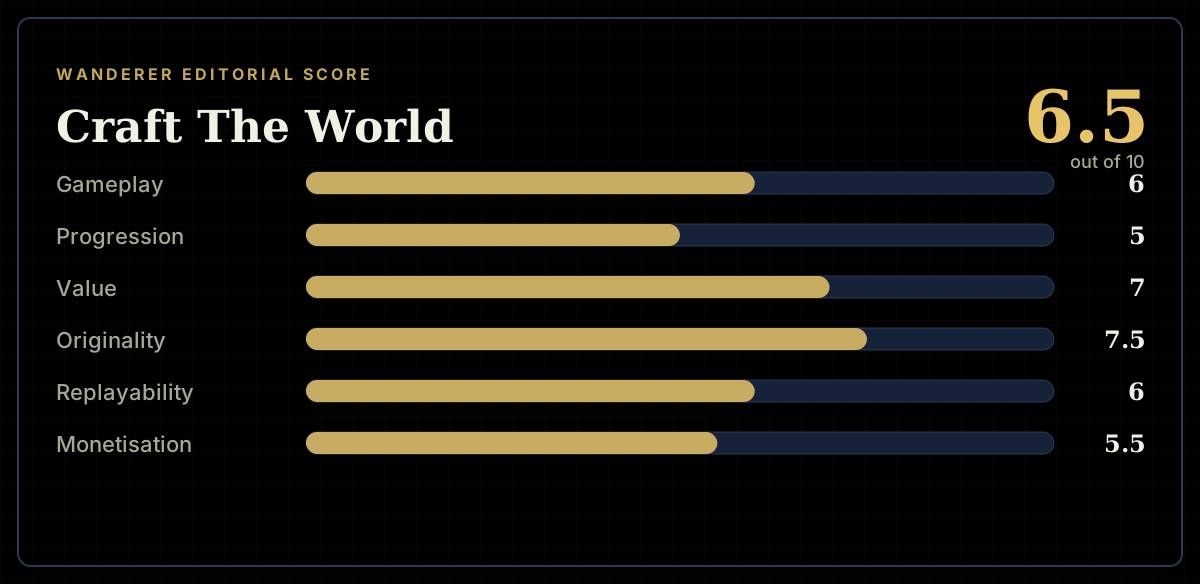
6.5 / 10
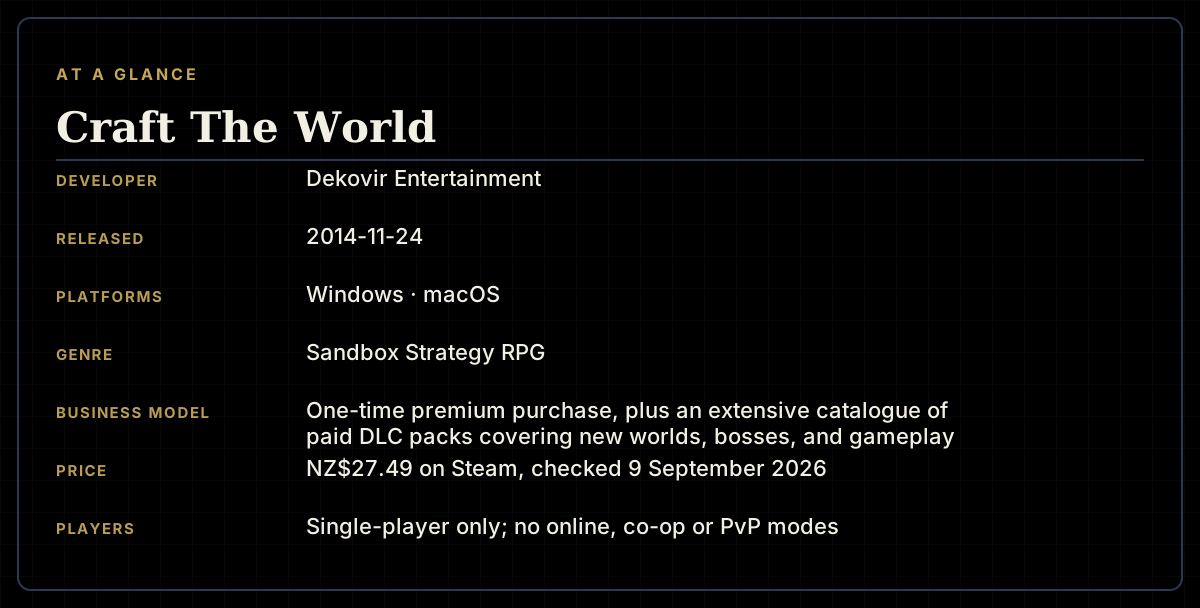
- Developer
- Dekovir Entertainment
- Publisher
- Dekovir Ltd
- Released
- 24 November 2014
- Platforms
- Windows, macOS
- Genre
- Sandbox Strategy RPG
- Monetisation
- One-time premium purchase, plus an extensive catalogue of paid DLC packs covering new worlds, bosses, and gameplay features (including a separate paid pack required for playable female dwarves). No ads, no ongoing subscription
- Players
- Single-player only; no online, co-op or PvP modes
The short version
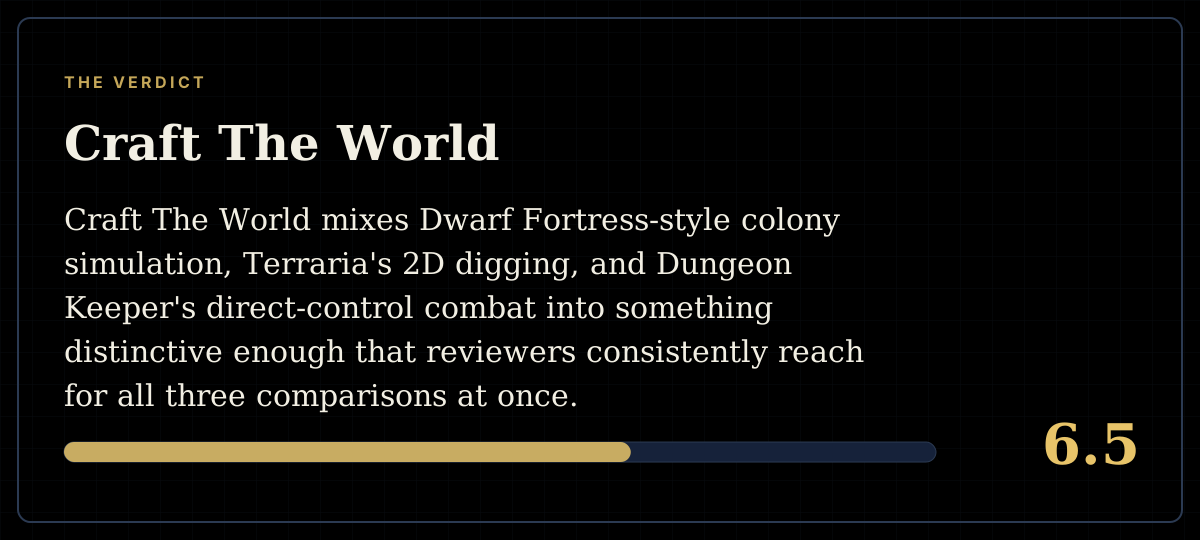
Craft The World mixes Dwarf Fortress-style colony simulation, Terraria's 2D digging, and Dungeon Keeper's direct-control combat into something distinctive enough that reviewers consistently reach for all three comparisons at once. The opening hours are widely, specifically praised, and remarkably, the developer is still shipping real updates and building new spin-off titles as recently as this month, twelve years after the original release.
What drags the score down is a pattern that shows up across an unusually large share of both positive and negative reviews: a strong, magical start giving way to a repetitive, tedious grind once the game's small handful of worlds and its rigid, multi-tier crafting requirements set in. Specific, corroborated complaints about poor dwarf pathing AI and paid DLC gating basic content like playable female dwarves compound the problem rather than standing apart from it.
Biggest strengths
- A genuinely distinctive genre mashup — Dwarf Fortress-style colony management, Terraria-style 2D digging, and direct dwarf control in combat — that reviewers consistently describe as unlike any single one of its influences
- The opening eight-to-ten hours are widely and specifically praised across nearly the entire review sample, positive and negative alike, as genuinely magical and absorbing
- An unusually long, still-active support record: the developer shipped a real content update as recently as February 2026 and is currently developing multiple new spin-off titles, twelve years after this game's original release
Biggest weaknesses
- An unusually consistent pattern across the review sample: reviewers overwhelmingly describe the same arc of a strong opening stretch collapsing into repetitive tedium, with one widely- quoted review charting it hour-by-hour from "Awesome" through "Tedious" to "Arrrghhhh!"
- Dwarf pathing and task-priority AI is repeatedly criticized as unreliable, with reviewers describing dwarves making inefficient or nonsensical decisions that require constant manual correction
- A specific, detailed critique argues the crafting tree offers little real strategic choice, functioning as a fixed "obstacle course" of prerequisite items rather than a system with meaningful decisions
Who it's for: Fans of colony-management sims and Dwarf Fortress-likes who want a more accessible, visually charming entry point and don't mind the genre's characteristic grind once the novelty wears off. Less suited to players who want steady difficulty and pacing all the way through rather than a strong opening that tapers off.
Our recommendation: A worthwhile purchase for the base game's opening stretch and distinctive presentation, but budget for diminishing returns after the first ten to twenty hours and check what basic features (like playable female dwarves) require additional DLC before buying.
6.5 / 10
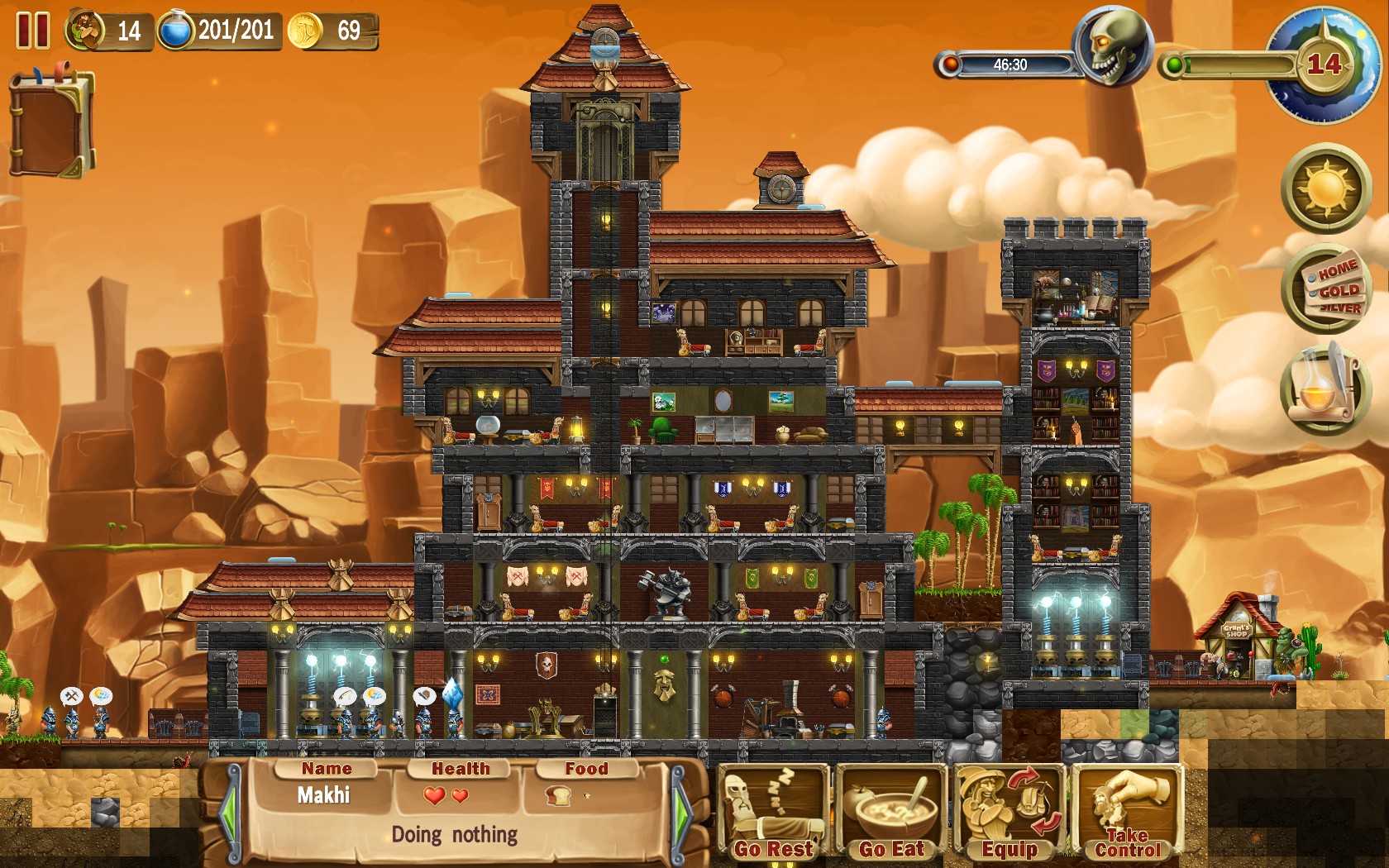
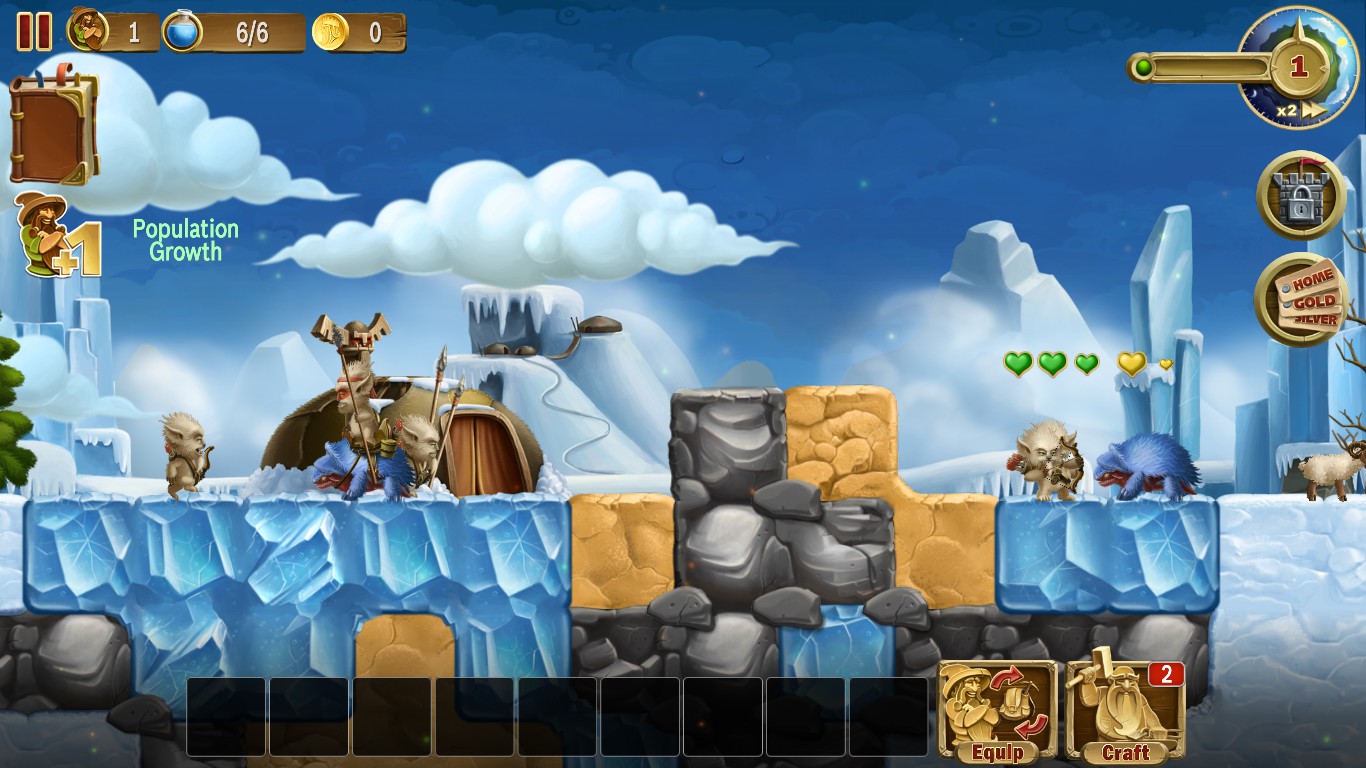
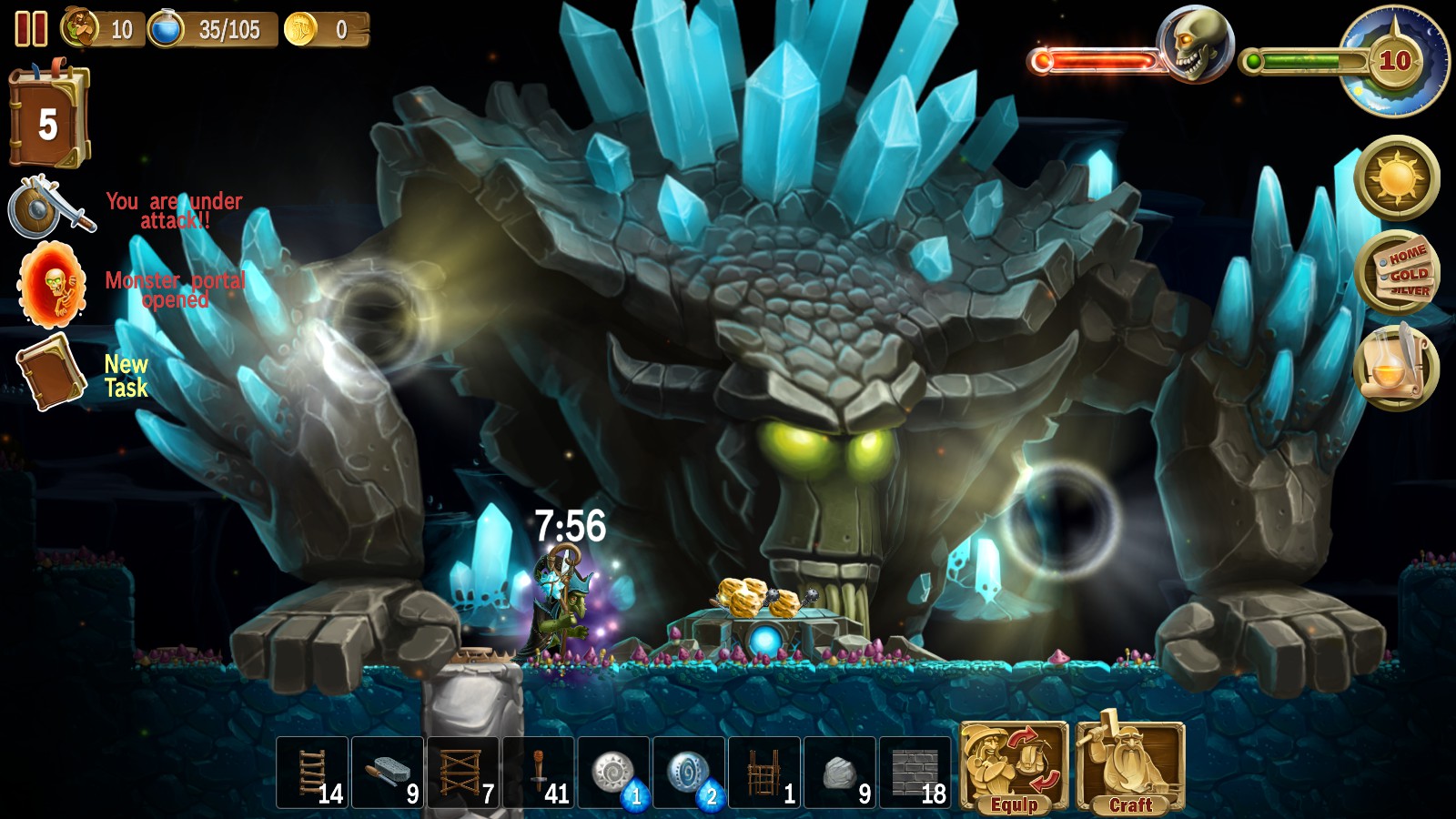
Craft The World's elevator pitch writes itself for anyone who's spent time with genre classics: Dwarf Fortress's colony management, Terraria's 2D digging and building, and Dungeon Keeper's direct dwarf control in combat, folded into one approachable, visually charming package. Reviewers reach for all three comparisons constantly, and a decade-plus after release, the developer is still actively building on the idea — a real content update shipped as recently as February 2026, and the studio is currently developing multiple new spin-off titles in the same crafting-sandbox space. That's a genuinely rare degree of sustained commitment for a 2014 indie release, and it sits alongside a review base that's overwhelmingly positive on the strength of a real, distinctive idea well executed, at least at first.
An arc nearly every reviewer describes the same way
What makes this game's review sample unusual is how consistently both its fans and its critics describe the same shape of experience. One widely-quoted review charts it explicitly: "First 10 hours - Awesome / Next 10 hours - Fun / Next 10 hours - ok / Next 10 hours - Tedious / Next 10 hours - Arrrghhhh!" That's not an isolated complaint — reviewer after reviewer, including several giving the game a thumbs-up overall, independently describe the opening stretch as genuinely magical and the back half as a real, specific decline into repetition rather than sustained challenge. When a review sample converges this consistently on the exact same narrative arc, regardless of whether the final verdict lands positive or negative, it's worth treating as an accurate description of the game rather than a taste-dependent complaint.
Two specific mechanical complaints behind the fatigue
Reviewers point to concrete causes rather than just vague burnout. Dwarf pathing and task-priority AI comes up repeatedly as unreliable — dwarves described as wandering off, making inefficient routing decisions, or refusing to prioritize urgent tasks without constant manual correction from the player. A second, more structural critique argues the crafting system itself is the deeper problem: one detailed review describes needing to build a fixed chain of prerequisite items just to reach the next tier, concluding "you have no meaningful choices. You can run the obstacle course efficiently or inefficiently, based on how well you understand the recipe tree" — a specific argument that the game's apparent depth is mostly the illusion of choice laid over a fixed, linear requirement chain.
Steam's own achievement data backs up how sharply the content thins out as a result: while the earliest milestones sit comfortably above 75% of the tracked playerbase, the achievement for finishing the game's final world sits at just 0.5% — an unusually steep drop-off even by the standards of a genre known for long tails, and hard evidence that the fatigue reviewers describe is a widely shared experience rather than a handful of players hitting a skill wall.
A DLC catalogue that gates some basics
Craft The World's commercial model compounds the content-thinness complaint in a specific way: alongside DLC that meaningfully expands the game (new worlds, bosses, mechanics), playable female dwarves specifically require a separate paid pack, "Sisters in Arms." Several reviewers flag this directly as a basic character-representation option that feels like it should ship with the base game rather than sit behind an additional purchase — a fair, specific critique distinct from the broader "there's a lot of optional DLC" observation that applies to plenty of well-regarded games without drawing the same complaint.
The accessibility trade-off, both ways
Several reviewers frame their purchase explicitly against Dwarf Fortress and Gnomoria, describing Craft The World as the version they tried first specifically because those genre touchstones looked too dense or too punishing to learn. That trade-off cuts both directions in the review sample: reviewers who came from Dwarf Fortress consistently credit this game's friendlier visual presentation and gentler learning curve as real, deliberate strengths, while a smaller group with the same background specifically criticize it for feeling shallower once the initial accessibility wears off — the same dwarf-management fantasy with meaningfully less emergent depth underneath it. Neither camp is wrong about what they're describing; it's the same design decision read two different ways depending on what a given player was hoping the accessibility would eventually open up into.
Twelve years, and still actively building
Set against all of this is a genuinely unusual fact worth crediting directly: Craft The World is still being supported in a real, substantive way well over a decade after release. The developer's public update history shows a content patch in February 2026, alongside active promotion of at least three new titles in development — including a direct crossover DLC tying this specific game to one of them, released within the last week of this review being written. Very few 2014-era indie releases can claim their original developer is still both patching the base game and building new work in the same universe this far out — whatever this specific entry's design shortcomings, it hasn't been abandoned in the way many small studios' first successes eventually are.
Where it lands
Craft The World earns its Very Positive reputation honestly on the strength of its opening hours and a genre mashup few other games attempt this well. But the near-universal pattern of decline its own reviewers describe, backed up precisely by achievement data showing almost nobody reaches the end, and compounded by dwarf-AI frustration and a DLC structure that gates basic content, are real enough to weigh against that opening-hours magic rather than treat as an afterthought. Go in expecting a genuinely great first act and a much rockier back half, from a developer that, credit where due, never actually walked away from the project.
Pros and cons
Pros
- A genuinely distinctive genre mashup — Dwarf Fortress-style colony management, Terraria-style 2D digging, and direct dwarf control in combat — that reviewers consistently describe as unlike any single one of its influences
- The opening eight-to-ten hours are widely and specifically praised across nearly the entire review sample, positive and negative alike, as genuinely magical and absorbing
- An unusually long, still-active support record: the developer shipped a real content update as recently as February 2026 and is currently developing multiple new spin-off titles, twelve years after this game's original release
- Extensive optional DLC content for players who want more worlds, bosses and mechanics beyond the base game, for those willing to pay into it
- More visually accessible and less punishing to learn than genre touchstones like Dwarf Fortress, which several reviewers cite as the specific reason they tried this game first
Cons
- An unusually consistent pattern across the review sample: reviewers overwhelmingly describe the same arc of a strong opening stretch collapsing into repetitive tedium, with one widely- quoted review charting it hour-by-hour from "Awesome" through "Tedious" to "Arrrghhhh!"
- Dwarf pathing and task-priority AI is repeatedly criticized as unreliable, with reviewers describing dwarves making inefficient or nonsensical decisions that require constant manual correction
- A specific, detailed critique argues the crafting tree offers little real strategic choice, functioning as a fixed "obstacle course" of prerequisite items rather than a system with meaningful decisions
- Achievement data confirms the content genuinely thins out: the achievement for completing the game's final world sits at just 0.5% of the tracked playerbase, well below what a well-paced campaign would typically show
- Basic content some reviewers expect as standard — playable female dwarves among them — is gated behind separate paid DLC rather than included in the base game
Screenshots
-
Craft The WorldImage: Dekovir Ltd via Steam -
Craft The WorldImage: Dekovir Ltd via Steam -
Craft The WorldImage: Dekovir Ltd via Steam -
How the review scores each part of the gameWanderer Editorial -
The specsWanderer Editorial -
The short versionWanderer Editorial