
Game review
Planetbase
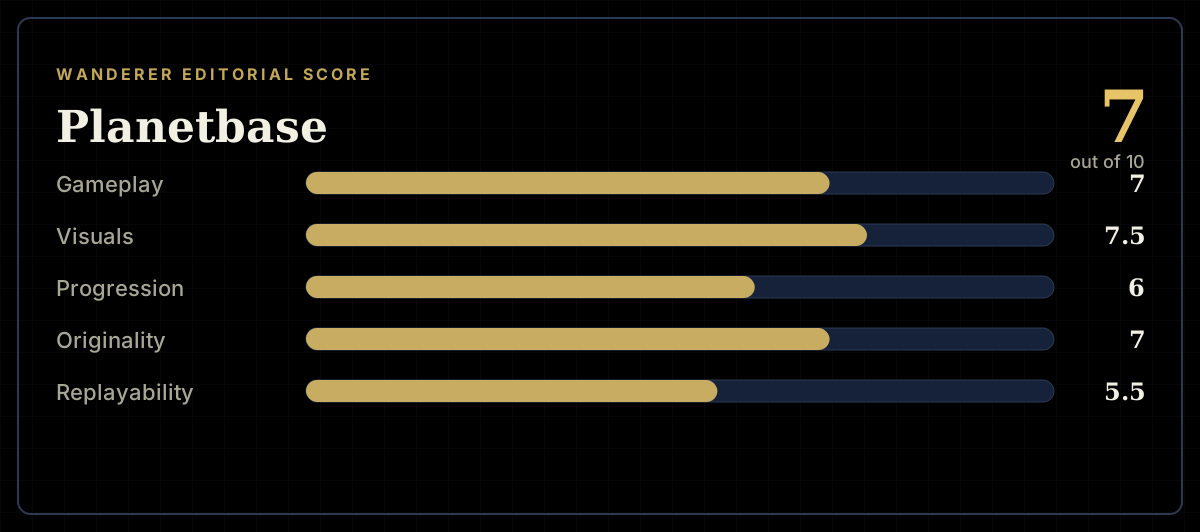
7 / 10
- Developer
- Madruga Works
- Publisher
- Madruga Works
- Released
- 15 October 2015
- Platforms
- Windows, macOS
- Genre
- Space Colony Sim
- Monetisation
- One-time purchase, NZ$21.99. No microtransactions, no DLC.
- Players
- Single-player only
The short version
Planetbase asks you to build and sustain a self-sufficient colony on a hostile alien world — power, oxygen, food and manufacturing chains connected by pathways your colonists physically walk to do their jobs. Mostly Positive at 79.7% across 10,401 reviews, it's held up reasonably well for a decade-old management sim, drawing consistent praise for its visual polish and the satisfaction of a well-planned base layout.
The honest, detailed criticism centres on one specific design decision. Because outdoor structures (power, oxygen generation) and indoor domes must be connected by pathways that can't cross rock formations, a single meteorite strike on an unavoidable bottleneck connection can end an entire colony in one hit. Some long-time players call this a fatal flaw baked into the game's terrain logic; others, including a reviewer with over 900 hours who scaled colonies past 600 colonists, argue it's simply a planning mistake players need to design around.
Biggest strengths
- Genuinely satisfying base-planning logistics, where the placement of every structure has real downstream consequences
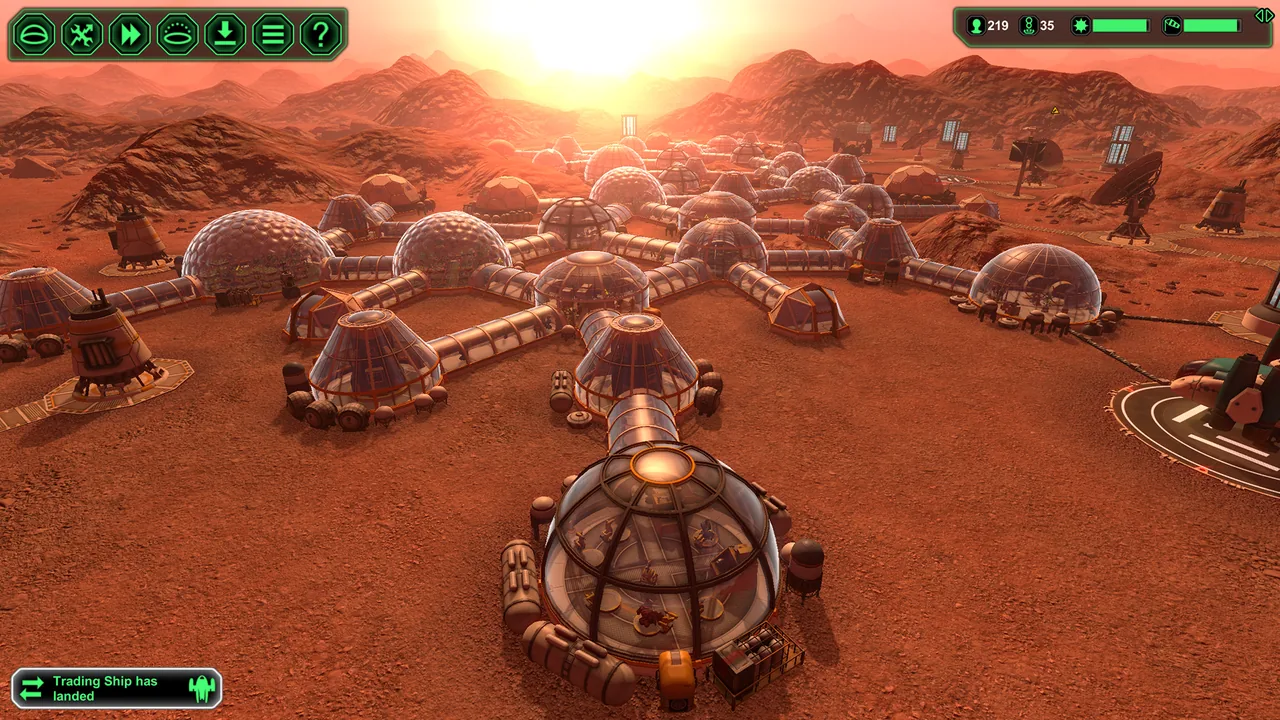
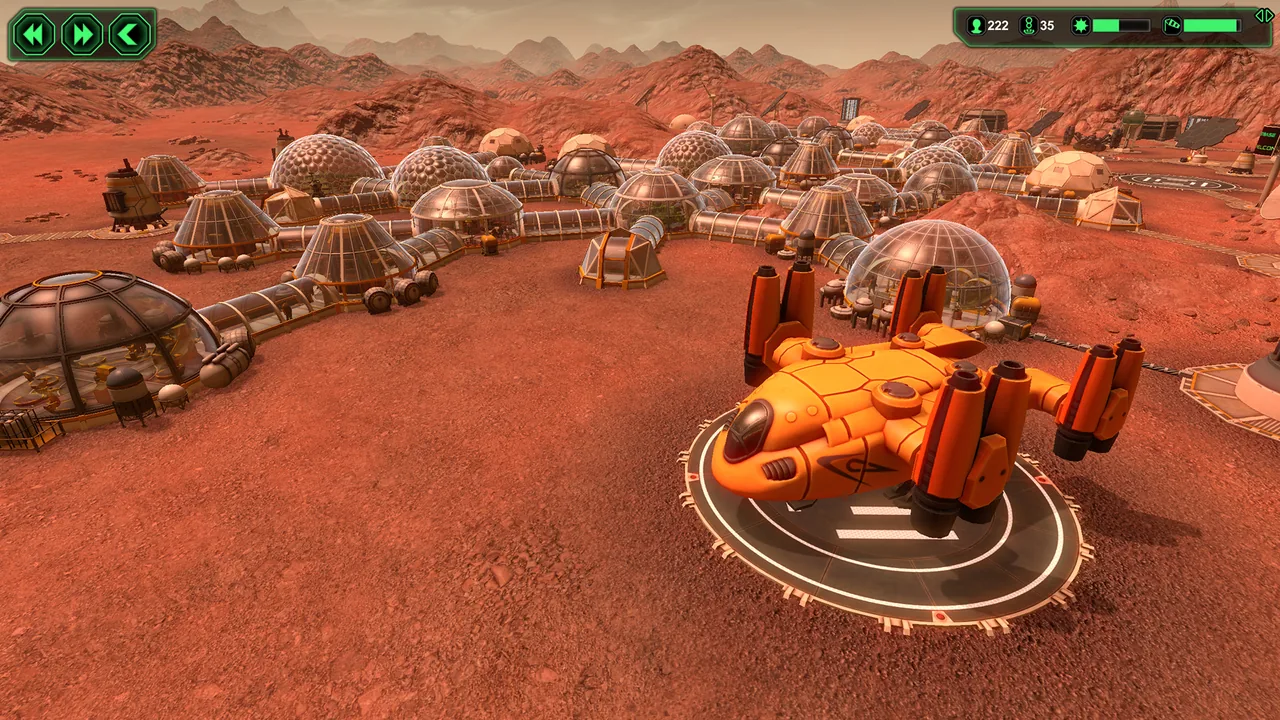
- Strong, still-attractive visual presentation for a decade-old release
- A committed minority of extremely high-playtime players (900+ hours) demonstrate the game supports serious long-term mastery for those who learn its systems deeply
Biggest weaknesses
- A specific, widely-discussed terrain mechanic — outdoor and indoor structures connected by pathways that can't cross rock — creates single-point-of-failure connections that a meteorite strike can exploit to end a colony instantly, called a fatal design flaw by a meaningful share of reviewers
- Content and goals are described as running dry after the early-to-mid game, with several reviewers noting there's "not enough game" once every building type has been constructed once
- Colonist AI draws consistent complaints about poor task prioritization and inefficient pathing
Who it's for: Fans of methodical, logistics-focused colony sims who enjoy optimizing a base layout more than chasing new content or narrative variety. Less suited to players who want a long-term goal structure or deep late-game systems — most reviewers agree the core loop is largely exhausted once you've built one of each building type.
Our recommendation: Worth a purchase at its modest price if the base-logistics puzzle genuinely appeals to you, but go in understanding its ceiling: expect 5-15 hours of genuine engagement rather than a long-term project, and study base layout carefully around the outdoor/indoor connection issue before committing to a design, since it's the single most consequential lesson the community has learned the hard way.
7 / 10
Planetbase is a decade old now, with a sequel announced but not yet released, which makes this the right moment to look at how the original actually holds up. The review corpus offers something unusually specific: a single, well-articulated design disagreement that both sides argue with real evidence rather than vague dissatisfaction.
Base planning as the whole game
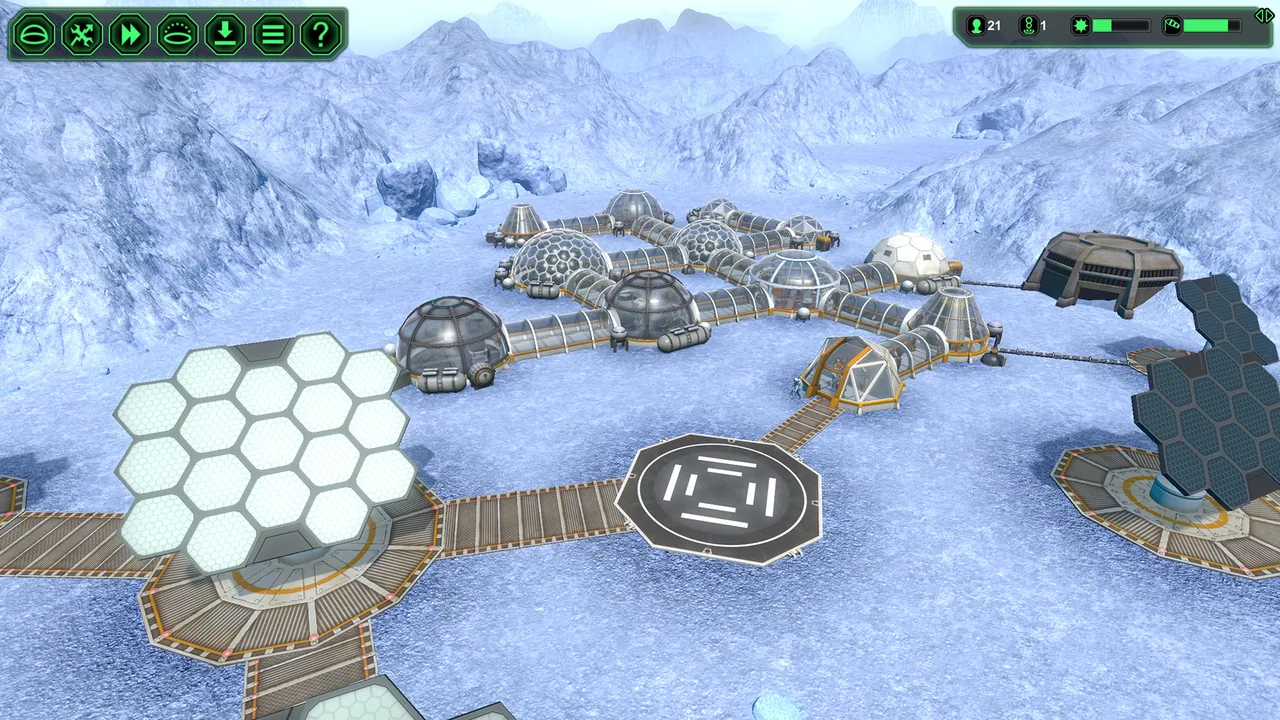
You land a group of settlers on a hostile world and build outward from there — mines connected to processors connected to manufacturing domes, all linked by pathways your colonists walk to perform their assigned tasks. Reviewers consistently credit the resulting logistics puzzle as genuinely satisfying: where you place a structure relative to everything else has real, cascading consequences, and getting a layout right feels earned. The presentation holds up well for its age too, with even critical reviewers routinely praising the visual polish.
The connection problem, argued from both sides
Here's the specific complaint worth understanding in detail, because it's argued with unusual precision on both sides. Outdoor structures — power and oxygen generation — and indoor domes must be linked by pathways that cannot cross rock formations. On terrain where the only viable route connects your entire base through one narrow corridor, that single connection becomes a catastrophic point of failure: a meteorite strike there can sever your colony's life support in one hit, regardless of how well everything else was planned. One of the most detailed negative reviews in the game's history — nearly 1,800 votes, from a player with 50 hours who clearly wrestled with the decision before writing it — calls this "a fatal flaw in the game design itself" that no amount of practice can overcome.
That's not the only word on the subject, though. A reviewer with over 900 hours, who reports successfully scaling colonies past 600 colonists across multiple scenarios, pushes back directly: "losing your Colony is down to you, the player — don't come up with excuses, you just mis-managed it." Both perspectives come from genuinely experienced players rather than a casual dismissal on one side and a defensive fanboy response on the other, and the honest read is probably in between: the mechanic is real and can be genuinely punishing on bad terrain, but experienced players demonstrably learn to design around it. Knowing about it before you start building is the practical takeaway either way.
Where the game runs dry
Separate from the terrain-connection debate, the more universal complaint concerns content depth. "There's just not enough GAME here," one reviewer writes, echoing a sentiment repeated across many others: once you've built one example of every structure type, the systems stop introducing anything new. This is a fair criticism of scope rather than execution, and it explains why most reviewers, even positive ones, describe the game's real engagement window as somewhere between five and fifteen hours rather than an open-ended project.
Reading the completion data
The achievement curve shows a game with a gentle early ramp and a steep late wall. Early milestones — landing your first base, connecting initial power — sit above 97% and 98%, meaning nearly every buyer experiences the opening hours successfully. The rarest achievements, tied to fast "express" colony completions, fall to 1.2-2.6%, reflecting a small group of dedicated players pursuing speedrun-style mastery well beyond what most buyers attempt.
7 out of 10. Planetbase remains a solid, visually appealing colony-logistics sim a decade after release, built around a genuinely satisfying core puzzle of base layout and resource chains. It's held below the top tier by two honest, well-documented limitations: a specific terrain mechanic that a meaningful share of experienced players consider a real design flaw rather than a skill issue, and a content ceiling most reviewers agree arrives sooner than they'd like. Go in with modest expectations for its length, plan your base layout carefully around rock formations, and it's a fair, worthwhile way to spend its asking price.
Pros and cons
Pros
- Genuinely satisfying base-planning logistics, where the placement of every structure has real downstream consequences
- Strong, still-attractive visual presentation for a decade-old release
- A committed minority of extremely high-playtime players (900+ hours) demonstrate the game supports serious long-term mastery for those who learn its systems deeply
- Reasonable price point that most reviewers, even critical ones, describe as fair for the content included
Cons
- A specific, widely-discussed terrain mechanic — outdoor and indoor structures connected by pathways that can't cross rock — creates single-point-of-failure connections that a meteorite strike can exploit to end a colony instantly, called a fatal design flaw by a meaningful share of reviewers
- Content and goals are described as running dry after the early-to-mid game, with several reviewers noting there's "not enough game" once every building type has been constructed once
- Colonist AI draws consistent complaints about poor task prioritization and inefficient pathing
- Limited replayability once the core systems are understood, since scenarios don't vary dramatically between playthroughs
Screenshots
-
PlanetbaseImage: Madruga Works via Steam -
PlanetbaseImage: Madruga Works via Steam -
PlanetbaseImage: Madruga Works via Steam -
How the review scores each part of the gameWanderer Editorial -
The short versionWanderer Editorial