
Game review
Caves of Lore
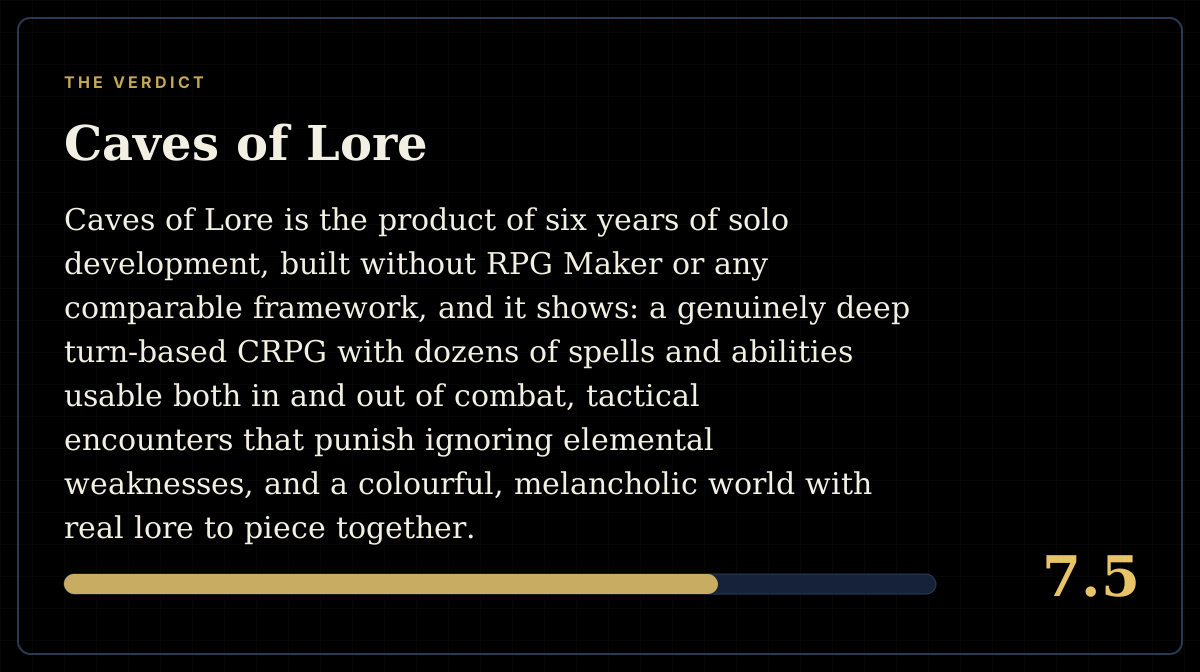
7.5 / 10
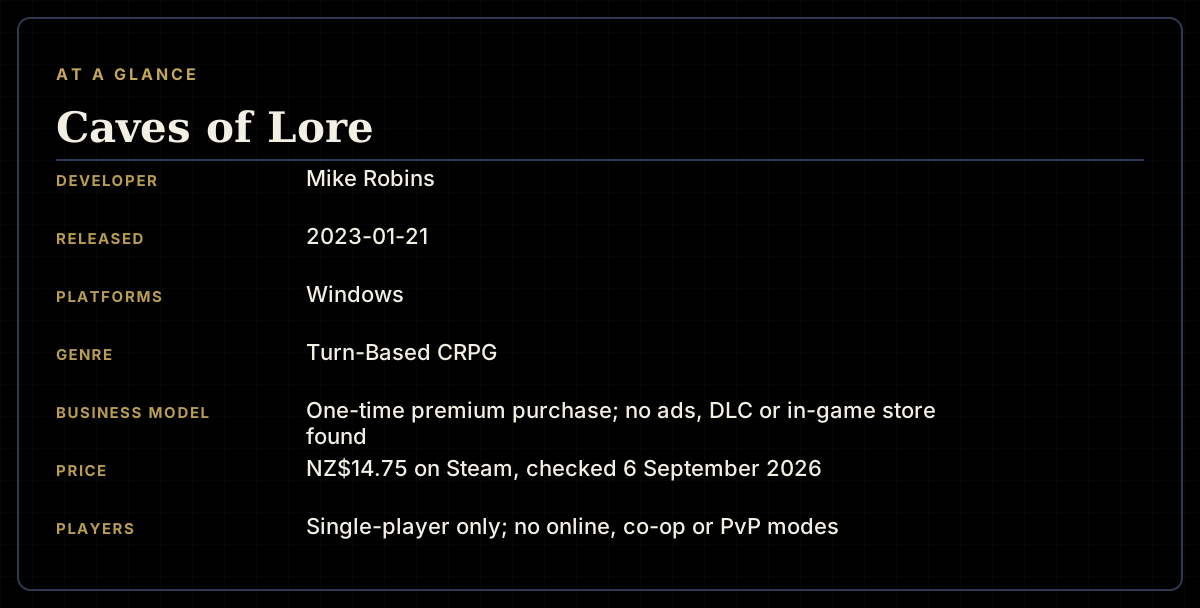
- Developer
- Mike Robins
- Publisher
- Mike Robins
- Released
- 21 January 2023
- Platforms
- Windows
- Genre
- Turn-Based CRPG
- Monetisation
- One-time premium purchase; no ads, DLC or in-game store found
- Players
- Single-player only; no online, co-op or PvP modes
The short version
Caves of Lore is the product of six years of solo development, built without RPG Maker or any comparable framework, and it shows: a genuinely deep turn-based CRPG with dozens of spells and abilities usable both in and out of combat, tactical encounters that punish ignoring elemental weaknesses, and a colourful, melancholic world with real lore to piece together. It placed 5th in RPGCodex's community-voted 2023 Game of the Year, and reviewers repeatedly invoke Jeff Vogel's Spiderweb Software catalogue as the nearest comparison for its scope and sincerity.
Set against that achievement is a specific, widely-corroborated pacing problem: the back half of the roughly 90-to-100-hour campaign leans heavily on frequent, low-stakes trash combat that even many of the game's admirers describe wearing thin well before the credits. UI and controller issues present at launch have since been substantially addressed by an exceptionally dedicated, still-active solo developer, whose response time to reported bugs is repeatedly cited by name in positive reviews as remarkable in itself.
Biggest strengths
- An extraordinarily deep, six-year solo-built CRPG with dozens of spells and abilities usable both in and out of combat, genuine elemental weakness tactics, and a rich, atmospheric world to explore
- Placed 5th in RPGCodex's community-voted 2023 Game of the Year list, and repeatedly compared by reviewers to Jeff Vogel's Spiderweb Software catalogue for scope and sincerity
- An exceptionally responsive solo developer, with reviewers specifically citing bug fixes delivered within minutes to hours of being reported, and a still-active, multi-year update cycle including a New Game Plus mode added as recently as May 2026
Biggest weaknesses
- A widely-repeated complaint describes the back half of the campaign, particularly around a specific graveyard area, as devolving into near-constant low-stakes combat that crowds out the exploration and world-building the opening hours are praised for
- Quests lean heavily on repetitive fetch and kill-count objectives that several reviewers single out as the weakest part of an otherwise strong game
- UI and controller support were rough at launch — including an ESC-key navigation loop and poor controller menu navigation — though a dedicated 2024 patch rebuilt the input system to address the controller issues specifically
Who it's for: CRPG veterans who want genuine old-school depth, extensive exploration and lore, and don't mind a long campaign that leans on quantity of combat encounters over consistently high stakes. Less suited to anyone wanting a tightly-paced story or minimal combat friction.
Our recommendation: A genuine hidden gem for CRPG fans specifically, and one of the more remarkable single-developer achievements in the genre — go in aware that the second half asks for real patience with its combat frequency.
7.5 / 10
Some indie RPGs borrow the CRPG label loosely; Caves of Lore earns it the hard way. Built entirely from scratch by a single developer over six years, without RPG Maker or any comparable engine shortcut, it's a turn-based role-playing game with the kind of scope and mechanical density reviewers say genre veterans will recognize immediately — and it earned real community recognition for it, placing 5th in RPGCodex's notoriously discerning 2023 community Game of the Year vote.
A genuine, deep old-school RPG
The moment-to-moment systems back up that reputation. Combat rewards reading enemy weaknesses, both physical and magical, and layering buffs before engaging rather than brute-forcing encounters; dozens of spells and abilities carry utility outside of combat as well, giving exploration and puzzle-solving real mechanical texture beyond simple traversal. Reviewers repeatedly invoke Jeff Vogel's Spiderweb Software catalogue — the gold standard for one-person-built CRPG depth — as the nearest comparison, which is about as strong a compliment as this specific genre offers. The world itself draws separate, consistent praise: colourful yet melancholic, with genuine lore to piece together through notes, environmental details and NPC conversation, rewarding the kind of close attention the genre's best entries have always demanded.
A pacing problem the game's own fans keep raising
Set against that achievement is a specific, widely and independently repeated complaint about how the back half of the roughly 90-to-100-hour campaign is paced. Multiple reviewers describe the game shifting from exploration-driven discovery toward near-constant low-stakes combat, with one detailed account singling out a graveyard area specifically as the point where "gameplay devolves into taking a step or two, then fighting one of the endless slew of battles," with a boss in that same area spawning minions continuously enough to turn the fight into pure attrition. This isn't a complaint confined to reviewers who dislike the genre — it recurs across accounts that otherwise rate Caves of Lore extremely highly, several explicitly framing it as the one thing standing between a great game and an exceptional one. A related, smaller complaint concerns quest design: several reviewers describe objectives leaning heavily on repetitive fetch-and-kill-count structures that feel thin compared to the depth of the combat and exploration systems around them.
Real, substantive fixes for real, specific problems
To its considerable credit, Caves of Lore's developer has responded to exactly the kind of specific feedback described above with real, dated changes rather than silence. Controller support, rough enough at launch that reviewers describe menus becoming unnavigable without a mouse, was rebuilt with an entirely new input system in a dedicated February 2024 patch. A specifically confusing early quest that couldn't actually be completed until much later in the game — a design gap that left multiple players stuck and searching for outside help — was directly identified and moved to a more appropriate point in the story. The developer's responsiveness extends to individual bug reports as well: reviewers cite fixes delivered within minutes to hours of being reported, an unusually fast turnaround for any developer, let alone a solo one juggling a game this large. That responsiveness has continued for over three years past launch, most recently with a New Game Plus mode added in May 2026 that carries forward permanent stat gains, memorized spells and unlocked traits into subsequent playthroughs.
What the achievement data reveals
Global achievement figures give a useful, objective sense of just how far most players actually get. Even a comparatively simple milestone like walking 1,000 tiles sits at only 41.4%, and deeper completionist achievements — memorizing every spell in the spellbook, learning every characteristic, winning without dying — all sit at a flat 0.2-0.3%. That's an extraordinarily steep completion curve even by CRPG standards, and it's consistent with the reviewer accounts above: this is a long, demanding game that a meaningful share of buyers start and don't finish, whether because of the combat-frequency pacing problem, the game's demanding lack of hand-holding, or simply its sheer length relative to how much free time a given player has to give it.
A resistance system that cuts both ways
The elemental resistance and damage-type system deserves a closer, more balanced look than a single complaint can give it, since reviewers land on genuinely opposite sides of the same mechanic. For players who enjoy adapting their loadout mid-campaign, being forced to diversify damage types across a full run is exactly the kind of tactical depth old-school CRPGs are meant to demand, and several reviewers cite it as a highlight precisely because it prevents settling into one dominant strategy for ninety-plus hours. For others, hitting an enemy type immune to a character's specialized build reads as a punishing wall requiring a trip back to town to regear and relevel rather than a puzzle to solve in the moment. Both reactions are reasonable responses to the same design choice — how it lands likely depends heavily on whether a given player enjoys mid-campaign build flexibility or prefers committing to one specialized approach and sticking with it.
Where it lands
Caves of Lore succeeds at exactly what it sets out to be — a genuine, deep, old-school CRPG built with real sincerity and mechanical ambition well beyond what a solo six-year project typically delivers. Its specific, well-documented pacing problem in the campaign's second half is a real and fair reason some players won't see it through to the end, and quest design remains its weakest system relative to everything built around it. But a developer this responsive, still actively improving the game more than three years after release, earns real trust that remaining rough edges are being taken seriously rather than abandoned — and for CRPG fans specifically, this remains one of the more substantial, sincere entries the genre has produced in recent years.
Pros and cons
Pros
- An extraordinarily deep, six-year solo-built CRPG with dozens of spells and abilities usable both in and out of combat, genuine elemental weakness tactics, and a rich, atmospheric world to explore
- Placed 5th in RPGCodex's community-voted 2023 Game of the Year list, and repeatedly compared by reviewers to Jeff Vogel's Spiderweb Software catalogue for scope and sincerity
- An exceptionally responsive solo developer, with reviewers specifically citing bug fixes delivered within minutes to hours of being reported, and a still-active, multi-year update cycle including a New Game Plus mode added as recently as May 2026
- Roughly 90 to 100 hours of content for players who see it through, backed by genuine secrets, puzzles and lore-piecing rewarding thorough exploration
- No hand-holding, which a large share of reviewers explicitly value as true to the genre's roots rather than a flaw
Cons
- A widely-repeated complaint describes the back half of the campaign, particularly around a specific graveyard area, as devolving into near-constant low-stakes combat that crowds out the exploration and world-building the opening hours are praised for
- Quests lean heavily on repetitive fetch and kill-count objectives that several reviewers single out as the weakest part of an otherwise strong game
- UI and controller support were rough at launch — including an ESC-key navigation loop and poor controller menu navigation — though a dedicated 2024 patch rebuilt the input system to address the controller issues specifically
- The resistance and elemental damage-type system can create hard walls requiring players to regear and re-level to progress, which some reviewers describe as forcing tedious backtracking rather than rewarding tactical adaptation
- The ending is described by multiple reviewers as an abrupt cliffhanger, with one specifically noting it closes on a direct thank-you note from the developer rather than a full narrative resolution
Screenshots
-
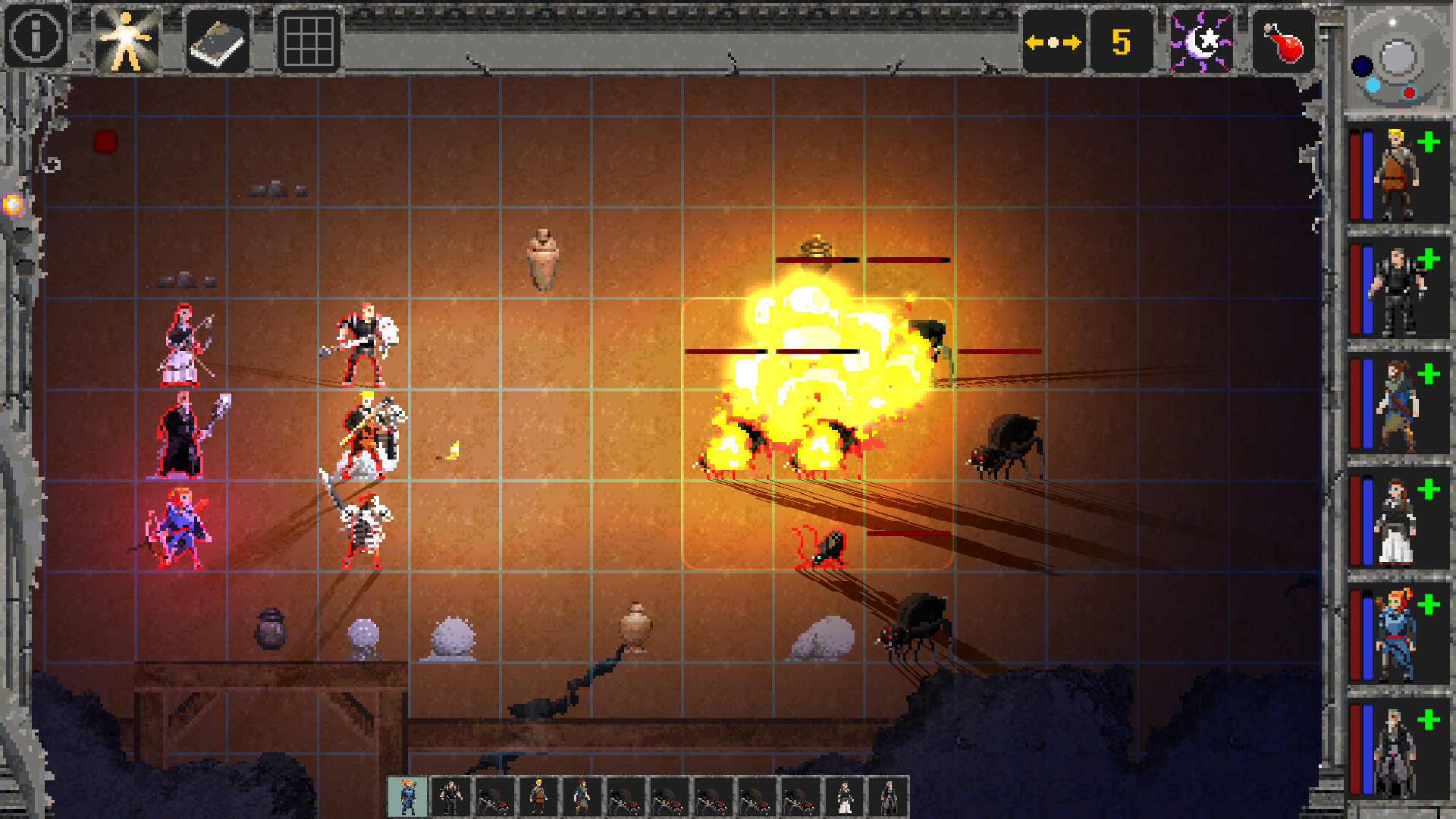
Caves of LoreImage: by Mike Robins via Steam -
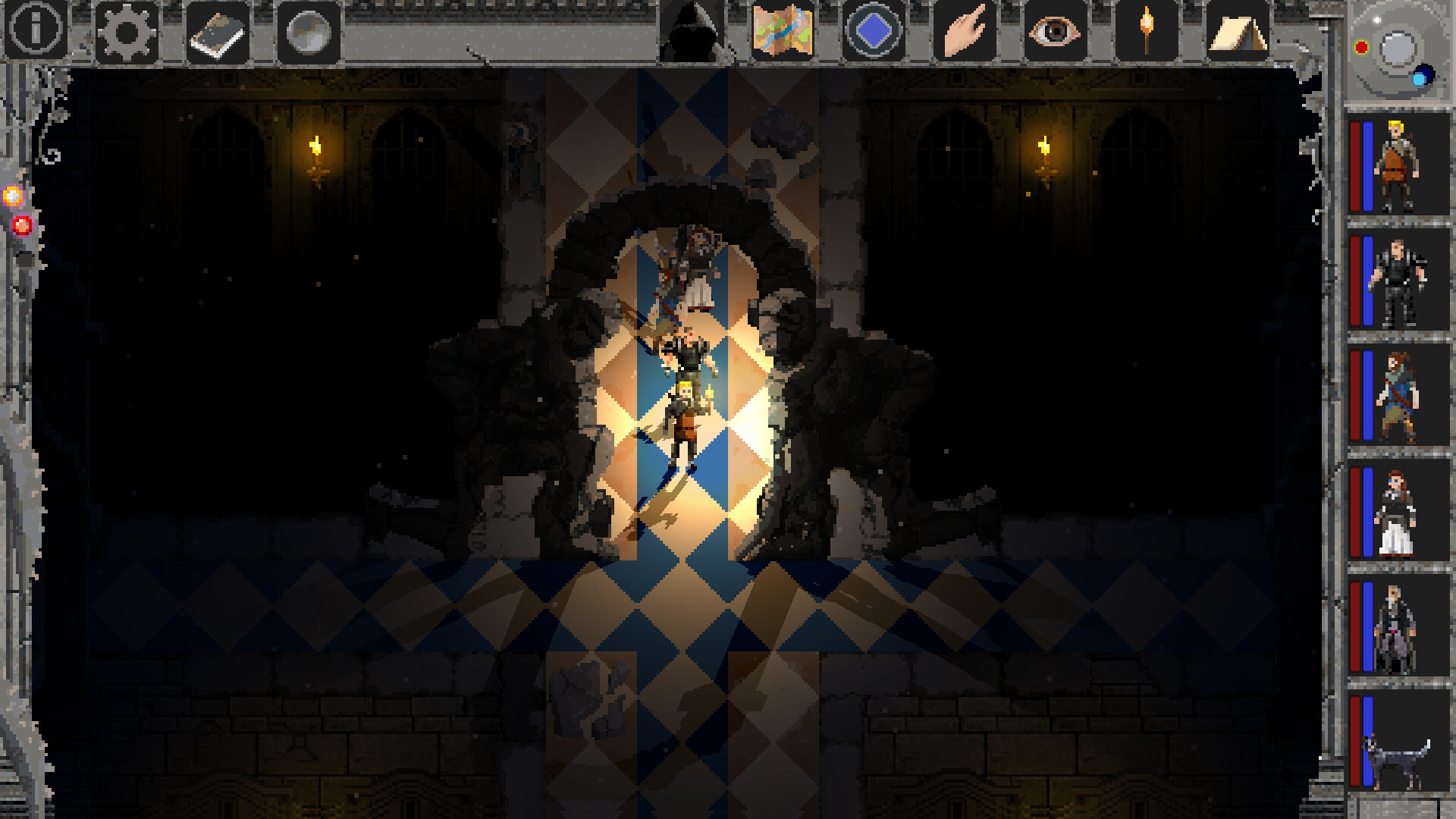
Caves of LoreImage: by Mike Robins via Steam -
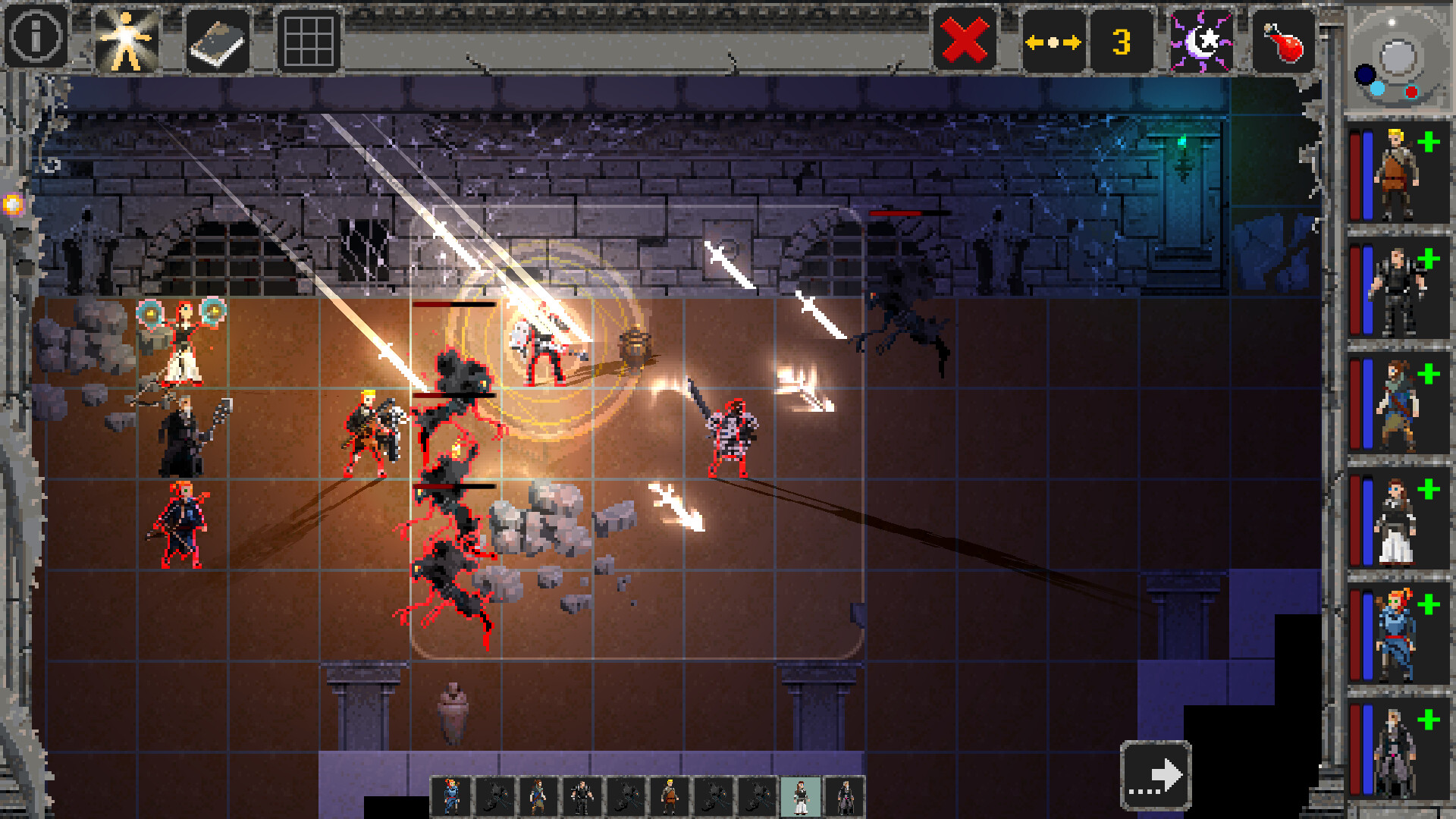
Caves of LoreImage: by Mike Robins via Steam -
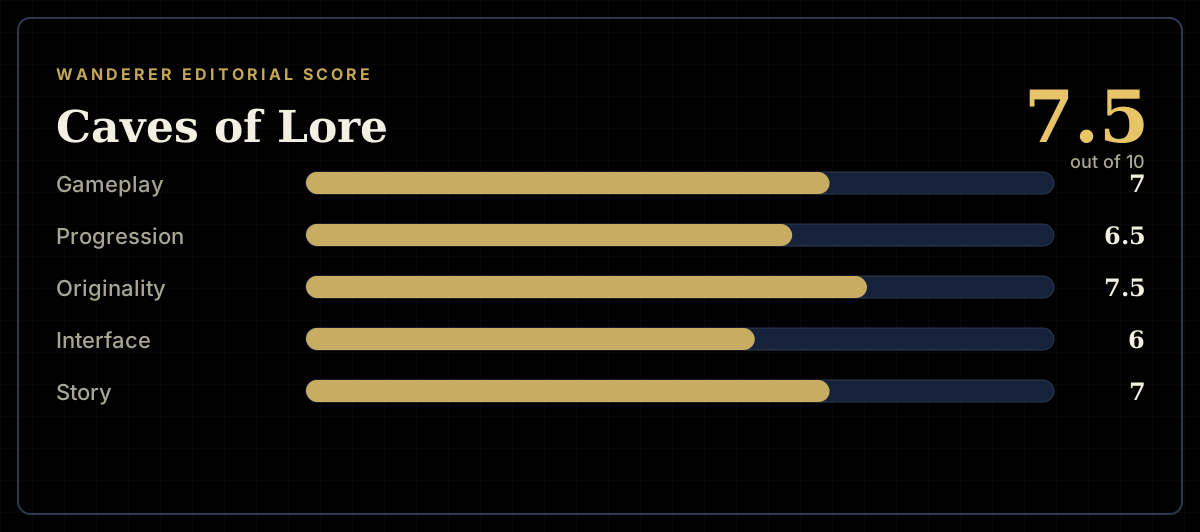
How the review scores each part of the gameWanderer Editorial -
The specsWanderer Editorial -
The short versionWanderer Editorial