Game review
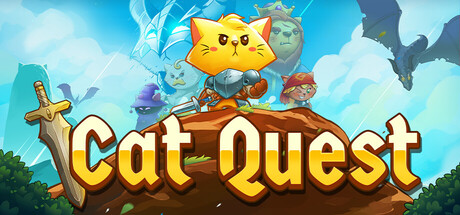
Cat Quest
7 / 10
- Developer
- The Gentlebros
- Publisher
- Kepler Interactive
- Released
- 8 August 2017
- Platforms
- Windows, macOS, PlayStation 4, Xbox One, Nintendo Switch, iOS, Android
- Genre
- Open-world action RPG
- Monetisation
- One-off purchase, no in-game currency, ads or gameplay-affecting purchases
- Players
- None; single-player only
The short version
Cat Quest earns its 95%-positive standing on presentation and personality rather than mechanical depth, and the review sample is unusually clear-eyed about that trade. The open world is small enough to feel welcoming rather than sparse, the cat puns and 2.5D storybook art carry real charm through to the credits, and a free-roam New Game+ added within months of launch gave the post-story tail a real reason to exist. Underneath that is a combat system reviewers repeatedly call a stat check more than a skill test, and a side-quest structure specific enough to draw a precise complaint: level-8 quests sending players into level-20 dungeons, a balance gap that turns "explore at your own pace" into "grind until the number matches." None of that erases what works, but a reader deciding whether to play the whole trilogy should know this first entry is the cheapest experiment of the three, not the deepest.
Biggest strengths
- A genuinely charming, consistent visual identity — 2.5D storybook art and constant cat puns that reviewers across nearly a decade still cite as the game's strongest asset
- Combat and movement are immediately readable and forgiving, making it a strong, low-barrier introduction to action RPGs for children or genre newcomers
- A free New Game+ ("Mew Game") mode, added via a major content update within months of launch, gives completionists a real reason to keep playing once the main story ends
Biggest weaknesses
- Combat is repeatedly described as a stat check rather than a skill-based system, with no dodge invincibility frames and limited enemy variety once the early hours pass
- A specific, reproducible quest-balance flaw sends players on side quests well below the level of the dungeons those quests point them toward, turning exploration into forced backtracking for several detailed reviewers
- The main story concludes well before the level cap, leaving post-story progression feeling like optional grinding rather than a natural extension of the plot
Who it's for: Players wanting a short, low-stakes, genuinely charming action RPG to introduce a younger or more casual player to the genre, and longtime Cat Quest II/III fans curious where the series started. Less suited to action-RPG veterans hoping for real combat depth or a story that doesn't lean on cat puns as its primary personality trait.
Our recommendation: An easy buy at its frequent steep discount, less essential at full list price given how much cheaper the near-identical mobile version has historically been — worth it mainly as the first chapter of a trilogy that grew considerably more ambitious after it.
7 / 10
Cat Quest's pitch practically writes its own headline: an open-world action RPG where every character is a cat, every line of dialogue is stuffed with puns, and the combat loop borrows openly from Diablo's satisfying skill-and-loot rhythm at a fraction of the scale. Released in August 2017 across PC and console simultaneously, it went on to spawn two sequels and a real franchise identity, which makes revisiting the original a slightly different exercise than reviewing most eight-year-old indie games — this isn't a curiosity that faded, it's the first chapter of something that got considerably bigger. Nearly 3,550 English-language reviews, 95% of them positive, confirm the charm worked. What's more interesting is how consistently specific the remaining 5% are about exactly where the experience runs thin.
Small, welcoming, and genuinely funny
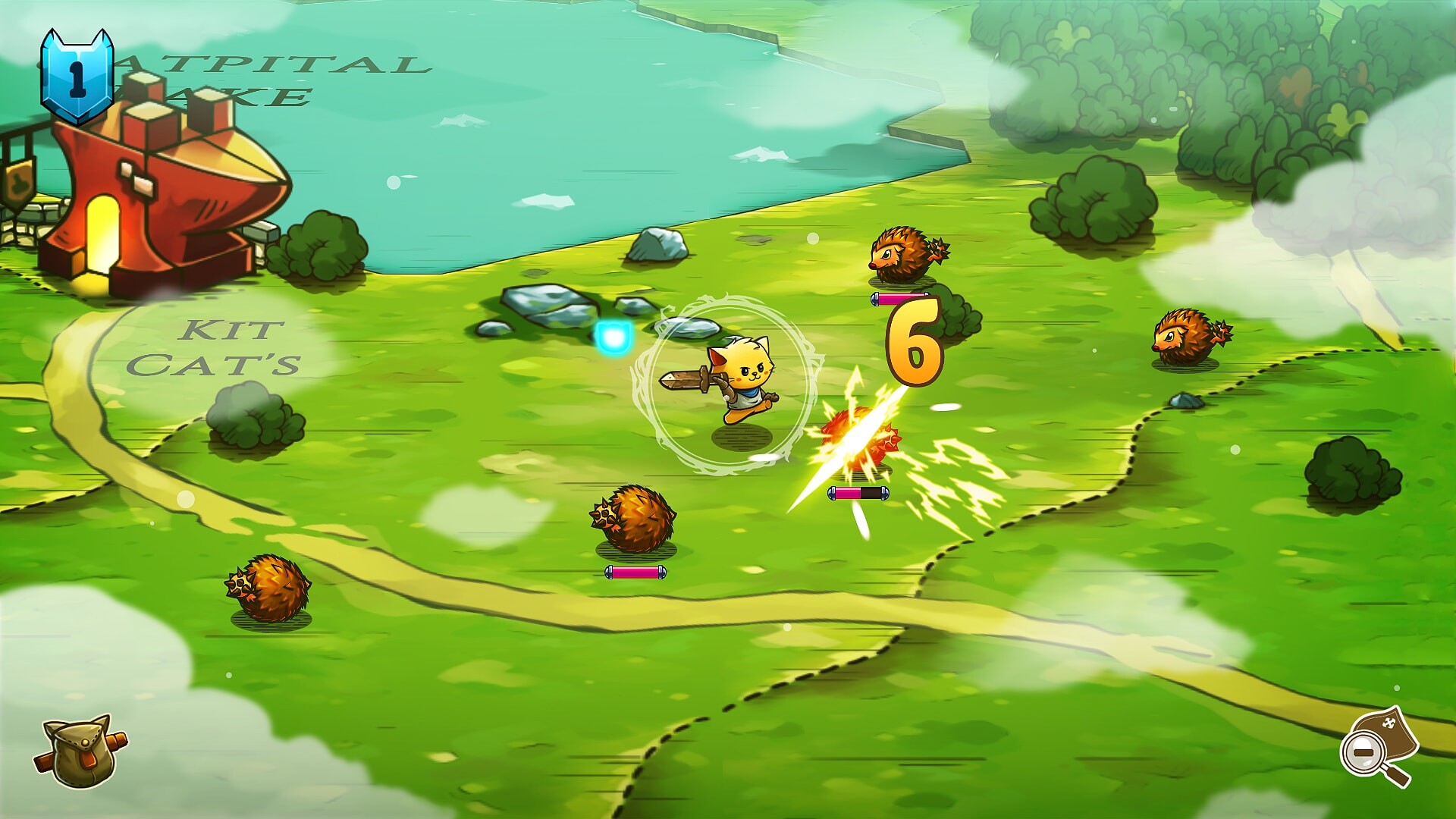
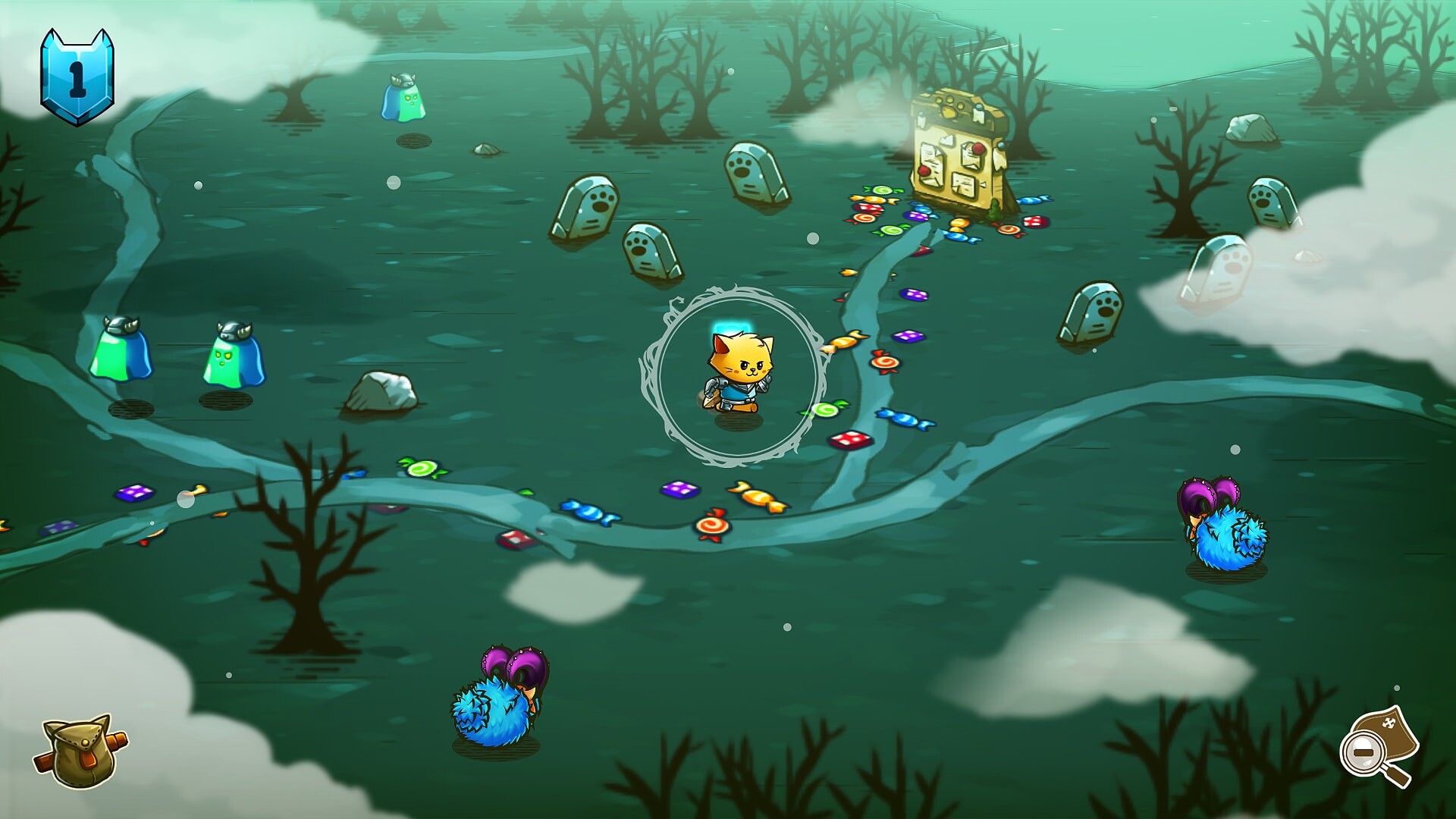
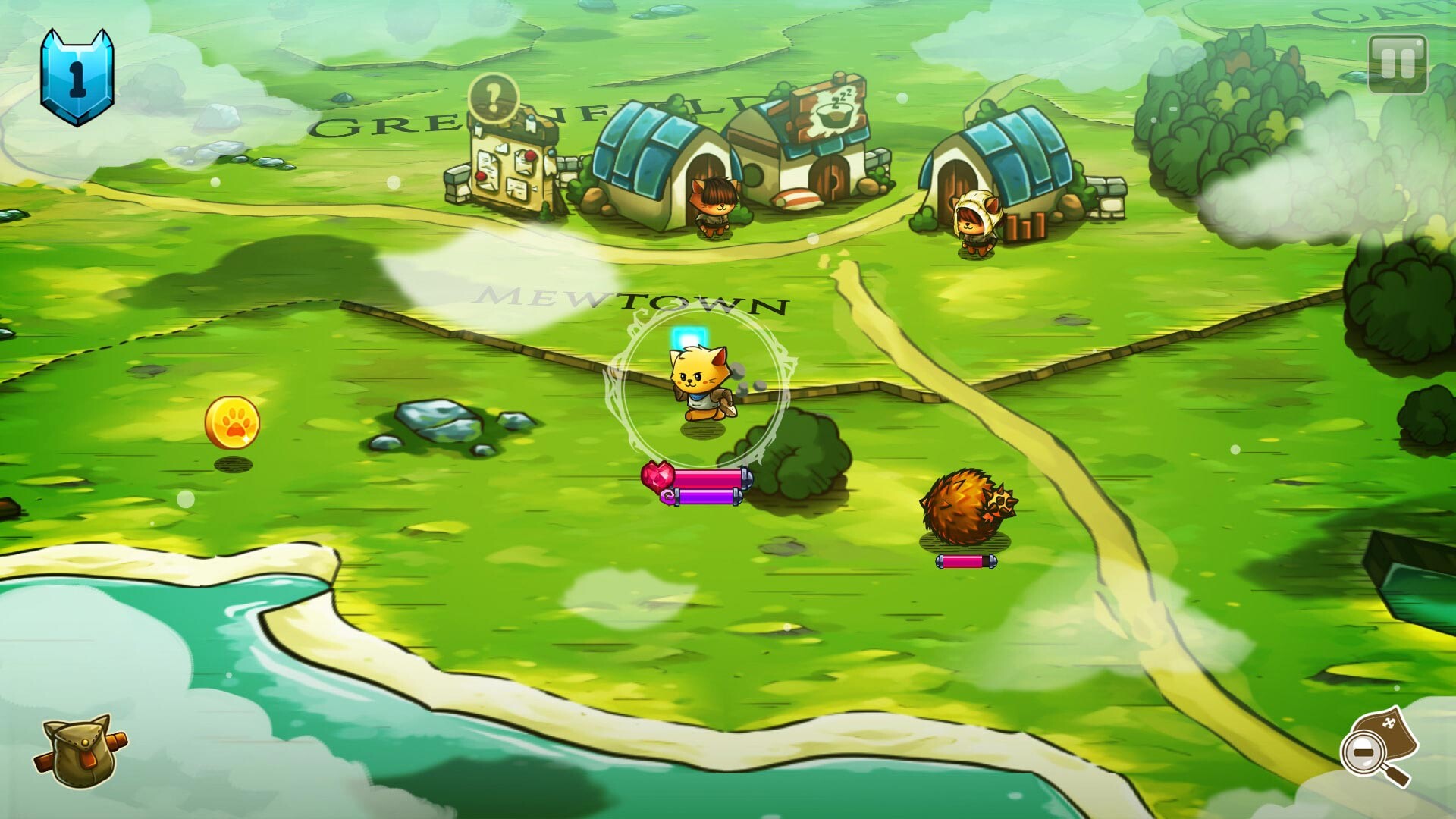
The strongest, most consistent praise across the review sample has nothing to do with mechanical depth and everything to do with tone. The Gentlebros built a 2.5D storybook world small enough to never feel like padding, populated it entirely with cats delivering an unrelenting stream of puns, and let the whole thing stay lighthearted without becoming grating for most players. One reviewer's summary captures the appeal precisely: "a simple little game with no pretensions, but genuinely fun to play. It's easy to learn, accessible to everyone." That accessibility is repeatedly framed as a strength specifically for introducing children or genre newcomers to action RPGs — a combat system built around one attack button, a handful of spells, and a dodge roll, forgiving enough that failure rarely feels punishing. It's not an ambitious combat system, but it's an honest one, and the review sample credits it for knowing exactly what audience it's serving.
A stat check wearing an action game's clothes
The most common critical thread, appearing across reviews that otherwise recommend the game, is that combat lacks real skill expression. Multiple detailed reviews describe it as fundamentally a numbers exercise rather than a test of positioning or timing — one reviewer notes plainly that dodging carries no invincibility frames, meaning survival comes down to gear and level rather than reading enemy attacks. Enemy variety draws similar complaints: several reviewers note that once the early hours pass, encounters repeat familiar patterns with re-skinned stat blocks rather than new threats. None of this makes the game unplayable — genre newcomers specifically praise how forgiving it is — but it does mean the "RPG" in the pitch is doing more of the work than the "action" is, which matters for anyone expecting the Diablo comparison to hold up mechanically rather than just tonally.
A specific, checkable quest-design flaw
One complaint recurs with enough precision to treat as a real, documented design gap rather than a subjective gripe: side quests that send players toward content well above their current level. One detailed review states it exactly: "a level 8 quest shouldn't be sending you to a level 20 dungeon," describing this happening multiple times and effectively forcing a completionist player into unplanned grinding just to survive the destination rather than the quest itself. That's a different, more specific complaint than ordinary "the side quests are repetitive" feedback — it's a pacing and balance failure between the quest log and the world's own difficulty curve, and it lines up with a broader pattern of reviewers describing side content as fetch-quest padding needed primarily to reach a level the main story doesn't naturally provide.
A story that ends before the credits should roll
Several reviewers independently note that Cat Quest's main plot wraps up well before the level cap, leaving a stretch of post-story play that feels optional rather than essential. The Gentlebros answered this directly and fairly quickly: a major "Mew Game, New Game+" content update, confirmed via the developer's own announcement roughly three months after launch, added a free New Game+ mode specifically to give that post-story stretch a real structural reason to exist. That's a genuine, verifiable response to a real complaint, and it's worth crediting the same way this fleet credits any developer directly addressing reviewer feedback rather than leaving it unresolved — though it doesn't retroactively give the base story more substance, just a better reason to revisit what's there.
A price gap worth naming plainly
A recurring, specific value complaint deserves stating directly rather than folding into general "a bit pricey" feedback: Cat Quest's Steam list price of NZ$15.99 has historically sat several times higher than the same game's mobile storefront price, and more than one reviewer calls this out explicitly as poor value for a near-identical experience. Steam's own frequent, steep discounting (down to NZ$3.99 at the time of writing) largely resolves this in practice for anyone willing to wait for a sale, but a reader considering the game at full price should know the gap exists and factor it in rather than assume platform parity.
Verdict
Cat Quest is a small, sincere, well-executed piece of comfort gaming that earned its large, positive audience honestly — the art style and humor carry real weight, the length is honestly proportioned to its ambitions, and a free post-launch New Game+ shows a developer responding to feedback rather than ignoring it. It's also, by its own reviewers' fair and specific account, more of a stat check than a combat system, padded by quests whose difficulty pacing doesn't always match the world around them, and priced on Steam well above its mobile equivalent outside of sales. Buy it on a discount for the charm and the trilogy's origin story; don't expect the deepest entry in the series it started.
Sources: Steam store page and appdetails API (release date, pricing, platform and language data); Steam's aggregate review data (query_summary totals, English-language sample); individually read user reviews, both positive and negative, sorted by helpfulness and recency; Steam's global achievement statistics API; Kepler Interactive/The Gentlebros' own partner-events announcements from launch in August 2017 through the Cat Quest III anniversary in 2025.
Pros and cons
Pros
- A genuinely charming, consistent visual identity — 2.5D storybook art and constant cat puns that reviewers across nearly a decade still cite as the game's strongest asset
- Combat and movement are immediately readable and forgiving, making it a strong, low-barrier introduction to action RPGs for children or genre newcomers
- A free New Game+ ("Mew Game") mode, added via a major content update within months of launch, gives completionists a real reason to keep playing once the main story ends
- A small, digestible open world avoids the padding-through-scale problem bigger open-world RPGs are often criticized for
- Went on to spawn two increasingly ambitious sequels, giving this entry's ideas a genuine, successful afterlife rather than fading as a one-off experiment
Cons
- Combat is repeatedly described as a stat check rather than a skill-based system, with no dodge invincibility frames and limited enemy variety once the early hours pass
- A specific, reproducible quest-balance flaw sends players on side quests well below the level of the dungeons those quests point them toward, turning exploration into forced backtracking for several detailed reviewers
- The main story concludes well before the level cap, leaving post-story progression feeling like optional grinding rather than a natural extension of the plot
- Full price on Steam has historically sat several times higher than the near-identical mobile version, a gap multiple reviewers raise directly as poor value at list price
- The cat-speak dialogue styling (meows and purrs mixed into ordinary sentences) is a genuine dealbreaker for a meaningful share of reviewers, not just a minor stylistic quirk
Screenshots
-
Cat QuestImage: Kepler Interactive via Steam -
Cat QuestImage: Kepler Interactive via Steam -
Cat QuestImage: Kepler Interactive via Steam -
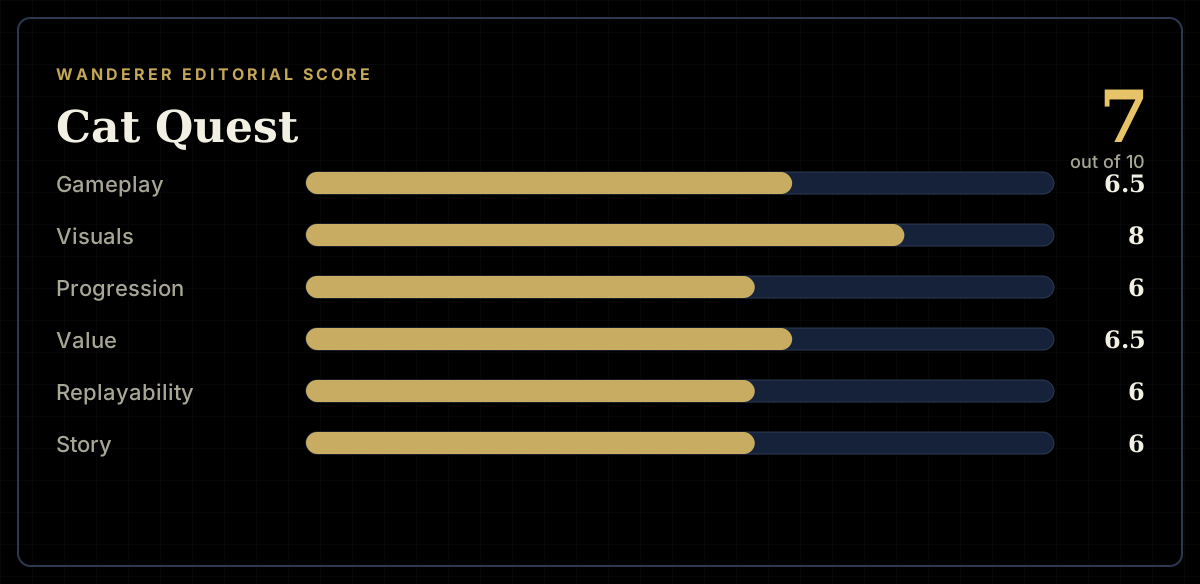
How the review scores each part of the gameWanderer Editorial -
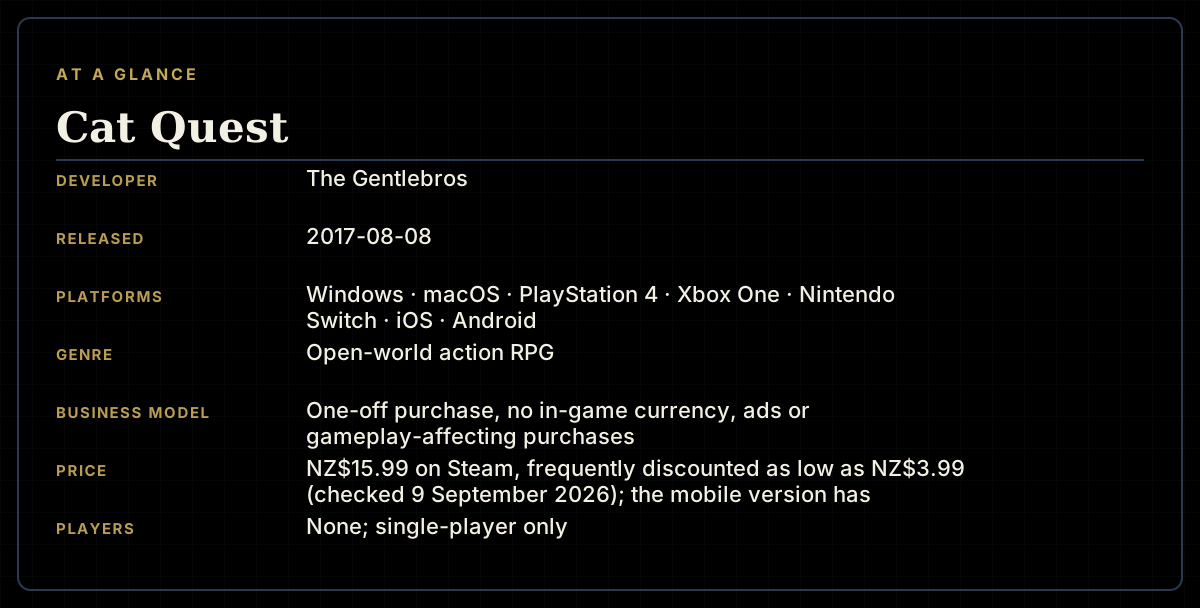
The specsWanderer Editorial -
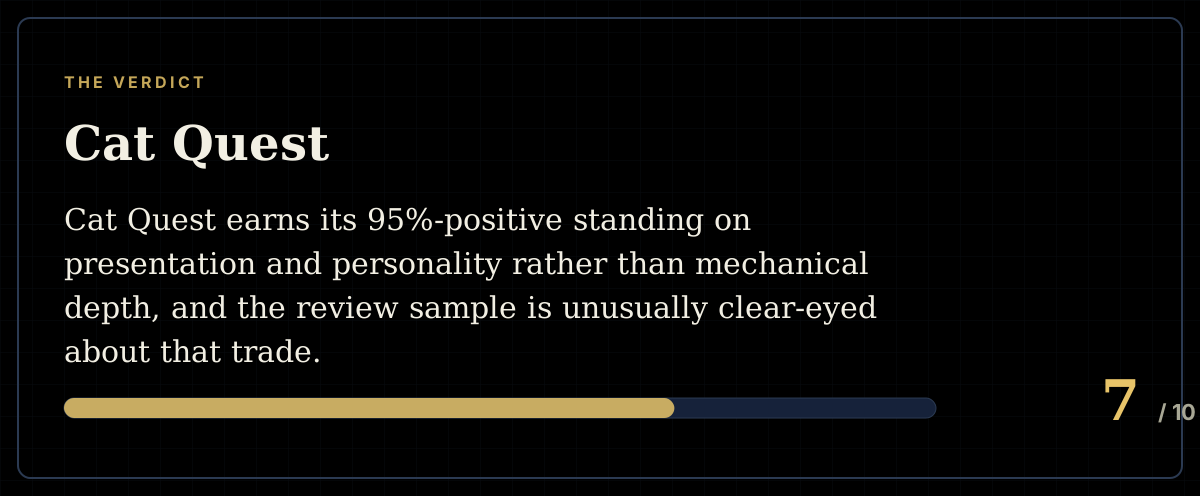
The short versionWanderer Editorial