
Game review
Beneath Oresa
6.5 / 10
- Developer
- Broken Spear Inc.
- Publisher
- Goblinz Publishing
- Released
- 27 September 2023
- Platforms
- Windows
- Genre
- Fantasy Deckbuilder Roguelike
- Monetisation
- One-time premium purchase; extensive free content and balance updates continued for roughly a year and a half after the full release
- Players
- Single-player only; no online, co-op or PvP modes
The short version
Beneath Oresa sends a small cast of heroes into a crumbling, fantastical underground city, building card-based decks to fight through its factions and floors in the tradition of Slay the Spire. Reviewers near-universally praise its art direction and combat animations as genuinely striking, standing out even in a genre now saturated with deckbuilding roguelikes chasing the same formula.
That praise sits alongside a real, specific set of complaints this review's research confirms are widely shared: playable characters draw criticism for feeling too similar to one another at launch, card randomization is described as poorly tuned relative to genre benchmarks, and several reviewers explicitly argued the asking price didn't match the amount of content on offer. Achievement data corroborates a genuinely steep difficulty curve consistent with those complaints. This review's research also confirms the developer directly addressed a specific, repeated clarity complaint about missing card tooltips, alongside sustained balance tuning that continued for well over a year after the full release.
Biggest strengths
- Near-universally praised art direction and combat animations, with even critical reviewers consistently singling out the visual presentation as a genuine standout
- A distinctive, fully realized fantasy setting and faction structure that gives the deckbuilding formula real thematic identity rather than generic dressing
- Confirmed, sustained post-launch support with frequent balance patches and quality-of-life additions continuing for roughly a year and a half after the full release
Biggest weaknesses
- Playable characters draw consistent criticism for feeling too similar at launch, sharing overlapping card pools and mechanics rather than offering clearly distinct playstyles
- Card randomization draws specific, repeated criticism as poorly tuned relative to genre benchmarks, with reviewers describing runs where their intended build never materializes
- Achievement data confirms a genuinely steep difficulty curve, with less than a third of the playerbase completing even the easiest full run
Who it's for: Deckbuilder roguelike fans drawn specifically to strong art direction, willing to accept real friction in build variety and randomization relative to the genre's best-regarded titles.
Our recommendation: Worth a look for deckbuilder fans specifically for its visual presentation, though best purchased at a discount given the well-documented content-for-price complaints from launch.
6.5 / 10
Beneath Oresa drops a small cast of heroes into a crumbling, faction-ruled underground city, building card-based decks to fight through its floors in the well-established Slay the Spire tradition. It wears its genre influences openly, and reviewers consistently credit its art direction with distinguishing it from a now-crowded field of similar deckbuilding roguelikes, even as its mechanics draw a more mixed reception.
Art and animation reviewers call a genuine standout
The single most consistent praise in the review base concerns presentation. Reviewers repeatedly describe the game as "beautiful," crediting detailed combat animations and a distinctive visual style with elevating the experience beyond a typical genre entry — praise that appears even in otherwise critical reviews, suggesting it's a genuinely, broadly agreed-upon strength rather than a matter of taste.
Characters and randomization reviewers call underdeveloped
Set against that praise, the game's launch-era character design draws specific, repeated criticism. Reviewers describe the playable heroes as feeling too similar to one another, sharing overlapping card pools and mechanics rather than offering the clearly distinct playstyles genre veterans expect. A related complaint concerns card randomization itself: several detailed reviews describe runs where their intended build never materializes because the game simply doesn't offer the right cards at the right time, a complaint framed explicitly against Slay the Spire's more carefully tuned randomization as the genre's benchmark.
A price complaint tied to launch-era content
Several reviewers explicitly frame their criticism around value rather than any single broken system, arguing the asking price didn't match the amount of distinct content available at launch relative to comparable deckbuilders. That's a distinct complaint from the mechanical criticisms above — not that any one system is broken, but that the overall package felt thinner than its price implied when it first released.
A confirmed fix for a specific clarity complaint
This review's research confirms the developer directly addressed one specific, repeated complaint: several early reviews describe cards referencing status effects or symbols with no explanation available anywhere in the game, including in tooltips. A dedicated update roughly a year after the full release explicitly added "a lot of missing tooltips" alongside other clarity improvements — a clean, confirmed fix for a complaint distinct from the broader variety and randomization criticisms, which this review's research did not find a comparably direct fix for. Notably, no confirmed option to skip or reject offered cards was found, despite that being a specific, repeated request tied to the randomization complaint above.
What the achievement data confirms about difficulty
Global achievement data shows a genuinely steep difficulty curve: only 28.9% of the playerbase has completed even a full run at the easiest of five difficulty tiers, falling to 16.0% at the second tier and just 5.1% at the fifth. That's a meaningfully steeper attrition rate than many deckbuilder roguelikes in this lane, and it lends real weight to reviewer complaints about randomization and balance rather than suggesting those complaints come from an unusually vocal minority.
Sustained support well beyond a typical launch window
This review's research confirms Beneath Oresa received genuinely extensive post-launch investment: frequent balance patches continued through 2024 and into early 2025, roughly a year and a half after the September 2023 full release, addressing specific card interactions, difficulty tuning, and stability issues in a steady, numbered cadence. That's a real, sustained commitment distinct from a studio shipping once and moving on, even where certain specific complaints — like the request for a card-skip option — don't appear to have been directly answered within that support window.
A defense some reviewers make against the difficulty complaints
Not every reviewer treats the game's difficulty as a design flaw. Several explicitly push back against what they characterize as review-bombing driven by frustration with a genuinely hard game rather than a broken one, drawing a comparison to similarly-received titles in the same period and arguing that difficulty itself shouldn't be conflated with poor design. That's a meaningful counter-argument worth weighing against the achievement data above: a steep completion curve is consistent with both "the game is unfairly balanced" and "the game is legitimately hard but fair," and reviewers are genuinely split on which explanation fits their own experience.
A faction system with real long-term depth
Beyond the core complaints, the game's achievement list itself reveals a level of built-in longevity some reviewers may undersell: dozens of achievements track specific hero-and-faction combinations completed together, suggesting a deliberately designed metagame around discovering which pairings work well rather than a single "solved" optimal strategy. Reviewers who engage with that structure directly, rather than judging the game purely on its first few runs, describe a slower-burning sense of discovery that the launch-era variety complaints don't fully capture.
How it compares within its own genre
Reviewers who've played widely across the deckbuilder-roguelike space consistently place Beneath Oresa below Slay the Spire itself on mechanical depth and randomization tuning, but several are careful to note that's a genuinely high bar — the genre's clearest touchstone rather than a typical baseline. Measured against the broader wave of similar titles that followed in Slay the Spire's wake, rather than against the genre's single best-regarded entry, reviewers describe Beneath Oresa as a competent, above-average example distinguished primarily by its art direction, even where its card design and character variety trail the format's strongest work.
Where it lands
Beneath Oresa earns its Mostly Positive reception through genuinely striking art and animation work that reviewers consistently single out as a standout even among a crowded genre, while its Mostly Positive rather than higher standing reflects real, specific complaints about character variety, randomization tuning, and launch-era value that this review's research confirms are widely shared. The developer's sustained, responsive post-launch support — including a direct, confirmed fix for the game's tooltip clarity problem — is a genuine point in its favor, even where it hasn't closed every gap reviewers have raised. For deckbuilder fans specifically drawn to its presentation, this remains a worthwhile, if imperfect, pickup.
Pros and cons
Pros
- Near-universally praised art direction and combat animations, with even critical reviewers consistently singling out the visual presentation as a genuine standout
- A distinctive, fully realized fantasy setting and faction structure that gives the deckbuilding formula real thematic identity rather than generic dressing
- Confirmed, sustained post-launch support with frequent balance patches and quality-of-life additions continuing for roughly a year and a half after the full release
- A confirmed, direct developer response to a specific, repeated complaint about missing card tooltips, addressed in a dedicated update roughly a year after launch
- Extensive playable hero and faction combinations tracked via achievements, giving completionist players real long-term goals beyond a single successful run
Cons
- Playable characters draw consistent criticism for feeling too similar at launch, sharing overlapping card pools and mechanics rather than offering clearly distinct playstyles
- Card randomization draws specific, repeated criticism as poorly tuned relative to genre benchmarks, with reviewers describing runs where their intended build never materializes
- Achievement data confirms a genuinely steep difficulty curve, with less than a third of the playerbase completing even the easiest full run
- Several reviewers explicitly argued the launch price didn't match the amount of distinct content on offer relative to established genre benchmarks
- No confirmed option to skip or reject offered cards was found in this review's research, despite being a specific, repeated request tied to the randomization complaint above
Screenshots
-

Beneath OresaImage: Goblinz Publishing via Steam -

Beneath OresaImage: Goblinz Publishing via Steam -

Beneath OresaImage: Goblinz Publishing via Steam -
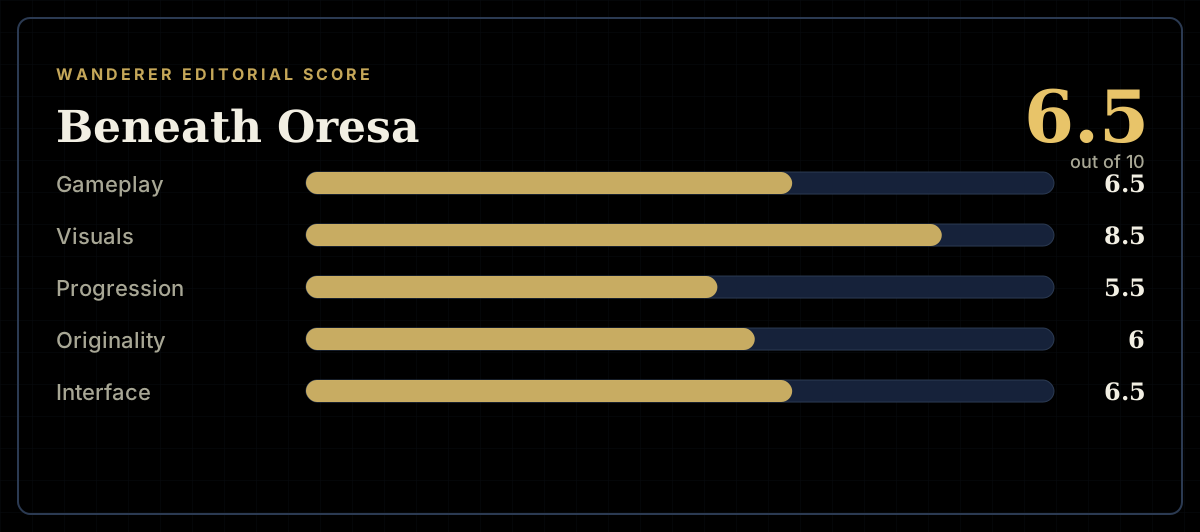
How the review scores each part of the gameWanderer Editorial -
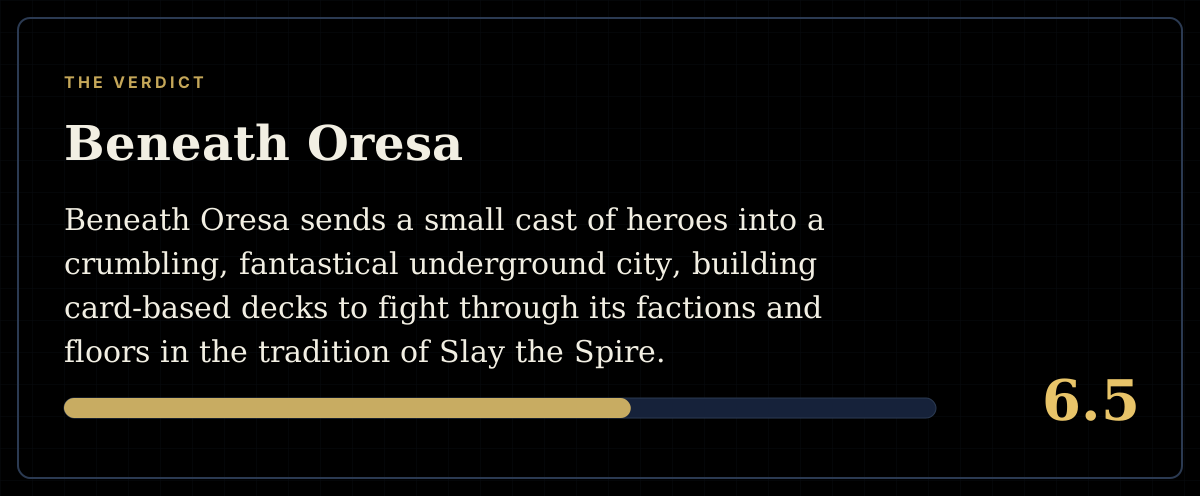
The short versionWanderer Editorial