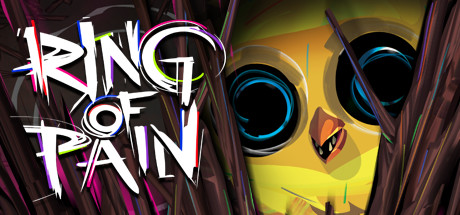
Game review
Ring of Pain
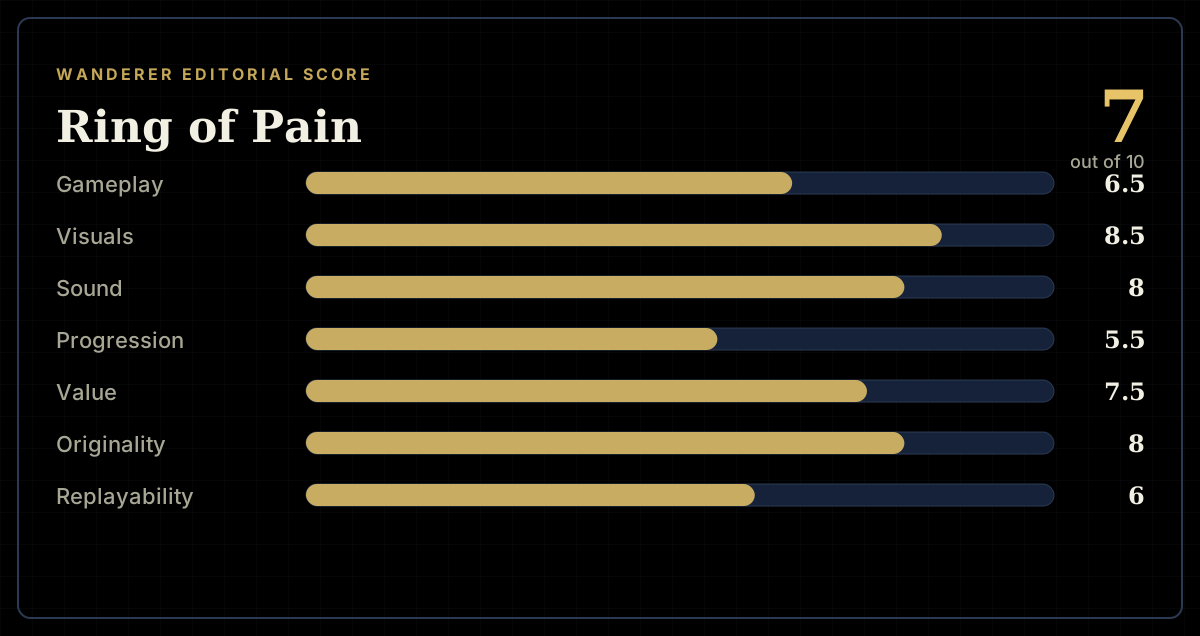
7 / 10
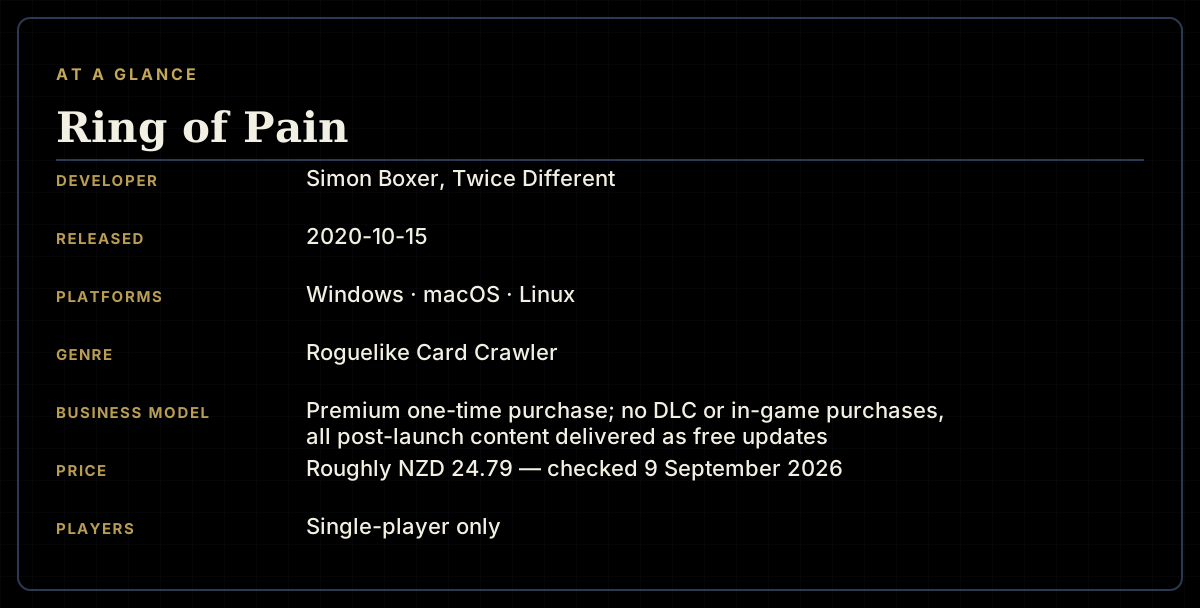
- Developer
- Simon Boxer, Twice Different
- Publisher
- Balor Games
- Released
- 15 October 2020
- Platforms
- Windows, macOS, Linux
- Genre
- Roguelike Card Crawler
- Monetisation
- Premium one-time purchase; no DLC or in-game purchases, all post-launch content delivered as free updates
- Players
- Single-player only
The short version
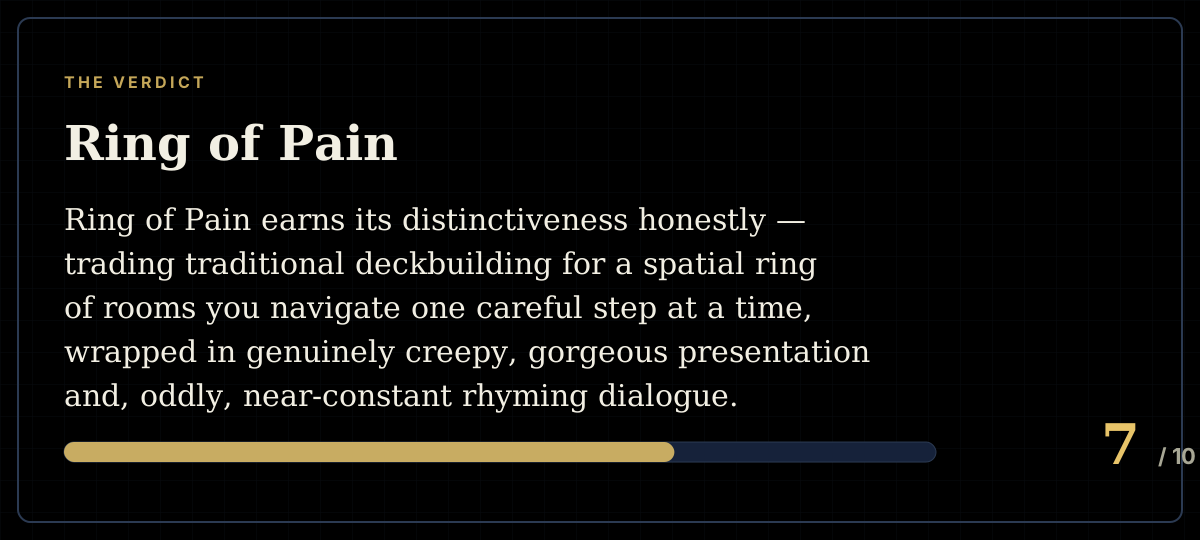
Ring of Pain earns its distinctiveness honestly — trading traditional deckbuilding for a spatial ring of rooms you navigate one careful step at a time, wrapped in genuinely creepy, gorgeous presentation and, oddly, near-constant rhyming dialogue. What keeps its otherwise Very Positive reception from translating into a higher score is a specific, dominant and self-acknowledged community complaint: randomness heavy enough that its own players coined the nickname "the RNG of Pain" for exactly the problem they mean.
Biggest strengths
- The Ring mechanic itself — encounters arranged in a navigable circle rather than a fixed map or a deck to shuffle — is repeatedly called a genuinely fresh structural idea in a crowded roguelike-card genre
- Presentation is a strong, cohesive package: gorgeous, unsettling art direction and an atmospheric horror aesthetic draw consistent praise even from reviewers frustrated with other systems
- Development support has been sustained for more than five years, including a major Multiclass content update in 2023 and build patches continuing into 2025, well past what most indie roguelikes of this size receive
Biggest weaknesses
- The single most repeated complaint across the review sample, echoed almost identically by dozens of independent reviewers, is that randomness in stat rolls, item drops and enemy placement can make individual runs unwinnable regardless of player skill — reviewers have their own shorthand for this, "the RNG of Pain"
- Several of the strongest items and stat combinations are locked behind achievement unlocks rather than available from the start, meaning new players face the game's harshest randomness before they've earned the tools that make it more manageable
- At least one detailed review describes a specific late-game "rug pull," where builds and items that carried a run for hours become largely worthless against the final stretch's scaling, a complaint the developer engaged with directly in a public response
Who it's for: Roguelike fans who want a genuinely different spatial-puzzle take on the genre and can tolerate real, run-ending luck swings as part of the deal, more than players looking for Slay the Spire's build-around-your-deck sense of control.
Our recommendation: A strong pickup at its price for anyone who enjoys a punishing, atmospheric roguelike and wants something structurally different from the deckbuilder crowd — just know going in that skill mitigates but does not eliminate the randomness, and some runs are simply unwinnable from the first room.
7 / 10
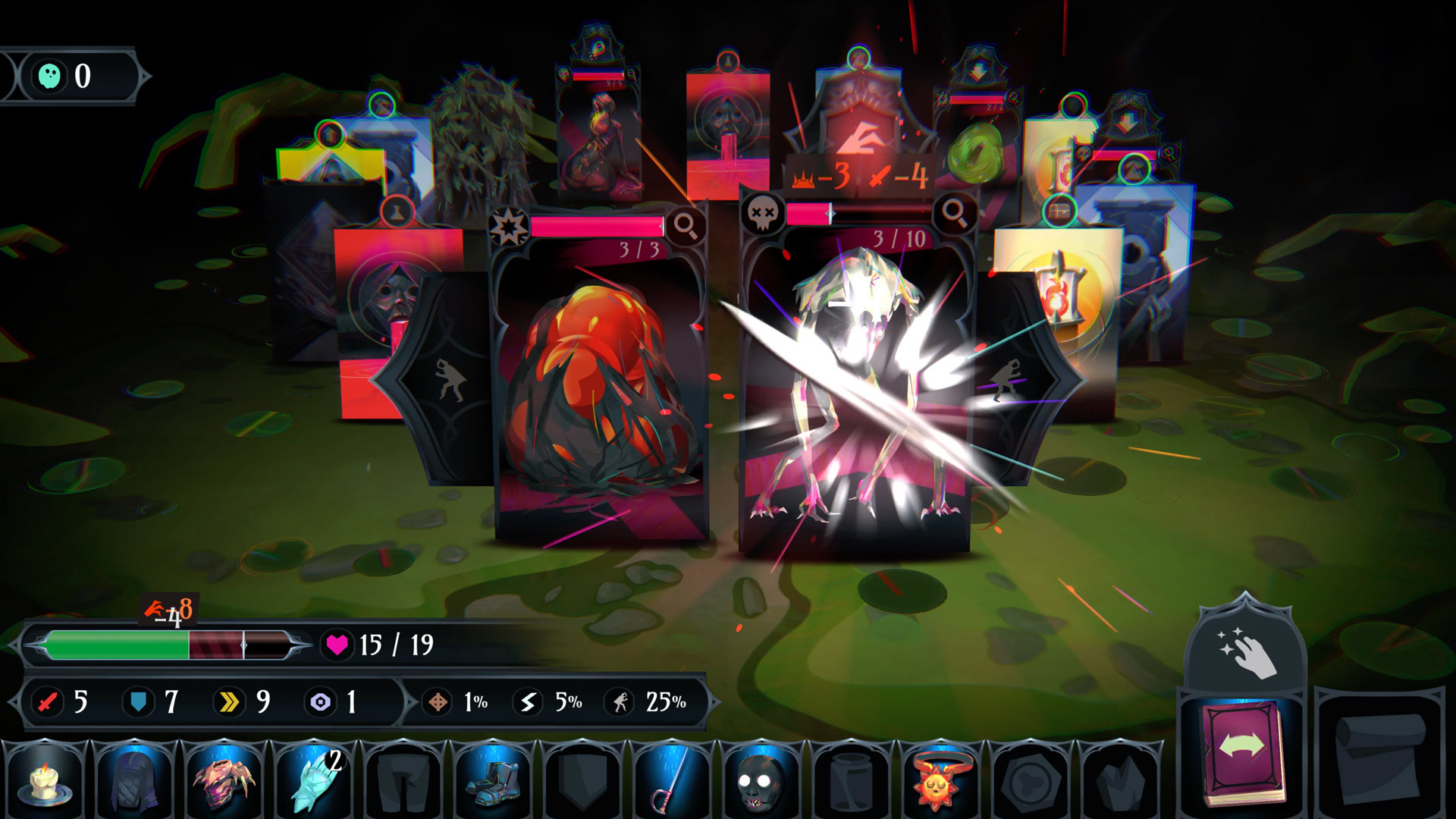
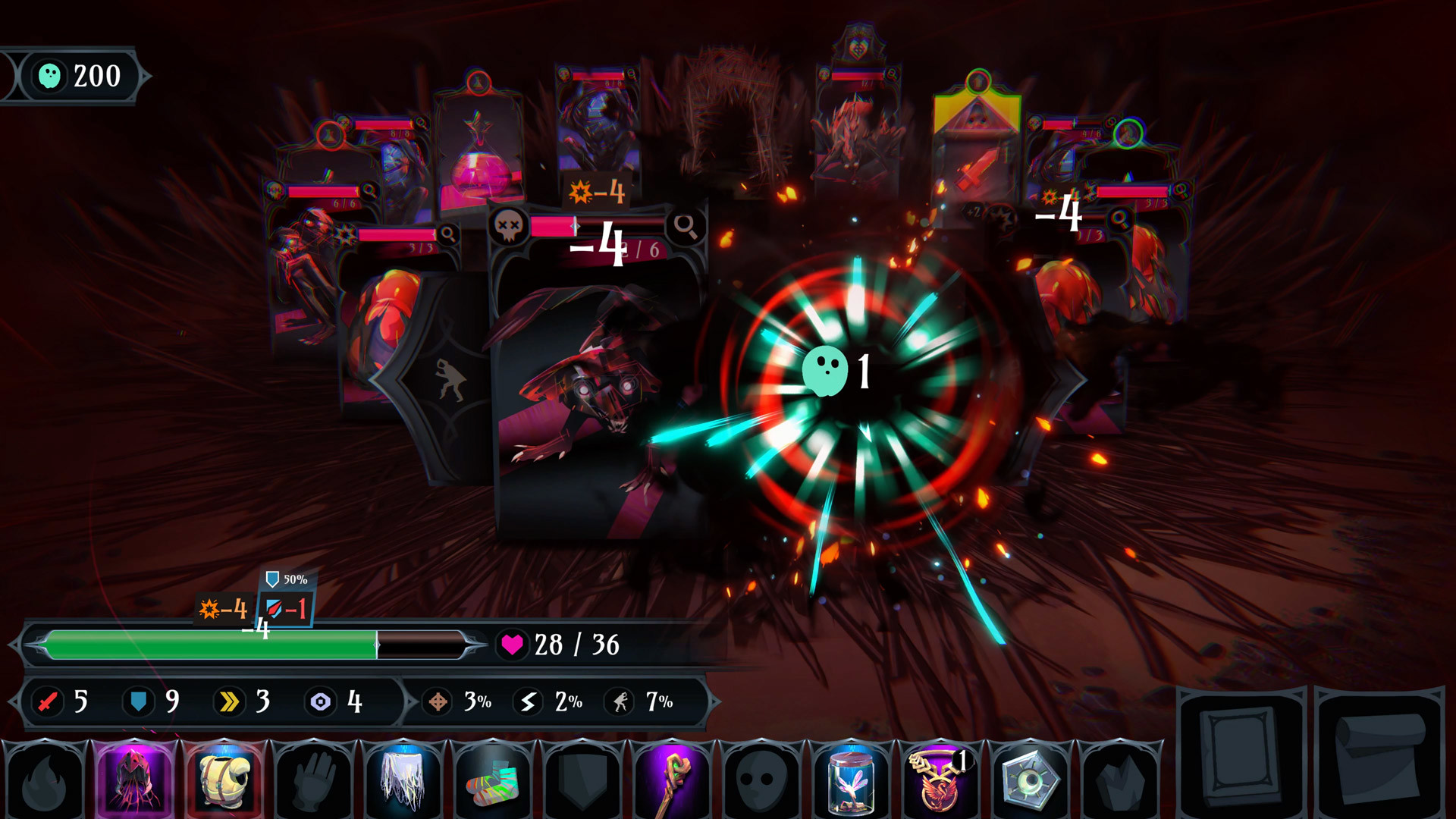
Slay the Spire cast a long shadow over roguelike card games, and most of what followed it answered with some variation on the same idea: build a deck, shuffle it, play cards from your hand. Ring of Pain answers differently. There's no deck to speak of — instead, encounters are arranged around a literal ring of rooms you step through one at a time, deciding whether to fight, flee, loot or bargain with whatever's waiting in the next space. It's a genuinely different spatial puzzle wearing the same genre's clothes, and the review sample treats that distinctiveness as the game's clearest achievement.
A ring instead of a deck
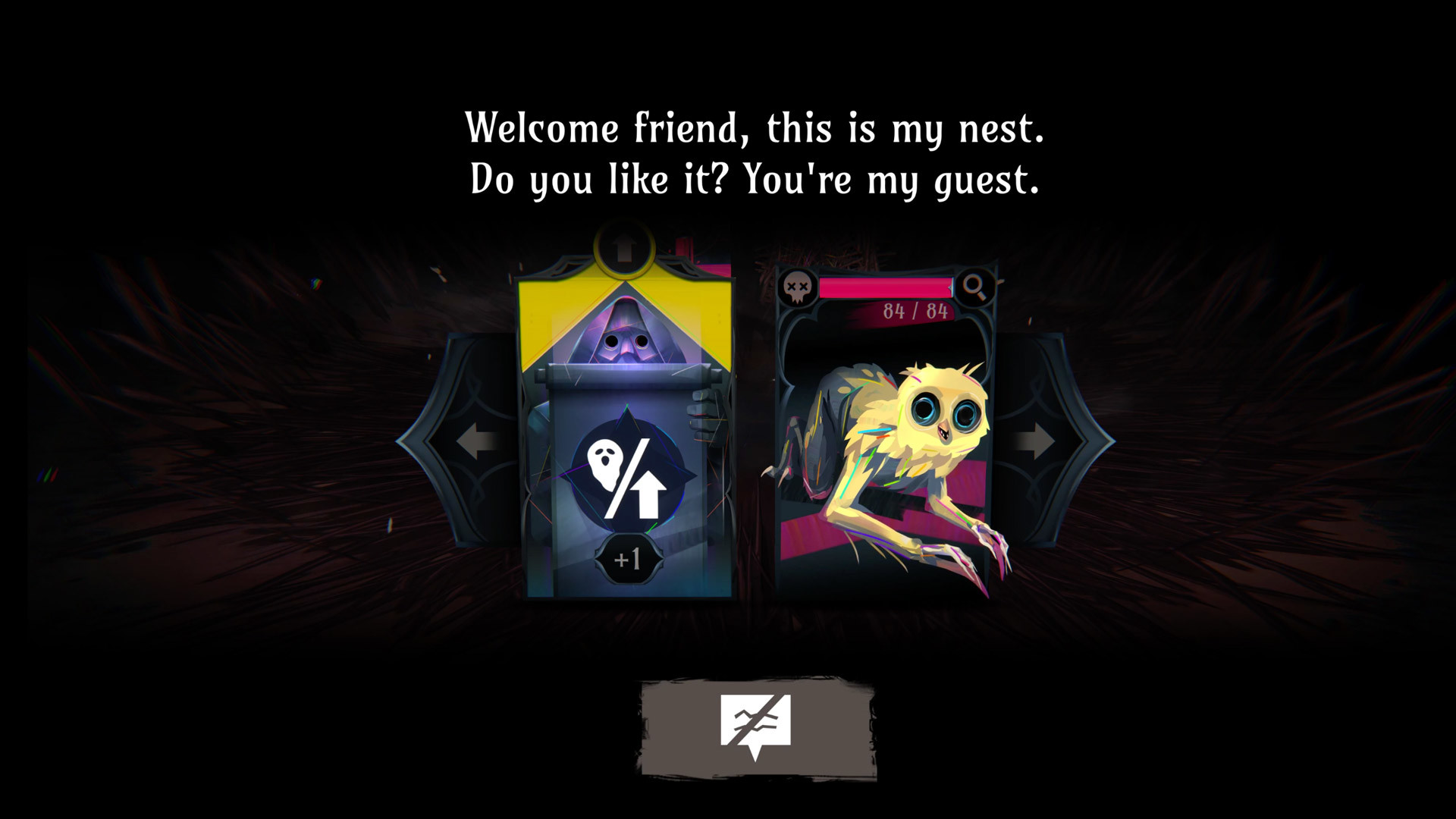
The core loop rewards careful reading of what's ahead rather than deck synergy: every room shows you what's coming before you commit to entering it, and managing your position relative to threats — who's adjacent to whom, what triggers on approach — becomes the real skill expression once you understand the systems. Reviewers across the sample describe this as a legitimately novel structural idea, not just a reskin of a familiar formula, and the game backs it with presentation that earns nearly unanimous praise: a gorgeous, unsettling art style and a genuinely creepy horror atmosphere that several reviewers say elevates a mechanically clever game into a memorably cohesive one. One quirk sits inside that praise as its own small controversy — every character in the game speaks exclusively in rhyming verse, which a good share of reviewers find charming and at least one describes as close to ruining the experience for them, a rare case of a single stylistic choice splitting opinion sharply on its own.
The complaint the community named itself
Set against all of that, one problem dominates the review sample so thoroughly that players coined their own shorthand for it: "the RNG of Pain." Dozens of independent reviews describe the same underlying issue in similar terms — stat rolls, item drops and enemy placement carry enough randomness that a run can become unwinnable within the first few rooms regardless of player skill, and no amount of careful play recovers a sufficiently unlucky start. This isn't a vague "the game is hard" complaint; it's a specific, widely corroborated structural criticism about where the difficulty actually comes from. Compounding it, several reviewers note that many of the strongest items and stat combinations are locked behind achievement unlocks rather than available from the outset, meaning new players face the game's harshest variance before they've earned the tools other roguelikes would hand them from the start.
One particularly detailed complaint goes further, describing a late-game "rug pull" where the builds and items that carried a run for hours become largely ineffective against the final stretch's difficulty scaling — a complaint specific enough that the developer engaged with it directly in a public response, according to the reviewer's own account, though this review can't independently verify the content of that exchange.
A small studio still showing up five years later
What tempers all of this is a support record most indie roguelikes don't match. Twice Different kept shipping build patches well past a normal support window, including a substantial Multiclass content update in 2023 and further patches into 2025 — five years after the game's 2020 launch — all delivered as free updates rather than paid DLC. That's a meaningfully different commitment than a studio that ships once and moves to its next project, and it shows up directly in player sentiment: long-time reviewers specifically credit the free-update model and periodically return when new content lands, even while still describing the same RNG frustration they had at launch.
A different philosophy of control than Slay the Spire
It's worth being precise about what the RNG complaint actually means, because it's easy to conflate with ordinary roguelike difficulty. Slay the Spire and its many imitators are built around a promise that skilled deck construction gradually converts luck into consistency — a strong player can reliably reach the later floors even on an average draw. Ring of Pain's own reviewers, including several of its most positive ones, describe a game that doesn't fully make that promise: skill narrows the range of outcomes and helps you survive bad rooms you'd otherwise die to, but it doesn't reliably rescue a genuinely unlucky opening. That's a real design-philosophy difference, not just a difficulty-tuning issue, and it explains why reviewers who love strategic roguelikes for their sense of mastery are more likely to bounce off this one than reviewers who enjoy roguelikes for their tension and atmosphere first.
That distinction also explains the achievement data's shape better than difficulty alone would. A meaningful share of the roughly 11% of owners who die before finishing a single run are likely experiencing exactly the "unwinnable from the start" scenario reviewers describe, rather than simply failing to learn the game's systems in time — a different explanation than the achievement curve alone could prove, but one that lines up with what the review sample says in its own words.
Still building, five years on
The studio's own announcement history adds one more piece of relevant context for anyone weighing a purchase today: Twice Different revealed a demo for a follow-up roguelite in late 2024, meaning Ring of Pain's small team is still active and still working in the genre rather than having moved on entirely. For existing players, that's a reasonable signal current content updates will keep arriving rather than trailing off; for newcomers, it's a sign the developers' design instincts on display here, RNG complaints included, are ones they're continuing to refine rather than treating as a closed chapter.
Verdict
Ring of Pain does something genuinely different with a crowded genre, wraps it in atmosphere and art that earn their praise honestly, and backs it with five years of real, free ongoing support from a small team. What holds it back from a stronger score is a well-documented, community-named randomness problem that a meaningful share of its own fans say crosses from "punishing" into "unwinnable through no fault of your own." If you can make peace with that trade, there's a genuinely original roguelike underneath it worth the low asking price.
Pros and cons
Pros
- The Ring mechanic itself — encounters arranged in a navigable circle rather than a fixed map or a deck to shuffle — is repeatedly called a genuinely fresh structural idea in a crowded roguelike-card genre
- Presentation is a strong, cohesive package: gorgeous, unsettling art direction and an atmospheric horror aesthetic draw consistent praise even from reviewers frustrated with other systems
- Development support has been sustained for more than five years, including a major Multiclass content update in 2023 and build patches continuing into 2025, well past what most indie roguelikes of this size receive
- All post-launch content has shipped as free updates rather than paid DLC, a detail multiple long-time players specifically credit the small studio for
- Deep for its price on completionist terms — one detailed review reports 107 hours to unlock every achievement, with new content periodically giving long-time players a reason to return
Cons
- The single most repeated complaint across the review sample, echoed almost identically by dozens of independent reviewers, is that randomness in stat rolls, item drops and enemy placement can make individual runs unwinnable regardless of player skill — reviewers have their own shorthand for this, "the RNG of Pain"
- Several of the strongest items and stat combinations are locked behind achievement unlocks rather than available from the start, meaning new players face the game's harshest randomness before they've earned the tools that make it more manageable
- At least one detailed review describes a specific late-game "rug pull," where builds and items that carried a run for hours become largely worthless against the final stretch's scaling, a complaint the developer engaged with directly in a public response
- All in-game dialogue is written in rhyming verse, a stylistic choice several reviewers find charming and at least one calls actively grating enough to nearly sour an otherwise strong recommendation
- Global achievement data shows even the very first successful run is only completed by around 89% of owners who try, with the game's toughest challenge-run achievements clearing under 2% — a curve consistent with reviewers' account of a genuinely difficult, luck-inflected climb rather than a smooth learning curve
Screenshots
-
Ring of PainImage: Balor Games via Steam -
Ring of PainImage: Balor Games via Steam -
Ring of PainImage: Balor Games via Steam -
How the review scores each part of the gameWanderer Editorial -
At a glanceWanderer Editorial -
The short versionWanderer Editorial