Hexalith Review
A Sci-Fi Colony Built One Hex at a Time Hexalith launched July 13, 2026 from solo-feeling developer and publisher Artemi Studios, tasking players with dropping hexagonal tiles to g
7.5 / 10
The Wanderer reading room
Idle RPGs, MMOs, browser games and mobile RPGs, taken apart properly. Every review carries a score out of 10, what the game does well, what it does badly, and the kind of player it is actually for.
A Sci-Fi Colony Built One Hex at a Time Hexalith launched July 13, 2026 from solo-feeling developer and publisher Artemi Studios, tasking players with dropping hexagonal tiles to g
7.5 / 10
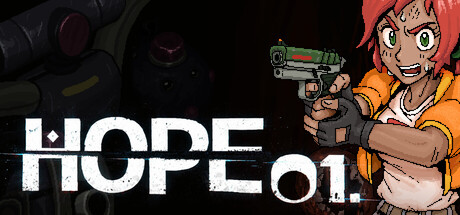
Waking Up in the Hab Cluster HOPE 01 opens with its unnamed protagonist waking inside a decaying underground facility, sent in on a vague request to find something called HAB 01. F
7.5 / 10
Your Typing Becomes A Bookstore Idle Bookstore is a $5.99 desktop-companion idler from small indie studio Purpledoor Studios: a tiny pixel-art writer and their bookstore live in a
7.5 / 10
A Love Letter To Symphony Of The Night, Not A Replica Of It Infinitevania, developed and published by JHT Games, released on Steam on July 24, 2026, at $14.99. It's a 2D metroi
7 / 10
A Puzzle Game That Refuses To Explain Itself In & Out, released August 31, 2026 by solo developer and publisher KASTEN, is a $4.99 first-person puzzle game set inside a cold, clini
7.5 / 10
An Island Made Entirely Of Trash, And A Very Literal Reason To Care Island For Sale, released September 3, 2026 from solo developer and publisher Tyranno Rocket, opens on a decepti
7 / 10
A Shoot 'Em Up Where Dying Is the Point Kamikaze Empire, released June 8, 2026 from Japanese doujin developer Kamikaze Kobo and published by Henteko Doujin and Sanuk Inc., buil
7.5 / 10
Your Forever Job At The Kharnym Isle Post Office Letter Lost, from debut developer and publisher FlatNine Games, released on Steam on June 10, 2026, at $19.99. It casts the player
7 / 10
No Monsters, No Combat, Plenty Of Dread Liminal Shroud, released September 3, 2026 for $12.99 from solo-flavored studio Everdeep Studios, arrives into a genre that's become gen
7.5 / 10
Five Decisions, One Honest Market Load Factor strips airline management down to its bones and dares you to master the result. There's no terminal construction, no runway-laying
7.5 / 10
A Road Trip Built Around Standing Still Look to the Birds casts the player as a kid on a family road trip through New England and the Canadian Maritimes, camera in hand, stopping a
8 / 10
An Autochess Roguelike Wrapped In Lucha Libre And Tacos Lucha Chess, from solo developer Jorge T.V., entered Steam Early Access on June 1, 2026 after roughly eight months of free d
7 / 10
Socialism, Reforged on the Lunar Surface Lunokhod builds its entire premise on a single, evocative point of divergence: it's 1993, the USSR is collapsing under the weight of it
7.8 / 10
You Are the Drug MAINLINE opens with a premise so committed to its bit that it takes a moment to process: you are a dose of caffeine, injected into the arm of an exhausted human, a
7 / 10
From Tobacco Shop to Shopping Center Business Tycoon has been quietly building a mini-empire of first-person retail simulators — Mall Simulator, Tobacco Shop Simulator — and Mall T
7 / 10
A Sequel That Actually Listened to the First Game's Complaints The original Marsupilami platformer landed as a charming but slight package — reviewers loved its Donkey Kong Cou
7.4 / 10
A Tidying Game That Picked A Genuinely Fun Setting Mess in the Toy Shop, released September 3, 2026 from solo developer and publisher Trigarb, drops you into a wrecked toy store an
7 / 10
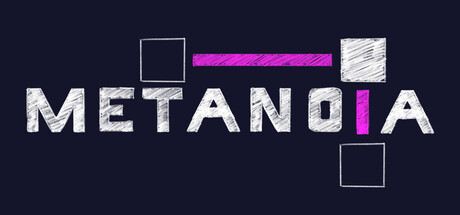
Two Simple Rules, A Circle's Existential Crisis, And A Pool Of Reviewers Who All Agree Metanoia, developed and published by Meteoric Works, released on Steam on February 27, 20
8.5 / 10
A Creature Collector That Fits In A Corner Of Your Screen Minimon: Tiny Idle Tactics, released August 31, 2026 by developer Reign of Gaming and publisher Bufflehead Studios, pitche
8 / 10
Monks, Not Mechs MOBU, released July 16, 2026 by developer and publisher Saidera Studio, is a $5.99 arena shooter with roguelite bones, where players control a superpowered monk fi
8.5 / 10
It Started in Your Foot. Now You Have to Go Up. MOLDRISE opens on the smallest possible scale — a splinter, a scratch, something wrong with your foot — and turns it into the entire
7.1 / 10
A Corporate Shell, an Angry Colony, and an ASCII Planet NERMIUS entered Early Access around June 8, 2026 from the solo-flavored studio Saturn Acme Corp., pitching itself as a genre
7 / 10
A Free, Minimalist Magnet Puzzle That Punches Above Its Price Netoo, developed and published by Mindlabor, released free on Steam on March 3, 2026. It's a minimalist logic puzz
7.5 / 10
Rome Never Fell, And Someone Finally Built A Colony Sim About It Nova Patria released on Steam on May 14, 2026 from small developer Sower Interactive, and it opens with a premise u
8.5 / 10