Game review
Mess in the Toy Shop Review
7 / 10
- Developer
- Trigarb
- Publisher
- Trigarb
- Released
- 3 September 2026
- Platforms
- ["Windows"]
- Genre
- Simulation
A Tidying Game That Picked A Genuinely Fun Setting
Mess in the Toy Shop, released September 3, 2026 from solo developer and publisher Trigarb, drops you into a wrecked toy store and asks you to do exactly what the title says: put everything back where it belongs. It's a crowded genre by now, "clean up X" games have become their own recognizable niche on Steam, but the toy-shop setting gives Trigarb's entry a genuine edge over its rivals in raw variety of stuff to sort. At $4.99 it's a small release, only seven English-language reviews so far, but the pool is unanimous: all seven positive, a perfect record that's rare even for a genre known for pleasing its niche fanbase reliably. One reviewer who's clearly played several games like this makes the comparison explicit: "I love that this game has a variety of items I haven't seen in others like doll clothes and ponies for the dolls, the army men and their vehicles and accessories, puzzles and books, crafts like modeling clay and paint by number, musical instruments, educational learning toys, lots of sports things, so much stuff!"
The Sorting Loop, And One Genuinely Smart Quality-Of-Life Touch
The core mechanic is standard for the genre, pick up an item, find its designated shelf, place it correctly, repeat across dozens of item types until the shop reads as organized rather than ransacked. What sets this particular implementation apart, according to multiple reviewers, is a specific piece of interface design: items automatically sort themselves while held. "What I really LOVE and would like to see elsewhere is the items auto-sort in your hand when putting them away," one reviewer wrote, a small mechanical touch that removes a layer of fiddly manual rotation most competing tidying games force on the player. Another reviewer frames the whole experience in purely relaxation terms, distinct from stress: "there's no achievements, so there's no worrying about anything, it's just all pure vibes," a fair description of a launch-week build that, notably, added an achievements system in its very first post-launch patch, a detail worth flagging since that reviewer's review predates the update.
A Genuine Scavenger Hunt Layered On Top Of The Chores
Beyond the core sort-and-shelve loop, Trigarb built in a collectathon layer that reviewers single out as the game's most memorable feature: hidden golden figurines scattered through each level, optional finds that reward exploration rather than just methodical tidying. "The hidden golden figurines was really unique, an awesome game!" one reviewer wrote, while another goes further describing the developer's own handling of the mechanic: "I also appreciate the fast response by devs to a discussion board post question about golden figurines... and the SPOILERS tag was VERY appreciated in case players like me wanted to try to find the golden figurines on my own, a cool little scavenger hunt side quest." That's a rare, specific example of a solo developer actively managing community spoilers around their own game's secret content, rather than just posting patch notes, and it speaks to a level of care that goes beyond the core cleaning loop.
Small Rough Edges: A Fiddly Ability And No Controller Support
The criticism that does surface is limited and specific rather than a pattern. One reviewer took issue with a timed special ability meant to grab items from a distance, calling it "a bit weird" and arguing "I never used the one to pick items up further away, that shouldn't be something that needs to be timed," suggesting the ability's design gets in the way of the exact stress-free pacing the genre is supposed to deliver. A separate reviewer wished for controller support, noting it "would make it better in my opinion" for accessibility, while still calling the game "incredibly polished and easy to get into" overall. Both are single, uncorroborated observations rather than shared complaints, useful context for anyone weighing a purchase but not evidence of a deeper problem. The ISteamNews history shows a developer staying on top of things regardless: a hotfix on launch day itself, followed five days later by an update adding achievements, a fast turnaround for a $4.99 solo release.
Real Length For The Price, In A Genre That Sometimes Runs Short
Value is where this release quietly outperforms plenty of its genre peers. One reviewer reports finishing in "5 hours going at a leisurely pace," and another logged nearly 40 hours, suggesting the golden-figurine hunt and the sheer variety of item categories genuinely extend the game well past a single sitting for players who want to chase full completion. "Just right for 1-2 evenings. The price makes it hard not to give it a try," one reviewer summarized bluntly, and that's about as clean an endorsement of the value proposition as this genre gets: a low buy-in, a real handful of hours of content, and enough variety in what you're actually sorting that the tidying doesn't start feeling like the same three item types on repeat.
Verdict
Mess in the Toy Shop earns its unanimous reception by doing the genre's fundamentals well, satisfying sorting feedback, a smart auto-sort-in-hand quality-of-life touch, and a setting stuffed with more genuinely varied item types than most of its competitors bother with, while adding a hidden-collectible layer that a solo developer is clearly still actively supporting and protecting from spoilers on the community boards. The rough edges, an underused timed pickup ability and a lack of controller support, are minor and individually reported rather than shared complaints, and neither gets in the way of what is, by multiple accounts, a genuinely relaxing five-plus-hour toy-shop cleanup for less than the price of a coffee. Anyone who already knows they like this specific "put it all back" genre should find this one of the stronger, more varied entries currently on Steam; anyone new to the genre could do a lot worse than starting here.
Screenshots
-
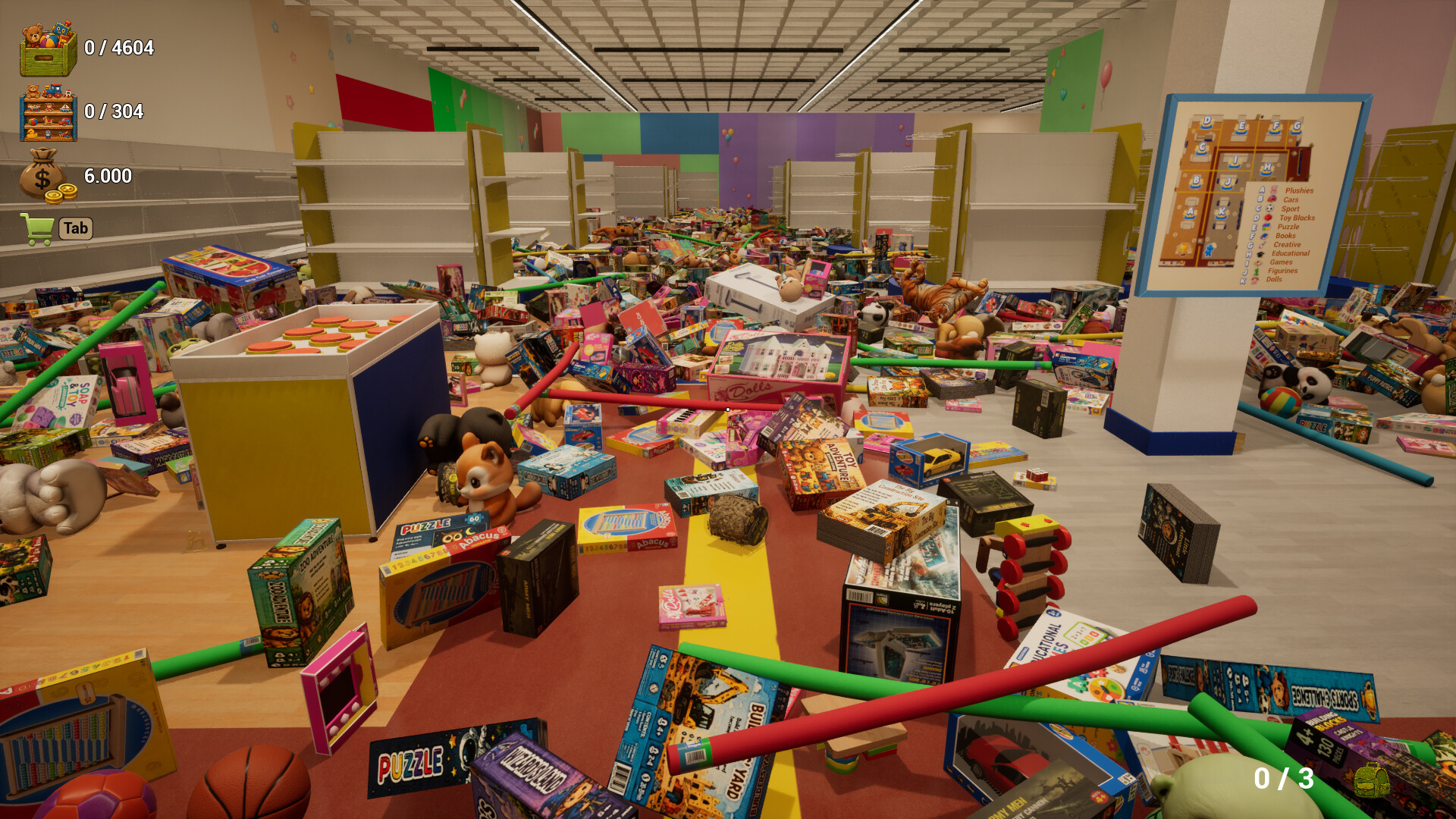
The scale of the mess at a level's start, thousands of individual items across a dozen categories, all currently dumped on the floor.Image: Trigarb via Steam -
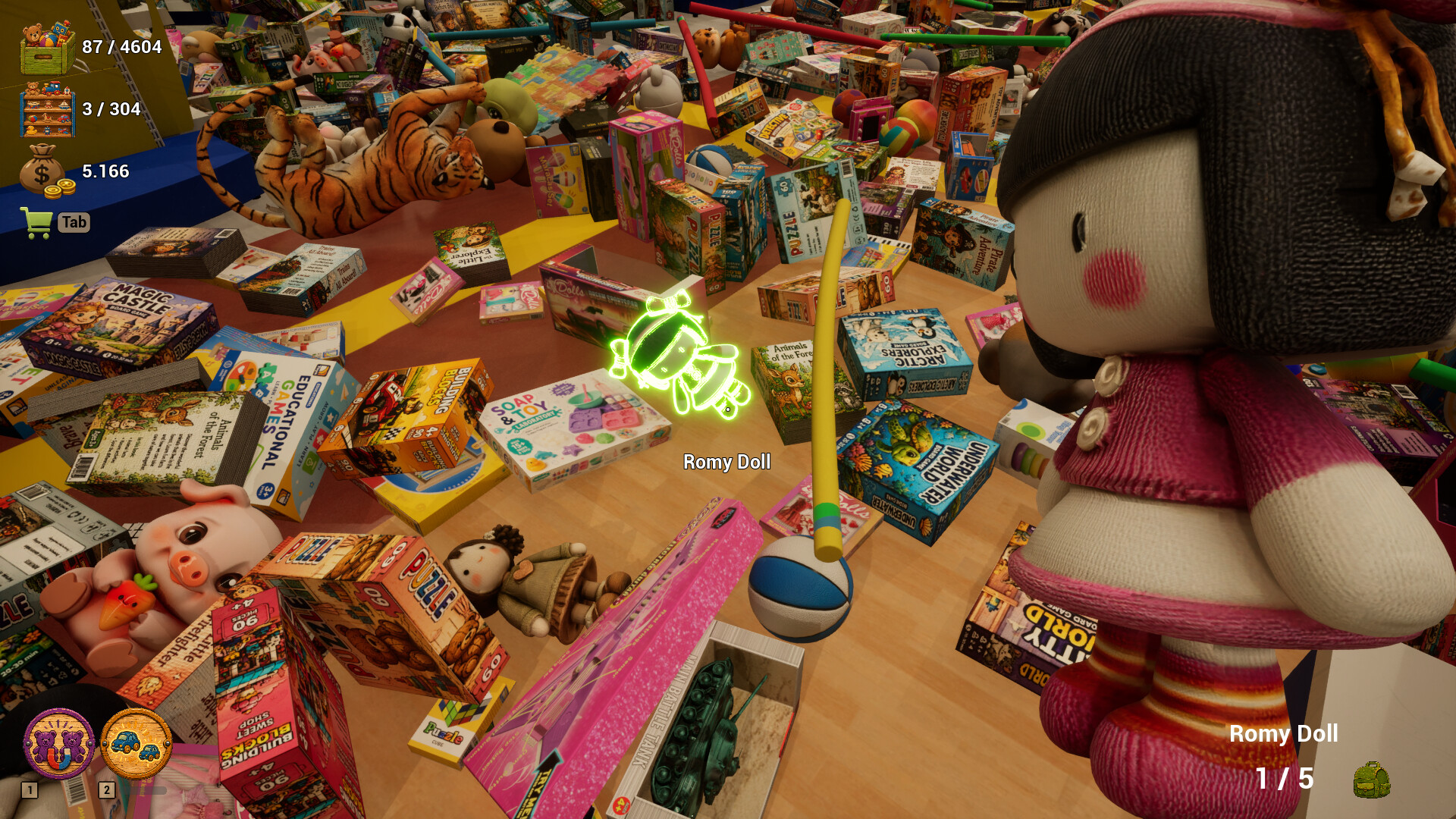
The hidden-collectible layer in action: a glowing highlighted item as part of a themed doll set, one of the optional side-goals stacked on top of the main tidy-up objective.Image: Trigarb via Steam -
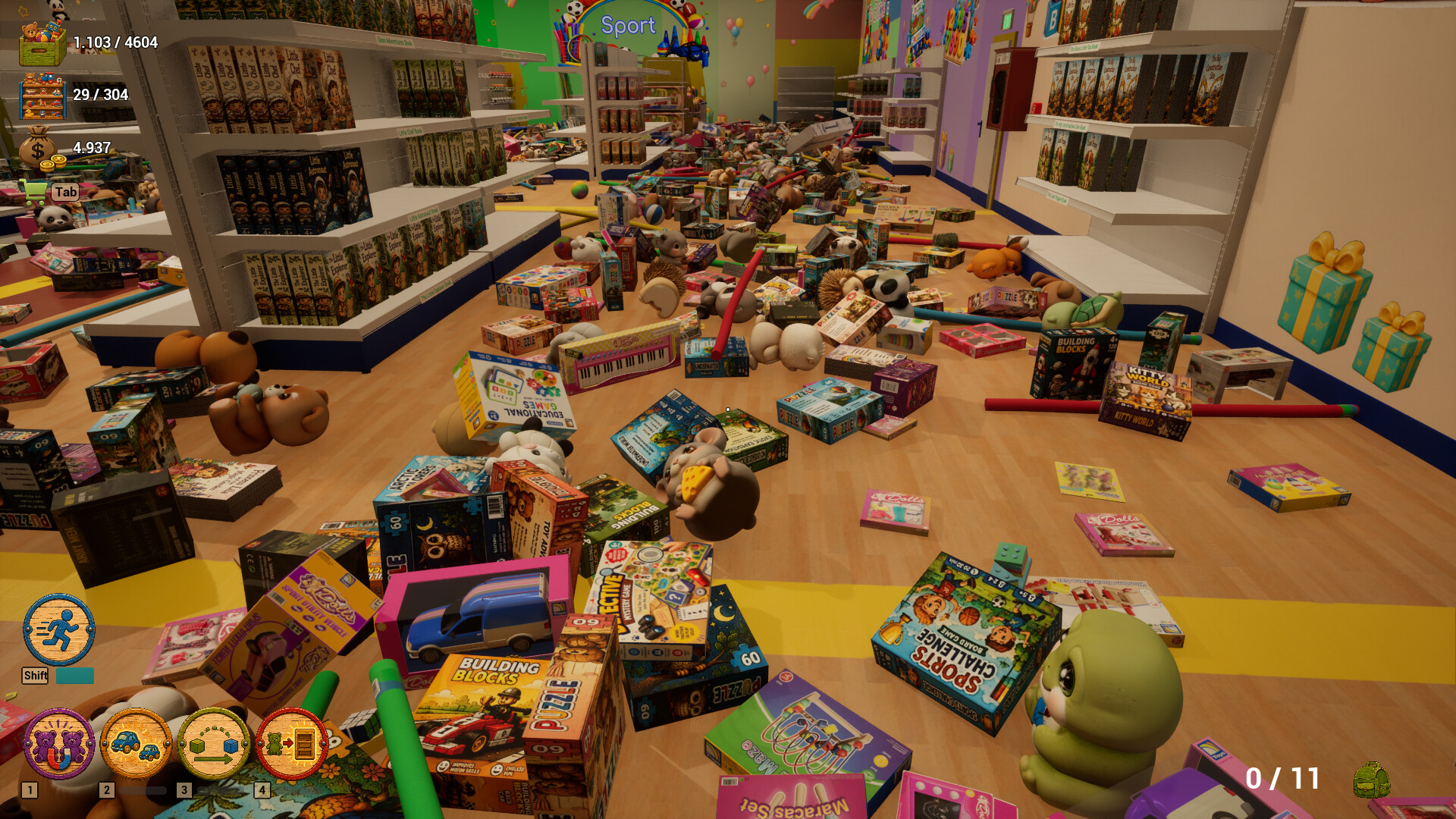
Progress in motion: shelves in the background already restocked while the foreground still looks like a disaster zone, the exact push-and-pull pacing reviewers call satisfying.Image: Trigarb via Steam