
Game review
We Are Gum Review
8 / 10
- Developer
- Curious Nessie Club
- Publisher
- Curious Nessie Club
- Released
- 1 September 2026
- Platforms
- ["Windows"]
- Genre
- Puzzle
Cute Gum Blobs, Genuinely Mean Puzzles
We Are Gum, released September 1, 2026 by developer and publisher Curious Nessie Club, is a $9.99 Sokoban-style puzzle game with a premise that's charming right up until it isn't: goofy alien bubble gums, all controlled and moved simultaneously, have to stick to walls, drag heavy stones, and work their way home through increasingly brain-melting level design. It's a small, focused release with exactly eighteen English-language reviews at the time of writing, every single one of them positive, a perfect record that lines up with how consistently reviewers describe the experience: deceptively cute, then genuinely, repeatedly humbling.
A Simple Rule Set That Turns Vicious Fast
The core hook, every gum blob on screen moves in response to a single input, means solving a level is really about choreographing several characters at once rather than steering one, and reviewers are near-unanimous that this simple constraint produces surprising depth. "Cute, mind-bending puzzle game with a surprising amount of complexity to it. The stages can get really difficult!" one reviewer writes, and another frames the difficulty curve almost as a personal insult: "It seems to be very easy to grasp at first. After just a few levels, game turned to be extremely challenging through its level. I felt stupid trying to pass each one." That specific arc, an easy premise curdling into genuine brain strain, comes up again and again across the review pool, often paired with self-deprecating admissions rather than complaints: "I'm just mad at myself on how dumb I am," "The game showed me how smart I am," "I'm crazy. I spend a lot of time with it." For a puzzle game, provoking that particular flavor of frustrated affection is close to the highest compliment available.
A Real, Corroborated Interface Complaint
Set against the design praise, one specific piece of UI friction shows up independently across multiple reviews: a sluggish level-select screen. "The level select can feel slow sometimes," one reviewer notes, while another, deeper into the game, is more pointed: "the level selection screen during later part of the game is very slow to navigate." Two separate reviewers flagging the exact same menu, unprompted, is a legitimate, corroborated complaint rather than a one-off gripe, and it's the single clearest reason to dock points from an otherwise excellent interface. Smaller, uncorroborated notes round out the picture: one reviewer's laptop fan spun up unusually hard during play, another wished for a way to skip cutscenes and end credits, and a couple of players found the game's audio hint system's repeated chime more irritating than helpful.
Hints That Guide Without Spoiling
Curious Nessie Club clearly put real thought into accessibility for a genre that can otherwise gatekeep hard. Multiple reviewers single out the hint system specifically for getting the balance right: "I don't usually play puzzle game, so the hint help me a lot. It give me just the vague concept without spoiling the solution," one wrote, a distinction that matters a great deal in a puzzle game where a full solution would kill the satisfaction of solving it yourself. The developer has also stayed responsive post-launch, three patches and a Steam Cloud rollout within the first ten days of release, following a pre-launch campaign that included a ChinaJoy 2026 showcase appearance, evidence of a small team actively building momentum around the game rather than launching and disappearing.
Short, Sticky, And Worth The Asking Price
At under 250 minutes for some of the fastest reported playthroughs and well over 20 hours for the most dedicated players logged in this review pool, We Are Gum's length varies wildly depending on how much a given player lets the harder late-game stages punish them, which is itself a decent proxy for how much genuine challenge is packed into the level design. Nobody in the review pool describes the $9.99 asking price as a stretch, and several explicitly recommend buying it outright: "My brain hurts, worth to buy 10/10" and a blunt, all-caps "Buy the game!!!!!" are about as direct as endorsements get.
Verdict
We Are Gum earns its perfect review score by nailing the two things a puzzle game absolutely has to get right: a premise simple enough to grasp in seconds, and a difficulty curve that turns that simplicity into something genuinely, memorably hard without ever feeling unfair. The cute, sticky art direction sells the tone, the hint system respects the player's intelligence, and Curious Nessie Club's quick post-launch patch cadence suggests a developer paying close attention. A slow, repeatedly-flagged level-select menu is a real and fixable rough edge, not a dealbreaker, and shouldn't stop anyone who likes their puzzle games cute on the surface and mean underneath from picking this one up.
What's most striking about the review pool, taken as a whole, is how consistently players describe the same emotional loop: initial confidence, a wall of difficulty a few levels in, a stretch of visible frustration, and then a small, specific moment of triumph once the solution clicks. That's a hard rhythm for any puzzle designer to nail reliably across dozens of levels, and Curious Nessie Club appears to have done it without leaning on obtuse mechanics or unclear rules to manufacture the difficulty artificially. The gum-blob premise could easily have stayed a cute gimmick; instead it's the actual engine driving every one of those "oh, of course" moments reviewers keep describing. For a small team working in a genre this crowded, that's a genuinely rare thing to get right, and it's the strongest argument for treating the perfect review score as earned rather than lucky.
Screenshots
-
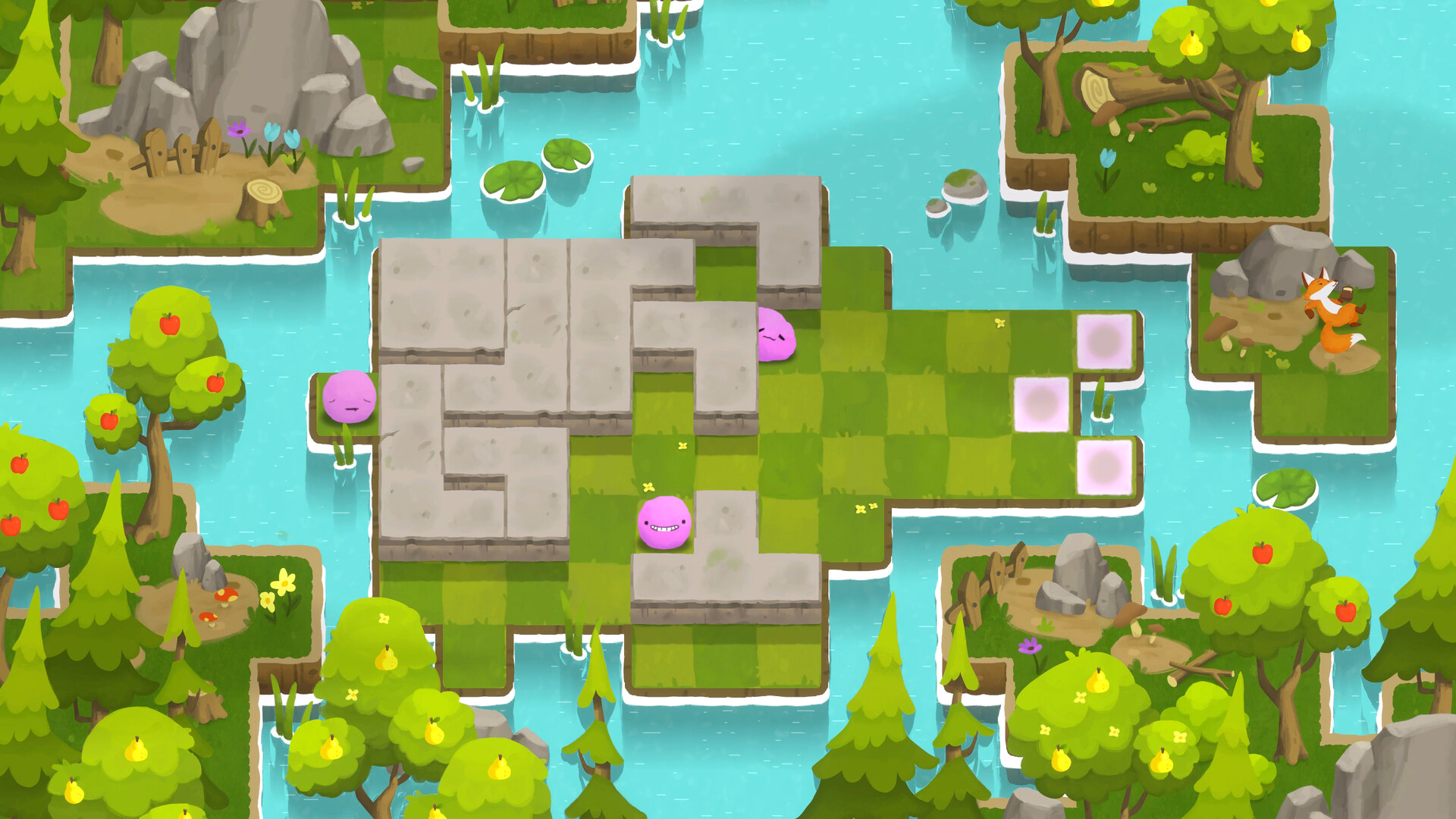
A mid-game level shows the format: several gum blobs at once, threading a stone maze toward the pink target tiles on the far side.Image: Curious Nessie Club via Steam -
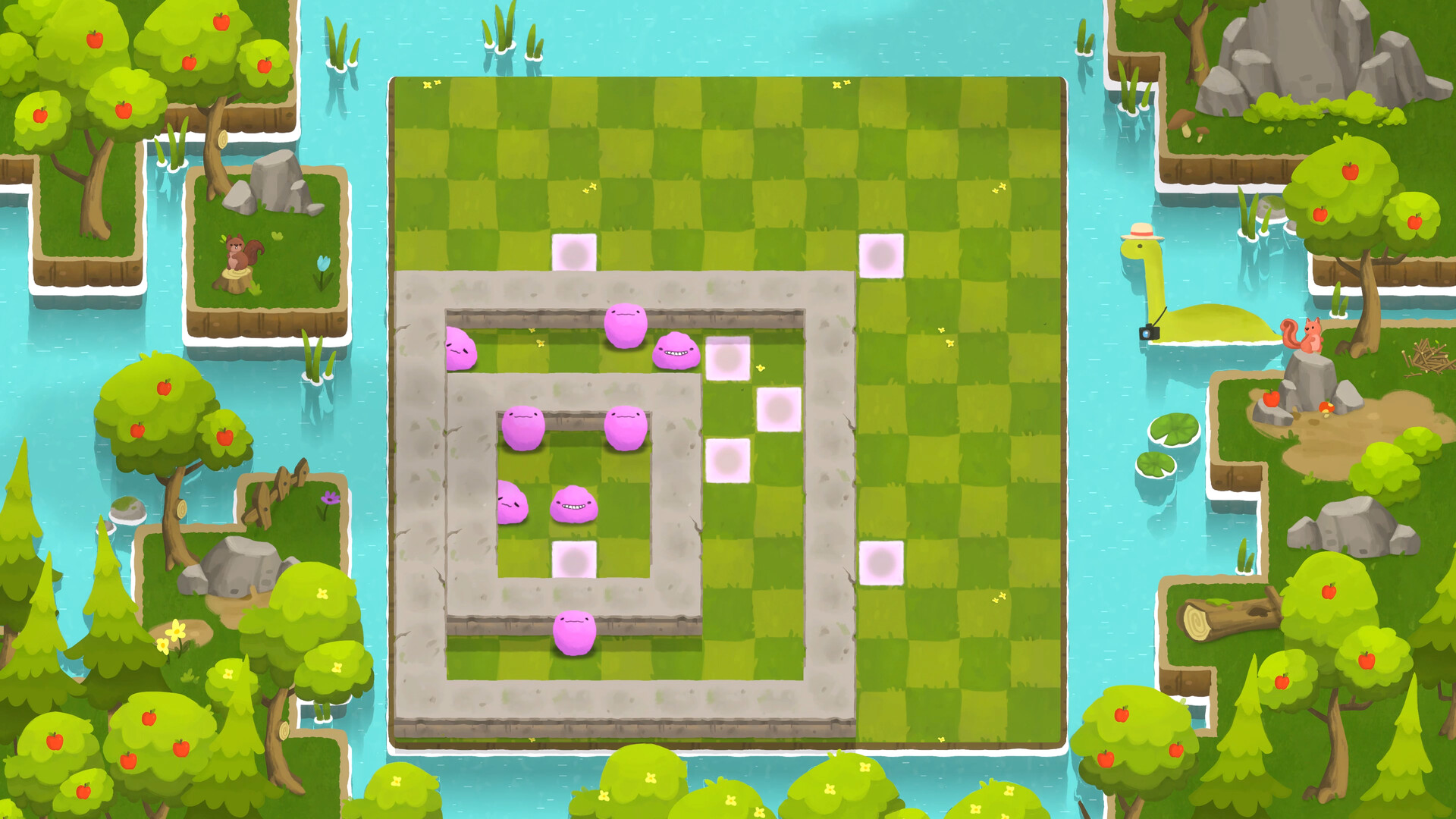
One of the trickier spiral layouts, six gum blobs need coordinating through the same narrow stone corridor at once.Image: Curious Nessie Club via Steam -
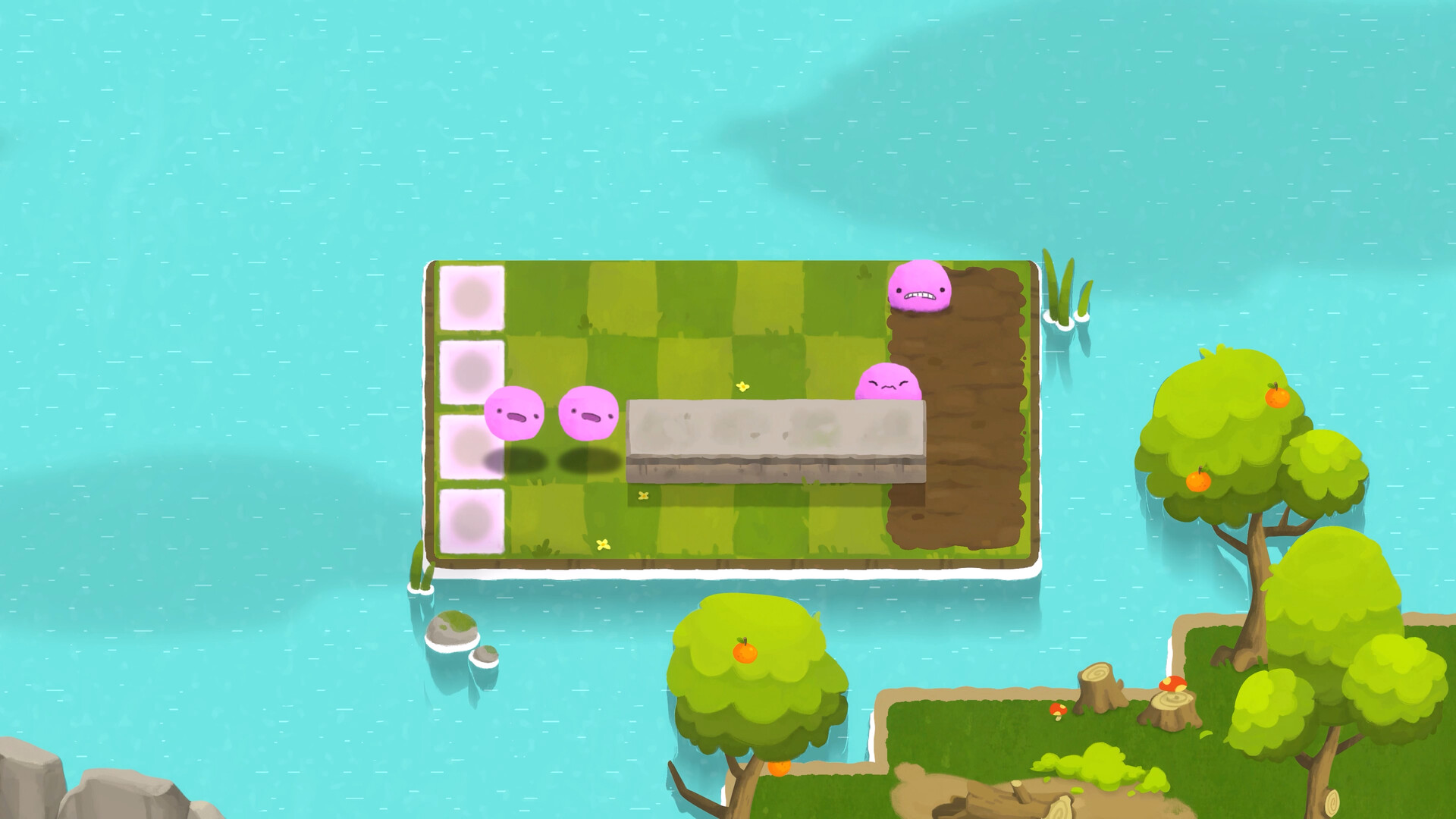
A smaller, early-game layout, the kind of gentle introduction that reviewers say gives way fast to much harder later stages.Image: Curious Nessie Club via Steam