Game review
Nova Patria Review
8.5 / 10
- Developer
- Sower Interactive
- Publisher
- Judatone Studios
- Released
- 14 May 2026
- Platforms
- ["Windows", "macOS", "Linux"]
- Genre
- Simulation
Rome Never Fell, And Someone Finally Built A Colony Sim About It
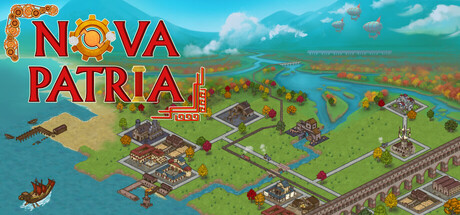
Nova Patria released on Steam on May 14, 2026 from small developer Sower Interactive, and it opens with a premise unusual enough to carry a game on its own: an alternate history in which the Roman Empire never collapsed, and instead lived on to discover the New World and industrialize with steam power. Players take the role of a colonial governor tasked with building a network of connected Roman-steampunk cities across a procedurally generated isometric map, linking aqueducts, horseless chariots, and rail lines into intricate supply chains that feed an empire's growth. At $11.99, on Windows, macOS, and Linux, its English review pool is small but unusually decisive: 25 reviews, all 25 positive, every one of which was read in full for this review. That kind of unanimity from a fresh launch is rare enough to be worth digging into rather than taking at face value.
Not Really A City Builder, A Logistics Puzzle Wearing One's Clothes
The single most consistent observation across this review pool, repeated in different phrasing by nearly every reviewer, is that Nova Patria only looks like a city builder from a distance. "While this game looks like a city builder, it is more of a resource automation/management game where every building's placement is extremely important," wrote one of the pool's most detailed reviews, adding flatly, "this is by no means an easy game." Another reviewer put it even more directly: "It's more of puzzle game than a straight city builder. The game mechanics are simple, the challenge comes from building placement, adjacencies, how to get resources where you need them, access to water and how to bridge the gap to next settlement location." A third called it "Rogulike city builder perfected," praising how the game "task you with building connected cities, becous its not possible to have all industries in one place," a structural choice several reviewers singled out as the game's most distinctive idea: rather than one sprawling city, players build a network of specialized settlements, each solving a different piece of a shared production puzzle.
A Steep Learning Curve, Softened By Genuinely Good Tutorials
Reviewers were nearly unanimous that Nova Patria demands real effort to learn, and just as unanimous that the game's tutorials earn that demand honestly. "Great tutorials - it is highly encouraged to read carefully and understand what they are trying to teach you. Do not just put stuff in places and click next," read one review, a sentiment echoed almost word for word elsewhere: "The tutorials are genuinely good, and more importantly, they are necessary. The game may look easy to get into at first, but it is also very easy to fall flat on your face." One reviewer described the specific texture of that difficulty: "you can easily unbalance your whole economy and be flat on your ass if you aren't careful," while a more critical voice acknowledged "it is feasible to softlock yourself the couple first tries, moreso due to inexperience than the games fault," and specifically flagged an early-game freshwater and fish-sourcing bottleneck as needing either a gentler curve or a more forgiving map generation option. That same freshwater dependency became something of an inside joke in the pool: one reviewer's entire piece of advice for new players was simply, "THE FISH MUST FLOW."
A Long, Visible Development Arc Behind The Launch
Several of the pool's most substantive reviews describe following Nova Patria for a year or more before its 1.0 release, through a public demo and, for at least one reviewer, a closed beta. "Started playing this game on the demo stage last year. Fell in love with the progression of cities and the puzzle that the game offers... Then the developer just added to my enjoyment of this game. His passion, interest, and reception to feedback has been awesome to see," wrote one. Another, who disclosed receiving the game for free roughly a year early as a closed beta playtester, still rated it highly at launch: "Absolutely love this game. Cannot fault it at all." A third reviewer who'd played the demo "some time ago" and returned at release noted concretely how much had changed: "They updated this a lot in these last months! I'm impressed!" That pattern, a visible, community-engaged development cycle stretching back roughly a year before this review's 2026 launch, appears to have built real goodwill that's now paying off in reception, even though the eligible original release for this review's purposes remains the May 2026 launch itself rather than the earlier demo period.
The One Real Crack: Thin Replayability Once You've Solved It
For a review pool with zero negative entries, the closest thing to a consistent critical note is a concern about how much game remains once a player has mastered its systems. One reviewer, after finishing three full playthroughs in roughly 17 hours, wrote plainly: "My biggest criticism is the limited replayability. I wish there were more incentives in the late game to keep building and expanding an empire beyond the 15-year goals." Another reviewer flagged a related structural worry rather than a lived complaint: "the game seems 'solvable', with ideal ratios and build orders possible, but at the moment it's a lot of fun figuring out each production pathway." Both concerns point toward the same underlying risk for a puzzle-driven city builder: once the optimal supply-chain solutions are known, the challenge that makes the genre work in the first place may thin out, and this pool is honest enough to flag that even while otherwise recommending the game without reservation.
Verdict
Nova Patria earns its unanimous early review pool by delivering something genuinely distinct within an oversaturated genre: a Roman-steampunk logistics puzzle disguised as a city builder, demanding but fair, with tutorials that actually teach the systems they introduce rather than gesturing at them. At $11.99, cross-platform on Windows, macOS, and Linux, it's an easy recommendation for anyone who enjoys puzzle-driven management games and doesn't mind an early learning curve steep enough to soft-lock a first attempt or two. Its ceiling, per its own most thoughtful reviewers, is replayability once its supply chains have been solved once, so players looking for an endless empire-builder to sink hundreds of hours into should temper expectations accordingly. For everyone else, this is a small, focused, remarkably well-received debut worth the asking price.
Screenshots
-
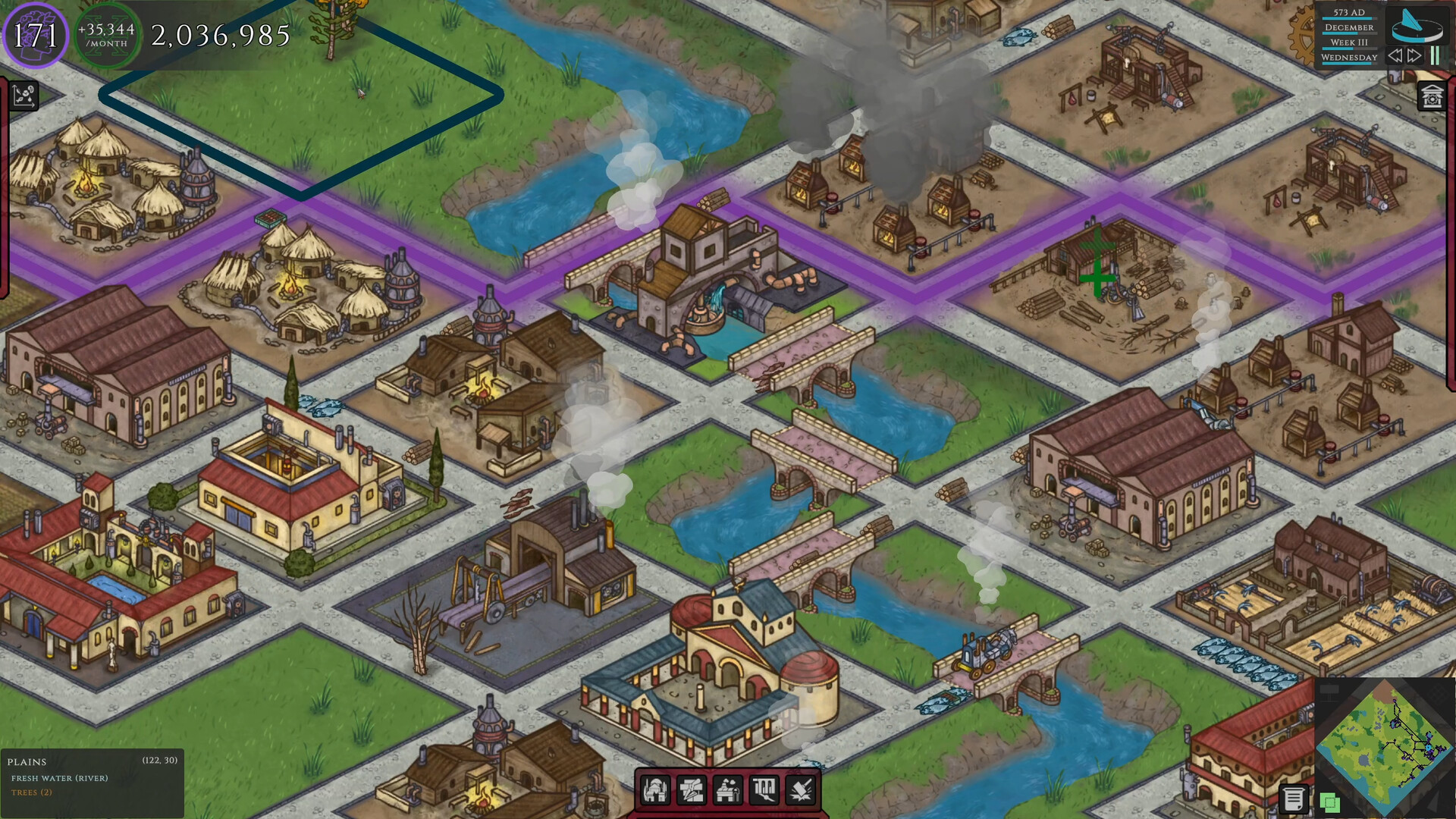
A close-up view of one settlement's production chain, with workshops, warehouses, and bridges linking resources across the river.Image: Judatone Studios via Steam -
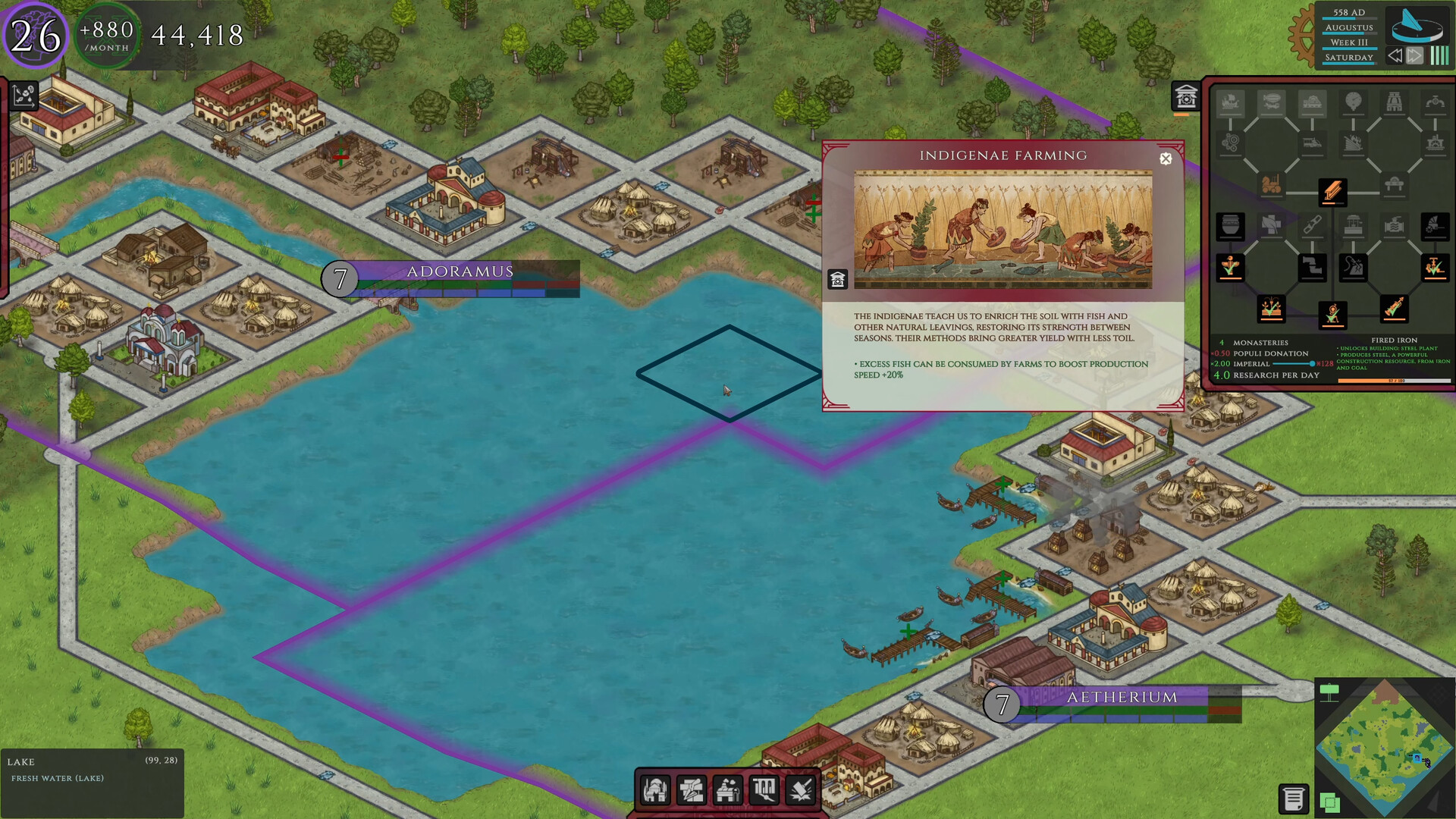
One of the game's detailed tutorial pop-ups, explaining a fish-and-farming bonus alongside the technology tree reviewers praised for actually teaching its systems.Image: Judatone Studios via Steam -
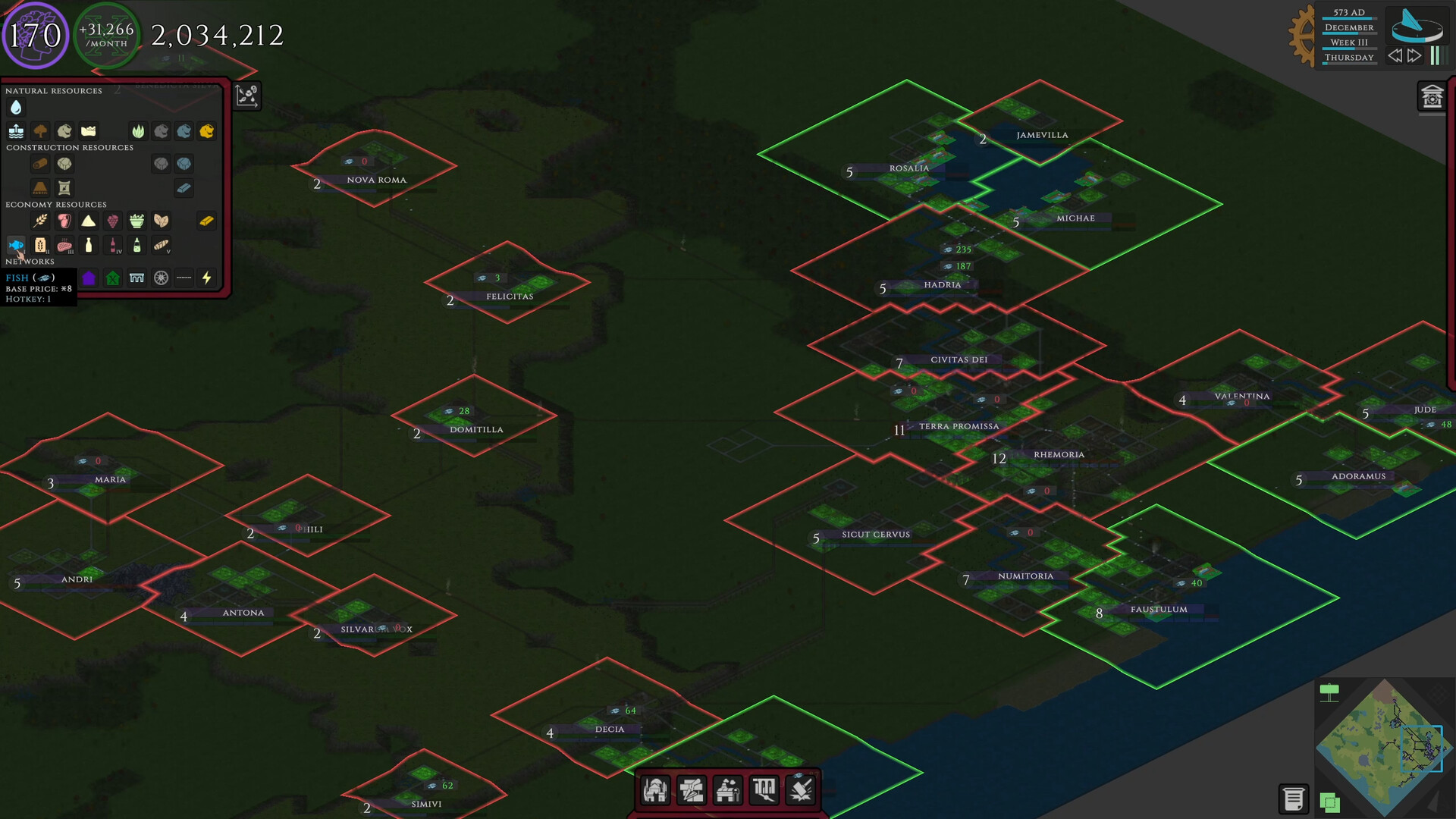
The empire-level map view, showing the network of specialized settlements players must link together rather than a single sprawling city.Image: Judatone Studios via Steam