Game review
Folklands Review
3.7 / 10
- Developer
- Bromantic Games
- Publisher
- Light Up Games
- Released
- 9 September 2026
- Platforms
- ["Windows", "Mac"]
- Genre
- Simulation
A Cozy Nordic Settlement Builder, Out of a Long Demo Period
Folklands is a settlement builder from Bromantic Games, set in a retro-styled, fantasy Nordic-inspired world where players harvest raw resources, refine them through multi-step production chains, and grow a small camp into a full settlement while keeping simulated citizens fed, housed, and content. The pitch leans deliberately old-school, explicitly positioned by both the developer and several reviewers as a tribute to classic city-builders of decades past, favoring a slow, methodical rhythm of placing buildings and watching production chains mature over fast-paced optimization or combat. Multiplayer is built in from the start, with online and LAN PvP alongside co-op and Steam Workshop support for community content, letting players compete over the same finite resources or hand-build settlements together on shared maps. The game spent a substantial stretch of 2026 in public demo form, during which the developer pushed frequent fixes and small content additions, before launching out of that demo period into its full 1.0 release on September 9, 2026, priced at $14.99.
A "Mostly Positive" Launch With a Sharp Split Between Early Fans and Later Skeptics
Folklands launched to 72 total reviews, 54 of them positive, for a "Mostly Positive" score, with the English-language subset landing at a similar 16 out of 22. Reading through the pool, that split tracks reasonably closely with when a reviewer played: many of the earliest, most enthusiastic reviews came from the extended demo period, praising the game's charm and potential, while a cluster of the most detailed and heavily upvoted negative reviews arrived specifically after the version 1.0 launch, flagging performance problems, missing content, and a bug that some reviewers say breaks progression outright. That timing matters, because it suggests a genuinely likeable demo concept ran into real trouble translating into a finished, purchasable product.
Genuine Cozy-Builder Charm for Players Who Found It Early
The positive reviews describe exactly the kind of low-stakes, meditative experience the retro city-builder genre promises. One reviewer compares it favorably to TheoTown, "but with the charm of early European aesthetics," specifically praising an active developer who is "always fixing things as they appear." Another highlights a small but telling systems detail, the ability to replant trees that have been cut down, as a first glimpse of a sustainability-management layer with more depth than the surface presentation suggests. A longer, more measured positive review frames the whole game as "a tribute to the classic strategy titles that defined the genre decades ago," embracing "a slower and more methodical style of progression" rather than modern optimization-heavy city-building. Several shorter reviews simply describe the experience as "relaxing," "almost mindfulness," and "cosy," with more than one reviewer specifically looking forward to trying the built-in co-op mode with friends. Even reviewers who land on the positive side aren't uncritical, though: one flags real annoyances, like having to hunt for the specific button that lets builders upgrade homes rather than that being automatic, alongside graphics, UI, and a limited, repetitive soundtrack they say "could do with some improvement."
Post-Launch Crashes, an Empty Late Game, and a Price Several Reviewers Call Unjustified
The negative reviews, several of them the most heavily upvoted in the entire pool, converge on three problems that surfaced specifically once the game left its demo period. The first is stability: one reviewer reports their game crashing twice after building a Wheat Farm shortly after the 1.0 launch, while another, who loved the demo enough to buy the full game, describes it as unable to properly unlock the builder's hut or connect roads between buildings in the finished release, making meaningful progress impossible. The second and most heavily upvoted complaint concerns performance and content depth together: one detailed review states flatly there is "not enough content to justify even 1/4 of the price," adding that the game is "insanely horribly optimized," with lag that worsens the longer a session runs until framerates drop into single digits, and pointedly notes that by the time a player finishes the tutorial under that lag, they may already be past Steam's two-hour refund window. A separate long-form review, posted alongside a video critique, calls the overall experience "pleasant but empty," arguing the game "feels like a framework for something greater that never fully arrives," with no meaningful progression or surprises once the initial charm wears off. A third recurring thread is value for money: one reviewer, pricing the game against genre peers like Workers & Resources: Soviet Republic, Diplomacy is Not an Option, Nordhold, and Norland, argues Folklands offers nothing that distinguishes it and calls it "an incredibly boring implementation of hackneyed patterns," reporting that three hours of correct play led to boredom rather than escalating challenge.
Verdict
Folklands captures real, if familiar, cozy-city-builder charm for the players who caught it during its long demo run and stuck with the methodical, old-school pacing it's aiming for, and the developer's visible responsiveness to bug reports earns it real goodwill in the review pool. But the jump from demo to full 1.0 release appears to have exposed problems the demo period didn't fully surface: post-launch crashes and progression-blocking bugs, performance that reportedly degrades into single-digit framerates in longer sessions, and, for multiple reviewers, a late-game emptiness that undercuts the promise of deep production chains and genuine settlement growth. At $14.99 against a crowded field of more established city-builders, this is a game with a real, gentle appeal for patient genre fans willing to ride out early post-launch rough patches, but not yet a confident recommendation at full price.
Screenshots
-
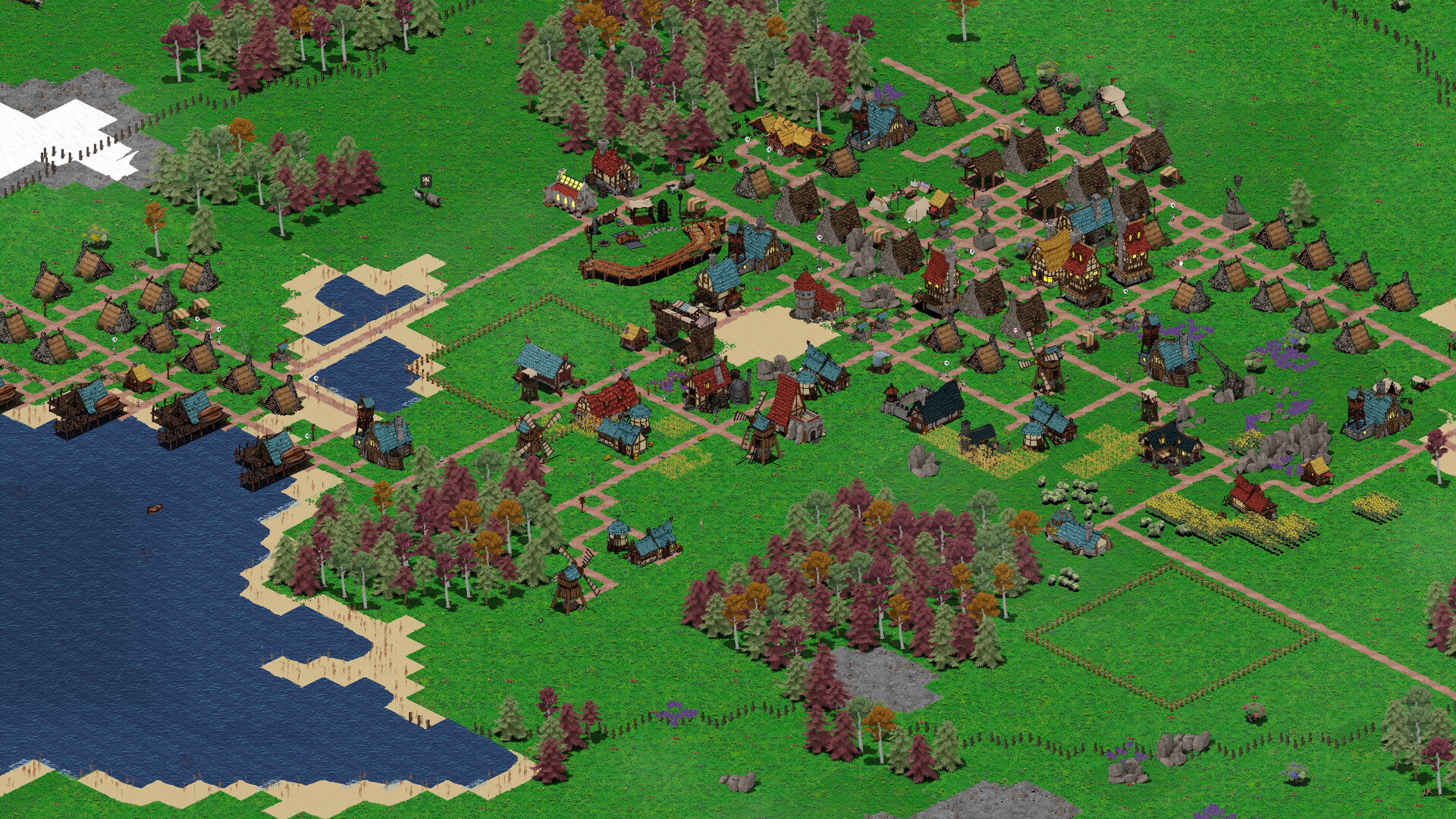
A mature settlement in full swing, with production buildings, homes, and roads branching out from a central marketplaceImage: Light Up Games via Steam -
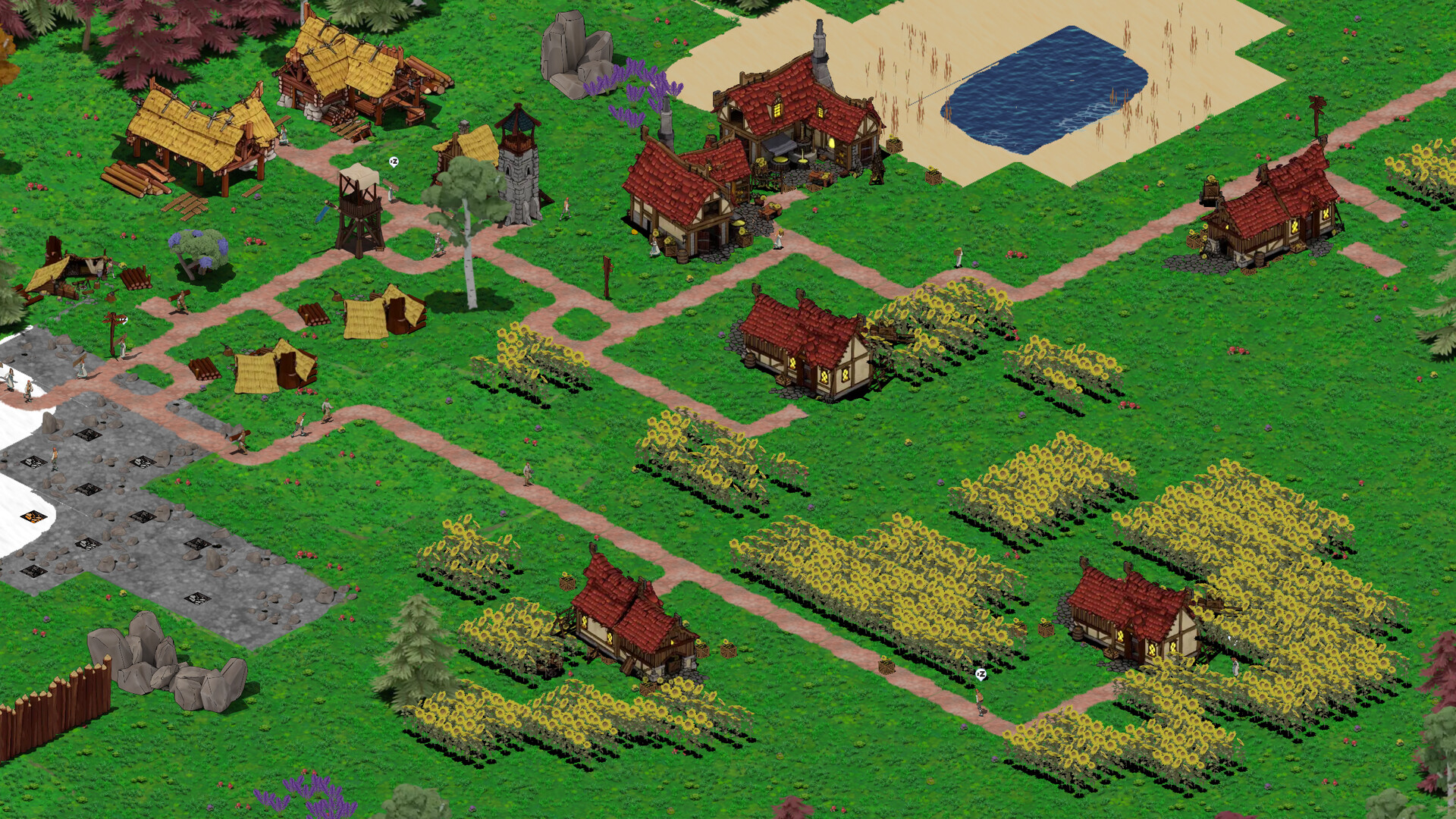
Early settlements grow modestly around a handful of production buildings before scaling into the larger towns reviewers describeImage: Light Up Games via Steam -
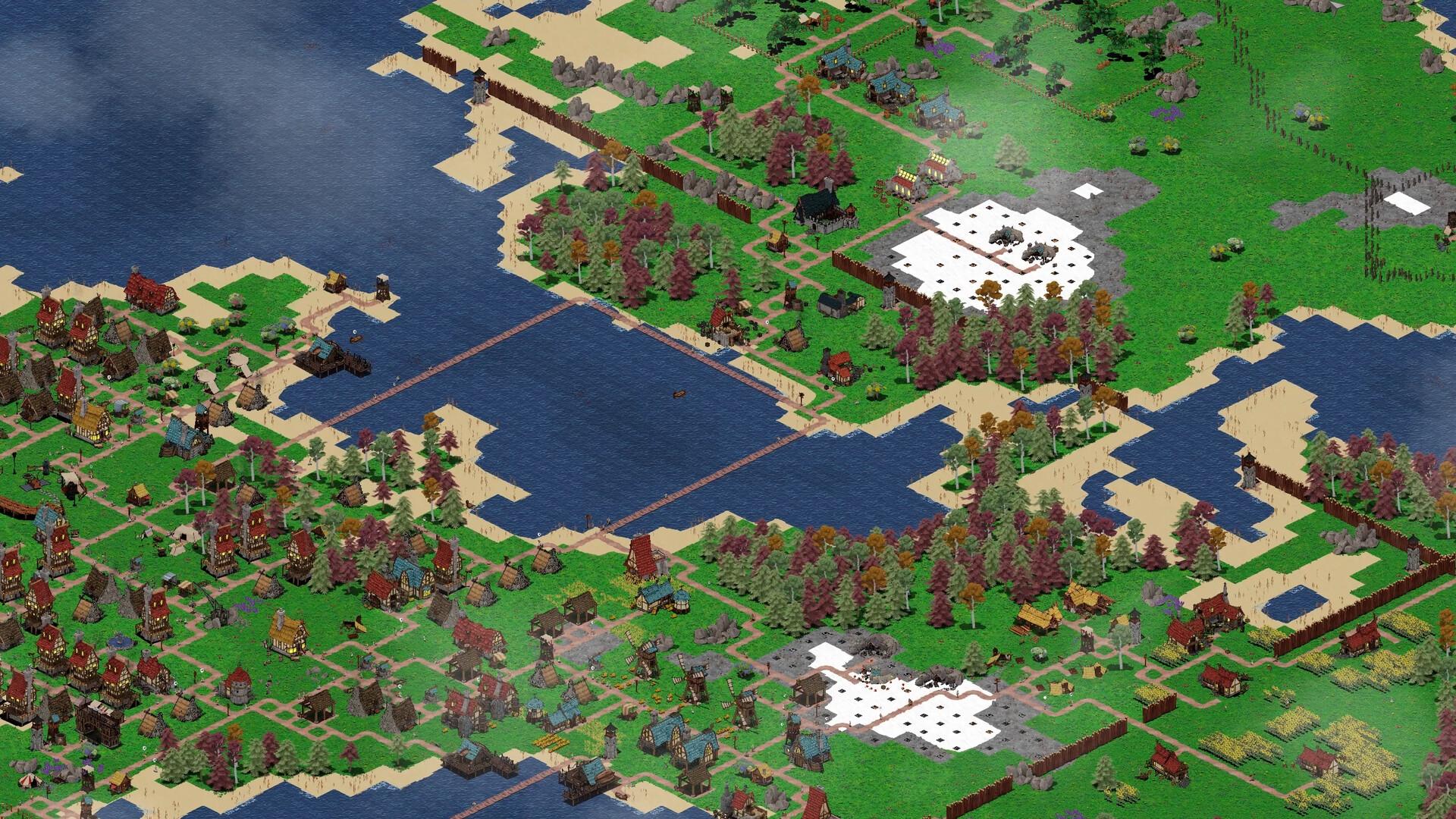
Settlements expand across natural obstacles like lakes and forests, part of the resource-chain planning several reviewers praisedImage: Light Up Games via Steam