
Game review
A Bit Dicey Review
6.7 / 10
- Developer
- Andy Zawadzki
- Publisher
- Andy Zawadzki
- Released
- 9 September 2026
- Platforms
- ["Windows"]
- Genre
- Puzzle
A Solo-Developer Dice-Rolling Puzzle Box
A Bit Dicey is a spatial puzzle game from solo developer Andy Zawadzki, built around a simple but fiddly core idea: dice sit on grids of tiles, and every move rolls a die over onto an adjacent tile, changing which face points up and, critically, which face is now touching the ground. Puzzles ask the player to land specific faces on specific tiles, thread dice through tight corridors without rolling into pits, or coordinate multiple dice with different starting orientations toward a shared goal. The game is structured as ten worlds of hand-crafted levels, more than a hundred in total, with each world introducing a fresh twist on the rolling formula, from special tile types to dice that behave differently from the standard six-sided default, before folding that idea into increasingly demanding combinations. It launched on Steam on September 9, 2026, priced at $3.99, styled throughout with soft pastel colors and a deliberately unhurried, low-pressure presentation.
A Tiny, Entirely Positive Launch Pool
A Bit Dicey launched quietly, with 13 total reviews across languages at the time of writing, every single one of them positive, giving it Steam's "Positive" designation, the label reserved for well-reviewed games that simply haven't yet accumulated enough volume for the platform's higher tiers. There isn't a single negative review in the pool in any language, which makes this an unusually one-sided launch to assess: there's no vocal minority of frustrated players to weigh against the praise, so the review below leans more heavily than usual on close reading of what even the satisfied players flag as friction, since a completely uncritical reviewer isn't much use to anyone. What's clear across all 13 reviews, in English and beyond, is a consistent, specific description of the experience on offer, which at least suggests the small sample isn't a fluke of self-selection.
A Well-Judged Difficulty Curve and a Genuinely Relaxing Package
The reviewers who've played A Bit Dicey describe almost exactly the experience its pastel presentation promises, and they describe it with unusual consistency for such a small pool. Several independently reach for the same comparison points, invoking Crayon Physics and World of Goo as spiritual predecessors: small, unpretentious indie puzzle games built around one clever physical idea, expanded patiently rather than padded out. One reviewer calls it "challenging, has some variety, and fits just perfectly in between tasks," describing it as ideal for short bursts while waiting on a compile or between calls, while several others use nearly identical language around it being a "chill," "relaxing," or "cozy" way to unwind, crediting a calming soundtrack and satisfying UI animation work for a solo-developer project. The design specifics reviewers single out for praise suggest real thought went into pacing: one highlights that the game doesn't require clearing an entire world before unlocking the next, reducing the odds of getting stuck on one stubborn puzzle and giving up altogether, while another notes that each of the ten worlds "eases you in" to its new mechanic gently before ramping up the complexity, a structure repeatedly credited with making levels that "left me stumped for a while" feel satisfying to crack rather than punishing. More than one reviewer mentions playing through the entire level set in a single extended sitting, several clocking upward of an hour without meaning to, and multiple reviews explicitly request a mobile port, taking the game's short-session, pick-up-and-put-down design as evidence it would suit handheld play even better than desktop.
A Missing Mouse-Only Mode and Very Little Room for a Vocal Minority
With zero negative reviews to draw from, the honest complaints have to be extracted from asides inside otherwise glowing write-ups, and there are a few worth flagging. The most concrete is a straightforward usability gap: one reviewer, mid-praise for the level design, notes plainly that they're "missing a way to play mouse only," implying the game currently expects keyboard or controller input for its core rolling interactions, a real accessibility and comfort limitation for a genre whose audience often prefers to point and click through puzzles rather than juggle directional input. A couple of reviewers also describe specific stretches of levels leaving them genuinely stuck, "stumped for a while" in one case and making one player "regret my life choices" in another, admiring turns of phrase rather than complaints, but worth noting for anyone hoping this is a purely breezy, difficulty-free experience; it clearly has teeth in its later worlds. Beyond what reviewers explicitly say, the game's own positioning invites a structural critique: at just over a hundred hand-crafted levels built from repeating and recombining the same rotate-and-roll mechanic across ten thematic worlds, this is a tightly scoped, single-idea puzzle box rather than a genre-redefining release, and a player who bounces off the central dice-rolling hook in the first world or two has little reason to expect the later ones will win them over. It's a game built to do one small thing well rather than many things at once, and reviewers who came in wanting exactly that are uniformly happy; reviewers who wanted more variety of mechanic types, rather than more variations on a single mechanic, simply haven't shown up in the review pool yet to say so.
Verdict
A Bit Dicey is a small, confidently made puzzle game from a solo developer who clearly understands pacing: ten worlds of dice-rolling puzzles that introduce ideas gently, let players skip around rather than getting hard-blocked, and wrap the whole thing in a genuinely soothing pastel presentation that reviewers describe reaching for specifically to decompress. Its 13-review launch pool is too small to draw sweeping conclusions from, and the total absence of negative reviews means this assessment leans on minor asides rather than pitched complaints, chief among them a missing mouse-only control option and a design that, by its own admission, builds an entire game out of one central mechanic rather than several. For $3.99, though, that single mechanic is well executed and generously proportioned across more than a hundred levels, and it's an easy, low-risk recommendation for anyone who enjoys short, contemplative spatial puzzles and doesn't need genre-defying ambition from a solo-developer debut.
Screenshots
-
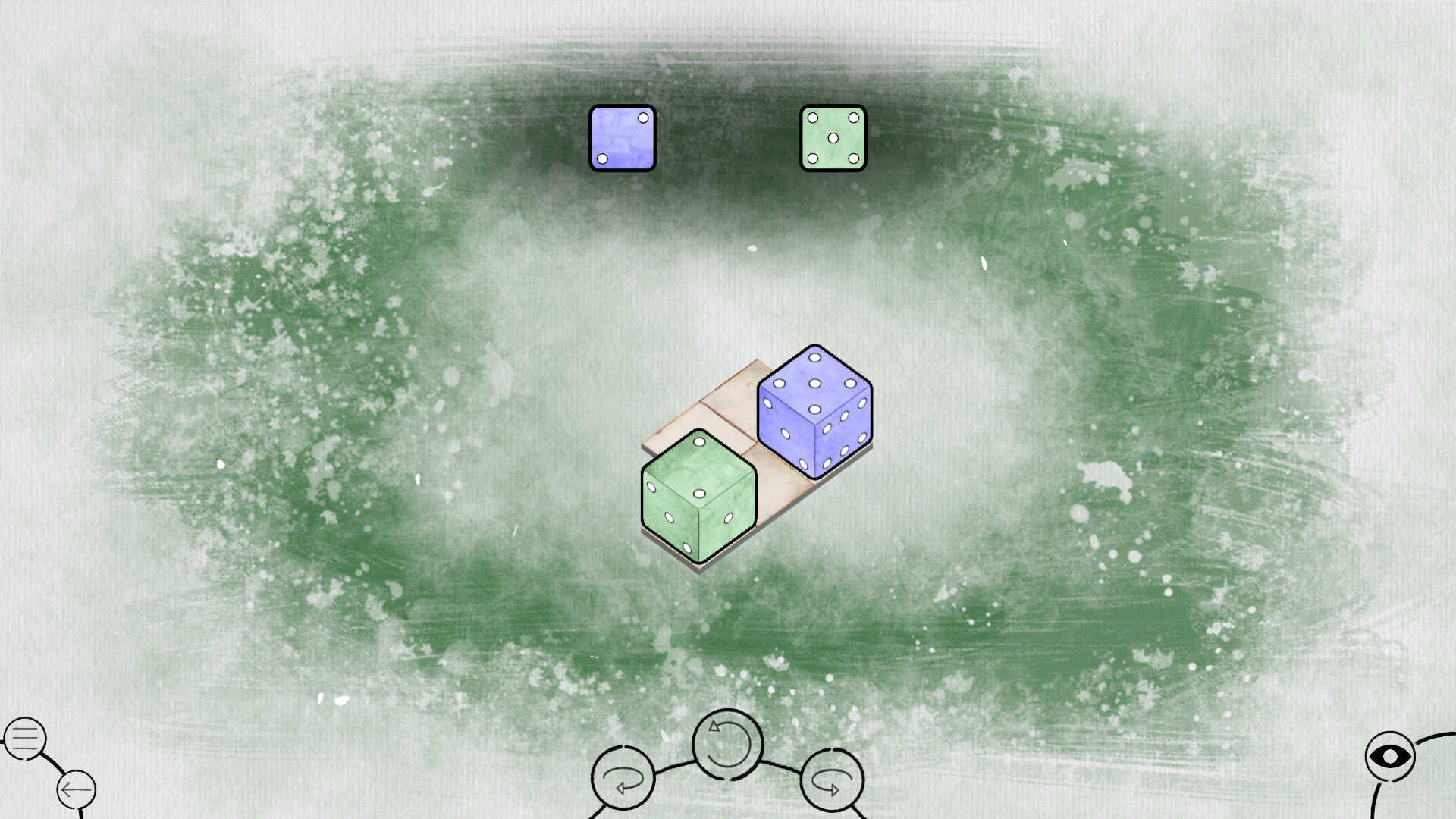
Puzzles ask players to rotate paired dice across tiles until their upward faces match a target shown at the top of the screenImage: Andy Zawadzki via Steam -
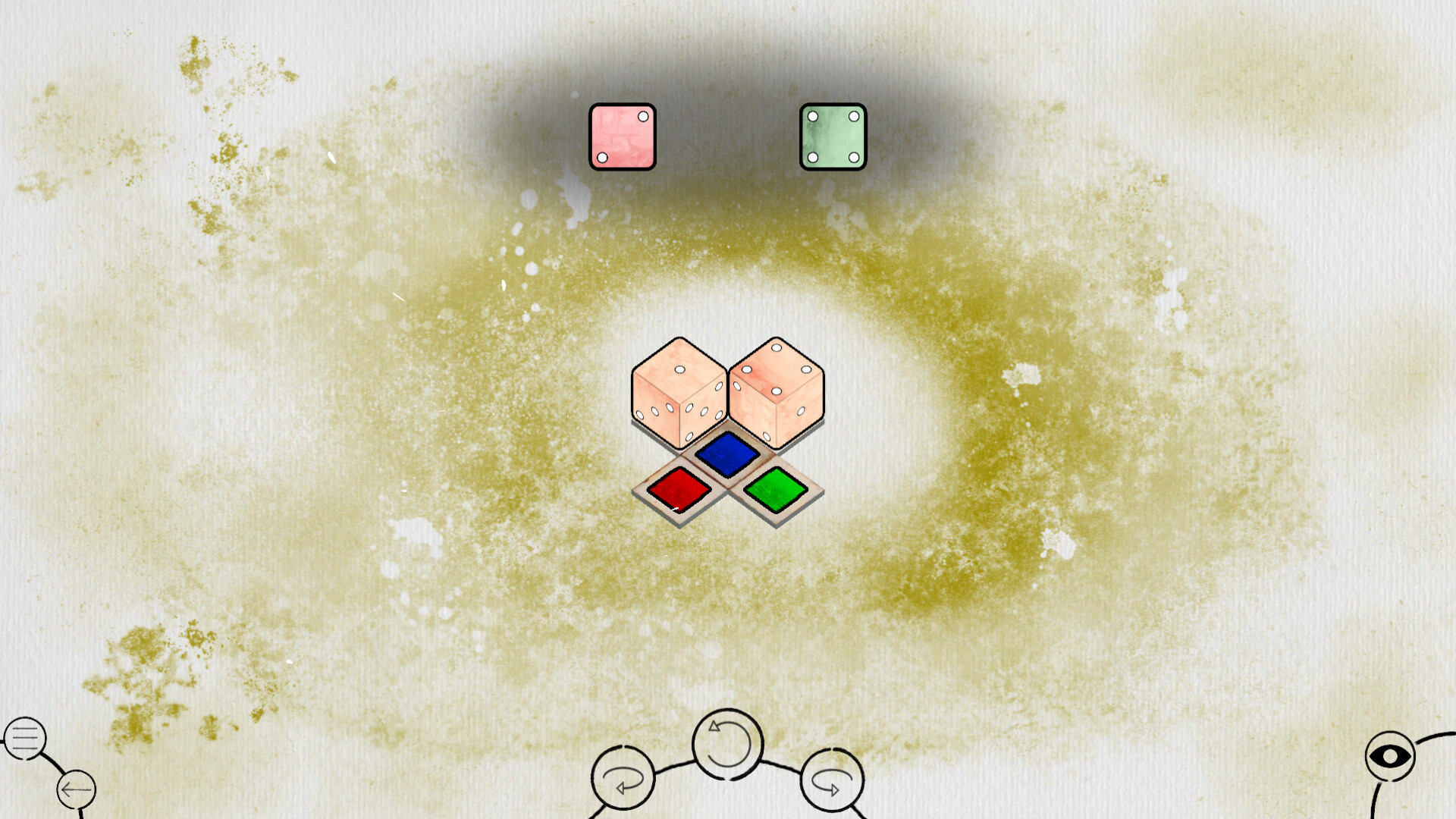
Later levels introduce colored tile types and multi-die stacks, part of the gradual mechanic layering reviewers praisedImage: Andy Zawadzki via Steam -
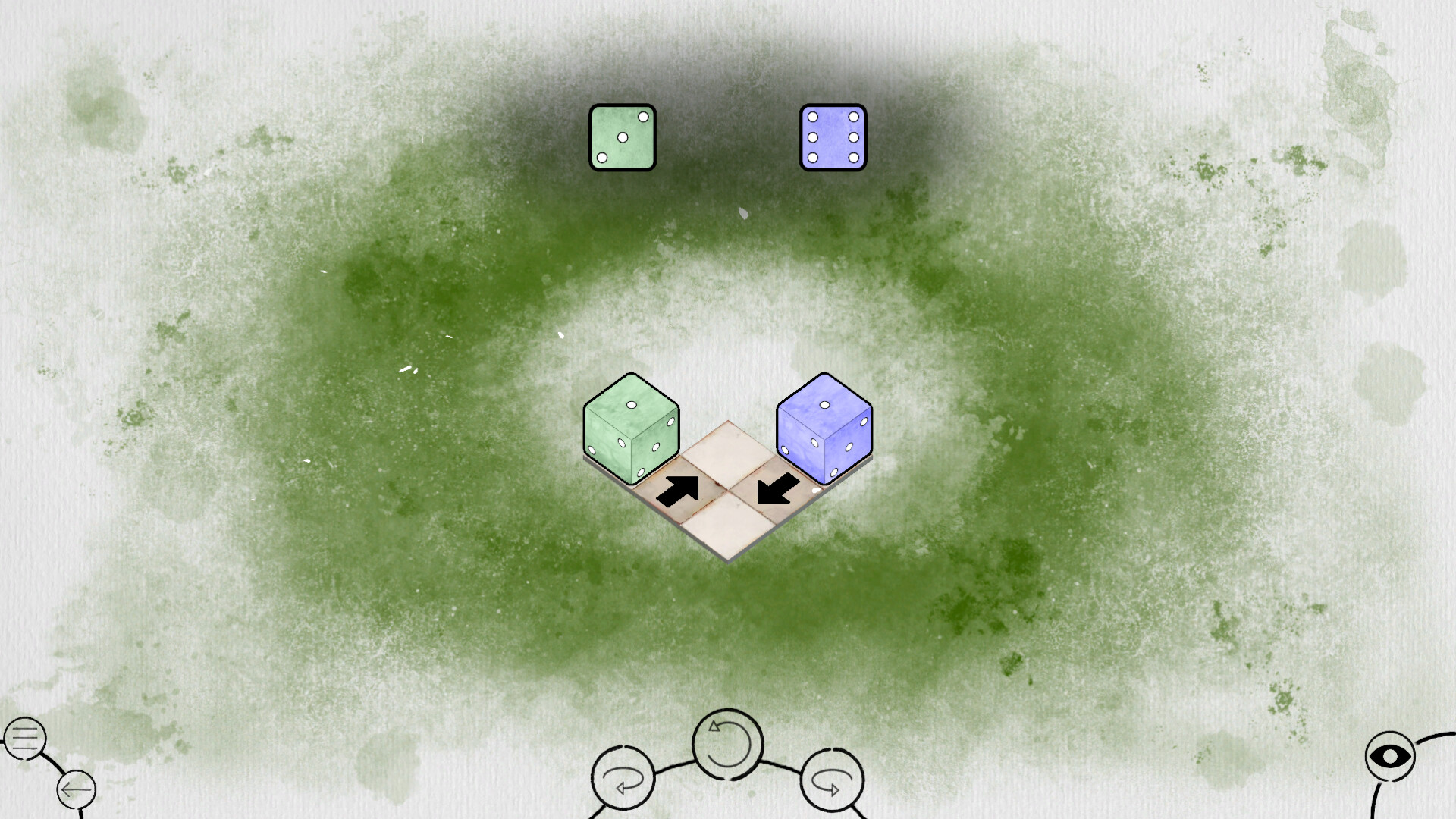
Directional arrows preview legal rolls, part of the calm, low-pressure interface reviewers compared to Crayon PhysicsImage: Andy Zawadzki via Steam